

An aluminium fry pan is a staple in most kitchens, and for good reason. It’s loved for being incredibly lightweight and an absolute champion at conducting heat, which makes it perfect for cooking that needs a quick, responsive touch. The moment you turn the heat up or down, the pan follows suit, giving you fantastic control.
Why Every Kitchen Needs an Aluminium Fry Pan
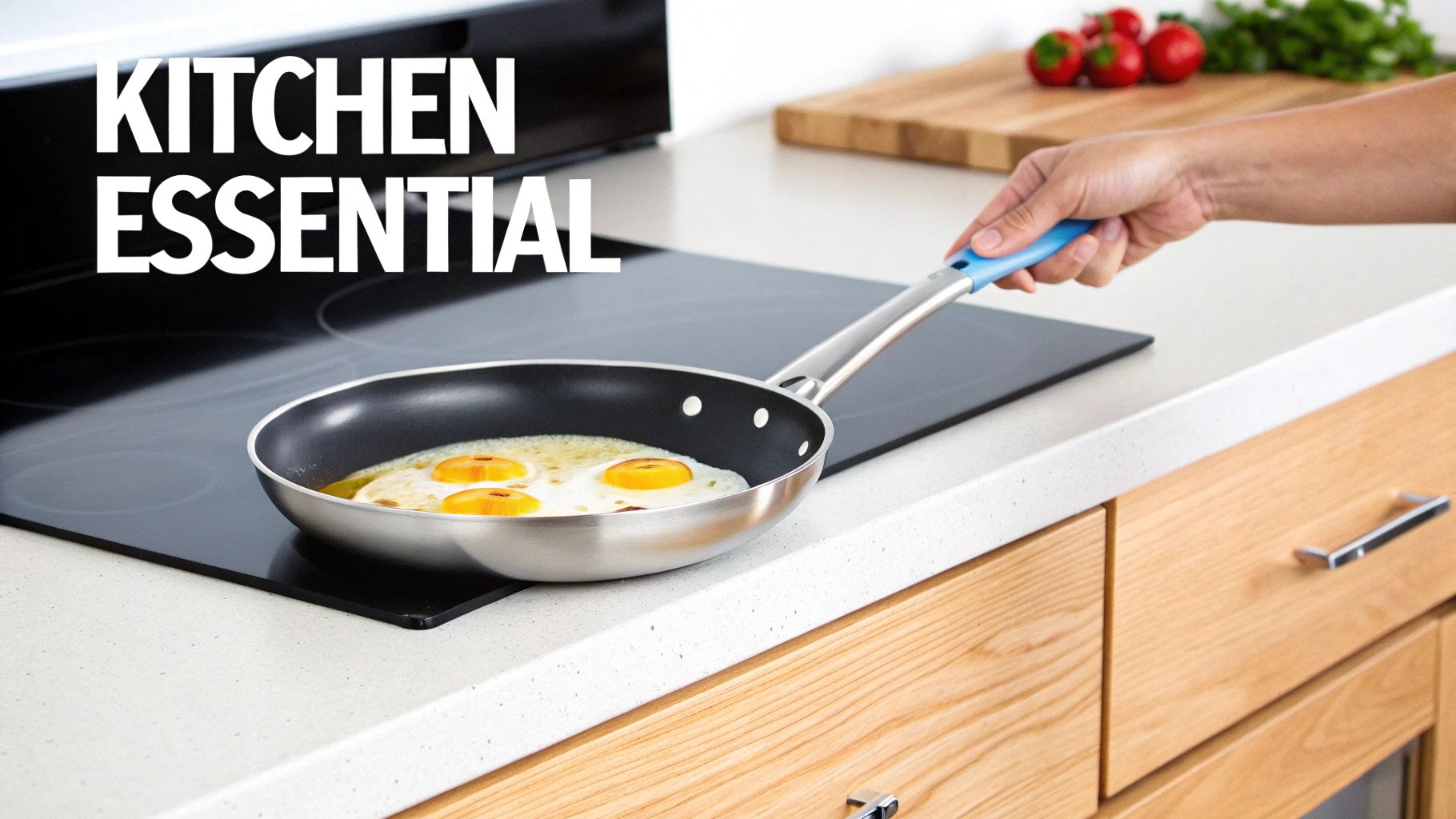
If you think of your cookware as a toolkit, each piece has its own special purpose. A heavy cast iron skillet is your go-to for holding onto heat, making it unbeatable for searing a steak. An aluminium fry pan, on the other hand, is the nimble, agile performer in the kitchen.
Its feather-light feel makes it a breeze to handle, whether you're tossing sautéed veggies or flipping a delicate omelette. You’ll really appreciate how easy it is on your wrist, making everyday cooking far more comfortable and less of a chore.
But where this pan truly shines is its unmatched heat control. Aluminium reacts almost instantly when you adjust your stove's temperature. This means you can save a delicate sauce from burning at a moment's notice or drop the heat right after searing without waiting for a heavy pan to cool down. This responsiveness makes it less of a simple tool and more of a reliable cooking partner.
From a quick morning egg scramble to a perfectly seared piece of fish for dinner, the aluminium fry pan adapts to your needs, giving you consistent results with minimal effort.
The cookware you choose genuinely affects everything from how fast your food cooks to its final texture. Getting to know the unique strengths of an aluminium fry pan helps you decide if it’s the right tool for your kitchen—one that will help bring all your culinary ideas to life.
Unpacking Aluminium's Cooking Superpowers
At the heart of every great aluminium fry pan is a simple yet powerful scientific principle: exceptional thermal conductivity. Imagine it as a high-performance sports car—it goes from zero to searing hot in moments and cools down just as fast when you take your foot off the gas.
This incredible responsiveness is what makes aluminium a star in the kitchen. Unlike heavier materials that stubbornly hold onto heat, aluminium transfers it rapidly and evenly across the entire cooking surface. This gets rid of those frustrating hot spots, ensuring your food cooks just as well at the edges as it does in the centre.
That rapid reaction time gives you an amazing degree of control. You can stop a delicate sauce from catching or get a perfect brown on your ingredients without overcooking them. It’s a level of agility that chunkier, heavier pans just can't offer.
Light on Your Wrist, Heavy on Performance
Beyond its fantastic heat control, an aluminium fry pan is a dream to handle because it's so lightweight. Its low density means you can lift, tilt, and toss with ease, putting far less strain on your wrist when you're flipping pancakes or sautéing veggies. This makes the whole cooking process feel more intuitive and less like a workout.
It's this blend of speed and agility that makes aluminium a go-to choice in both fast-paced professional kitchens and for busy home cooks.
"The ability of an aluminium pan to react instantly to temperature changes is its greatest advantage. It allows a cook to execute techniques with precision, from a quick sauté to a controlled simmer, making it an indispensable tool."
The Two Core Types of Aluminium Pans
It’s important to know that not all aluminium is created equal. The way a pan is made has a huge impact on its performance and how long it'll last. You'll mainly come across two types: stamped and cast aluminium.
- Stamped Aluminium: This process involves cutting a pan shape from a big, flat sheet of aluminium and then pressing it into its final form. These pans tend to be thinner, lighter, and more budget-friendly.
- Cast Aluminium: With this method, molten aluminium is poured into a mould. This creates a thicker, more solid pan that’s much less likely to warp over time and often provides even more effective heat distribution.
Getting your head around these basics is crucial, as they are the foundation for more advanced cookware like hard-anodised or coated pans. While many pans have extra layers, choosing the best non-stick surface for your frying pan often boils down to your personal cooking style and how you like to care for your gear.
How to Choose the Right Type of Aluminium Pan
Picking the right aluminium fry pan isn’t about finding the single "best" one on the market. It's really about finding the best one for your kitchen. Your cooking style, how much you value durability, and even how you like to clean up will all point you toward your perfect match.
Let's break down the main contenders you'll find on the shelf.
The Different Faces of Aluminium
First up is the classic uncoated aluminium pan. Think of it as the straightforward workhorse. It's incredibly responsive to temperature changes, heating up and cooling down in a flash. You'll need to use a bit of oil or butter and good technique to stop food from sticking, but it's fantastic for jobs where you want to build up a fond—those tasty browned bits on the bottom of the pan—for a killer sauce.
Of course, the most popular choice for many home cooks is non-stick aluminium. These pans have a special coating, usually PTFE (the material used in Teflon) or a ceramic finish, which makes cooking delicate foods like eggs or fish an absolute dream. They're a gift for low-fat cooking and cleanup is ridiculously easy. The only catch? The coating is sensitive, so you'll need to stick to silicone or wooden utensils to avoid scratches.
For a clearer picture, this flowchart can help you see which pan type fits your go-to cooking style.
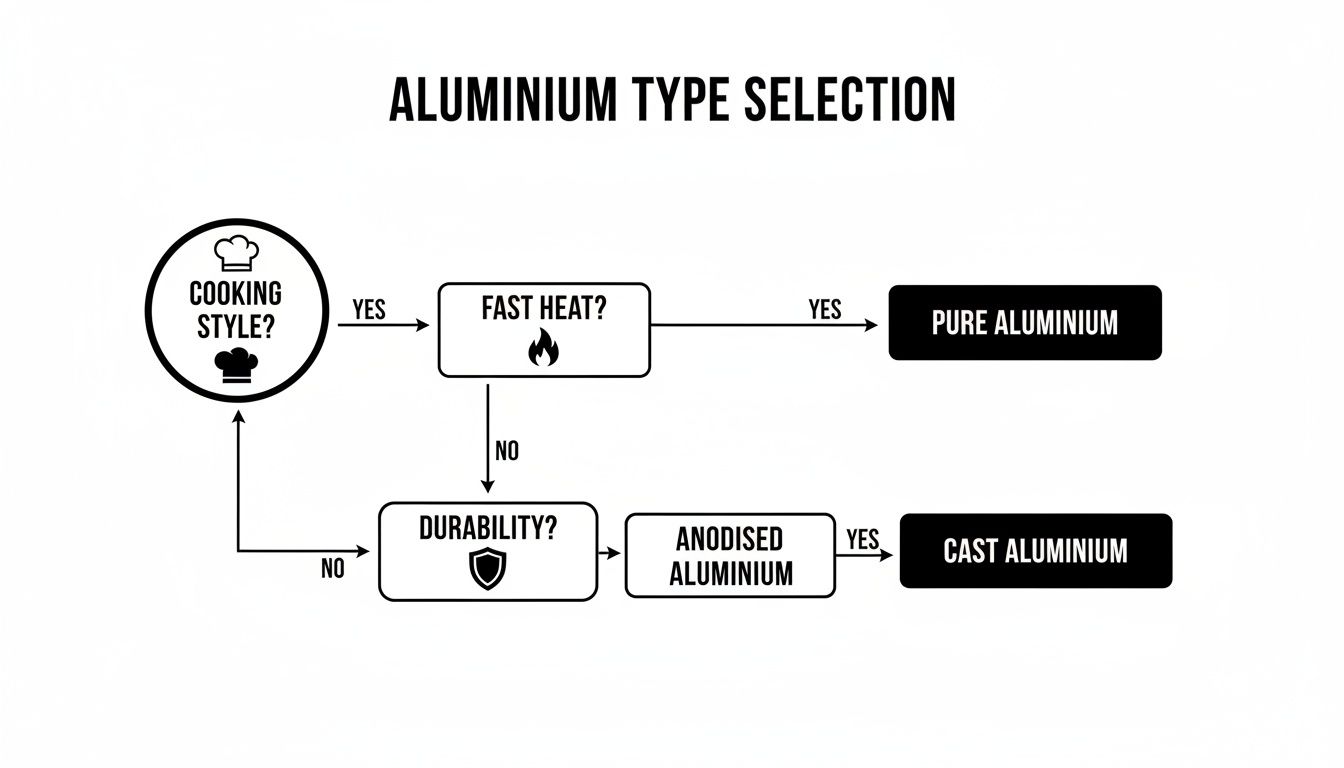
As you can see, figuring out whether you prioritise speed or sheer strength is the first step in narrowing down your options.
Stepping Up in Durability
If you're looking for a pan that can really take a beating, hard-anodised aluminium is where you should be looking. These pans go through a special electrochemical process that basically super-hardens the surface. The result is a pan that’s way more durable and scratch-resistant than its standard aluminium cousin. It's a fantastic middle-ground, giving you extra toughness without sacrificing that amazing heat conductivity.
Finally, for those who truly want it all, there's clad aluminium. This is the premium option, and for good reason. It’s built with an aluminium core that's sandwiched between layers of stainless steel.
A clad pan gives you the rapid, even heating of aluminium combined with the durable, non-reactive cooking surface of stainless steel. It’s a hybrid design engineered for superior performance and longevity.
This clever construction makes it a true all-rounder, perfect for everything from searing a steak on high heat to gently simmering a delicate sauce.
To help you compare these options at a glance, here’s a simple table breaking down the key differences.
Aluminium Fry Pan Types Compared
| Pan Type | Key Feature | Best For | Durability | Price Point |
|---|---|---|---|---|
| Uncoated Aluminium | Extremely heat-responsive | Searing, browning, pan sauces | Moderate | Low |
| Non-Stick Aluminium | Easy-release surface | Eggs, fish, low-fat cooking | Low to Moderate | Low to Mid |
| Hard-Anodised Aluminium | Scratch-resistant and tough | Everyday all-purpose cooking | High | Mid |
| Clad Aluminium | Even heating + durability | Searing, sauces, professional use | Very High | High |
Ultimately, understanding these materials is the key to a smart purchase. For an even deeper look into what separates a good pan from a great one, our guide to quality frying pans will help you make an investment that lasts for years.
The Kitchen Revolution: Why We're Demanding Better Cookware
Let's face it, the way we think about our kitchens has changed. The rise of the modern aluminium fry pan isn't just a random trend; it’s part of a much bigger story about how seriously we now take our home cooking. We’ve moved on from the days of flimsy, disposable cookware. Today’s home chef is savvy, investing in high-performance tools that are built to go the distance.
This shift is all about a renewed love for cooking from scratch and a sharper eye for quality. When we shop for kitchen gear now, we’re looking for things like durability, responsive heat control, and materials we can trust. It's a move towards premium tools that don't just cook well but also deliver real value and peace of mind for our families.
The Numbers Don't Lie
You can see this demand reflected in the market itself. In Australia, the cookware market—where aluminium pans are a major player—was valued at a staggering USD 664.44 million in 2024. Projections show it’s on track to more than double, hitting USD 1,369.43 million by 2033. This incredible growth is a direct result of our collective passion for quality home-cooked meals and the undeniable appeal of lightweight, super-conductive materials like aluminium. Explore more about these market dynamics to see where things are headed.
It's clear that a good fry pan is no longer just another utensil. It's now seen as a core investment in the kitchen, something that directly shapes the quality and joy of the food we cook every day.
What's Driving Our Choices?
A few key trends are really shaping what people look for when buying an aluminium fry pan today:
- The Induction Boom: Induction cooktops are everywhere now, prized for their speed and safety. This has created a huge demand for compatible cookware, prompting manufacturers to add magnetic steel bases to their aluminium pans so they work flawlessly on these modern hobs.
- A Focus on Health: We're all more conscious of what goes into our bodies, and that extends to our cookware. This has fuelled the popularity of materials like hard-anodised aluminium and advanced non-stick coatings that are guaranteed to be free from nasty chemicals.
- Buying for the Long Haul: The "buy it once, buy it right" philosophy is making a comeback. People are happily choosing solidly built pans over cheap, throwaway options. It’s a smarter choice that reduces waste and ends up being better value in the long run.
How to Keep Your Aluminium Pan in Top Shape
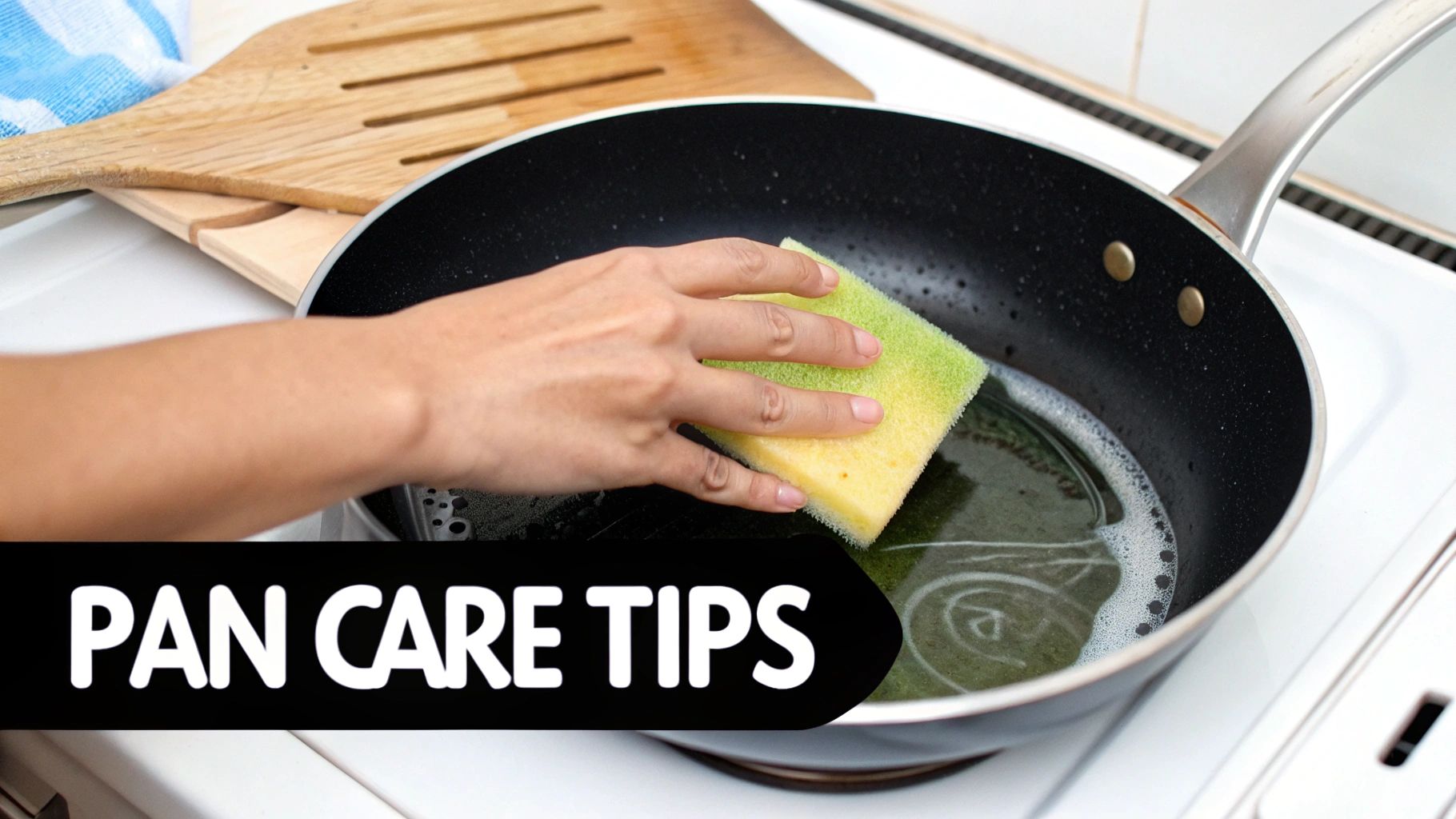
You've got a fantastic aluminium fry pan—now, let's make sure it lasts. A little bit of know-how will keep it performing beautifully for years, so you can count on it for every meal.
The golden rule? Always let your pan cool down completely before you even think about washing it. Dunking a hot pan into cold water is a recipe for disaster. This sudden temperature change, known as thermal shock, can cause the metal to warp, ruining its flat base.
When it's cool to the touch, a gentle hand wash is your best friend. All you need is a soft sponge or cloth and some warm, soapy water. Stay far away from harsh scourers like steel wool, as they’ll quickly scratch and damage the surface, especially if it has a non-stick or hard-anodised coating.
Your Day-to-Day Pan Care Routine
The secret to a long-lasting pan isn't some magic trick; it's about building good habits. Small, simple tweaks to how you cook, clean, and store your pan will make all the difference.
- Stick to Soft Utensils: Metal spatulas and forks are the arch-nemesis of non-stick coatings. Always reach for silicone, nylon, or wooden tools to keep the surface smooth and intact.
- Keep the Heat in Check: Aluminium heats up fast, so there's rarely a need to crank the dial to maximum. Cooking on low to medium heat is gentler on non-stick surfaces and prevents food from burning on.
- Hand Wash for a Longer Life: Even if your pan says it's dishwasher-safe, hand washing is always the kinder option. The high heat and harsh detergents in a dishwasher can wear down coatings over time. If you're curious about the specifics, our guide on dishwasher safe pans can help you decide what's best.
Storing your pan properly is the final, crucial step. Stacking pans haphazardly is a surefire way to get scratches. Just pop a paper towel or a soft pan protector inside your fry pan before putting another on top. It's a simple move that keeps the cooking surface pristine.
By following these straightforward tips, you’re not just cleaning a pan—you’re protecting your investment. A well-maintained aluminium fry pan will be a reliable workhorse in your kitchen, helping you whip up countless delicious meals.
Got Questions About Aluminium Fry Pans?
Even with all their perks, it's completely normal to have a few questions before you bring a new aluminium fry pan home. Let's run through the most common ones so you can feel totally confident in your decision.
Are Aluminium Pans Safe to Use?
This is probably the number one question people ask, and it's a good one. The short answer is yes, high-quality, modern aluminium pans are perfectly safe for everyday cooking. It all comes down to how they're made.
Reputable brands don't just give you a pan made of raw aluminium. They seal it, either with a tough non-stick coating or by putting it through a special process to make it hard-anodised. This creates a durable, non-reactive barrier, so your food never actually touches the aluminium itself. Stick with trusted manufacturers, and you've got nothing to worry about.
Do Aluminium Pans Work on Induction Hobs?
Another common query is whether these pans will play nicely with induction cooktops. By itself, aluminium isn't magnetic, so a standard pan won't work on an induction hob.
But cookware makers have a smart workaround. They bond a magnetic stainless steel plate to the bottom of the pan. This simple addition allows the pan to heat up on an induction cooktop, so you get aluminium’s fantastic heat control on any kind of stove.
Always look for an 'induction compatible' symbol or note on the packaging before you buy. A quick check is all it takes to make sure your new pan is a perfect match for your kitchen.
It's clear that people all over the world love cookware that's both efficient and reliable. The global aluminium cookware market was valued at about USD 6.25 billion in 2024 and is forecast to reach USD 10.49 billion by 2032. That’s a huge vote of confidence from home cooks and chefs everywhere. Discover more insights about these cookware market trends.
At Everti, we believe your kitchen deserves tools that give you fantastic performance and complete peace of mind. Explore our range of premium kitchen essentials.