

Titanium Cutting Board Safety: Durability, Health, and Hygiene for Health-Conscious Consumers and Professional Cooks
Key Takeaways
-
Titanium cutting boards develop visible cut marks over time but pose minimal health risks due to titanium’s excellent biocompatibility and medical-grade safety profile.
-
Unlike plastic cutting boards that shed harmful microplastics into food, titanium boards release only trace amounts of biocompatible metallic particles.
-
Authentic titanium boards are significantly more expensive than plastic alternatives but offer superior durability and long-term hygiene benefits.
-
Genuine titanium boards preserve knife edges better than glass or ceramic surfaces while maintaining non-porous, bacteria-resistant properties.
-
Consumers must be cautious of fake titanium boards made from stainless steel that lack true titanium’s safety benefits and can damage knives.
Titanium Cutting Board Safety: Who Should Consider Them and Why It Matters
Titanium cutting boards are an ideal choice for health-conscious consumers and professional cooks who want to address safety and hygiene concerns in the kitchen. The topic of titanium cutting board safety matters because the materials used in food prep surfaces can directly impact food safety, knife longevity, and overall kitchen cleanliness.
Titanium cutting boards have become a popular alternative for those seeking to minimize exposure to microplastics, avoid chemical leaching, and invest in a durable, hygienic food prep surface. In this article, we’ll cover key aspects such as safety, durability, health implications, particle shedding, knife maintenance, and how to identify authentic titanium boards for better scope and context.
Titanium cutting boards are non-toxic—meaning they do not leach chemicals or shed microplastics into food—and naturally antibacterial, which means they inhibit the growth of bacteria on their surface. These properties make them a superior choice for anyone prioritizing kitchen hygiene. When choosing a titanium cutting board, consumers should prioritize high purity (99%+), certifications like SGS/FDA, and knife-friendly surface finishes. A thickness between 0.8mm and 1.2mm provides a good balance of stability and manageable weight.
Features and Benefits of Titanium Cutting Boards
Titanium cutting boards offer a comprehensive set of features and benefits that make them stand out for both home and professional kitchens:
-
Antibacterial and Non-Toxic: Titanium cutting boards are non-toxic (do not leach chemicals or shed microplastics into food) and naturally antibacterial (inhibit bacterial growth on their surface). [Fact: Titanium cutting boards are non-toxic and naturally antibacterial.]
-
Stain Resistance: These boards are highly resistant to staining from acidic or pigmented foods, maintaining their appearance over time. [Fact: Titanium cutting boards are naturally antibacterial and stain resistant.]
-
Dishwasher Safe: Most titanium cutting boards are dishwasher safe, making them easy to clean and maintain. [Fact: Titanium cutting boards are often dishwasher safe, making them easy to clean.]
-
Lightweight and Easy Handling: Titanium boards are lightweight, which makes them easy to handle, wash, and store. [Fact: Titanium boards are lightweight, making them easy to handle, wash, and store.]
-
Integrated Handles: Many titanium cutting boards feature integrated handles for easy lifting and maneuvering. [Fact: Integrated handles on titanium cutting boards facilitate easy lifting and maneuvering.]
-
Juice Grooves: Juice grooves are effective for collecting liquids from meats or juicy fruits, simplifying cleanup. [Fact: Juice grooves on titanium cutting boards are effective for collecting liquids from meats or juicy fruits, simplifying cleanup.]
-
Durability: Titanium cutting boards are extremely durable, resisting warping, cracking, and denting for decades. [Fact: Titanium cutting boards are extremely durable, resisting warping, cracking, and denting for decades.]
-
Thickness Range: A thickness between 0.8mm and 1.2mm provides a good balance of stability and manageable weight. [Fact: A thickness between 0.8mm and 1.2mm provides a good balance of stability and manageable weight for titanium cutting boards.]
-
Purity and Certification: Choose boards with high purity (99%+), SGS/FDA certifications, and knife-friendly surface finishes for optimal safety and performance. [Fact: Choosing a titanium cutting board should prioritize high purity (99%+), certifications like SGS/FDA, and knife-friendly surface finishes.]
-
Longevity: Titanium cutting boards provide long-term value, often lasting decades without replacement. [Fact: Titanium cutting boards provide long-term value despite a higher upfront cost due to their longevity compared to cheaper options.]
-
Knife Maintenance: The softer metal surface of titanium helps knives stay sharper longer, reducing sharpening needs compared to harder surfaces like glass or ceramic. [Fact: Titanium cutting boards help knives stay sharper longer, reducing sharpening needs due to their softer metal surface.]
As microplastic contamination becomes a growing concern in our kitchens, many health-conscious consumers are searching for safer alternatives to traditional plastic cutting boards. Enter the titanium cutting board—a premium option that promises durability, safety, and superior hygiene. But do these expensive surfaces live up to their claims, and are they genuinely safer than the plastic cutting boards found in most kitchens?
This comprehensive analysis examines the safety, durability, and health implications of titanium cutting boards compared to their plastic counterparts. We’ll explore whether these boards shed particles, assess their impact on knife performance, and provide evidence-based guidance to help you make an informed decision for your kitchen.
Do Titanium Cutting Boards Show Marks and Are They Safe?
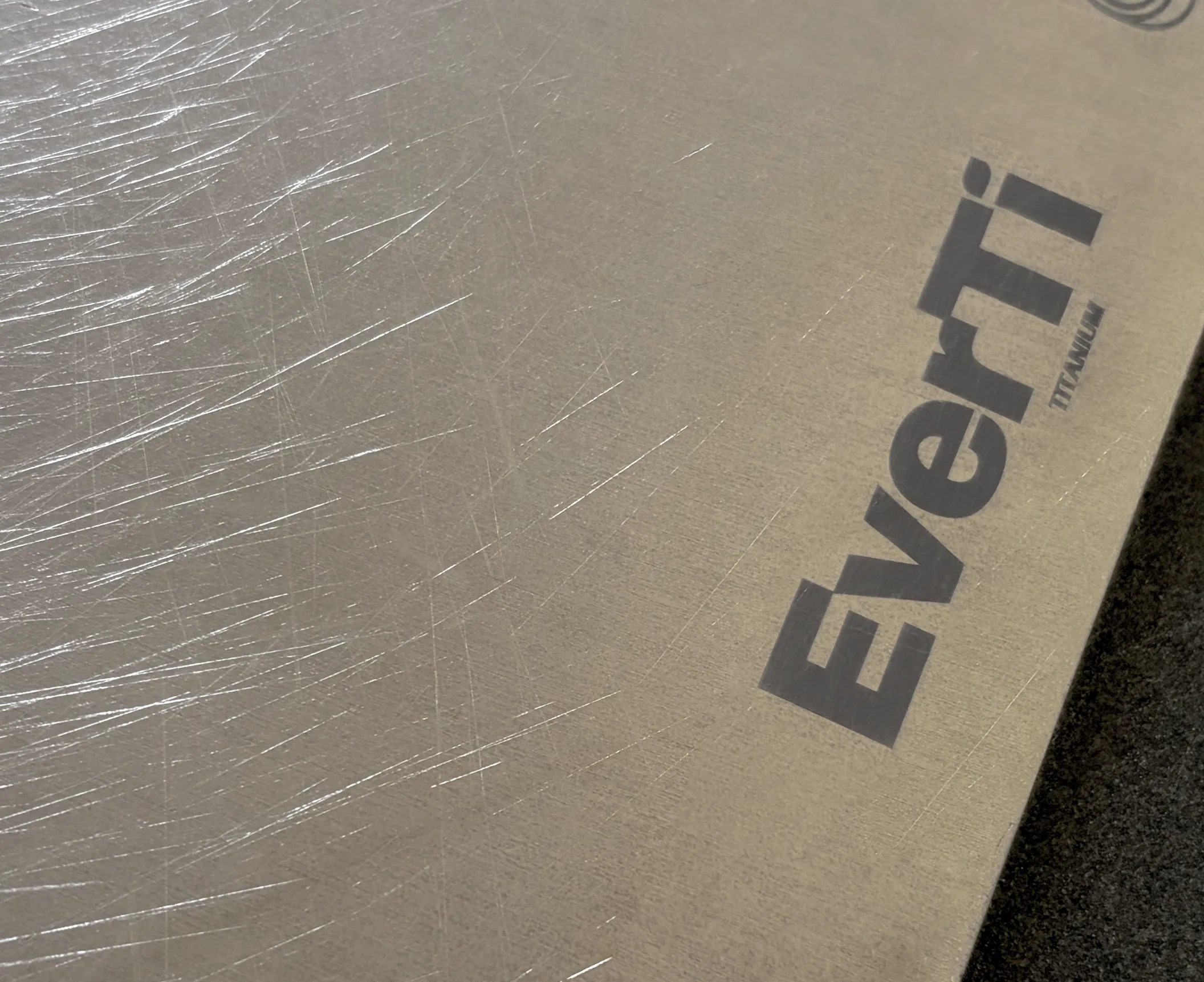
Yes, titanium cutting boards do show cut marks over time, but these marks pose minimal health risks. The visible scratching occurs due to titanium’s specific hardness properties and the mechanical interaction with knife blades during cutting. No cutting board is perfect, and visible marks are a normal result of use—not indicative of poor quality.
Titanium cutting boards are naturally antibacterial (meaning they inhibit bacterial growth) and non-toxic (do not leach chemicals or shed microplastics), making them ideal for hygienic food preparation. They are designed to provide a durable, non-porous surface that is easy to clean and maintain.
When knives make contact with a titanium surface under pressure, several phenomena create visible marks:
-
Micro-scratching and surface deformation occurs because titanium’s hardness level sits between that of plastic boards and hardened steel knives. The concentrated stress from knife edges creates shallow grooves and displaced metal ridges that appear as matte or bright lines against the board’s original finish.
-
Metal transfer from knives actually contributes more to visible marking than titanium loss. Softer steel from knife edges often transfers onto the harder titanium surface, creating gray streaks that many users interpret as board damage. These deposits can sometimes be reduced with proper cleaning techniques.
-
Changes in surface reflectivity make even microscopic scratches highly visible. Titanium’s characteristic oxide layer produces a specific sheen, and cutting creates micro-grooves that scatter light differently. Human eyes are remarkably sensitive to these contrast changes, making boards appear heavily marked even when actual material displacement is minimal.
From a safety perspective, these marks represent purely cosmetic wear rather than health hazards. The titanium oxide layer that forms naturally on the surface is only nanometers thick but extremely protective, spontaneously self-healing when scratched as oxygen re-oxidizes exposed metal almost instantly.
Titanium cutting boards are often marketed as being made from pure titanium, which can be more beneficial for knife maintenance compared to other materials. While you can expect some knife dulling over time, it is not technically severe, and titanium’s properties help minimize excessive wear on your blades.
All cutting boards will eventually show signs of wear with long-term use, but titanium’s durability ensures these effects remain mostly cosmetic.
Titanium’s biocompatible properties make it exceptionally safe for food contact. The same material used in medical implants, heart valves, and dental implants has decades of safety data supporting its use in direct contact with human tissue. The FDA has approved titanium for food contact applications, and it’s widely used in camping cookware and kitchen utensils specifically because of its non-reactive nature.
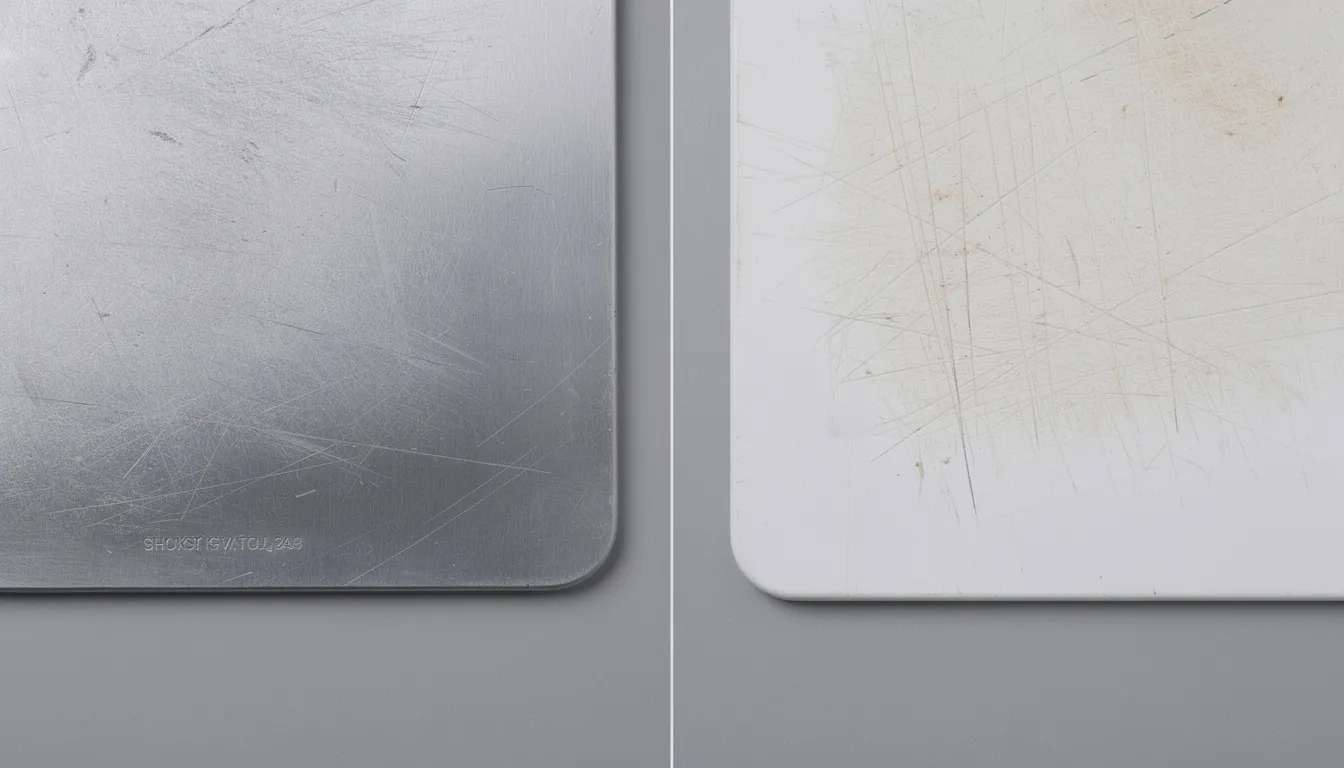
Unlike plastic cutting boards where deep grooves can harbor bacteria and become difficult to sanitize, titanium’s non-porous surface remains easy to clean despite superficial scratching. The material tolerates aggressive cleaning methods, high temperatures, and strong sanitizers without degradation.
The board is designed to hold steady on your kitchen counter, providing a stable surface that won’t slip while you slice meat or other foods. This stability and grip make it a reliable choice for everyday food prep.
Titanium vs Plastic Cutting Boards: Health Comparison
This review compares the health and safety implications of various cutting board materials, including titanium, plastic, and wood.
Why Cutting Board Material Matters
The health implications of cutting board materials have gained increased attention as research reveals concerning trends in microplastic contamination and chemical leaching from traditional kitchen surfaces.
Microplastic and Chemical Shedding
Microplastic shedding represents a significant concern with plastic cutting boards. Scientific studies have quantified substantial microplastic release during normal cutting activities, with some research finding tens of milligrams of plastic particles per person per year from cutting board use alone. These persistent polymer fragments are now widely detected in human tissues and throughout the environment, with unclear long-term health consequences.
Chemical leaching from plastic boards poses additional risks, particularly when boards are exposed to heat, acidic foods, or aggressive cleaning. While high-density polyethylene (HDPE) boards are generally considered safer than some plastics, they may still contain processing aids, stabilizers, and colorants that can migrate to food over time.
Plastic cutting boards are dishwasher safe and less porous than wooden boards, making them convenient and hygienic for everyday use. They are ideal for cutting meats or items that stain, such as chicken, due to their non-porous surface, and are easy to clean for various food preparation tasks. However, plastic boards are more prone to stain from foods like beets and berries, and they show cut marks more prominently than wooden boards, which can be sanded down to remove scratches.
When you buy a cutting board, consider that plastic options are generally cheaper than wooden boards and are especially suitable for slicing meat and raw chicken. Despite these advantages, plastic cutting boards dull knives faster than end-grain wooden cutting boards. Wooden cutting boards, on the other hand, have natural plant fibers that help them age better than plastic and possess antimicrobial properties, making them a safer option for food preparation.
Hygiene, Durability, and Cost Comparison Table
|
Feature |
Titanium Cutting Board |
Plastic Cutting Board |
Wooden Cutting Board |
|---|---|---|---|
|
Hygiene |
Non-porous, naturally antibacterial, non-toxic, does not leach chemicals or shed microplastics |
Non-porous, but can harbor bacteria in deep grooves, sheds microplastics |
Porous, natural antimicrobial properties, can harbor bacteria if not maintained |
|
Durability |
Extremely durable, resists warping, cracking, denting |
Prone to deep grooves, warping, and cracking over time |
Can warp or crack, but can be sanded and resurfaced |
|
Longevity |
Decades with proper care |
1–5 years depending on use |
5–10+ years with maintenance |
|
Knife Friendliness |
Softer than glass/ceramic, helps maintain sharpness |
Dulls knives faster than wood |
Gentle on knives, helps maintain sharpness |
|
Stain Resistance |
Highly stain resistant |
Prone to staining |
Can stain, but can be sanded |
|
Dishwasher Safe |
Yes |
Yes |
No (usually hand wash only) |
|
Weight |
Lightweight |
Lightweight |
Heavier |
|
Cost |
High upfront cost |
Low to moderate |
Moderate to high |
|
Environmental Impact |
Fully recyclable, long lifespan |
Contributes to microplastic pollution, frequent replacement |
Biodegradable, sustainable if sourced responsibly |
Bacterial Resistance and Cleaning
Titanium boards eliminate these chemical concerns entirely. The material contains no organic additives, no BPA, no phthalates, and no volatile compounds that can leach into food. Any particles released are inorganic metallic fragments rather than persistent organic pollutants.
Bacterial resistance differs significantly between materials. Plastic cutting boards develop deep knife scars that trap food residues and moisture, creating ideal environments for bacterial growth. These grooves become increasingly difficult to sanitize as they deepen, leading food safety experts to recommend regular replacement of heavily used plastic boards.
Titanium’s harder surface resists deep cuts while maintaining its non-porous structure. The material can withstand high-temperature dishwashing and strong sanitizers without degradation, supporting thorough decontamination. Some manufacturers claim titanium surfaces possess natural antibacterial properties, though the magnitude of this effect compared to proper cleaning practices remains debated.
Particle Shedding Analysis
Quantitative analysis reveals stark differences in particle generation between materials. Research on plastic cutting boards demonstrates measurable microplastic release during chopping activities, with particle sizes ranging from micrometers to nanometers. The soft nature of plastic allows knife edges to carve out substantial material during use.
Titanium particle emission rates are orders of magnitude lower than plastic alternatives under comparable use conditions. The hard surface experiences primarily surface deformation rather than material removal. When titanium particles are generated, they’re typically larger and less numerous than plastic microparticles.
Size and quantity differences matter significantly for health assessment. Microplastic particles are often in the nanoscale range with high surface area and potential for cellular uptake. Titanium particles from cutting board wear are generally larger, less numerous, and composed of biocompatible material with established safety profiles.
The particles released also differ fundamentally in their environmental persistence. Plastic microparticles accumulate in ecosystems and food chains, while titanium particles are inorganic and don’t exhibit the same bioaccumulation patterns.
Safety of Metallic Titanium Particles in the Human Body
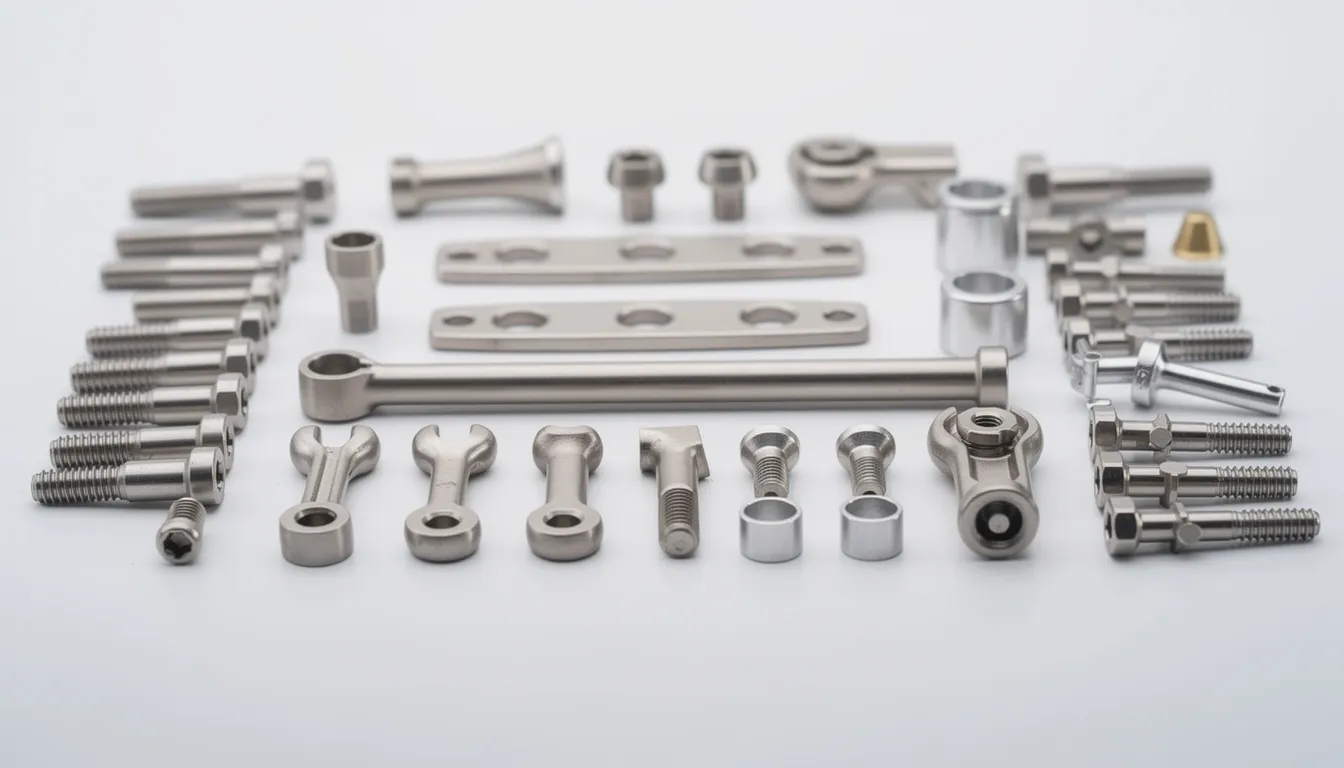
Extensive medical research supports titanium’s exceptional biocompatibility and safety in human exposure. Decades of clinical experience with titanium implants provide robust evidence for the material’s safety profile when in direct contact with human tissue.
Medical implant studies demonstrate remarkable tolerance for titanium particles and ions in the human body. Orthopedic and dental implants inevitably generate wear debris over years of use, yet titanium implants maintain excellent safety records. Studies show some systemic distribution of titanium particles from implants, but generally at concentrations that regulatory agencies and medical communities consider acceptable.
Digestive system processing of titanium particles follows predictable patterns based on oral toxicology research. Most ingested particles pass through the gastrointestinal tract unchanged, with minimal absorption into systemic circulation. The stomach’s acidic environment and normal digestive processes handle small titanium particles similarly to other inert materials.
Toxicology studies reveal low acute and chronic toxicity for metallic titanium at realistic exposure levels. Unlike some metals that accumulate and cause organ damage, titanium’s chemical inertness limits its biological activity. The material doesn’t readily release ions or participate in harmful biochemical reactions under physiological conditions.
Regulatory approval supports titanium’s food safety profile. Multiple international agencies have approved titanium for food contact applications, including cookware, utensils, and processing equipment. This regulatory acceptance reflects comprehensive safety assessments concluding that normal dietary exposure to titanium particles poses minimal risk.
The exposure levels from cutting board use are particularly low compared to other sources. Historical use of titanium dioxide as a food additive (now being phased out for other reasons) provided much higher dietary exposure than any reasonable estimate of particles from cutting board wear.
Do Titanium Cutting Boards Shed Particles?
Scientific testing confirms that titanium cutting boards do shed particles, but at extremely low rates compared to plastic alternatives. Understanding the mechanisms and quantities involved helps assess the practical significance of this particle generation.
Laboratory wear testing using standardized abrasion methods demonstrates that titanium surfaces experience measurable material loss under mechanical stress. However, the wear rates are exceptionally low compared to softer materials, typically measured in micrograms per hour of simulated cutting activity.
Factors affecting particle release include knife hardness, cutting technique, and board surface finish. Harder knives with damaged edges create more aggressive cutting conditions, while proper technique with sharp, well-maintained knives minimizes both board and knife wear.
Visual evidence versus actual material loss often creates misperceptions about shedding rates. The highly visible scratch marks that develop on titanium boards don’t necessarily correlate with significant particle generation. Much of the visible marking results from surface deformation and metal transfer rather than material removal.
Comparison studies with other materials reveal that wooden cutting boards shed organic fibers, plastic boards generate substantial microplastic debris, and glass or ceramic surfaces, while generating few particles themselves, cause excessive knife wear that increases metallic debris from blade damage.
New versus used board performance shows relatively stable particle generation rates over time. Unlike plastic boards that develop increasingly deep grooves that accelerate wear, titanium boards reach a steady state where surface micro-texture stabilizes and further particle generation decreases.
The particles generated are typically larger than microplastics, ranging from micrometers to tens of micrometers rather than the nanoscale debris common with plastic cutting boards. This size difference affects both biological uptake potential and environmental behavior.
Identifying Authentic vs Fake Titanium Cutting Boards
This article serves as a detailed review and guide to help you distinguish authentic titanium cutting boards from imitations, offering insights on what to look for when selecting reputable manufacturers and industry practices to be cautious of.
Common Substitute Materials
The premium price of genuine titanium cutting boards has created a market for counterfeit products that pose both safety and performance risks. Understanding how to identify authentic titanium construction protects consumers from inferior alternatives.
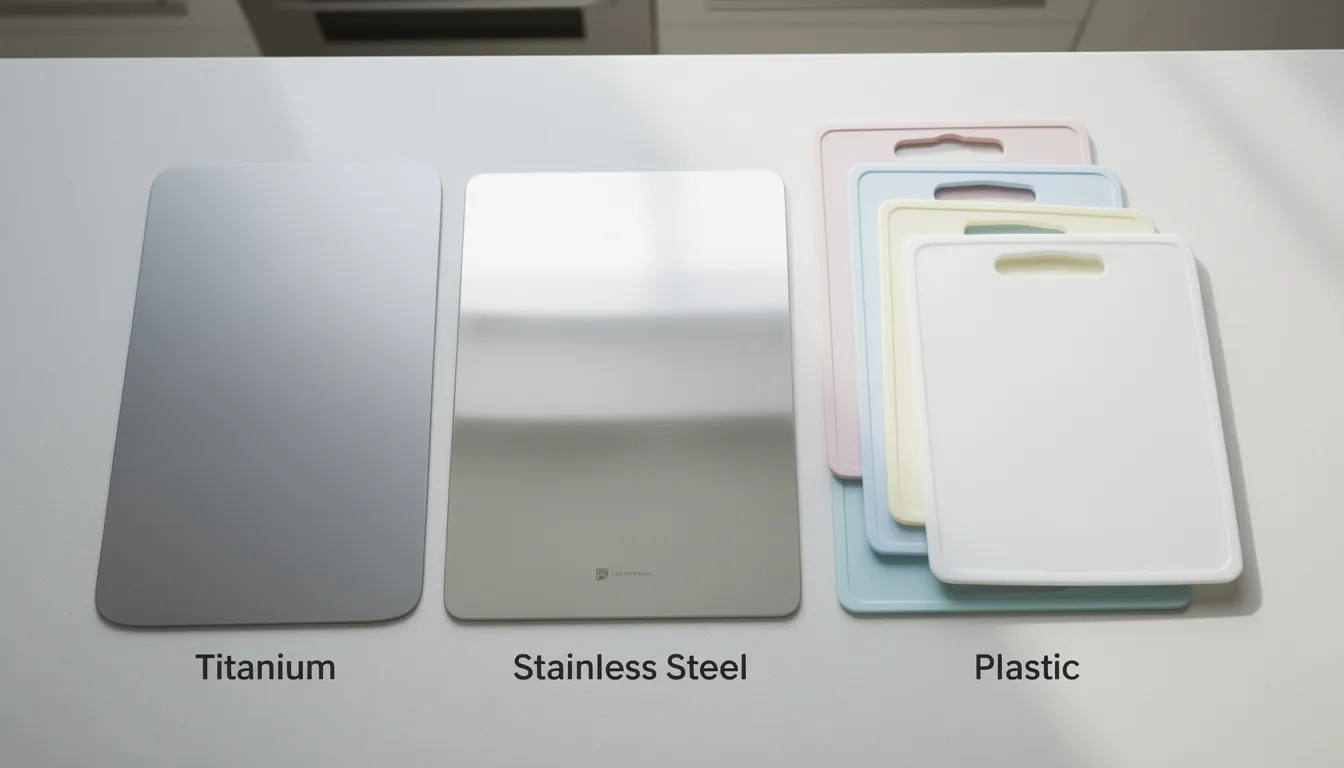
Common substitute materials include stainless steel, aluminum alloys, and titanium-plated surfaces over other metals. These alternatives lack titanium’s unique combination of properties and may actually damage knives more severely than advertised.
Price Indicators
Price indicators provide the first screening tool. Authentic titanium cutting boards typically cost several hundred dollars due to the material’s high production costs and specialized manufacturing requirements. If you have paid a significantly lower price, it is likely not a genuine pure titanium board—investing in authentic titanium means paying more for quality and long-term durability compared to cheaper steel options. Boards priced significantly below $200 should raise suspicion about material authenticity.
Testing Methods
Testing methods for verification include magnetic testing (titanium is non-magnetic while steel alternatives are magnetic), weight assessment (titanium has a distinctive density), and professional materials analysis for definitive confirmation.
Manufacturer Reputation
Manufacturer reputation matters significantly in this specialized market. Established brands with transparent material certifications and detailed specifications provide more reliable authenticity than unknown sellers making vague claims about titanium content.
Performance differences between authentic and fake boards become apparent during use. Genuine titanium provides consistent cutting feel and appropriate knife wear patterns, while steel substitutes often dull knives faster and show different wear characteristics.
Fake titanium boards may also lack the superior corrosion resistance and chemical inertness that make authentic titanium valuable for food safety. Steel alternatives can react with acidic foods and may require different maintenance approaches.
Durability and Knife Impact Considerations
Titanium’s hardness creates a complex relationship with knife performance that affects both blade longevity and cutting experience. Understanding these interactions helps users set appropriate expectations and maintenance routines.
Knife edge retention suffers compared to softer cutting surfaces. Titanium’s hardness, while less abrasive than glass or ceramic, still exceeds that of wood and plastic significantly. Professional chefs report needing more frequent knife sharpening when using titanium boards exclusively.
Cutting technique adaptations can minimize knife wear while preserving the benefits of titanium surfaces. Using proper slicing motions rather than chopping, maintaining sharp blades, and avoiding excessive downward pressure reduces wear on both the knife and board.
Long-term cost analysis must account for increased knife maintenance when evaluating titanium boards. While the boards themselves last decades without replacement, the additional sharpening costs and potential for shortened knife life affect total ownership economics.
Professional chef experiences vary based on kitchen practices and knife quality. High-end kitchens often accept increased maintenance costs for titanium’s hygiene benefits, while home cooks may find the knife wear unacceptable depending on their blade investment and usage patterns.
Maintenance Requirements
Board maintenance requirements remain minimal compared to other premium materials. Unlike wood boards requiring periodic oiling or plastic boards needing frequent replacement, titanium boards need only standard cleaning and occasional polishing to maintain appearance.
The non-porous nature eliminates concerns about deep cleaning, bacterial harborage, or flavor transfer that affect other materials. This durability advantage often justifies the initial cost for users prioritizing long-term hygiene and performance.
Final Safety Verdict: Plastic vs Titanium Cutting Boards
Based on comprehensive analysis of health, safety, and performance factors, titanium cutting boards offer superior safety profiles compared to plastic alternatives, though with important practical considerations that affect their suitability for different users. You can expect titanium boards to provide long-term durability and hygiene, but also to require some adjustment in knife maintenance compared to softer surfaces.
Health risk assessment favors titanium decisively. The elimination of microplastic shedding, chemical leaching, and persistent organic pollutants represents a significant advantage for consumers concerned about long-term dietary exposure. While titanium boards do generate trace particles, these consist of biocompatible materials with established safety profiles rather than potentially harmful synthetic polymers.
Environmental impact considerations support titanium for users prioritizing sustainability. Plastic cutting boards require regular replacement and contribute to microplastic pollution throughout their lifecycle. Titanium boards last decades and are fully recyclable, and in Australia, they can be processed and disposed of in accordance with local recycling standards. Although the energy-intensive production process creates substantial upfront environmental costs, the long lifespan and recyclability of titanium boards help offset this impact.
Titanium cutting boards are lightweight, making them easy to handle, wash, and store. Features such as an integrated handle make it easy to hold and maneuver the board, while a juice groove is effective for collecting liquids from meats or juicy fruits, simplifying cleanup. The stability of titanium boards also means they resist sliding during use, providing a secure surface for slicing a variety of foods.
Cost-benefit analysis depends heavily on individual priorities and usage patterns. For health-conscious consumers willing to invest in premium kitchen equipment and accept increased knife maintenance, titanium boards provide clear advantages. Budget-conscious users or those prioritizing knife longevity may find plastic boards more practical despite their health trade-offs. For wooden boards, you can expect to sand the surface occasionally to remove scratches and restore appearance.
Recommended use cases for titanium include:
-
Health-conscious households concerned about microplastic exposure
-
Professional kitchens prioritizing hygiene and easy sanitization
-
Users willing to invest in long-term durability over upfront costs
-
Situations requiring chemical resistance and high-temperature cleaning
Plastic boards remain practical for:
-
Budget-conscious consumers prioritizing immediate affordability
-
Users with expensive knife collections requiring gentle cutting surfaces
-
Households where frequent board replacement is acceptable
-
Situations where board weight and storage matter significantly
The scientific evidence strongly supports titanium’s safety advantages, making it the preferred choice for consumers able to accommodate its practical limitations and higher initial cost.
Frequently Asked Questions
Are titanium cutting boards worth the high price compared to plastic alternatives?
For health-conscious consumers, the investment often justifies itself through eliminated microplastic exposure, superior hygiene, and decades-long durability. The key consideration is whether you’re willing to accept increased knife maintenance costs and can afford the substantial upfront investment. Professional kitchens and households prioritizing food safety typically find the benefits outweigh the costs.
Can titanium cutting boards be safely cleaned in the dishwasher without damage?
Yes, titanium cutting boards excel in dishwasher cleaning due to their exceptional heat and chemical resistance. Unlike wood boards that warp or plastic boards that may degrade under high temperatures, titanium maintains its properties and appearance through repeated high-temperature wash cycles. This dishwasher compatibility actually enhances their hygiene advantages.
How long do titanium cutting boards typically last with regular kitchen use?
With proper care, authentic titanium cutting boards can last several decades without requiring replacement. While they develop cosmetic scratches over time, their structural integrity and non-porous properties remain intact throughout their lifespan. This durability contrasts sharply with plastic boards that typically need replacement every few years due to deep knife scars and hygiene concerns.
Do titanium cutting boards require special maintenance or seasoning like wood boards?
No special maintenance is required beyond standard cleaning practices. Unlike wooden cutting boards that need regular oiling and careful drying, or plastic boards that may require sanitizing treatments, titanium boards need only washing with standard dish soap and water. Their chemical resistance allows the use of stronger sanitizers when needed without board degradation.
Are there any foods that should not be cut on titanium surfaces?
Titanium’s chemical inertness makes it safe for all food types, including highly acidic items like citrus fruits and tomatoes that can react with some other materials. However, extremely hard items like bones or frozen foods should be avoided not because of safety concerns, but to prevent unnecessary stress on both the board surface and your knives that could accelerate wear on both.