

Australia's pristine waters yield some of the world's most succulent and flavourful scallops. From the robust King Scallops of the Bass Strait to the sweet, delicate varieties from Western Australia, our local seafood is a chef's dream. But you don't need a professional kitchen to create stunning scallop dishes. This guide unlocks eight diverse australian scallop recipes that celebrate native ingredients, regional specialties, and modern culinary techniques, transforming your home cooking.
We'll show you how to prepare everything from a simple, elegant crudo featuring native finger limes to a rich, comforting gratin perfect for a special occasion. Each recipe provides clear, step-by-step instructions, ensuring you can confidently handle this premium ingredient. A key to success with delicate seafood is preparation. Using a hygienic, non-porous surface is crucial for food safety, preventing bacterial growth and ensuring the pure, sweet flavour of the scallop isn't tainted by residual odours.
This curated collection moves beyond basic pan-searing, introducing you to methods like ceviche, stir-frying, and classic thermidor. To truly celebrate these diverse flavours, consider enhancing your meals by exploring the art of pairing fresh seafood with South Australian white wines, which can beautifully complement the delicate sweetness of the scallops. Prepare to elevate your culinary skills and master the art of Australian scallops.
1. Sydney Rock Oyster & King Scallop Gratin
This decadent dish elevates Australian seafood to a new level of luxury, combining the briny intensity of Sydney rock oysters with the sweet, delicate flavour of king scallops. Baked in a rich, creamy gratin with a classic beurre blanc sauce and a crisp breadcrumb topping, it’s a sophisticated starter or main course that truly impresses. The success of this recipe hinges on the quality of its hero ingredients and the precision of its preparation.
This is one of those classic Australian scallop recipes where technique is just as important as the ingredients themselves. The delicate nature of both scallops and oysters demands careful handling to preserve their texture and moisture.
Ingredients
- 12 large king scallops, roe on or off, as preferred
- 12 fresh Sydney rock oysters, shucked
- 125 ml dry white wine
- 1 eschalot, finely diced
- 125 ml thickened cream
- 150g unsalted butter, cubed and chilled
- 1 tbsp fresh chives, finely chopped
- 1 tbsp fresh parsley, finely chopped
- 50g panko breadcrumbs
- 30g Parmesan cheese, finely grated
- Salt and freshly ground black pepper
- Lemon wedges, to serve
Preparation and Cooking Instructions
- Prepare the Seafood: Gently pat the scallops completely dry with a paper towel. For clean, precise cuts that don’t tear the delicate flesh, use a sharp knife on a hygienic surface like a titanium cutting board. This ensures the scallops retain their moisture and sear beautifully.
- Make the Beurre Blanc: In a small saucepan, combine the white wine and diced eschalot. Simmer over medium heat until the liquid has reduced by two-thirds. Lower the heat and whisk in the thickened cream. Gradually add the chilled butter cubes, whisking continuously until the sauce is smooth and emulsified. Do not let it boil. Season with salt and pepper, then stir through the fresh herbs.
- Assemble the Gratin: Preheat your oven's broiler (grill) to high. Arrange the shucked oysters and scallops in individual oven-safe dishes or a large gratin dish.
- Sauce and Top: Spoon the warm beurre blanc sauce evenly over the seafood. In a small bowl, mix the panko breadcrumbs and grated Parmesan, then sprinkle this mixture over the top.
- Broil to Perfection: Place the dish under the broiler for 3-5 minutes, or until the top is golden brown and bubbling. For dishes like this, mastering broiler techniques is crucial for achieving that perfect, crisp finish without overcooking the delicate seafood underneath.
- Serve Immediately: Garnish with extra herbs and serve with fresh lemon wedges on the side.
2. Pan-Seared King Scallops with Native Finger Limes
This contemporary recipe celebrates the unique flavours of Australia by pairing perfectly seared king scallops with vibrant native ingredients. The dish features the zesty pop of finger lime caviar, a rich bush tomato coulis, and the crunchy texture of a macadamia nut brittle. It's a modern, elegant preparation that showcases the best of local produce, turning a simple pan-sear into a gourmet experience.
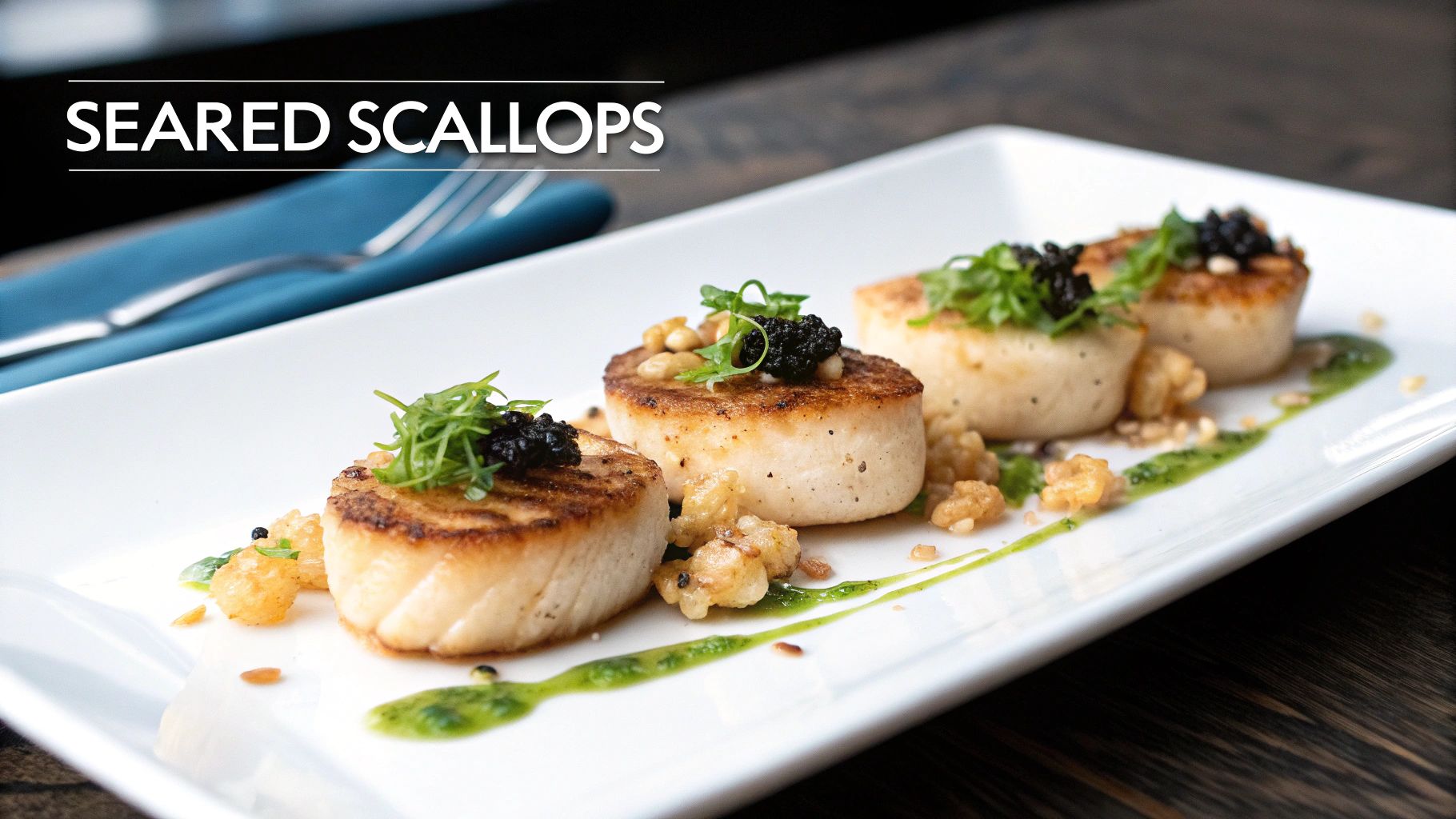
As one of the more modern Australian scallop recipes, its success lies in precision and the quality of the ingredients. The simplicity of searing scallops means there is nowhere to hide, demanding careful preparation of each component to create a balanced and memorable dish.
Ingredients
- 12 large king scallops, roe removed
- 1 tbsp olive oil
- 2 native finger limes
- For the Coulis: 100g dried bush tomatoes, 1 garlic clove, 50ml water
- For the Brittle: 50g macadamia nuts (coarsely chopped), 100g caster sugar, 25ml water
- Salt and freshly ground black pepper
- Micro herbs, to garnish
Preparation and Cooking Instructions
- Prepare the Coulis and Brittle: First, rehydrate the bush tomatoes in warm water, then blend with garlic and a little water until smooth. For the brittle, dissolve sugar in water in a saucepan over medium heat, then simmer until it turns a golden caramel colour. Stir in the macadamia nuts and pour onto a lined baking sheet to cool and harden.
- Prepare Native Ingredients: Squeeze the finger limes to release the 'caviar' pearls into a small bowl. For precise preparation of these delicate ingredients without flavour transfer, use a hygienic surface like a titanium cutting board. This ensures the distinct taste profiles of the native elements remain pure.
- Dry the Scallops: Thoroughly pat the scallops dry with a paper towel. This step is critical for achieving a perfect golden-brown crust. Any surface moisture will cause the scallops to steam rather than sear.
- Sear the Scallops: Heat olive oil in a heavy-based frying pan over high heat until it shimmers. Carefully place the scallops in the pan, ensuring they are not crowded. Cook for 90 seconds per side until they have a deep golden crust and are just opaque in the centre.
- Assemble and Serve: Spoon the bush tomato coulis onto plates. Arrange the seared scallops on top, then garnish with the finger lime caviar, crushed macadamia brittle, and micro herbs. Serve immediately to enjoy the contrast of temperatures and textures.
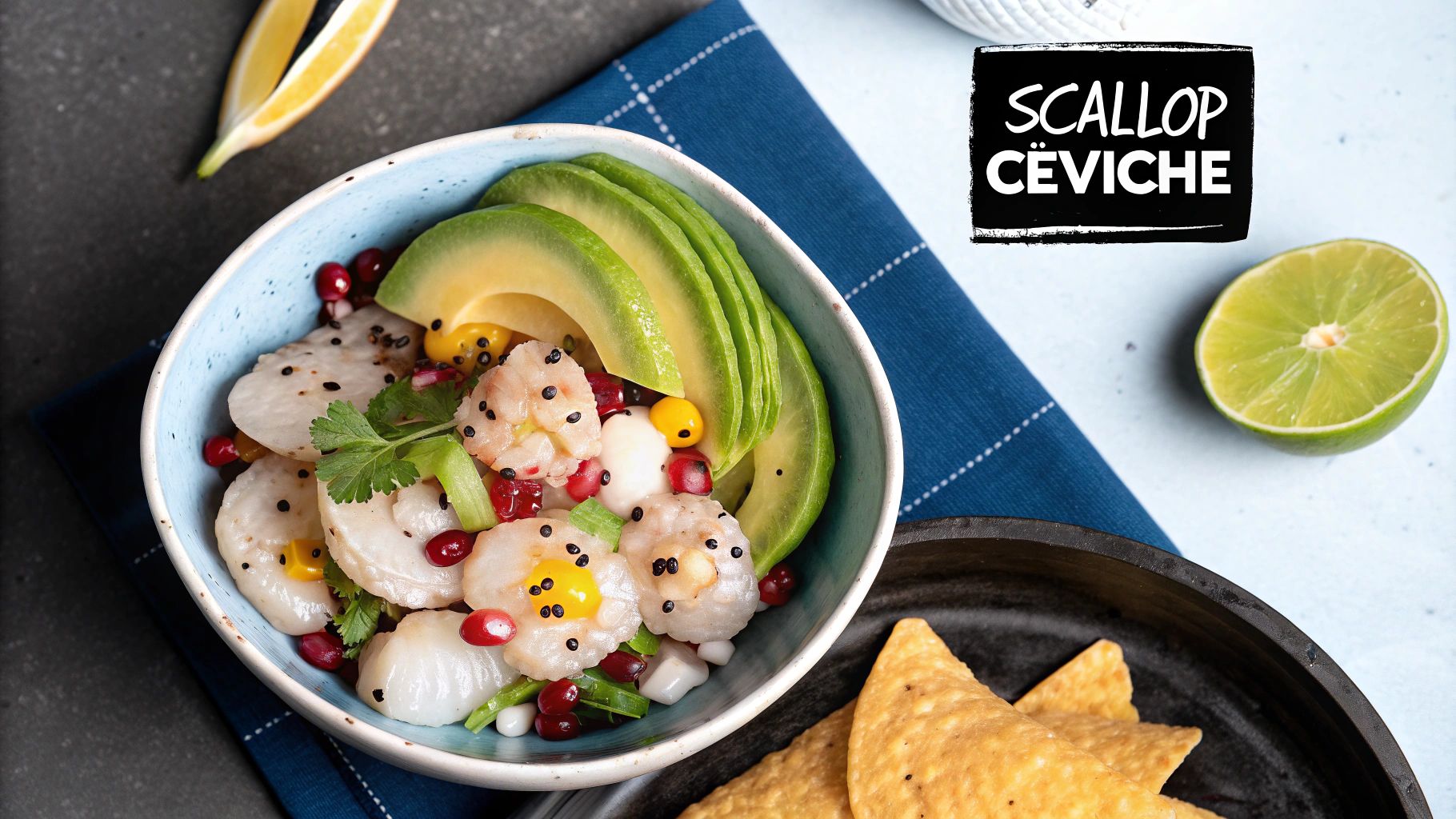
3. Great Australian Bight Scallop Ceviche
This vibrant, refreshing dish showcases the pristine quality of scallops from the Great Australian Bight in their purest form. Cured in zesty citrus juice rather than cooked with heat, this ceviche is a contemporary take on a classic, infused with Australian native pepperberry, creamy avocado, and served with crispy wontons for texture. The success of this recipe relies entirely on the freshness of the scallops and the precision of the knife work.
As one of the most elegant no-cook Australian scallop recipes, ceviche demands meticulous attention to hygiene and preparation. The acid from the citrus "cooks" the scallop protein, so achieving delicate, paper-thin slices is essential for a tender, melt-in-your-mouth texture.
Ingredients
- 12 large Great Australian Bight scallops, roe off, muscle removed
- 125 ml fresh lime juice (approx. 4-5 limes)
- 60 ml fresh lemon juice (approx. 1-2 lemons)
- 1 small red onion, very finely sliced
- 1 red chilli, deseeded and finely diced
- 1 ripe avocado, diced
- 1/2 tsp ground native pepperberry
- 1 tbsp fresh coriander, chopped
- Salt to taste
- Crispy wonton strips or corn tortillas, to serve
Preparation and Cooking Instructions
- Prepare the Scallops: For food safety and precision, use a hygienic surface like a titanium cutting board, which can be chilled beforehand to keep the scallops cold. Pat the scallops completely dry. Using an extremely sharp knife, slice each scallop horizontally into 3-4 paper-thin rounds.
- Cure the Scallops: Place the sliced scallops in a non-reactive glass or ceramic bowl. Pour over the fresh lime and lemon juice, ensuring all slices are submerged. The acid will begin to turn the scallops opaque.
- Marinate: Add the finely sliced red onion, diced chilli, and ground native pepperberry to the bowl. Gently stir to combine, then cover and refrigerate for 15-20 minutes. The scallops should be opaque but still tender; do not over-cure, or they will become tough.
- Assemble the Ceviche: Once cured, gently drain off about half of the citrus marinade. Fold in the diced avocado and fresh coriander. Season with salt to your preference.
- Serve Immediately: Spoon the ceviche into chilled bowls or glasses. Serve immediately with crispy wonton strips on the side for scooping. Assembling just before serving is key to preventing the avocado from browning and the wontons from going soggy.
4. Moreton Bay Bugs & Scallop Thermidor
This recipe is a uniquely Australian take on a French culinary classic, pairing the sweet, succulent meat of Moreton Bay bugs with plump, tender scallops. The seafood is enveloped in a rich thermidor sauce- a creamy concoction traditionally featuring egg yolks, brandy, and mustard- then returned to the bug shells and grilled until golden. It’s a dish of pure indulgence that showcases some of Queensland's most prized seafood.
As one of the more complex Australian scallop recipes, this dish demands precision and careful handling of multiple high-quality proteins. Success lies in balancing the rich sauce with the delicate flavour of the seafood and achieving that perfect gratinéed finish.
Ingredients
- 4 large Moreton Bay bugs
- 12 large scallops, roe removed, cut into bite-sized pieces
- 60g unsalted butter
- 2 eschalots, finely chopped
- 30g plain flour
- 300ml full-cream milk, warmed
- 100ml thickened cream
- 2 tbsp Dijon mustard
- 1 tbsp brandy or dry sherry
- 2 egg yolks
- 50g Gruyère or Parmesan cheese, grated
- 2 tbsp fresh tarragon or parsley, chopped
- Salt and white pepper, to taste
- Lemon wedges, to serve
Preparation and Cooking Instructions
- Prepare the Moreton Bay Bugs: First, humanely dispatch the bugs. Using a sharp, heavy knife on a hygienic surface like a titanium cutting board, split them lengthwise. The board's non-porous nature is crucial for food safety when handling multiple proteins. Carefully remove the meat from the tail and claws, chop it into chunks, and set aside. Clean the shells thoroughly, as they will be used for serving.
- Sauté the Seafood: In a large pan over medium-high heat, melt half the butter. Lightly sauté the bug meat and scallop pieces for 1-2 minutes until just opaque. Do not overcook. Remove from the pan and set aside.
- Make the Thermidor Sauce: In the same pan, melt the remaining butter. Sauté the eschalots until soft. Stir in the flour to create a roux and cook for one minute. Gradually whisk in the warm milk until the sauce is smooth, then add the cream, mustard, and brandy. Simmer gently for 5 minutes until it thickens.
- Finish and Assemble: Remove the sauce from the heat and let it cool slightly before whisking in the egg yolks. Return the cooked seafood and fresh herbs to the sauce, stirring gently to combine. Season with salt and white pepper.
- Grill to Perfection: Preheat your oven's grill (broiler) to high. Spoon the mixture back into the reserved bug shells and sprinkle the grated cheese over the top. Place under the grill for 3-5 minutes, or until the top is bubbling and golden-brown.
- Serve Immediately: Garnish with extra herbs and serve hot with lemon wedges for squeezing over.
5. Tasmanian Scallop & Kelp Noodle Stir-Fry
This modern Asian-fusion dish celebrates Tasmania's pristine marine environment, pairing plump, sweet scallops with the unique texture of locally-foraged kelp noodles. Wok-tossed with shiitake mushrooms and native mountain pepper in a light soy-ginger glaze, it’s a healthy, flavourful, and incredibly fast meal. This recipe is a fantastic example of contemporary Australian cooking, blending traditional Asian techniques with premium local ingredients.
The key to this vibrant stir-fry is speed and precision. High-heat wok cooking requires every component to be prepped and ready to go before you even turn on the stove, a practice known as mise en place. The focus is on retaining the scallop's delicate texture while achieving a perfect sear.
Ingredients
- 12 large Tasmanian scallops, roe off, muscle removed
- 200g kelp noodles, rinsed and drained
- 150g shiitake mushrooms, thinly sliced
- 1 red capsicum, thinly sliced
- 1 small brown onion, thinly sliced
- 2 cloves garlic, minced
- 1 tbsp fresh ginger, grated
- 2 spring onions, sliced diagonally
- 1 tsp native mountain pepper (or substitute with black pepper)
- 2 tbsp soy sauce or tamari
- 1 tbsp rice wine vinegar
- 1 tsp sesame oil
- 2 tbsp grapeseed oil or other high-smoke point oil
Preparation and Cooking Instructions
- Prepare All Components: The success of a stir-fry lies in the prep work. Use a hygienic and sharp-knife-friendly surface like a titanium cutting board to thinly and uniformly slice the mushrooms, capsicum, and onion. This ensures everything cooks evenly and quickly in the wok. Pat the scallops completely dry on the board’s non-porous surface to guarantee a beautiful, golden-brown sear.
- Make the Sauce: In a small bowl, whisk together the soy sauce, rice wine vinegar, and sesame oil. Set aside.
- Sear the Scallops: Heat the grapeseed oil in a wok or large frying pan over high heat until it shimmers. Carefully add the scallops in a single layer, ensuring not to overcrowd the pan. Sear for 60-90 seconds per side until caramelised but still translucent in the centre. Remove from the wok and set aside.
- Stir-Fry Vegetables: Add the onion, capsicum, and shiitake mushrooms to the hot wok. Stir-fry for 2-3 minutes until they begin to soften. Add the minced garlic and grated ginger, cooking for another 30 seconds until fragrant.
- Combine and Serve: Add the rinsed kelp noodles and the prepared sauce to the wok, tossing everything together for 1 minute to heat through. Return the seared scallops to the wok, along with the spring onions and native mountain pepper. Toss gently to combine for just 30 seconds. Perfecting the timing and heat is central to a great result, and you can master the art of seafood stir-frying to elevate dishes like this.
- Serve Immediately: Divide the stir-fry among bowls and serve straight away while it’s hot and the scallops are tender.
6. South Australian Scallop & Finger Lime Crudo
This ultra-minimalist raw preparation celebrates the pristine quality of South Australian hand-dived scallops. Sliced paper-thin and elegantly dressed, this crudo showcases the scallop's natural sweetness, enhanced by premium extra-virgin olive oil, the zesty burst of native finger lime, a sprinkle of fleur de sel, and the subtle heat of cracked native pepperberry. It is the pinnacle of ingredient-focused cuisine.
This is one of those Australian scallop recipes where the final result is determined entirely by the quality of the ingredients and the precision of the technique. With no heat applied, the dish relies on exceptional knife skills and absolute cleanliness to let the pure, delicate flavours of the seafood shine. Every element must be perfect.
Ingredients
- 6-8 large, sashimi-grade South Australian scallops, roe removed
- 1 tbsp premium extra-virgin olive oil
- 1 native finger lime
- Fleur de sel (or high-quality sea salt flakes)
- 1 tsp native Tasmanian pepperberries, lightly cracked
- Micro herbs or edible flowers, for garnish (optional)
Preparation and Cooking Instructions
- Chill the Equipment: Place your scallops and a clean, non-porous cutting board in the refrigerator for at least 15-20 minutes before slicing. Chilling the scallops helps firm the flesh, making it easier to achieve paper-thin slices.
- Prepare the Dressing: Squeeze the finger lime to release the individual citrus "pearls" into a small bowl. Add the extra-virgin olive oil and a tiny pinch of fleur de sel, then gently stir to combine.
- Slice the Scallops: Place a chilled scallop on the cutting board. Using a very sharp, long-bladed knife, slice the scallop horizontally into thin rounds. Aim for one smooth, clean motion for each slice to avoid tearing the delicate flesh.
- Plate with Precision: Immediately arrange the sliced scallops on chilled plates, slightly overlapping them in a circular or fanned pattern. This must be done quickly to maintain their freshness and prevent oxidation.
- Garnish and Serve: Delicately spoon the finger lime and olive oil mixture over the scallops. Sprinkle with a few flakes of fleur de sel and the cracked pepperberry. Add a few micro herbs for a touch of colour if desired.
- Serve Immediately: This dish is best enjoyed the moment it is prepared to appreciate the pure, fresh flavour and delicate texture of the scallops.
7. Melbourne Bay Scallop Croquettes with Lemon Myrtle Aioli
This contemporary recipe transforms the delicate Melbourne Bay scallop into a sophisticated comfort food. By mincing the sweet scallop meat with potato and fragrant native lemon myrtle, then shallow-frying to a perfect golden-brown, this dish offers a delightful textural contrast. Served with a zesty aioli, these croquettes are an approachable yet elegant starter or canapé that highlights premium Australian ingredients in a creative format.
The success of these croquettes, a unique entry among Australian scallop recipes, depends on careful preparation. Achieving a consistent texture in the filling and ensuring the croquettes hold their shape during cooking are the key challenges, demanding precision and a gentle touch.
Ingredients
- 500g fresh Melbourne Bay scallops, tough muscle removed
- 2 medium potatoes (e.g., Desiree or King Edward), peeled and boiled until tender
- 1 tbsp fresh chives, finely chopped
- 1 tsp ground lemon myrtle
- Salt and freshly ground black pepper
- 100g plain flour, for dusting
- 2 large eggs, lightly beaten
- 150g panko breadcrumbs
- Vegetable oil, for shallow frying
- For the Aioli:
- 2 egg yolks
- 1 clove garlic, crushed
- 1 tsp Dijon mustard
- 250 ml light olive oil
- Juice of 1 lemon
- 1/2 tsp ground lemon myrtle
Preparation and Cooking Instructions
- Prepare the Filling: Mash the boiled potatoes until smooth and set aside to cool completely. Finely mince the scallops. For the most consistent texture without tearing the delicate fibres, use a very sharp knife on a hygienic surface like a titanium cutting board, which prevents the mixture from sticking.
- Combine and Chill: In a large bowl, gently combine the minced scallops, cooled mashed potato, chives, and 1 teaspoon of ground lemon myrtle. Season well with salt and pepper, being careful not to overwork the mixture. Cover and chill in the refrigerator for at least 2 hours to firm up.
- Shape the Croquettes: Set up a crumbing station with three shallow dishes: one with flour, one with beaten eggs, and one with panko breadcrumbs. Shape the chilled scallop mixture into small logs or balls of a consistent size for even cooking.
- Crumb and Fry: Dust each croquette in flour, dip in the egg wash, and then coat thoroughly in panko breadcrumbs. Heat vegetable oil in a frying pan over medium-high heat. Shallow-fry the croquettes in batches for 2-3 minutes per side, until golden and crisp. Drain on a wire rack.
- Make the Lemon Myrtle Aioli: While the croquettes cool slightly, whisk the egg yolks, garlic, and mustard. Slowly drizzle in the olive oil while whisking continuously until the mixture emulsifies and thickens. Stir in the lemon juice and 1/2 teaspoon of lemon myrtle. Season to taste.
- Serve Warm: Arrange the hot croquettes on a platter and serve immediately with the lemon myrtle aioli for dipping.
8. Western Australian Scallop Pasta with Wild Garlic & Chili
This rustic yet refined dish celebrates the pristine quality of Western Australian scallops with a minimalist approach. Seared scallops are tossed with al dente pasta, foraged wild garlic, fresh chili, and a high-quality olive oil, creating a light but intensely flavourful meal. The beauty of this recipe lies in its simplicity, where the sweet, buttery scallops are the undisputed star.
Quick preparation and precise timing are essential for this dish, ensuring the pasta is perfectly cooked and the scallops are seared to perfection without becoming tough. It's one of those elegant Australian scallop recipes that comes together in minutes but delivers a restaurant-quality experience, showcasing how exceptional ingredients need very little intervention.
Ingredients
- 12 large Western Australian scallops, roe off
- 300g dried linguine or spaghetti
- 4 cloves wild garlic (or 2 standard garlic cloves), very thinly sliced
- 1 long red chili, deseeded and finely sliced
- 60 ml extra virgin olive oil
- A small handful of fresh flat-leaf parsley, roughly chopped
- Juice of ½ a lemon
- Salt and freshly ground black pepper
- 50g Parmesan cheese, finely grated (optional, to serve)
Preparation and Cooking Instructions
- Prepare the Aromatics: Start by meticulously preparing your aromatics. Thinly slice the wild garlic and chili. Using a non-porous surface like a titanium cutting board is ideal here, as it won't absorb the potent garlic and chili odours, ensuring no flavour transfer to other foods.
- Cook the Pasta: Bring a large pot of salted water to a rolling boil. Add the pasta and cook according to packet directions until al dente. Just before draining, reserve about one cup of the starchy pasta water.
- Sear the Scallops: While the pasta cooks, pat the scallops completely dry. A dry surface is crucial for achieving a beautiful golden-brown crust. Heat half the olive oil in a large frying pan over high heat until shimmering. Add the scallops in a single layer, ensuring not to crowd the pan, and sear for 1-2 minutes per side until caramelised. Remove from the pan and set aside.
- Create the Sauce: Reduce the heat to medium-low. Add the remaining olive oil to the same pan, followed by the sliced garlic and chili. Sauté for about 30 seconds until fragrant, being careful not to let the garlic burn.
- Combine and Emulsify: Drain the pasta and immediately add it to the pan with the garlic and chili. Add the seared scallops, chopped parsley, and lemon juice. Toss everything together, adding a few tablespoons of the reserved pasta water to create a light, emulsified sauce that coats the pasta strands.
- Serve Immediately: Season with salt and pepper to taste. Divide the pasta among serving bowls and finish with an extra drizzle of olive oil and a sprinkle of grated Parmesan, if desired.
8 Australian Scallop Recipes Comparison
| Dish | Preparation Complexity 🔄 | Resource & Sourcing Requirements | Expected Outcome & Quality ⭐📊 | Ideal Use Cases | Key Advantages 💡 | Speed & Efficiency ⚡ |
|---|---|---|---|---|---|---|
| Sydney Rock Oyster & King Scallop Gratin | High — multi-stage (slicing, sauce, gratin) 🔄🔄🔄 | Premium oysters & scallops, white wine, gratin dishes; higher cost | Elegant, rich, high-quality finish ⭐⭐⭐⭐ 📊 | Fine dining, special-occasion starter or main | Showcases premium seafood; make-ahead finish; texture contrast 💡 | Moderate — 20–30 min prep; moderate oven time ⚡⚡ |
| Pan-Seared King Scallops with Native Finger Limes | Medium — precise searing and fine julienne 🔄🔄 | King scallops + specialty native ingredients (finger lime, macadamia); seasonal | Visually striking, ingredient-forward quality ⭐⭐⭐⭐ 📊 | Tasting menus, light mains, contemporary restaurants | Quick, ingredient-led, light and photogenic presentation 💡 | Very fast — 5–7 min cook time ⚡⚡⚡ |
| Great Australian Bight Scallop Ceviche | High — ultra-precise slicing and safe acid-curing 🔄🔄🔄 | Sushi-grade scallops, fresh citrus, strict sourcing for safety | Fresh, delicate, high-impact when handled correctly ⭐⭐⭐⭐ 📊 | Summer menus, raw seafood courses, outdoor entertaining | No cooking, make-ahead (short window), refreshing profile 💡 | Moderate — quick prep; 2–3 hr gentle cure possible ⚡⚡ |
| Moreton Bay Bugs & Scallop Thermidor | Very high — dual proteins, sauce development, butchery 🔄🔄🔄🔄 | Two premium proteins, complex sauce components; labor-intensive | Luxurious, deeply flavored, showpiece result ⭐⭐⭐⭐⭐ 📊 | Formal fine dining, special events, signature dishes | Impressive presentation; rich, layered flavors; make-ahead friendly 💡 | Low — many stages and timing coordination required ⚡ |
| Tasmanian Scallop & Kelp Noodle Stir-Fry | Medium — rapid prep, high-heat technique 🔄🔄🔄 | Tasmanian scallops, kelp noodles (specialty), wok; fresh produce | Light, balanced, sustainable-focused result ⭐⭐⭐⭐ 📊 | Weeknight entertaining, Asian-fusion menus, healthy options | Celebrates sustainable ingredients; quick hot-cook finish 💡 | Fast — 8–10 min cooking; prep-dependent ⚡⚡⚡ |
| South Australian Scallop & Finger Lime Crudo | Very high — paper-thin slicing; absolute hygiene 🔄🔄🔄🔄 | Hand-dived sushi-grade scallops, finger limes; highest cost & freshness | Ultra-pure, delicate, top-tier tasting quality ⭐⭐⭐⭐⭐ 📊 | Chef’s tastings, premium entertaining, immediate service | Pure ingredient focus; minimalism highlights provenance 💡 | Very fast to assemble but must serve immediately ⚡⚡ |
| Melbourne Bay Scallop Croquettes with Lemon Myrtle Aioli | Medium — mincing, chilling, shaping and frying 🔄🔄🔄 | Scallops + potato binder, breadcrumbs, frying equipment; moderate sourcing | Comforting, crowd-pleasing appetizer quality ⭐⭐⭐ 📊 | Casual entertaining, finger-food platters, outdoor events | Make-ahead friendly; approachable format; familiar flavors 💡 | Moderate — prep and chill time; frying quick ⚡⚡ |
| Western Australian Scallop Pasta with Wild Garlic & Chili | Low–Medium — quick sear and pasta timing 🔄🔄 | WA scallops, seasonal wild garlic, pantry staples; foraged items seasonal | Simple, flavorful, rustic result ⭐⭐⭐⭐ 📊 | Casual lunches/dinners, ingredient-led home cooking | Accessible to execute; highlights regional ingredients 💡 | Fast — under 20 min when prepped correctly ⚡⚡⚡ |
Your Next Steps to Scallop Perfection
You've journeyed through a culinary tour of Australia's coastlines, exploring eight distinct and delicious Australian scallop recipes. From the elegant simplicity of a South Australian Crudo to the comforting richness of a Moreton Bay Bug Thermidor, this collection showcases the incredible versatility of this prized seafood. We've seen how native ingredients like finger limes and lemon myrtle can elevate the scallop's natural sweetness, and how different cooking methods can transform its texture and flavour profile.
The true secret to success, woven through each recipe, is a deep respect for the core ingredient. Mastering these dishes isn't just about following steps; it's about understanding the delicate nature of the scallop and the importance of preserving its pure, oceanic taste. This begins with sourcing the freshest possible product and continues with meticulous, hygienic preparation in your kitchen.
Key Takeaways for Culinary Success
To ensure your next scallop dish is a triumph, remember these crucial principles:
- Freshness is Paramount: Always source your scallops from a trusted fishmonger. Look for firm, plump flesh with a sweet, briny aroma. Whether you're working with Tasmanian, Western Australian, or Melbourne Bay varieties, quality is non-negotiable.
- Preparation is Key: Proper cleaning and removal of the tough adductor muscle are essential for a perfect texture. A clean, non-porous preparation surface is vital to prevent flavour transfer and bacterial contamination, safeguarding the scallop's delicate essence.
- Master the Sear: For recipes like the Pan-Seared King Scallops, achieving a golden-brown crust without overcooking the interior is the ultimate goal. This requires a scorching hot pan, a high smoke point oil, and precise timing. Don't overcrowd the pan, and resist the urge to move the scallops until a crust has formed.
Putting It All into Practice
Your path to scallop perfection is now clear. The next step is to choose a recipe that excites you and head to your local market. Don't be afraid to experiment; perhaps you'll add a touch more chilli to the Western Australian pasta or try a different native citrus in the ceviche. The beauty of these Australian scallop recipes lies in their adaptability.
By embracing these techniques and prioritising quality, both in your ingredients and your kitchen tools, you are setting the stage for truly memorable culinary experiences. You're not just cooking; you're celebrating the pristine flavours of Australian seafood, creating dishes that are as impressive to serve as they are delightful to eat.
Ready to elevate your seafood preparation and guarantee a pure, untainted taste every time? The Everti Titanium Cutting Board provides the ultimate hygienic, non-reactive surface, ensuring your delicate scallops taste exactly as they should. Explore the collection and invest in a lifetime of culinary excellence at Everti.