

A good baking ware set is so much more than a jumble of pans in your cupboard. It’s the very foundation of successful, joyful baking – the kind that has you pulling golden-brown perfection out of the oven time and time again. Having a matched set means you’ve always got the right tool for the job, whether you’re whipping up a batch of simple cookies or tackling a multi-layered celebration cake.
Why the Right Bakeware Can Completely Change Your Baking Game
Let’s face it, the line between a show-stopping cake and a kitchen disaster is often thinner than we’d like. And more often than not, the culprit is our equipment. Baking is as much a science as it is an art, a delicate balance of temperature, time, and technique. A quality baking ware set is your trusted partner in this culinary dance, removing the guesswork and paving the way for brilliant results.
Think about it this way: trying to bake a delicate chiffon cake in a cheap, warped pan is like trying to paint a masterpiece with a toddler’s frayed paintbrush. You might have the skill and the vision, but the tool will let you down every single time. The right pans don’t just prevent frustration; they build your confidence, turning would-be baking fails into delicious wins.
The Science Behind a Truly Great Bake
A well-chosen set of bakeware isn’t just about having matching pans. It's about pure performance. High-quality materials are designed to conduct and distribute heat evenly, which is the secret to getting consistent results. No more brownies with rock-hard edges and a raw, gooey middle. No more scones that are perfectly golden on one side and stubbornly pale on the other. This reliability means you can finally trust your recipes and your oven.
Here’s what that looks like in your kitchen:
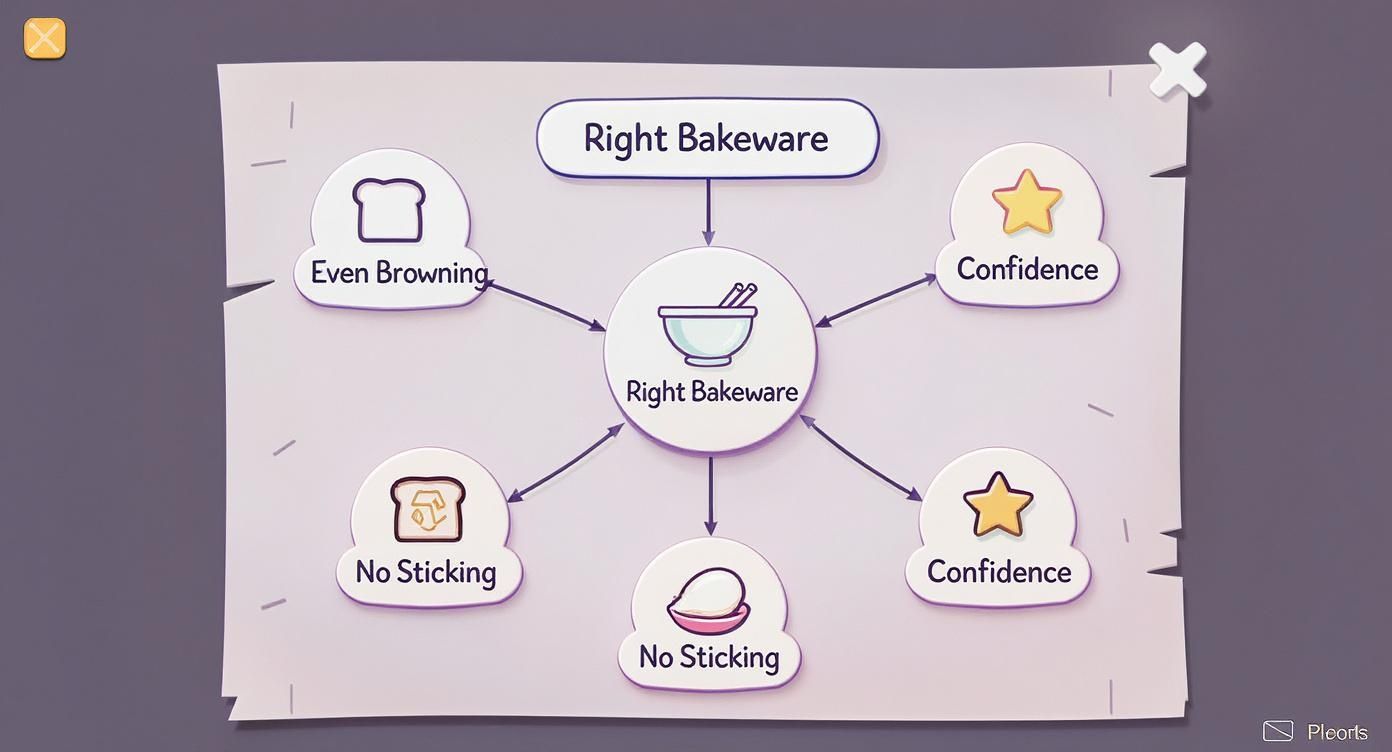
- Even Browning: Superior heat conduction means your creations get that perfect, uniform colour and a beautifully developed crust.
- Effortless Release: A quality surface, whether it’s a brilliant non-stick coating or well-seasoned metal, ensures your cakes, loaves, and muffins slide right out without a fight.
- Confidence to Experiment: When you know your tools won't let you down, you feel free to take on those more challenging recipes you've been eyeing.
A great baking ware set is a true investment in your passion. It becomes an extension of your own skills, helping you bring your culinary vision to life for friends and family to enjoy.
A Growing Passion in Aussie Kitchens
The simple joy of home baking is a trend that’s only getting stronger across Australia. This isn’t just a feeling; the numbers back it up. The Australian bakeware market is on a steep upward trajectory, projected to hit an incredible USD 122.41 billion by 2032. This boom shows just how much we’ve come to appreciate quality tools for our home and commercial kitchens. You can dive into the full report to see more on these market trends.
Ultimately, choosing the right set is your first step towards a kitchen that truly inspires you. To take it even further, it helps to understand how to create an effortlessly stylish and functional kitchen. When your space is well-organised and filled with tools you can count on, you’re not just baking – you’re creating wonderful, delicious memories.
Decoding Bakeware Materials: From Glass to Silicone
Have you ever pulled a batch of brownies from the oven, only to find the edges are tough as rocks while the centre is still a gooey mess? The problem might not be your recipe or your oven—it's probably the pan you used. The material of your baking ware set is a secret ingredient in its own right, and it has a massive impact on how heat travels, how evenly everything cooks, and the final texture of your creations.
Think of bakeware materials as different types of athletes. Some are sprinters, heating up in a flash. Others are marathon runners, holding a steady temperature for the long haul. Getting to know their unique strengths and weaknesses is the key to unlocking consistent, fantastic results every single time you bake.
This knowledge takes the guesswork out of baking. You’ll finally understand why your grandmother’s glass pie dish turns out a perfectly tender crust and why that dark metal pan gives your bread that irresistible golden-brown finish.
Ultimately, mastering your materials puts you in control. It turns baking from a game of chance into a reliable and rewarding skill.
Glass Bakeware: The Steady Insulator
Glass is a brilliant insulator, which is a fancy way of saying it heats up slowly but holds that heat incredibly well. This steady, gentle heat is perfect for bakes that need to cook right through to the middle without the outside burning, like casseroles, bread puddings, and bubbly fruit crumbles.
But its insulating power can be a double-edged sword. Glass doesn’t conduct heat as efficiently as metal, so you won’t get the same crisp, dark edges on things like brownies or cornbread. Also, a word of caution: glass is prone to thermal shock. Never, ever take a hot glass dish and put it on a cold, wet surface, or it could shatter.
Ceramic Bakeware: The Elegant All-Rounder
Just like glass, ceramic is a fantastic insulator that provides wonderfully even, consistent heat. It’s often the top choice for pies, tarts, and quiches because it bakes crusts gently, preventing them from over-browning before the filling is properly set.
Its naturally non-reactive surface is another bonus, as it won't give acidic ingredients like lemon or tomatoes a metallic taste. Plus, let's be honest, many ceramic dishes look beautiful enough to go straight from the oven to the dinner table. While they’re quite durable, they can chip or crack if dropped, so handle them with a bit more care than their metal cousins.
Choosing the right bakeware is all about matching the material's properties to what your recipe needs. A light, delicate cake requires a completely different approach—and a different pan—than a rustic, crusty loaf of bread.
Metal Bakeware: The Speedy Conductors
When we talk about metal bakeware, we’re entering the world of superior heat conduction. These materials heat up quickly and cool down just as fast, which gives you incredibly precise control over your baking.
- Aluminium: This is the most common bakeware material out there, and for good reason. It’s lightweight, affordable, and an amazing heat conductor, which means you get even rising and uniform browning. Look for anodised aluminium, which has been treated to be stronger, more durable, and resistant to corrosion.
- Stainless Steel: Known for being a true workhorse in the kitchen, stainless steel is incredibly durable and resistant to rust, warping, and corrosion. It doesn't conduct heat quite as evenly as aluminium on its own, so you'll often find high-quality stainless steel pans with an aluminium or copper core to get rid of hot spots. It's an excellent choice if you're looking to understand the basics of oven-safe cookware thanks to its sheer versatility.
The home baking boom in Australia has really driven the demand for better, more specialised pans. In fact, the bakery product manufacturing industry down under is projected to hit AUD 5.4 billion in revenue by 2025. This growth is partly fuelled by our love for artisanal and healthier breads like rye and whole-grain, which bake best in pans that offer top-notch heat conduction.
Silicone Bakeware: The Flexible Specialist
Silicone has carved out a pretty unique spot in the modern baker’s kitchen. Its biggest selling points are its amazing flexibility, non-stick surface, and how ridiculously easy it is to clean. Muffins, cakes, and other moulded goodies pop right out without a fight, and it can go from the freezer to the oven without a problem.
The trade-off? Silicone provides very little structure and is a poor heat conductor. That means you won't get any real browning or crisping on the outside of your bakes. It’s perfect for detailed novelty cakes or freezing desserts, but for anything that needs a golden, crispy crust, metal is still the undisputed champion.
Bakeware Material Performance at a Glance
Here’s a quick-reference table to help you compare the most common bakeware materials. Think of it as your cheat sheet for choosing the perfect pan for any recipe.
| Material | Heat Conduction | Best For | Key Consideration |
|---|---|---|---|
| Glass | Poor (Insulator) | Casseroles, bread puddings, crumbles | Prone to thermal shock; no crisp edges |
| Ceramic | Poor (Insulator) | Pies, quiches, tarts, lasagne | Even, gentle heating; can chip or crack |
| Aluminium | Excellent | Cakes, cookies, brownies, bread | Heats & cools quickly for even browning |
| Stainless Steel | Moderate | All-purpose roasting & baking | Extremely durable; may have hot spots |
| Silicone | Very Poor | Detailed cakes, muffins, frozen treats | Flexible & non-stick; no browning |
This breakdown should give you the confidence to pick the right tool for the job. Knowing whether you need a quick-heating conductor or a slow-and-steady insulator is the first step toward becoming a more intuitive and successful baker.
The Titanium Advantage in Modern Bakeware
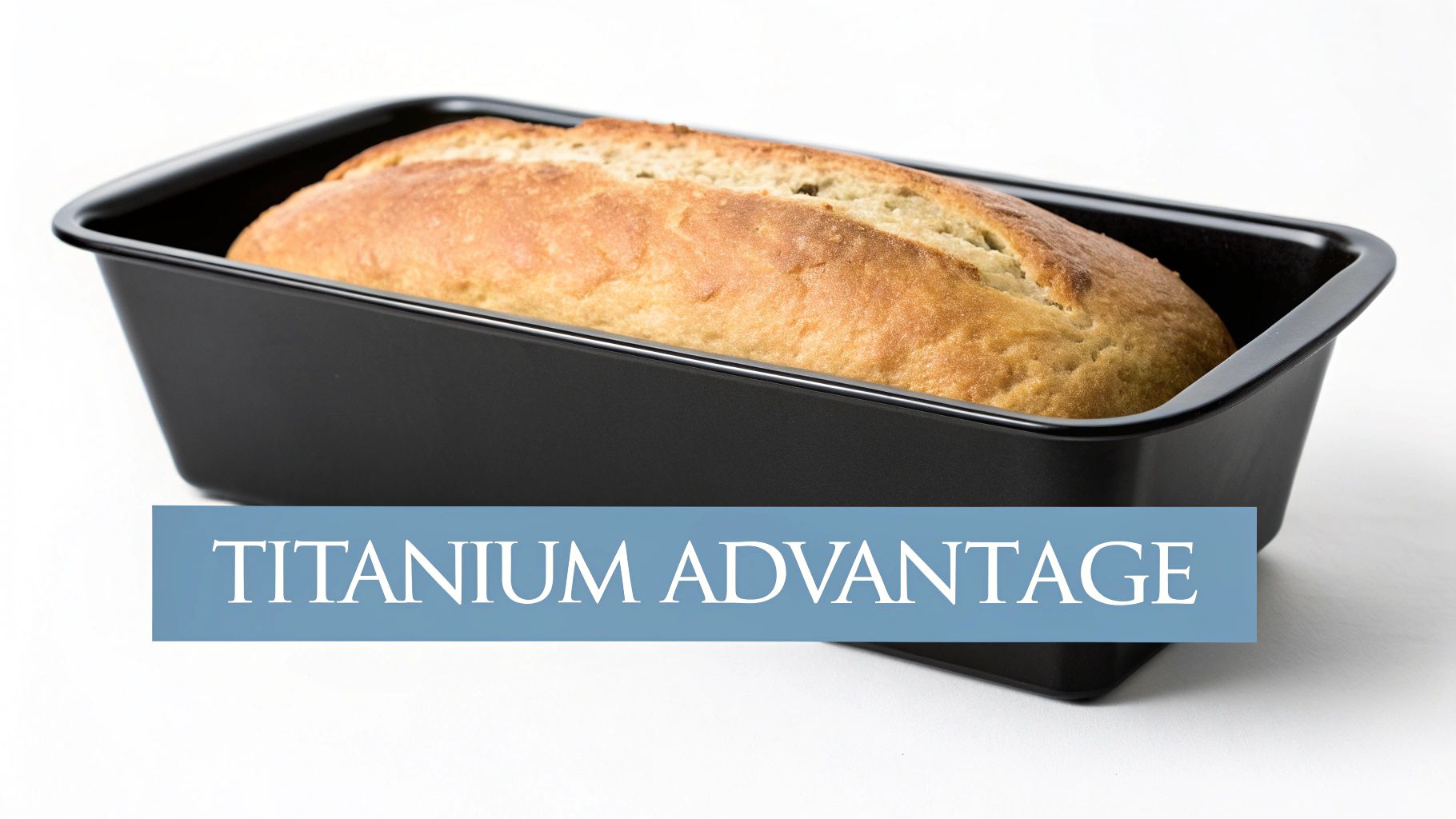
When you think about bakeware, materials like glass and aluminium probably spring to mind. They’re the old faithfuls. But there’s another player on the scene that’s changing the game for serious bakers: titanium. You might associate it with aerospace or high-tech gear, but its unique mix of strength, heat mastery, and purity makes it a standout choice in the kitchen.
Think of titanium as the ultimate upgrade for your baking ware set. It’s not just another metal; it’s in a completely different league, engineered for incredible longevity and flawless results. It directly tackles the most common frustrations bakers face, from wonky, uneven bakes to pans that scratch, warp, and wear out far too soon.
For anyone who values precision and wants bakeware that will last a lifetime, titanium isn't a fad. It’s a genuine investment in quality.
Unbeatable Durability and Strength
One of titanium’s most famous traits is its incredible strength-to-weight ratio. It’s much stronger than aluminium and even steel, yet it’s surprisingly light. What this means for your baking is simple: these pans are incredibly resistant to warping, denting, and all the knocks and bumps of a busy kitchen.
Just imagine never again having to wrestle with a baking sheet that twists and pops in a hot oven, or finding your favourite loaf pan has been dinged out of shape. Titanium bakeware is built to go the distance, holding its form and performing beautifully for decades.
This toughness also applies to its surface. Unlike traditional non-stick coatings that can get scratched up and start peeling away, pure titanium is naturally tough enough to handle metal utensils. Go ahead and slice your brownies right in the pan—you won't have to worry about ruining the surface.
Superior Heat Distribution for Perfect Bakes
While aluminium is a great heat conductor, titanium offers something even better: exceptionally even heat distribution. It gets up to temperature quickly, but more importantly, it gets rid of hot spots. This means the heat spreads uniformly across every square centimetre of the pan.
So, what does that actually mean for your baking?
- Golden, Uniform Crusts: Your bread will come out with a perfectly and consistently browned crust, with no burnt bottoms or pale, doughy tops.
- Evenly Cooked Cakes: Forget lopsided domes and undercooked centres. Your cakes and muffins will rise beautifully and bake through evenly.
- Perfectly Crisp Edges: From the centre right to the very edge, your cookies and scones will have that perfect, consistent texture in every single bite.
The precision you get from titanium’s heat control is what lets you achieve those professional-level results at home. It takes the guesswork out of baking, so you can trust your bakeware is working with you, not against you.
This incredible level of control is why so many culinary professionals are making the switch. You can take a deeper dive into what makes a high-quality titanium cookware set such a brilliant addition to any kitchen.
A Pure and Naturally Non-Stick Surface
Perhaps the most compelling reason to choose titanium is its purity. High-quality titanium bakeware is completely non-porous and non-reactive. This means it will never leach chemicals or leave a metallic taste in your food, even when you're baking with highly acidic ingredients like lemon or tomato.
This makes it an incredibly safe and healthy choice for your family. And unlike so many non-stick pans that rely on synthetic coatings, titanium offers a naturally slick surface. Food releases with ease, often with little to no oil, and cleanup is an absolute breeze. Best of all, this natural property won't degrade, peel, or chip away over time—it’s a permanent solution.
That purity also means it won't hang onto stubborn odours or flavours. The savoury garlic bread you made last night won't leave a ghost of its flavour behind in the delicate vanilla cake you bake today. Every creation gets a fresh, neutral start, just as it should. This powerful combination of durability, performance, and purity makes a titanium baking ware set a truly smart choice for any passionate home baker.
Building Your Essential Baking Ware Set
Walking into a kitchenware store can be dizzying. With so many pans, tins, and trays vying for your attention, it's easy to end up with a cupboard full of odd bits you barely touch. The secret to a truly useful baking ware set isn't about having everything; it's about having the right things.
A far better approach is to build a core foundation of versatile, high-quality essentials. Think of it as creating a capsule wardrobe for your kitchen. By starting with the workhorses, you guarantee every piece earns its place, saving you money and frustration in the long run.
The Must-Have Foundation Pieces
These are the absolute non-negotiables, the pans you'll reach for time and time again. If you’re just starting out or doing a major clear-out, these are the items to get first. They’ll see you through everything from weekend cookies to a classic birthday cake.
- Baking Sheets: Often called cookie sheets, these are the true MVPs. You'll use them for biscuits, scones, roasting veggies, and even just to slide under other tins to catch drips. Get at least two heavy-duty ones so you can have one batch in the oven while you prep the next.
- Round Cake Pans: A pair of 20cm or 23cm (8 or 9-inch) round pans are a must for layer cakes. Having two lets you bake both layers at the same time, which is key for getting a consistent texture.
- Rectangular Baking Pan: The classic 23x33cm (9x13-inch) pan is your go-to for traybakes, brownies, slices, and even savoury dishes like lasagne. It’s a real jack-of-all-trades.
- Loaf Pan: You can't make a proper banana bread, pound cake, or a simple homemade loaf without one. A standard 23x13cm (9x5-inch) pan is the perfect place to start.
- Muffin Pan: A standard 12-cup pan is essential for whipping up cupcakes and muffins, but it's also brilliant for savoury things like mini frittatas or individual meatloaves.
Expanding Your Baking Horizons
Once you've got the basics down pat, you can start to bring in a few more specialised pieces that open up a whole new world of baking. These are the fun additions that let you tackle more ambitious recipes and really flex your creative muscles.
A well-curated baking ware set grows with you. Start with the basics that build your confidence, then add specialised pieces as your skills and curiosity expand.
When you're ready to level up, think about adding these:
- Pie Dish: A 23cm (9-inch) pie dish is perfect for everything from a classic apple pie to a savoury quiche. Glass or ceramic are great choices here as they heat evenly.
- Square Baking Pan: An 20cm or 23cm (8 or 9-inch) square pan is brilliant for smaller batches of brownies or a simple cornbread.
- Bundt Pan: That iconic fluted shape instantly makes any cake look like a showstopper with zero extra effort.
- Springform Pan: If you dream of making perfect cheesecakes or delicate mousse cakes, you need a springform pan. Its removable sides are a lifesaver for anything too fragile to be flipped upside down.
Pre-Packaged Set vs Curating Your Own
So, should you buy a boxed baking ware set or build your own from scratch? There’s no single right answer—it really depends on you. A pre-packaged set can be fantastic value and is a simple way for new bakers to get everything they need with a consistent look and performance.
On the other hand, hand-picking each piece gives you total control. You can invest in a top-of-the-line cake pan while opting for a more basic loaf tin, choosing the best material and brand for every single task. This bespoke approach fits right in with how Australian home baking is evolving. The market for local bakery mixes, for example, is tipped to hit USD 1,693.9 million by 2035, fuelled by a love for everything from gluten-free to keto-friendly bakes that often need specific pans. You can find more details about these consumer trends and their impact on the market. Building your own set means you're always ready for whatever recipe next catches your eye.
Making Your Bakeware Last a Lifetime
A top-quality baking ware set is more than just a purchase; it's a real investment in your kitchen adventures. With just a little bit of care, these tools can serve you faithfully for years, even decades, turning out perfect results time and time again. Protecting that investment is easier than you might think, and it's the secret to making every bake as brilliant as the first.
It's a bit like looking after a car. You wouldn't just keep driving without ever changing the oil and expect the engine to purr along forever. In the same way, a few simple, consistent habits will keep your bakeware in peak condition, saving you from the classic headaches of food sticking, pans warping, and cakes cooking unevenly.
Gentle Cleaning for Every Material
When it comes to cleaning, the number one rule is to know your material. What works wonders for one type of pan can spell disaster for another, so understanding what you're working with is half the battle.
First things first: always let your bakeware cool down before washing it. Dunking a hot pan into a sink of cold water creates thermal shock, causing the metal to warp almost instantly. A little patience here goes a very long way.
- Non-Stick Surfaces: Step away from the steel wool! Abrasive scrubbers are the enemy of delicate non-stick coatings. Stick to a soft sponge or cloth with warm, soapy water.
- Stainless Steel & Aluminium: These are tougher, but you should still avoid overly aggressive scouring pads. For really baked-on grime, a simple paste of baking soda and water is a fantastic trick that won’t leave scratches.
- Glass & Ceramic: Most of the time, a good soak in warm, soapy water is all you need to lift off any stubborn bits. A non-scratch sponge can help with any trickier spots.
While plenty of modern pans claim to be dishwasher-safe, the harsh detergents can be tough on non-stick coatings and can dull the finish on shiny metal pans. We've put together a full guide on what makes pans truly dishwasher-safe if you want to dive deeper. For day-to-day care, handwashing is always the safest bet for extending the life of your gear.
Smart Storage and Utensil Habits
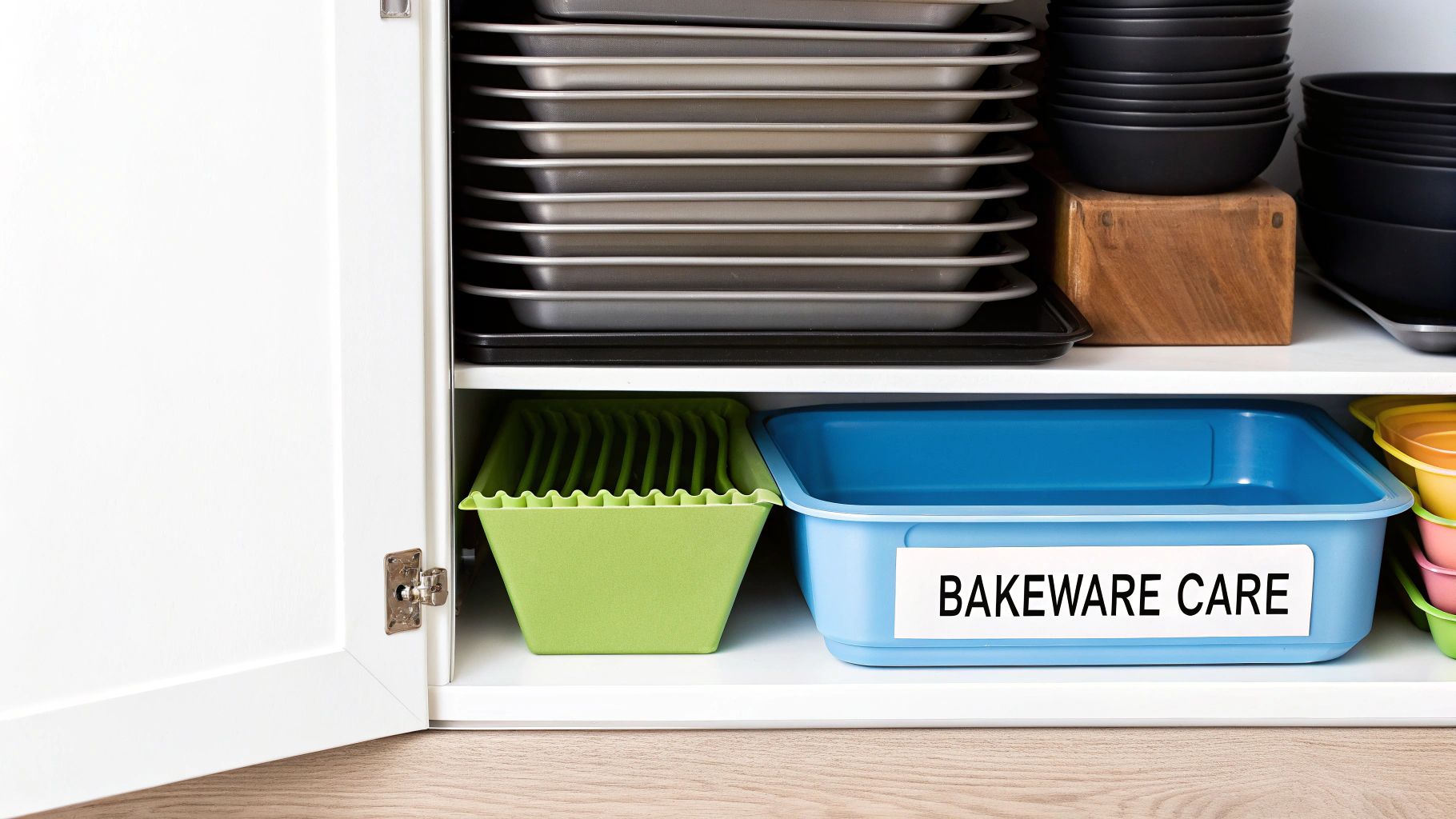
How you store your bakeware is just as critical as how you clean it. Piling pans directly on top of each other is the leading cause of scratches and dings, especially on those precious non-stick surfaces.
The fix is simple: just place a protective layer between each pan when you stack them. You don't need anything fancy—a paper towel, an old tea towel, or a felt pan protector works perfectly. This tiny step acts as a buffer and keeps your bakeware looking brand new.
Think about it this way: using metal utensils on a non-stick pan is like dragging your house keys across the side of your car. The damage is swift and usually permanent.
Always reach for wood, silicone, or nylon utensils when you're using non-stick or coated bakeware. These softer materials won't harm the surface and will dramatically prolong the pan's lifespan. Keep your metal spatulas and whisks for the heavy-duty stainless steel, glass, or pure titanium pieces that can take the heat.
Tackling Stubborn Baked-On Messes
Look, it happens to the best of us. You get distracted, and suddenly you're dealing with a seriously burnt-on mess. The trick is to deal with it gently, without resorting to brute force and scratching up the pan.
For those really stubborn, greasy disasters, fill the pan with warm water and a couple of drops of dish soap. Pop it on the stovetop and let it simmer gently for about 10–15 minutes. This little trick helps to soften and lift all that baked-on gunk, making it incredibly easy to wipe away with a sponge once it cools. It's a gentle but super-effective method that works for almost any material and keeps your baking ware set in top shape.
Got Questions About Baking Ware? We’ve Got Answers.
Even after you’ve done your homework on materials and decided which pieces you need, a few questions always seem to pop up. Think of this as your go-to guide for those final "what if" moments that can make all the difference between a good bake and a great one. Getting these sorted is the final step to baking with complete confidence.
Let's dive into some of the most common queries that come up when people are choosing and using their baking ware.
Should I Buy a Full Set or Piece by Piece?
This is the big one, and honestly, there’s no single right answer. It really comes down to where you are in your baking journey and what makes the most sense for your kitchen.
Buying a complete baking ware set is a brilliant move for anyone just starting out or setting up a new home. You get all the essentials in one hit, it’s usually great value for money, and everything matches—giving you consistent performance from pan to pan. No guesswork, no fuss.
On the other hand, curating your own collection piece by piece gives you ultimate control. This is the path for the baker who knows exactly what they want. You can invest in a heavy-gauge aluminium tray just for those perfectly crisp cookies, or a beautiful ceramic pie dish for its gentle, even heat. For experienced hands, building a custom set over time is often the smarter long-term play.
What Does “Non-Reactive” Bakeware Actually Mean?
You’ll see the term “non-reactive” thrown around a lot, and it’s a big deal when it comes to flavour. Simply put, materials like glass, ceramic, stainless steel, and pure titanium won’t have a chemical reaction with acidic ingredients.
So, why should you care? When you’re baking with things like lemons, tomatoes, vinegar, or even certain berries, reactive pans (like plain aluminium) can sometimes leach a tiny amount of metal into your food. It’s not harmful, but it can leave a faint, tinny aftertaste that gets in the way of the pure flavour you worked so hard to create.
For a zesty lemon slice or a rich tomato tart, a non-reactive pan is non-negotiable. It’s your guarantee that the only thing you’ll taste is your delicious creation, exactly as you intended.
How Do I Know When It’s Time to Replace My Old Non-Stick Pans?
Your non-stick bakeware puts in a lot of hard work, but it won’t last forever. The most obvious sign it’s time to say goodbye is when you can see physical damage. If the surface is deeply scratched, flaking, or peeling, that special coating is officially compromised.
Once the coating is damaged, its performance nosedives and food will start to stick. Another dead giveaway is warping. If your pan wobbles on the benchtop instead of sitting flat, it’s not going to heat evenly in the oven, and that’s a recipe for patchy, inconsistent bakes.
Stubborn, deep discolouration that just won't scrub off is another sign of old age. Ultimately, if your pan has lost its slick, easy-release magic and you find yourself needing more and more grease to stop things from sticking, its best days are over. A new pan won’t just make baking easier; it’s a better choice for food safety too.
Does the Colour of a Baking Pan Really Make a Difference?
It absolutely does. The colour of your pan has a direct and surprisingly big impact on your baking results. This isn’t about looks; it’s pure physics.
Dark-coloured metal pans are heat magnets—they absorb and radiate heat far more intensely than their lighter counterparts. This leads to faster baking and helps create those wonderfully dark, crispy crusts and edges. If you’re making a rustic loaf of bread or fudgy brownies with chewy edges, a dark pan is your best friend.
Light-coloured or shiny pans, on the other hand, act more like a mirror, reflecting a lot of the heat. This means they bake more gently and slowly, promoting a much more even browning. They're perfect for delicate cakes, sponges, or buttery shortbread where a dark, hard crust is the last thing you want.
Here’s a great rule of thumb: if a recipe calls for a light pan but you only have a dark one, try dropping the oven temperature by about 10°C. It’s also smart to start checking for doneness a few minutes earlier than the recipe says, just to make sure the bottom and sides don’t burn. Mastering this simple trick gives you a whole new level of control.
Ready to feel the difference that a pure, high-performance material can make in your kitchen? The Everti collection of titanium bakeware is engineered for a lifetime of flawless results. Explore our range and discover the ultimate upgrade for your passion.