

If you’re on the hunt for the best ceramic cooking pots, you’ll find that the top contenders all share two key traits: a non-toxic cooking surface and fantastic heat distribution. This combination is what delivers those consistently flavourful meals. Brands like GreenPan and Caraway are really setting the standard here, offering pots free from nasty chemicals like PFOA and PTFE, making them a healthier and smarter choice for any kitchen.
Why Ceramic Pots Are a Smart Choice for Modern Kitchens
The move towards ceramic cookware isn’t just some fleeting trend. It represents a real shift from home cooks who want to put health first without giving up on performance. Traditional non-stick pans have come under fire for potentially releasing chemicals at high temperatures, but ceramic surfaces are different. They’re made from natural sand and are completely inert, meaning nothing unwanted will leach into your food.
This makes them one of the best cookware choices for health, giving you genuine peace of mind with every dish you prepare.
This growing focus on safety is making a big impact on the market. In Australia alone, the cookware market hit a value of USD 664.44 million in 2024, and ceramic-coated pots are fast becoming the go-to for health-conscious households. It’s a change driven by people wanting to move away from older non-stick technologies, a sentiment that’s been echoed on popular cooking shows like MasterChef Australia. You can dig deeper into the growth of the Australian cookware market on IMARC Group.
Understanding the Two Types of Ceramic
When you start shopping for the best ceramic cooking pots, you'll quickly notice there are two main types. Getting to know the difference is crucial for picking the one that best suits the way you cook.
| Cookware Type | Core Material | Heat Distribution | Durability |
|---|---|---|---|
| 100% Ceramic | Solid Clay | Slower to heat, but holds that heat incredibly well. | More delicate; can chip or crack if dropped. |
| Ceramic-Coated | Metal (usually aluminium) | Heats up fast and spreads heat evenly. | Lighter and generally more resilient to knocks. |
The bottom line is pretty straightforward: 100% ceramic is brilliant for slow cooking and keeping things warm, while ceramic-coated pots are quicker, more responsive, and perfect for your day-to-day meals.
At the end of the day, both give you that fantastic non-toxic cooking surface. Ceramic-coated pots tend to be a more practical choice for daily use because they’re durable and heat up efficiently. On the other hand, solid ceramic pots are truly in a league of their own for jobs like baking bread or slow-roasting, where steady, retained heat is everything.
The Key Criteria for Evaluating Cookware Performance
When you're trying to find the best ceramic cooking pots, you need a clear set of standards. Let's cut through the marketing fluff and get down to what actually makes a pot perform in a real kitchen. Knowing what to look for lets you assess cookware like a pro, focusing on the practical details that make all the difference to your final dish.
The main things to consider are heat distribution, non-stick quality, long-term durability, and of course, material safety. Each of these plays a huge part in your day-to-day cooking, from avoiding burnt patches in your bolognese to making sure your investment lasts for years. Getting your head around these will help you see the true value in any pot you pick up.
Heat Distribution and Retention
Exceptional heat management is really the defining feature of high-quality cookware. A good pot needs to spread heat evenly across its base and up the sides to eliminate hot spots—those annoying areas that scorch delicate sauces or leave one side of your stir-fry undercooked. This is an area where ceramic pots often shine, giving you a consistent temperature and much better control over your cooking.
Good heat retention is just as important. It means the pot stays hot long after you've taken it off the stove. This is brilliant for keeping food warm while you plate up, but it also helps with energy efficiency. You can often turn the heat off a few minutes early and let the pot's residual warmth gently finish the cooking process.
A pot with superior heat retention can reduce cooking time for dishes like risotto by 15-20%, using less energy while delivering better, more consistent results.
Durability and Material Safety
Durability is more than just resisting a few knocks and dents; it’s about how well the cooking surface itself holds up over time. The best ceramic cooking pots are built to handle daily use without chipping or losing their non-stick properties, with some lab tests showing they can stand up to over 5,000 uses. Our guide on what makes good quality pots and pans goes into more detail on what gives cookware its staying power.
For health-conscious Australian homes, material safety is a massive priority. The non-toxic nature of ceramic is a huge reason for its popularity. A recent survey even found that 72% of Aussies put PFOA-free coatings at the top of their list when buying new cookware, which shows a definite shift towards safer kitchen tools.
This focus on non-toxic materials is a key reason the Australian ceramic cookware market is projected to hit USD 91.08 million, growing at 9.6%. It’s the perfect match for popular slow-cooking trends. And with home cooking up 28% since 2020, it’s clear people are willing to invest in pots that are both safe and effective. You can dive deeper into these consumer trends in the latest Cognitive Market Research reports. Ultimately, focusing on both safety and performance ensures you're making a smart choice for your kitchen.
Ceramic Pots Versus Traditional Cookware
Choosing the right cookware is a bit like picking the right tool for a job. Every material has its own personality in the kitchen, with unique strengths that suit different cooking styles. When you put a quality ceramic pot next to kitchen classics like stainless steel, cast iron, or traditional non-stick, you really start to see the finer points of performance, safety, and upkeep. It's not about finding one "perfect" material, but about understanding which one truly fits how you cook.
This quick visual guide breaks down the three pillars of great cookware: heat performance, durability, and safety.
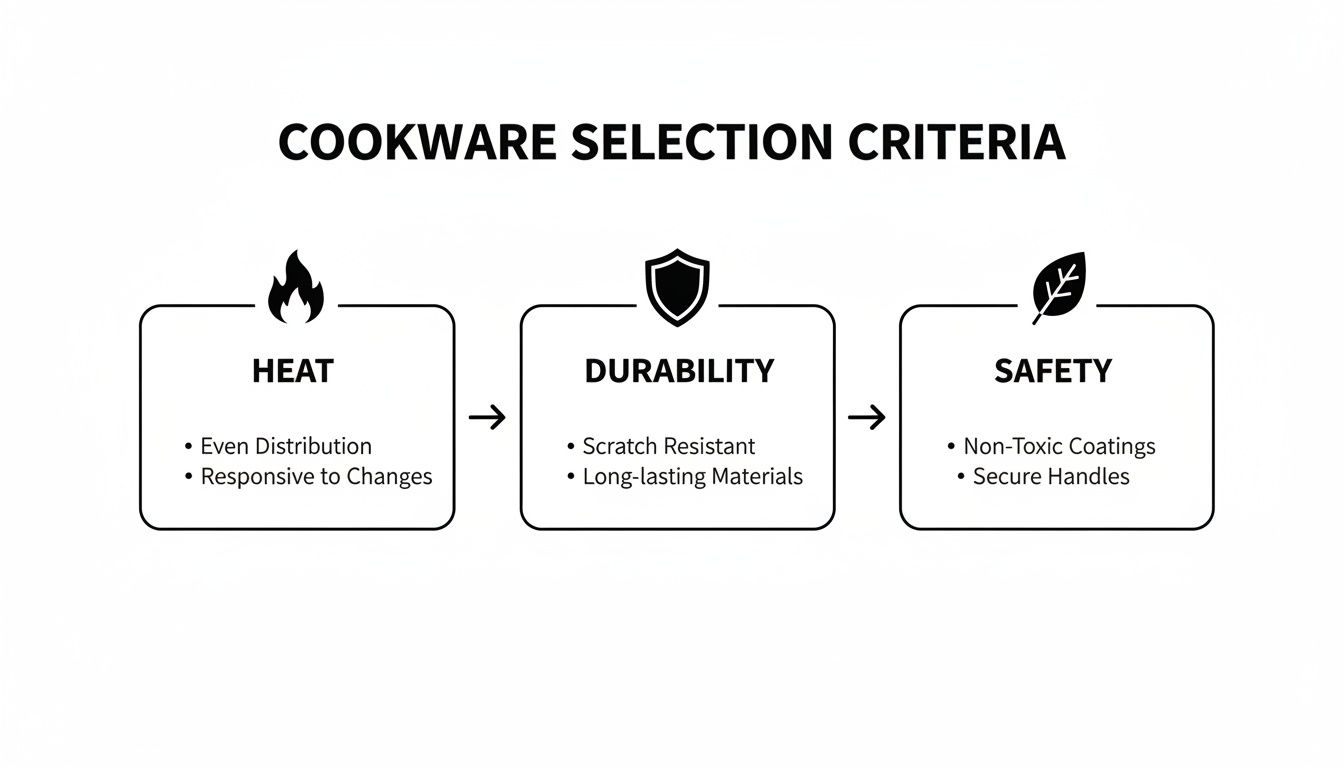
As you can see, the ideal pot is a balancing act—it needs to heat efficiently, be built to last, and have a non-toxic surface you can trust.
Ceramic Versus Stainless Steel
There’s a reason professional kitchens are filled with stainless steel: it’s practically indestructible and can handle searing-hot temperatures like a champ. But it has a well-known weakness. Unless it has a quality aluminium or copper core, it's prone to hot spots and uneven cooking. Food also loves to stick to it, which can mean more time scrubbing at the sink.
Ceramic-coated cookware, on the other hand, offers a naturally slick surface. This means you can use less oil, and cleanup is often as simple as a quick wipe. While they won't take the extreme heat of a commercial-grade steel pan, they deliver more than enough power for everyday cooking and really shine when it comes to keeping food from sticking.
Ceramic Versus Cast Iron
Cast iron is the king of heat retention. Once you get it hot, it stays that way, making it incredible for deep-frying, baking crusty bread, or getting that perfect sear on a steak. The trade-offs? It’s heavy, and it needs regular seasoning to keep it non-stick and rust-free. It can also react with acidic foods like tomatoes, which can impart a metallic taste.
Ceramic pots are just so much easier to live with. They’re lighter, never need seasoning, and their inert surface won’t react with anything you cook. They might not hold onto heat with the same sheer force as a hefty cast iron skillet, but they provide fantastic heat retention for stews and braises without all the fussy maintenance.
Ceramic Versus Traditional Non-Stick
Traditional non-stick pans, usually coated with PTFE (what most people know as Teflon), are famous for their superb food release. The problem is the growing concern around chemicals like PFOA once used in their production, and the potential for the coating to degrade and release fumes if overheated. Scratches can also ruin the surface quickly, giving them a shorter lifespan.
The biggest win for ceramic cookware is its safety profile. Made without PFOA, PTFE, lead, or cadmium, it delivers a non-toxic cooking surface that gives you genuine peace of mind.
Modern ceramic coatings offer similar non-stick results without the chemical worries, making them a much safer bet for health-conscious home cooks. If you want to get into the nitty-gritty of what makes the https://everti.com.au/blogs/news/best-non-stick-surface-for-frying-pan, our detailed guide has you covered.
Cookware Material Performance At a Glance
Sometimes, seeing it all side-by-side makes the choice clearer. This table breaks down how these popular materials compare across the most important criteria.
For a deeper dive into all the options out there, this excellent guide on choosing the right cookware materials is a fantastic resource.
| Feature | Ceramic | Stainless Steel | Cast Iron | Traditional Non-Stick |
|---|---|---|---|---|
| Heat Distribution | Very Good | Good (with core) | Good (slowly) | Very Good |
| Non-Stick Ability | Excellent | Poor | Good (when seasoned) | Excellent |
| Durability | Good | Excellent | Excellent | Fair |
| Safety (Non-Toxic) | Excellent | Excellent | Excellent | Good (with caution) |
| Maintenance | Low | Low | High | Medium |
When you look at the whole picture, the best ceramic cooking pots hit a sweet spot. They offer the easy-release convenience of traditional non-stick, the safety of stainless steel, and are far less demanding to care for than cast iron.
Choosing the Right Pot for How You Cook
The best cookware isn’t just about the material; it’s about how that pot or pan fits into your kitchen and your life. A piece that’s perfect for one job might be a complete flop for another. The real secret to finding cookware you'll love for years is to match its strengths to your personal cooking style.
This is where thinking in scenarios really helps. Instead of just grabbing a generic set, think about what you actually cook week after week. Are you all about slow-cooked meals that simmer for hours, or do you live for a quick weeknight stir-fry? Your answer is the best guide to finding the perfect ceramic companion.
For Slow Cooking and Hearty Stews
When it comes to low-and-slow cooking, a heavy-bottomed ceramic Dutch oven or casserole dish is the undisputed champion. These pots are built for incredible heat retention, which means they hold a steady, gentle temperature for a very long time. That's the magic behind breaking down tough cuts of meat until they’re fall-apart tender or simmering a bolognese sauce into something truly special.
Picture yourself making a classic lamb shank stew. A ceramic pot’s ability to maintain that even, consistent heat ensures the meat cooks gently without catching and scorching on the bottom. The tight-fitting lid is also key—it traps steam, constantly basting the ingredients and building deep, complex flavours. Lighter, thinner pots just can't compete here; they often lead to uneven cooking and require constant fiddling with the temperature.
For Delicate Sauces and Grains
Precision is everything when you're making a creamy risotto, a silky custard, or even just a simple pot of quinoa. For these kinds of tasks, a smaller ceramic saucepan with brilliant heat distribution is what you need. The even heating gets rid of those frustrating hot spots that can scorch a milk-based sauce in an instant or cause grains to stick and burn at the bottom.
Pro Tip: The naturally slick surface of ceramic cookware is a huge advantage for delicate jobs. It lets you stir ingredients without them clinging to the pot, giving you that smooth, uniform texture you’re looking for in your final dish.
For Weeknight Family Meals
For the everyday demands of a busy family kitchen, a mid-sized ceramic pot (around 3-5 litres) hits that perfect sweet spot. It’s big enough to handle a one-pot pasta, a hearty curry, or a batch of soup for the week. Plus, its non-stick surface makes both cooking and the dreaded cleanup a whole lot faster—a massive win on a hectic weeknight.
This is your go-to workhorse pot, the one that can go from boiling potatoes to sautéing vegetables without missing a beat. The ceramic coating also means you can get away with using less oil for healthier meals, and food slides right out, leaving less mess behind. This simple ease of use makes it one of the best ceramic cooking pots for sheer everyday reliability.
Matching Pots to Your Cooktop
One last thing: always check if the pot is compatible with your stove. Most ceramic cookware works beautifully on gas and standard electric hobs, but not all of them are designed for induction.
- Gas & Electric Coil: You're good to go. Almost all ceramic pots work well here.
- Ceramic/Glass Cooktop: Look for pots with a completely flat and smooth bottom. This ensures you get good contact for even heating and helps prevent scratching your cooktop's surface.
- Induction: This is non-negotiable—the pot must have a magnetic base to work. Always look for the induction symbol on the packaging or check the manufacturer's details. If you use a non-compatible pot, it simply won't heat up.
How to Care for Your Ceramic Pots for Lasting Performance
You’ve invested in quality ceramic cookware, and a few simple habits will keep it performing beautifully for years. Looking after your pots isn’t just about how you clean them; it starts the moment you place them on the stove.
When you work with the material’s strengths, not against them, your ceramic pots will maintain that brilliant non-stick surface and even heating you love, meal after meal.
Best Practices for Cooking and Handling
Always start with low to medium heat. Ceramic cookware is incredibly efficient at conducting heat, so there's no need to crank up the dial. Blasting it with high temperatures can damage the non-stick surface over time and cause food to stick.
Give the pot a minute to preheat before adding a small amount of oil or butter. And whatever you do, avoid metal utensils. Hard tools like metal spatulas, whisks, and forks will easily scratch and chip the delicate ceramic surface. Stick to silicone, nylon, or wooden utensils to keep the coating pristine.
One of the most important things to remember is to avoid sudden temperature changes. Never put a hot pot into a sink of cold water. This causes thermal shock, which can crack the ceramic coating or even warp the pot's base.
Cleaning Your Ceramic Pots Effectively
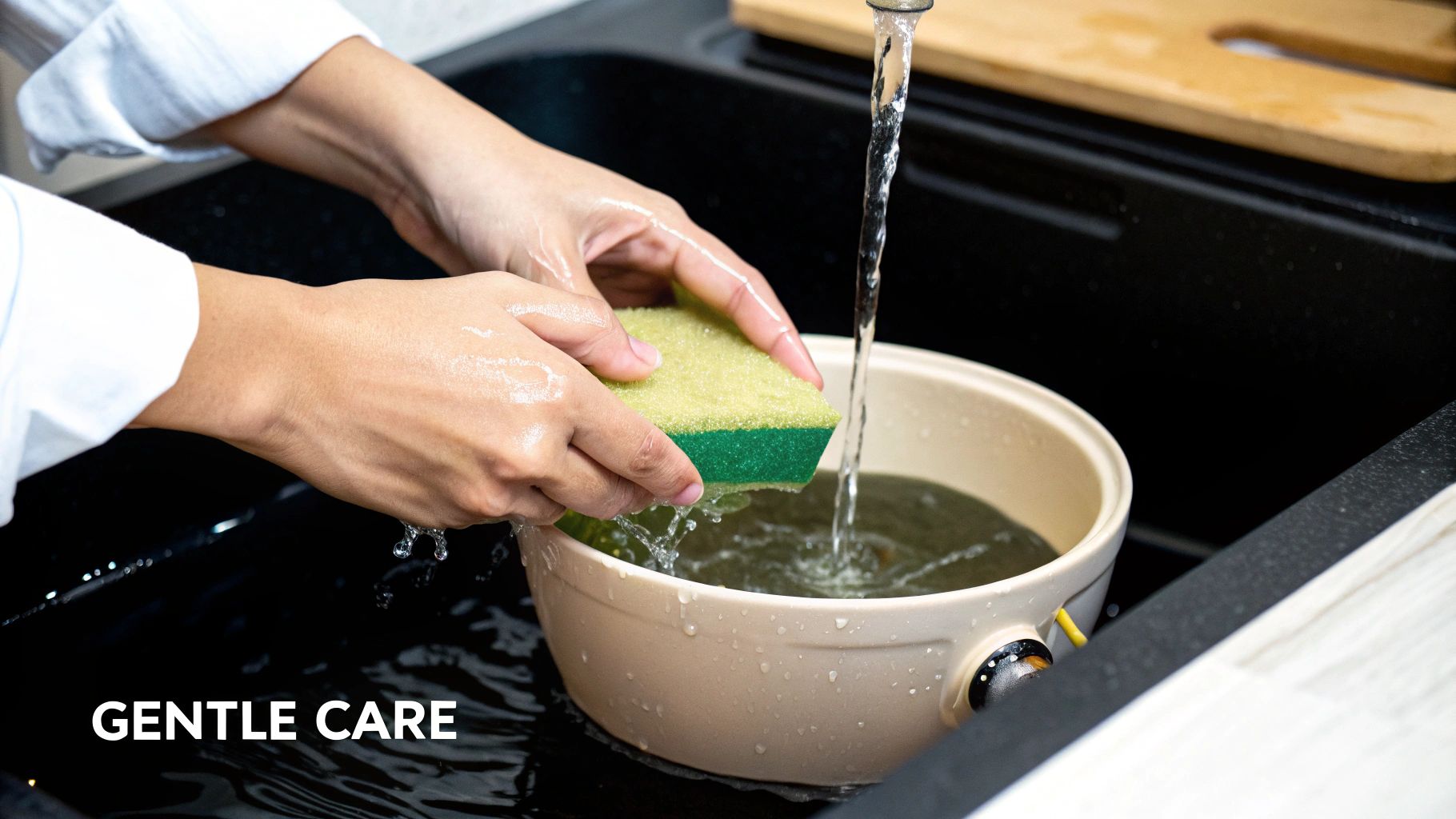
When it comes to cleaning, gentle hand-washing is always the best option. Let your pot cool down completely, then simply use warm, soapy water and a soft sponge or cloth. For a good quality ceramic surface, this is usually all it takes to wipe away any residue.
I know some brands claim their cookware is "dishwasher-safe," but I'd advise against it. Harsh detergents and the high heat inside a dishwasher will eventually wear down the non-stick coating. Hand-washing is a much safer bet for extending your pot's life.
For those stubborn, burnt-on bits or any discolouration:
- Create a simple paste with baking soda and a splash of water.
- Gently rub this paste over the problem spots using a soft sponge.
- Rinse it all off and make sure the pot is completely dry before you put it away.
This simple routine will keep your cookware in top shape. In Australia's kitchenware scene, where pots and pans are the biggest sellers, looking after your gear just makes sense. More health-conscious cooks are choosing ceramic for its non-toxic surface and because it lets them cook with less oil. You can read more about these Australian kitchenware market trends on IMARC Group.
Finally, don't forget about proper storage. When you stack your pots, place a paper towel or a soft cloth between each one to prevent scratches and chips. It's a small step that makes a big difference.
Your Top Ceramic Cookware Questions Answered
Choosing the right cookware can feel like a big decision, so it's only natural to have a few lingering questions. Getting a straight answer helps you feel confident you're making the best choice for your kitchen. Let's tackle some of the most common queries about ceramic pots—from performance to safety and everyday care.
Think of this as the final checklist to make sure you've got all the facts you need.
Are 100% Ceramic Pots Better Than Ceramic-Coated Ones?
This is a great question, and one I get asked a lot. The honest answer is: it really depends on what you cook.
A 100% solid ceramic pot is a true slow-cooking champion. It's made entirely from clay and other natural minerals, so it heats up slowly and holds onto that heat for a very long time. This is absolutely perfect for a simmering winter stew or baking a loaf of artisan bread where even, sustained heat is key. The downside? They can be heavy and are more prone to cracking if you accidentally drop them.
On the other hand, ceramic-coated pots are what most of us see in shops. They typically have an aluminium body, which means they're much lighter, heat up quickly, and respond instantly when you adjust the temperature. This makes them a far more practical choice for the everyday scramble of searing, sautéing, and whipping up a quick weeknight dinner.
The bottom line is this: go for 100% ceramic if you're a slow-cooking enthusiast. For all-around daily versatility and convenience, ceramic-coated is the more practical option for most home kitchens.
Can I Use Metal Utensils on Ceramic Cookware?
That’s an easy one: a definite no. You should never, ever use metal utensils like spatulas, whisks, or tongs on a ceramic cooking surface.
Think of it this way—metal is simply harder than the ceramic finish. It will inevitably scratch, chip, and gouge the surface. Once that smooth finish is compromised, the non-stick magic is gone, and you’ll find food sticking stubbornly in those damaged spots. To keep your pots in top condition for years, stick exclusively to tools made from silicone, wood, or nylon.
Is the Non-Stick Coating on Ceramic Pots Actually Safe?
Yes, the non-stick surface on a well-made ceramic pot is widely considered to be one of the safest options available. This is a huge reason why so many health-conscious cooks have made the switch.
The coating itself is derived from sand, creating a glass-like surface that's completely free from controversial chemicals like PFOA (perfluorooctanoic acid) and PTFE (polytetrafluoroethylene). Reputable brands also ensure their cookware is free from heavy metals like lead and cadmium. This gives you fantastic peace of mind—even if the coating were to get scratched, there’s no risk of harmful toxins leaching into your family's food.
How Do I Fix a Ceramic Pot That Starts Sticking?
It's frustrating when a once-perfectly non-stick pan starts to grip onto your food. This usually isn't a sign of a faulty pan, but rather a build-up of microscopic food residue or burnt-on oils. Before you think about replacing it, try a simple deep clean.
Mix a bit of baking soda with water to form a thick paste. Using a soft cloth or a non-abrasive sponge, gently scrub the areas that are sticking. Give it a good rinse, and you'll often find the slick surface is restored. It’s important to be realistic, though. If a pan has been repeatedly overheated or has seen years of heavy use, the coating can degrade permanently. At that point, it may be time for a replacement.
At Everti, we're passionate about using materials that offer both incredible performance and total peace of mind. While ceramic is a great non-toxic option, our titanium cookware delivers exceptional durability and purity for the ultimate healthy kitchen. You can explore our full collection today at https://everti.com.au.