

If you're on the hunt for the best ceramic frying pan Australia has to offer, you’re not alone. More and more home cooks are looking for cookware that’s healthy, tough, and cooks food evenly. The best options on the market usually have a solid, hard-anodised aluminium body for brilliant heat distribution, paired with a multi-layered ceramic non-stick coating that’s free from nasties like PFOA and PTFE. These pans are built to perform, giving you peace of mind in the kitchen.
Your Guide to Australia's Top Ceramic Frying Pans
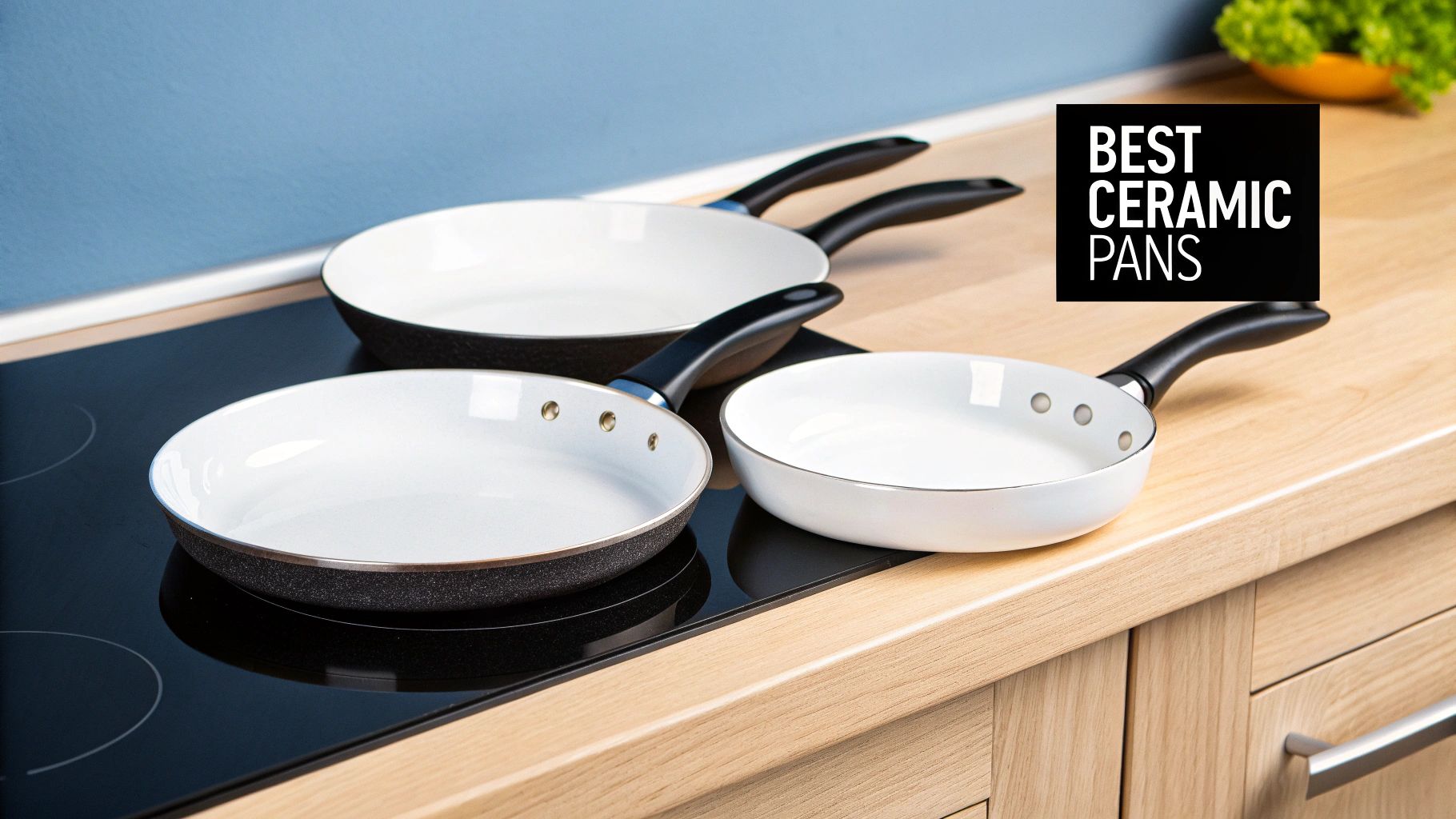
Choosing the right ceramic pan can feel like a chore with so many options out there. This guide is here to simplify things. We'll walk you through what really counts for Aussie kitchens, explaining why ceramic is becoming the go-to for its non-toxic, eco-friendly, and easy-to-clean surface. We're not just listing products; we're giving you the know-how to make a great choice.
The move towards healthier cookware is more than just a passing phase. In 2024, the Aussie cookware market hit a whopping USD 664.44 million, with ceramic-coated pans at the front of the pack. That number is expected to skyrocket to USD 1,369.43 million by 2033, which shows just how much we value non-toxic gear in our homes.
What This Guide Will Cover
My aim here is to give you the confidence to pick a pan that not only cooks like a dream but also fits into a healthier way of life. We'll break down the must-have features so you can feel sure you’ve found the perfect match for your kitchen.
Here’s what you’ll learn to look for:
- Coating Quality: We’ll explore the difference between a basic single-layer coating and a properly reinforced ceramic surface—and why that’s crucial for a pan that lasts.
- Core Materials: Find out how the pan's body, whether it's aluminium or stainless steel, affects everything from heat control to overall sturdiness.
- Heat Distribution: Discover why a thick, flat base is non-negotiable for even cooking, especially if you have an induction cooktop.
- Overall Durability: It's the little things that count. We’ll look at handle construction and oven-safe ratings that separate a decent pan from a truly great one.
A top-notch ceramic frying pan is a true kitchen workhorse, ready for everything from your daily brekky to more delicate dishes. It's perfect for cooking fluffy pancakes, getting a beautiful sear on a piece of fish, or sautéing veggies with just a tiny bit of oil.
The real magic of modern ceramic cookware is that it delivers an excellent non-stick performance without relying on the traditional chemicals that many of us are trying to avoid. It’s the perfect blend of high performance and peace of mind.
Once you know what to look for, you can see past the marketing hype and focus on the features that actually make a difference to your cooking. Let’s get started on finding your new favourite pan.
What Makes a Frying Pan 'Ceramic' Anyway?
When you hear "ceramic frying pan," it's easy to picture a hefty, solid clay pot, maybe something fresh off a potter's wheel. But the reality is a much more sophisticated piece of kitchen tech, designed for the modern Aussie home. These pans aren't ceramic through and through.
Think of them as a team of two parts: a sturdy metal body and a very slick non-stick coating. The body, usually made from aluminium or stainless steel, is the workhorse. It provides the pan's structure and, crucially, its ability to conduct heat.
The real magic, though, is in the coating. It’s a super-smooth, almost glass-like layer that’s bonded to the cooking surface. This is what makes the pan "ceramic." It's made using something called sol-gel technology, which turns a sand-derived, silicone-based gel into a hard, non-stick surface. This is the secret to its incredible performance.
The Science Behind That Slippery Surface
The term "sol-gel" might sound like something out of a science lab, but the idea is pretty simple. A liquid solution (the 'sol'), full of tiny ceramic particles, is sprayed onto the pan's metal base. As it's heated and cured, this liquid turns into a solid, gel-like matrix (the 'gel') that fuses directly with the metal.
This process creates an incredibly smooth, non-porous surface that food just can't get a grip on. The result? Your morning eggs glide right out, and cleaning up is often as simple as a quick wipe with a paper towel.
This technology is the key reason so many health-conscious home cooks are making the switch. The finished ceramic coating is incredibly stable and doesn't contain controversial chemicals like Polytetrafluoroethylene (PTFE) or Perfluorooctanoic acid (PFOA), which are often found in traditional non-stick pans.
Getting your head around this two-part construction—a metal core for heat, a ceramic coating for the non-stick action—is the first step to choosing the best ceramic frying pan in Australia. It allows you to see past the marketing hype and focus on what really counts: the quality of both the coating and the pan it's on.
Why the Metal Core Is Just as Important
While that ceramic coating gets all the glory, the pan's metal core is the unsung hero. It's what determines how quickly your pan gets hot, how evenly it cooks your food, and whether it'll buckle and warp over time.
- Forged or Hard-Anodised Aluminium: This is a top choice for a reason. It's light, and it's a brilliant heat conductor. It gets up to temperature fast and spreads the heat evenly, which means no more frustrating hot spots that burn your onions in one spot while leaving them raw in another.
- Stainless Steel: You'll often find stainless steel in multi-ply or 'clad' pans. It adds some serious strength and durability. A pan with a stainless steel base is also far more likely to be induction-compatible—a must for many modern Aussie kitchens.
A cheap pan might have a ceramic coating that looks great out of the box, but if it's sitting on a flimsy, thin metal base, it’s destined to warp and will never cook evenly. A truly great pan marries a durable, multi-layered ceramic surface with a solid metal body that's built to last. You can dive deeper into the differences and find the best non-stick surface for a frying pan in our detailed guide.
To get a broader perspective on how ceramic stacks up against other options, industry blogs are a great source of information. They often provide helpful cookware material insights that compare different metals and coatings, putting everything into context.
At the end of the day, knowing that a 'ceramic' pan is a clever fusion of materials puts you in control. You're not just buying a non-stick surface; you're investing in a complete cooking system where every part has a job to do.
What Really Makes a Good Ceramic Pan? A Look Under the Hood
Walk down any cookware aisle in Australia, and you'll see a dozen ceramic frying pans that look almost identical. But here’s the thing: how they perform and how long they last can be wildly different. The real secret to a pan’s quality isn't just its slick surface; it's in the clever engineering of every single part.
Think of a top-tier ceramic pan like a well-built car. The coating, the core material, the base, and the handle all need to work in perfect harmony. If one part fails, the whole experience suffers. Let's pull back the curtain and look at each component, so you can spot genuine quality and sidestep the duds.
The All-Important Ceramic Coating
The coating is what everyone gets excited about—it’s what gives you that effortless, non-stick glide for your morning eggs. But "ceramic coating" isn't one single thing. It's a bit more complex than that.
A cheap, entry-level pan might have a single, thin layer of non-stick spray. It’ll feel great for the first few weeks, but it's incredibly vulnerable to scratches and general wear. Before you know it, everything starts sticking, and you're back to square one.
On the other hand, a premium ceramic pan boasts a multi-layered, reinforced coating. This is where the real magic happens. Manufacturers infuse these layers with super-hard materials like diamond dust or titanium particles. This isn't just clever marketing; these additions act like armour for the cooking surface, making it far more resilient to daily use. It's this reinforcement that separates a pan that lasts six months from one that’s still going strong in a few years.
This diagram shows how a solid metal core and a durable non-stick coating work together in a modern ceramic pan.
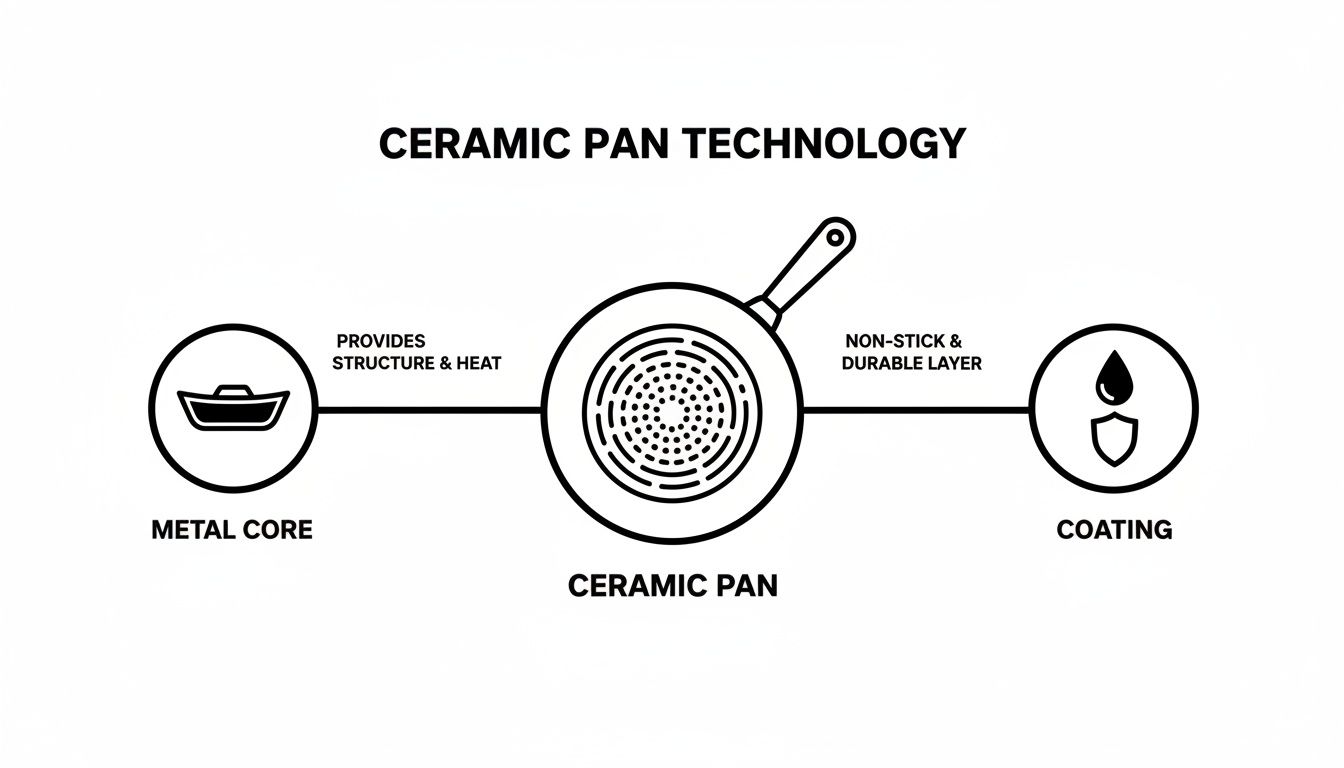
The takeaway here is that a brilliant ceramic pan is a fusion of materials, not just a simple coating. Each part has a crucial job to do.
The Pan's Core: The Engine of Heat Control
Underneath that slick coating is the pan's body, or its core. This is the engine room. It dictates how quickly the pan heats up, how evenly it spreads that heat, and whether it will warp over time. The material used here makes a huge difference to your cooking.
You'll generally find two main players in the quality market:
- Forged or Hard-Anodised Aluminium: This is the go-to for a very good reason. Aluminium is a fantastic conductor, so it gets hot fast and, more importantly, distributes the heat evenly right to the edges. No more frustrating hot spots that cremate one side of your schnitzel while the other remains pale.
- Stainless Steel: Often found in multi-ply or "clad" pans, stainless steel adds serious muscle and durability. A pan with a stainless steel layer is much less likely to buckle under high heat or from a sudden temperature shock (like rinsing a hot pan under the tap—don't do that!). Many of the best pans actually use a hybrid design, sandwiching an aluminium core between layers of stainless steel to give you the best of both worlds.
The Aussie market for quality ceramic cookware is taking off, with a projected 9.6% CAGR and a current value of USD 91.08 million. This isn't surprising, as more of us are looking for healthier, better-performing gear. In fact, lab tests show that high-quality ceramic pans distribute heat 30% more evenly than basic aluminium ones, a difference you can thank the superior core construction for. You can dive deeper into these trends in various market analysis reports.
The Foundation: A Thick, Flat Base
The base of a frying pan is its foundation. For a perfect sear and even cooking, that base absolutely must be perfectly flat and nice and thick. A thin, flimsy base is the number one reason pans warp. Once that happens, you get that annoying wobble on the cooktop, oil pools to one side, and your food cooks unevenly. It's a one-way trip to the bin.
A thick, heavy base acts as a heat sink, absorbing and spreading the energy from your stovetop more gradually. This is especially vital for induction cooktops, which are common in Australian kitchens. For a pan to work on induction, its base needs to have a ferromagnetic layer (like iron or a specific grade of stainless steel).
Always look for the "induction compatible" symbol on the box. A thick, magnet-ready base is your insurance policy—it ensures the pan will work on any cooktop and won't buckle under pressure.
The Handle: More Than Just Something to Hold
It’s easy to overlook the handle, but it's your main connection to the pan. The design and material will affect your comfort, safety, and what you can do with it.
- Cool-Touch Handles: Handles made from materials like silicone or Bakelite are great because they stay cool on the stovetop, giving you a safe and comfy grip. The trade-off is that they usually can't handle high oven temperatures, which limits the pan's versatility.
- Stainless Steel Handles: These are built to last and are almost always oven-safe to very high temperatures. This is perfect for when you want to sear a steak on the stove and finish it in the oven. The only catch is they can get hot, so you’ll want to keep an oven mitt nearby.
For a truly sturdy pan, look for a handle that is riveted to the body. This creates a much stronger, more permanent bond than a screw-on handle, which will inevitably work its way loose over time. By checking these four key areas—coating, core, base, and handle—you'll be able to see past the marketing hype and truly judge the quality of any ceramic pan.
Comparing the Top Ceramic Pan Brands in Australia
Trying to choose a ceramic pan in Australia can feel a bit overwhelming. You’ve got big international names and local Aussie favourites all vying for a spot on your stovetop. But instead of just looking for a "best to worst" list, it's more helpful to think about what each brand is trying to achieve. This way, you’ll find a pan that fits your budget, your cooking style, and even your personal values.
Some brands are all about pushing the boundaries of performance. They're the tech-heads of the cookware world, pouring money into R&D to create the toughest non-stick surface imaginable, often reinforcing their coatings with things like diamond dust or titanium. Their goal is a pan that lasts and performs, making them a top choice for serious home cooks who don’t mind investing a bit more for a kitchen workhorse.
On the other hand, you have brands that put sustainability front and centre. They might build their pans from recycled aluminium, focus on reducing their carbon footprint during manufacturing, and ship their products in minimalist, plastic-free packaging. For these companies, the pan is just one part of a bigger story about making responsible choices.
Budget-Friendly Versus Premium Investment
Let's be honest, price is usually the first thing we check. In Australia, ceramic pans tend to fall into a few clear price brackets, and knowing what your money gets you is the key to making a smart purchase.
-
Entry-Level Options ($30 - $70): These are great if you're just dipping your toes into ceramic cookware or setting up your first home. You'll typically get a basic, single-layer ceramic coating on a standard aluminium pan. They’ll do the job well at first, but don't expect them to last forever.
-
Mid-Range Performers ($70 - $150): This is the sweet spot for most of us. Pans in this price range often have thicker, forged aluminium or multi-ply bases that heat more evenly and are less likely to warp. The coatings are usually tougher and multi-layered, giving you a lot more durability for your dollar.
-
Premium and Speciality Pans ($150+): When you get to this level, you’re paying for top-tier engineering and materials. Think 5-ply stainless steel and aluminium construction, heavily reinforced coatings that can stand up to metal utensils, and excellent oven-safe temperatures. These are investment pieces designed to be with you for years.
What Sets the Big Names Apart
As you shop around, you’ll see the same brand names popping up. Each has earned its place by really honing in on a particular strength.
Below is a table to help you quickly compare some of the popular options you'll find in the Australian market.
Feature Comparison of Popular Ceramic Pan Brands in Australia
| Brand | Core Material | Coating Technology | Induction Compatible | Typical Price Range (AUD) |
|---|---|---|---|---|
| GreenPan | Forged Aluminium, Stainless Steel | Thermolon™ (various generations) | Yes (most models) | $50 - $250+ |
| Scanpan | Recycled Aluminium | Stratanium / Stratanium+ | Yes (select lines) | $100 - $300+ |
| Caraway | Aluminium | Proprietary Ceramic | Yes | $150 - $250 (part of sets) |
| Everten | Forged Aluminium | Everti™ Non-Stick | Yes | $70 - $150 |
| Bialetti | Aluminium | Duratek | Yes (most models) | $40 - $120 |
This table gives you a snapshot, but the story behind each brand is what really matters.
Take GreenPan, for instance. They really brought ceramic non-stick into the mainstream with their Thermolon coating. Their premium lines now focus on robust 3-ply and 5-ply bodies, making them a far more sustainable choice than the cheaper, disposable pans they first competed against. They're a big player, but it’s always wise to do your own research into any brand’s specific claims.
Other brands might lean into aesthetics, offering pans in a rainbow of beautiful colours that you’d be happy to hang on display. Here, the focus is on merging everyday function with a design-forward approach, perfect for people who see their cookware as part of their kitchen decor. You can dive deeper into finding the right pan for your kitchen by checking out our complete guide to the best ceramic cookware in Australia.
A brand’s reputation is built on more than just its coating. Consider their approach to handle design, oven safety, induction compatibility, and warranty support. These details often reveal a company's true commitment to quality and customer satisfaction.
Ultimately, choosing a brand comes down to you. Are you after the absolute best searing performance that cutting-edge technology can offer? Or do you get more satisfaction from cooking with a pan made from recycled, sustainable materials? Once you understand what each brand truly stands for, you can make a choice that goes beyond the specs on a box and find a true partner for your kitchen adventures.
Keeping Your Ceramic Pan Performing Like New
A top-notch ceramic frying pan is a brilliant addition to any kitchen, but that non-stick surface isn't bulletproof. Think of it like a finely tuned instrument; you need to look after it to keep it performing beautifully meal after meal. Letting a few simple rules slide is the quickest way to turn that slick, easy-release surface into a sticky nightmare.
The number one rule? Watch your heat. Ceramic pans are incredibly efficient at conducting heat, which means you can ditch the high-flame habits you might have from using other cookware. Stick to low to medium heat at all times. Blasting it on high can scorch your oil and, over time, actually bake it into the coating, which is what causes that dreaded stickiness.
The Right Tools for the Job
What you use in the pan is just as important as the heat you put under it. Metal spatulas, forks, or tongs are the arch-nemesis of a ceramic surface. Even one tiny scratch can break that smooth seal and create a weak spot where food will start to grab.
To keep your pan in top shape, stick with these utensils:
- Silicone: This is the gold standard. It's gentle, flexible, and has zero chance of scratching the pan.
- Wood: A classic for a reason. Wooden spoons and spatulas are perfectly safe for your pan’s coating.
- Nylon: Generally okay, but be careful not to leave them resting on a hot pan, as they can melt.
Another common pitfall is using aerosol cooking sprays. They seem convenient, but they often contain propellants that don’t burn off properly. Instead, they leave behind a sticky, invisible residue that builds up over time and completely ruins the non-stick magic. Your best bet is always a small splash of butter or an oil with a high smoke point.
The secret to a long-lasting ceramic pan isn’t about treating it with kid gloves; it's about being consistent. Small, mindful habits—like using the right oil and avoiding metal tools—make all the difference.
Cleaning Your Pan the Right Way
How you wash your pan is the final piece of the care puzzle. Even if the box says "dishwasher safe," a gentle hand-wash is always the better choice. The combination of intense heat and harsh detergents inside a dishwasher can slowly wear down the non-stick layer. We dive deeper into this in our guide explaining why hand-washing is better for dishwasher-safe pans.
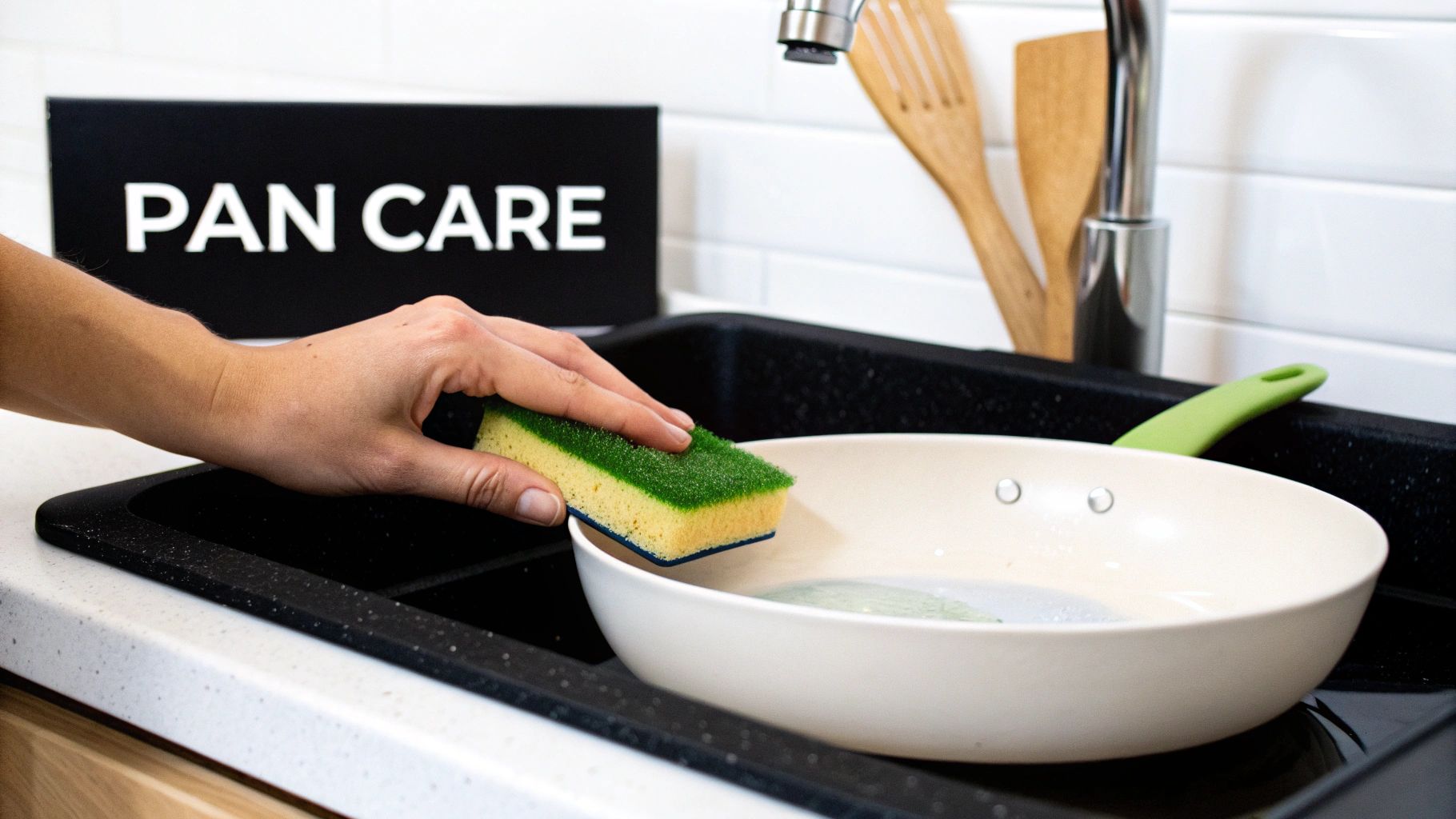
For daily cleaning, just let the pan cool down completely. Never plunge a hot pan into cold water, as the thermal shock can cause it to warp. Once it's cool, a soft sponge with warm, soapy water is all you need. That gentle approach is enough to keep the surface pristine.
Modern ceramic pans are impressively tough. Testing has shown they can handle 40% more oven cycles (up to 260°C) than older Teflon pans, making them a far more versatile tool for Aussie home cooks. This durability has helped drive their popularity, with online kitchenware sales seeing a 33% jump as more of us look for non-toxic options. By following these simple tips, you’ll be making sure your pan stays slippery and reliable for years to come.
Common Questions About Ceramic Frying Pans
Even with all the facts laid out, it’s completely normal to have a few more questions rattling around before you decide on a new pan. After all, picking the best ceramic frying pan Australia has to offer is about feeling genuinely confident in what you’re bringing into your kitchen. Let’s tackle some of the most common queries we get from home cooks.
Think of this as your final Q&A session before you find that perfect pan. We’ll cover everything from safety and longevity to fixing those annoying little problems that can pop up.
Are Ceramic Pans Truly Safer Than Traditional Non-Stick?
Yes, and the reason is pretty simple: it’s all about what’s not in them. A high-quality ceramic non-stick coating is made without chemicals like Polytetrafluoroethylene (PTFE) and Perfluorooctanoic acid (PFOA).
Those are the two compounds historically used in traditional non-stick pans that sparked health concerns, especially when they got too hot. A ceramic pan, on the other hand, gives you a stable and non-reactive cooking surface. It won’t release nasty fumes if you accidentally overheat it, which is a huge plus for health-conscious Aussie households.
How Long Does a Ceramic Non-Stick Coating Last?
This is the big one, and the honest answer is: it really depends. The lifespan of your ceramic coating comes down to two things: the quality of the pan and, just as importantly, how you look after it. A cheaper, entry-level pan might give you about a year of good non-stick performance with regular use.
A top-tier pan with a reinforced, multi-layer coating could easily last three years or even longer, but only if you treat it right. That means sticking to the golden rules: stay away from high heat, only use wooden or silicone utensils, and always, always wash it by hand. Good habits make all the difference.
Can I Use My Ceramic Pan on an Induction Stove?
Not all of them, no. A ceramic pan’s ability to work on an induction cooktop has nothing to do with the ceramic coating itself—it’s all about the base. For an induction stove to work its magic, the pan's base needs to be made of a ferromagnetic metal like iron or a specific type of stainless steel.
Luckily, manufacturers make this easy to check. Just look for the induction symbol (it usually looks like a coil of wire) on the packaging or stamped onto the bottom of the pan. If you’re ever unsure, grab a fridge magnet. If it sticks firmly to the base, you’re ready to cook.
The most common frustration users experience is a new pan suddenly losing its non-stick abilities. This is almost always preventable and often reversible, stemming from issues that are easy to fix once you know what to look for.
Why Did My New Ceramic Pan Start Sticking?
It’s the most common complaint we hear, and it’s maddening when your slick new pan suddenly turns sticky. But nine times out of ten, it’s not a faulty pan. The culprit is usually one of three things:
- Invisible Residue Buildup: This is the big one. Tiny particles of cooking oil can bake onto the surface over time, creating a thin, sticky layer that’s often invisible. This process, called polymerisation, completely ruins the non-stick effect.
- Damage from High Heat: Cranking the heat up to high is a fast way to degrade the delicate ceramic coating, making it porous and prone to sticking. Always preheat gently on a low-to-medium setting.
- Micro-Scratches: Using a metal spatula or fork, even just once, can create thousands of tiny scratches. You might not see them, but they give food plenty of little edges to grab onto.
The good news is you can often fix it. Try making a paste with bicarbonate of soda and a little water, then gently scrub the cooking surface with a soft cloth. This simple trick can lift that stubborn oil residue and help bring your pan's non-stick magic back.
At Everti, we believe in equipping you with knowledge to make the best choices for your kitchen. Explore our range of premium, durable kitchen essentials designed for a healthier home.
Find your perfect kitchen solution at https://everti.com.au.