

Searching for the best ceramic pans in Australia? It’s no surprise that names like Caraway and GreenPan often top the list. They’ve built a solid reputation for their brilliant non-stick performance, seriously tough construction, and non-toxic coatings. These brands deliver on the promise of healthier cooking, steering clear of chemicals like PFOA or PTFE, which is why they’ve become such a staple in modern Aussie kitchens.
Your Quick Guide to the Best Ceramic Pans
Choosing the right cookware can feel like a mission, but ceramic pans make it easy. They offer a fantastic blend of safety, performance, and everyday convenience. Traditional non-stick pans often get their slippery surface from chemical coatings, but the best ceramic pans go a different route, using a mineral-based sol-gel technology.
Think of it like this: the coating is created from sand-derived silica, forming a slick, glassy surface that's naturally non-stick. This means you can fry an egg or sear a piece of fish with total peace of mind.
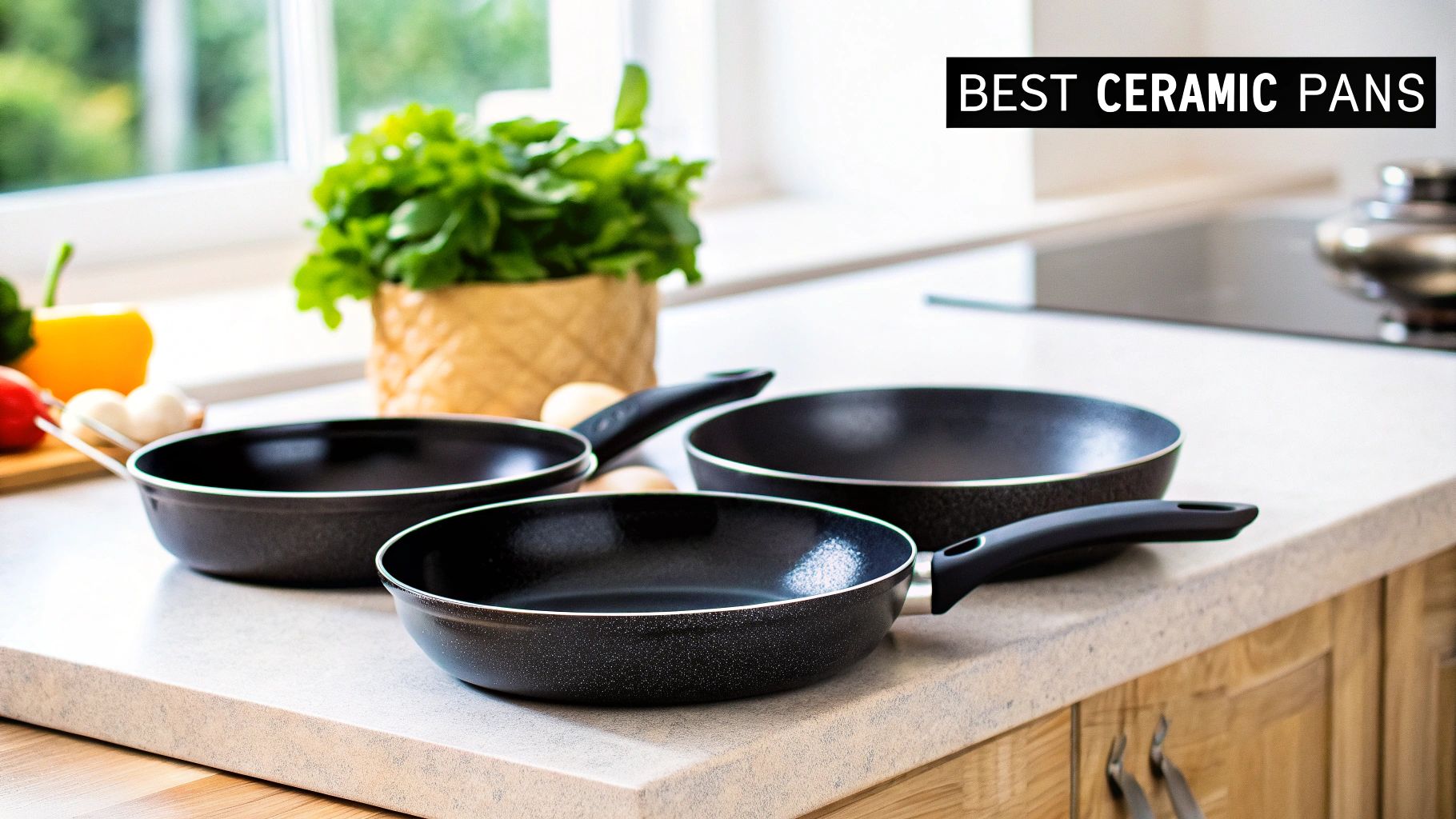
For most of us, this health-conscious design is the biggest drawcard. You get that effortless food release we all love, without worrying about exposing your family to nasty compounds, even if you accidentally let the pan get a little too hot.
Performance and Durability
Safety is one thing, but how do they actually cook? This is where high-quality ceramic cookware really shines. Underneath that smooth ceramic coating is a metal core, usually a heavy-gauge aluminium or stainless steel. This core is engineered for one thing: fast, even heating.
That means no more frustrating hot spots that scorch your onions on one side of the pan while leaving the other side raw. What you get is a consistent temperature across the entire surface, leading to perfectly seared steaks, evenly sautéed veggies, and golden-brown pancakes every single time.
To help you sift through the options, we've put together a table that breaks down the most important features to look for when you're ready to buy.
Key Features of Top-Performing Ceramic Pans
Use this table to quickly evaluate the most important features when choosing the right ceramic pan for your kitchen.
| Feature | What to Look For | Why It Matters for Your Cooking |
|---|---|---|
| Coating Type | A mineral-based, multi-layer ceramic non-stick coating from sol-gel technology. | Gives you a durable, non-toxic cooking surface that's free from PTFE, PFOA, lead, and cadmium. |
| Core Material | A heavy-gauge aluminium or multi-ply stainless steel core for the best heat conduction. | Makes sure heat spreads quickly and evenly, preventing hot spots and giving you reliable, consistent results. |
| Handle Construction | A sturdy, ergonomic handle made from stainless steel or another stay-cool material. | Offers a secure, comfortable grip so you can safely move a hot pan from the cooktop to the oven. |
| Cooktop Compatibility | A flat, magnetic base if you have an induction cooktop. Always check the label to confirm compatibility. | Guarantees your pan will work efficiently on your stove, whether it’s gas, electric, ceramic, or induction. |
| Oven Safety | A high oven-safe temperature, ideally up to 260°C (500°F) or more. | This opens up your cooking options, letting you sear a chicken breast on the stove then finish it in the oven. |
Paying attention to these details will ensure you pick a pan that not only performs beautifully from day one but also stands up to the demands of a busy kitchen for years to come.
What Actually Makes a Pan “Ceramic”?
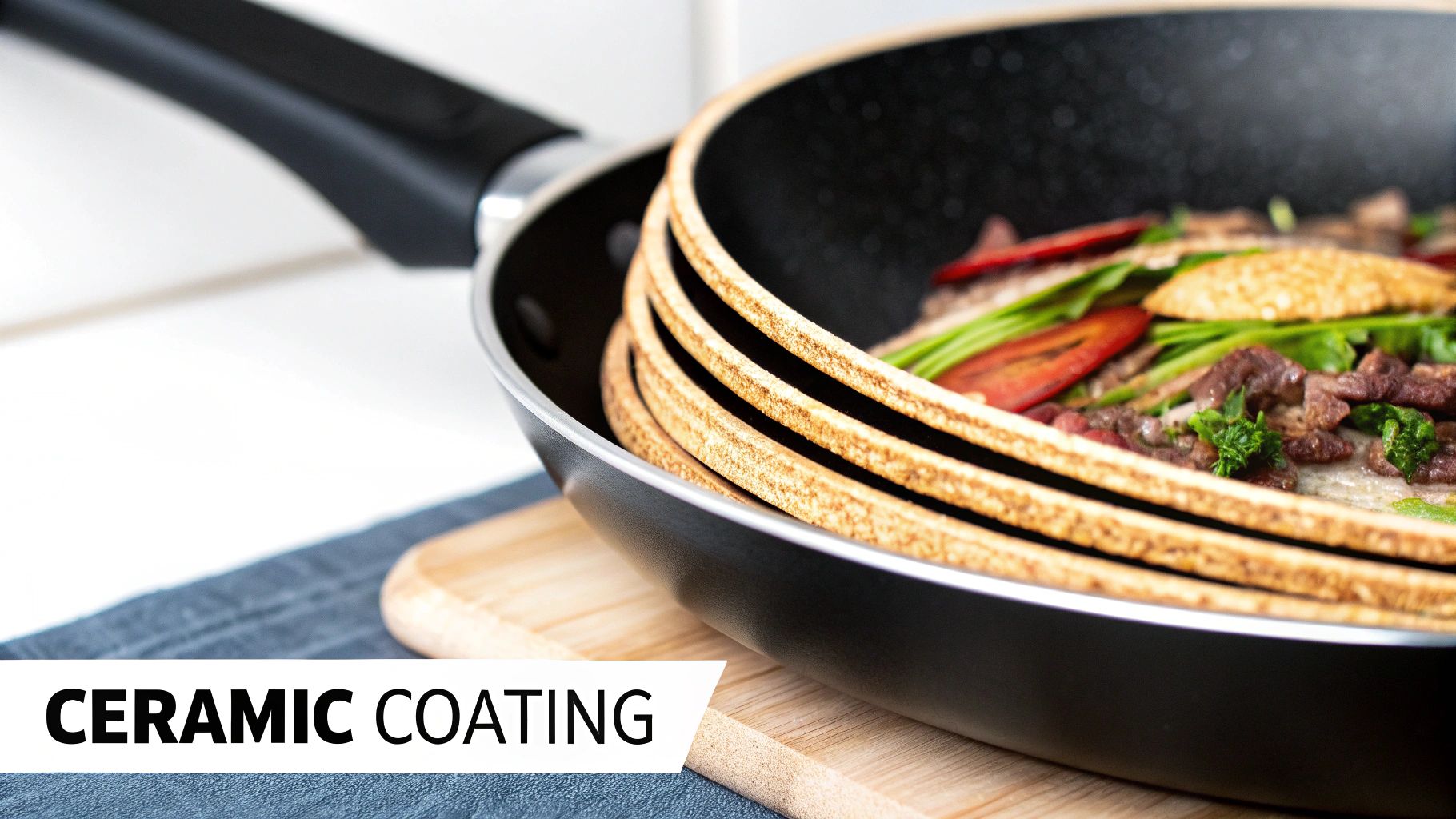
When someone says “ceramic,” your mind probably jumps to a heavy clay pot or a fragile teacup. But in the world of cookware, that's not quite what we're talking about. The “ceramic” in the best ceramic pans isn’t the pan itself, but a super-thin, high-tech coating that delivers those incredible non-stick results.
This isn't pottery; it's advanced material science. The coating is made using something called sol-gel technology. It all starts with a mineral-based solution, usually derived from silica (the same stuff in sand and glass). This liquid gel is sprayed onto a metal pan body and then baked at high temperatures. The heat fuses it into a slick, hardened, glassy layer.
The finish is incredibly smooth and non-porous. This is what gives the pan its non-stick power, and it does it without relying on traditional synthetic chemicals like PTFE. That simple fact is a huge part of why so many health-conscious home cooks have made the switch to ceramic.
The Pan's Foundation: The Metal Core
While the shiny ceramic coating gets all the glory, the metal core underneath is the real workhorse. It's the foundation that dictates how well the pan heats up, how long it lasts, and how it feels in your hand. The type of metal used is often what separates a decent pan from one of the best ceramic pans you can buy.
Most ceramic pans are built on either an aluminium or stainless steel core, and each has its own strengths.
- Aluminium Core: Fantastic for its light weight and how quickly it conducts heat. An aluminium-core pan gets hot fast and evenly, making it perfect for things like whipping up an omelette or stir-frying veggies.
- Stainless Steel Core: Known for being tough, durable, and resistant to warping. It might take a little longer to heat up than aluminium, but it’s incredibly rugged and provides a solid, stable base, especially if you have an induction cooktop.
Top-of-the-line pans often feature a multi-ply construction. This means they sandwich a layer of aluminium between layers of stainless steel, giving you the best of both worlds: the fast heating of aluminium with the rock-solid durability of steel. It’s this smart engineering that creates a consistent, reliable cooking experience.
This marriage of a durable metal core and a safe, slick coating is what defines modern ceramic cookware. It’s not just about what the pan is made of, but how these materials work together to deliver superior non-stick performance without compromise.
Local Craftsmanship Meets Global Technology
The growing demand for high-quality, non-toxic cookware has sparked plenty of innovation right here at home. Australia's ceramic product manufacturing sector is a serious player, generating a whopping $755.0 million in revenue and seeing solid growth over the last five years.
This industry, made up of over 420 businesses, blends traditional quality with modern sol-gel technology. The result is top-tier ceramic pans that often give imports a run for their money, especially since they undergo brutal testing—some are put through over 10,000 oven cycles at 260°C to prove their durability.
With health being a top priority for Australian families—surveys show 72% of us prioritise chemical-free cookware—these locally influenced products hit the mark perfectly. You can find out more about the Australian ceramic manufacturing industry and its impact on cookware trends.
Understanding this blend of clever coating technology and a well-engineered metal core is the secret to appreciating what makes the best ceramic pans perform so well. It helps you see the craftsmanship behind them and make a smarter choice for your kitchen. After all, it’s not just a pan; it’s a piece of equipment designed to make cooking healthier and a whole lot more enjoyable.
What This Means for Your Everyday Cooking
Let's move past the technical jargon. What really matters is how a pan performs on a Tuesday night when you’re just trying to get a decent meal on the table. The true value of a great ceramic pan isn't just in how it's made, but in the tangible, everyday wins it brings to your kitchen.
These benefits aren't abstract concepts; they make cooking less of a chore and more of an enjoyable, efficient, and healthier experience. From knowing your family’s food is free from nasty chemicals to making the post-dinner cleanup a breeze, the advantages are practical and immediate.
A Genuinely Healthier Way to Cook
One of the biggest draws of ceramic cookware is the peace of mind it delivers. The non-stick coating comes from a mineral-based sol-gel, which means it’s completely free from compounds like PTFE (polytetrafluoroethylene) and PFOA (perfluorooctanoic acid). You might know these as "forever chemicals," which have been linked to a number of health concerns over the years.
This means you can cook for your family without that nagging worry about chemicals leaching into your food, even when you crank up the heat. Whether you're searing salmon or scrambling eggs for the kids, the inert ceramic surface ensures your food is just that—food. It’s a simple, proactive step towards a cleaner kitchen. For anyone serious about this, exploring a wider range of non-toxic pans in Australia is a great next step.
Fantastic Heat Control for Better Results
Ever tried to cook pancakes, only to have one come out perfectly golden while its neighbour is pale and doughy? That’s the classic sign of poor heat distribution, and it’s a frustration that cheap pans dish out all too often. The best ceramic pans are engineered to put an end to this.
Their secret lies in their core, which is usually a heavy-gauge aluminium or multi-ply stainless steel designed for brilliant thermal conductivity.
- Heats Up Fast: The core soaks up heat from the cooktop quickly, so you’re not left standing around waiting for the pan to get hot.
- Spreads Heat Evenly: More importantly, it pushes that heat right across the entire cooking surface—from the dead centre to the outer edges.
- No More Hot Spots: This consistency gets rid of those rogue hot spots that burn one bit of your food while leaving another part raw.
The result is a reliable, predictable cooking surface every single time. Your steaks get a perfect edge-to-edge sear, your veggies sauté uniformly, and every single pancake in the batch will have that same beautiful, golden-brown finish. This kind of control just makes you a more confident cook.
The true test of a pan isn’t just about getting hot—it’s about getting hot evenly. Ceramic cookware nails this with a responsive metal core and a smooth surface, giving you the consistency you need for flawless results.
Food Slides Right Off, Making Cleanup a Doddle
Beyond health and performance, there’s the simple joy of convenience. The slick, non-porous surface of a ceramic pan offers incredible non-stick power. We’re talking about delicate fish fillets, fried eggs, and gooey omelettes sliding right onto the plate with barely a nudge.
This also means you can get away with using far less oil or butter, which is another quiet win for healthier cooking.
But the best part? This easy food release makes cleanup almost effortless. Instead of spending ages scrubbing away at stubborn, burnt-on food, a quick wipe with a soft sponge and some warm, soapy water is usually all you need. It turns the most dreaded kitchen chore into a task that takes seconds, not minutes. When your cookware is this easy to look after, you’ll find yourself wanting to cook more often, knowing the cleanup won't be a battle.
How to Choose the Right Ceramic Pan
Walking into the cookware aisle can feel a bit overwhelming, but picking the right ceramic pan for your kitchen doesn't need to be a guessing game. It really just comes down to a few key things. If you know what to look for, you can find a pan that fits your cooking style, your cooktop, and your everyday needs like a glove.
Think of it as a personalised fitting for your kitchen. We’ll start with the heart of the pan—its construction—and work our way to the finer details that will make cooking a joy.
Consider the Core Material
Underneath that slick ceramic coating is a metal core, and this is the engine room of your pan. It determines how quickly and evenly it heats up, which makes a huge difference in your cooking. The two main players here are aluminium and stainless steel.
- Aluminium Core: You'll find these pans are lightweight and fantastic heat conductors. An aluminium core gets hot fast and spreads the heat evenly, which is perfect for quick jobs like frying an egg or sautéing some veggies.
- Stainless Steel Core: These are the workhorses. Known for being incredibly durable and resistant to warping, they might take a little longer to heat up. But once they do, they hold that heat beautifully, giving you a stable temperature for a perfect sear on a steak.
You'll often see premium pans with a "clad" or multi-ply construction. This is basically a sandwich of metals, usually an aluminium layer tucked between stainless steel, giving you the best of both worlds: speedy heating and rock-solid durability.
Check Your Cooktop Compatibility
This is a big one. Before you get too attached to a pan, you have to make sure it will actually work on your stove. This is non-negotiable if you have an induction cooktop, which needs magnetic cookware to even turn on.
Most packaging or online descriptions will tell you if a pan is induction-compatible. An easy way to test it yourself? If a magnet sticks firmly to the bottom, you're good to go. It's also worth thinking about how a pan performs on other heat sources, like portable hot plates, if you use them.
The infographic below really nails down why so many people are making the switch to ceramic.
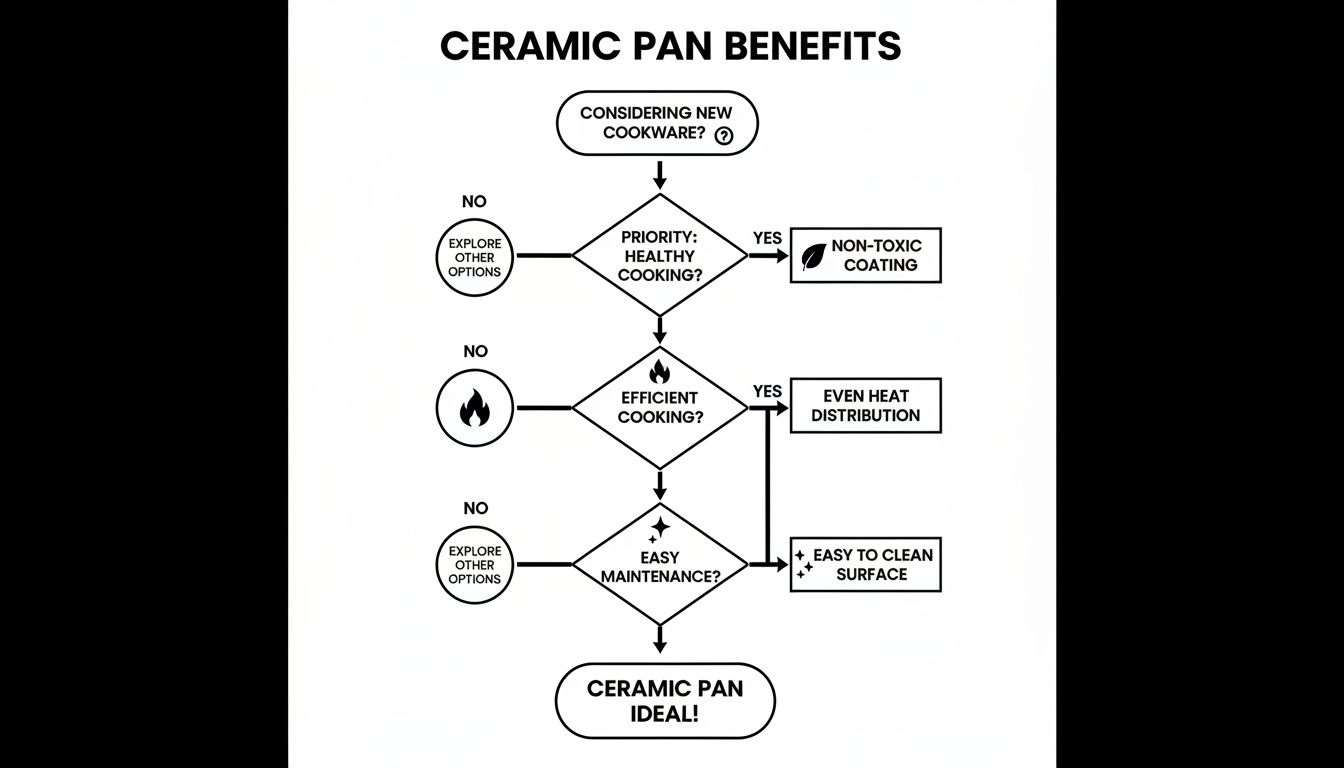
As you can see, it's not just about being non-stick. The non-toxic surface means healthier meals, while the even heating and easy cleanup just make life in the kitchen that much better.
Details That Make a Difference
Beyond the big stuff, it's the little details that can turn a good pan into a great one. Take a look at the handle. Is it comfortable? Does it stay cool to the touch? An ergonomic, heat-resistant handle makes cooking safer and a whole lot more pleasant.
Another crucial feature is the pan’s oven-safe temperature. A pan that can handle high heat (look for at least 260°C) is a game-changer. You can sear a piece of meat on the stove and pop the whole thing in the oven to finish, all in one pan.
In Australia's kitchenware market, which is valued at a whopping US$243.54 million, features like high heat resistance are a major selling point. After the pandemic, home cooking shot up by 35%, and people wanted pans that could withstand up to 500°C without releasing toxins. This matters to the 68% of us who are actively trying to avoid PFAS. You can dig into more Australian kitchenware market trends on Statista.
Finally, think about the shape. A good frypan is essential, but if you love stir-fries or one-pan pasta dishes, a wok or sauté pan might be your new best friend. Knowing what you cook most often will help you pick the right tool for the job. We have a whole guide on choosing the best non-stick surface for a frying pan if you want to learn more.
Matching Your Ceramic Pan to Your Cooking Style
Not all pans are created equal. This quick comparison will help you figure out which type of ceramic pan is the best match for your favourite meals.
| Pan Type | Best For | Key Performance Features |
|---|---|---|
| Frypan | Frying eggs, searing meat, sautéing vegetables, and making pancakes. | Sloped sides for easy flipping and tossing; a true all-rounder. |
| Sauté Pan | Braising, pan-frying, and cooking sauces or one-pan meals. | Straight, high sides to contain liquids and prevent splatters. |
| Wok | Stir-frying, deep-frying, and steaming. | High, sloping sides that concentrate heat for rapid cooking. |
| Saucepan | Boiling liquids, simmering sauces, and cooking grains or pasta. | Tall sides and a smaller surface area to manage liquids effectively. |
By thinking about how these features translate to your own kitchen, you can choose a ceramic pan with confidence, knowing it will be a reliable partner for many meals to come.
Keeping Your Ceramic Pan Performing Like New
You’ve brought home a great ceramic pan, and that’s a fantastic start. But getting it to last isn't about luck; it's about care. The difference between a pan that stays slick for years and one that starts sticking after a few months all comes down to a few simple habits.
The good news? It’s incredibly easy. We’re not talking about the complicated seasoning rituals you’d need for cast iron. It’s all about protecting that smooth, sol-gel coating.
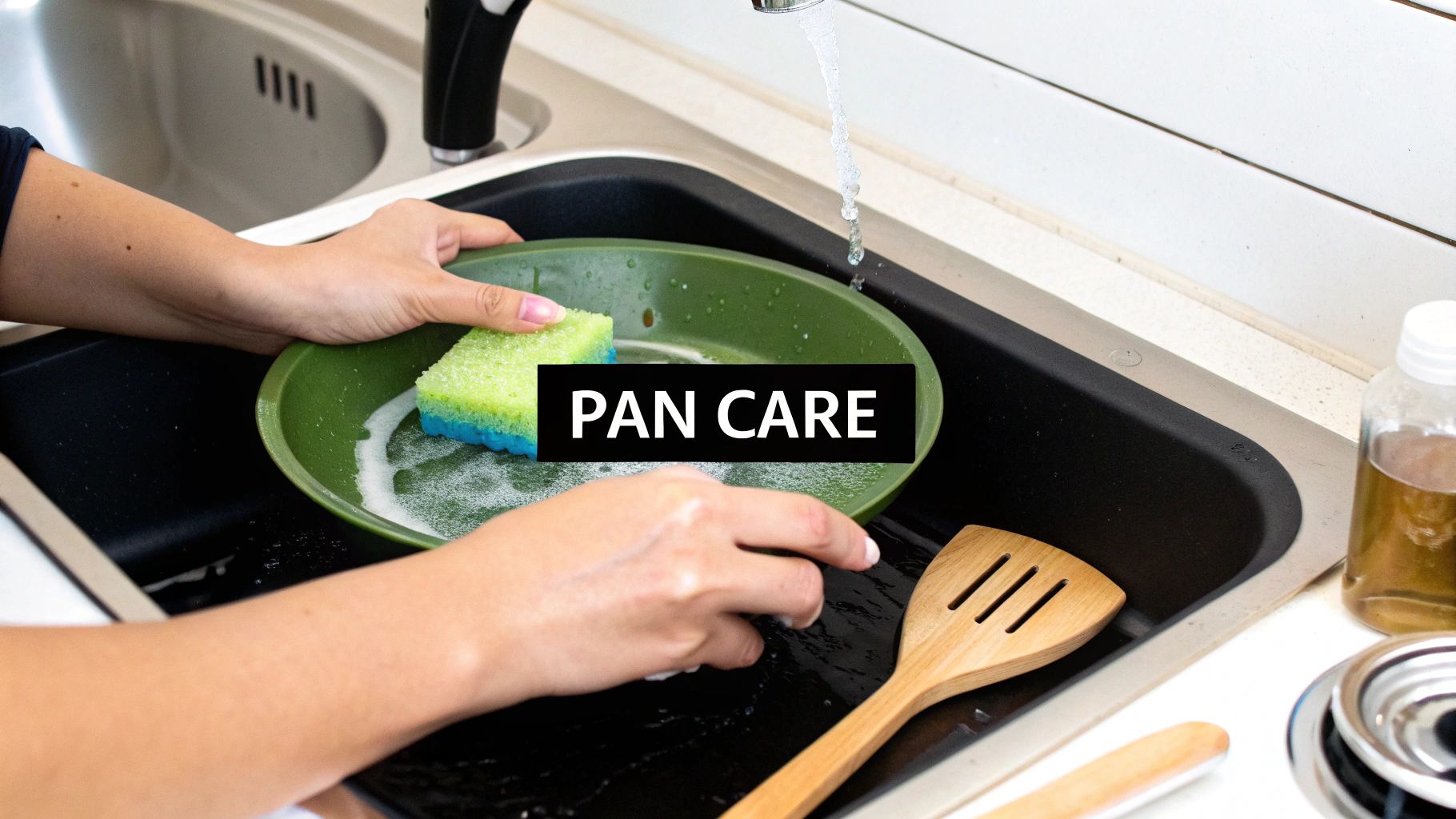
With a little know-how, you can make sure every meal slides right out, just like it did the first time you used it.
The Golden Rules of Heat Management
If there's one thing that will ruin a ceramic coating fast, it's blasting it with too much heat. Thanks to their aluminium or stainless steel cores, these pans get hot quickly and hold that heat incredibly well. That means you almost never need to turn your stovetop dial past medium.
The secret to a long-lasting ceramic pan isn’t high heat; it’s consistent, controlled heat. Cooking on low-to-medium settings is almost always sufficient and is the single most important habit for preserving the non-stick surface.
Cranking the heat can cause the coating to break down over time, which is when food starts to stick and cooking becomes a chore. A great rule of thumb is to gently preheat the pan on low for a minute or so before adding any oil or food. This lets the heat spread out evenly without shocking the surface.
Choosing the Right Tools and Oils
What you put in the pan is just as crucial as the heat you put under it. A ceramic surface is tough, but it's not invincible. Metal utensils will easily scratch the coating, creating tiny grooves where food can get trapped and burn.
To keep that surface pristine, stick with gentle tools. Think of these materials as your pan's best mates:
- Silicone: It’s flexible enough not to scratch but sturdy enough to flip a pancake.
- Wood or Bamboo: These classic materials are naturally soft and safe for any non-stick pan.
- Nylon: A reliable, heat-resistant plastic that won’t do any damage.
Metal spatulas, forks, or knives are a definite no-go. The same goes for certain cooking oils. While a little bit of high-smoke-point oil (like avocado or grapeseed) is perfect, never use aerosol cooking sprays. The propellants in these sprays build up a sticky, invisible film that’s nearly impossible to scrub off and will completely ruin your pan’s non-stick magic.
The Definitive Guide to Cleaning
This is the final piece of the puzzle. While many brands market their pans as "dishwasher-safe," your pan will thank you for handwashing it. The intense heat and harsh detergents inside a dishwasher are just too aggressive and will wear down the coating over time. It's helpful to understand what those dishwasher-safe pan labels really mean.
For the best results, just follow these simple steps:
- Let It Cool Down: Never, ever put a hot pan in a sink full of cold water. The sudden temperature change, known as thermal shock, can cause the pan to warp or even crack the coating.
- Use a Soft Sponge: A soft cloth or a non-abrasive sponge is all you’ll ever need. Keep steel wool and scouring pads far away.
- Warm, Soapy Water: A bit of gentle dish soap and warm water is enough to lift off almost any residue.
- Dry Thoroughly: Once it’s clean, give it a proper dry with a tea towel before putting it away. This prevents water spots and keeps it looking fresh.
This approach isn't unique to cookware. Whether you're learning how to care for ceramic tiles or a new pan, the principle is the same: gentle, consistent maintenance delivers the best results. Treat your ceramic pan with a little bit of respect, and it will reward you with years of flawless cooking.
Let's Bust Some Common Myths About Ceramic Cookware
When you're trying to choose new cookware, it's easy to get lost in a sea of conflicting information, especially when it comes to ceramic pans. A lot of myths and misunderstandings out there can unfortunately steer you away from a great addition to your kitchen. So, let’s clear the air and tackle some of the most common myths head-on.
One of the biggest misconceptions is that "ceramic" means the pan is made entirely from clay, like a pot you'd find in a pottery studio. While you can find 100% pure ceramic cookware, the pans you see everywhere are almost always ceramic-coated.
They start with a metal core – usually aluminium or stainless steel – and are then coated with a super-slick, mineral-based non-stick layer. This smart design gives you the best of both worlds: the brilliant, even heating of metal and a safe, non-toxic cooking surface.
Myth One: Ceramic Pans Are Indestructible
It would be nice, wouldn't it? But the idea that ceramic pans are scratch-proof and will last forever is just not true. A good quality ceramic coating is definitely tough, but it’s not invincible.
Think of it like the protective glass on your smartphone screen. It’s built to be durable, but a sharp knock or a bad drop can still cause damage. The same goes for your pan. Metal utensils can scratch or chip the surface, and repeatedly cranking the heat up too high will cause the non-stick properties to break down over time. Using abrasive scourers is also a sure-fire way to ruin the finish.
The honest truth is that no non-stick pan lasts forever. How long your ceramic cookware performs well is directly linked to how you treat it. Gentle use, sticking to low-to-medium heat, and using the right utensils are the real secrets to its longevity.
Myth Two: All Ceramic Coatings Are Created Equal
It’s easy to fall into the trap of thinking that if a pan is labelled "ceramic," they're all pretty much the same. In reality, the quality of the coating can vary wildly from one brand to another.
The best ceramic pans feature advanced, multi-layer sol-gel coatings, often reinforced with materials like titanium or diamond dust to boost their durability. On the flip side, cheaper pans often have just a single, thin layer of coating that can wear out incredibly quickly. This is usually why you hear stories of pans losing their non-stick magic after only a few months.
When you're shopping, it really pays to invest in a brand known for its high-quality coating technology. Once you know the truth behind these myths, you can make a much more informed choice and understand exactly how to care for your new cookware to keep it in top shape.
A Few Common Questions About Ceramic Pans
Even with all the details covered, a few questions probably come to mind. Let's get straight to the point and answer the things most home cooks wonder about before they buy or while they're using ceramic pans.
This is your go-to spot for quick troubleshooting and practical advice, helping you get the most out of your cookware with total confidence.
Are Ceramic Pans Actually Safe to Cook With?
Yes, absolutely. In fact, their safety is one of the biggest reasons they've become a kitchen favourite. Proper ceramic coatings are created from a mineral-based gel, which results in a naturally slick cooking surface.
What's really important is what they don't contain. They are completely free of chemicals like PTFE (the stuff in traditional Teflon) and PFOA. This means you can heat the pan without ever worrying about nasty compounds getting into your family's dinner, giving you real peace of mind.
Why Is My Ceramic Pan Suddenly Sticking?
This is easily the number one headache people have with non-stick cookware, and the reason is almost always the same: a hidden buildup of oil. It sounds strange, but over time, tiny droplets of cooking oil and fat can bake onto the surface, forming a sticky, transparent layer.
This residue basically cancels out the non-stick properties of the pan. It's often caused by using aerosol cooking sprays (they contain propellants that burn on easily) or just cranking the heat up too high. To fix it, try a gentle scrub with a soft sponge and a paste made from bicarbonate of soda and water—it can often bring that slick surface right back.
When a non-stick pan starts to stick, the problem usually isn't the pan itself. It’s a nearly invisible film of polymerised oil that needs a deep (but gentle) clean to restore its performance.
How Long Will a Ceramic Pan Realistically Last?
The lifespan of your ceramic pan comes down to how you treat it. Unlike cast iron or stainless steel that can be passed down through generations, non-stick coatings all have a limited life. With the right care, you can expect a quality ceramic pan to serve you well for 2 to 5 years.
To get the most out of it, just stick to a few simple rules:
- Keep the heat low-to-medium. High heat is the enemy of non-stick coatings.
- Stick to silicone or wooden utensils. Metal will scratch and ruin the surface.
- Wash by hand with a soft sponge. Dishwashers are too harsh.
- Let it cool down before washing. Plunging a hot pan into cold water can cause thermal shock, which can warp it or damage the coating.
Making these small habits part of your routine will make sure your pan keeps delivering delicious, hassle-free meals for years.
At Everti, we're passionate about outfitting kitchens with tools that are safe, reliable, and genuinely enjoyable to cook with. While we specialise in pure titanium cookware, we believe that understanding how to choose and care for all quality kitchenware helps every home cook. See our collection of lifetime-quality pieces at https://everti.com.au.