

When you start looking for the best ceramic pots and pans, it's easy to see why so many Australian cooks love them. They offer a fantastic non-toxic, non-stick surface and come in a whole range of beautiful colours. The best ones usually have a solid aluminium core for great heat distribution, topped with a quality ceramic coating that's completely free from nasties like PTFE and PFOA. This makes them a go-to for anyone building a health-focused kitchen.
Why Australian Kitchens Are Embracing Healthier Cookware
The Aussie kitchen has really changed. It’s no longer just a place to knock up a meal; it's become the true heart of the home, a hub where family connects and well-being is nurtured. This evolution has sparked a real movement towards healthier, non-toxic cookware, as more and more of us start questioning what's in our old non-stick pans.
We've all heard the growing concerns about chemicals like perfluorooctanoic acid (PFOA) and polytetrafluoroethylene (PTFE), which were common in traditional non-stick coatings. The worry is that if these surfaces get scratched or overheated, they could potentially release unwanted substances into your food and the air.
This shift in awareness is exactly why materials like ceramic and pure titanium are becoming so popular. They give you the confidence to cook freely, focusing on creating delicious, nutritious meals without second-guessing the safety of your gear. Ceramic pots and pans, in particular, have become a favourite for those making the switch.
The Search for Purity and Performance
Of course, a great piece of cookware needs to be more than just safe—it has to perform. From the fresh produce at the local farmers' market to the techniques seen on TV cooking shows, Australian home cooks demand a lot from their tools. They need to be reliable, versatile, and a joy to use.
That's where this guide comes in. We’re here to help you navigate the choices. We'll put two of the top healthy cookware contenders head-to-head:
- Ceramic Cookware: Famous for its slick, non-stick surface and stylish looks, it's a brilliant, easy-to-use option for your daily meals.
- Pure Titanium Cookware: Valued for its incredible durability, purity, and high-heat performance, making it a buy-it-for-life investment for the passionate cook.
By getting to know the unique strengths and weaknesses of each material, you can pick the one that truly fits your cooking style, health priorities, and what you want from your kitchen in the long run.
Setting the Stage for a Better Choice
Think of this article as your personal roadmap. We’ll dive deep into what actually makes cookware ‘healthy’, comparing the beautiful—but often delicate—nature of ceramic coatings with the almost indestructible resilience of pure titanium.
Understanding the real differences between various healthy cooking pans is the first step towards creating a kitchen that genuinely supports your health. Our aim is to give you the confidence to invest in cookware that’s not only safe and durable but also delivers fantastic results, meal after meal, for years to come.
What's the Big Deal with Ceramic Cookware?
When you first start looking at the best ceramic pots and pans, it’s easy to get a bit confused. Those beautiful, colourful pans you see everywhere aren't actually solid ceramic. They're what we call ceramic-coated cookware. Think of it as a metal pan—usually aluminium, because it heats up so well—that’s been given a special non-stick coating.
This slick surface is created using a clever method called the sol-gel technique. Essentially, a silica-based gel made from sand is sprayed onto the pan's surface and then baked at a high temperature. This process creates a hard, glassy finish that’s naturally non-stick, all without the old-school chemicals.
It’s an important distinction to make. While you can find 100% pure ceramic gear (like your classic stoneware baking dish), it's the lightweight, coated version that has really taken over modern kitchens.
Why Health-Conscious Aussies Are Making the Switch
The number one reason ceramic cookware has boomed is because it’s non-toxic. For a long time, there were growing worries about the chemicals used in traditional non-stick pans, specifically things like PTFE (polytetrafluoroethylene) and PFOA (perfluorooctanoic acid). Ceramic cookware offered a breath of fresh air.
Because the sol-gel coating is completely free of these chemicals, you get to cook for your family with total peace of mind. There’s no fear of nasty fumes being released if you accidentally let the pan get too hot.
This focus on health has had a huge impact on what people are buying. The Australian cookware market was valued at USD 664.44 million in 2024, and ceramic pans are grabbing a serious slice of that pie. In fact, the Aussie ceramic cookware segment is set to grow by 9.6% annually, hitting around USD 91.08 million. It’s all part of a bigger shift. Since the pandemic cooking craze and the enduring popularity of shows like MasterChef Australia, people are consciously moving away from old non-stick surfaces to chemical-free alternatives. You can dive deeper into these market trends and projections on IMARC Group.
The core promise of ceramic cookware is simple but compelling: get all the easy-release benefits of non-stick without the chemical baggage of older coatings. It’s a perfect fit for anyone building a clean, non-toxic kitchen.
How Does It Handle in a Real Kitchen?
Safety is great, but a pan has to perform. Luckily, ceramic cookware delivers. Thanks to its aluminium core, it’s fantastic at both holding heat and spreading it evenly.
Let's look at a few everyday examples:
- Searing Barramundi: A good ceramic pan gets hot evenly across the entire surface. This means you can get that perfect, crispy golden skin on a delicate fish fillet without any annoying hot spots that just burn one side.
- Simmering a Bolognese: The pan's ability to maintain a steady temperature is brilliant for slow-cooked sauces. You can let a bolognese bubble away for hours to develop those deep, rich flavours, without it sticking and catching on the bottom.
- Frying an Egg: That ultra-slick surface means you need barely any oil to fry an egg, and it’ll slide straight onto your toast. It makes the cooking—and the cleanup—a breeze.
It's this blend of a non-toxic surface, dependable heat control, and no-fuss maintenance that has made ceramic cookware a staple in so many Australian homes. It just hits that sweet spot between healthy living and practical, everyday performance.
Comparing Performance: Ceramic Versus Titanium Cookware
When you’re weighing up ceramic and titanium cookware, you're really looking at how each one will hold up in a busy Australian kitchen. This isn't just about looks; it's about getting to grips with the real-world differences in how they manage heat, stand up to daily use, and fit into a healthy lifestyle. Both have their fans, but their performance couldn't be more different.
If you value easy non-stick cooking and a splash of colour, the best ceramic pots and pans have an immediate appeal. On the other hand, pure titanium is engineered for a lifetime of serious cooking, celebrated for its rugged durability and absolute material purity. Let's break down the key differences to help you figure out which one really belongs in your kitchen for the long haul.
Heat Distribution and Responsiveness
Great cookware starts with great heat control. It’s what separates a perfectly cooked meal from one that’s burnt on the outside and raw in the middle.
Ceramic-coated pans, which usually have an aluminium core, are fantastic conductors. They get hot fast and spread that heat evenly across the pan’s surface. This makes them a go-to for quick, everyday jobs like scrambled eggs or pancakes, where you just need consistent, moderate heat.
Titanium, however, offers a completely different kind of control. It takes a little longer to heat up, but once it’s hot, its ability to hold and radiate that heat is second to none. This is exactly what you need for high-heat cooking, like searing a steak to get that perfect crust without overcooking the centre. Titanium's thermal stability is a game-changer—it won't suddenly cool down when you add ingredients, giving you incredible precision.
Key Takeaway: Ceramic is quick and even, making it great for daily cooking on low-to-medium heat. Titanium offers superior heat retention and stability, making it the clear winner for searing and any cooking that demands precise temperature control.
This infographic neatly sums up why so many cooks are drawn to ceramic cookware.
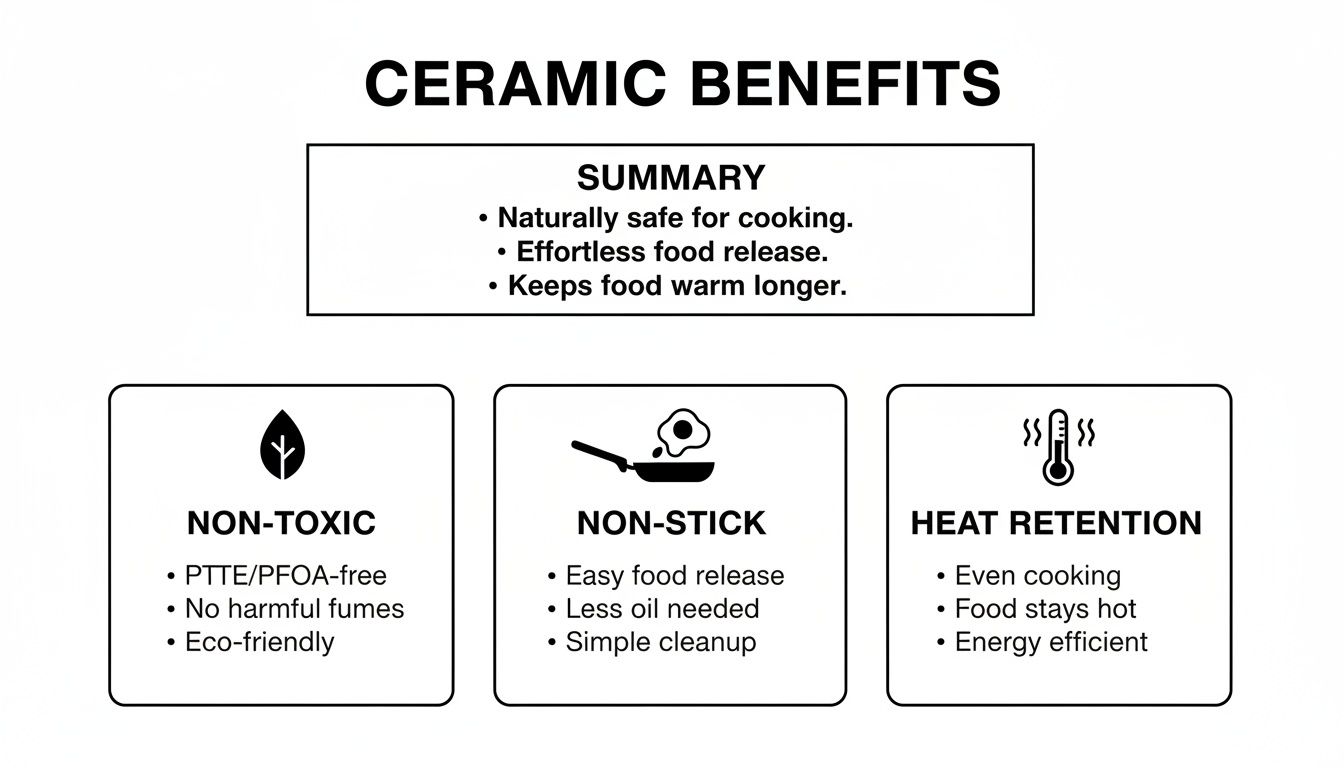
It’s clear its main attractions are a non-toxic surface, effortless non-stick performance, and solid heat retention.
Durability And Longevity
This is where the difference between ceramic and titanium becomes stark. The biggest downside to ceramic cookware is its delicate coating. That sol-gel surface is essentially a very thin layer of glass, which means it’s prone to scratches, chips, and even cracks.
You can forget about using metal utensils; they can damage the non-stick layer in an instant. Even stacking the pans without a protector can cause scuffs that ruin their performance. And if you’ve ever moved a hot pan straight to a cold sink, you’ll know all about thermal shock, which can cause the coating to crack.
Pure, uncoated titanium, on the other hand, is one of the toughest materials you can get for cookware. Everti’s SGS-verified 99.9% pure titanium pans are practically indestructible in a home kitchen. They’re completely scratch-resistant, so go ahead and use your metal utensils. They won't rust or corrode, and you can throw them from a hot stove into a cold sink without any risk of warping or cracking. Titanium is a true buy-it-for-life investment.
The numbers don't lie. Ceramic is known to crack under thermal shock 30% more often than metals. In busy homes, it's not uncommon for ceramic pans to be replaced at a rate of up to 22% annually, while pure titanium cookware like Everti's has a near-zero replacement rate, backed by a lifetime guarantee.
Material Safety and Purity
Both ceramic and titanium get a lot of praise as healthier options than old-school non-stick pans with PFOA and PTFE. But their safety profiles aren't quite the same, especially over time.
A brand-new ceramic pan is perfectly safe. The surface is non-reactive and non-toxic. The problem starts when that surface gets damaged. Once the ceramic layer is scratched or chipped, the metal underneath—usually aluminium—is exposed. This means it could potentially leach into your food. So, the long-term safety of ceramic really depends on how babied it is.
Pure titanium, especially uncoated pans like ours at Everti, offers a level of safety that’s simply unmatched. With no coating, there’s nothing to chip, peel, or break down over the years. Titanium is biocompatible and inert, which means it will never react with acidic foods or leach anything into your meal. Ever. What's more, Everti’s titanium is naturally antibacterial, proven to reduce bacteria by 99.9% without any chemicals.
Feature Showdown: Ceramic vs. Pure Titanium Cookware
To make things even clearer, here’s a quick side-by-side look at how these two materials stack up in the kitchen.
| Feature | Ceramic Cookware | Everti Titanium Cookware |
|---|---|---|
| Non-Stick Surface | Excellent when new, but degrades with scratches and heat. | Not truly non-stick; requires proper heating and oil. |
| Utensil Compatibility | Needs silicone, wood, or nylon to avoid scratching. | Fully compatible with all metal utensils. |
| Heat Tolerance | Best for low-to-medium heat; high heat damages coating. | Excellent for high-heat searing and all temperature ranges. |
| Lifespan | Typically 1–3 years with very careful use. | A lifetime investment, often with a lifetime warranty. |
| Long-Term Safety | Safe until the coating is compromised. | Inherently safe for life—no coating to degrade. |
This table highlights the core trade-offs. You can dive even deeper into the specific pros and cons of using titanium cookware in our detailed guide. In the end, it boils down to what you prioritise: the instant, easy-release convenience of ceramic, or the bulletproof durability and absolute purity of titanium.
How To Choose The Right Cookware For Your Lifestyle
Technical specs and performance figures are one thing, but the best cookware is the one that actually fits into your daily life. The real trick is translating durability stats and heat charts into how a pan will perform on a busy weeknight. Let’s look at a few common Australian cooking styles to see whether ceramic or titanium is the right long-term partner for your kitchen.
Your cooking habits, what you value most, and even your patience for maintenance will point you towards the right material. Whether you're whipping up quick meals or dedicating weekends to culinary projects, the right pan makes all the difference.
The Everyday Family Cook
For the busy parent juggling work, school runs, and hungry kids, convenience is everything. The main goal is getting a healthy, tasty meal on the table fast, with as little cleanup as possible.
This is where the best ceramic pots and pans seem to shine, at least initially. Their super-slick non-stick surface is a lifesaver for sticky foods like scrambled eggs or cheese toasties, and you can get away with using very little oil. More importantly, cleanup is often a simple wipe-down, which is a massive win on a hectic Tuesday night.
The catch, however, is fragility. In a bustling family kitchen where pans might get stacked hastily or even dropped, a ceramic coating is incredibly vulnerable to chips and scratches. Once that surface is damaged, its non-stick magic is gone, and you might start worrying about its safety.
Recommendation: Ceramic is a strong contender for its ease of use and cleanup, but only if you have the discipline to handle it with care. If your kitchen reality involves metal tongs and a rushed wash-up, the short lifespan of ceramic could lead to a cycle of frustration and repeat purchases.
The Passionate Home Chef
The passionate home chef is all about precision, control, and using proper techniques to create exceptional dishes. This person isn't just feeding people; they are exploring flavours and perfecting their craft, from getting that perfect steak crust to delicately simmering a complex sauce.
For this kind of cook, titanium cookware is the undisputed champion. Its superior heat retention and stability provide the exact control needed for high-heat searing and nuanced temperature adjustments. Unlike ceramic, titanium can handle extreme heat without any risk of damage, making it ideal for techniques that would destroy a lesser pan.
The ability to move seamlessly from a high-temperature sear on the stovetop directly into a hot oven gives titanium a versatility that ceramic simply can’t match. This durability empowers the creative cook to experiment without hesitation.
On top of that, the incredible longevity of pure titanium means it becomes a trusted, lifelong kitchen tool. It stands up to metal utensils, abrasive cleaning, and the demands of ambitious cooking, performing just as well year after year.
The Health-First Purist
The health-first purist puts material purity above everything else. Their main concern is ensuring that absolutely nothing leaches from their cookware into their food, ever. They value clean, non-toxic materials and are willing to invest in tools that guarantee long-term safety.
While ceramic is often marketed as non-toxic, its safety really depends on the coating staying perfectly intact. For a purist, this is a significant compromise. The potential for scratches to expose the underlying metal core creates a long-term uncertainty that just doesn't sit right.
Pure, uncoated titanium is the ultimate choice here. As a biocompatible and inert material, it offers total peace of mind. There is no coating to degrade, chip, or scratch. This means the cooking surface stays pure and non-reactive for life, no matter what you cook or which utensils you use.
Commercial stats highlight this durability gap: ceramics have a low adoption rate in professional kitchens at just 12%, compared to 28% for coated metals. This is often because they show significant scratching after only 500 uses. Innovators like Everti, Australia's first SGS-verified 99.9% pure titanium maker, offer a solution. Their pots and pans boast a strength-to-weight ratio that's 40% better than ceramic, a naturally antibacterial surface, and a microplastic-free guarantee, making them perfect for health-conscious cooks.
When figuring out how to choose the right cookware for your lifestyle, it can be helpful to look at specialised needs too. For instance, learning how to choose camping cookware often provides great insights into durability and material science that you can apply to any kitchen investment.
Analysing Cost Versus Lifetime Value
It’s easy to get fixated on the price tag, but the real value of cookware reveals itself over years of Sunday roasts and weeknight stir-fries, not at the checkout counter. To get a true sense of what you're spending, you have to look beyond the initial cost and think about the long-term investment. This is where ceramic and titanium cookware tell two very different stories.
Many of the best ceramic pots and pans in Australia look like a fantastic deal upfront. You get a non-toxic, non-stick surface without a huge dent in your wallet, which is certainly appealing. But that lower entry price often hides the recurring cost of having to replace them far sooner than you'd expect.
The Hidden Cost of Ceramic Replacement Cycles
Even if you treat it with the utmost care, the lifespan of a typical ceramic-coated pan is only around 2-5 years. The non-stick coating is delicate; it’s susceptible to scratches, chips, and damage from high heat. Over time, it just stops working as it should, which can also bring up safety concerns.
Think about what that means over a decade. A decent ceramic frying pan might set you back $80. If you have to replace it every three years, you’ve spent over $240 on that single pan. Now multiply that across a whole set of cookware. That initial bargain quickly turns into a frustrating and expensive habit.
This constant replacement cycle doesn't just hit your bank account. It also means more waste heading to landfill and that nagging feeling you get when cooking on a surface that’s seen better days.
The true cost of less durable cookware isn't just the money spent on replacements; it's the continuous cycle of buying, discarding, and compromising on performance and peace of mind.
Titanium as a Lifetime Investment
Premium titanium cookware, like the pieces we offer at Everti, completely turns that financial logic on its head. Yes, the initial investment is higher—there's no denying that. But it's designed to be a one-time purchase that lasts a lifetime. Brands like ours stand by that with a lifetime warranty, which means you can pretty much wipe replacement costs off your budget for good.
Imagine buying one pan that you know will perform perfectly for decades. You can use metal utensils, crank up the heat, and use it every single day without it breaking down. There’s no coating to peel or scratch off, so you'll never have to buy it again. Your cookware shifts from being a disposable kitchen tool to a permanent kitchen asset.
Cost Analysis Over 10 Years
| Cookware Type | Initial Cost (Example) | Replacement Frequency | 10-Year Estimated Cost |
|---|---|---|---|
| Ceramic Pan | $80 | Every 3 years | ~$240+ |
| Titanium Pan | $250 | Once (Lifetime) | $250 |
The numbers speak for themselves. Over the long haul, the buy-it-once approach of titanium offers far better economic value. The higher upfront cost is quickly balanced out by the money you save on replacements. For anyone wanting to make a smart investment, understanding what makes good quality pots and pans is the first step toward a choice that pays off for both your kitchen and your finances.
Got Questions About Your Cookware? We Have Answers.
Picking the right cookware is a big deal, and it’s smart to have a few questions. Whether you’re eyeing off the colourful appeal of the best ceramic pots and pans or considering the rugged, long-term promise of pure titanium, getting straight answers helps you buy with confidence. Here, we tackle the most common queries we hear from Australian home cooks.
We’ll dig into the practical side of things—safety, durability, and what it’s like to use them day in, day out. The goal is to clear up any lingering doubts so you can choose the pans that truly fit your kitchen, your cooking style, and your health priorities for the long haul.
Are The Best Ceramic Pots And Pans Completely Safe?
Generally, yes. A high-quality ceramic pan made without lead or cadmium is a safe option for your kitchen. The big drawcard is its non-stick surface, which is completely free from chemicals like PTFE and PFOA—a massive tick for anyone focused on healthy cooking.
But there’s a catch. The long-term safety of a ceramic pan is only as good as its coating. If that surface gets scratched or chipped, the metal underneath (usually aluminium) can come into contact with your food. This is exactly why you have to be so careful to avoid metal utensils and harsh cleaning pads.
For guaranteed lifetime safety, you really can’t go past an uncoated material like pure titanium. With no coating to degrade, chip, or scratch off, it offers a completely non-reactive cooking surface that will never leach a thing into your food. That’s permanent peace of mind.
Can I Use Metal Utensils On Ceramic Pans?
In a word, no. Using metal utensils on ceramic-coated cookware is one of the fastest ways to destroy it, so it’s a definite no-go. While the ceramic surface feels solid, it's surprisingly brittle and scratches easily when it meets a metal spoon, spatula, or whisk.
As soon as that smooth surface is compromised, the pan loses its non-stick magic, and its safety can become a question mark. To keep your cookware going, you need to stick to utensils made from softer materials like silicone, wood, or nylon.
This is a huge point of difference when you look at solid 99.9% pure titanium cookware, like the range from Everti. It's tough enough to handle any metal utensils you throw at it without getting damaged, which gives you so much more flexibility and resilience in a busy kitchen.
How Do I Maintain Ceramic Cookware To Make It Last?
If you want to get the most out of your ceramic cookware, proper care is non-negotiable. Following a few simple rules is the only way to stretch out its relatively short lifespan and keep it working as it should.
To keep your ceramic pans in good shape, build these habits:
- Avoid Thermal Shock: Never plunge a hot pan into cold water. Let it cool down completely first, otherwise the brittle coating can crack.
- Hand Wash Gently: It’s always best to wash by hand with a soft sponge and warm, soapy water. Stay away from abrasive scourers or steel wool—they will scratch the surface.
- Skip the Dishwasher: Some brands might say they're dishwasher-safe, but the high heat and harsh detergents will break down the non-stick coating over time. Hand washing is always the safer choice.
- Soak, Don't Scrape: For stubborn, burnt-on messes, let the pan soak in warm water. Don’t try to force it off by scraping.
- Store Carefully: If you stack your pans, pop a soft cloth or a proper pan protector between each one to prevent scratches.
Is Titanium Better Than Ceramic For High-Heat Searing?
Absolutely. When it comes to getting a serious high-heat sear, premium titanium cookware is in another league. Uncoated, pure titanium has an incredibly high melting point and amazing thermal stability, which means it can handle the intense temperatures needed for a perfect sear without any risk of damage.
Ceramic coatings, on the other hand, just aren’t designed for that kind of heat. If you expose them to very high temperatures repeatedly, the non-stick properties break down, and the surface can be permanently damaged. This makes ceramic a poor choice for any cooking technique that relies on a screaming hot pan.
Titanium’s ability to take and transfer intense, consistent heat makes it the clear winner for any cooking that needs precise temperature control. It delivers those reliable, professional-grade results where a ceramic pan would likely fail, making sure you get that perfect crust on your steak or fish, every single time.
Ready to upgrade to cookware that's built to last a lifetime? Explore the pure, uncoated, and naturally antibacterial range from Everti and discover the difference that lifetime durability makes.