

So, what exactly is a camping composting toilet? Think of it as a smart, self-contained sanitation system that works without water or chemicals. It cleverly separates liquid and solid waste, allowing the solids to break down naturally. This process pretty much eliminates odours and turns the waste into a safe, soil-like material. It's the perfect off-grid solution for caravans and campervans, giving you total freedom from dump points.
Why a Composting Toilet Is a Modern Camping Essential
Let's be honest, nobody enjoys dealing with smelly chemical toilets or planning their trip around the next dump station. The whole point of camping is freedom and connecting with the incredible Aussie landscapes we love. A composting toilet isn't just another piece of gear; it’s a game-changer that makes your sanitation simple, clean, and sustainable.
At its heart, a composting toilet is more than just a portable loo—it's a complete waste management system that fits neatly in your van. The magic lies in a simple but brilliant principle: separation.
By diverting liquids (urine) from solids (faeces), the toilet stops that awful sewage smell from ever starting. The solids are then mixed with something like coconut coir or peat moss, which kicks off a natural, oxygen-rich decomposition process. The result? A surprisingly odour-free experience.
The Shift Towards Greener Camping
This move away from old-school portable toilets is all part of a bigger picture of responsible travel. Chemical toilets rely on harsh additives and use up a lot of flushing water, which is the last thing you want to waste. They also keep you tethered to designated disposal facilities.
A composting toilet, on the other hand, just makes sense.
- Eco-Friendly: You're not pouring chemicals into the environment, and you're saving a ton of water—a huge plus anywhere in Australia.
- Total Freedom: Forget dump stations. You can stay off-grid for weeks at a time, exploring remote spots without a single worry about waste disposal.
- No Bad Smells: When you use them right, these toilets genuinely don't smell. That makes life inside a van, tent, or caravan so much more pleasant.
- Easy to Manage: Emptying the separate urine and solids containers is a much cleaner and less frequent job than wrestling with a full chemical cassette.
You can see this shift happening all over Australia’s off-grid and van life communities. Brands like OGO Origin and Nature's Head are now common fixtures in new van builds and caravan fit-outs, which shows just how much travellers want solutions that are both convenient and kind to the environment.
To get a better handle on the science, it's worth reading up on the principles behind waterless sanitation to see how these systems have evolved. And while you’re kitting out your setup, be sure to check out our list of the best camping gadgets to round out your gear.
https://everti.com.au/blogs/news/best-camping-gadgets
How a Camping Composting Toilet Really Works
The idea of a toilet that needs no water or chemicals and simply creates compost can seem a bit like magic at first. But a camping composting toilet actually runs on some very simple, natural principles. The best way to get your head around it is to stop thinking of it as a "toilet" and start seeing it as a cleverly designed, miniature compost system that handles waste hygienically.
The whole setup is engineered to encourage aerobic decomposition. That’s just a fancy way of saying it creates the perfect environment for the "good" bacteria—the ones that need oxygen—to get to work breaking down solid waste. These microscopic helpers transform everything into a safe, soil-like material, all without the nasty smells you probably associate with old-school portable toilets.
A regular toilet just flushes everything into a sludgy, oxygen-starved mess, which is what creates that unmistakable sewage smell. A composting toilet, on the other hand, is all about control and separation. Two key functions work in tandem to keep the whole process clean and remarkably odour-free.
The Secret Ingredient: Separation of Liquids and Solids
The single most important feature of any camping composting toilet is its ability to keep liquids and solids apart. This isn't just a clever design quirk; it's the absolute foundation of how the system works. When urine (which is mostly ammonia and water) mixes with faeces, you create the perfect breeding ground for anaerobic bacteria, which in turn produce smelly gases like hydrogen sulphide.
By keeping them separate from the get-go, you cut off the main source of odour before it even has a chance to start.
Inside the toilet bowl, a urine diverter channels liquid into a dedicated, sealed container at the front. Solid waste, meanwhile, drops straight down into a completely different chamber at the back. This simple mechanical split is the most effective feature for controlling smells.
This separation does more than just stop bad odours. It also makes managing the waste a whole lot easier and more hygienic. You can empty the liquids bottle frequently and discreetly, leaving the solids chamber untouched to begin the composting process.
Adding the Right Composting Medium
With the liquids diverted, the second piece of the puzzle is managing the solids. This is where the "composting" really kicks in. After each use, you cover the solid waste with a scoop of carbon-rich, organic material, often called a "bulking agent" or "composting medium."
This stuff does a few critical jobs:
- Absorbs Moisture: It soaks up any excess liquid in the solids, preventing the pile from getting soggy and stinky.
- Creates Air Pockets: Its coarse texture makes sure oxygen can circulate through the waste, which is exactly what those helpful aerobic bacteria need to thrive.
- Balances Carbon-to-Nitrogen: Just like a garden compost heap, the system needs the right mix of "greens" (nitrogen from the waste) and "browns" (carbon from the medium) to break down efficiently.
The most popular medium by far is coconut coir, a sustainable byproduct of the coconut industry. It's fantastic because it's lightweight, incredibly absorbent, and has a neutral smell. You can also use peat moss or even fine wood shavings. Most units have an agitator handle on the side, which you turn to mix the new material into the pile, keeping everything nicely aerated.
The diagram below shows this journey from waste to nutrient-rich compost, illustrating the shift from old chemical methods to today's sustainable systems.
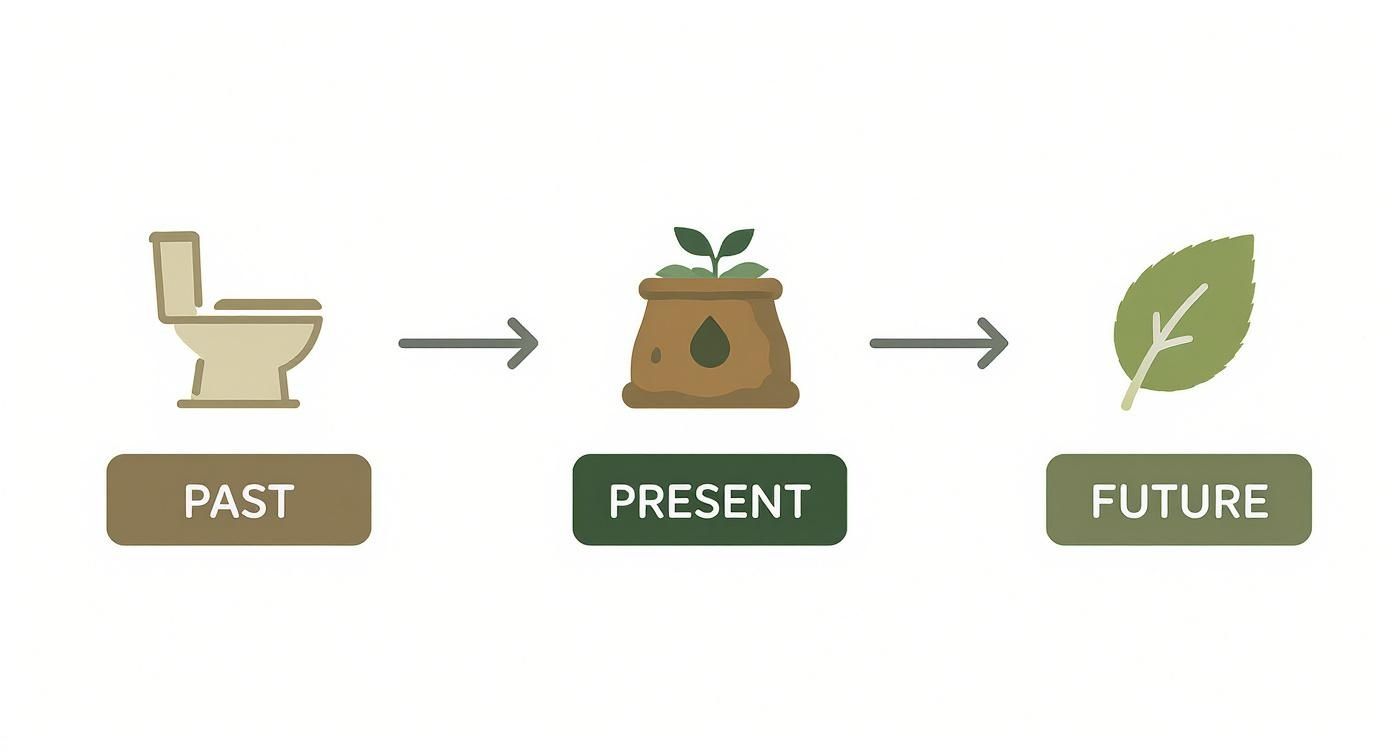
This visual really highlights how a composting toilet closes the loop, turning what used to be a disposal problem into an ecological benefit.
By combining urine diversion with a carbon-based medium, you create a dry, oxygen-rich environment where waste breaks down naturally and without any offensive smells. It’s a surprisingly effective process that turns a messy problem into a clean, manageable, and genuinely eco-friendly solution for life on the road.
Comparing the Different Types of Portable Composting Toilets
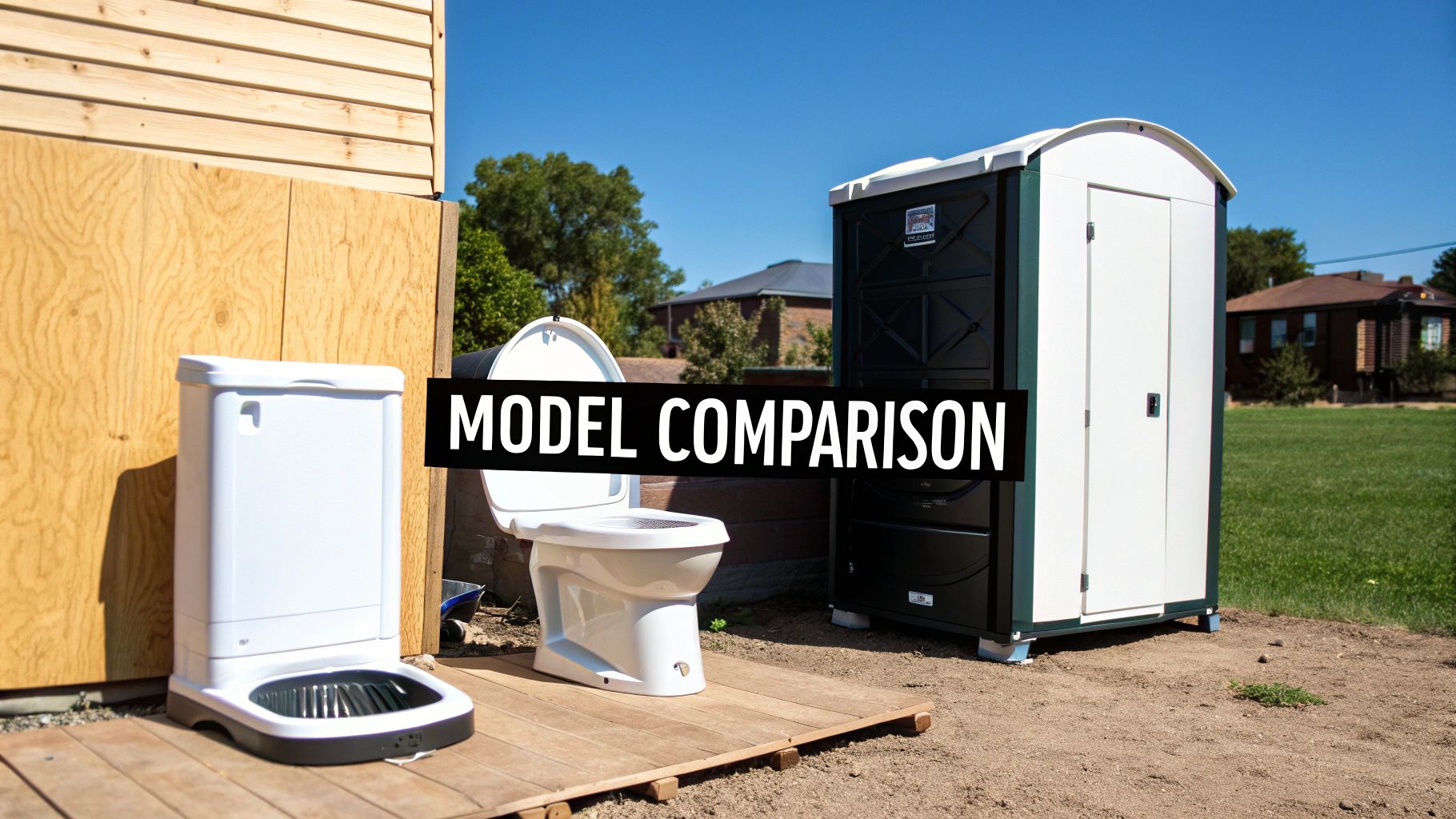
When you start looking for a camping composting toilet, it’s easy to think they’re all pretty much the same. But that's not quite right. The market is full of clever designs suited for different kinds of travellers, from full-time van-lifers to weekend tent campers. Getting your head around these differences is the key to finding a toilet that makes your trips easier, not harder.
You'll generally come across two main camps: self-contained units and minimalist portable systems. They each handle waste, capacity, and setup in their own way, which makes them a great fit for some but a poor choice for others. Let's dig into what sets them apart. To see how they stack up against other options, it's worth exploring the various portable toilet options for marine vessels, as many of the principles overlap.
Self-Contained Composting Units
These are the heavy hitters of the composting toilet world. Self-contained units are built for the long haul and are a favourite among those living off-grid in caravans, big campervans, or tiny homes. Models like Nature's Head or Air Head are basically permanent fixtures, often bolted right to the floor for stability.
Their big selling point is capacity. They come with large, separate containers for liquids and solids, which means you could go for weeks before needing to think about emptying the solids bin. Just about all of them feature a tiny, low-wattage 12V fan connected to an external vent. This nifty setup constantly pulls air through the solids container and pushes it outside, making your living space completely odour-free—a massive win in a small van.
- High Capacity: The solids tank can often handle 60-80 uses, which is perfect for couples or families on extended adventures.
- Active Ventilation: That little fan is a game-changer, creating negative pressure so no smells ever escape back into your vehicle.
- Permanent Installation: They’re designed to be a fixed part of your setup, giving you the stability and feel of a regular toilet.
The trade-off? You’re looking at a higher price tag and a more involved installation that requires drilling a hole for that all-important vent.
Minimalist Portable Systems
At the other end of the scale, you have the minimalist systems, where light weight and flexibility are the top priorities. These are an absolute godsend for weekend warriors, 4WD tourers, and tent campers who just need a simple, no-fuss solution for a few days away. Think of them as a smart, eco-friendly upgrade to the old bucket-and-sawdust method, but with the crucial addition of a urine diverter.
These units are incredibly compact and need zero installation. You can just grab them and go, moving them between vehicles or setting them up in a toilet tent. This growing demand for simple, sustainable options has led to some fantastic designs. You can find models that weigh under 3 kilograms, are made from recycled plastics, and can hold about 8-10 uses before they need emptying.
Because they lack active ventilation, managing odours relies entirely on using enough carbon material (like hemp litter or coconut coir) after each use. While effective, it requires a bit more diligence compared to a vented system.
Their smaller size means you'll be emptying both containers more often, usually after just a couple of days. But for short, casual trips, their sheer convenience and portability are hard to beat.
Comparison of Camping Composting Toilet Types
To help you see the differences at a glance, here’s a straightforward comparison of how these two types of composting toilets measure up.
| Feature | Self-Contained Units (e.g., Nature's Head) | Minimalist Portable Units (e.g., BOXIO) |
|---|---|---|
| Ideal For | Full-time van life, caravans, long-term trips | Weekend camping, 4WD touring, short trips |
| Capacity | High (60-80 solid uses) | Low (8-15 solid uses) |
| Installation | Permanent, requires venting and 12V power | None required, completely portable |
| Odour Control | Excellent (active fan and external vent) | Good (relies on composting medium) |
| Emptying Freq. | Solids every 3-4 weeks; liquids every 2-4 days | Solids every 3-5 days; liquids every 1-2 days |
| Cost | Higher initial investment | Lower and more affordable |
Ultimately, whether you choose a robust, self-contained unit or a lightweight, minimalist one comes down to how you travel. By weighing up these features, you can find the perfect fit for your adventures.
Keeping Your Toilet Clean and Odour-Free
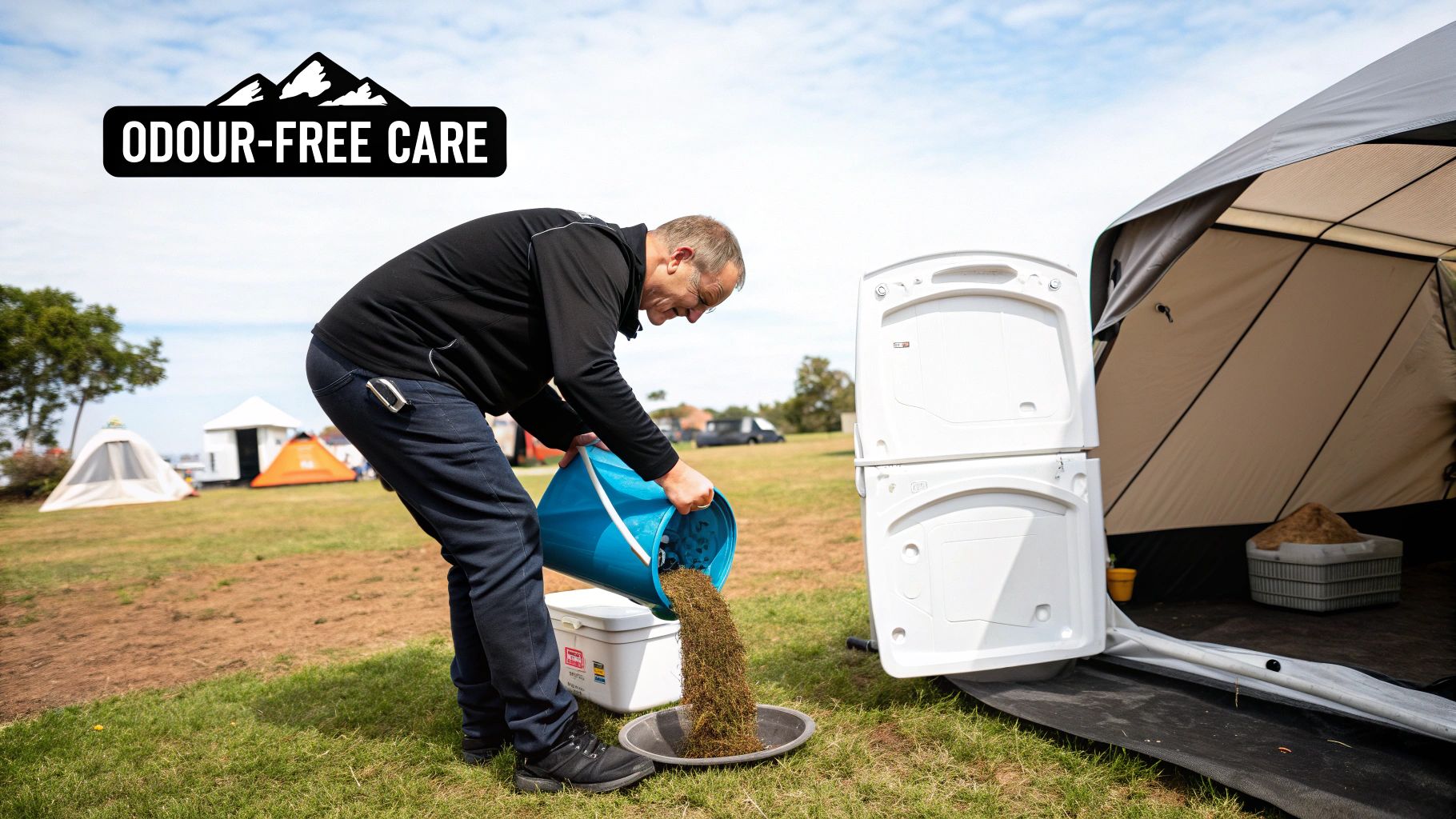
Let's clear the air about the biggest worry most people have with a camping composting toilet: the smell. Honestly, a well-managed unit is practically odourless. Unlike a chemical loo that just masks smells with more chemicals, a composting toilet is designed to stop them from ever developing. It all comes down to a few simple habits that are far less grim than emptying a chemical cassette.
The secret to an odour-free experience boils down to two things: keeping the solids dry and encouraging good airflow. Your toilet’s urine diverter does most of the heavy lifting by separating liquids from solids, but your choice of composting medium is what really nails the moisture control. Get this part right, and you’re golden.
Choosing and Using Your Composting Medium
Think of the composting medium as the heart of the system. This carbon-rich material is your go-to for soaking up moisture, creating little air pockets for the good bacteria to work their magic, and balancing the whole decomposition process. Adding a scoop after every number two isn't optional—it's essential.
For Aussie campers, these are the most popular choices:
- Coconut Coir: This is the crowd favourite, and for good reason. Made from coconut husks, it’s sustainable, super lightweight, and highly absorbent. It has a neutral, earthy scent and comes in compressed bricks that are a breeze to store in the van.
- Peat Moss: Another great option. Peat moss is brilliant at absorbing moisture and creating a nice, airy texture. Just be aware there are growing environmental concerns around how sustainably peat bogs are harvested.
- Fine Wood Shavings or Sawdust: Easy to find and cheap, fine shavings work a treat. The key is to use fine shavings, not chunky wood chips, and make sure they come from untreated timber so they can cover everything properly.
To get it ready, you just rehydrate a compressed coir brick with a little water until it’s damp and crumbly, kind of like fresh garden soil. You definitely don’t want it sopping wet.
Pro Tip: Keep your prepped composting medium in a sealed container right next to the toilet, with its own dedicated scoop. This makes it dead simple to add a generous layer after each use, which is hands down the most effective way to prevent smells.
Managing the Liquid and Solid Containers
Emptying the containers is a quick and easy job that keeps the whole system ticking along nicely. Trust me, it’s a far more pleasant task than wrestling with a sloshing, chemical-filled cassette.
Emptying the Urine Bottle
You’ll be emptying the urine bottle the most often, usually every 1-4 days, depending on its size and how many people are using it. Because urine is sterile, getting rid of it is straightforward. You can legally and safely pour it down any flushing toilet at a campground, public loo, or service station.
If you’re out in the bush, you can pour it out on the ground, but be sure to follow Leave No Trace principles. That means doing it at least 60 metres away from any water sources, walking tracks, or campsites. A quick rinse with a splash of water and a dash of vinegar after emptying stops any ammonia smells from building up.
Emptying the Solids Bin
This is the task everyone frets about, but you’ll probably only need to do it every 3-4 weeks. By that time, the contents won't look or smell like raw sewage at all—it will just look like damp soil. The standard and most accepted way to dispose of it is to bag the contents in a compostable bag and pop it into a general waste bin.
Following this practice is vital for protecting our sensitive environments. To put it in perspective, composting toilets have been used for decades in places like the Australian Alps National Parks, where normal septic systems just aren't an option. These park systems often require the waste to be composted for over a year to ensure it’s fully broken down and safe. It’s a great reminder of why proper, contained disposal is so crucial for campers. You can even read more about these high-country toilet systems to see how they’re managed.
Pro Tips for Aussie Conditions
Camping in Australia means you could be dealing with bone-dry heat one week and tropical humidity the next. A few small tweaks to your routine can make a massive difference.
- In High Humidity: Moisture is the enemy of a smell-free toilet. When it’s humid, be extra generous with your composting medium to soak up that ambient moisture. If your toilet has a fan, make sure it’s running constantly to help dry things out.
- Ventilation is Your Best Friend: For any unit with a 12V fan, good ventilation is non-negotiable. Check that the external vent is clear of any dirt or obstructions. This little fan creates negative pressure inside the solids bin, actively pulling any potential odours outside before you even get a whiff.
How to Choose the Right Composting Toilet
So, you're ready to take the plunge and get a composting toilet for your camping setup, but the options feel a bit overwhelming. Not to worry. Think of this as your personal buyer's guide—we're going to walk through the key questions to ask yourself to find the perfect model for your adventures.
Getting this right is all about matching the toilet to your specific style of travel. The needs of a family living full-time in a caravan are a world away from a solo weekender in a 4WD. Let's break down what really matters.
Evaluating Capacity for Your Crew
First things first: who's coming along and for how long? Capacity is easily the most important thing to get right, as it directly impacts how often you’ll be on emptying duty. This one decision can be the difference between a quick, easy task and a constant headache.
- Solo Travellers or Couples on Short Trips: You can easily get by with a smaller, portable unit. Something with a solids capacity of around 8-15 uses is usually perfect, as you'll just empty it when you get home.
- Families or Full-Time Van-Lifers: You’ll want a larger, self-contained unit, no question. Aim for a high solids capacity of 60-80 uses, which can stretch your emptying schedule out to every few weeks instead of days.
Here’s a pro tip: don’t just focus on the solids bin. The urine bottle almost always fills up first. For two people, a standard 8-litre liquids container will need to be emptied every 2-4 days. Make sure you factor that frequent, but easy, task into your routine.
Measuring the Physical Footprint
This one is pretty straightforward—you can’t fit a square peg in a round hole. Whether you’re sliding it into a custom van cabinet or popping it in a shower tent, you need to get the measuring tape out.
Check the width and depth, but don't forget the height. You need enough clearance to lift the seat and lid comfortably. And just as important, make sure you have enough wiggle room around the unit to actually remove the solids bin and liquids bottle. A toilet that fits snugly but is impossible to service is not a good buy.
Understanding Installation Requirements
The setup process can range from "literally zero" to a bit of a weekend project. The most basic portable units are good to go straight out of the box, making them fantastic for anyone who wants flexibility or uses multiple vehicles.
The bigger, self-contained units usually need a more permanent home. This often involves three simple steps:
- Bolting the unit to the floor so it doesn't go flying on a bumpy road.
- Connecting a small 12V fan to your rig's electrical system for ventilation.
- Drilling a small hole for the vent hose to run outside, either through a wall or the floor.
While it requires a little DIY, this permanent setup offers the best odour control by far.
Budget and Material Durability
Finally, let's talk about price and quality. Camping composting toilets are an investment, with costs ranging from a few hundred dollars right up to over a thousand. It can be tempting to go for the cheapest option, but remember this bit of gear needs to withstand the constant vibrations and bumps of Australian roads.
Look for models made from tough, high-quality plastics that are thick, durable, and easy to wipe down. Spending a bit more on a well-built unit from a trusted brand usually pays off with better design, fewer problems, and a much longer life. It's the same logic you'd apply to any core piece of kit; choosing quality materials, like in titanium camping cookware, means you can rely on it trip after trip.
The Real Benefits for Modern Campers
Making the switch to a camping composting toilet is more than just a gear upgrade—it's about changing the way you travel for the better. The perks are pretty compelling, covering everything from doing your bit for the environment to making life on the road a whole lot easier.
The biggest win is that it's a completely waterless system. For anyone camping in Australia, you know how precious water can be. Not needing it for flushing saves an incredible amount over a long trip. It also means you can ditch those harsh blue chemicals you find in traditional cassette toilets, which are pretty nasty for the environment if they're not handled perfectly.
More Freedom and Less Hassle
Eco-friendly is great, but it’s the practical side of things that really seals the deal for most campers. The absolute game-changer is breaking free from the dreaded dump point. You no longer have to meticulously plan your journey around where the next facility is or pack up early because your cassette is full. This opens up so many more opportunities to stay longer in those truly special, off-the-beaten-track spots.
With a composting toilet, you become genuinely self-sufficient. This one change can stretch your off-grid adventures from a few days into weeks, all while managing your waste cleanly and sustainably without needing to find a town.
That feeling of self-sufficiency is liberating. It's not just about convenience; it’s about building a more robust and independent camping setup. For those kitting out a full off-grid camp kitchen, this kind of freedom pairs perfectly with reliable gear like a titanium packable stove, creating a setup ready for anything.
At the end of the day, a camping composting toilet is a clear win-win. You get a more enjoyable, smell-free camping experience without the constant trips to a dump point. At the same time, you're actively helping to protect the incredible Australian landscapes we all love to explore, leaving a much lighter footprint behind you.
Got Questions? We’ve Got Answers
Getting your head around a new bit of gear is always part of the adventure. A camping composting toilet might be simple in design, but it’s the little day-to-day things that really matter when you're out on the road.
Let’s tackle some of the most common questions people have. Think of this as the final briefing before you head off, giving you the confidence to handle your new setup like a pro.
Can I Just Use Regular Loo Paper?
Yep, you absolutely can. Your standard, single-ply toilet paper from the supermarket is perfectly fine. It breaks down easily in the solids bin without any fuss. The only rule of thumb is to not go overboard with it.
What you do want to avoid are those fancy, super-plush, quilted, or lotion-infused rolls. They’re loaded with extra fibres and chemicals that can really slow down the composting process. While you can buy special rapid-dissolving paper for RVs or septic tanks, it’s not essential – single-ply gets the job done.
What’s the Right Way to Dispose of the Waste?
This is a big one, and getting it right is all about being a responsible traveller. The rules are straightforward and are there to protect the beautiful places we all love to visit.
- The Liquids Bottle: Your urine bottle will need emptying every 1-4 days. The easiest and best place to empty it is down a regular flushing toilet at a campground, public rest stop, or service station. If you're truly in the middle of nowhere, you can pour it on the ground, but make sure you are at least 60 metres from any water source, campsite, or track, just as you would with any grey water.
- The Solids Bin: This needs doing far less often – usually only every 3-4 weeks. The proper way to handle it is to empty the contents into a strong, compostable bag and throw it in a general waste bin. It’s important not to bury the contents. The material isn't fully broken down yet and could introduce things into the local ecosystem that shouldn't be there.
Always have a quick check of local park or council rules before you go. Some sensitive areas might have specific guidelines, but the main goal is always the same: leave no trace.
Will My Composting Toilet Attract Flies and Bugs?
It’s a fair question, but here’s the good news: when managed correctly, a composting toilet is the last thing pests are interested in. The whole system is designed to be dry and odour-free, which is the complete opposite of what attracts flies.
Bugs are on the hunt for moisture and smells. Because you’re diverting the liquids and adding a dry medium like coconut coir to the solids, you’re getting rid of both of those things. If your toilet has a 12V fan, it’s even better. The constant, gentle airflow dries out the contents and sends any faint smells outside, making it totally unappealing for insects. Stick to the simple maintenance steps, and your setup will stay completely pest-free.
At Everti, we believe in equipping adventurers with durable, reliable, and sustainable gear for the long haul. Our lifetime titanium essentials are designed to elevate your experiences, whether at home or in the great outdoors. Discover the Everti collection and find gear built to last a lifetime.