

If you're looking for ceramic cookware in Australia, chances are you're on the hunt for a healthier, non-toxic alternative to the old-school non-stick pans. The first thing to get your head around is that we're not talking about cookware made from solid ceramic, like a pottery dish. Instead, think of a metal pan, usually aluminium, that's been given a special sand-derived non-stick ceramic coating. It’s a small distinction, but it’s key to understanding how these pans perform and how to look after them.
What Is Ceramic Cookware and Why Is It Trending in Australia
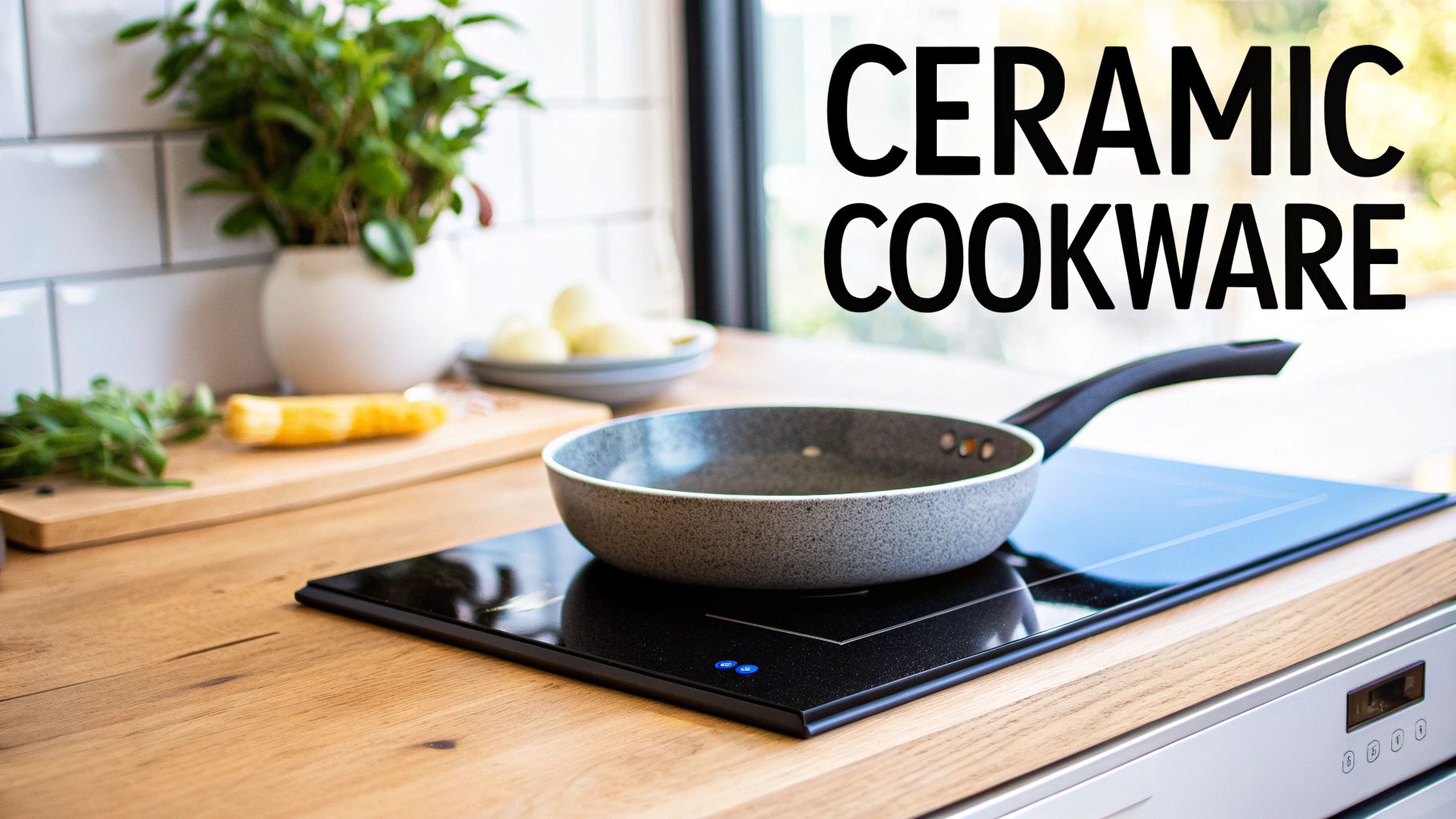
A good way to picture it is like the glossy, protective finish on a new car. That durable layer provides a slick, easy-to-clean surface, while the metal underneath does the heavy lifting of conducting heat. It's this clever combination that has seen ceramic cookware pop up in kitchens all across the country, from busy Melbourne cafes to laid-back Perth homes.
At the heart of this trend is a bigger movement towards healthier living. Aussies are more clued-in than ever about the potential downsides of traditional non-stick coatings, especially those containing chemicals from the PFAS family (per- and polyfluoroalkyl substances).
The Push for Non-Toxic Kitchens
There's been a lot of talk about compounds like PFOA (perfluorooctanoic acid) and PTFE (polytetrafluoroethylene), which have raised health and environmental concerns. When older-style non-stick pans get too hot, these chemicals can release fumes, and if the surface starts to peel, you risk flakes getting into your food.
This growing awareness has naturally created a huge demand for safer alternatives. The great news is there are now plenty of fantastic PFOA and PTFE-free cookware options available, making it easier to cook with confidence.
This isn’t just a niche interest anymore; it's a mainstream shift. In 2024, the Australian ceramic cookware market was valued at a whopping USD 88.92 million, driven by everyday households making a conscious decision to move away from chemical-based coatings. And it's not slowing down—market forecasts predict this value will more than double by 2033, showing just how serious people are about wanting safer tools in their kitchen.
For many Australian families, the kitchen is the heart of the home. Choosing non-toxic cookware is a direct way to look after your family's health, turning every meal into a safer, more conscious act of care.
Why Ceramic Fits the Modern Aussie Kitchen
Ceramic cookware simply ticks a lot of boxes for today's home cook. It's about more than just what's not in it; it's also about how it fits into our lives and homes.
Here’s why it’s become such a popular choice:
- Health and Safety First: The biggest drawcard is its non-toxic makeup. It gives you peace of mind that nothing nasty is leaching into your food.
- Looks Good, Too: Let's be honest, style matters. Ceramic pans come in a huge range of modern colours and sleek designs that look great in any kitchen.
- Effortless Non-Stick: When it's new, the surface is incredibly slick. This means you can use less oil or butter, which is a nice bonus for healthier cooking.
This mix of safety, style, and performance is precisely why so many people are choosing ceramic cookware in Australia. It's a simple, practical step towards creating a healthier kitchen without giving up the convenience we all love.
The Real Pros and Cons of Ceramic Cookware
It's easy to get drawn in by the gorgeous colours and slick marketing of ceramic cookware here in Australia. But before you commit, it’s worth taking a closer look at what you’re really getting. To figure out if it's the right fit for your kitchen, we need to honestly weigh up its brilliant perks against its very real limitations.
Just like any tool in the kitchen, ceramic cookware has its strengths and its weaknesses. Getting a handle on this balance is the secret to happy cooking and avoiding buyer's remorse.
The Advantages of Ceramic Cookware
So, why have so many Aussie kitchens embraced ceramic pans? The appeal really comes down to a trio of benefits: health, cooking performance, and pure convenience. They've become a go-to for anyone wanting to move away from traditional non-stick surfaces without sacrificing ease of use.
First off, the excellent non-stick surface you get straight out of the box is a dream. A brand-new ceramic pan is incredibly slippery. This means you can cook delicate foods like eggs or a piece of barramundi with just a whisper of oil, a big win for healthier meals.
Perhaps the biggest selling point for many is the peace of mind they offer. The coatings are made without the controversial chemicals like PTFE and PFOA that you find in many older non-stick pans, so you can feel confident about what you're cooking in.
Here’s a quick rundown of the main upsides:
- A Non-Toxic Choice: Quality ceramic coatings are free from common nasties like PFAS, PFOA, lead, and cadmium. This means you don't have to worry about anything leaching into your family's dinner.
- Effortless Non-Stick (at first): When new, food glides right off, which not only makes cooking a breeze but also makes cleanup astonishingly simple.
- Even, Consistent Heat: Most ceramic pans are built around an aluminium core, which is fantastic at conducting heat. This design gets rid of annoying hot spots, so your food cooks evenly from edge to edge.
- Looks Great on the Stove: Let's be honest, they look fantastic. With a huge range of modern colours and stylish designs, they can add a real pop of personality to your kitchen.
The Disadvantages of Ceramic Cookware
Now for the reality check. While the good points are genuinely good, it’s crucial to understand the trade-offs, which mainly circle around durability and the specific TLC they need to survive. This is often where people's expectations get a little out of sync with how the pans actually perform long-term.
The single most important thing to know is that the non-stick coating has a limited lifespan. Unlike a cast iron skillet you might pass down to your kids, a ceramic pan's surface will wear out. Even if you treat it with the utmost care, its non-stick magic will likely fade within one to three years.
The delicate nature of the ceramic coating is its Achilles' heel. It offers a brilliant cooking experience initially, but it's fragile and demands careful handling to last. It simply can't take the same abuse as other types of cookware.
The surface is also surprisingly easy to damage. Here are the key drawbacks to keep in mind:
- Easily Scratched: Metal utensils are public enemy number one. A single scrape with a fork can permanently damage the coating. You absolutely have to stick to wood, silicone, or nylon tools.
- Hates Sudden Temperature Changes: Never, ever plunge a hot ceramic pan into cold water. This thermal shock can cause the delicate coating to crack or even flake off. Let it cool down on the stovetop first.
- Can't Handle High Heat: Blasting your pan on high heat is the fastest way to destroy its non-stick ability. Ceramic cookware is designed to perform its best on low to medium temperatures.
- Not a Fan of the Dishwasher: Some brands might say they're "dishwasher-safe," but the harsh detergents and intense heat will dramatically shorten the coating's life. Hand washing is the only way to go if you want it to last.
To make it even clearer, here is a quick summary of what you're getting into with ceramic cookware.
Ceramic Cookware At a Glance
| Feature | Advantages (Pros) | Disadvantages (Cons) |
|---|---|---|
| Coating Material | Non-toxic; free of PFAS, PFOA, lead, and cadmium. | Coating has a limited lifespan (1-3 years). |
| Non-Stick | Excellent initial performance with minimal oil needed. | Non-stick properties degrade over time with use. |
| Durability | Solid aluminium core provides good structure. | Surface is fragile and prone to scratches and chipping. |
| Heat Tolerance | Distributes heat very evenly across the surface. | Best for low-to-medium heat only; high heat damages it. |
| Utensil Use | Works well with gentle, non-abrasive tools. | Requires wood, silicone, or nylon utensils to avoid damage. |
| Cleaning | Very easy to wipe clean when new. | Not truly dishwasher-safe; hand washing is essential. |
| Aesthetics | Comes in a wide array of stylish and modern colours. | The beautiful coating can be easily stained or damaged. |
Ultimately, choosing ceramic cookware is about understanding this trade-off: you get a beautiful, non-toxic, and initially slick pan, but you have to be prepared to treat it gently and replace it more often than other types of cookware.
How to Choose the Best Ceramic Cookware in Australia
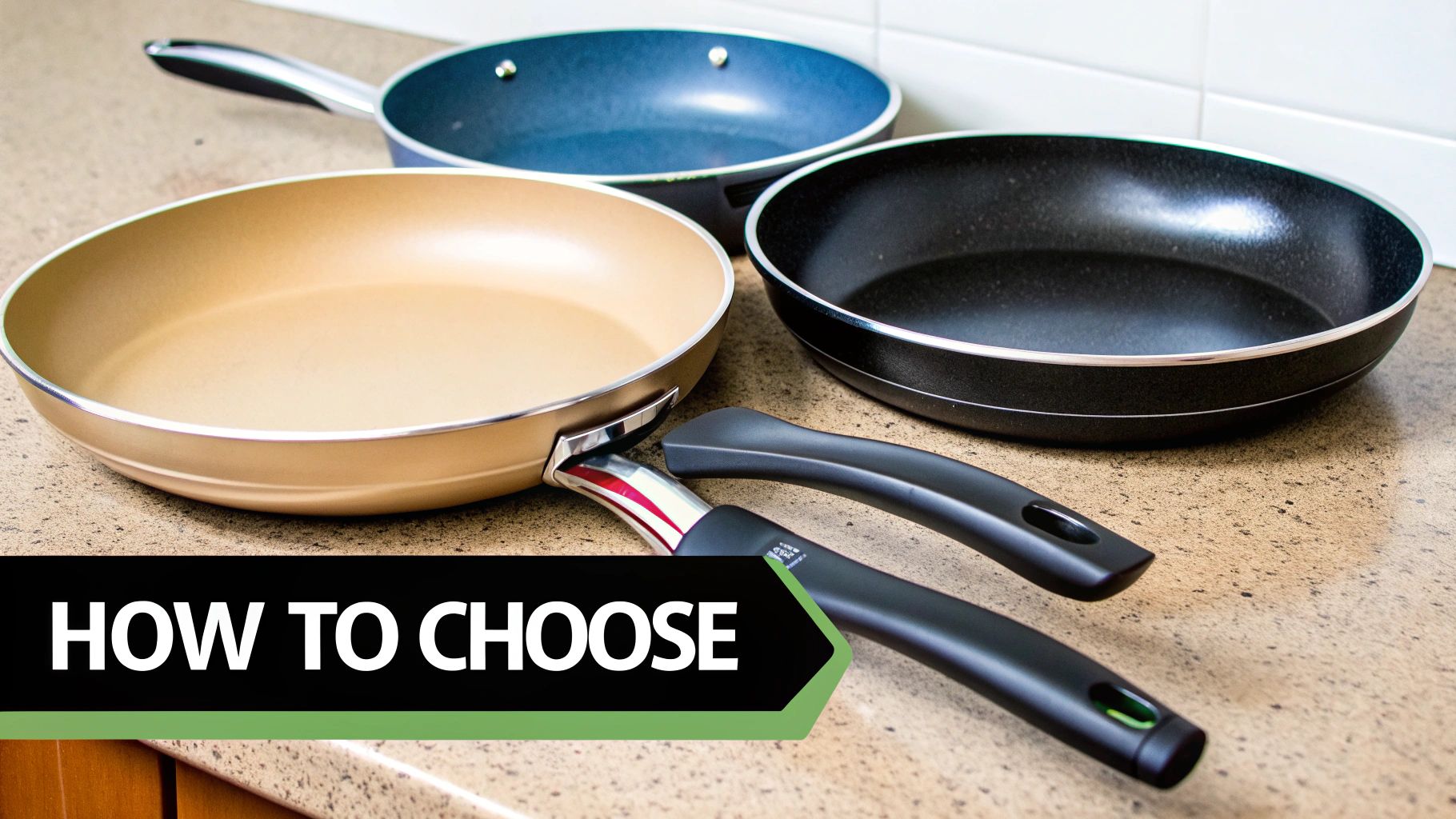
Walking down the cookware aisle can feel a bit overwhelming, but figuring out what makes a great ceramic pan doesn't have to be. A few key details separate the high-performers from the ones that lose their non-stick magic after just a few uses. Think of it like being a detective—the clues to a smart investment are all there in the pan's construction.
The real story of a great pan starts with what's underneath the coating. The core material is the heart of the cookware; it’s what dictates how it heats, how evenly it cooks, and ultimately, how long it will last in your kitchen.
Look at the Core Material
Most ceramic cookware starts with a body made from either aluminium or stainless steel, and each brings something different to the table. Aluminium is a champion heat conductor, which means it heats up fast and spreads that heat evenly. This is your best defence against annoying hot spots that scorch one part of your meal while leaving another undercooked.
You'll often find top-tier pans use hard-anodised aluminium. This is a treated version that’s much tougher and less likely to warp than the standard stuff. On the other hand, a multi-ply stainless steel core gives you incredible durability and heat retention, although it might take a little longer to get up to temperature.
Your choice here directly impacts both performance and price. A good rule of thumb? A sturdy, heavy-gauge core that feels substantial in your hand is usually a reliable sign of quality.
Inspect the Ceramic Coating
Here's where things get interesting: not all ceramic coatings are created equal. A high-quality coating should feel thick, completely smooth, and flawlessly applied. Look for brands that are open about their coating technology, often highlighting features like diamond or titanium reinforcement for extra durability.
A thicker, multi-layer coating will naturally stand up to scratches and wear far better than a single, thin layer. While it’s hard to judge thickness just by looking, a premium price tag and detailed product specs are often good clues. Remember, this delicate surface is what you're paying for, so you want to see that the manufacturer has invested the most care here. To really dive deep, check out our guide on finding the best non-stick surface for a frying pan.
The quality of ceramic cookware is a story told in layers. A robust metal core provides the foundation for even heating, while a resilient, multi-layered ceramic coating delivers the non-stick performance you're paying for.
Check the Handles and Lids
A pan is only as good as its handle. The best ones are securely riveted to the pan’s body, creating a strong, permanent bond that won’t get wobbly over time. Screwed-on handles are often the first thing to fail.
Think about the handle material and how you cook:
- Stainless Steel: Incredibly durable and usually oven-safe to high temperatures, but they can get hot on the cooktop.
- Silicone-Wrapped: These offer a comfortable, cool grip but might have a lower oven-safe temperature limit.
Don’t overlook the lid. A snug-fitting lid, especially one made from tempered glass, lets you keep an eye on your food without letting all the heat escape. A small steam vent is a fantastic bonus for preventing messy boil-overs.
Don't Forget the Practical Details
Finally, sweat the small stuff that makes a big difference in your kitchen. Always check the maximum oven-safe temperature for both the pan and its lid—this is a must if you love recipes that go from the stove to the oven. You also need to confirm it’s compatible with your cooktop, particularly if you have an induction stove.
The rise of ceramic cookware in Australia is no surprise, given our love for home cooking. With the residential sector making up 85.3% of demand, the local market clearly shows a strong desire for healthier kitchen tools. This trend is set to push Australia's ceramic cookware market from USD 88.92 million towards USD 91.08 million soon.
Before you make a final decision, look for a solid warranty. It’s a good sign that the manufacturer has confidence in their product. And most importantly, read recent Australian customer reviews. They give you the real-world scoop on how a pan actually holds up to the rigours of daily use in a kitchen just like yours.
Caring for Your Ceramic Pans to Make Them Last
It’s a great feeling, unboxing a new set of ceramic cookware. But to keep that slick, non-stick surface working its magic, you need to protect your investment. Unlike tougher pots and pans, that delicate ceramic coating needs a specific kind of care. The good news is, a few simple tweaks to how you cook and clean can make all the difference.
Think of the ceramic coating as a very thin layer of glass. It’s the secret to that effortless food release, but it's also its biggest weakness. The golden rule? Always be gentle.
The Gentle Approach to Utensils and Cleaning
First things first: get all metal utensils away from your ceramic pans. Seriously. A single scrape from a metal spatula or fork can create a permanent scratch, and once that non-stick surface is compromised, there’s no going back. This is the number one rule for keeping your pans in top shape.
Instead, you’ll want to embrace softer tools. Silicone, wood, or nylon utensils are perfect companions for ceramic cookware because they won't damage that delicate coating.
When it comes to cleaning, hand washing is always the best bet. Some brands might market their pans as dishwasher-safe, but the reality is that the high heat and harsh detergents in a dishwasher will break down the non-stick coating over time. You can learn more about how detergents affect dishwasher-safe pans, but the short version is that hand washing is a much safer option.
Here’s a simple cleaning routine that works every time:
- Let It Cool Completely: Never, ever put a hot pan straight from the stove into a sink of cold water. This causes thermal shock, which can easily crack or peel the coating.
- Use a Soft Sponge: A soft cloth or a non-abrasive sponge is all you need. Steel wool and harsh scourers are the enemy here.
- Wash with Mild Soap: Gently clean away any leftover food with warm, soapy water.
- Rinse and Dry: Rinse it well and dry the pan completely with a soft towel before putting it away to prevent any water spots.
Smart Cooking Habits for a Longer Lifespan
How you cook with your ceramic pans matters just as much as how you clean them. Ceramic cookware is designed to work best on low to medium heat. Thanks to the aluminium core, it heats up quickly and evenly, so there’s just no need to crank the heat up to high. In fact, prolonged high heat can burn the coating, causing discolouration and permanently destroying its non-stick qualities.
Another common mistake is reaching for aerosol cooking sprays. These sprays contain chemicals and propellants that burn at low temperatures, leaving behind a sticky, gunky residue that’s almost impossible to get off. This build-up is one of the main reasons food starts to stick.
The secret to long-lasting ceramic cookware isn’t complicated—it’s about consistency. Gentle tools, mindful heating, and proper cleaning will preserve the non-stick surface far better than any quick fix.
Instead of a spray, just use a small amount of oil or butter. Fats with a high smoke point, like avocado oil, grapeseed oil, or ghee, are ideal. If you're not sure which to use, getting a good grasp on understanding cooking oil smoke points can be a game-changer for both your cooking and your cookware. This one small adjustment makes a huge difference.
By adopting these simple habits, you’ll protect your ceramic cookware, keep it looking great, and enjoy that smooth, non-stick glide for years to come.
Ceramic vs Titanium: A Health and Durability Showdown
While ceramic cookware is a fantastic step up from old-school non-stick pans, it’s really just one stop on the journey to a truly non-toxic kitchen. For the Aussie home cook who’s serious about lifetime performance and total purity, it pays to look at a premium alternative: pure titanium. This isn’t about a temporary fix; it’s about finding a permanent solution.
Let’s put the popular ceramic-coated pan head-to-head with the sheer resilience of pure, uncoated titanium. We'll compare them on the things that really matter in a modern kitchen: health and safety, long-term durability, and how they actually perform when you’re cooking dinner.
Health and Safety: A Clear Winner Emerges
The big drawcard for ceramic cookware is that it’s PFOA-free, which is a massive health win over older non-stick technologies. The sand-derived coating acts as a barrier between your food and the aluminium core, meaning no nasty chemicals leach into your meal—as long as that coating stays perfectly pristine.
But pure titanium takes health and safety to a whole new level. Because it’s 99.9% pure and completely inert, it doesn't need a coating at all. There is simply no layer to scratch, chip, or break down over time.
This means a few critical things for your peace of mind:
- Zero Leaching Risk: Titanium is biocompatible—it’s the same stuff used for medical implants because the human body doesn’t react to it. Nothing from the pan will ever find its way into your food.
- Naturally Antibacterial: The surface of pure titanium naturally discourages bacteria from growing, giving you a more hygienic cooking surface without any chemical help.
- Free from Microplastics and BPAs: With no coatings or synthetic bits and pieces, you can be 100% certain your food stays pure and uncontaminated.
While ceramic cookware is a safer choice than traditional non-stick, pure titanium is the definitive choice for health purists. It eliminates the coating entirely, removing any possibility of degradation or chemical leaching for life.
Durability: The Lifetime Investment
This is where the difference between the two materials really becomes obvious. The biggest weakness of ceramic cookware is how fragile its coating is. Even if you’re super careful—avoiding metal utensils and high heat—the non-stick surface eventually wears down. Most pans only last one to three years before their performance drops off.
This flowchart gives a simple guide to the essential dos and don'ts for looking after any coated pan.
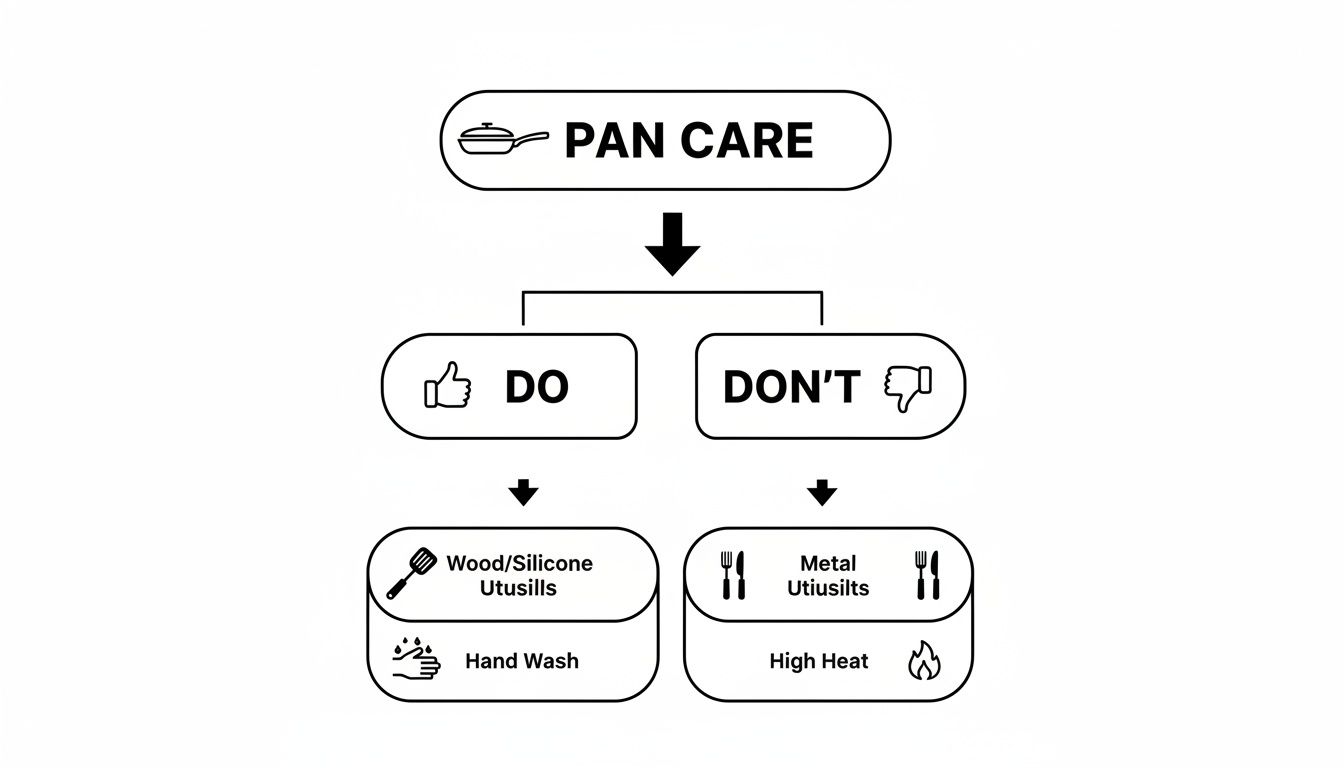
As you can see, coated pans demand a bit of babying—gentle utensils and hand washing—just to slow down their inevitable decline.
Pure titanium, on the other hand, is built to last a lifetime. It's exceptionally resistant to corrosion, rust, and scratches. Go ahead and use metal utensils; you won’t damage the surface because there’s no delicate coating to protect. It’s made to handle the chaos of a busy kitchen, day in and day out, without ever losing its integrity.
This makes titanium a far more sustainable and budget-friendly choice in the long run. Instead of replacing your frying pan every few years, you invest once in a piece of cookware that will perform just as well for decades to come.
Performance Under Pressure
When it's time to cook, both materials distribute heat well, but they shine in different scenarios. Ceramic pans are great for low-to-medium heat, making them perfect for delicate things like eggs and fish. They aren't, however, cut out for high-heat searing, as intense temperatures can quickly ruin the non-stick coating.
Titanium, however, is incredibly versatile. It can handle extremely high temperatures, so you can get that perfect, crusty sear on a steak without a second thought for the pan's surface. It heats up evenly and holds that heat brilliantly, giving you precise control.
Ceramic Coating vs Pure Titanium Head-to-Head
To make the comparison crystal clear, let's break it down side-by-side. This table highlights the fundamental differences in what you can expect from each material over its lifespan.
| Attribute | Ceramic-Coated Cookware | Everti Pure Titanium Cookware |
|---|---|---|
| Health & Safety | PFOA-free, but relies on a fragile coating that can degrade. | 100% inert and biocompatible. No coatings to chip or leach. |
| Durability | Short lifespan (1-3 years). Coating scratches and wears down easily. | A lifetime investment. Highly resistant to scratches, warping, and corrosion. |
| Utensil Use | Requires soft utensils (silicone, wood) to protect the coating. | Metal utensil safe. No coating to scratch or damage. |
| Heat Tolerance | Best for low-to-medium heat. High heat degrades the coating. | Excellent for high-heat searing and versatile across all temperatures. |
| Long-Term Cost | Lower initial cost but requires frequent replacement. | Higher upfront investment but pays for itself over time. |
| Cleaning | Easy to clean initially, but becomes difficult as coating wears off. | Easy to clean and naturally antibacterial; can be scrubbed vigorously. |
Ultimately, the choice comes down to your priorities. Ceramic is a good starting point, but pure titanium is the clear winner for anyone looking for a permanent, high-performance, and completely non-toxic solution.
For those wanting a deeper dive, you can explore the full range of titanium cookware pros and cons to understand its unique properties.
Ceramic cookware is an excellent entry into non-toxic cooking. But for Australians seeking a true "buy it for life" kitchen tool that offers unmatched health benefits and robust performance, pure titanium stands in a class of its own as the ultimate upgrade.
Is Ceramic Cookware the Right Choice for You?
After weighing up all the pros and cons, figuring out if ceramic cookware is right for you really boils down to what you prioritise in the kitchen. For many Aussies, it’s a brilliant first step away from traditional non-stick pans that come with concerns about their chemical coatings. It offers a healthier, PFOA-free cooking surface that also happens to look fantastic.
There's no denying its initial performance. It’s a dream for cooking delicate foods like eggs and fish, and the pop of colour can really modernise a kitchen's aesthetic. But it's important to go in with your eyes open. That delicate coating needs a bit of babying—metal utensils and high heat are definite no-gos—and its non-stick magic won't last forever. Even with the best care, you're typically looking at a lifespan of just a few years.
Making Your Final Decision
So, how do you know if it’s the right fit for your cooking style? It all comes down to what you’re looking for in a pan.
Ceramic could be a perfect match if you:
- Want an affordable, non-toxic pan for everyday, low-to-medium heat cooking.
- Love the idea of colourful, modern cookware brightening up your stove.
- Are happy to hand wash your pans and stick to silicone or wooden utensils.
- Are okay with the idea of replacing it in a few years.
This kind of cookware shines in its niche. It’s a fantastic, accessible entry point into non-toxic cooking, blending convenience and style without the health worries tied to older non-stick surfaces.
But for anyone chasing a true "buy it once, buy it for life" solution, the conversation needs to shift. If you're after uncompromising durability and a pure, uncoated cooking surface that will last a lifetime, ceramic cookware isn’t your final destination.
In that case, it’s worth exploring premium alternatives like pure, uncoated titanium. While ceramic gives you a temporary non-stick fix, titanium offers a permanent, high-performance foundation for a truly non-toxic kitchen. It's an investment for the discerning Australian home cook who refuses to compromise on health or quality.
Your Top Questions About Ceramic Cookware Answered
Diving into the world of ceramic cookware? It's a popular choice in Australian kitchens, but it's natural to have a few questions before you buy. Getting the right info is crucial for making a good choice and keeping your new pans in top shape. Let's tackle some of the most common queries we hear.
Can I Use Metal Utensils on My Ceramic Pans?
In a word: no. It's best to keep metal utensils far away from your ceramic pans. Think of the coating as a very thin, glass-like layer. Metal spatulas, forks, and whisks can easily scratch or even chip that delicate surface.
Once you have those tiny scratches, you’ve essentially ruined the non-stick magic. Food will start grabbing onto those damaged spots, making cooking and cleanup a real chore. To keep that slick surface performing at its best, always reach for utensils made from wood, silicone, nylon, or bamboo.
Is Ceramic Cookware Genuinely Non-Toxic?
One of the biggest draws for ceramic cookware is that it’s made without chemicals like PTFE and PFOA, which is why it's a favourite in so many health-conscious Aussie homes. For the most part, a well-made ceramic pan is a safe, non-toxic option.
However, a pan is only as safe as the company that makes it. Stick to reputable brands that are transparent about their manufacturing and can confirm their products are also free from lead and cadmium. It’s also important to remember that it is a coating, and all coatings will eventually break down with use.
For a cooking surface that is permanently non-toxic because it has no coating at all, you have to look at materials like pure titanium. It offers a level of safety and peace of mind that coated pans simply can't match over a lifetime.
Why Is My Ceramic Pan Suddenly Sticking?
It's a common frustration: your once-perfectly non-stick pan now holds onto food for dear life. The number one reason this happens is the build-up of a nearly invisible film of baked-on oil residue. This sticky layer is often caused by using aerosol cooking sprays or letting oils get too hot and burn onto the surface, and it’s a real pain to scrub off.
The other culprit is permanent damage. If the coating has been scratched by metal tools, blasted with heat that's way too high, or cracked from sudden temperature changes (like running a hot pan under cold water), its non-stick days are over.
How Long Does Ceramic Cookware Actually Last?
This really depends on the quality of the pan and how you treat it. If you’re incredibly careful—hand washing it every time, only using soft utensils, and keeping the heat moderate—a premium ceramic pan might give you 2-3 years of solid performance before the non-stick coating gives up.
For most people with regular, day-to-day use, you'll likely find the non-stick properties start to fade after about a year. This shorter lifespan is the major trade-off you make with ceramic. It's a world away from materials like pure titanium, which are designed to last a lifetime with the right care.
Ready to invest in kitchenware that offers uncompromising purity and lifetime durability? Explore the Everti collection of pure titanium essentials and discover a new standard for non-toxic cooking. https://everti.com.au