

So, what exactly is ceramic induction cookware? Think of it as the perfect partnership in your kitchen: it takes the health-conscious, easy-to-clean ceramic surface we all love and pairs it with a magnetic base that works seamlessly on induction hobs.
This solves a common frustration for many home cooks. You might have a fantastic set of traditional ceramic pans, only to find they're useless on a new, energy-efficient induction stovetop.
The Best of Both Worlds in Your Kitchen
Ceramic induction cookware lets you enjoy the slick, non-stick benefits of ceramic and the lightning-fast, precise heat of induction cooking. It’s a game-changer.
But here’s a common misconception: these pans aren't solid ceramic. That wouldn't work, as ceramic itself isn't magnetic. Instead, it’s a smart fusion of materials built for the modern kitchen.
The main body is usually made of a metal like aluminium, which is brilliant at spreading heat evenly. This body is then coated with a mineral-based, non-stick ceramic layer. The real magic, though, is in the base. A layer of ferromagnetic material, such as stainless steel, is bonded to the bottom. This is the crucial part that allows the pan to connect with the magnetic field of an induction hob, generating heat almost instantly.
This clever design fills a major gap in the market. It gives us a non-toxic alternative to traditional non-stick pans without forcing us to give up our high-tech induction cooktops. It’s a direct answer to the growing demand for healthier and more adaptable kitchen gear.
You can see this trend playing out in Australia and New Zealand. The non-stick market, where induction-friendly ceramic coatings are a big player, has been growing steadily. People are actively looking for eco-friendly and PFOA-free choices. This sector grew from a USD 254.62 million base and is forecast to hit USD 356.78 million by 2032. If you're curious, you can dig deeper into the global ceramic cookware market to see how these trends are shaping up worldwide.
In a nutshell, you get the complete package:
- A Safe Cooking Surface: The ceramic coating is made without chemicals like PFOA and PTFE.
- Induction Compatibility: That magnetic base means it’s ready for any induction cooktop.
- Efficient Heating: The combined materials provide quick, even heat for perfectly consistent results every time.
Thanks to this smart construction, you no longer have to pick between your preferred cookware and your modern stove. You can finally have both.
How Induction Hobs Heat Your Ceramic Pan
To get your head around how ceramic induction cookware works, think of it this way. Imagine your induction hob is a dance floor with a very strict rule: it only lets people dance if they're wearing special magnetic shoes. A standard, all-ceramic pot is like someone in regular sneakers—they can stand on the floor, but the music won't make them move.
That’s because induction cooking doesn't rely on open flames or glowing-hot coils like your old gas or electric stoves. Instead, it generates an invisible, oscillating magnetic field right above its sleek glass surface. For a pan to get hot, it needs to be made of a ferromagnetic material. It's a technical-sounding term, but it just means something a magnet will stick to, like cast iron or specific kinds of stainless steel.
When you place a pan with a magnetic base onto the hob, this magnetic field zips through it, creating tiny electrical currents called "eddy currents" that swirl around inside the pan's base. These currents meet resistance as they flow, and it’s this friction that generates heat directly within the metal of the pan itself. The cooktop stays cool, while your pan gets hot almost instantly.
The Hybrid Hero: A Magnetic Base
So, how does a ceramic pan—which isn’t magnetic—get its invitation to the dance? This is where the clever hybrid design comes in. Manufacturers get around the problem by bonding a flat, ferromagnetic plate right onto the bottom of the pan.
This base is typically made from a type of stainless steel that’s magnetic. It acts as the “special shoes,” allowing the pan to connect with the cooktop’s magnetic field. The heat is generated in this steel plate and then instantly travels up into the pan’s main body (usually aluminium, which is a fantastic heat conductor) and finally to the non-stick ceramic surface where your food is.
This visual breaks down how the layers team up to give you non-toxic ceramic performance with magnetic induction power.

The whole process is seamless. You end up with a pan that offers the best of both worlds: a safe, easy-to-clean surface and the incredible speed of modern induction cooking.
Why the Base Quality Matters So Much
Not all magnetic bases are created equal, and the quality of this part is absolutely critical for good performance. A well-made piece of ceramic induction cookware will have a thick, completely flat base that covers the entire bottom.
This design ensures two very important things:
- Even Heat Distribution: A full-coverage base spreads heat uniformly across its entire surface. This prevents those annoying hot spots that scorch food in the centre while the edges are still catching up.
- Stable Connection: A flat, heavy base makes solid contact with the glass cooktop, which is vital for efficient energy transfer. Warped or flimsy bases heat unevenly and can even cause the hob to pulse on and off, leading to really frustrating and inconsistent results.
You'll find some cheaper pans use a thin, stamped-on "magnet disk" instead of a fully bonded plate. These often create a "hot ring" effect and are much more likely to warp over time, which really kills their performance.
The science is clear: the pan itself becomes the source of heat. Unlike traditional cooking where the stove heats the pan, induction makes the pan heat itself from within. This is why it’s so fast, precise, and energy-efficient—up to 90% of the energy is transferred directly to your food.
The Complete Heating Process, Step by Step
Let’s walk through the entire sequence, from switching the hob on to getting that perfect sear on a steak. Understanding this flow helps you appreciate the tech and get the most out of your cookware. It’s a rapid chain reaction that happens in a matter of seconds.
Here’s the magic in action:
- Step 1: Activation: You place your ceramic induction pan on the cooktop and turn it on. A copper coil under the glass surface springs to life, generating a high-frequency alternating magnetic field.
- Step 2: Interaction: The magnetic field connects only with the ferromagnetic base of your pan. The rest of the cooktop, and the pan's ceramic interior, are unaffected and stay cool to the touch.
- Step 3: Heat Generation: This interaction creates those powerful eddy currents in the pan’s base. Resistance in the metal converts this electrical energy into heat.
- Step 4: Conduction: The heat instantly travels up through the pan’s aluminium core to the ceramic cooking surface.
- Step 5: Precision Cooking: Your food hits a perfectly heated, non-stick surface. Because the heating is so direct, temperature changes are incredibly responsive—turn the power down, and the heat drops immediately.
This direct, localised heating is what makes ceramic induction cookware a phenomenal choice for everything from delicate sauces that need careful temperature control to a blistering, high-heat sear.
The Perks of Choosing Ceramic Induction Cookware
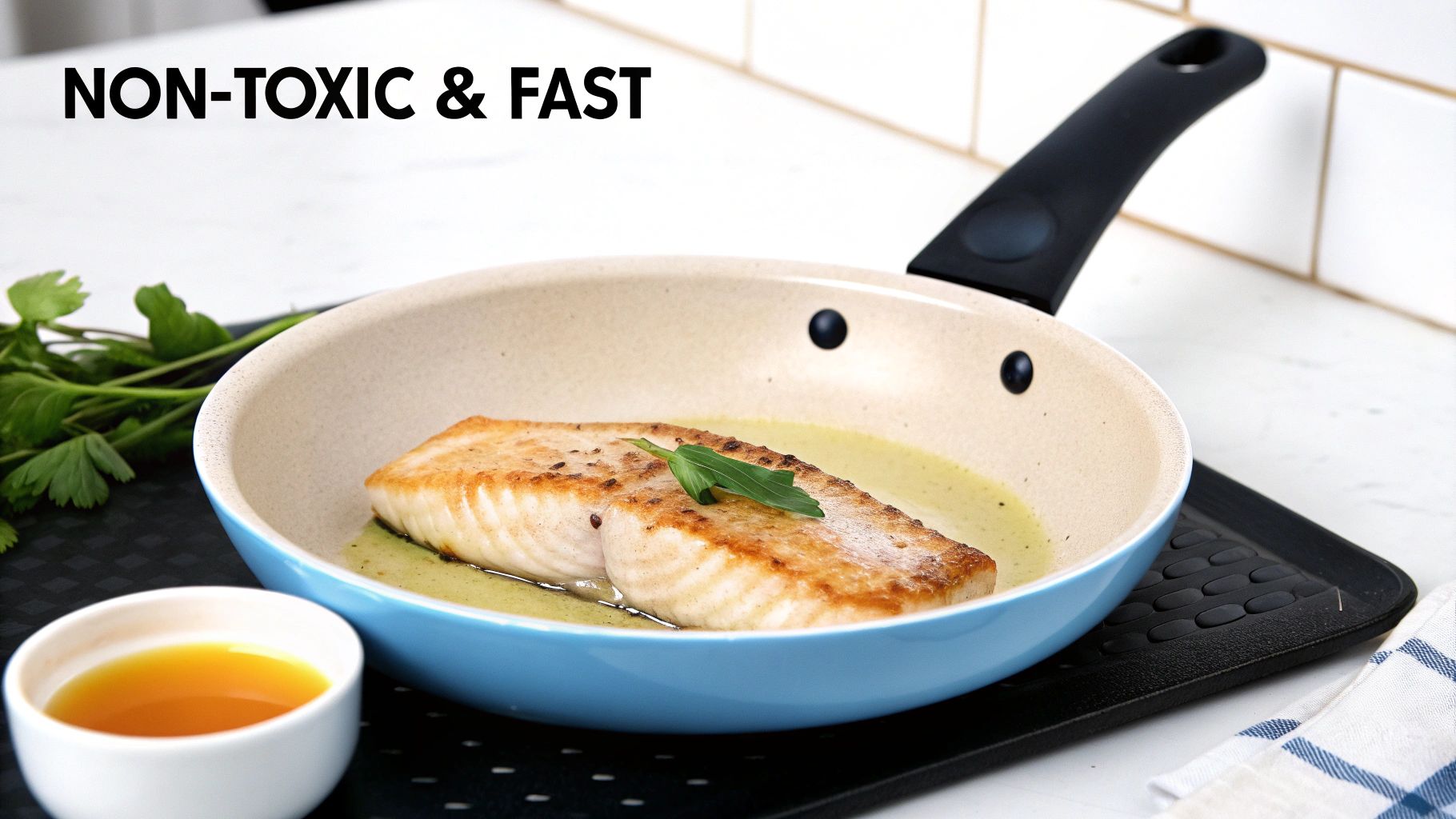
So, what's behind the buzz? Why are so many home cooks across Australia making the switch to ceramic induction cookware? The appeal goes way beyond a pretty pan on the stovetop. It really boils down to three game-changing pillars that elevate your daily cooking: rock-solid health and safety, brilliant performance, and unbeatable convenience.
This trio of benefits is driving a real shift in modern kitchens. More and more, health-savvy Aussies are looking for non-toxic alternatives to old-school non-stick pans that can keep up with their induction hobs. In fact, the local market for non-stick cookware—where ceramic is a huge player—was valued at USD 254.62 million in one year and is tipped to reach USD 356.78 million by 2032. This isn't just a trend; it's a clear signal that people want safer, more efficient tools in their kitchen. For a deeper look, you can explore the data on the non-stick cookware market in Australia and New Zealand.
A Focus on Health and Safety
Hands down, the biggest reason people make the switch is for peace of mind. Top-quality ceramic coatings are made without PFOA (perfluorooctanoic acid) or PTFE (polytetrafluoroethylene)—the chemicals often found in traditional non-stick pans.
This means you can cook for your family without the nagging worry of sketchy chemicals seeping into your food, even if the pan gets a little nicked over time. The coating itself comes from natural sand and minerals, making it a completely inert and stable surface for all your meals.
When you choose ceramic induction cookware, you're not just buying a pan; you're investing in a healthier kitchen. The surface won't release toxic fumes at high temperatures, keeping the air in your home clean while you whip up dinner.
This commitment to wellness is at the heart of making truly good food. If you're keen to learn more, our guide to the best healthy cooking pans available is a great place to start.
Exceptional Performance and Precision
Safety is one thing, but performance is where this cookware truly earns its stripes. The magic lies in its construction: an aluminium core for even heating fused to a ferromagnetic base for induction compatibility. The result? Fast, uniform heat across the entire pan. No more frustrating hot spots that burn your onions in one corner while leaving the other side raw.
Imagine simmering a delicate sauce without it catching and scorching, or getting that perfect, golden-brown crust on a piece of salmon from edge to edge. That's the kind of control we're talking about.
Here’s what you’ll notice right away:
- Pinpoint Temperature Control: The pan reacts the second you adjust the dial on your induction hob. Turn the heat down, and the temperature drops instantly—perfect for those recipes that demand precision.
- Excellent Heat Retention: While it heats up in a flash, the multi-layered build also holds onto that heat beautifully. Your food keeps cooking consistently and stays warm even after you’ve switched the hob off.
- Energy Efficiency: The induction process heats the pan directly, so almost no energy goes to waste. That means quicker cooking and a friendlier electricity bill.
Unbeatable Convenience and Easy Cleanup
Last but not least, let's talk about convenience. A naturally non-stick surface makes cooking and cleaning an absolute breeze. The slick ceramic coating lets food slide right off, which also means you can get away with using far less oil or butter for healthier meals.
Think about flipping pancakes or scrambling eggs—they release effortlessly, leaving next to nothing behind. But it’s not just for delicate foods. That same easy release makes cleaning up after searing a steak or simmering a sticky glaze just as simple.
Most of the time, a quick wipe with a soft sponge and some warm, soapy water is all it takes. No more endless scrubbing or overnight soaking. This day-to-day ease is often the final clincher that turns ceramic induction cookware from a nice-to-have into a kitchen must-have.
Ceramic Induction vs Other Cookware Types
To put things into perspective, here’s a quick comparison of how ceramic induction cookware stacks up against other popular materials. This will help you see where it really shines.
| Feature | Ceramic Induction | Cast Iron | Stainless Steel | Traditional Non-Stick (PTFE) |
|---|---|---|---|---|
| Health & Safety | Excellent (PFOA/PTFE-free) | Good (can leach iron) | Excellent (inert material) | Poor (potential fumes/chemicals) |
| Heat Distribution | Excellent (fast & even) | Good (slow but retains well) | Fair (prone to hot spots) | Good |
| Non-Stick Quality | Excellent (initially) | Good (when well-seasoned) | Poor (requires oil/technique) | Excellent |
| Induction Ready | Yes (must have a magnetic base) | Yes | Yes (most modern types) | Varies (check for base) |
| Durability | Good (can chip if mishandled) | Excellent (can last a lifetime) | Excellent (very robust) | Fair (coating can scratch easily) |
| Ease of Cleaning | Excellent | Fair (requires careful maintenance) | Fair (can require scrubbing) | Excellent |
As you can see, each material has its pros and cons, but ceramic induction offers a compelling, well-rounded package of safety, performance, and convenience that’s hard to beat for everyday cooking.
How to Choose the Right Cookware
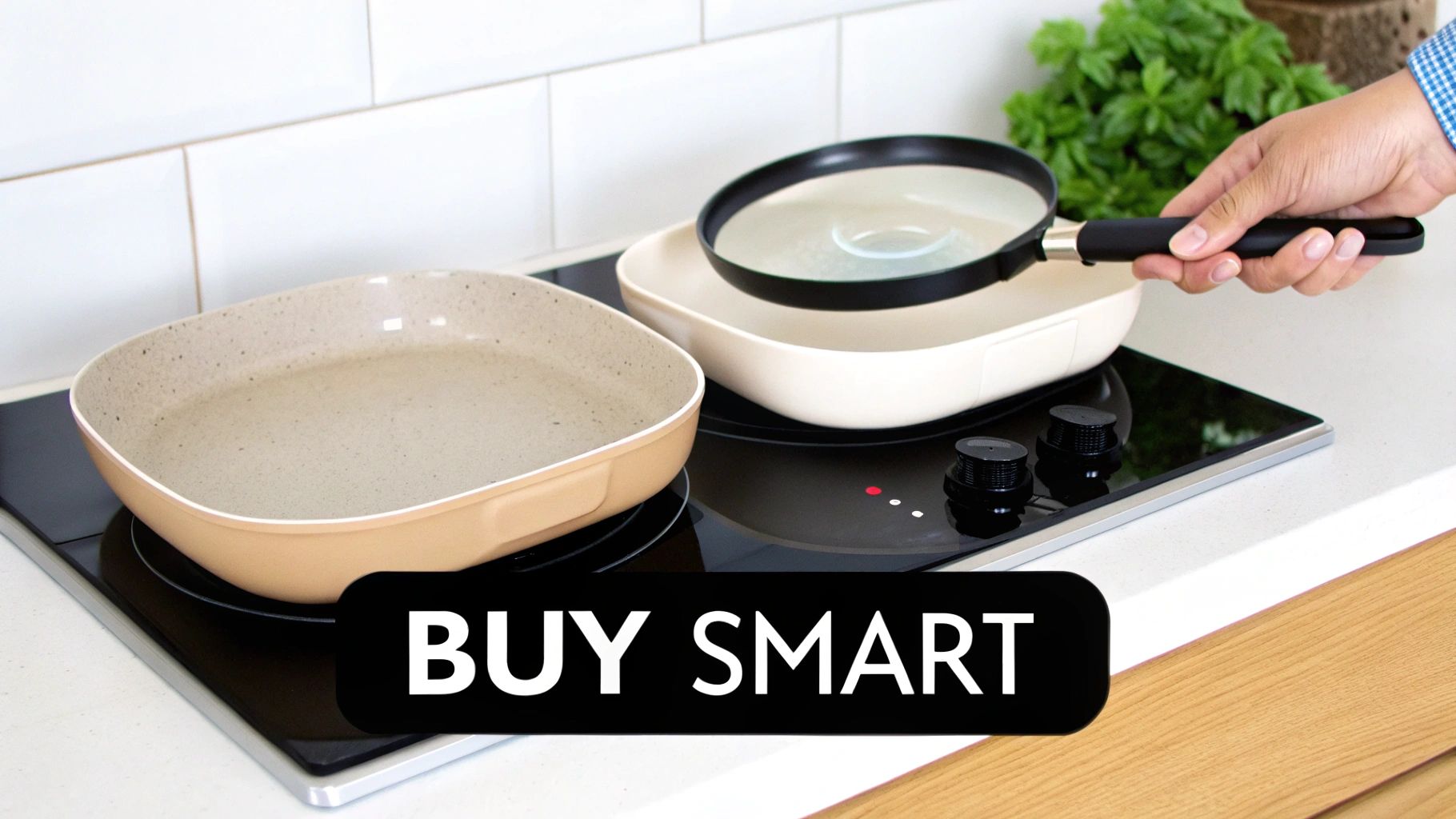
Choosing the right ceramic induction cookware isn't just about picking a colour you like; it’s an investment in your daily cooking. Get it right, and you’ll have pieces that perform beautifully for years, making time in the kitchen a genuine pleasure. It's time to cut through the marketing noise and focus on what really matters.
Think of this buyer’s guide as your pre-purchase checklist. We'll break down the four key things to look for: the magnetic base, the quality of the ceramic coating, the pan’s overall build and feel, and the universal symbol that guarantees it’ll work on your induction hob.
Inspect the Base Material First
The heart of any good ceramic induction pan is its magnetic base. This is the non-negotiable part that actually lets it talk to your cooktop. But just being magnetic isn't the whole story—the quality of that base dictates everything from how evenly it heats to how long the pan will last.
You're looking for a heavy-gauge ferromagnetic base, which is usually a specific grade of stainless steel. A thick, solid base does two critical things: it stops the pan from warping under high heat, and it spreads that heat evenly across the cooking surface. A flimsy, thin base is a recipe for hot spots and can buckle over time, making it completely useless.
A flat, thick base ensures maximum contact with the induction hob's surface. This direct contact is vital for efficient energy transfer, meaning your pan heats up faster and maintains a more consistent temperature, giving you superior control.
Evaluate the Ceramic Coating
Once you’ve confirmed the base is solid, it's time to look at the cooking surface itself. The quality of the ceramic coating directly impacts its non-stick performance and how much wear and tear it can handle. A cheap, single layer might look great in the shop, but it'll quickly lose its slickness and start scratching.
High-quality cookware often features multiple layers of ceramic coating. This creates a much tougher, more resilient surface that can stand up to daily use. Manufacturers don't always advertise the exact number of layers, but you can usually get a good sense of the quality from the brand's reputation and warranty.
Here are a few tell-tale signs of a superior coating:
- Reputable Brands: Established brands that live and breathe cookware are far more likely to invest in durable, multi-layer coatings.
- Warranty: A longer warranty period often shows the manufacturer is confident in their product's lifespan.
- Reinforced Coatings: Some premium pans have coatings infused with materials like titanium or diamond dust to boost their strength and longevity.
The push for better, safer kitchenware is obvious here in Australia. With high induction hob usage—over 25% of new stovetops sold in a recent year—the demand for compatible, non-toxic options is booming. Given that 85.3% of ceramic cookware is used at home, it's no surprise that skillets and frying pans make up a 38.5% market share, loved for being toxin-free and non-stick.
You can dive deeper into the growth of the induction cookware market to see how things are changing. For more local advice, our guide to the best ceramic cookware in Australia has specific recommendations for Aussie kitchens.
Check Construction and Handling
A pan is more than just its cooking surface. How it feels in your hand and the way it’s put together are just as important for safety and everyday use. Pay close attention to the handles, lids, and the overall balance of the cookware.
Handles should feel comfortable and secure in your grip. Look for handles that are firmly riveted to the pan’s body, as this is much more durable than screwed-on versions which can loosen over time. A major bonus is a 'stay-cool' handle, often made from stainless steel or silicone-wrapped metal, which helps prevent nasty burns.
Lids are also key. Tempered glass lids are perfect because they let you see what's going on without letting all the heat and flavour escape. A snug fit is a must for trapping moisture, and a little steam vent can be a lifesaver for preventing boil-overs.
Look for the Induction Compatibility Symbol
Finally, the easiest check of all: just look for the universal symbol for induction compatibility. It’s a small icon that looks like a coil of wire, usually stamped on the bottom of the pan or printed on the box. If you see it, the manufacturer is guaranteeing the pan has the right ferromagnetic material to work on your induction hob.
If you’re ever in a shop and can’t find the symbol, just pull out a magnet. If it sticks firmly to the bottom of the pan, you’re good to go. This simple test can save you from the frustration of bringing home a beautiful new pan that your cooktop won't even recognise. Of course, a great kitchen experience goes beyond the cookware; consider finding the best meal planning app to make your cooking routine even smoother.
Keeping Your Cookware in Prime Condition
You've just invested in some fantastic ceramic induction cookware, which is a brilliant first step. But the real secret to keeping it performing like a dream for years to come is all in the care you give it. The right habits will preserve that slick, non-stick surface and ensure you get perfect results every time you cook.
It’s surprisingly easy to shorten a pan's lifespan with a few common mistakes. Luckily, it’s just as easy to make it last with a few simple routines. Let’s walk through what you need to do right out of the box, during your day-to-day cooking, and when it's time to clean up and put it away.
Preparing for Your First Use
Before you get cooking, your brand-new pan needs a little bit of prep work. This isn't complicated, but it's an important step to clean off any residues from the factory and get the surface ready for its first meal.
First things first, give your new cookware a gentle wash in warm, soapy water. Use a soft sponge or cloth, rinse it well, and then dry it completely with a soft towel. That’s it—you're starting with a perfectly clean slate.
Once it's dry, you can season the pan. While it’s not always strictly necessary for modern ceramic surfaces, it's a great habit to get into. Just add a teaspoon of a neutral oil (like canola or grapeseed oil), use a paper towel to wipe a thin layer across the entire inner surface, and heat it on low for a couple of minutes. Let the pan cool right down, wipe out any leftover oil, and you’re good to go.
Daily Cooking Best Practices
How you treat your ceramic induction cookware on a daily basis will have the biggest impact on how long it lasts. The golden rule is to be gentle with the non-stick surface, which means avoiding extreme heat and harsh tools that can cause damage over time.
One of the most important things to remember is to avoid high heat. Induction is incredibly efficient and powerful, so a medium setting is usually more than enough to get a beautiful sear. Blasting the heat too high can actually break down the non-stick coating, which is what eventually causes food to stick.
It's also a good idea to steer clear of metal utensils. Metal spatulas, whisks, and tongs can easily scratch and chip the delicate ceramic surface.
- Choose the Right Tools: Always reach for silicone, wood, or nylon utensils. They’re much kinder to the coating.
- Use the Right Oils: Skip the aerosol cooking sprays. The propellants in them can burn at low temperatures, leaving behind a sticky, gunky residue that’s a nightmare to clean. Instead, use oils with a high smoke point, like avocado or light olive oil.
- Don't Preheat Empty: Always add a small amount of oil or fat to the pan before you turn on the heat. This helps prevent thermal shock, which can warp or damage the coating over the long run.
Think of the ceramic coating as a high-performance surface that thrives on moderation. Gentle heat and soft tools are its best friends, ensuring it remains slick and effective for thousands of meals.
Cleaning and Storing Your Cookware
Getting the cleaning and storage right is the final piece of the puzzle. While plenty of modern pans claim to be dishwasher-safe, hand washing is always the better choice for keeping that non-stick layer in top shape.
The combination of harsh detergents and high heat inside a dishwasher can slowly but surely wear down the ceramic coating. A quick, gentle wash in the sink is much safer and more effective for its longevity. If you're curious to learn more, our guide on caring for dishwasher-safe pans has some great insights.
Always let your pan cool down completely before you wash it. Plunging a hot pan into cold water is a recipe for thermal shock, which can cause it to warp or even crack. Once it's cool, a soft sponge with warm, soapy water is all you need. For any stubborn, stuck-on bits, a simple paste of baking soda and water works wonders without scratching the surface.
When it's time to put your cookware away, try not to stack pans directly on top of each other, as this can cause scuffs and scratches.
Smart Storage Solutions:
- Hang It Up: If you’ve got a pot rack, hanging your pans is the ideal way to store them.
- Use Protectors: If you need to stack them in a cupboard, just place a soft cloth, a paper towel, or a dedicated pan protector between each piece.
By following these simple tips, you’ll have no trouble keeping your ceramic induction cookware in fantastic condition, making sure it remains a reliable favourite in your kitchen for many years.
Your Questions Answered
Alright, so you've got the basics down, but a few practical questions might still be bubbling away. Let's tackle some of the most common ones that pop up, so you can feel completely confident when you're at the stove.
Is Ceramic Induction Cookware Actually Safe?
Absolutely. In fact, it's considered one of the safest choices you can make for your kitchen. The non-stick surface comes from natural sand and minerals, meaning it’s completely free from chemicals like PTFE (Teflon), PFOA, lead, and cadmium that people often worry about.
Think of the coating as a layer of glass. It’s chemically inert, so it won’t react with your food or leach anything funky into it, even when you're simmering a big pot of acidic tomato sauce for hours.
The best way to guarantee this is to buy from a reputable brand. Look for companies that are open about their materials and manufacturing process. That way, you know you're getting a quality piece that stands by its health claims.
Can I Put My Ceramic Induction Pan in the Oven?
This is a great question, and the answer is: it depends. Many high-quality ceramic induction cookware pieces are built to be versatile, moving seamlessly from the cooktop to the oven.
The deciding factor is usually the handle. Pans with sturdy, riveted stainless steel handles are often oven-safe to high temperatures, sometimes right up to 260°C (500°F). This is brilliant for searing a steak on the stove and then finishing it in the oven.
On the other hand, if your pan has handles made from silicone, plastic, or wood, they'll have a much lower heat tolerance, or they might not be oven-safe at all. The last thing you want is a handle that melts, warps, or releases fumes.
Before you even think about sliding that pan into the oven, do yourself a favour and check the manufacturer's instructions. You'll usually find this info on the packaging, stamped on the bottom of the pan, or on the brand's website. Sticking to their advice is the only sure-fire way to avoid damaging your cookware or creating a kitchen hazard.
Help! Why Is My Pan Starting to Stick?
It’s one of the most frustrating kitchen moments: the pan that once released eggs with a gentle nudge now clings to them for dear life. In nearly every case, the problem isn't a faulty coating. The real culprit is an almost invisible build-up of burnt-on oil residue.
This sticky film forms when you heat oil past its smoke point or use aerosol cooking sprays. The propellants in those sprays burn at surprisingly low temperatures, leaving behind a stubborn layer that ruins the slick ceramic surface.
The good news? You can usually bring that non-stick magic back with a deep clean.
How to Restore a Sticky Pan:
- Make a Paste: Mix baking soda with a little water until you have a thick, gritty paste.
- Scrub Gently: Once the pan is cool, spread the paste over the sticky spots and gently scrub with a non-abrasive sponge or cloth. The baking soda acts as a mild abrasive to lift the residue without scratching the ceramic.
- Rinse and Dry: Give the pan a good rinse with warm water and dry it completely. You should be able to feel the difference straight away.
To keep it from happening again, cook on low-to-medium heat—induction is so efficient you rarely need to crank it up to high. Also, choose oils with a high smoke point, like avocado or grapeseed oil, and ditch the aerosol sprays. A little care really does go a long way in keeping that surface effortlessly non-stick.
Experience the pinnacle of kitchen performance with Everti's range of pure titanium essentials. Our cookware is designed for health-conscious cooks who demand durability, safety, and timeless design. Discover the difference of cooking with lifetime-quality pieces at https://everti.com.au.