

If you're looking for new non-toxic cookware, you’ve probably noticed ceramic pans popping up everywhere. They've become a go-to for Aussie home cooks, and for good reason. The non-stick surface comes from a clever, sand-derived coating, giving you a great alternative to traditional non-stick pans that can contain chemicals like PFOA and PTFE.
This guide will walk you through everything you need to know about choosing, using, and looking after ceramic pans right here in Australia.
Why Ceramic Pans Are a Top Choice in Australian Kitchens
There’s been a real shift in Australian kitchens lately. More and more of us are thinking carefully about the materials we cook with every day. This rising awareness is driving a move away from conventional non-stick cookware toward options that feel safer and more natural.
Ceramic pans are leading the charge.
Their popularity is built on a simple, powerful promise: a non-stick surface without the controversial chemicals. Traditional non-stick coatings often used compounds like PTFE. Ceramic pans, on the other hand, use a completely different method called sol-gel technology. It basically involves baking a super-thin, glass-like layer of silica onto the pan's metal body.
This fundamental difference gets straight to the heart of what worries many families—the risk of chemicals getting into your food, especially when a pan gets too hot or scratched.
A Healthier Approach to Everyday Cooking
The draw of ceramic pans in Australia isn't just about what they don't have; it's also about what they bring to the table. This modern cookware is a genuinely practical solution for day-to-day cooking, giving you fantastic non-stick results along with complete peace of mind.
Here’s what’s making them so popular:
- Totally Non-Toxic: The coating is completely free from PFOA, PTFE, lead, and cadmium. This means no nasty fumes are released, even if you accidentally crank up the heat too high.
- Made From Natural Stuff: Because the coating is derived from sand, it really resonates with people wanting more earth-friendly and sustainable products in their homes.
- Seriously Non-Stick: A new, well-cared-for ceramic pan is incredibly slick. You can get away with using just a tiny bit of oil, which is a big win for healthier cooking.
For many Aussie households, switching to ceramic isn't about jumping on a trend. It's a conscious choice for the family's wellbeing—a way to get clean, healthy cooking without giving up the sheer convenience of a great non-stick pan.
At the end of the day, the rise of ceramic cookware is part of a much bigger story about our priorities. We're all looking for healthier ways to live, so it only makes sense that the pots and pans we use are getting a closer look. That’s why ceramic has become such a trusted favourite in kitchens from Perth to Sydney.
Understanding How Ceramic Cookware Really Works
When you hear the term ‘ceramic pan’, it’s easy to picture something made entirely of pottery, like a terracotta dish. But that's not quite right. Most of the ceramic pans you'll find in Australian stores are actually metal pans finished with a special non-stick coating. It’s best to think of it as a super-smooth layer of glass-like material fused onto a sturdy metal base, which is usually aluminium.
This coating is applied using a clever process called sol-gel technology. It all starts with a silica-based liquid—silica being the same natural mineral that makes up sand and glass. This liquid is sprayed onto the pan and then baked at high heat, which hardens it into a glossy, slick, non-stick finish.
Two Main Types of Ceramic Pans
As you browse for new cookware, you’ll mainly come across two kinds of ceramic pans here in Australia. Knowing the difference between them will help you choose the best fit for your kitchen.
- Ceramic-Coated Pans: These are the ones you’ll see everywhere. They have a metal core, typically aluminium because it heats up so well, with that sol-gel ceramic non-stick layer on top. This design gives you the best of both worlds: great performance at a price that won’t break the bank.
- Solid Ceramic Pans: These are a much rarer breed and are made from 100% ceramic. While they are completely non-toxic and hold heat beautifully, they are also heavier, take longer to warm up, and can crack if you drop them or expose them to a sudden temperature shock (like running a hot pan under cold water).
For the day-to-day sizzle and sear, a quality ceramic-coated pan is almost always the way to go. It offers that non-stick ease we all love, combined with fast, even heating.
This simple diagram shows why the materials used in modern ceramic pans are catching on so quickly in Aussie kitchens.
It’s a straightforward path: the search for healthier cooking leads us straight to safer, more natural materials for our cookware.
The Health and Safety Advantage
A big reason so many people are switching to ceramic is what goes into—or rather, what doesn't go into—the coating. Because it’s derived from natural minerals, it’s a go-to for anyone focused on healthy living. The most important part? It’s made without Polytetrafluoroethylene (PTFE) or Perfluorooctanoic acid (PFOA).
This means that even if you accidentally overheat the pan, there's no risk of it releasing potentially harmful fumes. For families wanting to create a non-toxic kitchen, this offers incredible peace of mind.
The absence of these chemicals really sets ceramic apart from many older non-stick technologies. If you're curious to learn more about the different coatings out there, it's worth exploring the best non-stick surface for a frying pan and seeing how they stack up.
Ultimately, the shift to ceramic cookware is all about wanting a clean, reliable, and safe cooking experience, without the old worries. It’s a simple change that just makes sense for a healthier lifestyle.
The Real Pros and Cons of Everyday Use
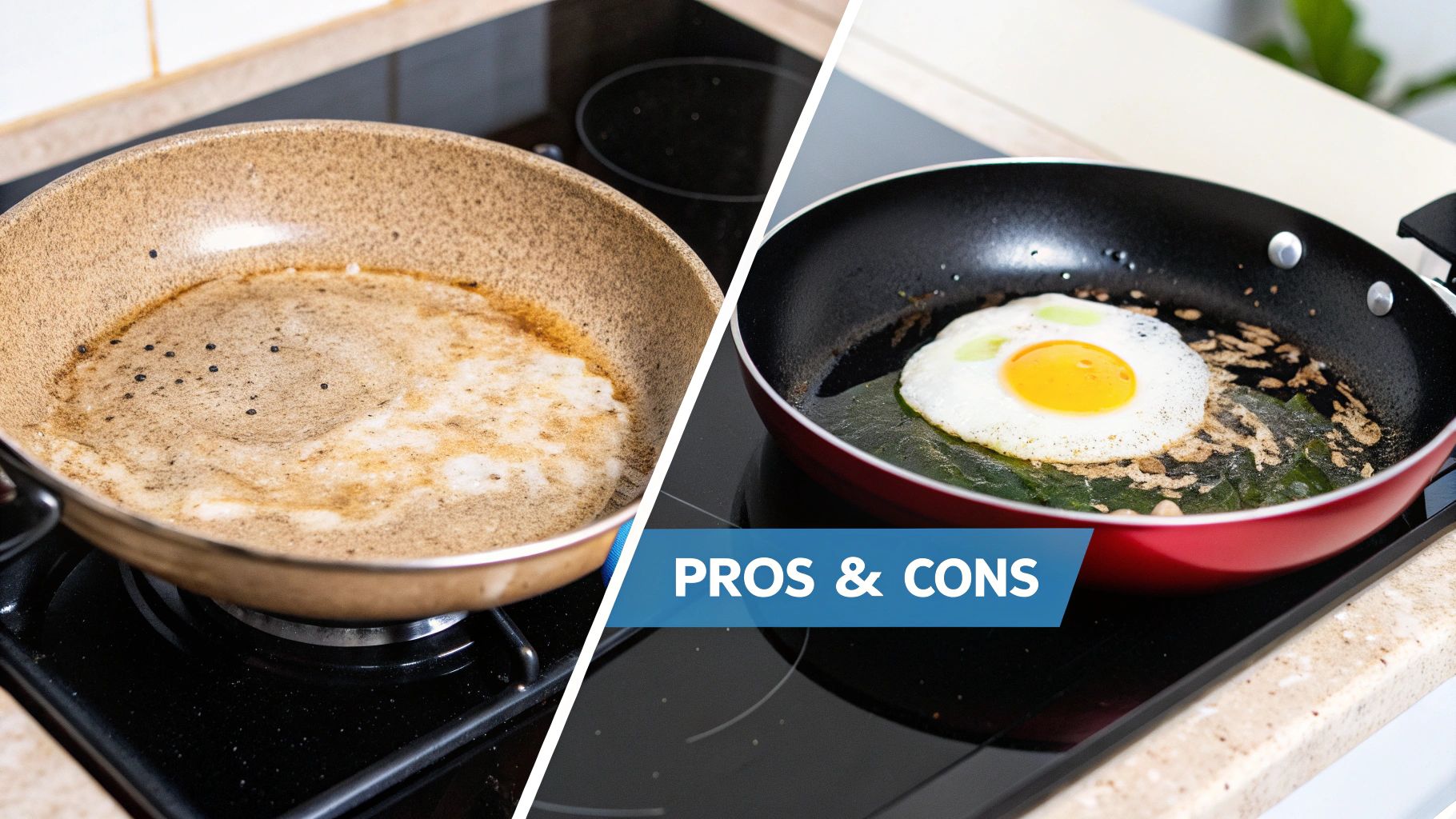
Let's get past the marketing spin and talk about what it’s really like to use ceramic cookware in a busy Aussie kitchen. Like any tool, these pans have brilliant upsides that can make cooking a dream, but they also come with some real-world limitations you absolutely need to know about.
Getting a clear picture of both sides of the coin is the only way to know if they're the right fit for your cooking habits and expectations. So, let’s break it all down.
The Clear Advantages of Ceramic Pans
The appeal of ceramic cookware is strong, particularly for anyone trying to cook a bit healthier without giving up performance. They’re designed to solve a lot of the old frustrations we’ve had in the kitchen.
The first thing you’ll notice is their outstanding non-stick surface when they’re brand new. A fresh ceramic pan lets you slide a fried egg or a pancake right onto the plate with barely a drop of oil. It's a game-changer for low-fat cooking.
Then there’s the peace of mind. The coating is made without PFOA or PTFE, so you don't have to worry about nasty chemicals leaching into your food, even if you accidentally let the pan get a bit too hot. This alone makes them a popular choice for families.
- Excellent Heat Distribution: Most ceramic pans are built around an aluminium core, which heats up quickly and evenly. This means no more frustrating hot spots, just consistent results whether you’re searing a steak or wilting spinach.
- Aesthetic Appeal: Let’s be honest, they look fantastic. They come in a whole range of modern colours that can really brighten up a kitchen and look great hanging from a pot rack.
The core appeal of ceramic pans in Australia lies in their ability to deliver a high-performance, non-stick experience without the health worries associated with older cookware technologies. It’s a clean, simple, and effective way to cook.
The Honest Disadvantages to Consider
But no pan is perfect, and it's crucial to be realistic about where ceramic cookware falls short. Its biggest weakness is, ironically, the lifespan of that beautiful non-stick coating.
The most common complaint is their shorter non-stick lifespan compared to top-tier traditional non-stick pans. While they feel unstoppable at first, the ceramic surface inevitably wears down. Even with meticulous care, you might only get one to three years of peak performance before food starts to catch.
Another major issue is their vulnerability to thermal shock. This is when you make a sudden, drastic temperature change, like moving a sizzling hot pan straight from the stove into a sink of cold water. That shock can create tiny cracks in the coating, causing its non-stick magic to vanish almost overnight.
To help you weigh it all up, here’s a quick look at the pros and cons side-by-side.
Ceramic Pans At a Glance: Pros vs Cons
This table gives a quick summary comparing the key advantages and disadvantages of using ceramic cookware in a typical Australian kitchen.
| Feature | The Good (Pros) | The Considerations (Cons) |
|---|---|---|
| Non-Stick Surface | Exceptionally slick when new, requiring little oil. | Lifespan is shorter; coating degrades over time. |
| Health & Safety | PFOA & PTFE-free for non-toxic cooking peace of mind. | Coating is delicate and requires specific care. |
| Durability | Solid metal core provides good structure. | Prone to cracking from thermal shock. |
| Maintenance | Easy to wipe clean when the coating is intact. | Needs careful hand washing; not ideal for dishwashers. |
Ultimately, ceramic pans demand a bit of TLC. You have to commit to using wooden or silicone utensils, avoiding high heat, and never touching them with an abrasive scrubber. This need for gentle handling doesn't mesh with every cook's style, especially in a chaotic kitchen.
Knowing these limitations from the get-go is the key to being happy with your purchase and getting the most out of your pan.
How to Choose the Best Ceramic Pan for Your Home
Walking into a cookware aisle can feel a bit overwhelming, but figuring out what makes a great ceramic pan isn't as complicated as it seems. A few key details separate a pan that will become a kitchen workhorse from one that disappoints after a few uses.
When you’re looking to buy, think of the pan as being built in layers, starting right at its core. The very best ceramic pans are built on a heavy-gauge metal base, and this is non-negotiable for good performance.
A thick, solid base, typically made from aluminium, acts like a heat battery. It soaks up the energy from your cooktop and spreads it evenly across the whole surface. This is what stops you from getting those frustrating hot spots that burn your food in one area while leaving another part undercooked. A flimsy, lightweight pan just can't manage heat properly, which almost always leads to patchy results.
Look for a Quality Core and Coating
At its heart, a great ceramic pan is all about solid construction. After you've checked the core, the next thing to look at is the non-stick coating itself. A top-tier pan will often feature multiple layers of ceramic coating, which is a huge factor in its durability and how long it will last.
When you're comparing pans, keep an eye out for these specifics:
- Heavy-Gauge Aluminium or Multi-Ply Base: Look for terms like "heavy-gauge," "forged," or "multi-ply." This language signals a stronger build that won’t warp under high heat and will cook your food evenly.
- Thick, Reinforced Coating: Brands that mention reinforced or multi-layer coatings are telling you they’ve invested in making the surface tougher. This is what helps the non-stick magic last through daily cooking.
A well-made ceramic pan should feel substantial in your hand. Its weight is a good indicator of a thick metal core, which is the foundation for superior cooking performance and a longer lifespan.
This shift towards quality is easy to see in the numbers. The Australian ceramic cookware market is valued at USD 91.08 million in 2024, and it's set to keep growing. The push is coming from health-conscious Aussies looking for safer, non-toxic pans to replace older non-stick options.
Check Handles and Cooktop Compatibility
A pan is much more than just the part that holds the food. Think about the handle—it’s how you interact with the pan, so it needs to feel good in your hand, be securely attached, and suit how you cook. Look for handles that are shaped for a comfortable grip and attached with solid rivets, which are far more reliable than a simple screw.
An oven-safe handle is another game-changer. It gives you the flexibility to sear a steak on the stovetop and then pop the whole pan in the oven to finish it off. Just be sure to check the maximum oven-safe temperature, as this can differ quite a bit from one pan to another.
Finally, double-check that the pan will actually work on your cooktop. Most ceramic pans are fine on gas and standard electric hobs, but induction is a different story.
- Induction Cooktops: These cooktops need magnetic cookware to function. Since most ceramic pans have an aluminium core (which isn't magnetic), you need one that's been specifically designed for induction. These pans have a magnetic steel plate bonded to the bottom. Always look for the induction symbol—it looks like a little coil—on the packaging or base.
By focusing on these key building blocks—a solid core, a tough coating, a comfy handle, and the right cooktop compatibility—you’ll be able to confidently pick out one of the best ceramic cookware options in Australia that will serve you well for years to come.
Making Your Ceramic Pan Last Longer

A good ceramic pan is an investment, not just in your kitchen but in healthier cooking. If you treat it right, you'll get years out of that beautiful non-stick surface. Unlike some of the tougher cookware out there, a ceramic coating has a delicate side. Gentle handling from day one is the secret to its longevity.
The number one mistake I see people make is thermal shock. That’s what happens when you take a sizzling hot pan and plunge it straight into cold water. It might seem like a good way to start cleaning, but it causes tiny, invisible cracks in the coating. Before you know it, your eggs are sticking again. Just let the pan cool down on its own before you even think about washing it.
The Golden Rules of Ceramic Pan Care
To keep that surface in pristine condition, your mantra should be: low heat, soft tools. The beauty of a ceramic non-stick surface is that you rarely need to crank the heat past medium. Overdoing it with high heat will slowly burn out the coating, making food stick.
Just as crucial is what you put in the pan. Metal utensils are public enemy number one for ceramic coatings; they'll scratch and chip the surface in a heartbeat.
- Stick to Silicone or Wood: Always reach for utensils made of softer stuff like silicone, nylon, or wood. They won't damage that delicate finish.
- Skip the Cooking Sprays: Those aerosol sprays might seem convenient, but they contain chemicals and propellants that build up a gummy residue. This film is a nightmare to clean without harsh scrubbing. All you really need is a small dab of butter or a good oil with a high smoke point.
- Hand Wash Every Time: I know it's tempting, but keep it out of the dishwasher. The combination of intense heat and aggressive detergents is brutal on non-stick coatings. A quick, gentle wash with a soft sponge and a bit of dish soap is all it takes. You can learn more about why some materials hold up better than others by reading about dishwasher-safe pans.
Handling Cleaning and Storage Correctly
Once the pan is cool, cleaning is usually effortless. Most food will slide right off with a bit of warm, soapy water and a non-abrasive sponge. If you’ve got some stubborn, burnt-on bits, fight the urge to grab the steel wool or a harsh scourer.
The old-fashioned trick works best here: a simple paste of bicarb soda and a splash of water. Let it sit on the tough spot for a few minutes, then gently scrub it away. It works wonders without scratching the surface.
Finally, think about storage. Stacking other pots and pans directly on your ceramic one is a recipe for disaster, guaranteeing scratches. If you’re short on space and have to stack, always slide a soft cloth, a tea towel, or a proper pan protector in between.
Honestly, the best solution for your ceramic pans in Australia is to hang them on a pot rack. It keeps them safe, sound, and ready for action.
Got Questions About Ceramic Pans? We've Got Answers.
It's smart to have a few questions before you splash out on new cookware, even with all the glowing reviews. When it comes to ceramic pans here in Australia, the same queries tend to pop up again and again. Let's get them sorted so you can feel good about your choice.
Think of this as your final checklist to clear up any lingering doubts.
Are Ceramic Pans Actually Safe?
Yes, a well-made ceramic pan is one of the safest options you can put on your stove. The non-stick magic comes from a sol-gel coating made from sand and minerals, which means it’s completely free from PFOA and PTFE. For many health-aware Aussies, this is the biggest drawcard.
Because of this, you don't have to worry about nasty chemicals finding their way into your food. Even if you accidentally scratch the surface or let the pan get too hot, it won't release toxic fumes, giving you great peace of mind for daily cooking.
How Long Do Ceramic Pans Really Last?
This one comes down to two things: the quality you buy and the way you treat it. A top-tier pan, if you look after it, can keep its non-stick surface for a good 1 to 3 years. But that care part is absolutely crucial.
To get that kind of lifespan, you have to be disciplined. That means always using low-to-medium heat, never touching it with metal utensils (wood or silicone only!), and gently handwashing it every time. If you opt for a cheaper pan or treat it rough—blasting the heat or scraping it with a fork—you'll be lucky to get a year out of it before everything starts sticking.
The durability of that non-stick coating is a direct reflection of your kitchen habits. Be gentle with it, clean it properly, and you'll get your money's worth. Otherwise, you're just setting yourself up for frustration.
Can I Use a Ceramic Pan on an Induction Cooktop?
This is a big one, and the answer is a classic "it depends." For a pan to work on an induction stove, its base needs to be magnetic. Think iron or a specific grade of stainless steel.
Most ceramic pans have an aluminium body, which isn't magnetic and won't work on its own. To get around this, manufacturers bond a special magnetic plate to the bottom.
So, how can you be sure? Always check the box for an 'induction-safe' label or look for the universal induction symbol (it looks like a little coil of wire) stamped right on the pan's base. Don't buy it unless you see it.
Why Is My Ceramic Pan Suddenly Sticking?
Sticking is the number one complaint with ceramic pans, and it almost always comes down to two culprits. The most common cause is a thin, invisible layer of burnt-on oil. This happens when you use aerosol cooking sprays or overheat your oils, creating a sticky residue that clogs up the non-stick surface.
The other reason is just good old-fashioned wear and tear. If the coating is visibly scratched, chipped, or looks worn thin, its non-stick days are over. You can sometimes revive a sticky pan with a gentle scrub using a bicarb soda and water paste, but that trick only works if the coating itself isn't physically damaged.
At Everti, we're all about fitting out your kitchen with tools that are safe, reliable, and made for a lifetime of healthy meals. While our specialty is pure titanium, we know how important it is to understand the best material for every job. Take a look at our range of lifetime kitchen essentials.