

You've set out bread beside dinner, but the small plate in the cupboard is too shallow for a salad and too large to sit neatly beside the main. That's the everyday puzzle with side plates: they look simple, yet small differences in size, material and finish affect how useful they are.
A good choice starts with what you'll serve, then moves to the plate's body, glaze, safety evidence and replacement options. A product description that says “ceramic” or “durable” isn't enough on its own. The useful details are more concrete: diameter, water absorption, decoration placement and whether the maker can document testing.
What a Ceramic Side Plate Actually Is
You're setting out soup and want a little bread on the side, or serving a main with a small salad. The plate for that extra portion is a side plate: a compact plate intended to accompany a meal, rather than hold the main course. It can also carry toast, a snack, a small dessert or something to share.
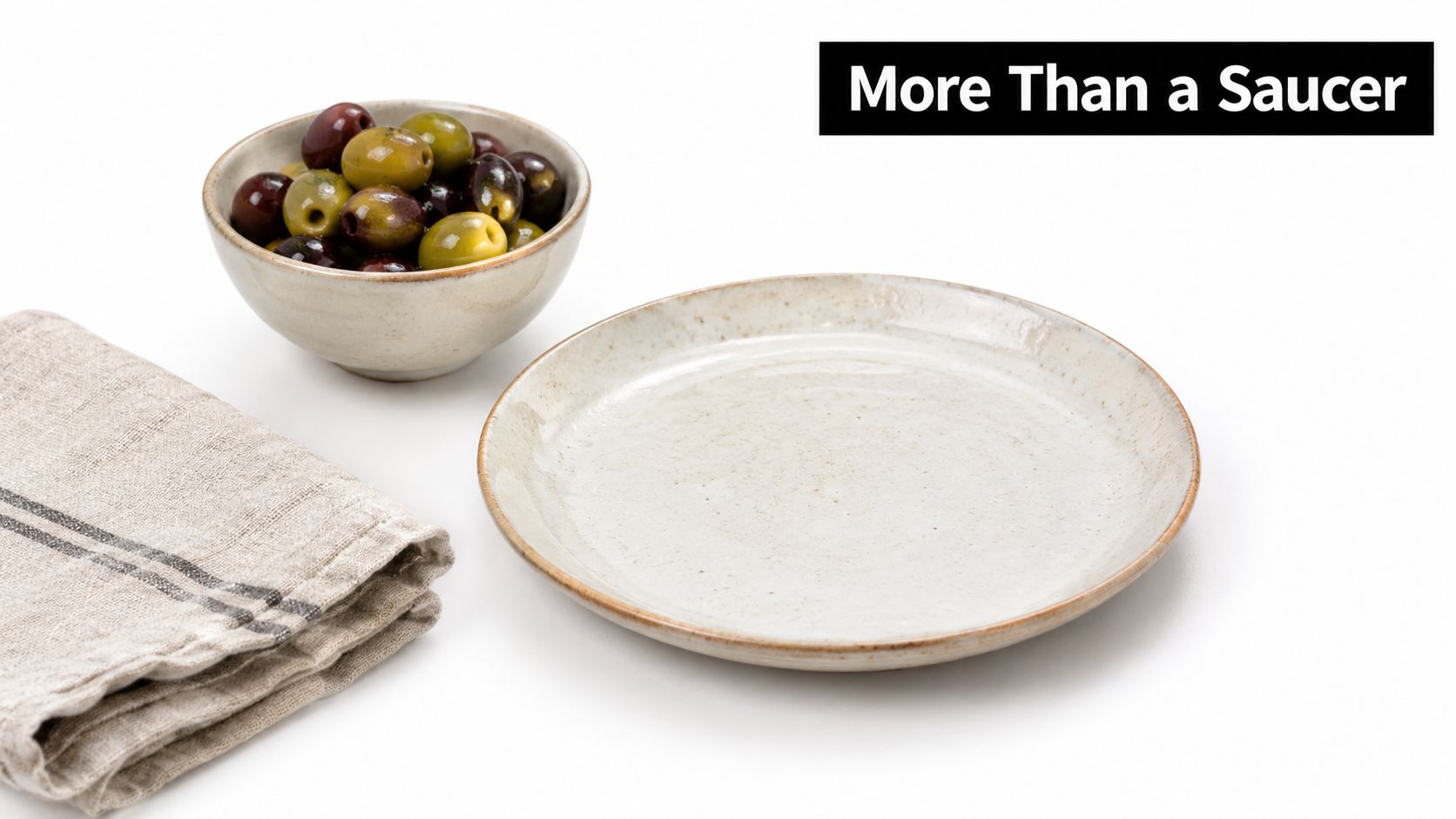
The names overlap in shops, so think about the job rather than the label. A bread plate is often used for bread at an individual place setting. A dessert plate is chosen to serve a sweet course, while a salad plate may be a little larger or deeper to contain greens and dressing. Many plates can do more than one of these jobs. A side plate is the versatile middle ground, small enough to sit beside a dinner plate, but useful beyond bread service.
“Ceramic” describes a family of fired clay materials, not one specific recipe or performance level. Porcelain, stoneware and earthenware are all ceramics, but they differ in density, feel and resistance to liquid absorption. The word alone doesn't tell you whether a plate is suited to frequent washing or whether its glaze has been tested for food contact.
As you shop, check the diameter, the shape of the eating surface, and the care instructions. Then look for information about the clay body and glaze, especially if you expect to use the plate every day. Those details help turn a pretty object into a plate that fits your table and routine.
Standard Ceramic Side Plate Sizes
The diameter gives you a useful first filter, but the right size depends on what you serve and how the plate is shaped. A narrow rim leaves more room for food than a broad rim on a plate with the same outside measurement. A shallow well suits toast or a biscuit; a deeper centre is handier for dressed salad or a snack with sauce.
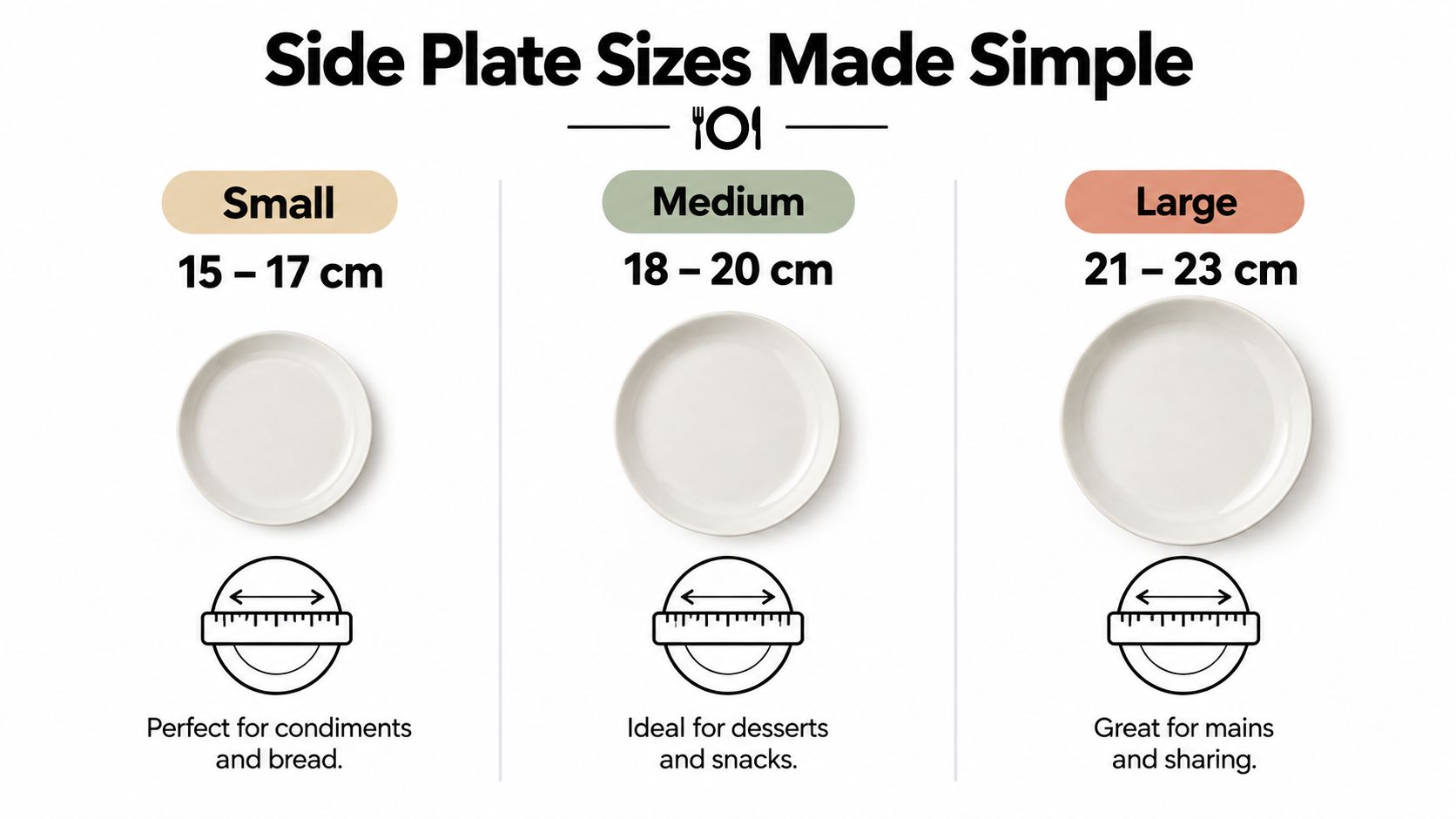
For a quick shopping guide, think in practical bands:
- Small, around 15–17 cm: Handy for bread, olives, condiments or a small piece of cake.
- Medium, around 18–20 cm: A flexible everyday choice for toast, snacks, dessert or a modest side salad.
- Large, around 21–23 cm: Better for a generous salad, a share plate or a substantial snack.
These are useful categories, not a universal standard. The visual guide groups sizes a little differently, so use the actual measurement and eating surface when comparing products rather than relying on words such as “medium” or “large”.
A compact plate can feel just right on a busy table because it takes up less space and keeps portions contained. At home, a broader plate may be more useful if “side” often means a full salad or a few items served together. Restaurants may prefer smaller pieces where tables are crowded or where plates need to stack efficiently, but the best choice for your kitchen depends on how you eat and store dinnerware.
The dimensions have a long history. A University of Melbourne museum project examined a Staffordshire Mason plate measuring approximately 20 centimetres, made around 1813–1820 and transported from England to Australia. Its research places small plates within the spread of practical, standardised ceramic tableware, not just decorative ware. The University of Melbourne project report on the Staffordshire plate gives useful context for why a compact plate around this size remains familiar.
Before ordering, measure a plate you already enjoy using, including its rim, and check the cupboard shelf where it'll live. Match the plate to the food, then confirm that its stack height and footprint suit your storage.
Glazes and Finishes Explained
A glaze is the fired surface coating that gives a ceramic plate its colour, sheen and feel. Gloss glaze reflects light and is usually easy to wipe clean. Matte glaze has a softer, less reflective appearance, while a reactive glaze can create colour changes and variation across a piece. Those looks can be appealing, but a striking finish doesn't tell you how the glaze performs.
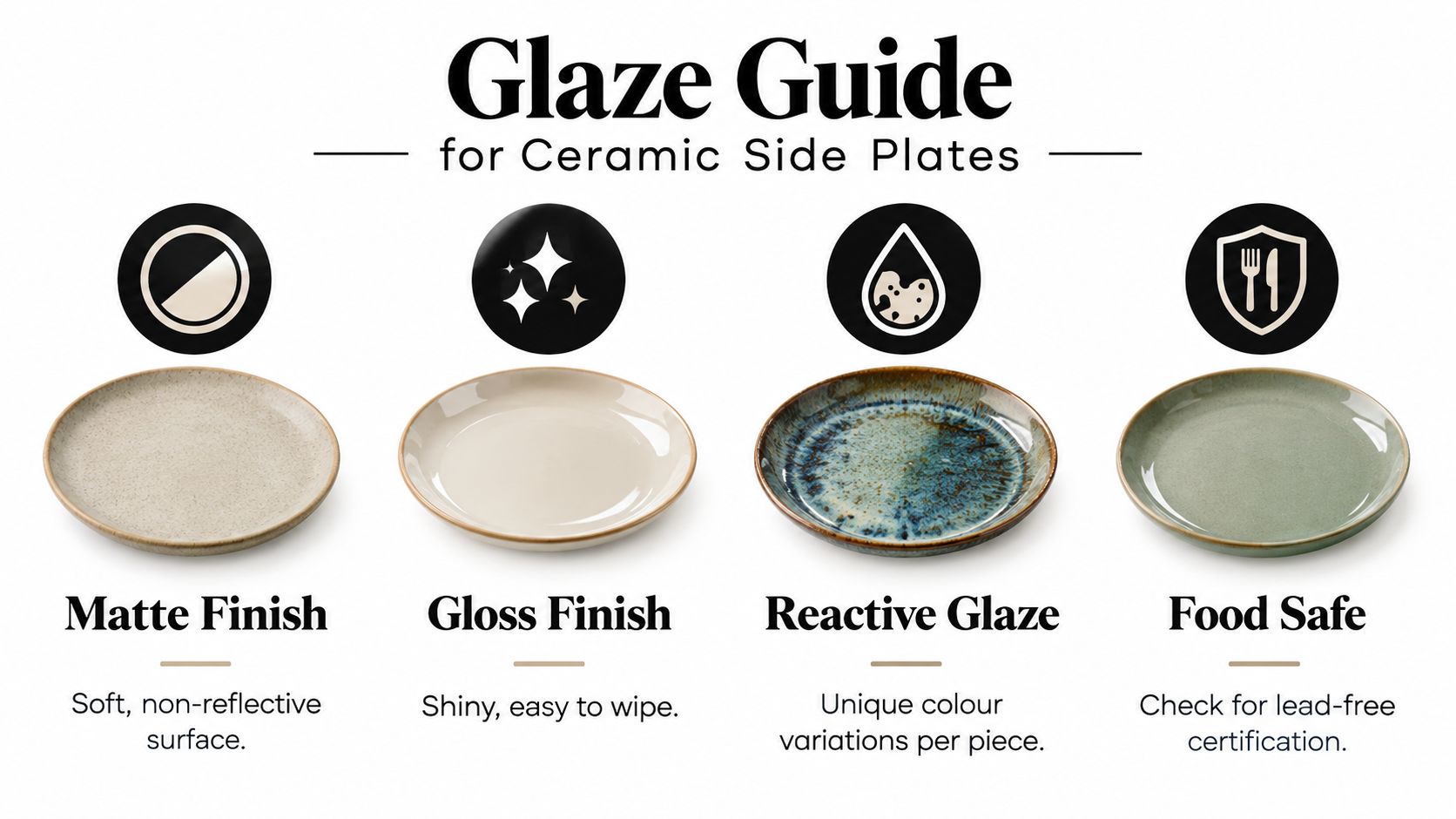
Decoration placement matters, too. Under-glaze decoration sits beneath a transparent glaze; over-glaze decoration is applied on top of the glaze. Ask the seller which method is used, and whether the finished plate has been tested for food contact. “Lead-free” on its own doesn't tell you whether the product has suitable test evidence for lead and cadmium release.
For Australian use, AS 4371:2012 is the relevant technical benchmark for permissible lead and cadmium release from ceramic tableware intended for general use. It also covers performance and marking for commercial, industrial and hotel-grade tableware. The AS 4371:2012 standard listing describes the standard's scope. The reason this matters is practical: glaze, pigments and decorative finishes are part of the food-contact surface, and acidic or salty foods can challenge poorly formulated or damaged finishes.
Check the surface, not just the colour
Before buying, look closely at the plate under good light. Crazing appears as fine lines in the glaze; pinholes and pits are small surface defects. Ask whether the supplier can provide test documentation, explain decoration placement and state what to do if the glaze becomes worn, chipped or crazed. For frequent use, a stable, fully matured glaze and traceable batch documentation are more reassuring than a broad “food-safe” claim without supporting detail.
Citrus, tomato, vinegar-based dressings and fermented foods are useful reminders that plates meet more than dry bread. If you can't find clear safety information, ask before purchase rather than assuming that every finish behaves the same way.
Porcelain, Stoneware, and Earthenware Compared
A product listing that says “ceramic” leaves important questions unanswered. Porcelain is often selected for everyday dinnerware because a dense, vitrified body limits water absorption. Stoneware can also be sturdy and practical, while earthenware tends to be more porous. These are broad material descriptions, so the actual firing and product specification matter.
An Australian product specification describes porcelain fired at 1280°C with water absorption below 0.5%. That gives buyers a concrete example of a dense, vitrified body. Lower absorption means fewer pathways for liquid to enter the ceramic body, which can help limit staining and lingering odours. It's still sensible to check the maker's care instructions: microwave, dishwasher and oven suitability depend on the individual plate, not just the material name.
| Ceramic body types for side plates | Typical firing | Water absorption | Durability feel | Best fit |
|---|---|---|---|---|
| Porcelain | High-temperature firing; one Australian specification states 1280°C | Look for a stated figure at or below 0.5% as a vitrification benchmark | Dense, smooth and suited to regular use when correctly made | Busy kitchens that want a fine, practical plate |
| Stoneware | Varies by clay body and manufacturer | Check the product specification | Often substantial in the hand; performance varies by formulation and firing | Everyday use where a weightier appearance suits the setting |
| Earthenware | Varies by clay body and manufacturer | Often more porous than vitrified porcelain; confirm with the maker | Can feel warm and informal, but needs care with impacts and temperature changes | Relaxed settings where its look and feel are part of the appeal |
The table is a comparison guide, not a substitute for a product's own specifications. For porcelain, water absorption is particularly useful because appearance can't show you how dense the body is. Ask the seller to identify the figure and confirm dishwasher compatibility rather than inferring performance from a glossy finish or a refined shape.
Design also changes how a plate feels in use. Rim profile, foot shape and proportions all affect the way it sits, stacks and presents food. For a plain-language look at how these choices influence appearance, explore ceramic design details. If you're weighing a side-plate purchase against a broader dinnerware collection, this guide to ceramic dinner sets can help you think through how individual pieces work together.
Daily Care and Long-Term Durability
A side plate gets handled often. It may be stacked after breakfast, scraped by cutlery at lunch and washed after dinner. Small habits help protect the glaze and reduce avoidable knocks.
Start by stacking plates carefully and keeping rims from rubbing directly against one another. If you have pieces with delicate edges or decorative finishes, use a soft separator and avoid forcing a tall, unstable stack into a cupboard. When loading a dishwasher, follow the maker's instructions and leave room for water to circulate rather than wedging plates tightly together.
Practical rule: Don't assume that “ceramic” means microwave- or oven-safe. Check the product's own care guidance, and avoid sudden temperature changes.
A plate can experience thermal shock when it moves quickly between very different temperatures. Don't take a cold plate straight from the refrigerator or freezer and put it into a hot oven. For microwave use, check that the manufacturer permits it, and avoid using any plate that has a crack, chip or damaged glaze.
Dishwasher detergents and repeated washing can affect some finishes over time, especially if the maker's care limits aren't followed. Use the cleaning method recommended for that specific product. If you're comparing porcelain pieces for regular meals, this overview of porcelain dinner plates offers a related look at choosing and using porcelain dinnerware.
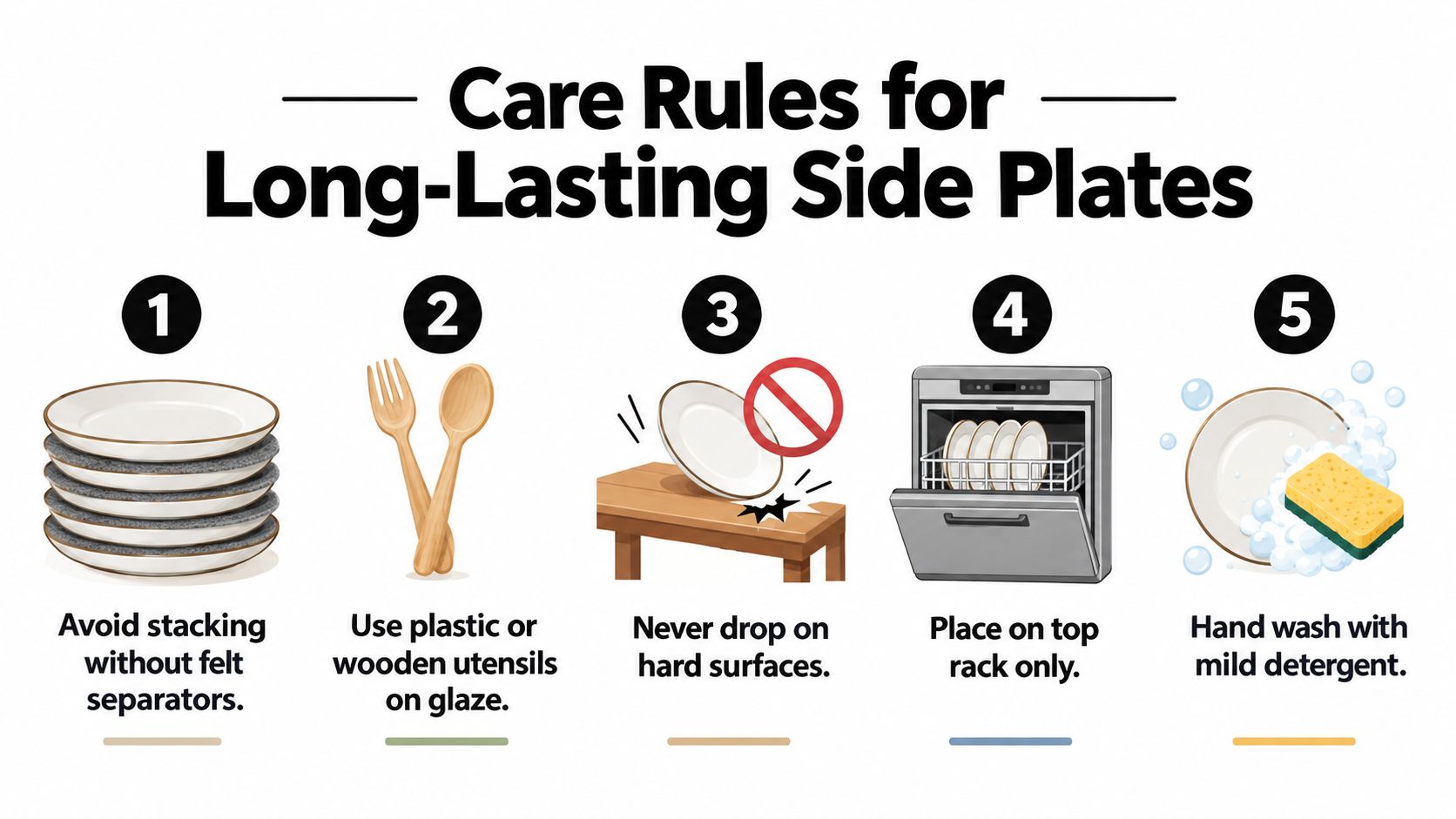
Retire a plate from food service if it has a chip that exposes the clay body, a crack, or deep crazing. Damage can make the surface harder to clean reliably, and you can't restore a compromised glaze just by washing the plate more carefully. Keep an eye on the rims, where knocks and cutlery contact tend to show first.
Why Australian Buyers Should Think Open Stock
A full dinner set looks organised when it arrives, but replacing one broken side plate can become awkward if the maker only sells boxed sets. Buying open stock, meaning individual pieces sold separately, gives you a better chance of replacing one plate, adding pieces gradually or mixing colours without replacing everything.
Australia's supply environment makes replacement availability a useful question. In 2024, Australia imported approximately 20,230,500 kilograms of non-porcelain ceramic tableware, kitchenware and other household articles, valued at about US$80.7 million. China supplied roughly 16,735,800 kilograms worth about US$66.8 million, representing approximately 82.7% of the reported import value and volume. These figures cover the broader Harmonized System category for non-porcelain household ceramics, not side plates alone, but they show how heavily the local category depends on imports. Australia's 2024 import data for non-porcelain ceramic household articles provides that wider market context.
For a buyer, the point isn't to judge a plate by where it's made. It's to think ahead: Can you buy a single replacement if one breaks? Will the same range remain available, or are you happy to have a slightly different finish later? Open-stock pieces can cost more per plate, and glaze colour may vary between production batches. Imported goods also travel a long way, so a sustainability claim shouldn't rest on material alone.
Compare expected service life, replacement options, stackability, packaging and shipping distance. A durable plate that can be replaced individually may suit your household better than a set that's difficult to maintain. Think about repair and end of life, too: chipped or crazed plates should leave food service, and household recycling options for ceramics may be limited. Buy for the years you expect to use the plate, not just the moment you unpack it.
Styling Ceramic Side Plates With Your Dinnerware
A side plate can disappear into the setting or become the detail that brings the table together. Start with the meal, then decide whether the plate should blend in, add colour or introduce a different texture.
For a casual weeknight dinner, choose a neutral plate that sits beside your dinnerware. A simple white, cream or muted tone leaves the food at the centre of attention and makes the side plate easy to use for toast one night and a small salad the next. If your main plate has a coloured rim, echoing that shade in the side plate can make a mixed setting feel deliberate.
At a weekend lunch, use a coloured or reactive-glaze piece as an accent against plain dinner plates. The surface variation gives each plate character, so keep the rest of the table simpler if you want the glaze to stand out. When mixing patterns, look for a shared colour or a similar scale rather than combining several competing motifs.
A third option is mixing materials. A ceramic side plate beside a titanium serving board creates a contrast between a glazed, tactile surface and a clean metallic one. Keep the food and the table setting practical: use the board for serving, and let the side plates handle individual portions.
You don't need a complete matching set to make a table feel organised. Choose a small working collection with compatible shapes, colours or finishes, then add pieces that earn their place. For broader inspiration on arranging a table, these table-setting ideas can help you plan a setting around the meal. If you're also decorating the room, kitchen wall decor ideas from Slone Brothers offer a separate way to carry plate shapes and patterns into the space.
Buying Criteria and Common Questions
Before you buy, use this checklist to turn a nice-looking plate into a practical choice:
- Size: Choose a diameter that suits the food and your storage space.
- Body: Look for a stated ceramic type and water-absorption information, especially for porcelain.
- Glaze: Check the finish, decoration placement and care instructions.
- Safety: Ask for evidence of AS 4371 testing where food-contact safety matters.
- Replacement: Confirm whether the plate is available individually.
- Use: Check dishwasher, microwave and oven guidance for that exact product.
Common questions
Can a chipped plate be repaired? A decorative repair may improve its appearance, but don't return a chipped or cracked plate to food service if the food-contact surface is damaged.
Can dishwasher detergent damage glaze? It can affect some finishes over repeated washing. Follow the manufacturer's care instructions and choose hand washing if the product guidance recommends it.
How do I match a new plate to an existing set? Bring a piece to compare, or check measurements, rim colour and finish in natural light. If an exact match isn't available, repeat one visual feature, such as colour or shape, to make the mix look intentional.
Can I use a crazed plate for dry food only? It's safer to retire a crazed plate from food service rather than relying on dry foods to avoid the risks associated with a damaged surface.
For a broader home-care perspective, this guide to stylish glass dining table care offers practical advice on looking after another surface that often shares the dining space.
Everti creates titanium essentials for the kitchen and table, including cutting boards and tableware designed for everyday use. If you're pairing ceramic side plates with durable serving pieces, visit Everti to explore the range and find a practical fit for your table.