

A cooking pan set is essentially a hand-picked collection of pots and pans, bundled together to tackle the most common jobs in the kitchen. A decent set will always include the workhorses: a frying pan, a saucepan, and a stockpot. These are the foundational tools every home cook needs.
How to Choose the Right Cooking Pan Set for Your Kitchen
So, you're on the hunt for a new cooking pan set. It can feel a bit overwhelming, can't it? With so many options out there, it’s tough to know where to start. This guide is here to cut through the noise.
We’ll break down the key things that make a set truly great, not just okay. We'll get into the nitty-gritty of materials—like the real difference between stainless steel and non-stick—and help you figure out how many pieces you actually need without cluttering your cupboards.
Think of this as a conversation about finding the right tools for your kitchen. By the time we're done, you'll feel confident picking out a set that suits your cooking habits, fits your budget, and will genuinely make your time at the stove more enjoyable for years to come. Getting this right is about making a smart investment in your kitchen.
Key Factors to Consider
Before you even start looking at shiny new pans, it’s worth taking a moment to think about your own kitchen and how you cook. The perfect set for a professional chef is probably completely wrong for someone who just needs to whip up a quick dinner after work.
Ask yourself a few questions:
- What’s your cooking style? Are you all about searing steaks at super-high temperatures, or do you mostly find yourself gently cooking delicate things like eggs and fish? The way you cook points directly to the best material for you.
- What kind of cooktop do you have? Is it gas, electric, or induction? This is a big one. Not all cookware plays nicely with every type of hob—especially induction, which needs a magnetic base to even work.
- What’s your budget and how long do you want it to last? Are you after a starter set to get you by, or are you ready to invest in something that could last a lifetime? Higher-quality materials usually cost more upfront but pay for themselves in the long run.
For a different take and more detailed comparisons, this guide on Choosing the Best Cookware Set for Your Kitchen is a fantastic resource.
A well-chosen cooking pan set becomes an extension of your own hands in the kitchen, making every meal a little easier and more enjoyable. The right tools don't just cook food; they inspire you to be more creative.
Ultimately, it’s all about finding that sweet spot between performance, durability, and what’s practical for your everyday life. If you want to dive even deeper into what separates the premium stuff from the rest, our article on what makes for good quality pots and pans has you covered.
Now, let's start with the most important part of any pan: what it's made of.
Decoding Cookware Materials: The Foundation of Great Cooking
The material of your cooking pan set is its DNA. It dictates everything from how evenly your food cooks to how much elbow grease you’ll need for cleanup. Think of it like choosing the right car for a specific journey: you wouldn’t take a sports car on a rugged off-road track. In the same way, the pan you need for searing a steak is fundamentally different from the one you'd grab for flipping a delicate crepe.
Getting to know these materials means you can match the right tool to the task. It’s the difference between a frustrating night in the kitchen with food sticking and burning, and a seamless experience where you feel completely in control.
Let’s demystify the most common options out there. We’ll explore the unique personalities of each material, from the way they handle heat to their little maintenance quirks, so you can pick a set that genuinely fits the way you cook.
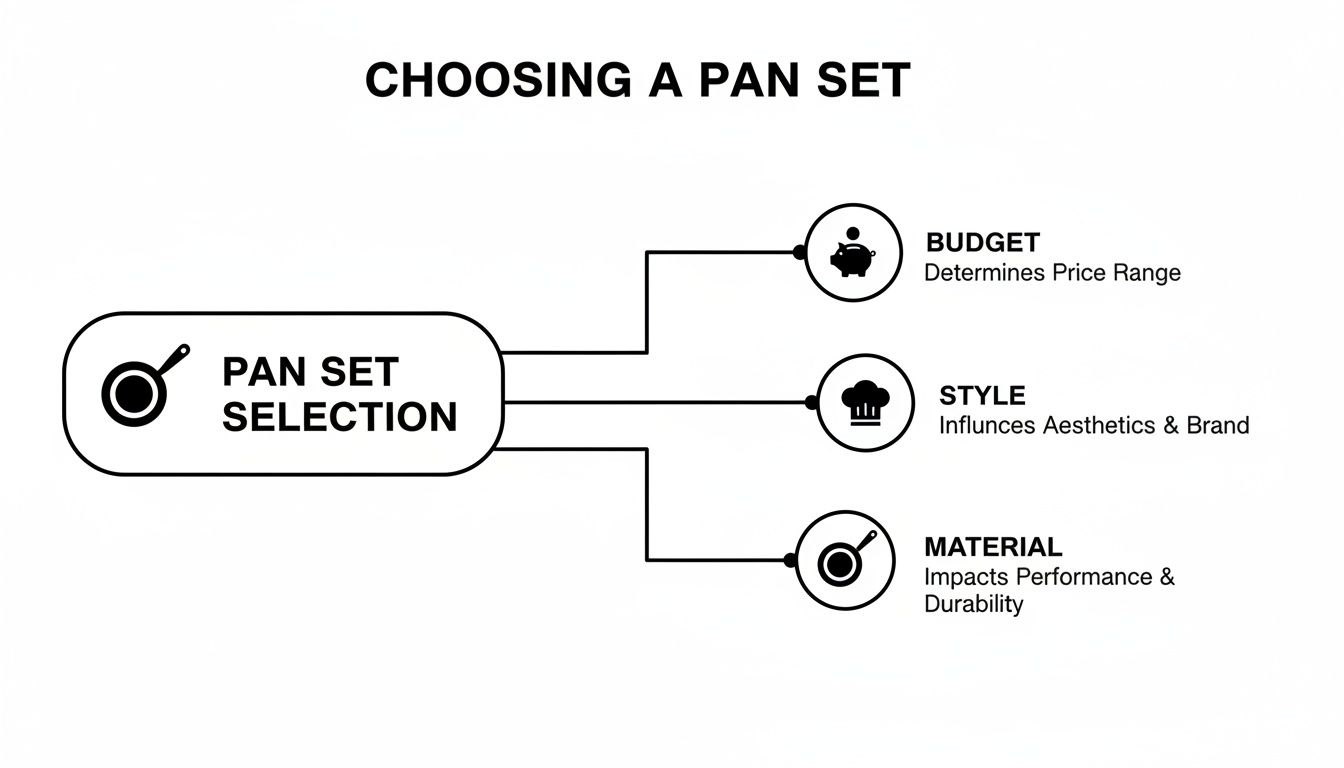
The Reliable Workhorse: Stainless Steel
Stainless steel is the undisputed champion in professional kitchens and a firm favourite among serious home cooks for good reason. Its durability is legendary; a quality stainless steel pan can genuinely last a lifetime. It’s also completely non-reactive, meaning you can simmer acidic ingredients like tomatoes or wine without ever worrying about a metallic taste tainting your dish.
Where it truly shines, though, is in its ability to create a perfect sear on meats and vegetables. It helps develop those delicious, caramelised brown bits (known as fond) that become the soul of an incredible pan sauce. This material is all about heat control and precision. Here in Australia, its popularity is undeniable, with stainless steel pots and pans commanding a market valued at over USD 71.2 million. This growth reflects a real appreciation for cookware that's built to perform and last. You can find out more about the Australian stainless steel market to see the full trend.
The secret to cooking with stainless steel is patience. Always preheat the pan properly before adding any oil. This simple step creates a temporary non-stick surface, letting food release itself naturally once it's perfectly browned.
The Convenient Sprinter: Non-Stick Coatings
When convenience is king, non-stick cookware reigns supreme. It’s designed for easy food release and minimal cleanup, making it a lifesaver in busy households. This is the pan you automatically reach for when cooking delicate things that are notorious for sticking, such as:
- Eggs: Scrambled, fried, or folded into an omelette, they’ll slide right out.
- Pancakes: You'll get that even, golden-brown finish without any frustrating sticking.
- Delicate Fish: Cook flaky fish fillets without watching them break apart in the pan.
Thankfully, modern non-stick surfaces, whether they're traditional PTFE or newer ceramic coatings, are made without harmful chemicals like PFOA. They do, however, demand a bit of gentle care. Using metal utensils or blasting them with super-high heat can damage the coating and shorten their lifespan.
The Seasoned Marathon Runner: Cast Iron
Cast iron is in a league of its own. It’s heavy and takes a while to get hot, but once it’s there, it stays hot. This exceptional heat retention makes it absolutely unbeatable for any task that requires a deep, even crust—think searing a thick steak, baking cornbread, or frying chicken to crispy perfection.
The defining feature of cast iron is its seasoning—a natural, non-stick layer built up by baking thin coats of oil onto the surface. The more you cook with it, the better this seasoning gets. While this material is incredibly durable, it has its own set of rules. It must be kept bone dry to prevent rust and should never, ever see the inside of a dishwasher. A well-maintained cast iron skillet isn’t just a pan; it’s an heirloom that can be passed down through generations.
The Modern All-Rounder: Hard-Anodised Aluminium
For those who want a bit of everything, hard-anodised aluminium offers a fantastic middle ground. It starts as regular aluminium—an excellent conductor of heat—and then undergoes an electrochemical process that hardens its surface. The result is a pan that’s incredibly scratch-resistant and even more durable than stainless steel.
This process also creates a non-reactive and slightly non-stick surface. It heats up quickly and evenly, giving you the speedy performance of aluminium with the strength of much tougher materials. It’s a versatile and relatively lightweight option, making it a hugely popular choice for an everyday cooking pan set.
To help you visualise how these materials stack up, here’s a quick comparison.
Cookware Material Performance at a Glance
This table breaks down the key characteristics of each material, giving you a side-by-side look at what to expect in your kitchen.
| Material | Heat Conductivity | Durability | Maintenance Level | Best For |
|---|---|---|---|---|
| Stainless Steel | Moderate, but holds heat well with a core (copper/aluminium) | Very High | Low to Medium | Searing, browning, and making pan sauces |
| Non-Stick | Varies (often aluminium base), good and even | Low to Medium | Low (but requires care) | Eggs, pancakes, and delicate fish |
| Cast Iron | Low (heats slowly), but excellent heat retention | Extremely High | High (requires seasoning) | Searing, frying, and baking |
| Hard-Anodised Aluminium | Very High (heats quickly and evenly) | High | Low | Everyday all-purpose cooking |
Each material clearly has its moment to shine. The best choice ultimately depends on what you cook most often and how you like to work in the kitchen.
A Closer Look at Non-Stick Cookware
In any modern kitchen, non-stick cookware has become an absolute must-have. It’s the kind of everyday hero that turns potentially messy meals into simple wins. The main draw is obvious: food just slides right off. This not only makes cleaning up a breeze but also lets you cook with far less oil or butter, which is a nice bonus for healthier eating.
If you’ve ever battled to flip a pancake or scrape a stuck-on omelette from a pan, you'll immediately get the appeal. Non-stick is the go-to for delicate foods like eggs and flaky fish that love to stick. That reliability makes it a favourite for everyone from busy families to home cooks who just want things to run smoothly.
The Two Main Types of Non-Stick Surfaces
When you head out to buy a non-stick pan, you’ll generally run into two main kinds of coatings, each with its own way of delivering that slick, easy-release surface.
- PTFE Coatings: You probably know this one by its most famous brand name, Teflon. Polytetrafluoroethylene (PTFE) is the classic non-stick material. Thankfully, manufacturing has come a long way, and modern PTFE pans are made without PFOA, the chemical that raised health concerns years ago. They offer brilliant non-stick performance and last a long time when you treat them well.
- Ceramic Coatings: As a newer option on the scene, ceramic non-stick coatings are made from a sand derivative that’s applied to create a glossy, slippery surface. It gets a lot of praise for being free from PTFE and PFOA right from the start and can often handle slightly higher temperatures. Ceramic gives you a fantastic non-stick experience, though its lifespan can sometimes be a bit shorter than a top-quality PTFE pan.
There's no denying how popular these pans are. In fact, the non-stick cookware market in Australia and New Zealand recently hit a value of USD 254.62 million. Pans are the biggest sellers in any cookware set, and that trend is only expected to grow. You can see the latest non-stick market trends to understand why they continue to be a kitchen staple.
How to Make Your Non-Stick Pans Last
While non-stick pans are designed for convenience, they do need a bit of TLC to keep them performing at their best. That coating is where the magic happens, so protecting it is your top priority. It's surprisingly easy to shorten the life of your favourite skillet with a few common mistakes.
The golden rule for non-stick cookware is simple: avoid anything that can scratch, overheat, or shock the surface. Treat it gently, and it will reward you with years of hassle-free cooking and easy clean-ups.
To get the most out of your pans, you have to sidestep the usual pitfalls. The biggest culprits are using metal utensils that can easily gouge the surface and blasting the pan with high heat, which causes the coating to break down. Even just stacking pans carelessly can lead to scratches. Our guide on caring for non-stick cookware has even more tips to keep your pans in top shape.
Simple Care for Long-Lasting Performance
You don’t need to do a lot to extend the life of your non-stick cooking pan set—just build the right habits. Following these simple rules will help keep that slick surface going for as long as possible.
- Use the Right Tools: Always reach for silicone, wood, or nylon utensils. Metal spoons, forks, and spatulas are the number one enemy of a non-stick coating.
- Stick to Low or Medium Heat: These pans aren't built for searing steaks at screaming-hot temperatures. Overheating can degrade the coating and sometimes release fumes. Save the high-heat jobs for your stainless steel or cast iron pans.
- Wash by Hand: I know some pans say "dishwasher safe," but the harsh detergents and high heat in a dishwasher will wear down the non-stick surface over time. A quick, gentle wash with a soft sponge and a bit of soap is all it needs.
- Store Them Smartly: Try not to stack other pots and pans directly on the non-stick surface. If you’re short on space and have to stack, just place a soft cloth, a paper towel, or a proper pan protector between each one to stop them from scratching.
Building Your Perfect Pan Set with Essential Pieces
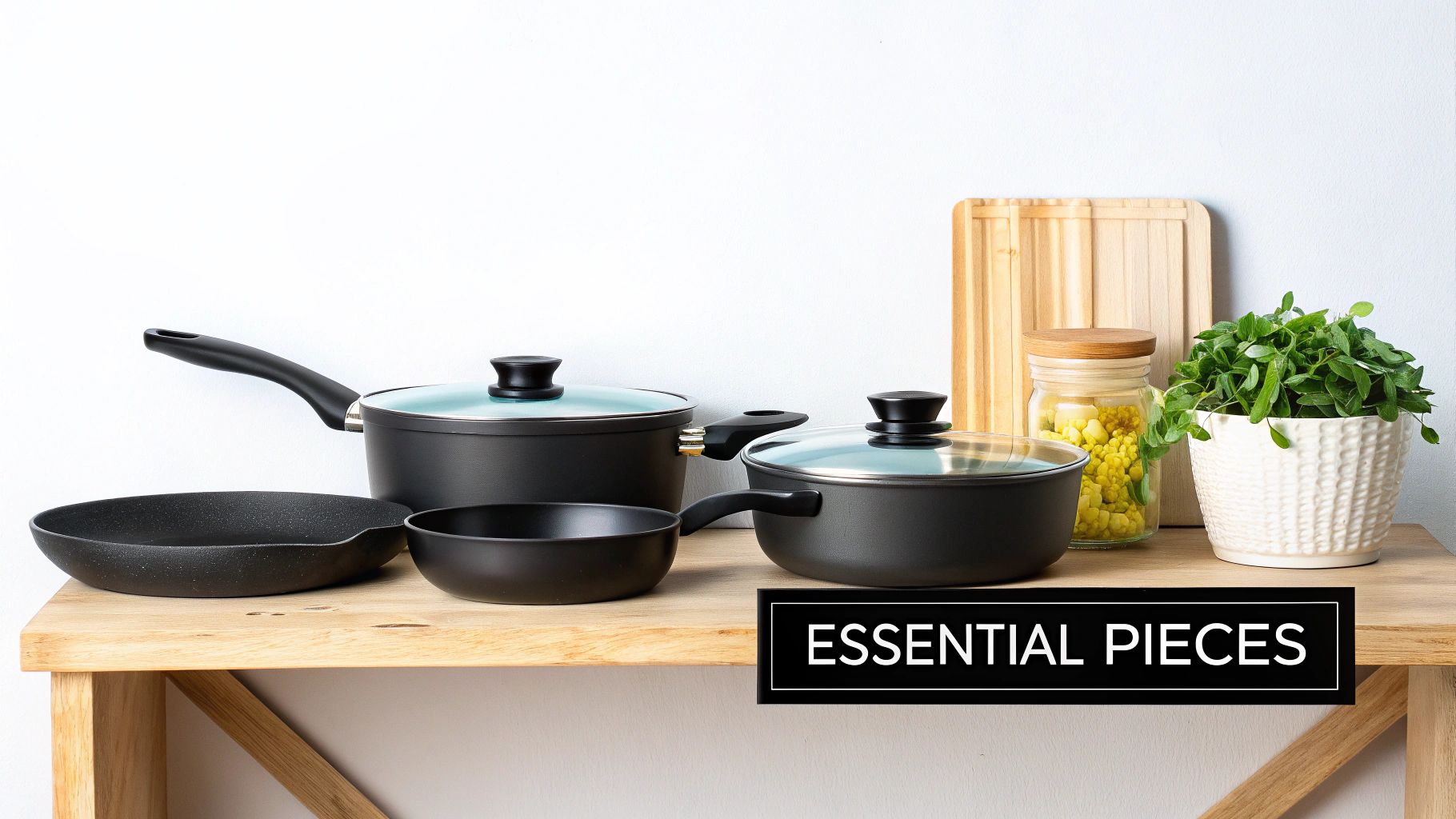
It’s easy to get drawn in by a massive, shiny 15-piece cooking pan set on display. But before you get carried away, it's worth asking a simple question: will I actually use all of that? For most of us, the honest answer is a firm no.
The reality is, many of those big sets are bulked up with pans that will likely spend their lives gathering dust at the back of a cupboard. A much smarter approach is to build your own collection around the way you really cook. This way, every single piece earns its place, becoming a trusted workhorse instead of just expensive clutter.
When you focus on a core group of essentials and add specialised pans over time, you create a set that’s not only more functional but also far more cost-effective. You're in control, investing in quality where it genuinely matters.
The Foundational Trio Every Kitchen Needs
Think of your cookware like a capsule wardrobe. You start with a few versatile, high-quality basics you can rely on for almost any situation. In the kitchen, this core is made up of three indispensable pans that will handle the lion's share of your daily cooking.
-
The Frying Pan (or Skillet): This is your everyday champion. Its flat bottom and sloped sides are designed for fast-cooking jobs like frying eggs, searing a chicken breast, or sautéing some veggies. A good 25-30 cm skillet is probably the most-used pan in any home kitchen.
-
The Saucepan: From boiling pasta and steaming broccoli to simmering a delicate sauce or simply reheating last night's soup, the saucepan is a true multitasker. A medium-sized pot, somewhere around 2-3 litres with a snug lid, is an absolute non-negotiable.
-
The Stockpot: When you need to go big, the stockpot is your answer. This large, deep pot is essential for making big batches of soup, stock, or chilli. It’s also the only practical choice for boiling a whole chicken or cooking pasta for a crowd.
With just these three pieces, you can confidently tackle about 80% of common recipes. They form a rock-solid foundation for any cook, whether you’re in a tiny city apartment or a sprawling suburban home.
Expanding Your Set with Purposeful Additions
Once you have your foundational trio sorted, you can start adding more specialised pans that reflect your personal cooking style. This is where you can really tailor your cooking pan set to your tastes. Think about the food you love to cook or the recipes you’ve always wanted to try.
For example, if you're a fan of rich, slow-cooked meals, a sauté pan is a fantastic next step. It has a wider, flatter base and straight, high sides, giving you more cooking surface than a standard frying pan and keeping splatters contained. It's perfect for braising meats or simmering a flavourful pan sauce.
"A well-equipped kitchen doesn’t need dozens of pans; it needs the right pans. Choosing each piece with a specific purpose in mind transforms your collection from a random assortment into a highly effective culinary toolkit."
Other fantastic additions could include:
- A Wok: If you love stir-frying, nothing beats a proper wok. Its unique shape is built for rapid, even cooking over high heat.
- A Cast Iron Skillet: Unbeatable for getting that deep, crusty sear on a steak or baking the perfect cornbread.
- A Griddle Pan: Want those beautiful grill marks without firing up the barbie? A griddle pan is your go-to for everything from burgers to capsicum.
By building your set piece by piece, you ensure every pan has a clear role to play. This thoughtful approach means you’ll always have the right tool for the job, making your time in the kitchen so much more efficient and enjoyable.
Extending the Life of Your Cookware with Proper Care
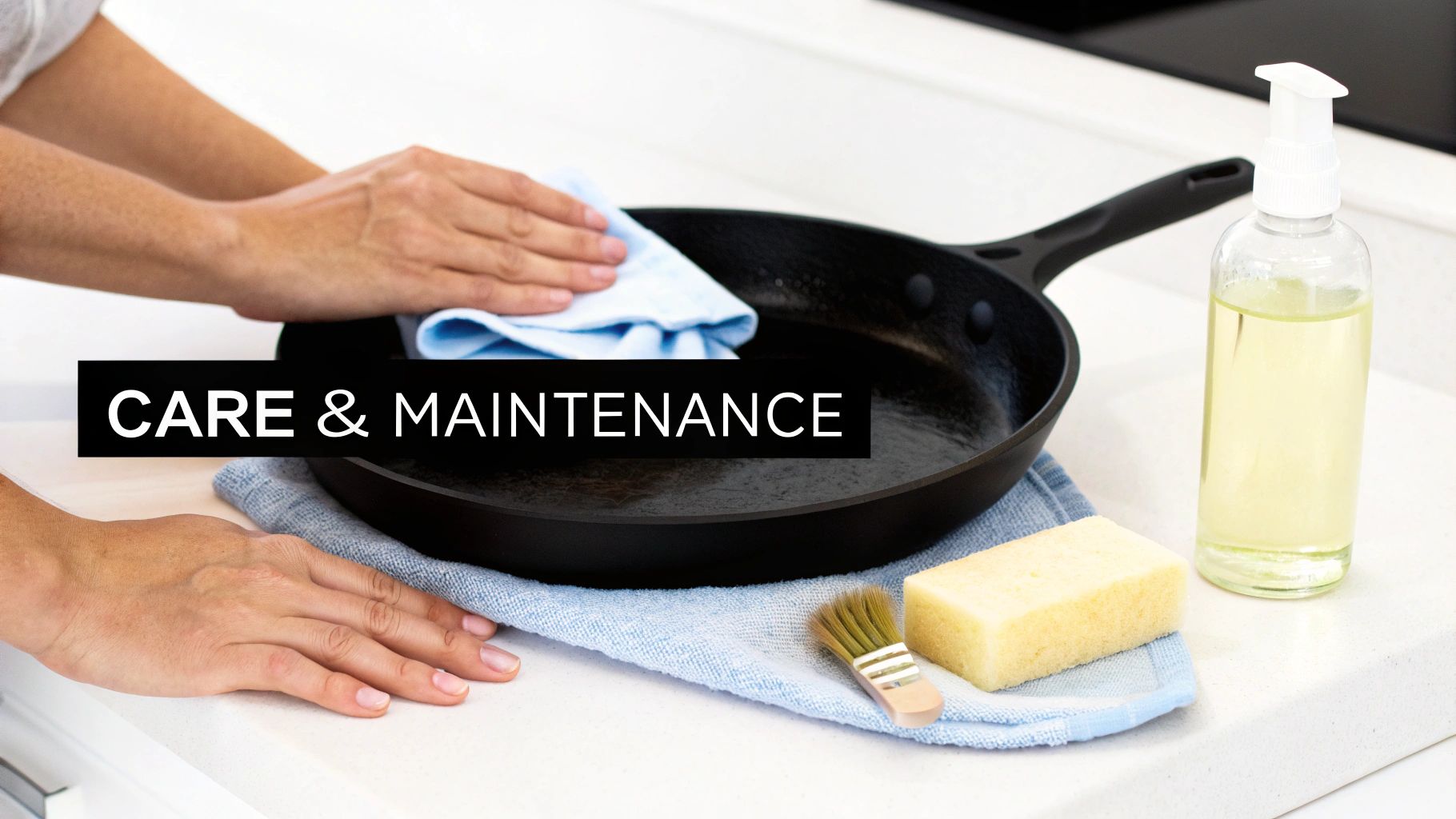
A top-notch cooking pan set is a serious investment in your kitchen, and like any good investment, it pays to protect it. With the right care, those pans can perform beautifully for years, sometimes even decades. Think of it less like a chore and more like respecting the tools of your trade.
Proper care isn't just about a quick scrub in the sink. It's about getting to know the personality of each material, from the rugged nature of cast iron to the delicate touch a non-stick surface needs. Once you understand these nuances, keeping your cookware in peak condition becomes second nature.
Let's walk through the essential cleaning and storage habits that will keep your pans looking and cooking their best. We'll even bust a few myths along the way so you can care for every piece in your collection with confidence.
Mastering the Daily Clean
What you do in the moments right after you finish cooking can make all the difference. Get this step right, and you're looking at a simple clean-up. Get it wrong, and you're in for a battle with stubborn, baked-on food.
The golden rule? Avoid thermal shock. Never, ever plunge a sizzling hot pan into a sink of cold water. That sudden temperature jolt can cause the metal to warp or even crack, leaving you with a wobbly pan that no longer heats evenly.
Instead, let your pan cool on the stovetop for a few minutes until it’s warm to the touch. For most everyday cleaning, warm water, a bit of dish soap, and a soft sponge are your best friends. This gentle method is perfect for stainless steel and hard-anodised aluminium, and it’s absolutely essential for non-stick coatings that can be easily ruined by aggressive scrubbing.
The great dishwasher debate... for most high-quality cookware, handwashing is the clear winner. The harsh detergents and high heat in a dishwasher can strip away a pan’s seasoning or slowly degrade its non-stick surface.
Even when a manufacturer says a pan is dishwasher safe, it usually just means the pan will survive the cycle, not that it will thrive. To dig deeper, you can learn all about the subtleties of dishwasher safe pans and decide what’s best for your set.
Specialised Care for Different Materials
Every material in your cooking pan set has its own set of rules. A one-size-fits-all approach just doesn't cut it if you want to get the best performance and lifespan out of each piece.
-
Cast Iron Seasoning: This is the one that requires a bit of ritual. After washing with minimal soap and a soft brush, you have to dry it immediately and thoroughly to stop rust in its tracks. The final, crucial step is to wipe a super-thin layer of cooking oil over the surface and heat it gently on the stove until it begins to smoke. This is what builds and maintains its naturally non-stick surface.
-
Stainless Steel Brilliance: To keep that mirror-like finish and avoid that bluish, rainbow-like discolouration (called heat tint), try not to heat your pan while it's empty. For tough, burnt-on food, a simple paste of baking soda and water or a dedicated stainless steel cleaner will lift it right off. Always dry it completely to prevent water spots.
-
Non-Stick Surface Protection: It’s all about being gentle here. Use only silicone, nylon, or wooden utensils—never metal. Clean with a soft sponge, and be mindful when storing. Stacking non-stick pans is a recipe for scratches. If you must stack them, always slide a pan protector or a tea towel between each one.
Smart Storage to Prevent Damage
How you store your pans is just as important as how you clean them. The main goal is to protect them from scratches, dents, and dings. A hanging pot rack is the ideal solution, as it keeps every pan separate and easy to grab.
If you have to use a cabinet or drawer, never stack them directly on top of each other. This is especially critical for your non-stick cookware, as that delicate surface is the most likely to get damaged. Use pan protectors, soft cloths, or even a few sheets of sturdy paper towel as a cushion. This one simple habit can dramatically extend the life of your entire cooking pan set, ensuring it’s always ready for your next creation.
The Future of Cookware and Emerging Kitchen Trends
The kitchen has really come into its own, hasn't it? It’s no longer just a functional room for whipping up a meal; it's become the true heart of the home—a space for creativity, connection, and healthy living. This fundamental shift is completely changing the game for cookware, driving innovation far beyond just a simple pot or pan.
As we look at what’s next, the humble cooking pan set is evolving to keep up. New tech, a massive focus on sustainability, and our own changing habits are all shaping the cookware of tomorrow. If you're thinking about investing in new pans, getting a handle on these trends means you'll make a choice that's built to last, not just one that works for right now.
The Rise of Conscious Consumerism
Home cooks today are more clued-in than ever before. We're asking tough questions about what our cookware is made of, leading to a huge demand for pans made from sustainable and non-toxic materials. People are turning their backs on throwaway culture and instead looking for durable, long-lasting investments.
This is why we're seeing a big comeback for classic materials like pure titanium, stainless steel, and cast iron. They're loved for their longevity and because they give us peace of mind. This conscious mindset isn’t just about the materials, either. It’s about the whole story. We’re looking for brands with ethical manufacturing practices and solid warranties, which all points to a bigger trend: choosing quality that lasts over cheap quantity.
In today's kitchen, a cooking pan set isn't just a tool; it's a long-term culinary partner. Durability, material safety, and a brand's eco-credentials are now on equal footing with how well a pan actually cooks.
The post-pandemic world has only accelerated this shift. With so many of us rediscovering the joy of cooking at home, consumer behaviour has changed for good. Take the Australia cookware market, for instance—it swelled to USD 664.44 million thanks to this home cooking revival. And it’s not slowing down. The market is tipped to hit USD 1,369.43 million by 2033, which shows just how committed we are to outfitting our kitchens with better gear. You can read more about this explosive growth over at IMARC Group.
Smart Technology and Cooktop Compatibility
Technology is slowly but surely creeping into our kitchens, and our cookware is getting smarter too. We're starting to see the first "smart" pans hitting the market, complete with sensors that talk to an app on your phone. Imagine a pan that helps you hold the perfect temperature or guides you step-by-step through a tricky recipe. It’s still early days, but it gives us a glimpse into a future where your cooking pan set is an active cooking assistant.
A much more immediate change, though, is the move towards induction cooktops. They're fast, incredibly energy-efficient, and are quickly becoming the standard in modern kitchens. This has a massive knock-on effect for cookware, because only pans with a magnetic base will work on an induction hob. It’s a big reason why stainless steel and cast iron are still so popular, and why you’ll see most new non-stick pans are now made with an induction-ready base. They're designed for the kitchens we're building today and tomorrow.
Common Questions About Cooking Pan Sets
It's easy to get lost in the world of cookware. Whether you're about to buy or just starting to look, clear answers make all the difference. Let's tackle some of the most common questions that pop up when choosing and using a new cooking pan set.
What Is the Healthiest Type of Cooking Pan Set?
When it comes to "healthy" cookware, what's best really depends on how you cook. Many people feel most comfortable with materials like stainless steel, ceramic, glass, and cast iron. These are generally considered incredibly safe because they're stable and won't leach anything into your food. If material purity is your top priority, these are fantastic choices.
On the other hand, a high-quality ceramic non-stick pan is perfect for anyone focused on low-fat cooking, since you barely need any oil or butter. The most important thing for your health, regardless of material, is to use your pans properly. That means never overheating non-stick surfaces and retiring any pan as soon as its coating gets scratched or damaged.
Are Expensive Cooking Pan Sets Worth the Investment?
For most people who cook regularly, the answer is a resounding yes. A higher price tag on a cooking pan set isn't just for show; it usually points to better materials and smarter construction. Take premium stainless steel pans, for example. They often have a multi-ply design, sandwiching a highly conductive core of aluminium or copper between layers of durable steel.
This thoughtful construction gives you far better heat distribution, which translates to more even cooking and no frustrating hot spots. A cheap set might get you by for a little while, but if you're in the kitchen often, a quality set is a smart long-term investment. It won't just perform better day-to-day—it will last for years.
Investing in a quality cooking pan set is a lot like buying a good mattress. The upfront cost might be higher, but the daily performance, reliability, and longevity deliver real value for years to come.
How Do I Know When It Is Time to Replace My Non-Stick Pan?
It's time to say goodbye to your non-stick pan when it starts showing obvious signs of wear. The biggest red flags are significant scratching, or when the non-stick surface begins to flake or peel. As soon as that coating is compromised, food will start sticking, and you also run the risk of small coating particles ending up in your meal.
Another tell-tale sign is warping. If your pan wobbles and no longer sits flat on the cooktop, it's not going to heat evenly anymore and it’s time to retire it. If you treat it well, a good non-stick pan should serve you faithfully for about 3-5 years.
Can I Mix and Match Different Cookware Materials?
Absolutely! In fact, that's what most seasoned cooks and chefs do. There’s no single material that excels at every single task in the kitchen, so having a mix of different pans gives you the right tool for any recipe. A really functional kitchen might have:
- A stainless steel skillet for getting that perfect, crispy sear on a steak.
- A non-stick pan for delicate jobs like cooking eggs or flipping pancakes.
- A cast iron pan for deep frying or getting an incredible crust on a roast.
- A large stockpot for simmering soups, stews, or boiling pasta.
Building your collection piece by piece lets you create a versatile cooking pan set that’s perfectly tailored to the way you actually cook.
At Everti, we believe in creating tools that elevate your daily routines with timeless, pure materials. Our collection is designed for those who value health, durability, and performance in their kitchen.
Discover the Everti difference and explore our lifetime titanium essentials