

Think about the last time you sat down for a meal. The plates you used were more than just vessels for your food; they were part of the whole experience. A dinner plate set, typically including dinner plates, side plates, and bowls, really sets the tone for everything from a quick weekday breakfast to a lively dinner party.
A great set is a perfect blend of durability, clever design, and safe materials. It's something that truly elevates your day-to-day life at home.
Why Your Dinner Plate Set Matters More Than You Think
Picking out a new dinner plate set isn't just a shopping trip—it's an investment in your home's daily rhythm and even your family's wellbeing. The right plates don't just hold your food; they can transform an ordinary meal into something a little more special. Let's look past the surface-level aesthetics and get into what really counts: the materials, how long they'll last, and the health of your family.
These days, a pretty pattern just doesn't cut it. We all want tableware that can handle the rough and tumble of daily life, is free from nasty stuff like microplastics and BPAs, and doesn't require a lot of fuss to clean. It's like finding the perfect partner for your kitchen—one that just gets your lifestyle.
This guide will walk you through the essentials that make a dinner plate set a truly worthwhile purchase:
- Health and Safety: We'll dive into why non-toxic materials are non-negotiable for your family's peace of mind, making sure your plates are free from harmful chemicals.
- Durability for Daily Life: Find out which materials are tough enough to survive countless dishwasher cycles, microwave sessions, and the occasional accidental knock.
- Aesthetic and Functional Design: Learn how the right shape, size, and style can not only make your food look incredible but also make stacking and storing a breeze.
- Long-Term Value: We’ll break down why spending a bit more on a high-quality set is actually smarter in the long run, saving you money and cutting down on waste compared to constantly replacing cheaper, less durable options.
Whether you're a busy parent on the hunt for something nearly indestructible, a design lover looking for that perfect minimalist touch, or just someone who appreciates quality craftsmanship, this guide will give you the confidence to make a great choice. You'll be ready to pick a dinner plate set that will serve you beautifully for years to come.
Comparing Dinner Plate Set Materials
When it comes to choosing a dinner plate set, the material is everything. It dictates not just the look and feel, but how durable the plates will be, how they handle daily use, and even how they interact with your food. Think of it less like picking the "best" material and more like finding the perfect match for your lifestyle, kitchen aesthetic, and personal priorities.
Picture the difference: a heavy, rustic stoneware plate feels completely different from the delicate, almost glowing translucence of bone china. Each one sets a different mood. Getting this choice right from the start means you’ll have a dinner set you genuinely love using for years.
This flowchart breaks down the three main things you'll want to balance: how it looks, how it works in real life, and how safe it is for your family.
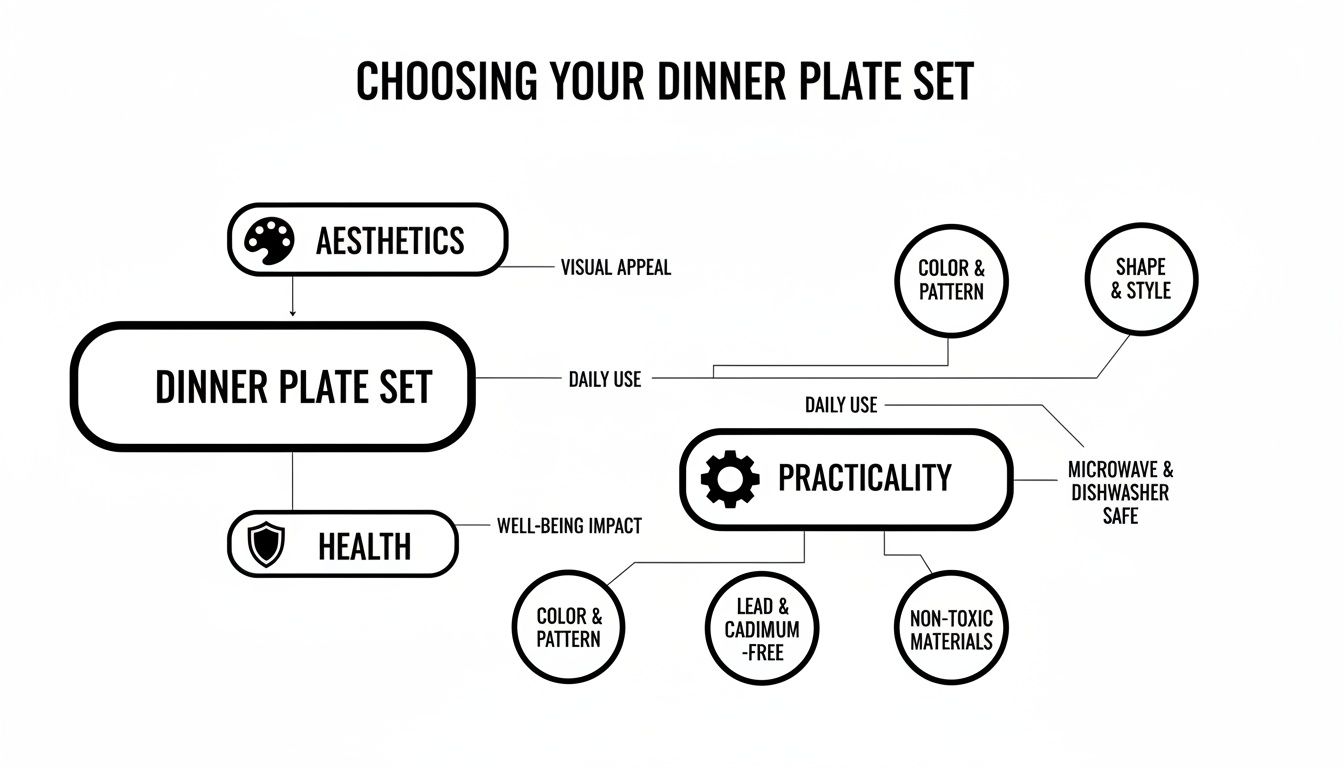
As you can see, these three elements are all connected. The best material for your home will sit right in the middle, giving you a perfect blend of style, function, and peace of mind.
To help you navigate the options, here’s a quick comparison of the most common materials you'll find.
Dinner Plate Material Comparison
| Material | Durability & Chip Resistance | Health & Safety | Weight | Best For |
|---|---|---|---|---|
| Porcelain | High | Generally safe (non-porous) | Light | Everyday elegance and formal dining. A versatile workhorse. |
| Bone China | Very High | Excellent (non-porous) | Very Light | Special occasions or luxurious daily use. Surprisingly tough. |
| Stoneware | Medium | Safe, but can stain if unglazed | Heavy | Rustic, farmhouse, or casual dining settings. |
| Glass | Medium | Excellent (non-porous) | Medium | Modern aesthetics and anyone concerned about leaching. |
| Titanium | Extremely High | Exceptional (biocompatible) | Very Light | Health-conscious families, outdoor use, and lifetime durability. |
This table gives you a snapshot, but let's dive a little deeper into what makes each of these materials unique.
The Classic Ceramics
Ceramics are what most of us picture when we think of dinnerware, but it's a surprisingly diverse family. Earthenware, stoneware, and porcelain are all related, but they each have their own personality.
- Porcelain: This is a classic for a reason. It's fired at incredibly high temperatures, which makes it non-porous (so it won't absorb odours or stains), light, and remarkably tough. Most porcelain is fine to pop in the dishwasher and microwave, making it a fantastic choice for elegant everyday use.
- Bone China: A type of porcelain with a special ingredient—bone ash—which gives it a stunningly bright, white colour and an almost translucent quality. Don't let its delicate looks fool you; bone china is one of the strongest ceramics available, making it a premium option that can handle daily life.
- Stoneware: If you're after a more grounded, earthy feel, stoneware is your go-to. It's heavier and more opaque than porcelain and has a wonderful, rustic charm. It's plenty durable for daily meals, though it can be a little more susceptible to chipping than its high-fired cousins. You can see some great examples in this new stoneware range.
Understanding these subtle differences is key to finding the right fit. If you want to explore this further, our guide on the benefits of a ceramic dinner set is a great next step.
Modern and Alternative Materials
Of course, the world of dinnerware doesn't stop at ceramics. Glass is a popular choice for its clean, non-porous surface, while materials like melamine are shatter-resistant wonders, perfect for picnics, camping, or households with little ones.
But one material is really turning heads for its unique mix of health benefits and sheer toughness: pure titanium.
Pure titanium is completely biocompatible and non-toxic. That means it will never leach chemicals or metals into your food, period. This purity, along with its natural antibacterial qualities, offers a level of safety that other materials just can't match.
The Case For Pure Titanium
Titanium really is a different beast. Unlike glazed ceramics or plastics, its surface is naturally non-porous and hygienic. This makes cleaning a breeze—it won't hold onto stains or smells from colourful foods like beetroot or strong curries.
What's more, its strength-to-weight ratio is phenomenal. A titanium dinner set is both incredibly lightweight and practically indestructible. You can drop it, bang it, and pack it for a camping trip without ever worrying about it chipping, cracking, or breaking. It’s a genuine buy-it-for-life investment.
This move toward durability and safety is a growing trend. Australia's kitchen and diningware wholesale industry is a massive AUD $3.5 billion sector, and dinnerware is a huge part of that. While ceramics are still popular, there's a growing unease around plastics—where a shocking 40% of sets can contain BPA. This is pushing more and more people to seek out safer, longer-lasting alternatives like titanium, signalling a clear demand for non-toxic, heirloom-quality dinnerware.
Choosing the Right Plate Size and Shape
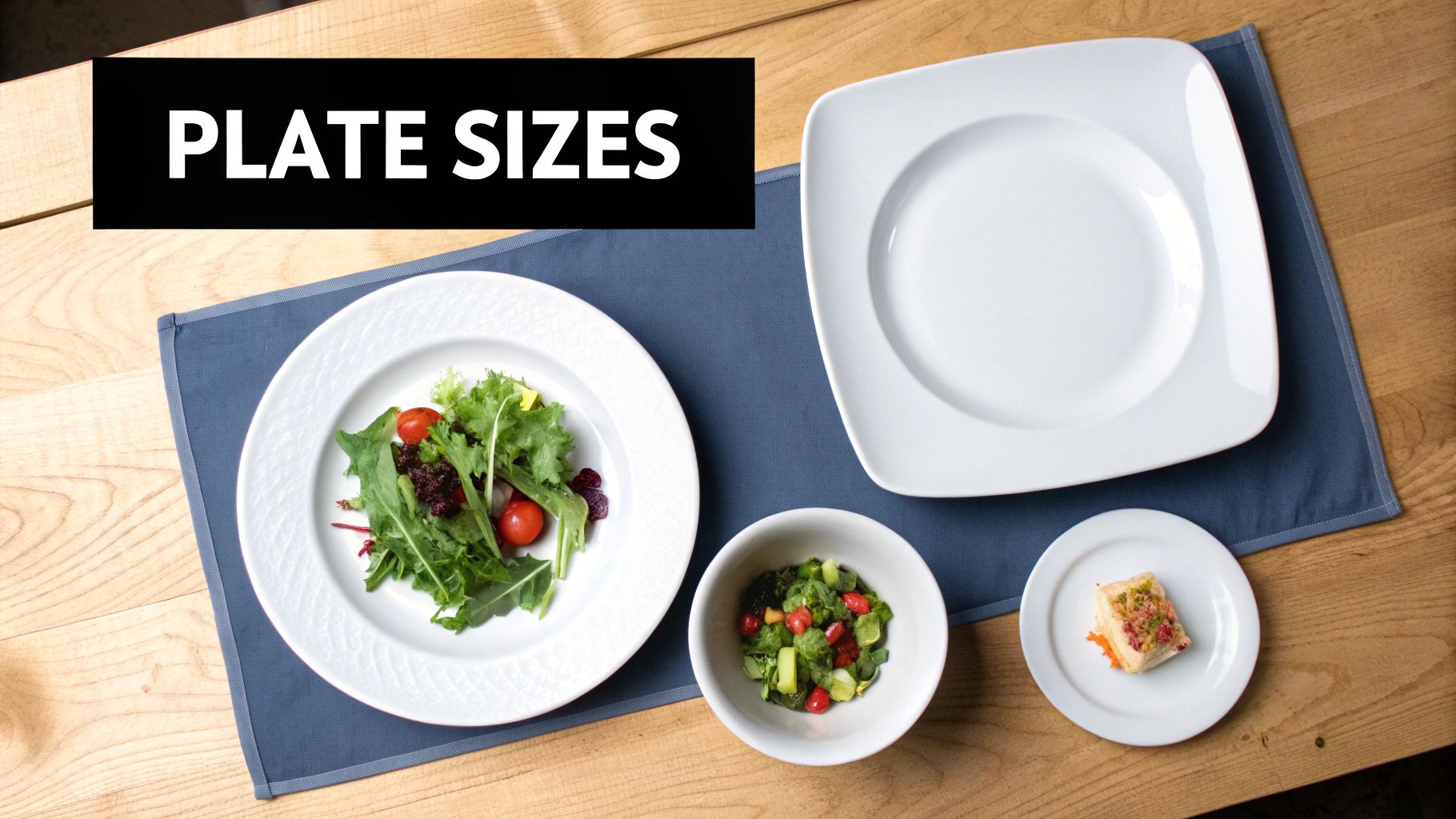
It’s easy to get caught up in the material of your dinnerware, but the actual size and shape of your plates can have a massive impact on everything from how your food looks to how much room you have in your cupboards. Nailing these details means your new set will be a joy to use every day, not just something pretty to pull out on special occasions.
The classic Australian dinner plate usually lands somewhere between 25cm and 28cm in diameter. This is a fantastic, versatile size that’s big enough for a main meal without hogging the whole table. But it’s definitely worth asking yourself if that standard size is truly the best fit for your household.
Finding Your Perfect Plate Size
Take a moment to think about the kind of food you cook and eat most often. If you’re a budding home chef who loves plating up restaurant-style dishes with lots of separate elements, a larger plate—maybe around 30cm—gives you a much bigger canvas to play with. On the other hand, if you're more focused on sensible portions, a slightly smaller plate can be a great and practical choice.
Most dinner plate sets are built around these core sizes:
- Dinner Plate (25-28cm): This is the workhorse of the set, perfect for your main course, whether it’s a hearty pasta or steak and veggies.
- Side Plate (18-20cm): The ideal companion for a slice of bread, a side salad, or a small starter.
- Bowl (15-18cm): An absolute essential for everything from your morning cereal and soups to a scoop of ice cream for dessert.
A well-designed dinner plate set makes sure all these pieces feel like they belong together. The side plates and bowls should complement the main dinner plates in proportion, giving you a balanced and functional toolkit for any meal you can dream up.
Shape The Look of Your Meals
The classic round plate is a timeless choice, no doubt about it. But the shape you pick can completely change the vibe of your table and even how people perceive the food on it.
Think of a plate's rim like a picture frame for your food. A traditional rimmed plate creates a classic, defined border, while a modern, rimless coupe-style plate offers an edge-to-edge canvas that makes food feel more expansive and accessible.
Let's look at a few of the most popular options:
- Round Plates: The go-to for a reason. They’re a breeze to stack, fit neatly into almost any dishwasher, and give your food a classic, well-balanced presentation.
- Square Plates: These bring a bold, contemporary feel to the table. The sharp angles and clean lines create a really dramatic backdrop for your cooking, but be warned—they can be a bit awkward to fit into round cupboards or dishwasher racks.
- Organic Shapes: Plates with gentle curves and slightly irregular, handcrafted shapes give off a lovely rustic, earthy vibe. They add a tonne of character, but they won’t stack as perfectly as their uniform round or square cousins.
At the end of the day, the right size and shape for your dinner plate set is a mix of personal taste and pure practicality. Think about how the plates will live in your home—will they fit in your dishwasher and stack neatly in your cupboards? Does the style match your decor? And most importantly, will they make the meals you love to cook look even better?
Matching Your Dinnerware to Your Lifestyle
Let's be honest. The most gorgeous dinner plate set in the world is completely useless if it doesn't actually fit how you live. Choosing the right dinnerware is far less about chasing the latest trends and much more about taking a good, hard look at your daily routines and what your family really needs.
Think of it like this: that sleek, minimalist porcelain set might look incredible in a catalogue, but will it survive a Tuesday night with the kids? Likewise, a heavy, rustic stoneware set might be beautiful, but is it the right choice if you’re constantly carrying plates out to the back deck for a barbecue? It’s all about finding the perfect partner for your kitchen.
For the Busy Family Home
Life with a family is a beautiful chaos of school runs, footy practice, and getting a decent meal on the table. When you’re in the thick of it, the top priorities for dinner plates are almost always durability and convenience. You need something that can handle the occasional drop, stand up to cutlery scrapes, and go through the dishwasher every single night without chipping or fading.
This is where a material like pure titanium really comes into its own. Its near-indestructible nature means you won't be constantly replacing chipped plates, and its non-porous surface makes cleaning a breeze—even after a particularly messy spaghetti bolognese.
For the Passionate Home Cook and Entertainer
If your kitchen is your happy place and you love having people over, your dinnerware is a key part of the whole experience. It's not just a plate; it's the canvas for your culinary creations. You're looking for a set that makes your food look amazing and gets your guests talking.
Here are a few things to think about:
- Unique Finishes: A subtle iridescent shimmer or a unique, organic shape can turn a simple meal into something truly special.
- Versatile Shapes: A plate with a generous rim is perfect for beautifully framing sauces, while a modern coupe plate gives you a clean, edge-to-edge canvas to play with.
- Cohesive Style: To really tie everything together, getting a handle on some basic interior design tips for your dining room can help you pick a set that truly complements your home’s vibe.
For the Health-Conscious Household
For a growing number of us, what our dinnerware is made of is just as important as the food we put on it. With a greater awareness of health, people are rightly questioning materials and looking to avoid potential nasties like BPAs, lead, and microplastics. For many, a non-toxic and chemically inert material is simply non-negotiable.
This shift towards health and quality is happening all across the country. In 2024, the Australian kitchenware market hit a value of USD 3,854.86 million. We're seeing households spend 15-20% more on premium, long-lasting goods that promise safety. It’s all part of a bigger trend towards products that can handle daily family life without chipping or leaching chemicals—a need that materials like pure titanium meet perfectly.
For anyone prioritising a clean, non-toxic home, a premium dinner plate set is an investment that pays off in peace of mind. It’s about knowing that every single part of your meal, right down to the plate, is contributing to your family’s well-being. Our deep dive into the best kitchenware in Australia explores this in more detail to help you make a confident choice.
Ultimately, when you match your plates to your lifestyle, you’re not just buying dinnerware; you’re choosing a source of joy and utility that will serve you well for years to come.
How to Care for Your Dinnerware So It Lasts
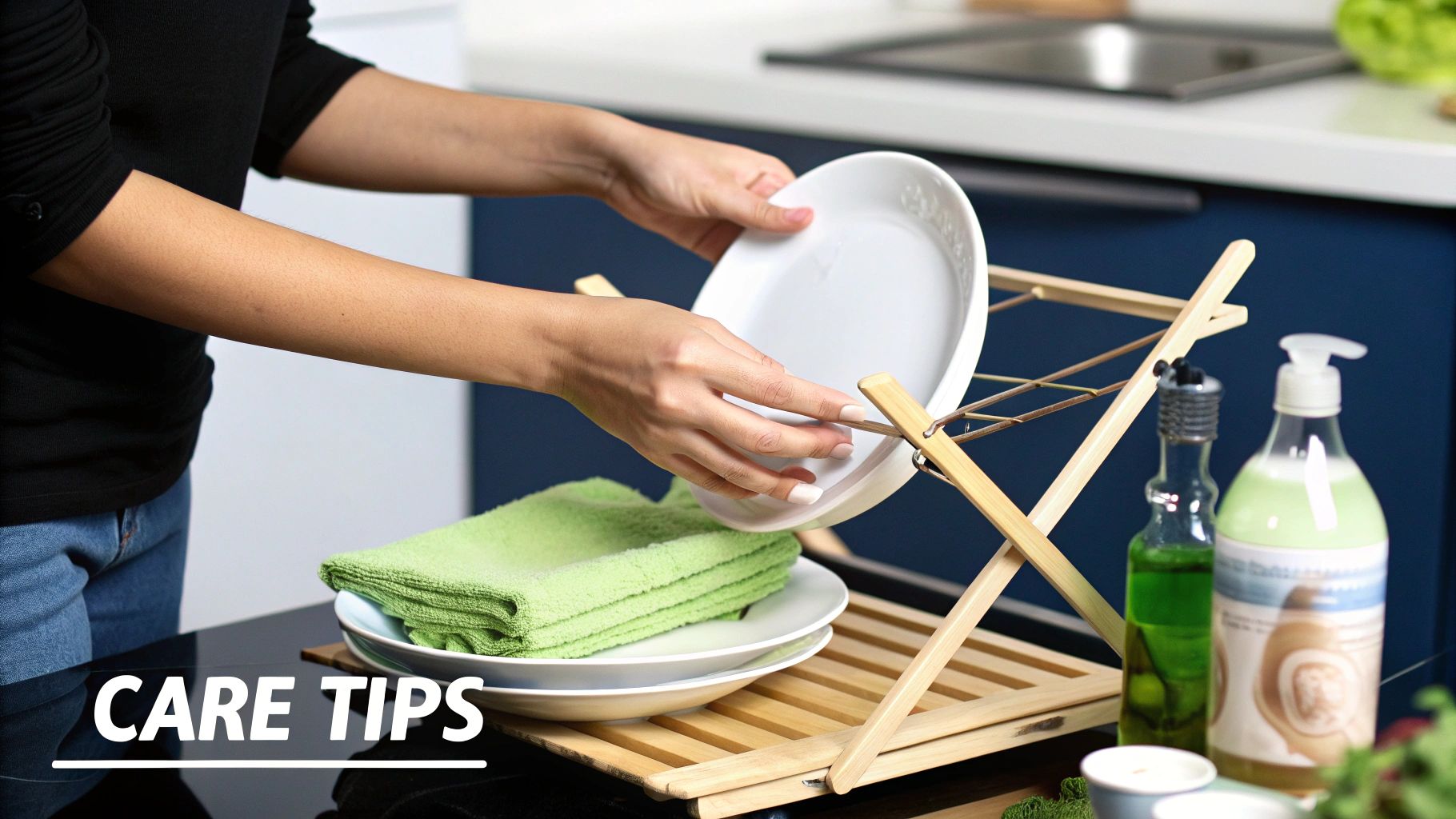
Think of a good dinner plate set as an investment. With the right care, it won’t just last a few years; it could be with you for decades, becoming a cherished part of your home and family meals.
Looking after your dinnerware isn't a chore. It’s a small commitment to protecting the craftsmanship you chose. Something as simple as rinsing plates right after a meal can stop acidic foods (like tomato sauce) or colourful spices from leaving stubborn stains, particularly on more porous materials like stoneware.
Washing Your Dinner Plates
Whether you're a hand-washer or a dishwasher devotee, a gentle touch is your best friend. A little bit of care during the daily clean-up makes all the difference in stopping chips, scratches, and dullness from setting in.
Hand Washing Tips
- Stick to soft sponges: Stay away from abrasive scourers and steel wool. They’ll scratch delicate glazes and patterns in a heartbeat.
- Mild soap is plenty: There’s no need for harsh chemicals. A gentle dish soap will do the job without damaging decorative finishes over time.
- Give them space: Don't jam your sink full of dishes. Washing one or two plates at a time is the safest way to avoid accidental knocks and chips.
Dishwasher Best Practices
- Load with care: Make sure plates aren't rattling against each other. Giving them a bit of room prevents chipping during the wash cycle.
- Choose a gentle cycle: Unless you’re dealing with seriously baked-on cheese, a normal or eco-cycle is powerful enough and far kinder to your plates.
- Double-check the instructions: Always confirm your set is dishwasher-safe before that first wash. It’s a simple check that can save a lot of heartaches.
Ever noticed those annoying grey marks from your cutlery? They usually aren't scratches but tiny metal deposits left on the plate’s surface. You can often get rid of them by making a paste with baking soda and water, then gently rubbing it with a soft cloth.
Material Specific Care Advice
Different materials need slightly different handling to stay in top shape. That beautiful, glass-like shine on porcelain, for example, is best maintained by avoiding sudden temperature swings. Never, ever take a hot plate straight from the oven and put it on a cold, wet benchtop – you're asking for thermal shock, which can cause it to crack right in front of you.
Titanium, on the other hand, is about as low-maintenance as it gets. It’s incredibly resilient. Because the surface is non-porous, it naturally resists stains and odours, making it a breeze to clean. A quick wash with warm, soapy water is all it needs to look perfect, ready for a lifetime of meals.
Why Investing in a Quality Plate Set Is a Smart Move
Picking out a new set of dinner plates feels like more than just a simple shopping trip. It's a real investment in your home, your family's well-being, and the simple joy of a good meal. When you choose a high-quality set, you're saying yes to durability, safety, and a design that makes even a Tuesday night dinner feel a little bit special. It's about choosing lasting quality over something that's just "good enough for now."
This shift towards quality isn't just happening in our homes. If you look at the bigger picture, in 2024, dinnerware accounted for a huge 63.91% of the commercial tableware market revenue in Australia. Restaurants and cafes demand plates that are hygienic, a breeze to clean, and tough enough for daily abuse. Now, we're seeing that same desire for professional-grade quality trickle down into what we want for our own kitchens. You can read more about this market shift and what's driving it.
Think of it this way: buying a premium dinner plate set isn't about being fancy. It’s about choosing something that gives you safety, great performance, and peace of mind for countless meals to come.
Materials are at the heart of this. Take pure titanium, for example. It’s non-toxic, naturally antibacterial, and unbelievably durable. That means you’re getting a set that won’t chip, stain, or leach nasty chemicals into your food. When you choose well, you’re not just buying plates; you’re bringing home a beautiful, functional part of your family's story that will last for decades.
Got Questions? We've Got Answers
Picking out new dinnerware often brings up a few queries. Let's tackle some of the most common questions to help you feel completely confident in choosing the right dinner plate set for your home.
How Many Plates Should I Get?
For most families, a set that serves between eight to twelve people is the sweet spot. This gives you enough plates for daily meals, a few spares in case of any mishaps (it happens!), and plenty to go around when you have guests over.
If it's just you or you're a couple, a set of six might seem like enough. But trust me, having a few extra on hand is incredibly useful for entertaining down the track. It’s always better to have a couple you don’t need than to need a couple you don’t have.
Is It Really Worth Splurging On An Expensive Dinner Plate Set?
Honestly, yes. While the price tag might be higher upfront, a quality dinner set made from premium materials like pure titanium or high-grade porcelain pays for itself over time.
Think of it this way: these sets are built to last. They’re much better at resisting the chips, scratches, and colour fading that you often see with cheaper alternatives. Plus, they're typically non-toxic and BPA-free, which offers real peace of mind for your family's health. A well-made set can genuinely last a lifetime, saving you the hassle and cost of replacing less durable plates every few years.
Investing in quality means buying once and buying well. It’s a choice that prioritises safety, durability, and a better dining experience over the false economy of disposable, low-quality plates.
Can I Mix And Match Different Dinnerware?
You absolutely can! Mixing and matching your dinnerware is a brilliant way to let your personality shine and create a table setting that feels unique and curated, not stuffy or staged.
The trick to making it look intentional, not chaotic, is to stick to a complementary colour scheme. You could start with a neutral base—like some minimalist titanium plates—and then layer in accent plates or bowls in a single, vibrant colour. Another great idea is to play with different patterns that all share a common colour, which pulls the whole look together beautifully.
Ready to invest in a dinner set that blends timeless style with incredible durability? Discover the pure titanium tableware collection from Everti, designed to elevate every meal and last a lifetime. Explore the collection on our website.