

When someone asks how much caffeine is in a double shot, the quick answer is usually somewhere between 120 and 150 mg. It's that concentrated kick that makes it the go-to for so many people needing to jump-start their morning. But that number is really just a ballpark figure; the true caffeine content can be a bit of a moving target.
So, What's the Real Caffeine Kick in a Double Shot?
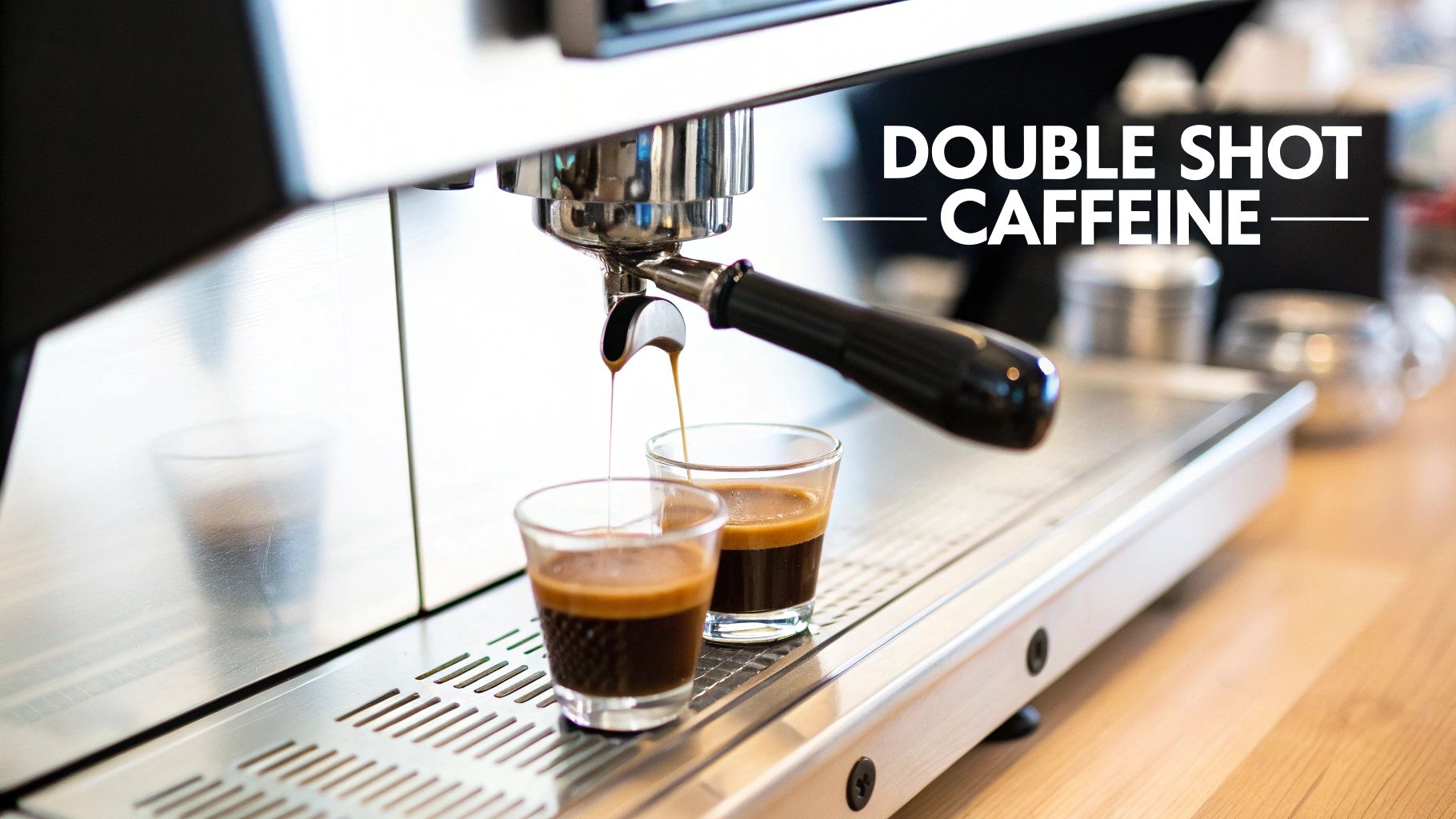
If you walk into most modern Aussie cafés and order a latte or a flat white, the standard base is a double shot, or a doppio. It’s the heart of almost every espresso-based drink on the menu. To get a feel for what’s really going on in that little cup, it helps to have a baseline for understanding overall coffee caffeine content and all the little things that can change it.
Here in Australia, our coffee culture tends to lean towards a bolder, more robust style. It’s pretty common for local baristas to use a hearty 20–22 gram dose of ground coffee for a double shot. This pushes the caffeine level right up toward that 150 mg mark, which is noticeably more than the traditional Italian standard of 14 grams. It’s a big part of what gives Aussie coffee its famously strong flavour and solid kick.
To put this into perspective, let's see how a double shot stacks up against some other popular coffee drinks. You might be surprised.
It's a classic myth that espresso is the most caffeinated drink out there. While it definitely has the most caffeine per millilitre, a big mug of filter coffee often has more total caffeine simply because you're drinking so much more of it.
Caffeine at a Glance
Here’s a quick look at how the caffeine in a double shot compares to other everyday coffee orders.
| Beverage | Serving Size | Average Caffeine (mg) |
|---|---|---|
| Double Espresso | 60 ml | 120–150 mg |
| Filter (Drip) Coffee | 240 ml (Standard) | 95–165 mg |
| Cold Brew | 240 ml | 150–250 mg |
| Instant Coffee | 240 ml | 60–80 mg |
As you can see, while your doppio gives you a fast and powerful hit, that big morning mug of filter coffee could easily deliver just as much, if not more, caffeine overall.
What Really Changes Your Espresso's Caffeine Level
It's a common mistake to think that the caffeine in a double shot is always the same. The truth is, it's not a fixed number. Think of it like a chef tweaking a recipe; a whole range of factors can shift the final kick in your cup.
From the moment the bean is grown to the way the barista pulls the shot, every step matters. Understanding these variables is the key to knowing why one double shot leaves you buzzing while another feels a bit mellow.
It All Starts With the Bean
The single biggest influence on your espresso's caffeine content is the coffee bean itself. In the coffee world, the two main players are Arabica and Robusta, and they are poles apart when it comes to caffeine.
Most specialty cafés across Australia favour Arabica beans for their nuanced, aromatic, and complex flavours. But if you’re chasing a serious jolt, Robusta is the powerhouse, packing almost double the caffeine of Arabica. Some espresso blends will deliberately include a small amount of Robusta, not just for an extra kick but also to produce a richer, more stable crema—that beautiful reddish-brown foam on top. To get a better sense of how they shape your brew, you can read up on the differences between Arabica and Robusta.
Choosing a 100% Arabica bean means you're getting a more flavour-driven, lower-caffeine shot. On the other hand, an espresso blend with even just 10% Robusta will give you a noticeably stronger buzz.
Roast Level and Grind Size
Next up are the roast and the grind. There's a persistent myth that a darker, bolder-tasting roast means more caffeine. Funnily enough, the opposite is true. The roasting process actually burns off a tiny amount of caffeine, so a lighter roast technically retains slightly more of it.
How finely the coffee is ground is also incredibly important. Espresso relies on a very fine grind to build up the right amount of pressure for extraction.
- A finer grind exposes more of the coffee's surface area to the hot water, meaning caffeine can be extracted more efficiently in that short, sharp shot.
- A coarser grind lets the water rush through too quickly. This leads to an under-extracted, weak, and often sour-tasting shot with less caffeine.
How a Double Shot Compares to Other Coffees
That rich, powerful flavour of an espresso shot often makes people assume it’s the most caffeinated drink you can order. It’s certainly got a kick, but when you look at the numbers, the story of double shot espresso caffeine gets a bit more interesting, especially once you factor in serving size.
The key difference comes down to concentration versus total volume. An espresso is a small, highly concentrated blast of coffee, packing a serious caffeine punch into a tiny 60 ml serving. On the other hand, a standard mug of filter coffee is usually around 240 ml.
Here’s a good way to think about it: espresso is like a shot of spirits, while filter coffee is like a pint of beer. The shot hits you harder and faster, but that big glass of beer often contains more alcohol overall. In the same way, while your double shot delivers a quick jolt, a big mug of filter coffee can easily contain more total caffeine simply because you're drinking so much more liquid.
Caffeine Showdown by the Cup and Milliliter
So, how does a double shot actually stack up against other popular brews? Let's break it down by looking at both the caffeine in a typical serving and the caffeine concentration per 100 ml. This is where you can really see why judging a coffee's strength by taste alone doesn't tell the whole story.
| Coffee Type | Typical Serving Size | Caffeine Per Serving (mg) | Caffeine Per 100ml (mg) |
|---|---|---|---|
| Double Espresso | 60 ml | 120–150 mg | 200–250 mg |
| Drip Filter Coffee | 240 ml | 95–165 mg | 40–70 mg |
| Cold Brew | 240 ml | 150–250 mg | 60–100 mg |
| Instant Coffee | 240 ml | 60–80 mg | 25–35 mg |
As the table shows, espresso is the clear winner when it comes to concentration, boasting an impressive 200–250 mg of caffeine per 100ml. But if you're looking at the total caffeine hit in one go, a big cup of cold brew can often deliver a much larger dose. It’s a really important distinction to make when you're keeping an eye on your daily intake.
The infographic below dives into the nitty-gritty of what creates these final caffeine numbers—things like the type of bean, how dark it's roasted, and even the size of the grind.
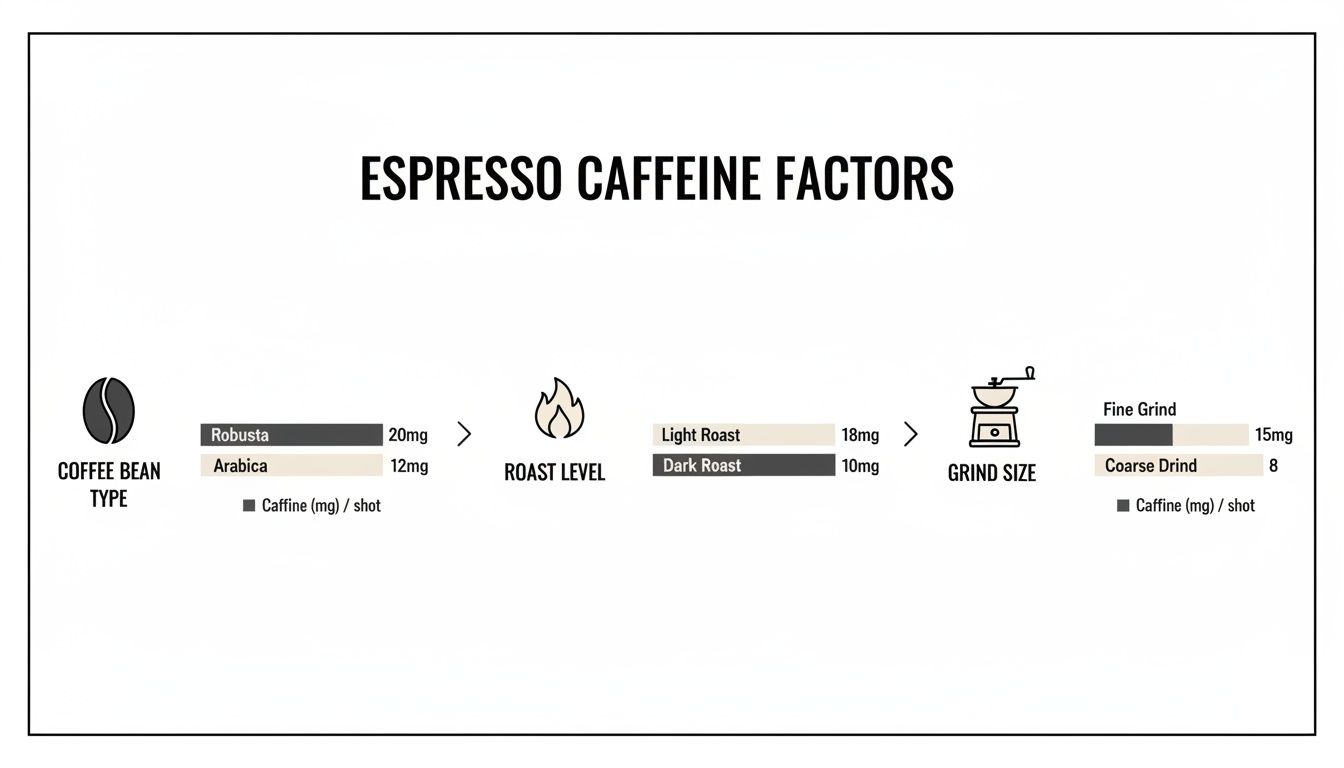
At the end of the day, remember that every choice, from the bean you pick to the way you brew it, plays a part in shaping the unique caffeine profile of your coffee.
Understanding Daily Caffeine Limits for Safe Consumption
Knowing how much caffeine is in a double espresso is one thing, but what does that number actually mean for your health? This is where we move from just drinking coffee to thoughtfully managing our intake to get all the good stuff without the jitters.
It really boils down to understanding your personal limits. Thankfully, health authorities in Australia provide some solid benchmarks to keep us on track.
Australian Caffeine Guidelines
For the average healthy adult, the advice is pretty clear. Food Standards Australia New Zealand (FSANZ) suggests capping your daily caffeine at 400 mg. If you’re pregnant or breastfeeding, that number is cut in half to a strict 200 mg per day.
When you realise a typical double shot from your local café has around 120–150 mg of caffeine, you can see how fast it all adds up. Two flat whites before noon could easily put you at 300 mg, which is already 75% of your daily limit before you've even had lunch. If you want to dig deeper, you can explore more about how much coffee is considered safe on peoplecare.com.au.
A good rule of thumb is to think in "shots." For most adults, that 400 mg limit works out to about two or three standard double-shot coffees a day. For pregnant women, one double shot would be the maximum.
Keeping this framework in mind is important because coffee isn't our only source of caffeine. It’s hiding in tea, chocolate, and plenty of soft drinks, too. If you're consciously watching your intake, it pays to consider all sources, which might even include looking into sugar-free energy drinks and their caffeine content as part of your daily total.
Being mindful of these guidelines helps you savour that daily espresso ritual while staying well within healthy, safe limits.
Enjoying Your Espresso with Mindfulness and Intention
Knowing the numbers behind a double shot of espresso is useful, but the real magic is in how you enjoy it. It's easy to fall into the habit of just downing coffee for the caffeine hit. But what if you treated it like a mindful ritual instead? Shifting your focus to intentional pleasure can completely transform your relationship with your daily brew.
It all starts with listening to your body. Think about timing—an espresso in the morning can kickstart your day beautifully, but one in the late afternoon might mess with your sleep. Everyone’s caffeine sensitivity is different, so pay attention to what feels right for you.
Creating a Balanced Coffee Ritual
Beyond timing, a few simple tweaks can elevate your daily espresso from a quick habit into a genuinely enjoyable part of your day. It’s about creating a sustainable practice that you look forward to.
Here are a few tips to get started:
- Hydrate First: Coffee can be a diuretic, so having a glass of water before your espresso is always a good idea to stay hydrated.
- Savour the Flavour: Don't just skull it. Take a moment. Inhale the aroma and let the complex notes dance on your palate. This small act turns a simple drink into a sensory experience.
- Choose Quality Over Quantity: Investing in a great cup makes the entire ritual feel more special. Something durable and well-designed, like the Everti Titanium Mug 400ml, can really enhance those little details of your daily break.
Ultimately, the goal is to find a balanced approach where each cup is a deliberate, rewarding moment in your day.
Your Espresso Caffeine Questions Answered
We’ve dug into the numbers and the variables that shape the caffeine in your double shot, but a few common questions always seem to surface. Let's tackle them head-on so you can feel confident about your daily coffee ritual.
Getting these details right helps you make smarter choices, whether you’re ordering from a barista or dialling in your machine at home.
Does a Ristretto Have More or Less Caffeine?
This one can be a bit tricky. A double ristretto shot actually has slightly less total caffeine than a standard double espresso. While it uses the same amount of coffee grounds, the key difference is the much shorter extraction time. Less water pushes through the puck, which means fewer of the caffeine compounds are pulled into the cup.
But here's the twist: because the final drink is so much smaller, a ristretto is incredibly concentrated. This means it has more caffeine per millilitre—it just has fewer millilitres. The total dose is a little lower, but the flavour and potency are intense.
Is a Double Shot Every Day Unhealthy?
For most healthy adults, a daily double shot espresso is perfectly fine. It typically lands somewhere between 120–150 mg of caffeine, which is well under the recommended safe daily limit of 400 mg.
The real key is awareness. Pay attention to your total caffeine intake from all sources—tea, soft drinks, chocolate—and listen to how your body feels. If you’re experiencing jitters, poor sleep, or anxiety, it might be a sign to dial it back a bit.
Why does espresso feel so strong? It’s because the caffeine hit is fast and furious. The small, concentrated volume is absorbed very quickly, giving you a much sharper energy spike than a big mug of filter coffee that you sip and absorb over a longer period.
Does Adding Milk or Water Lower the Caffeine?
Nope. Turning your espresso into a latte, cappuccino, or long black by adding milk, foam, or water doesn't remove any caffeine. All you're doing is increasing the total volume of the drink.
While this dilutes the concentration and mellows the flavour, the original amount of caffeine from the espresso shot remains exactly the same. Your body will process the full dose, no matter how much you dress it up.
For more answers to your coffee queries, feel free to check out our complete list of frequently asked questions on everti.com.au.
At Everti, we believe the best coffee experience starts with quality essentials. Elevate your daily ritual with our range of pure titanium drinkware, designed for a lifetime of clean, flavourful sips. Discover the collection at https://everti.com.au.