

Looking for a meal that's quick, healthy, and packed with flavour for those hectic weeknights? A fish stir fry ticks all the boxes. It's a brilliant way to bring together tender fish, crisp veggies, and a delicious savoury sauce, all cooked in a flash over high heat. The best part? You can have a complete, satisfying meal on the table in less than 30 minutes.
Why a Fish Stir Fry Is Your New Weeknight Go-To
Let's be honest, finding a weeknight dinner that's fast, good for you, and genuinely tasty can feel like a mission. This is where the fish stir fry shines. It's more than just another recipe; it’s a smart solution for our busy lives where time is precious, but we still crave a proper, home-cooked meal. This isn't about cutting corners; it's about cooking smarter.
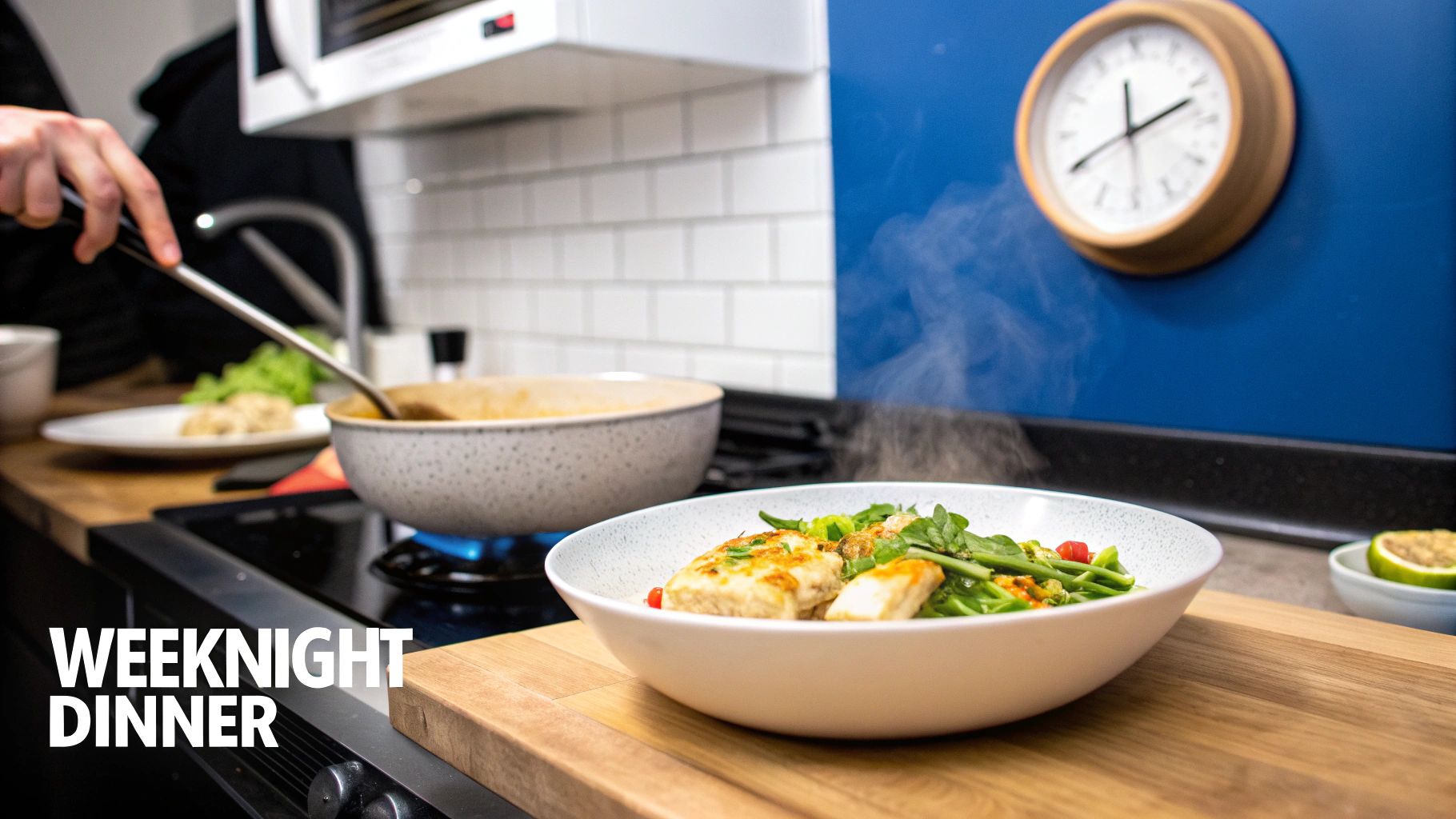
The real magic of a fish stir fry is its blend of simplicity and versatility. You get a fantastic balance of nutrients—lean protein from the fish, fibre and carbs from the vegetables, and healthy fats from your cooking oil. It’s a well-rounded meal in one pan.
The Shift Towards Smarter Home Cooking
These days, home cooks want meals that deliver big, bold flavours without spending hours in the kitchen. A fish stir fry is the perfect answer. When you have the right gear, like quality non-stick frying pans with lids, you can get that perfect sear on the fish and steam your veggies just right, all in the same pan. It's a game-changer for minimising cleanup and maximising flavour.
This shift isn't just a feeling; it’s reflected in how we eat. In Australia, for instance, stir-frying is a hugely popular way to cook seafood at home. In fact, on any given day, 14.3% of the population eats a fish or seafood dish, and stir-frying is a top method, according to data from abs.gov.au.
The beauty of a fish stir fry is its adaptability. You can swap out vegetables based on what’s in season or use different types of firm fish, ensuring the meal never becomes boring. It's a template for creativity in the kitchen.
Ultimately, once you get the hang of it, you can whip up a restaurant-quality meal faster than you could order and wait for takeaway. It’s all about taking control of your ingredients and enjoying a vibrant, satisfying dinner any night of the week.
Choosing the Right Fish for Stir Frying
The success of your fish stir fry really hinges on one crucial decision: picking the right kind of fish. The intense, roaring heat of a wok is brilliant for getting that perfect sear, but it can be absolutely brutal on delicate fillets. Anything too flaky, like sole or flounder, will simply disintegrate and turn to mush before you know it.
What you're after is a firm, white fish that can stand up to the heat and all that tossing around.
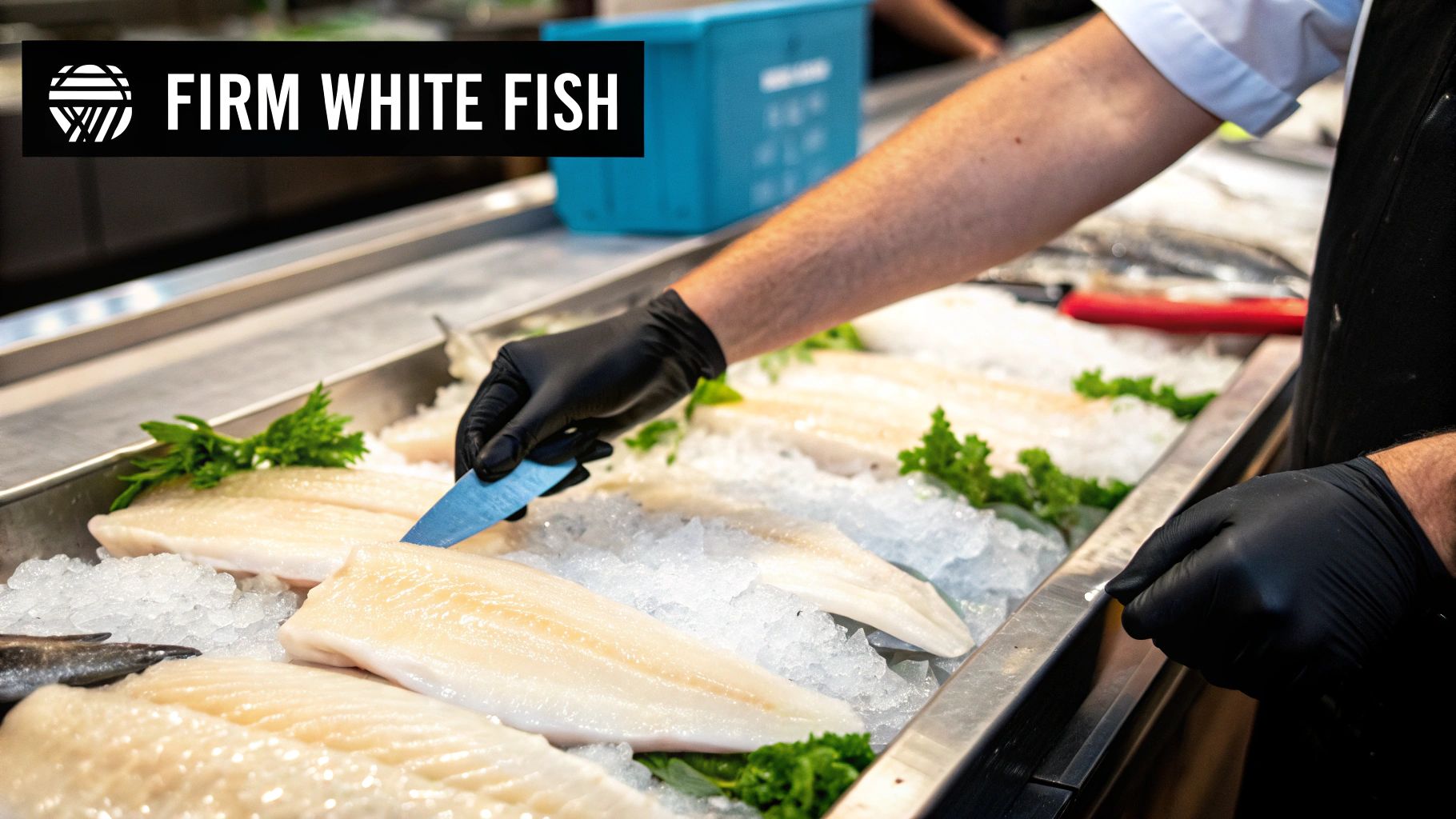
Think of it like choosing a steak for the grill; you need a cut that won't fall apart. For stir-frying, fish with a robust, meaty texture are your best friends.
Top Fish Choices For Your Stir Fry
When you're trying to figure out what to buy at the fishmonger, it helps to have a few go-to options in mind. Here's a quick rundown of some popular choices that I've found work brilliantly in a stir fry.
| Fish Variety | Texture Profile | Flavour | Best For |
|---|---|---|---|
| Barramundi | Firm, meaty, large flakes | Mild, slightly sweet | Soaking up bold sauces without being overpowered. |
| Snapper | Firm but tender | Mildly sweet | Holding its shape perfectly for uniform, bite-sized pieces. |
| Ling | Very firm, dense | Mild, clean taste | A budget-friendly option that's almost foolproof. |
| Cod / Sea Bass | Large, tender flakes | Rich, buttery | Creating a more luxurious stir fry with beautiful texture. |
These varieties give you delicious, intact pieces of fish from the wok to the plate, every single time. And it’s no wonder stir-frying is so popular; Australians consumed about 13.9 kilograms of seafood per person in 2020–21, with quick cooking methods like this leading the way.
For those looking to master a premium fish like Chilean Sea Bass, you can find some fantastic specific tips on how to cook Chilean Sea Bass perfectly.
Getting Your Fish Ready for the Wok
Once you’ve got your beautiful fillets home, a little bit of prep makes all the difference. You'll want a sharp knife and a truly clean surface. This is where Everti’s titanium board is a game-changer because it doesn't hold onto fishy smells or bacteria like porous boards can. It’s worth reading up on the best cutting board material for health if you're curious about the details.
Here’s a pro tip: the secret to a crispy, golden-brown sear is getting the fish completely dry. Once you've cubed your fillets into bite-sized pieces, take a moment to pat them thoroughly with a paper towel. This simple step removes all the surface moisture, ensuring the fish fries instead of steams in the wok.
Crafting an Unforgettable Stir Fry Sauce
Let's be honest, the soul of any great stir fry lies in the sauce. It's what brings all the fresh fish and crisp veggies together, turning a simple meal into something with real depth and character. Ditching the overly sweet, one-note bottled stuff is the first step. Making your own is surprisingly simple, and it puts you in complete control of the final flavour.
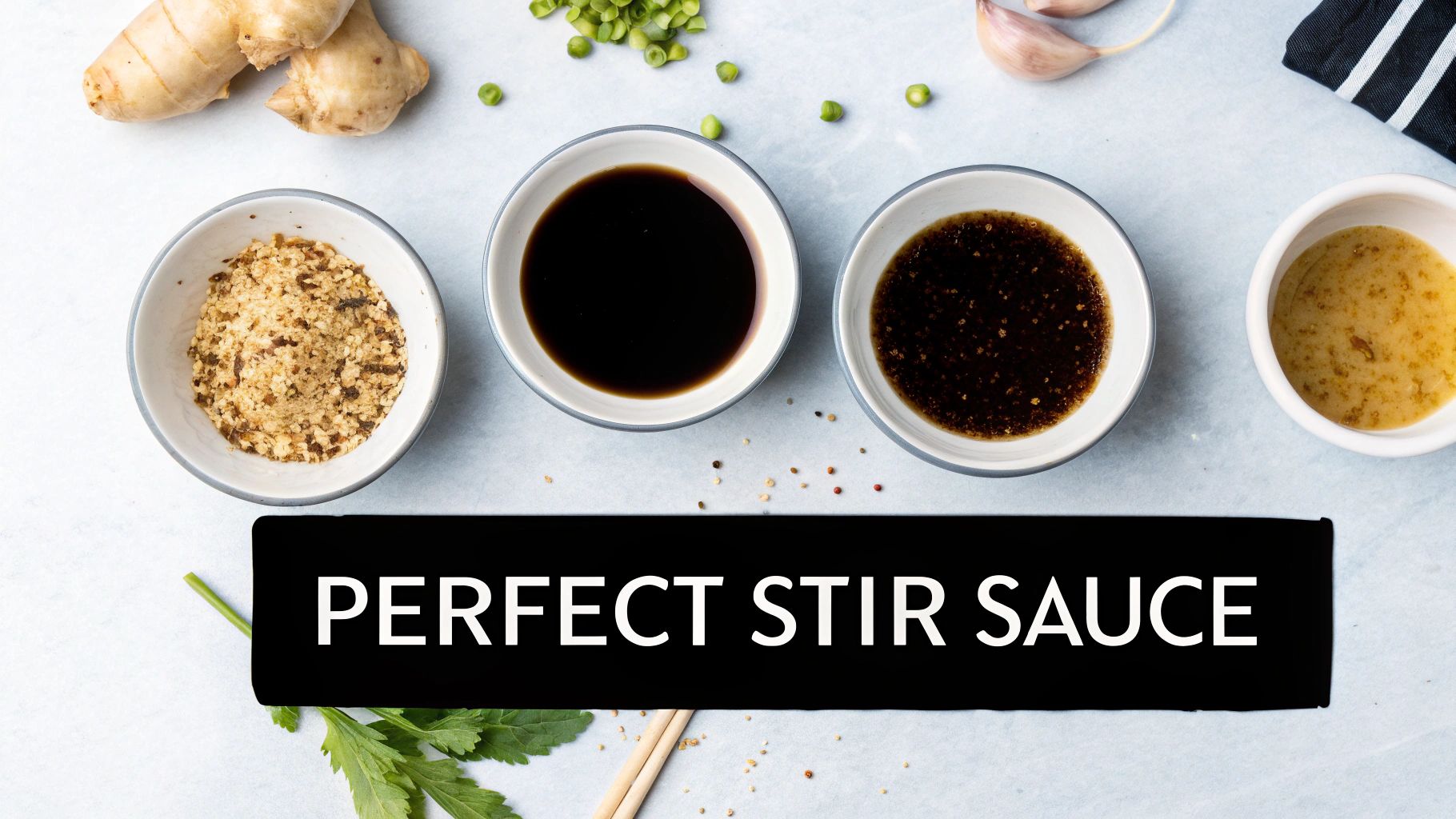
It all begins with a good foundation. A quality soy sauce provides that essential salty, umami backbone. From there, it's all about layering flavours.
Balancing the Core Flavours
Think of building a great stir fry sauce like a balancing act. You're juggling four key players: sweet, salty, sour, and savoury (umami). A touch of sweetness from honey or maple syrup can beautifully cut through the salt. A splash of rice vinegar or a squeeze of lime adds a bright, zesty note that makes the whole dish pop.
Here are the non-negotiables for a fantastic fish stir fry sauce:
- Salty/Umami: Soy sauce is the classic go-to (or tamari if you're gluten-free). I often add a spoonful of oyster sauce for an extra layer of savoury depth.
- Aromatics: Freshly grated ginger and minced garlic are absolutely essential. Their pungent, fragrant kick infuses everything in the wok.
- Sweet: Just a little bit of honey, brown sugar, or even maple syrup is all you need to round out the sharper, saltier notes.
- Thickener: The secret to that glossy sauce that clings perfectly to your fish and veggies? A simple cornstarch slurry – just mix a bit of cornstarch with cold water before adding it in.
Beyond the specific ingredients for your fish, truly mastering stir fry seasoning is what will give you consistently bold and exciting flavours.
My best advice is to taste as you go. Whisk your base ingredients together in a small bowl, then start tweaking. Does it need more salt? Add a dash more soy. A little flat? A squeeze of lime will brighten it right up. This is why homemade always wins – you can adjust it until it’s perfect for you.
Mastering Your Stir Fry Technique
This is where the real fun begins. A great fish stir fry is all about speed, heat, and timing, which means you absolutely must have everything ready to go before you even think about turning on the stove. This is what chefs call mise en place—a fancy French term that just means getting all your ingredients prepped and organised. When you're stir-frying, things happen fast. You won't have time to quickly chop an onion while your fish is in the pan.
I like to lay everything out on my Everti titanium board. You'll have your cubed fish, your veggies (grouped by how long they take to cook), your minced aromatics, and your sauce all mixed and ready. This little bit of organisation is what takes stir-frying from a chaotic mess to a smooth, controlled dance from board to wok.
The Perfect Sear
The first and most important step is getting a beautiful sear on the fish. You're aiming for a golden-brown crust that seals in all the moisture, keeping the fish flaky and juicy inside. The biggest mistake people make here? Overcrowding the pan. Throwing too much in at once drops the temperature, and your fish ends up steaming in its own liquid instead of frying.
The trick is to cook the fish in batches. Get your Everti pan or wok searing hot, then add a tablespoon of an oil with a high smoke point—avocado or grapeseed oil are perfect. Carefully place a single layer of fish in the pan, making sure there's space between each piece. Let it sizzle, untouched, for a minute or two until it's golden. Give it a flip, cook the other side for just a moment, and then get it out of the pan.
Remember, you aren't cooking it through just yet. Once all the fish is seared, set it aside. This method guarantees every single piece gets that beautiful, flavourful crust. If you've ever had trouble with food sticking, our guide on the best non-stick surface for a frying pan has some great tips on getting the most out of your cookware.
Here's the key: You're not trying to cook the fish completely in this first step. It's all about building colour and texture. It'll finish cooking later when it goes back into the wok with everything else.
Building Layers of Flavour
With the fish seared and resting, the wok is ready for the veggies. The secret here is adding them in the right sequence, starting with the ones that take the longest to cook.
-
Start with the Hard Veggies: Add a little more oil to the hot wok and toss in your tougher vegetables. Think broccoli florets, sliced carrots, or capsicum. Stir-fry them for a couple of minutes until they start to get tender but still have a bit of a bite and a vibrant colour.
-
Time for the Aromatics: Push the veggies up the side of the wok to make a space in the centre. Now, add your aromatics—minced garlic, grated ginger, and sliced onions. Let them hit that hot surface for about 30 seconds. You'll know they're ready when the kitchen fills with an incredible fragrance. This quick toast is what builds the deep flavour base for your dish.
-
Finish with the Quick-Cookers: Finally, it's time for the delicate stuff. Throw in your quicker-cooking greens like snow peas, bok choy, or spring onions. Give everything a good toss for another minute until they turn bright green and are perfectly crisp-tender.
Now for the grand finale. Gently return the seared fish to the wok, pour your pre-mixed sauce over everything, and toss it all together. The heat from the pan will finish cooking the fish and thicken the sauce in just a minute or two, perfectly coating every ingredient. Serve it up straight away
Common Stir-Fry Pitfalls and How to Sidestep Them
We’ve all been there. You have a vision of the perfect, sizzling fish stir-fry, but what ends up on the plate is... less than ideal. Even seasoned cooks can make a few common slip-ups. Let's talk about the most frequent issues – soggy veggies, overcooked fish, and watery sauce – and how to fix them for good.
Nine times out of ten, the biggest culprit is a wok or pan that just isn’t hot enough. You need that aggressive, searing heat to char-blister the vegetables the moment they hit the pan. If it’s too cool, they just end up steaming in their own juices and turning limp.
Another classic mistake? Throwing wet fish into the pan. You absolutely have to pat your fish cubes completely dry with a paper towel before they go anywhere near that hot oil. This tiny step is the difference between getting a gorgeous golden-brown crust and a sad, pale, steamed texture.
What to Do When Your Sauce is Too Thin
There’s nothing more disappointing than a watery sauce that just pools at the bottom of the bowl. Thankfully, the fix is one of the oldest tricks in the book: a simple cornstarch slurry.
Just whisk one tablespoon of cornstarch with two tablespoons of cold water until it's completely smooth. Pour it into your sauce during the last minute or so of cooking, and watch it magically transform into a glossy sauce that beautifully coats every single ingredient.
A pro tip from my own kitchen: always add your vegetables in stages. Harder veggies like carrots and broccoli need a head start, while delicate ones like snow peas or bok choy only need a quick toss at the very end. This ensures everything is perfectly crisp-tender.
This quick visual guide really helps to nail the timing and flow of a great stir-fry.
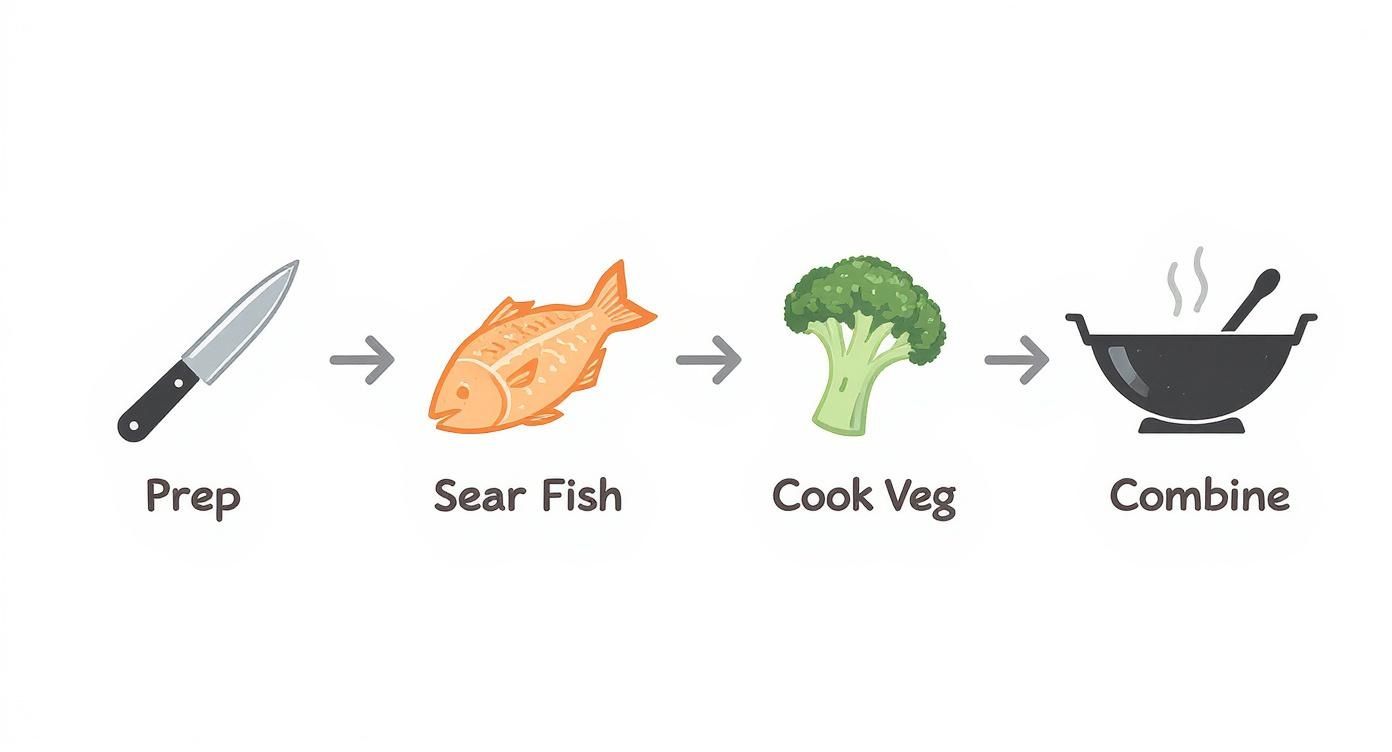
Seeing the sequence laid out—from prepping your ingredients to that final toss—makes it so much clearer. It’s no surprise we love cooking fish at home; a survey way back in 1976-77 found that three-quarters of all fish in Australia was eaten at home! By mastering these simple techniques, you're carrying on a delicious tradition. If you’re interested, you can dive deeper into the Australian seafood consumption trends reported by FRDC.
Got Questions About Your Fish Stir Fry? I've Got Answers.
Even the most seasoned cooks run into a few hurdles now and then, especially with something as delicate as a fish stir fry. Let's walk through some of the common questions I hear all the time so you can get it right every single time.
Is It Okay to Use Frozen Fish?
Yes, absolutely! Frozen fish is often my go-to for a quick weeknight meal. The real secret here isn't fresh versus frozen, but how you handle it.
You absolutely must thaw it completely first. The best, safest way is to let it thaw overnight in the fridge. Once it's thawed, pat it incredibly dry with paper towels. I mean, really dry. Any excess water is the enemy of a good sear; it'll just steam the fish, making it soft and watering down your beautiful sauce.
Help! Why Does My Fish Always Break Apart?
Ah, the classic stir fry tragedy. This usually boils down to one of two culprits: you've either picked the wrong fish or you're being a bit too enthusiastic with your spoon.
For stir-frying, you need a firm-fleshed fish that can take the heat. Think barramundi, snapper, or even a good quality cod. These varieties hold their shape much better than more delicate fish like flounder.
Here's my pro tip: Sear the fish pieces first, then take them out of the wok and set them aside. Cook all your veggies, make your sauce, and then gently fold the fish back in right at the end just to heat through. This simple trick minimises the handling and keeps those beautiful chunks perfectly whole.
What are the Best Veggies for a Stir Fry?
The beauty of a stir fry is its versatility, but the best vegetables are those that cook fast and bring a bit of crunch and colour to the party.
My personal favourites are capsicum, snow peas, small broccoli florets, and baby bok choy. The key to success is cutting everything to a roughly uniform size for even cooking. Always add them in stages, too—start with the harder stuff like broccoli and carrots, giving them a minute or two head start before tossing in quick-cookers like snow peas or leafy greens.
Ready to elevate your stir fry prep? The Everti Titanium Cutting Board provides the ultimate hygienic, non-porous surface that won't hold onto fishy odours, ensuring a clean start for every meal. Discover the difference at https://everti.com.au.