

Let's be honest, a good set of frying pans is the heart and soul of the kitchen. It’s your go-to for just about everything, from whipping up a quick brekky of fried eggs to getting that perfect, crusty sear on a beautiful steak. The right set gives you a few different sizes and materials, so you always have the perfect tool for the job without jamming your cupboards full of useless gear.
Why a Great Frying Pan Set Genuinely Changes the Game
Picking out new cookware can feel like a massive task, but it’s one of the best things you can do for your kitchen. A carefully chosen frying pan set isn’t about having cookware that just looks nice and matches; it’s about setting yourself up to cook better, more easily.
Think of it this way: a tradie wouldn't show up to a job with just one spanner. In the same way, different pans are built for different jobs. A cohesive set gives you consistency. You learn how they heat up, how they react when you turn the flame down, and you often get handy features like oven-safe handles or lids that fit multiple pans. It takes the guesswork out of cooking, letting you focus on the food instead of fighting with dodgy, mismatched pans.
What to Expect from This Guide
We’ve put this guide together to help you find the perfect frying pan set for your Aussie kitchen, cutting through all the marketing fluff to get to what actually matters. We'll walk you through the key things that make a set worthwhile, so you can feel confident in your choice.
Here’s a quick peek at what we’ll cover:
- Breaking Down Pan Materials: From the bomb-proof durability of stainless steel to the incredible lightweight strength of titanium, we’ll help you figure out which material is the best fit for the way you cook.
- Getting to Grips with Non-Stick: We'll explain the real differences between all those non-stick surfaces, how long you can expect them to last, and the right way to look after them.
- Choosing the Right Sizes: Learn how to pick pan sizes that actually make sense for your household, making sure every pan in your new set pulls its weight.
By the time you're done reading, you won't just know which frying pan set to buy—you'll understand why it's the right one for you. You'll be set to cook fantastic meals for years to come.
What's in a Pan? Unpacking Materials from Stainless Steel to Titanium
Think of a pan's material as its DNA. It dictates everything—how fast it heats up, how evenly it cooks your food, how you’ll clean it, and ultimately, how long it will last. Choosing the right material for your frying pan set is less about finding a single "best" option and more about picking the right tool for the job you do most often in the kitchen.
A simple way to look at it is to compare pan materials to cars. Stainless steel is your trusty family sedan—reliable, versatile, and great for most daily drives. Cast iron is the tough-as-nails 4WD, built for off-road adventures and high heat. And titanium? That’s the high-performance sports car: lightweight, incredibly durable, and super responsive. Getting a handle on these differences is the first step to buying a set that you’ll actually love to use.
This guide breaks down the three pillars of choosing a pan: the material it's made from, its coating (or lack thereof), and its size.
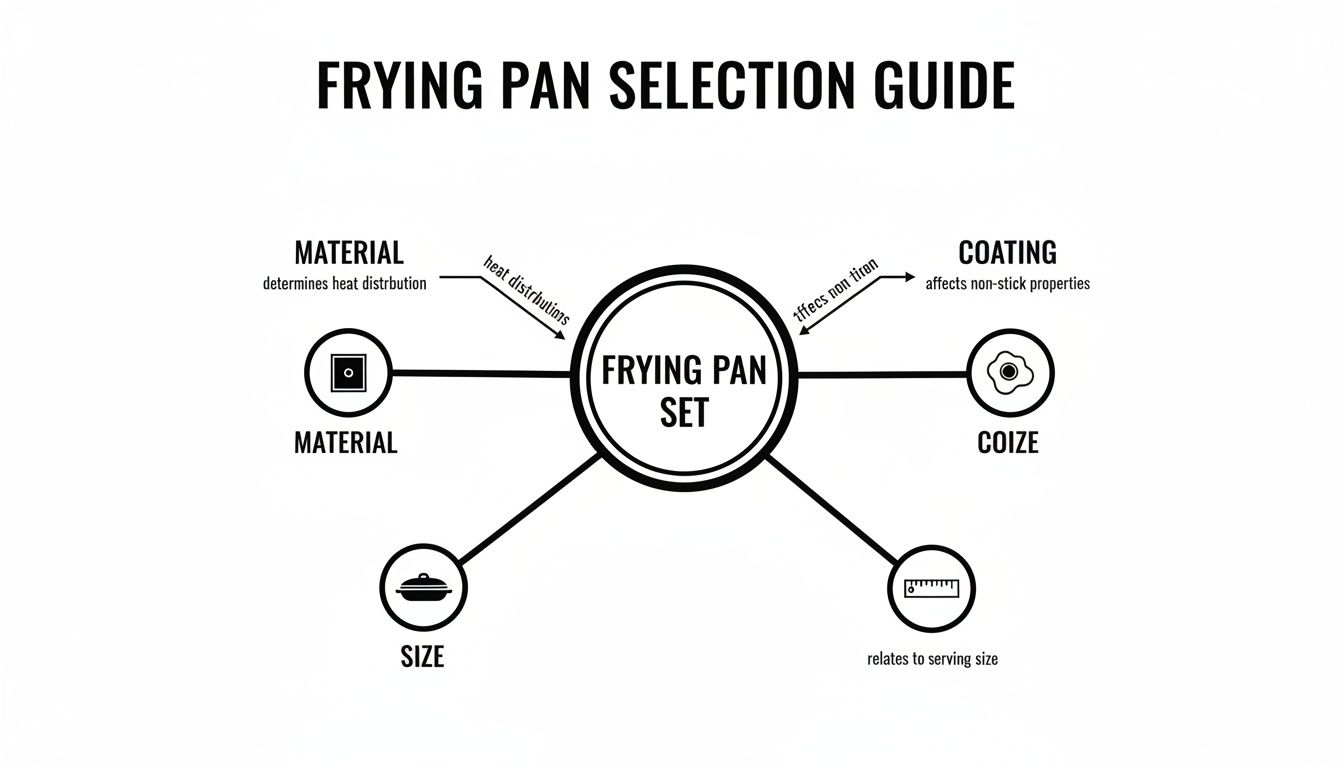
While these are three separate things to consider, the real magic happens when you find a pan that balances all of them perfectly for your needs.
The Kitchen All-Rounder: Stainless Steel
There’s a good reason stainless steel is the top pick for professional chefs and keen home cooks alike. It's incredibly durable, it’s non-reactive (so your tomato sauce won’t pick up a weird metallic taste), and it handles high heat like a champ. This makes it the perfect choice for getting a beautiful, golden-brown sear on a steak or a piece of fish.
The trick to loving stainless steel is learning to preheat it properly. Get the pan hot, add a slick of oil, and you’ll create a surface that food releases from naturally as it cooks. It takes a little practice, but the payoff is incredible browning and delicious pan sauces.
Pro Tip: If food is sticking to your stainless steel pan, the pan probably wasn't hot enough when the food went in, or you tried to flip it too soon. Give it time! The food will release itself when it has a good sear.
The Heat Masters: Cast Iron and Copper
Cast iron is legendary for one thing above all else: heat retention. Once a cast iron skillet is hot, it stays hot. This provides the powerful, even heat you need for a perfect steak crust, crispy fried chicken, or even a skillet-baked cornbread. These pans are practically indestructible and, with proper care, can be passed down through generations.
Copper, on the other hand, is the opposite—it’s all about responsiveness. It heats up and cools down almost instantly, giving you a level of precise temperature control that no other material can match. This is ideal for delicate sauces, melting sugar, or cooking fish where a few degrees can be the difference between perfect and overdone.
The Modern Choices: Titanium and Non-Stick Aluminium
Lightweight, quick to heat, and affordable, non-stick aluminium pans are a familiar sight in many kitchens. Their real draw is convenience, especially for delicate foods like eggs, crêpes, and pancakes that are notorious for sticking. The main thing to watch out for is the lifespan of the non-stick coating.
Then you have titanium, which cherry-picks the best features from other materials and rolls them into one. It’s exceptionally strong yet surprisingly light, completely non-reactive, and won't corrode. A quality titanium frying pan set gives you the durability of stainless steel without the heft, making it a fantastic investment for anyone after clean, high-performance cookware.
To get the full picture, it's worth exploring the specific titanium cookware pros and cons to see if its unique benefits align with your cooking style.
To help you decide, here’s a quick-glance table comparing the most common materials.
Frying Pan Material Comparison
| Material | Heat Conduction | Durability | Maintenance | Best For |
|---|---|---|---|---|
| Stainless Steel | Moderate & even | Excellent | Moderate (can require soaking) | Searing, browning, everyday cooking |
| Cast Iron | Slow, but excellent retention | Virtually indestructible | High (requires seasoning) | High-heat searing, frying, baking |
| Copper | Excellent & responsive | Good (can scratch/dent) | High (requires polishing) | Delicate sauces, precise cooking |
| Non-Stick Aluminium | Very good & quick | Fair (coating wears out) | Low (easy to clean) | Eggs, pancakes, delicate fish |
| Titanium | Very good & even | Exceptional | Low (often non-stick) | All-purpose cooking, healthy frying |
Each material has a place in the kitchen, but understanding their core strengths will guide you toward the set that feels like it was made just for you.
Why Quality Cookware Is Trending in Australia
Have you noticed that conversations about premium cookware are popping up more often these days? It's not just you. There's a real cultural shift happening in kitchens right across Australia, with more and more home cooks choosing to invest in high-quality tools, especially a reliable frying pan set.
This trend is largely fuelled by a renewed passion for cooking at home. Whether it’s popular culinary shows sparking our creativity or simply a deeper appreciation for well-made, delicious food, Aussies are definitely spending more time at the stove. This hands-on experience has quickly shown the limits of flimsy, disposable cookware, creating a real demand for tools that deliver consistent results and, frankly, make cooking a lot more enjoyable.
A Move Towards Mindful Consumption
Today’s savvy home cook is looking beyond just the price tag. We’re asking more questions about where our kitchenware comes from, what it's made of, and—importantly—how long it's going to last. This has really driven the demand for cookware that’s not only effective but also sustainable and built for the long haul.
People are consciously moving away from the "buy cheap, replace often" cycle. The focus now is on investing in durable, high-performance pieces that won't end up in a landfill after just a few years. This mindset aligns perfectly with the benefits of premium materials like titanium or multi-clad stainless steel, which offer incredible longevity and superior performance. You can learn more about the advantages of choosing good quality pots and pans in our detailed guide.
This growing awareness is reflected in some impressive market growth, too. The Australian cookware market hit a value of USD 664.44 Million in 2024 and is expected to climb to USD 1,369.43 Million by 2033. This boom really showcases a significant change in household spending habits, with a clear move towards higher-quality kitchen essentials. For more on this, check out the insights into this booming Australian market.
The Impact of Modern Shopping Habits
The rise of online shopping has certainly played a big part in all this. With a global marketplace at our fingertips, Australian consumers can now easily research and buy from brands that prioritise quality, innovation, and eco-friendly practices. This accessibility has made it easier than ever to find a frying pan set that lines up with your specific values, whether that's non-toxic materials, sustainable manufacturing, or exceptional durability.
Choosing a quality frying pan set today is about more than just buying a product. It's an investment in a more enjoyable, rewarding, and sustainable cooking lifestyle—one where the right tools empower you to create amazing food for years to come.
What's the Deal with Non-Stick Coatings and How Much Do They Cost?
Every home cook knows the magic of a good non-stick frying pan set. It’s the secret weapon for perfect pancakes and slide-right-out omelettes. But what actually makes them non-stick? That slick, easy-to-clean surface is usually a material called PTFE (polytetrafluoroethylene), which is brilliant at preventing food from getting stuck.
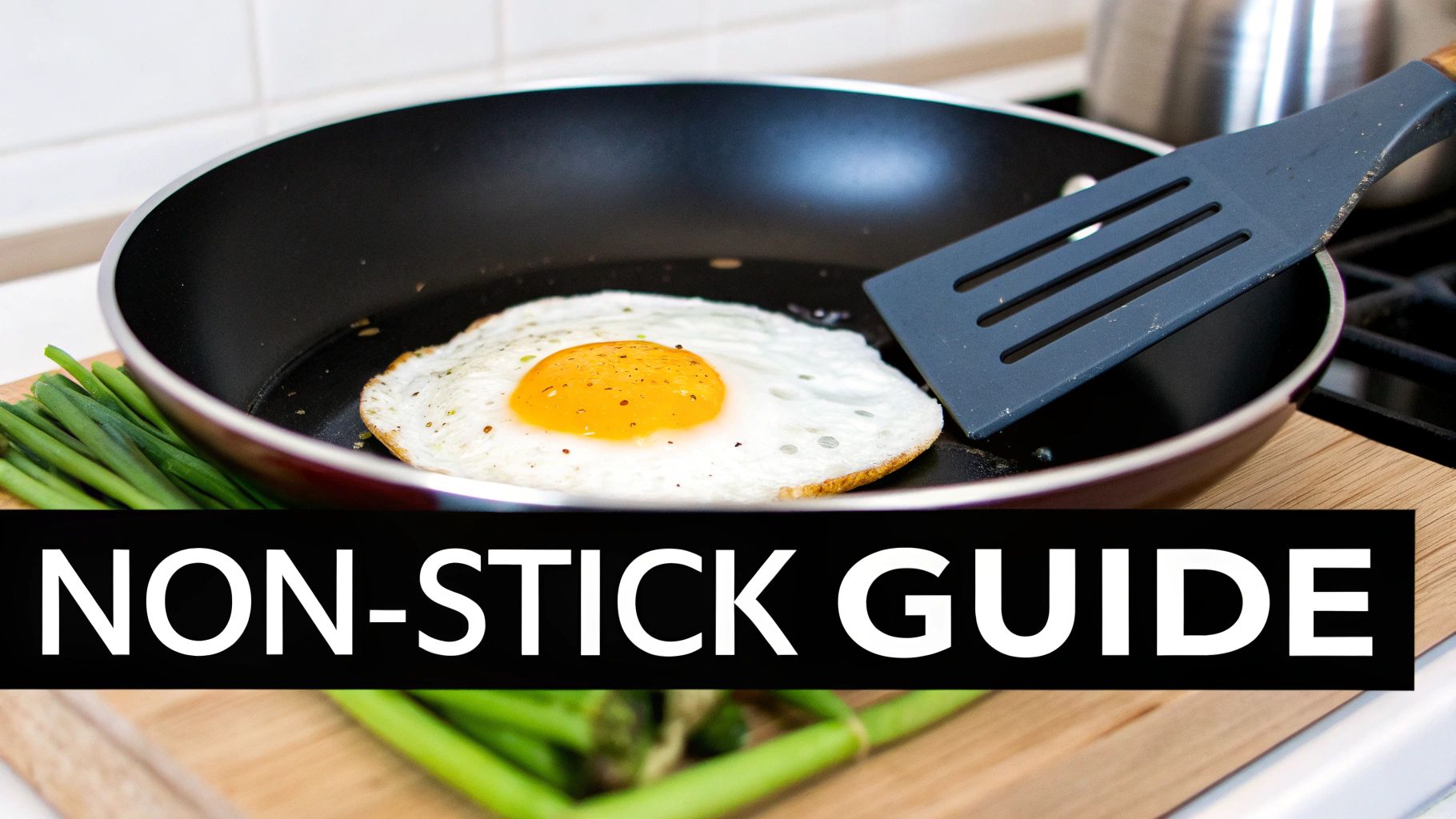
Now, you might have heard some old concerns about safety. Those were mostly tied to a chemical called PFOA, which was once used in the manufacturing process. The good news? Today, any non-stick pan worth its salt is proudly PFOA-free. As long as you treat them right—that means no crazy high heat and steering clear of metal utensils—modern non-stick pans are perfectly safe for your kitchen.
Beyond the classic PTFE, you’ll also come across ceramic non-stick coatings. These are made from a sand derivative and offer a fantastic, non-toxic alternative. The really top-tier pans often go a step further, infusing their coatings with tough materials like diamond dust or titanium to make them incredibly durable and scratch-resistant.
The Price Gap: Budget vs. Premium Pans
Walk into any kitchenware store and you'll see a massive price range for a frying pan set. That cheap-and-cheerful pan from the department store might seem like a bargain compared to a premium brand, but the difference in price tag reflects a real difference in how they're made and how they'll perform.
A budget pan might get by with just one or two layers of a basic non-stick coating. A premium pan, on the other hand, is likely to have three, five, or even more layers of a seriously reinforced, high-performance coating. This isn't just for show; it's an engineering choice designed for a long life, keeping your pan non-stick for years, not just a few months.
A premium non-stick pan is built from the ground up for durability. Its thicker base prevents warping and ensures even heat distribution, while a more robust, multi-layered coating is designed to withstand daily use without chipping or flaking.
Why Spending a Bit More Can Pay Off
The body of the pan itself is a huge factor. A top-quality non-stick pan will feel heavier because it has a forged aluminium or multi-clad stainless steel base. This solid construction is your best defence against hotspots, ensuring your food cooks beautifully and evenly. It's a common frustration with cheaper, flimsy pans that they tend to warp and cook unevenly.
Little details like riveted, oven-safe handles or coatings tough enough to handle metal utensils also add to the cost, but they turn a simple pan into a versatile kitchen workhorse. Adding features like non-stick frying pans with lids also makes a set far more useful, opening up options for simmering and steaming.
The demand for quality is clear, with the non-stick cookware market in Australia and New Zealand valued at a whopping USD 254.62 Million in 2024. Sure, a premium pan from a brand like Scanpan or Tefal might set you back over AUD 150, which can feel steep. But think of it this way: a higher initial investment means you won't be throwing out and replacing your pans every couple of years. In the long run, it’s often the smarter, more economical choice.
Choosing the Right Pan Sizes for Everyday Cooking
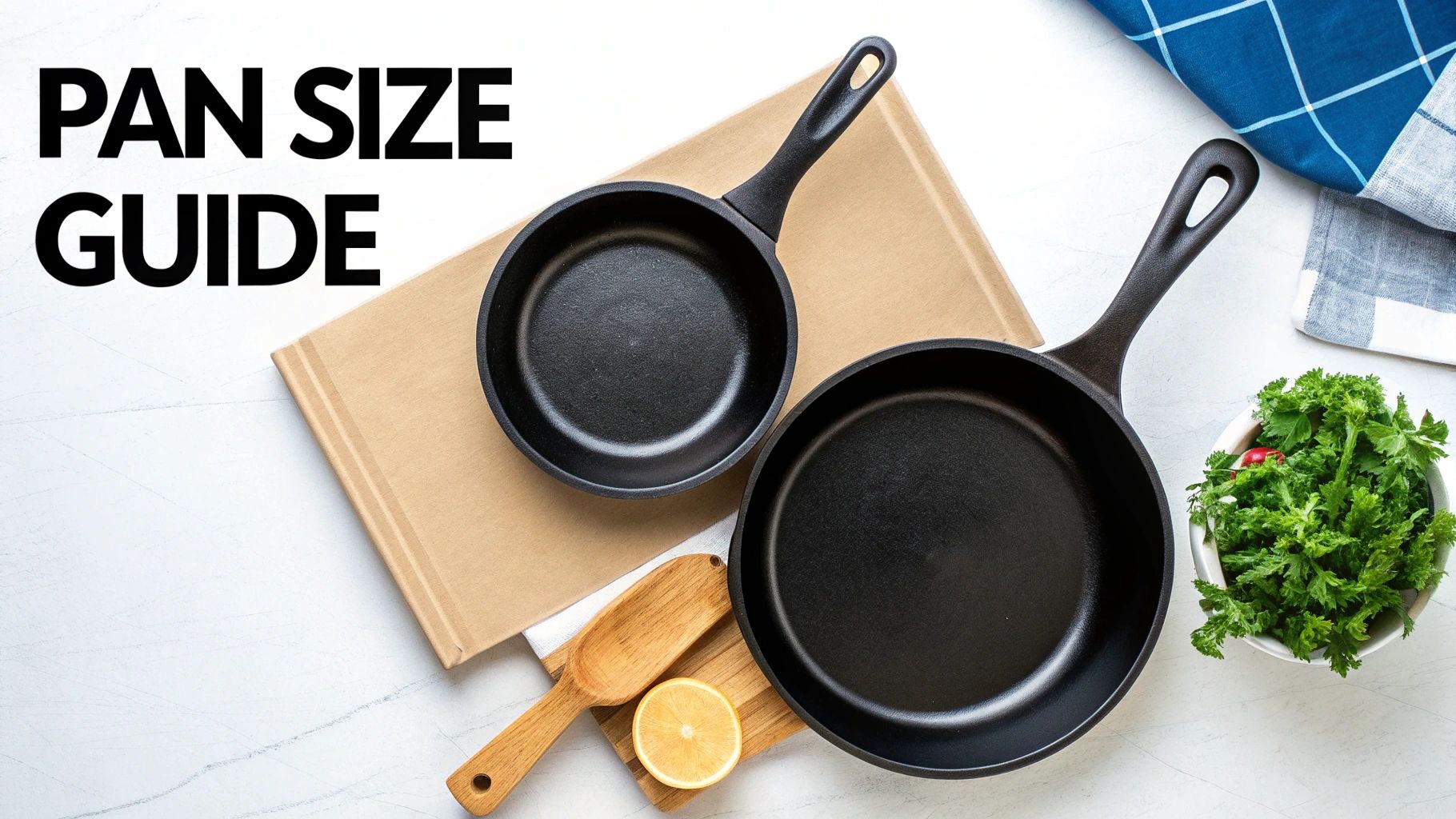
When it comes to a great frying pan set, more isn’t always better. The real goal is to find a few reliable pans you’ll actually use every day, not a collection that ends up buried at the back of a cupboard. A well-thought-out set should be versatile enough to handle almost anything you throw at it.
Think of it like having the right tools for a job. You wouldn't use a sledgehammer to hang a picture frame, right? The same principle applies in the kitchen. Having a small, medium, and large pan means you’re equipped for anything, from quickly frying a single egg to whipping up a family-sized stir-fry.
The Essential Trio of Pan Sizes
For most home cooks, a core set of three pans will easily cover 90% of their cooking needs. Let's break down what makes each size so useful.
-
The Small Pan (20cm): This is your go-to for all the small, quick jobs. It’s perfect for frying a couple of eggs, toasting a handful of spices, or melting a knob of butter. A smaller pan heats up fast and keeps your ingredients contained, so they cook evenly instead of spreading out and burning.
-
The Medium Pan (24-26cm): Say hello to your everyday workhorse. This is the pan you’ll grab for weeknight dinners for two, whether you’re searing a couple of chicken breasts, pan-frying salmon fillets, or sautéing a side of veggies. If you could only have one frying pan, this would be the one.
-
The Large Pan (28-30cm): When you've got more mouths to feed, this pan is a lifesaver. It gives you plenty of room to sear multiple steaks without them steaming, scramble eggs for the whole family, or simmer a generous one-pan pasta sauce. No more overcrowding!
Matching the Set to Your Household
Before you jump on a pre-packaged frying pan set, take a second to think about how you really cook. How many people are you usually feeding? What kinds of meals are on your weekly rotation? And, just as importantly, how much storage space do you have?
For many people, a good three-piece set is the most practical and cost-effective choice. You get a consistent look and feel across your cookware. But if your cooking style is a bit more specialised, building your own set piece by piece might be the smarter move.
This shift towards thoughtful purchasing is a growing trend. The kitchenware market in Australia is expanding, with more and more people seeking out high-quality, durable gear that not only performs brilliantly but is also a breeze to clean. You can learn more about the trends shaping the Australian kitchenware market outlook and see why quality has become such a huge focus for consumers.
Common Frying Pan Questions Answered
Diving into the world of cookware can feel a bit overwhelming. Whether you're finally upgrading your kitchen kit or buying your very first frying pan set, you want to know you're making the right call. This section is here to clear up some of the most common questions with simple, practical answers to get you cooking with confidence.
We'll tackle everything from choosing between a set or single pans to keeping your new gear in great shape for years. Think of it as your go-to cheat sheet for buying well and making it last.
Is It Better to Buy a Set or Individual Pans?
For most of us, buying a frying pan set is easily the smartest and most budget-friendly move. A classic three-piece set, which usually includes a small, medium, and large pan, has you covered for just about any recipe you can think of. It also creates a nice, cohesive look in your kitchen and means you get the same reliable performance from every pan.
That said, buying individual pans makes sense in a few specific situations. Maybe you just need to replace one old, tired-out pan, or perhaps you're a steak aficionado who just wants a single cast-iron skillet for that perfect sear. But if you’re setting up a kitchen from scratch or doing a total refresh, a good set offers fantastic value you just can't beat.
A thoughtfully chosen frying pan set gives you versatility and value, making sure you always have the right tool for the job. It takes the guesswork out of buying and almost always costs less than picking up each pan one by one.
How Do I Know if a Pan Is Induction Compatible?
This is a big one! Making sure a pan works with your induction cooktop is crucial. The simplest way to check is with the magnet test: if a regular fridge magnet sticks firmly to the bottom of the pan, you’re good to go. This works because induction hobs use a magnetic field to generate heat directly in the pan itself.
You can also keep an eye out for a specific symbol, either on the pan’s base or on its packaging. It looks like a little coil of wire and is the universal sign for induction compatibility.
- Magnetic Materials: Pans made from cast iron and most types of stainless steel are naturally magnetic and work beautifully.
- Non-Magnetic Materials: Pure aluminium and copper pans won't work on their own.
- Bonded Bases: Many modern pans get clever by combining materials. They might have an aluminium body (for fast, even heating) with a magnetic steel plate bonded to the base, giving you the best of both worlds.
What Is the Best Way to Care for Non-Stick Pans?
A little bit of TLC will go a long way in extending the life of your non-stick coating. The golden rule is to avoid thermal shock—that means always letting the pan cool down completely before you wash it. Dunking a sizzling hot pan into cold water is a sure-fire way to make it warp and can wreck the coating.
Gentle cleaning is also your friend. Use a soft sponge or cloth with some warm, soapy water. Stay well away from abrasive steel wool or harsh cleaning chemicals, as they'll scratch and wear down the non-stick surface over time.
Finally, think about your tools and the temperature you’re using.
- Use the Right Utensils: Always reach for wood, silicone, or nylon utensils. Metal tools are the mortal enemy of non-stick pans and will leave scratches behind.
- Avoid Extreme Heat: High heat is another culprit that can cause non-stick coatings to break down. Stick to low or medium heat for everyday cooking—your pan will thank you for it.
- Handwash When Possible: I know it’s tempting, but even if a pan says it's "dishwasher-safe," the intense heat and strong detergents in a dishwasher can drastically shorten the coating's lifespan. A quick, gentle handwash is always the superior choice.
When Should I Replace My Frying Pan?
It's time to say goodbye to your old pan when it starts showing obvious signs of wear. For non-stick pans, the big red flags are deep scratches, a flaking surface, or when food starts to stick no matter what you do. At that point, it’s just not doing its job anymore.
A warped base is another major sign for any kind of pan. If it wobbles on your flat cooktop, it’s not going to heat evenly, which means your food won’t cook properly. And finally, if the handle becomes loose and you can’t tighten it, that’s a serious safety risk. If you notice any of these problems, it’s definitely time to invest in a replacement.
At Everti, we believe in creating kitchen essentials that are built to last a lifetime. Our pure titanium cookware offers a naturally non-stick, non-toxic, and incredibly durable surface that elevates your daily cooking. Discover the difference of true quality and performance by exploring our collection at https://everti.com.au.