

A frying pan with a detachable handle is, at its core, a modular cooking system built to reclaim precious kitchen space. By letting you remove the handle, these pans can be stacked perfectly inside one another, getting rid of the awkward tangle of fixed handles that makes cupboards and drawers so messy. This simple idea offers incredible storage efficiency and a surprising amount of versatility.
How Detachable Handles Actually Transform Kitchen Storage
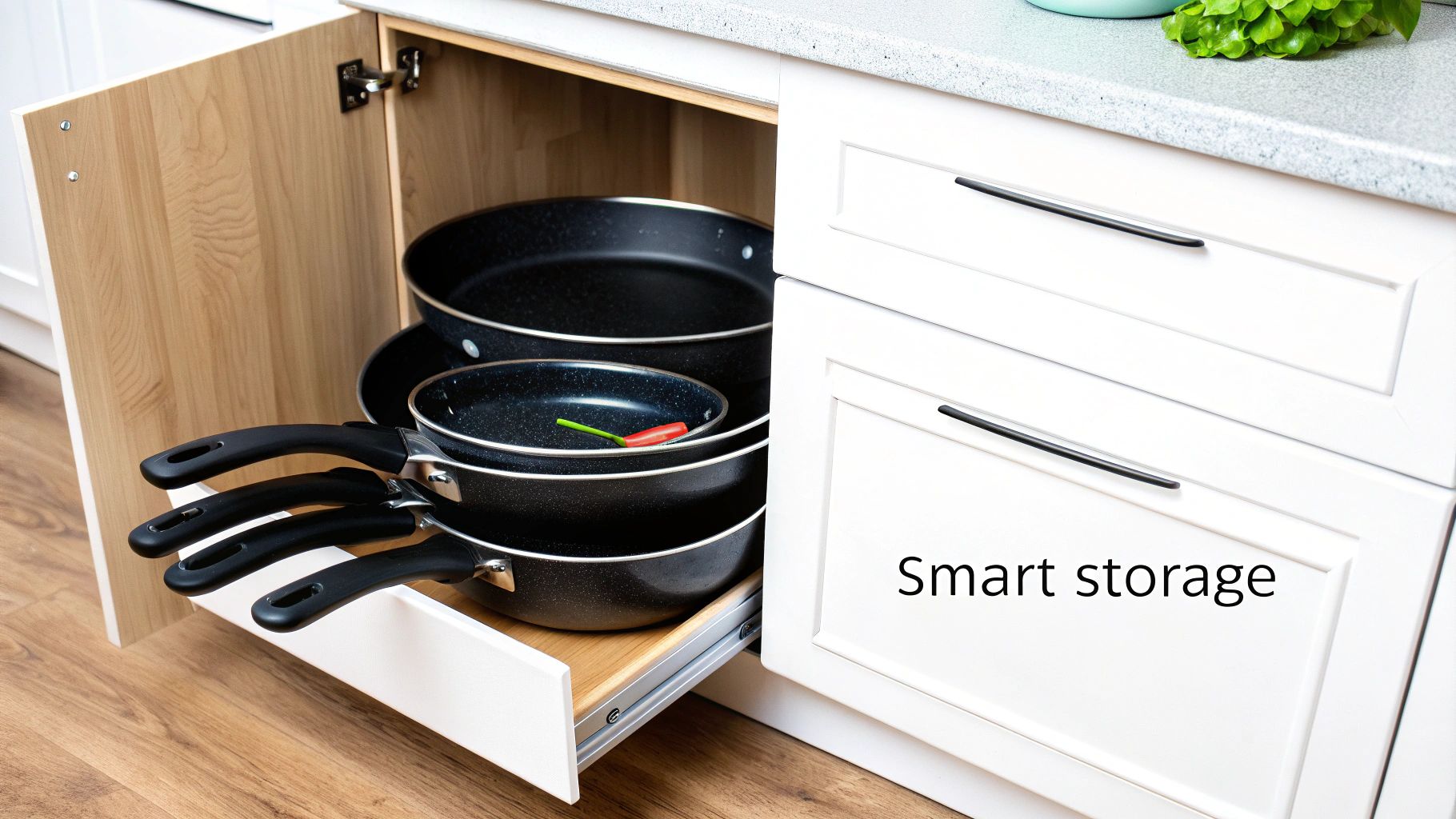
Picture a kitchen cabinet where your pans are organised, not just crammed in. That’s the simple, yet brilliant, promise of a frying pan with a detachable handle. It’s less about a single gadget and more about a smarter way of thinking about your cookware, especially for modern living.
This one design tweak directly tackles the universal headache of limited kitchen space. It fundamentally changes how you store and use your most essential cooking tools.
A Building Block Approach to Organisation
The main benefit is just so simple and effective. When you take off the handles, your frying pans become neat, stackable discs. They nestle together like a set of building blocks, transforming a chaotic cupboard or a deep drawer into a masterclass of efficiency. This is more than just a minor perk; it's a completely different way to approach kitchen organisation. If you’re in an apartment, a tiny home, or any place where every centimetre matters, this feature is a total game-changer.
By reimagining the pan as a two-part system, manufacturers have created a solution that declutters cabinets, simplifies cleaning, and increases the overall utility of a single piece of cookware. It’s a smart design for smarter kitchens.
More Than Just Tidy Cupboards
The genius of this design goes far beyond just neat stacks. A frying pan with a detachable handle fits perfectly with the trend toward minimalist, highly functional living. It’s all about doing more with less. With a single click, your pan can go from searing a steak on the stovetop straight into the oven to finish cooking. Pop the handle off again, and it’s now a rustic, stylish serving dish for the dinner table. It's this kind of versatility that's catching on with so many home cooks.
This shift is showing up in the market, too. The global demand for frying pans and skillets is expected to grow from USD 1.27 billion in 2025 to USD 2.07 billion by 2034. A big driver of this growth is the move towards removable handle designs. In fact, around 25% of premium skillet models launched in North America in 2024 included this feature to meet the growing consumer demand for convenience in homes across Australia and the rest of the world. You can dive deeper by checking out the complete market report on frying pans and skillets.
More Than Just a Space-Saving Trick
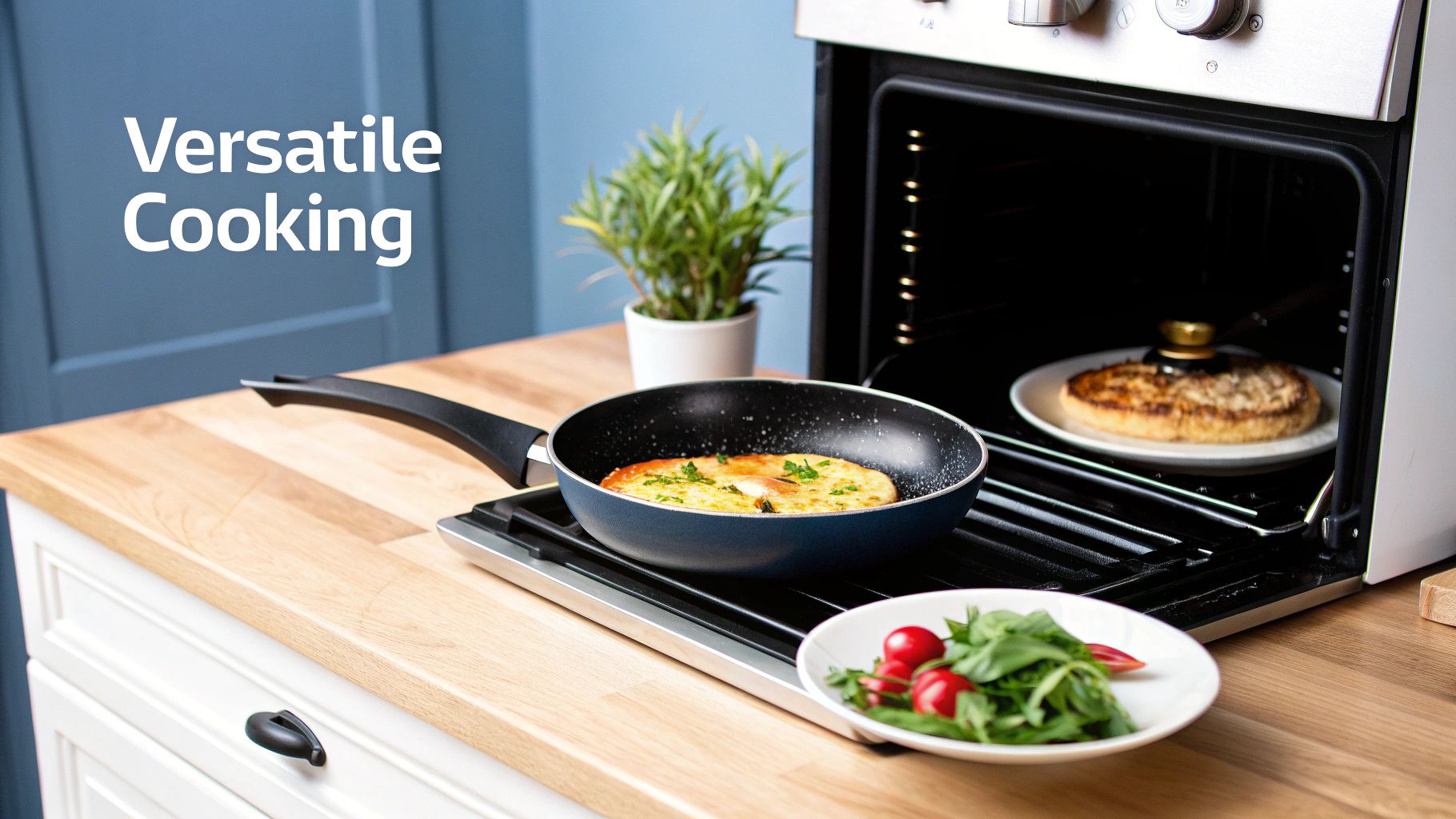
While everyone loves how neatly they stack, the real magic of a frying pan with a detachable handle is its incredible versatility. It’s not just a minor tweak; this one design change turns a humble pan into the ultimate kitchen multi-tool.
Think about it. By clicking off the handle, your pan instantly sheds its identity as just a 'frying pan'. It becomes an oven-safe baking dish, a handsome serving platter for the dinner table, and even a food storage container that fits neatly in the fridge. Now that’s what I call earning its keep.
From Stovetop Searing to Oven Roasting
Let's get practical. You're searing a beautiful steak, getting that perfect, crispy crust on the stovetop. With an ordinary pan, the next step is a clumsy transfer to a separate baking tray to finish it in the oven. Not anymore.
With a detachable handle, you just click it off and slide the entire pan straight into the oven. It's a game-changer. This seamless move means you keep all those caramelised bits and delicious pan juices right where they belong, leading to richer flavours and far better results. It’s perfect for things like:
- Fluffy frittatas and oven-finished omelettes
- One-pan chicken roasts that start on the stove
- Skillet brownies and impressive upside-down cakes
Plus, a one-pan approach means you slash your washing up time. That’s a win in anyone’s book.
A Major Upgrade in Kitchen Safety
The cooking benefits are fantastic, but there’s a safety aspect here that’s often overlooked, especially in homes with young kids. We all know how a standard pan handle can jut out over the stovetop edge, just asking for a curious toddler to grab it.
A removable handle gives you total peace of mind. Pop it on a front burner, get your food sizzling, then simply click the handle off. The risk of a child pulling it down or an adult knocking it over is completely gone.
It’s such a simple solution to a common kitchen hazard. By removing that protruding handle, the whole cooking area immediately becomes a safer space.
Let's look at how these pans stack up against their traditional counterparts.
Comparing Traditional vs Detachable Handle Pans
This table breaks down the practical differences you'll notice in your day-to-day cooking and cleaning.
| Feature | Traditional Frying Pan | Frying Pan with Detachable Handle |
|---|---|---|
| Oven Use | Often not possible due to plastic/wood handle. | Seamlessly moves from stove to oven after removing the handle. |
| Storage | Awkward to stack, takes up significant cabinet space. | Stacks neatly like bowls, saving a huge amount of space. |
| Serving | Requires transferring food to a separate serving dish. | Doubles as an elegant serving dish directly on the table. |
| Safety | Protruding handle can be a tipping or burn hazard. | Handle can be removed during cooking to eliminate risks. |
| Cleaning | Long handle makes it difficult to fit in sinks/dishwashers. | Fits easily into any sink or dishwasher rack like a simple bowl. |
As you can see, the benefits go far beyond just tidy cupboards. The detachable handle offers a smarter, safer, and more streamlined way to cook.
Simplifying the Cleanup Process
Finally, let’s talk about washing up. Anyone who’s played 'sink Tetris' trying to fit a long-handled pan into a full sink or a dishwasher knows the frustration. It just never seems to fit right, making it a pain to soak and clean properly.
When you detach the handle, the pan is just a simple, round vessel. It slips effortlessly into the sink for a good scrub or nestles into the dishwasher rack without any fuss. This clever design makes the entire journey—from prepping and cooking to the final clean—feel smoother and more organised. If you're interested in cookware that simplifies your kitchen routine, you might also want to check out our guide on non-stick frying pans with lids.
How to Choose the Right Detachable Handle Pan
Picking the right frying pan with a detachable handle goes a lot deeper than just finding a colour you like. It's really about matching the pan to the way you cook and the space you have in your kitchen. There’s a surprising amount to consider—from the pan's material to the handle's locking system—and getting it right means you’ll end up with a tool that’s both versatile and built to last.
Not all detachable systems are created equal, and that’s where you need to pay attention. The little details in how the pan is made and how the handle locks on are what separate a brilliant piece of cookware from a wobbly, frustrating one. Let’s walk through what really matters.
Pan Materials Matter
Let's start with the pan itself. The material it's made from dictates everything: how it heats up, how easily your food will slide out, and how you’ll need to look after it over the years. Each one has its own personality, so to speak.
- Non-Stick: A godsend for beginners or anyone cooking delicate things like eggs and fish. You get fantastic food release and cleaning is a breeze, but you do have to be gentle to avoid scratching that coating.
- Stainless Steel: The kitchen workhorse. It’s tough, sears meat beautifully, and spreads heat like a dream. It's the go-to for getting a great crust on a steak and making delicious pan sauces, though it does take a bit of practice to master heat control and stop food from sticking.
- Cast Iron: When it comes to holding heat, nothing beats it. This is what you want for that perfect, deep sear. It's definitely on the heavier side and needs a bit of love (seasoning), but a well-cared-for cast iron pan will outlive you.
Think about what you cook day-to-day. If you’re a pancake person, non-stick is your friend. If you’re all about searing, stainless steel or cast iron is the way to go. We dive a lot deeper into this in our complete guide to choosing quality frying pans.
The Heart of the System: The Locking Mechanism
This is the big one. The handle's locking mechanism is probably the single most critical feature of a detachable pan. It’s what gives you the confidence to lift a piping-hot pan full of food. A weak or fiddly lock isn't just an annoyance; it's a genuine safety hazard.
Look for a system that gives you a solid, audible "click" so you know it’s locked in place. Some are simple spring-loaded clips, but the better ones often have multi-point locking systems that grip the pan from a few different angles. The best designs feel completely solid—absolutely no wobble—but are still easy enough to attach and release with one hand.
A secure handle isn't just a feature; it's a fundamental safety requirement. Always test the handle's stability before you buy, ensuring it feels sturdy and securely attached to the pan body with no movement.
Essential Compatibility Checks
Finally, a quick sanity check to make sure your new pan will actually work in your kitchen. It's easy to forget that not all cookware plays nicely with every cooktop, and the oven-safe temperature can vary wildly.
Before you commit, just double-check these two things:
- Cooktop Compatibility: Make sure the pan is designed for your stove—whether you have induction, gas, electric, or ceramic. Induction hobs, for example, need a pan with a magnetic base to even work.
- Oven Temperature Rating: Find out the maximum temperature the pan can safely withstand in the oven. This is crucial if you plan on searing a steak on the stovetop and finishing it in the oven.
This kind of adaptability is exactly why detachable designs have become so popular here in Australia. Our kitchens often demand clever space-saving solutions, and our love for the outdoors means a pan that works on the campfire is a huge bonus. You can see this reflected in broader consumer preferences on the frying pan market, where versatility is a key selling point.
Mastering Your New Cookware for Lasting Performance
Getting your new frying pan with its detachable handle out of the box is exciting, but that's just the start. To make sure it becomes a true kitchen workhorse you can rely on for years, you need to get the hang of using and caring for it properly. A little bit of know-how goes a long way.
The first thing to master is attaching and detaching the handle. This isn't just for convenience; it's a safety essential. You should always listen for a very distinct, solid 'click' as you attach it. That sound is your confirmation that the locking mechanism has properly engaged.
Before you ever lift a hot pan full of food, give the handle a little jiggle. Does it feel rock-solid? Perfect. If there’s any wobble at all, re-attach it. This quick check takes all of a second and can save you from a nasty accident, giving you real confidence in your gear.
Keeping Your Pan and Handle in Top Condition
Proper cleaning is about more than just a sparkling cooking surface; it’s about looking after the handle's locking system, too. The pan itself is made to handle serious heat and scrubbing, but the handle is a bit more like a precision instrument. It needs a gentler touch.
Think of the handle as the pan's control centre. It has internal moving parts that really don't appreciate being dunked in a sink full of water. Over time, moisture can seep in, leading to rust or a stiff, clunky mechanism that ruins its smooth operation.
The golden rule for handle care is simple: never submerge it in water or put it in the dishwasher. All it needs is a quick wipe-down with a damp cloth to stay clean and working perfectly.
Sticking to this simple habit will keep that locking system feeling brand new for the life of the pan.
Smart Storage and Cleaning Practices
How you store your pans is just as important as how you clean them, especially when it comes to protecting those non-stick coatings. The stackable design is a massive space-saver, but it's not foolproof without a bit of care.
- Protect the Surface: When you stack your pans, always slide a soft cloth, a paper towel, or a proper pan protector between each one. This simple barrier stops the bottom of one pan from scratching the delicate cooking surface of the one beneath it.
- Clean the Mechanism Gently: Stay away from harsh, abrasive scourers or strong chemical cleaners when wiping the handle. They can strip away protective layers and damage the locking parts.
- Dry Before Storing: Make sure the pan and handle are bone dry before you put them away. Any lingering dampness can cause problems down the track.
Of course, making the right choice from the get-go makes long-term care much easier. This flowchart can help you think through the key decisions when you're choosing the right pan for your kitchen.
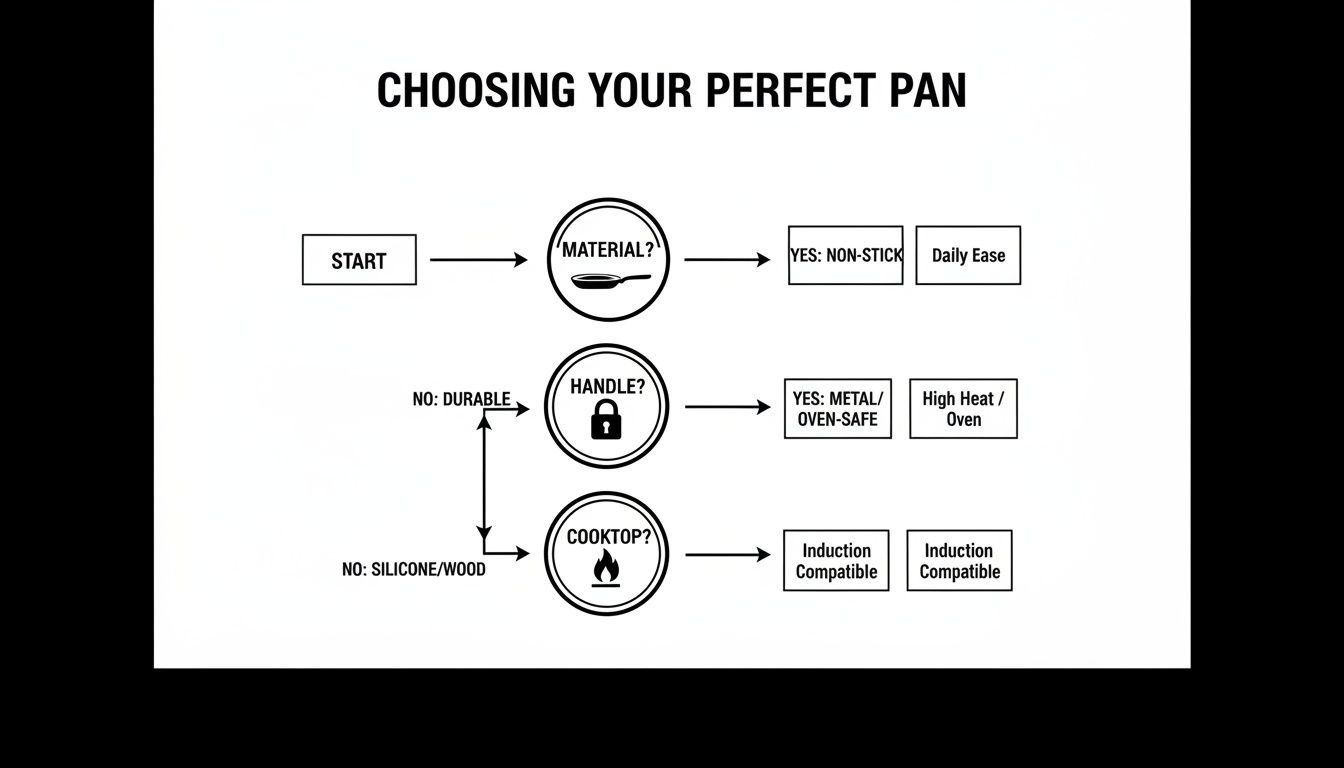
As the chart shows, it really comes down to the material, the security of the handle, and what kind of cooktop you have. By following these straightforward tips for maintenance and storage, your frying pan with a detachable handle will be a tool you can count on for countless delicious meals.
Popular Detachable Handle Pan Models to Consider
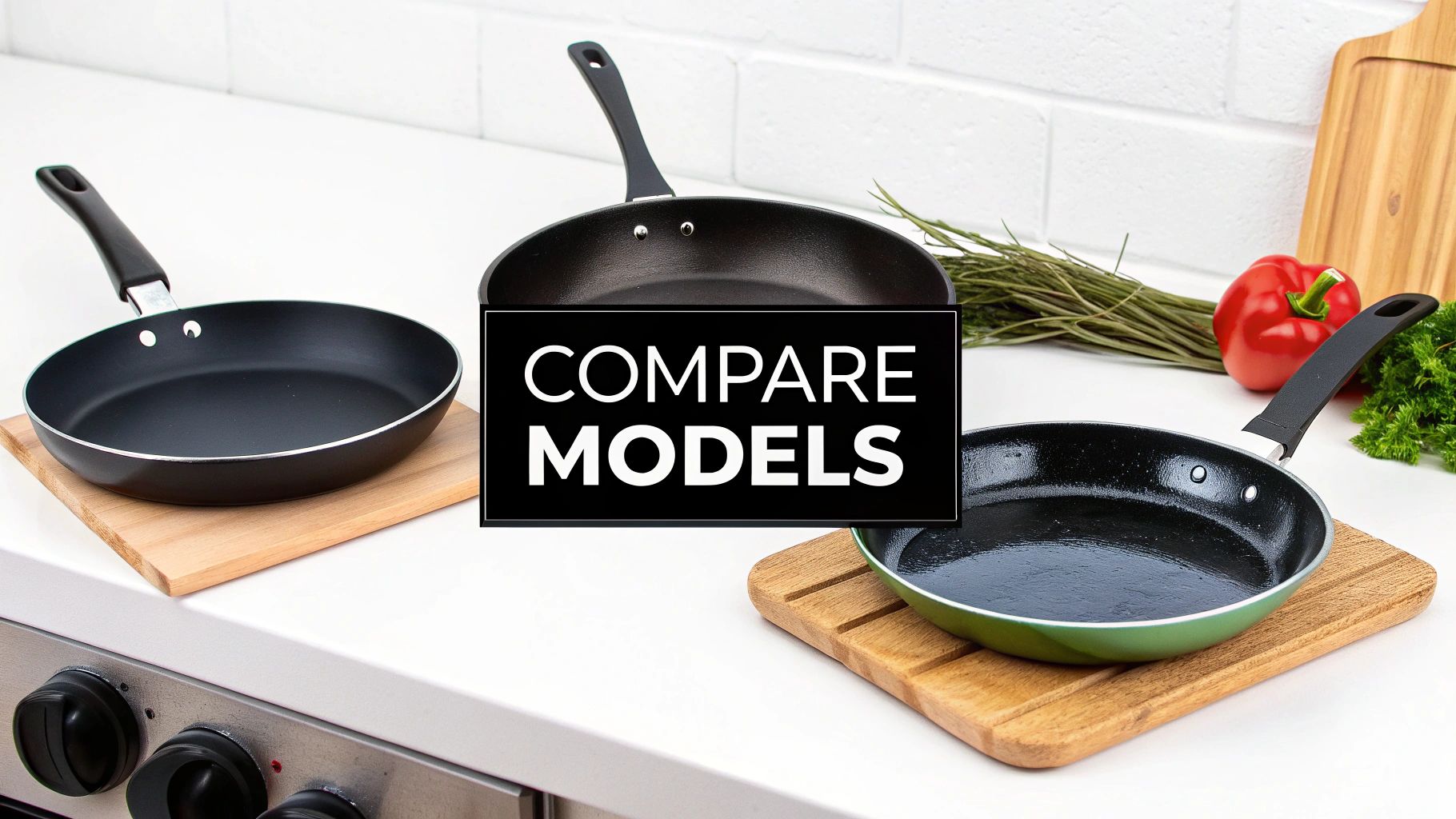
It’s one thing to talk about the theory, but seeing how these pans work in the real world is where it all clicks. Let’s take a look at a few popular models you'll find here in Australia to see how different brands are approaching the design.
This isn't just a "best of" list. Instead, we'll explore the variety out there, from big household names to some interesting newcomers. We'll look at what makes each one tick—their materials, handle designs, and who they’re really built for—so you can see how specific features suit different cooking styles.
For the Everyday Home Chef
You’ll find that many of the big names in cookware offer detachable handle sets designed for pure convenience. These are often non-stick aluminium pans that are nice and light, heat up in a flash, and are perfect for getting weeknight dinners on the table quickly. Their handle mechanisms are usually built for simple, one-handed use.
- Ideal User: Perfect for anyone who just wants a no-fuss pan for daily tasks like frying eggs, flipping pancakes, or sautéing veggies.
- Key Feature: The handles are often universal across a brand's entire range. This means one handle can click onto multiple pots and pans, which is the whole point of saving storage space.
- Material Focus: The main selling point is usually a durable, multi-layered non-stick coating that makes both cooking and washing up a breeze.
This is what makes a frying pan with detachable handle such a clever and accessible upgrade for any kitchen. If you're after that blend of lightweight durability, you might also be interested in our titanium foldable frying pan, which brings similar perks to both your kitchen and your camping kit.
For the Serious Cook and Baker
For those who treat their kitchen like a workshop and demand a bit more from their tools, there are higher-performance models out there. These pans are often built from stainless steel or heavy-gauge aluminium, giving you that brilliant heat distribution and retention you need for a perfect sear.
The handles on these more robust pans feel sturdier, too. They typically feature multi-point locking mechanisms, giving you that extra bit of confidence when you're moving a heavy, sizzling pan from the stovetop straight into a ripping hot oven.
A secure, wobble-free connection is paramount for a high-performance pan. It gives you the confidence to handle dishes like a thick-cut steak or a skillet bake without a second thought.
Here in Australia, manufacturers have definitely noticed this demand. You can see it in models like the DUCK4X4 26cm Fry Pan and the Eurolux Induction Flat Pan 24cm, which often include features like premium glass lids and easy one-hand operation, showing how brands are fine-tuning their gear for Aussie cooks. You can dive deeper into these trends in recent market analysis on frying pan innovations.
Got Questions About Detachable Handle Pans?
Thinking about making the switch to a frying pan with a removable handle? It’s a bit of a shift from what most of us are used to, so it's completely normal to have a few questions buzzing around your head. People often wonder about safety, how the system works, and if it's really worth it.
Let's clear things up and look at some of the most common queries.
Are Detachable Handles Genuinely Safe and Secure?
I get it—this is usually the first question on everyone's mind. The thought of a handle coming loose while you're carrying a sizzling hot pan is enough to make anyone nervous.
The short answer is yes, they are incredibly safe, provided you stick with a quality brand. These aren't just flimsy clips; they're cleverly engineered locking systems. Reputable manufacturers put these handles through some serious stress tests, ensuring they can hold far more weight than you’d ever have in the pan.
The real key to safety is using it correctly. Always listen for that solid, satisfying 'click' when you attach the handle. That sound is your confirmation that everything has locked into place. If you want extra peace of mind, just give it a little wiggle before you lift. When you get that click, you're good to go.
Can I Use One Handle for Multiple Pans?
You bet! This is actually one of the biggest perks of this style of cookware. Brands design their handles to be universal across their entire range of pots and pans. This means you can have a full set of cookware but only need one or two handles to do all the work. It’s this feature that unlocks all that amazing space-saving potential in your cupboards.
Just remember, compatibility is key. A handle from one brand almost certainly won't fit a pan from another, as they all use their own unique locking designs. To make sure you get a secure fit every time, it's best to build your collection from a single brand.
The whole idea is to simplify your kitchen and cut down on clutter, letting one handle serve an entire family of pans.
How Should I Clean and Care for the Handle?
This is a great question, as the handle needs slightly different treatment to the pan itself. The pan body can be scrubbed in the sink or popped in the dishwasher just like any other, but you need to be gentler with the handle.
Think of the handle's locking mechanism as a piece of precision gear. You wouldn't soak a good kitchen knife in water, and the same logic applies here. Water can eventually work its way into the internal parts, which could lead to stiffness or even rust down the track.
To keep it in top condition for years, never put the handle in the dishwasher or leave it soaking. A quick wipe-down with a damp cloth is all it ever needs. Keeping it dry is the secret to a long and happy life.
Are These Pans More Expensive Than Traditional Ones?
At first glance, a single frying pan with a detachable handle might have a slightly higher price tag than a standard pan. But when you look at the bigger picture, they often work out to be a much smarter investment, especially when you buy a set.
Think about it: you aren't paying for a handle on every single pot and pan. Because of this, the total cost of a full set is often on par with—or sometimes even cheaper than—a conventional collection of the same quality.
Add in the bonus versatility, the safety improvements, and the sheer amount of cupboard space you get back, and they quickly prove their worth. For a modern Australian kitchen, it’s a seriously practical and cost-effective choice.
Ready to upgrade your kitchen with tools that are as smart as they are durable? Explore the pure titanium essentials at Everti, designed in Melbourne for a lifetime of clean, efficient cooking.
Discover the difference at https://everti.com.au