

Picture this: you step out onto your balcony to snip a few crisp lettuce leaves for a salad, or maybe you pluck a perfectly ripe, sun-warmed tomato straight from the vine. When you grow vegetables in pots, this isn't a daydream; it's a daily reality. It’s a brilliant way to turn even the tiniest urban space into your own personal market garden.
This approach isn't just for those short on space, either. It’s about taking back control over the quality of your food, from the first seed you plant to the final harvest.
Why Pot-Grown Vegetables Are an Urban Gardener's Dream
For many of us, especially those living in Australia’s bustling cities, the classic backyard garden is a bit of a relic. Container gardening has well and truly stepped up, becoming less of a trend and more of a genuinely practical and rewarding way to live. It opens up the joy of growing your own food to absolutely everyone, no matter how much (or how little) space you have.
This shift really goes hand-in-hand with how our cities are changing. Think about the boom in apartment living and high-density housing in places like Melbourne and Sydney. It’s completely redefined what a "garden" can be. In fact, between 2011 and 2021, the number of Australian households in apartments jumped from 10% to around 13%. As private green space shrinks, container growing gives city dwellers a direct line to horticulture without needing a big patch of dirt. You can actually dig into more of this data on urban agriculture over at the ABARES website.
The Ultimate Control Over Your Harvest
One of the biggest wins with container gardening is the sheer level of control you get. You are the master of your domain, deciding on every single input to make sure your food is as clean and healthy as you want it to be.
- Perfect Soil Every Time: Forget dealing with the rocky, clay-heavy, or nutrient-stripped soil that plagues so many suburban backyards. With pots, you can mix up or buy the perfect potting blend, tailored specifically for what you want to grow.
- Pest Management Made Easy: It is so much easier to spot and deal with pests on a few contained plants than in a sprawling garden bed. If one plant gets a bit sad, you can simply move it away from the others to stop any spread.
- Watering Precision: Your potted plants depend on you for every drop, which means you can give them exactly what they need. This precision helps you sidestep the common over- or under-watering headaches that often happen in traditional gardens.
If you're starting from scratch and want a solid foundation before jumping into pots, this comprehensive beginner's guide to starting a garden is a fantastic place to start.
More Than Just Food
Growing your own food in pots is about so much more than just what ends up on your plate. It's an enriching way of life that brings a little slice of the farm right to your doorstep, making the connection to what you eat immediate and real.
There’s something incredibly satisfying about nurturing a plant from a tiny seed into a thriving, fruit-bearing wonder. It plugs us back into the natural cycles of growth and offers a daily dose of mindfulness in our otherwise hectic urban lives.
The whole process is a chance to slow down and really engage with nature. That simple morning ritual of watering your plants or checking for new growth can become a genuinely peaceful start to the day. It’s also a wonderful opportunity to teach kids where their food really comes from and to build an appreciation for the effort that goes into a single cucumber.
In the end, it just makes your meals better. A simple salad is transformed into a celebration of freshness—a freshness you grew yourself.
Choosing Containers That Help Your Plants Thrive
The pot you choose is so much more than a bucket for dirt; it’s your plant’s entire world. Thinking this through now is one of the most important things you can do to set yourself up for a lush, productive garden. When you grow vegetables in pots, getting this part right from the get-go means a lot less work and a whole lot more reward down the line.
We’re going to get into the nitty-gritty here. The material, size, and drainage of your container all play a massive role, especially under the intense Aussie sun. Let’s break down how to give your plants the best possible home.
This flowchart offers a simple starting point if you're weighing up your options.
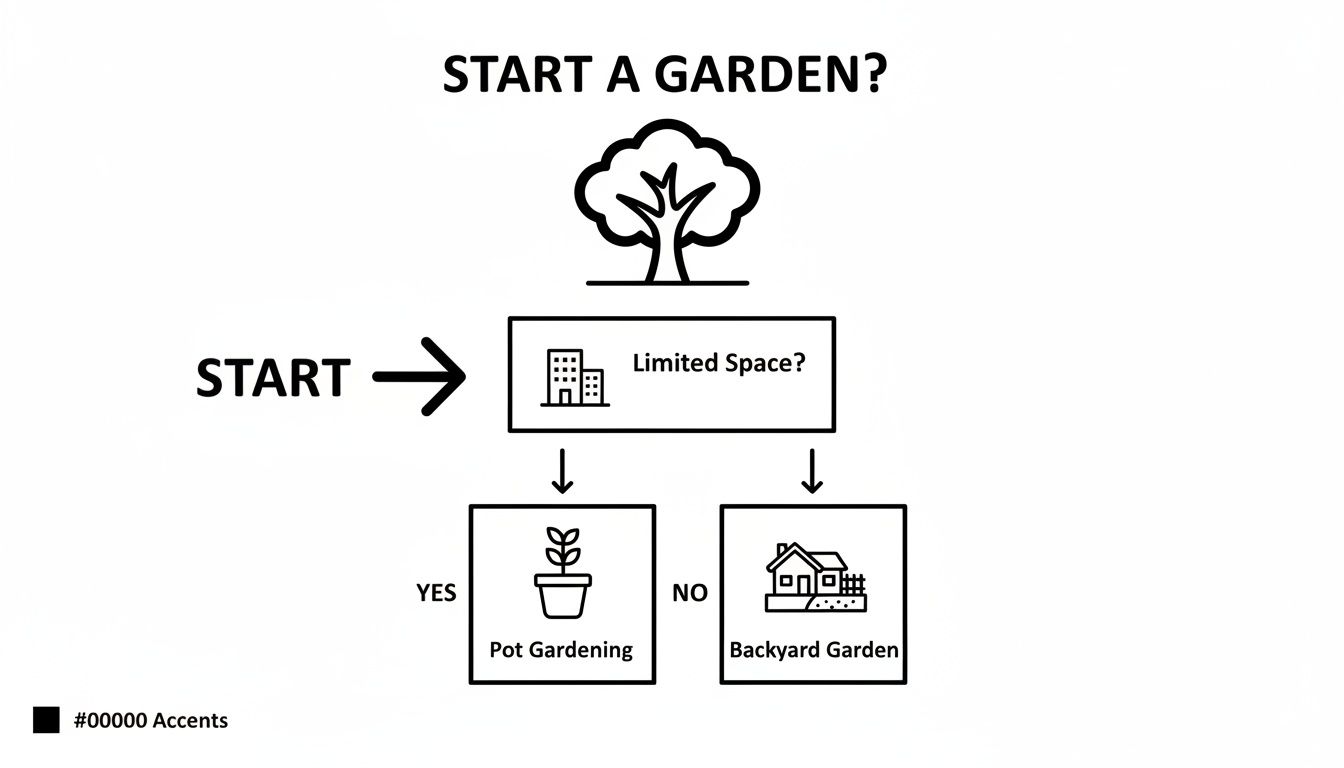
As you can see, for anyone with limited space, like an apartment balcony or a small courtyard, pot gardening is the perfect solution.
Matching Pot Material to Your Climate
Believe it or not, the material of your pot can be your plant's best mate or its worst enemy. Each type handles soil temperature and moisture differently, which are critical factors for success in our varied climate.
Here's a quick look at the most common options to help you decide what will work best in your garden.
Container Material Comparison for Aussie Gardens
| Material | Pros | Cons | Best For |
|---|---|---|---|
| Terracotta | Porous, allows roots to breathe; classic look. | Dries out very quickly in heat and wind. | Herbs, succulents, and gardeners who don't mind daily watering. |
| Plastic | Lightweight, affordable, excellent water retention. | Dark colours can overheat roots in direct sun. | Thirsty plants like lettuce; gardeners on a budget. Stick to light colours. |
| Glazed Ceramic | Retains moisture well; heavy and stable in wind. | Can be expensive; may crack in a sudden frost. | Feature plants on a patio or balcony where aesthetics are a priority. |
| Fabric Grow Bags | Fantastic aeration; promotes healthy, "air-pruned" roots. | Dries out almost as fast as terracotta. | Anyone wanting to maximise root health, especially for tomatoes and root veg. |
At the end of the day, picking the right material is a balance between your local weather, your watering habits, and the needs of the specific veggies you want to grow.
Size Matters More Than You Think
A pot that’s too small is a recipe for a stressed, thirsty, and underfed plant. I’ve seen it happen time and again. You have to think about the mature size of the vegetable you’re planting—that tiny seedling is going to grow, and it needs room for its roots to stretch out.
As a general rule of thumb, it's hard to go wrong with containers that are at least 30 cm wide and 30 cm deep. This volume gives you a good buffer for moisture and nutrients, meaning you aren't a slave to the watering can.
Here’s a practical guide for some popular veggies:
- Small Pots (5-10 litres): Great for herbs like basil, parsley, and mint. They're also perfect for quick crops like radishes and spring onions.
- Medium Pots (20-30 litres): This is the sweet spot for bush beans, leafy greens like lettuce and spinach, and some of the smaller pepper varieties.
- Large Pots (40+ litres): These are non-negotiable for "heavy feeders" like tomatoes, cucumbers, capsicums, and eggplants. These plants have massive root systems and an equally huge appetite for water and nutrients. Trying to grow a full-sized tomato in a small pot will only end in frustration.
The Unbreakable Rule of Drainage
If a pot doesn’t have drainage holes, it’s not a pot—it’s a bucket. It's that simple. Without a way for excess water to escape, the soil becomes a soggy, airless bog, and the roots will quickly start to rot. This is one of the fastest ways to kill a perfectly good plant.
Always, always check for drainage holes before you buy a container. If you’ve fallen in love with a decorative pot that doesn’t have any, you’ve got two options:
- Drill your own holes. This is easy enough with plastic or wooden containers. For ceramic, you’ll need a special masonry drill bit to avoid cracking it.
- Use it as a cachepot. This is my preferred method. Just pop a smaller, functional pot (with drainage holes!) inside the decorative one. When you water, take the inner pot out, let it drain completely, and then put it back.
Proper drainage isn’t just a suggestion; it’s essential for ensuring your plant's roots can breathe and access the water they need without drowning.
The Secret Ingredient Is Your Potting Mix
Here’s a hard truth many new gardeners learn the tough way: you can’t just scoop soil from your garden bed, pop it in a pot, and expect a bumper crop. It’s a common mistake, but garden soil is far too dense for containers. It compacts with every watering, squeezing out precious air and often bringing unwanted pests and diseases along for the ride.
To successfully grow vegetables in pots, you need a specialised growing medium designed specifically for the unique environment of a container.
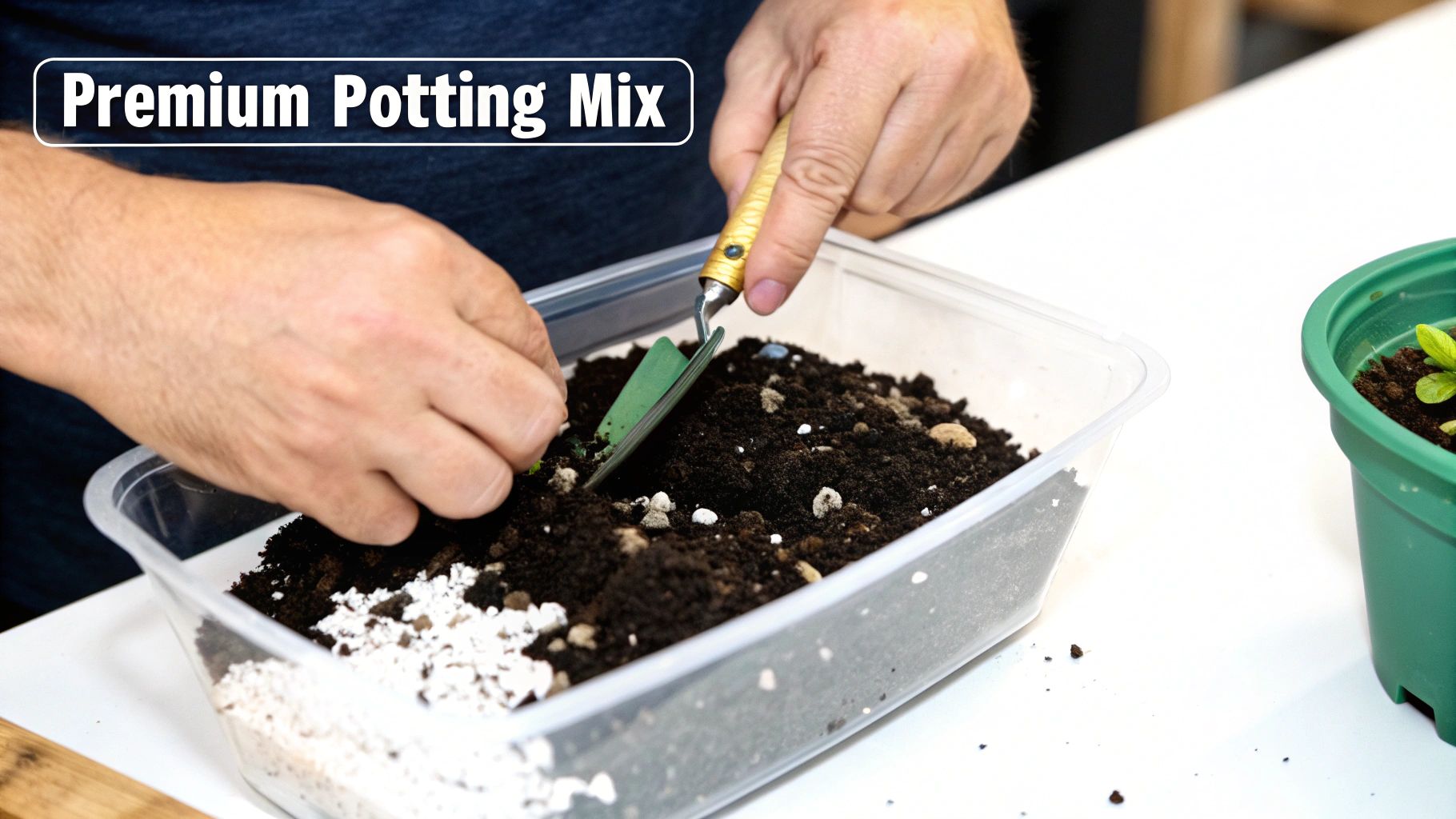
Think of your potting mix as the entire world for your plant's roots. In a pot, this mix is solely responsible for providing structural support, air, water, and every last bit of nutrition. Get this foundation right, and you're well on your way to a thriving container garden.
The Three Pillars of a Perfect Mix
A high-quality potting mix is a clever balancing act between three critical functions. Understanding these will help you either blend your own or choose the best bag at the nursery.
- Aeration: Plant roots need oxygen to breathe, just like we do. A good mix contains ingredients like perlite or coarse sand that create tiny air pockets, preventing the soil from becoming a waterlogged brick. This is absolutely vital for healthy root development.
- Moisture Retention: While aeration is key, the mix also needs to hold onto enough water to keep your plants happy between waterings. Ingredients like coco coir or peat moss act like tiny sponges, soaking up moisture and releasing it slowly as the plant needs it.
- Nutrition: Your veggies are hungry! A brilliant mix includes nutrient-rich components like compost or worm castings to provide a slow, steady supply of food. This is what fuels all that leafy growth and delicious produce.
Getting this balance right is what separates a lush, productive veggie patch from a few struggling plants. It's the difference between a plant that merely survives and one that truly flourishes.
The DIY Approach: A Simple Recipe for Success
Making your own potting mix is surprisingly easy, often cheaper in the long run, and gives you complete control over what goes in. You can guarantee your veggies get a clean, nutrient-rich start.
Here is a simple, battle-tested recipe that works wonderfully for most vegetables:
- 1 part Coco Coir or Peat Moss: This forms the base, providing fantastic moisture retention. Coco coir is a sustainable byproduct of the coconut industry and is my personal preference.
- 1 part Perlite or Coarse Sand: This is all about aeration. Perlite is that lightweight, white volcanic glass that looks like tiny foam balls, and it's perfect for keeping the mix light and airy.
- 1 part High-Quality Compost or Worm Castings: This is the nutrition powerhouse. It provides essential organic matter and a rich diversity of microbes that support healthy plant growth.
Just mix these three components together in equal parts in a large tub or on a tarp. It helps to moisten the mix slightly as you go until it holds together when squeezed but isn't dripping wet.
Buying Bagged Potting Mix
If you'd rather grab a pre-made mix for convenience, that’s perfectly fine! Just be aware that not all bags are created equal. The quality of the soil is paramount, and you can always delve deeper into selecting the right medium with the ultimate guide to indoor potting mix.
When you're at the garden centre, look for bags labelled "Premium Potting Mix" or "Vegetable & Herb Mix." These are specifically formulated with the right balance of ingredients for hungry plants.
Here's a pro tip from my years of gardening: feel the weight of the bag. A good quality mix should feel relatively light for its size, which tells you it has plenty of aeration materials like perlite. Heavy, dense bags often contain too much sand or poorly composted bark, which can suffocate roots over time.
Picking the Perfect Vegetables for Your Pots
Not all vegetables are created equal, especially when their entire world is a container. The real secret to a bountiful harvest when you grow vegetables in pots is choosing plants that are naturally suited to that environment. You can save yourself a lot of frustration by starting with proven winners for Aussie container gardens.
Rather than just a generic list, it helps to think about plants in groups based on their needs and how tricky they are to grow. This way, you can pick varieties that are a perfect match for your space, sunlight, and gardening confidence. From sun-loving tomatoes to surprisingly easy radishes, here’s a guide to choosing veggies that will genuinely thrive.
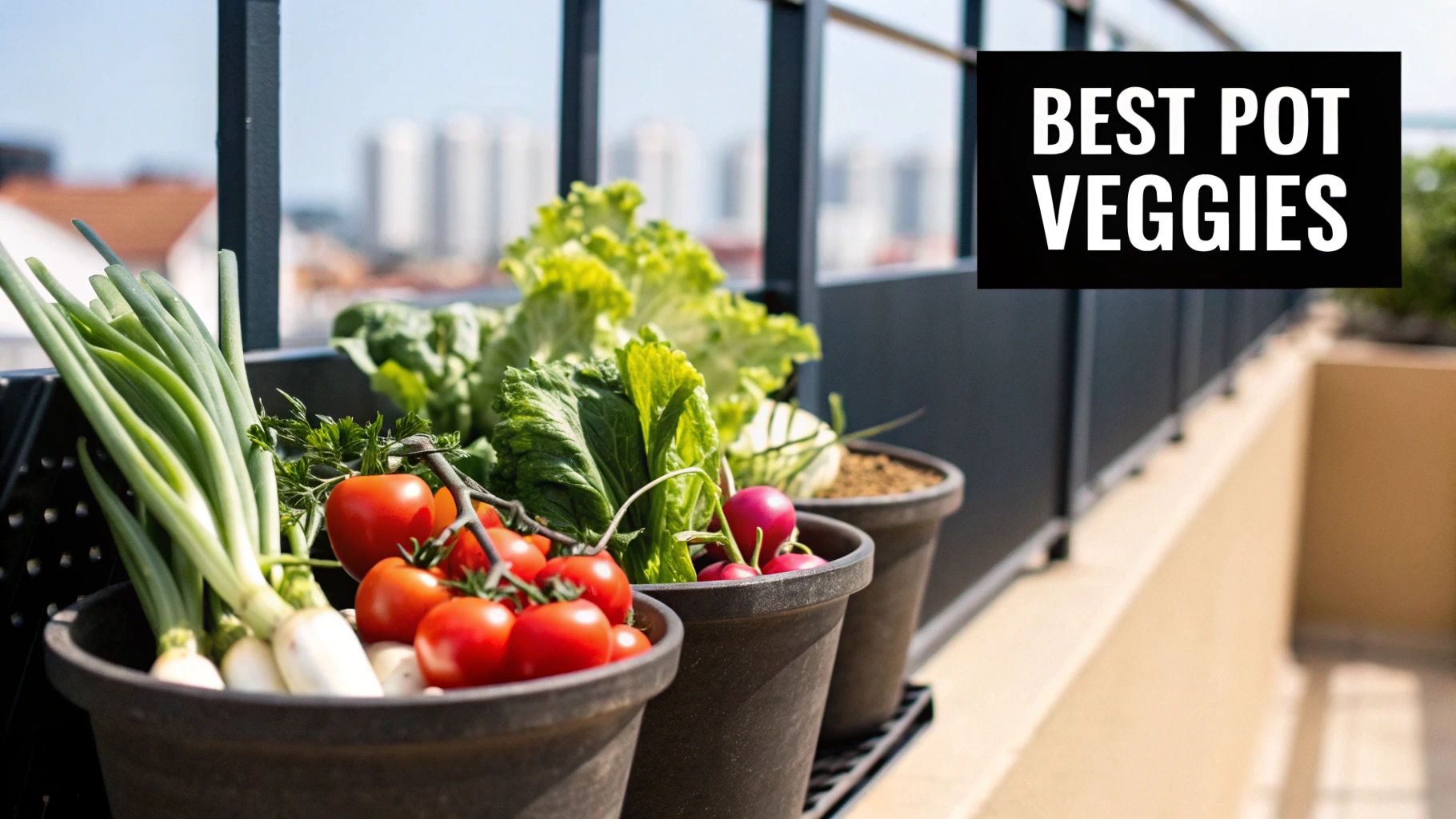
Sun Lovers Perfect for Pots
Most fruiting vegetables need a solid six to eight hours of direct sun every day to give you a decent harvest. If you’ve got a sunny balcony or courtyard, these plants will thank you for it with plenty of produce.
Cherry Tomatoes (Determinate Varieties)
When it comes to pots, compact or "determinate" tomato varieties are your absolute best friends. Unlike their sprawling cousins, they grow to a manageable size, give you all their fruit in a fairly concentrated period, and don’t need a complicated staking system. Keep an eye out for varieties like 'Tiny Tim' or 'Patio Delight'.
A single, healthy cherry tomato plant in a big enough pot can produce hundreds of fruits over its season. The key is consistent watering and a pot that’s at least 40-50 litres. This gives the vigorous root system enough room and holds enough moisture to stop it from drying out on a hot day.
Capsicums and Chillies
These are just brilliant container plants. They stay relatively compact, absolutely love the heat, and their colourful fruits look fantastic on a patio. A 25-30 litre pot is usually plenty for one healthy plant. A great little trick is to pinch off the very first flowers that appear—this encourages the plant to put its energy into becoming bushier, which means more fruit later on.
Shade Tolerant Champions
Don’t have a full day of sun? Don't stress. Plenty of delicious vegetables are perfectly happy with just three to five hours of direct sun, or even bright, indirect light for the rest of the day. For these leafy greens, morning sun followed by afternoon shade is the ideal setup.
Loose-Leaf Lettuce
Forget trying to grow dense iceberg heads in a pot. "Cut-and-come-again" lettuces like 'Oakleaf' or 'Lollo Rosso' are what you want. You can simply harvest the outer leaves as you need them, and the plant will keep producing new ones from the centre for weeks. A long, trough-style planter or a round pot about 30cm wide is perfect for them.
Spinach and Silverbeet
Just like lettuce, these are incredibly productive in containers. They really appreciate some protection from the harsh afternoon sun, which can cause them to 'bolt' (go to flower prematurely). Make sure to harvest leaves regularly from the outside in, as this encourages a continuous supply of new growth from the plant's crown.
Fast and Forgiving Veggies for Beginners
If you’re just starting out, you want some quick wins to build your confidence. These vegetables are low-fuss, grow rapidly, and are incredibly satisfying to harvest.
- Radishes: The ultimate instant gratification vegetable. Many varieties are ready to pull in just four weeks from sowing the seed. Plant them in a pot at least 15-20cm deep to give their roots enough space to swell.
- Spring Onions: So easy to grow and fantastically versatile in the kitchen. You can harvest them by snipping the green tops (leaving the bulb to regrow) or by pulling the whole plant. They don’t need much space and can even be tucked into pots with other plants.
- Bush Beans: Unlike climbing beans that need a trellis, bush varieties are compact and self-supporting. They are also super productive. A 25-litre pot can comfortably hold two or three plants, giving you a surprisingly generous harvest.
Top 10 Vegetables for Pot Cultivation in Australia
To make things even easier, here's a quick-reference table of some of the best vegetables to grow in containers around Australia. It covers the essentials so you can plan your potted patch with confidence.
| Vegetable | Minimum Pot Size (Litres) | Sunlight Needs | Harvest Time |
|---|---|---|---|
| Cherry Tomatoes | 40-50 | 6-8+ hours of direct sun | 50-70 days |
| Capsicum/Chilli | 25-30 | 6-8+ hours of direct sun | 60-90 days |
| Loose-Leaf Lettuce | 10-15 | 3-5 hours of sun (prefers morning sun) | 30-45 days |
| Spinach/Silverbeet | 15-20 | 3-5 hours of sun (prefers morning sun) | 40-60 days |
| Radishes | 5-10 | 4-6 hours of sun | 25-35 days |
| Spring Onions | 5 | 4-6 hours of sun | 20-30 days |
| Bush Beans | 20-25 | 6+ hours of direct sun | 50-65 days |
| Carrots (Dwarf) | 15-20 | 6+ hours of direct sun | 60-80 days |
| Basil | 10 | 6+ hours of direct sun | 30-40 days (leaves) |
| Zucchini (Compact) | 40-50 | 6-8+ hours of direct sun | 45-60 days |
This table is a great starting point, but always check the specific variety on the seed packet or plant tag, as some can be larger or smaller than their relatives. Happy planting!
The good news is that many high-value crops—like tomatoes, beans, and salad greens—are among the easiest to grow successfully in pots. Tomatoes alone accounted for approximately 436,907 tonnes of production in Australia worth $645.1 million in 2021–22, while beans surged 64% in value that same year. You can explore more data on Australian horticulture production to see just how popular these crops are.
Harvesting Secrets for Continuous Yield
Harvesting isn't just the final step; it's a crucial part of keeping your plants healthy and productive. Using the right technique actually signals to the plant that it should keep producing more leaves, fruit, or flowers.
For leafy greens like lettuce, spinach, and silverbeet, always pick the older, outer leaves first. This simple act allows the younger central leaves to keep maturing, which can extend your harvest season by weeks. With herbs like basil and parsley, regular trimming is key to encouraging a bushy plant rather than a tall, leggy one. Just snip the stems right above a set of leaves to promote new side shoots. This can easily double or triple your yield over the season.
Getting the Watering and Feeding Right
This is where the real daily rhythm of gardening kicks in. If there’s one thing that trips up new container gardeners more than anything else, it’s watering. Honestly, get this right, and you've already won half the battle to grow vegetables in pots.
Potted plants are completely at your mercy—they rely on you for every single drop. But because there's not much soil, they can go from perfectly happy to desperately thirsty in just a few hours on a hot day. Mastering the art of watering isn't just a tip; it's an essential skill for getting a good harvest.
The Foolproof Finger Test
Forget those fancy moisture meters or trying to stick to a rigid watering schedule. The best tool you have for checking if your plants need a drink is your own finger. It’s a simple, reliable method that tells you exactly what’s happening beneath the surface.
Here's all you need to do:
- Push your index finger into the potting mix, right up to the second knuckle.
- If the soil feels damp, your plant is fine. You can walk away.
- If it feels dry at that depth, it’s definitely time for a drink.
Using this technique is the best way to avoid the number one mistake: overwatering. Drowning your plants leads to root rot, and this simple check ensures you’re giving them what they actually need, right when they need it.
Water Deeply, Not Daily
It's so tempting to give your pots a little splash every day, but this can do more harm than good. A light sprinkle only moistens the top few centimetres of soil, which encourages a shallow, weak root system that just can't handle any stress.
Instead, your mantra should be deep, less frequent watering. When it is time to water, do it properly. Pour water slowly and evenly across the entire soil surface until you see it running freely from the drainage holes. This guarantees the whole root ball gets a good soak and encourages roots to grow deep into the pot, making for a much stronger, more resilient plant.
A deep soak every two or three days is far more effective than a light sprinkle every day. This approach builds drought resistance and strengthens the plant's foundation, especially when the weather heats up.
On scorching hot or windy days, your pots will dry out much faster. This is especially true for fabric grow bags and terracotta pots. You might need to check them in the morning and again in the afternoon. A deep soak first thing in the morning is the best defence against a blistering Aussie arvo.
Knowing When to Feed Your Veggies
The nutrients in your potting mix won't last forever. Fruiting veggies like tomatoes, capsicums, and cucumbers are particularly "heavy feeders" and will burn through the available food supply pretty quickly. Think of fertiliser as the fuel they need to keep producing a delicious harvest.
After about four to six weeks, your plants will have used up most of the goodies from the compost in the mix. This is your cue to start a regular feeding routine. Yellowing leaves, especially the older ones down the bottom, are often the first sign your plant is getting hungry.
There are a couple of types of fertilisers that work brilliantly for pots.
Slow-Release Fertilisers
These are granular products you just sprinkle on the soil surface or mix in when you first plant. They break down gradually over several weeks or even months, providing a steady, gentle supply of nutrition. They’re a fantastic "set and forget" option to make sure your plants always have a baseline of food to draw on.
Liquid Fertilisers
Liquid feeds, like a good seaweed solution or fish emulsion, are the fast food of the plant world. You mix them with water and apply them when you water. This gives your plants an instant, easily absorbed boost of energy, which is perfect for encouraging more flowers and fruit. A fortnightly liquid feed during the peak growing season works wonders. For even healthier roots that can better absorb these nutrients, some gardeners explore using diluted food-grade hydrogen peroxide solutions to boost soil oxygen levels.
By combining a slow-release fertiliser at planting with regular liquid feeds, you create a complete nutritional program that will keep your potted veggies thriving and productive all season long.
Your Potted Vegetable Questions Answered
As you start your container gardening journey, you're bound to have questions pop up along with your seedlings. That’s a good thing! It’s all part of the learning curve. To give you a hand, I’ve pulled together some of the most common queries I hear from new gardeners and answered them with practical, no-fuss advice.
Think of this as your go-to cheat sheet. It’s here to help you solve common problems, understand the 'why' behind the 'how', and build your confidence as you grow vegetables in pots.
How Often Should I Repot My Vegetables?
This is a great question, and the answer really boils down to what you’re growing. Most of the annual vegetables we love—think tomatoes, lettuce, and beans—live their entire life in a single season. This means they’ll never need repotting. You just start with fresh potting mix for new plants next year. Simple as that.
Perennial herbs, on the other hand, are a different story. Plants like rosemary or thyme stick around for several years and will probably need a new home every one to two years. You'll know it's time when they become ‘root-bound’. This is when the roots have completely filled the pot, and you’ll notice water seems to rush straight through without really soaking in. Early spring is the perfect time to move them into a slightly larger pot with fresh mix.
Repotting isn't just about giving a plant more space; it's a chance to refresh its soil and provide new nutrients, setting it up for another year of healthy growth.
Can I Reuse My Potting Mix Next Season?
It's so tempting to just reuse last year’s potting mix, I get it. But honestly, it’s usually not the best idea. Over a growing season, your hungry plants will have sucked up most of the nutrients, and the mix itself starts to break down, becoming compacted and losing its airy structure.
Even more importantly, old soil can harbour diseases or pest eggs, just waiting to wreak havoc on your brand-new seedlings.
If you absolutely must reuse it to cut down on waste, you’ll need to bring it back to life. A good method is to:
- Sift through it and remove all the old roots and plant bits.
- Mix it with at least 50% fresh, high-quality potting mix to restore its texture.
- Supercharge it by adding a generous amount of fresh compost and a balanced, slow-release fertiliser.
This can give old mix a second chance, but for the healthiest plants, starting fresh is always the safest bet.
What Are the Easiest Vegetables for a Complete Beginner?
Choosing the right plants from the get-go can make all the difference. It gives you those rewarding early wins that really build your gardening mojo. For your first go, I'd stick with varieties that are fast, forgiving, and give you plenty back for your effort.
My top recommendations for beginners are:
- Loose-leaf Lettuce and Spinach: These are fantastic "cut-and-come-again" plants. You can harvest the outer leaves as you need them, and the plant just keeps producing from the centre for weeks.
- Radishes: The ultimate for instant gratification! They’re often ready to pull in about a month from sowing.
- Bush Beans: These are wonderfully productive and don’t need the complicated trellises that climbing varieties do.
- Herbs: You just can't go wrong with mint, parsley, or basil. They’re tough, easy to care for, and so useful in the kitchen.
Just as some plants are perfect for pots, others thrive when started from smaller pieces. For instance, if you're interested in other types of gardening, you might find our guide on growing roses from cuttings useful.
My Balcony Is Really Windy, What Should I Do?
Ah, the wind. It's a huge challenge for container gardeners. It doesn't just dry out the soil and leaves at lightning speed; it can physically damage or even knock your plants right over.
To tackle a windy spot, your first line of defence is weight. Choose heavier pots made from terracotta or glazed ceramic. They’re far less likely to tip over than lightweight plastic ones.
Another trick is to group your pots together. This creates a more stable, sheltered little microclimate. For very exposed balconies, a simple windbreak made from bamboo screening or even some hessian fabric can work wonders. Finally, lean towards tougher, sturdier plants like kale or rosemary that can handle a bit of a battering, and just be extra vigilant with your watering.
After a successful harvest, prepare your delicious, home-grown vegetables on a surface that’s as clean and pure as your produce. The Everti Titanium Cutting Board is naturally antibacterial, non-toxic, and built to last a lifetime, ensuring every meal starts with the perfect foundation. Explore the full collection at https://everti.com.au.