

Tackling rust on tiles usually comes down to a simple, targeted approach. For lighter marks, a DIY paste of lemon juice and borax often does the trick. But for those more stubborn stains, you might need to bring in a specialised commercial cleaner. The real secret is matching your method to your tile type and how bad the stain actually is.
Getting to the Root of Rust on Your Tiles
Before you start scrubbing, it helps to play detective for a moment. Figuring out why those annoying orange stains have appeared is the key to both cleaning them effectively and stopping them from coming back.
Most of the time, the culprit is pretty straightforward: direct contact with metal, especially in a damp area.
We’ve all seen it happen. That can of shaving cream you left on the shower ledge now has a perfect orange ring underneath it. Or maybe the metal legs of your patio furniture have bled rust onto the veranda tiles after a week of rain. Even something as small as a lost hairpin can leave a surprisingly stubborn mark in the bathroom.
But sometimes, the source of the rust isn't something you can see on the surface. The problem can be a bit sneakier, originating from your home’s plumbing or even the water itself.
The Hidden Causes of Rust Stains
It might surprise you to learn that in many parts of Australia, the tap water is naturally high in iron. As this water sits on your tiles and evaporates, it can leave behind iron oxide deposits—in other words, rust. This is a common issue in toilet bowls, around taps that have a slow drip, and on shower floors that never quite dry out.
Another hidden source can be lurking right under your feet. Metal fixings like steel screws or the rebar in a concrete slab can start to corrode if moisture gets through. If you have cracked grout or unsealed tiles, water can seep in, causing these hidden metal parts to rust. That rust then has nowhere to go but up, eventually showing up on your tile surface.
Key Takeaway: How porous your tiles are makes a massive difference. Unglazed materials like terracotta or natural stone are like sponges; they’ll soak that rust stain right up, making it a real challenge to get out. On the other hand, glazed ceramic and porcelain have a protective surface, meaning the rust is usually just sitting on top and is much easier to clean off.
Choosing the Right Approach for Your Rust Stain
Let's be clear: not all rust stains are the same, and your battle plan shouldn't be either. The right approach really comes down to three things: how long the stain has been sitting there, what kind of tile you're dealing with, and what you’re comfortable using. A light orange ring left by a shaving cream can in the shower is a world away from a deep, angry-looking stain on your outdoor pavers that's been there for years.
For those fresh, surface-level marks on tough tiles like ceramic or porcelain, I always recommend starting with a simple DIY solution. These methods are cheap, cheerful, and often use ingredients you already have kicking around the kitchen. Perfect for a quick fix.
But what if the stain is old, dark, or has seeped into a porous tile like terracotta or natural stone? That’s when it’s time to call in the big guns and grab a specialised commercial rust remover. These products are purpose-built with powerful ingredients to dissolve the stubborn iron oxide that a bit of lemon juice just won't touch.
Matching the Method to the Mess
Think of it like first aid for your floors. A small, recent stain from a dripping tap is an ideal candidate for a gentle, homemade paste. On the other hand, that sprawling rust patch on the patio from the old metal table and chairs? That needs a much more robust, purpose-built cleaner to get the job done without hours of back-breaking scrubbing.
Figuring out why you have rust in the first place is half the battle. This can help you pick the right tool for the job.
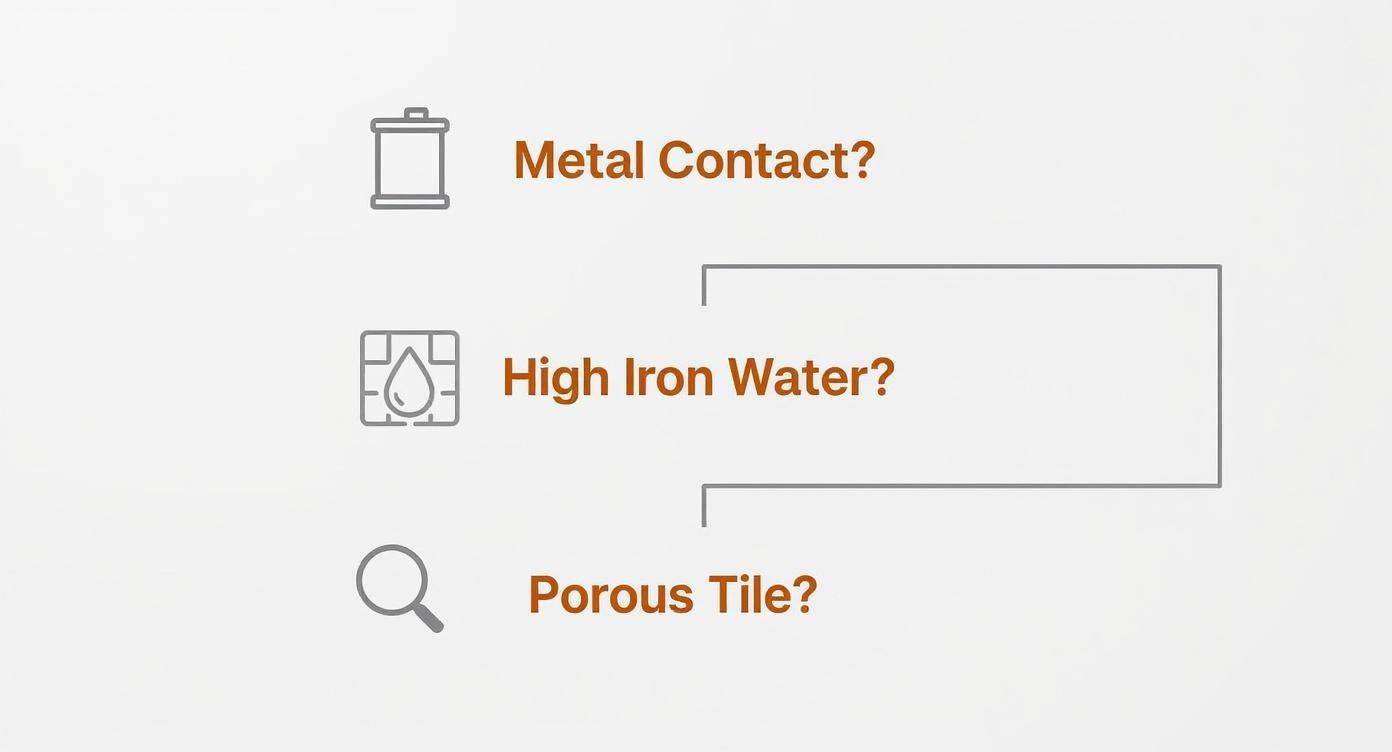
As you can see, understanding the source—whether it's direct metal contact, high iron content in your water, or the porosity of the tile itself—is crucial for choosing an effective cleaning method.
Expert Insight: If you take away one thing, it's this: the severity of the stain and the type of tile are your two most critical considerations. A cleaner that works miracles on glazed porcelain could permanently damage unsealed slate. Always, always match your approach to the specific situation.
DIY vs Commercial Rust Removers: A Quick Guide
To help you decide whether to reach for the lemon juice or head to the hardware store, here's a quick comparison to guide your choice.
| Method | Best For | Pros | Cons |
|---|---|---|---|
| DIY Solutions | Light, recent stains on non-porous tiles like ceramic and porcelain. | Inexpensive, readily available ingredients, non-toxic options. | May require multiple applications and elbow grease. Not for deep rust. |
| Commercial Cleaners | Old, deep, or large rust stains on a variety of tile types (check label). | Highly effective, fast-acting, formulated for specific tasks. | Can be more expensive, may contain harsh chemicals, requires PPE. |
Ultimately, both have their place. A homemade paste is great for a small, fresh spill, but for anything more serious, a commercial product will save you time and frustration.
While we're focused on tiles here, it’s sometimes helpful to understand the principles behind rust removal in general. You can explore a wider array of general rust removal techniques to broaden your knowledge.
Effective DIY Methods for Lighter Stains
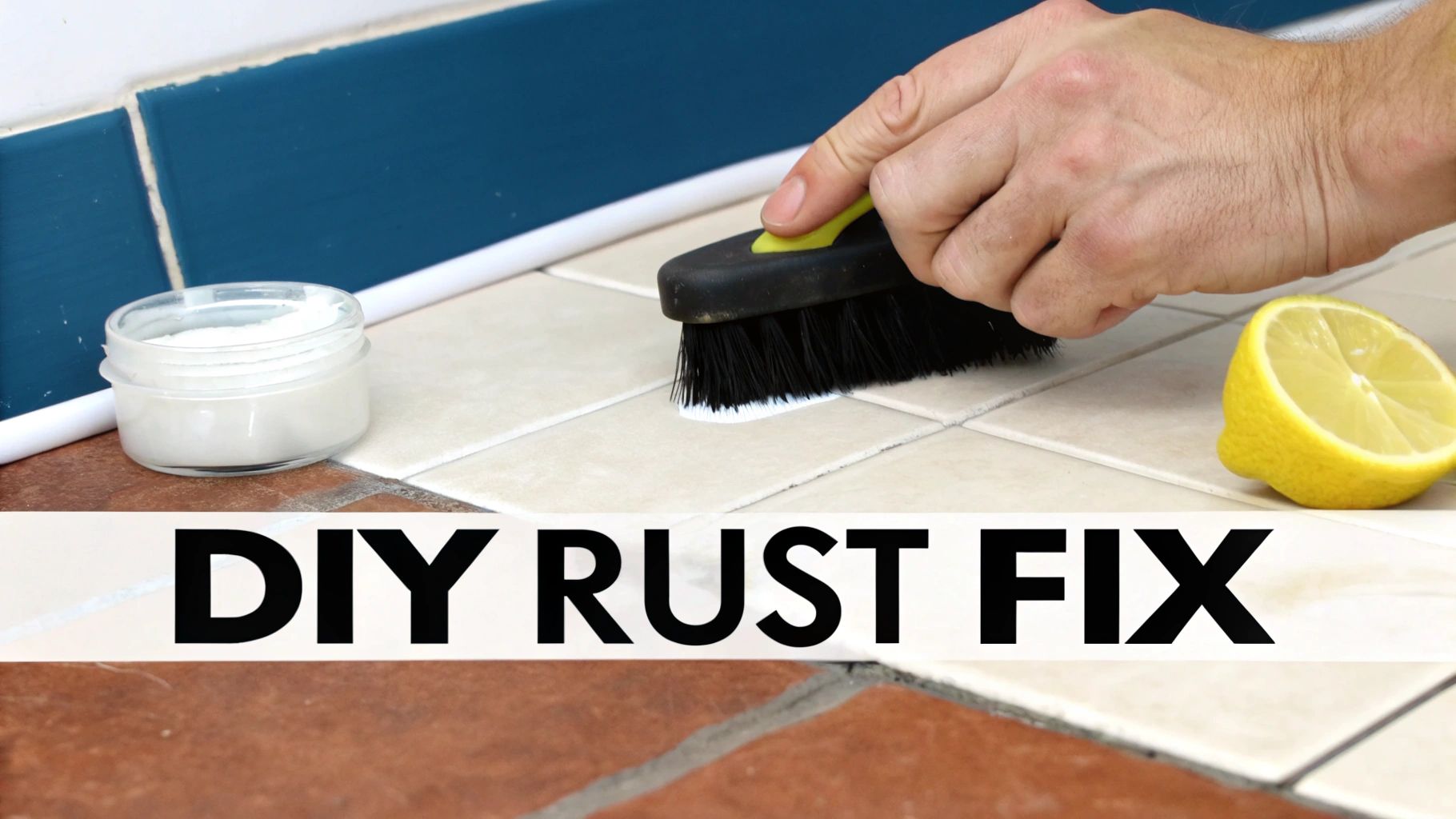
When you spot a fresh, light orange stain on your tiles, don’t immediately reach for the harsh chemical cleaners. More often than not, the solution is already hiding in your pantry. This is especially true for non-porous surfaces like glazed ceramic or porcelain.
A simple, homemade paste can work wonders on these lighter marks. It's the perfect first line of defence before you even think about using more aggressive products.
Creating and Using a Borax and Lemon Paste
The classic combination of borax and lemon juice is surprisingly powerful. Here in Australia, it’s a go-to trick for many homeowners. The mild acid in the lemon juice gets to work dissolving the rust (iron oxide), while the borax acts as a gentle abrasive to lift the stain away.
A popular approach involves creating a 50:50 mixture of borax and lemon juice. This simple paste is easy to whip up and apply directly to the tiles, showcasing a clear preference for readily available household solutions.
Making the paste is straightforward:
- Mix it up: In a small bowl, combine equal parts borax and fresh lemon juice.
- Get the right texture: Stir until you have a thick paste, almost like toothpaste. If it’s too runny, add a bit more borax. Too dry? A splash more juice will do the trick.
- Apply generously: Use a cloth or your fingers to spread the paste over the rust stain, making sure it’s completely covered.
Now for the easy part: patience. Let the paste sit and work its magic for at least 15-20 minutes. If you're dealing with a slightly tougher mark, you can leave it on for up to an hour. Just make sure the paste stays damp.
Pro Tip: Whatever you do, avoid steel wool or other harsh scourers. They will absolutely scratch your tiles and can even shed tiny metal fragments that will just create new rust stains down the track.
Once the paste has had time to work, it’s time for a gentle scrub. An old toothbrush or a non-scratch sponge is perfect for this. Use small, circular motions to lift the stain without damaging the tile’s glaze. It's the same principle of careful surface treatment you'd use when looking after the best ceramic cookware in Australia.
To finish, rinse the area well with clean water and dry it off with a soft cloth. The light rust stain should be gone, or at the very least, much less noticeable.
Sometimes, no matter how much elbow grease you put into a DIY paste, a stubborn orange shadow just won't budge. This is where you call in the big guns. Commercial rust removers are specifically engineered to break down the tough iron oxide in old, set-in stains that common household ingredients just can't touch.
Not all cleaners are built the same, though. When you're dealing with tiles, particularly on a shower wall, a gel-based formula is your best friend. Sprays are fine, but they tend to run, giving them precious little time to work on the stain. A thick gel, on the other hand, clings right where you put it, allowing the active ingredients to get to work dissolving the rust.
Selecting the Right Product
The real power behind most effective tile rust removers is acid. Phosphoric acid is a fantastic ingredient to look for—it’s a chemical powerhouse that dissolves rust efficiently but is generally safe for most common tile materials like ceramic and porcelain.
For those of us in Australia, a specialised product like Action Gel is a brilliant choice. It’s a phosphoric acid-based gel that’s thick enough to stick to vertical walls just as well as it does to floors. You can find more details on its unique formula directly from the manufacturer’s product details. It also pays to browse different specialty cleaning supplies to see what other professional-grade options are out there for tackling tough stains.
Safety First: Don't forget, you're working with a powerful acid-based cleaner. Proper personal protective equipment is non-negotiable. Always pull on a pair of protective gloves, wear safety glasses, and get some fresh air circulating by opening a window or flipping on an exhaust fan. The fumes can be quite potent.
Application for Maximum Effect
First things first, make sure the tile is clean and completely dry. Any lingering dirt or soap scum will act as a barrier, preventing the cleaner from getting direct contact with the rust.
Now, apply the gel liberally right on top of the rust stain. I find an old toothbrush is perfect for this next part—use it to gently work the gel into the stain. Pay close attention to the grout lines, as their porous nature means rust can sink in quite deep.
Let the product do its thing. Check the manufacturer’s instructions, but you’ll typically leave it on for about 5 to 15 minutes. You should actually be able to see the rust start to break down and dissolve. If you're dealing with a really ancient stain, don't be surprised if it needs a second go.
Once the time is up, give the area one last gentle scrub before rinsing it thoroughly with clean water. This final rinse is absolutely crucial; it neutralises the acid and washes away any leftover residue. It’s a completely different method compared to other cleaners. For example, the safety precautions and steps for using food grade hydrogen peroxide are worlds apart.
Safely Removing Rust From Natural Stone Tiles
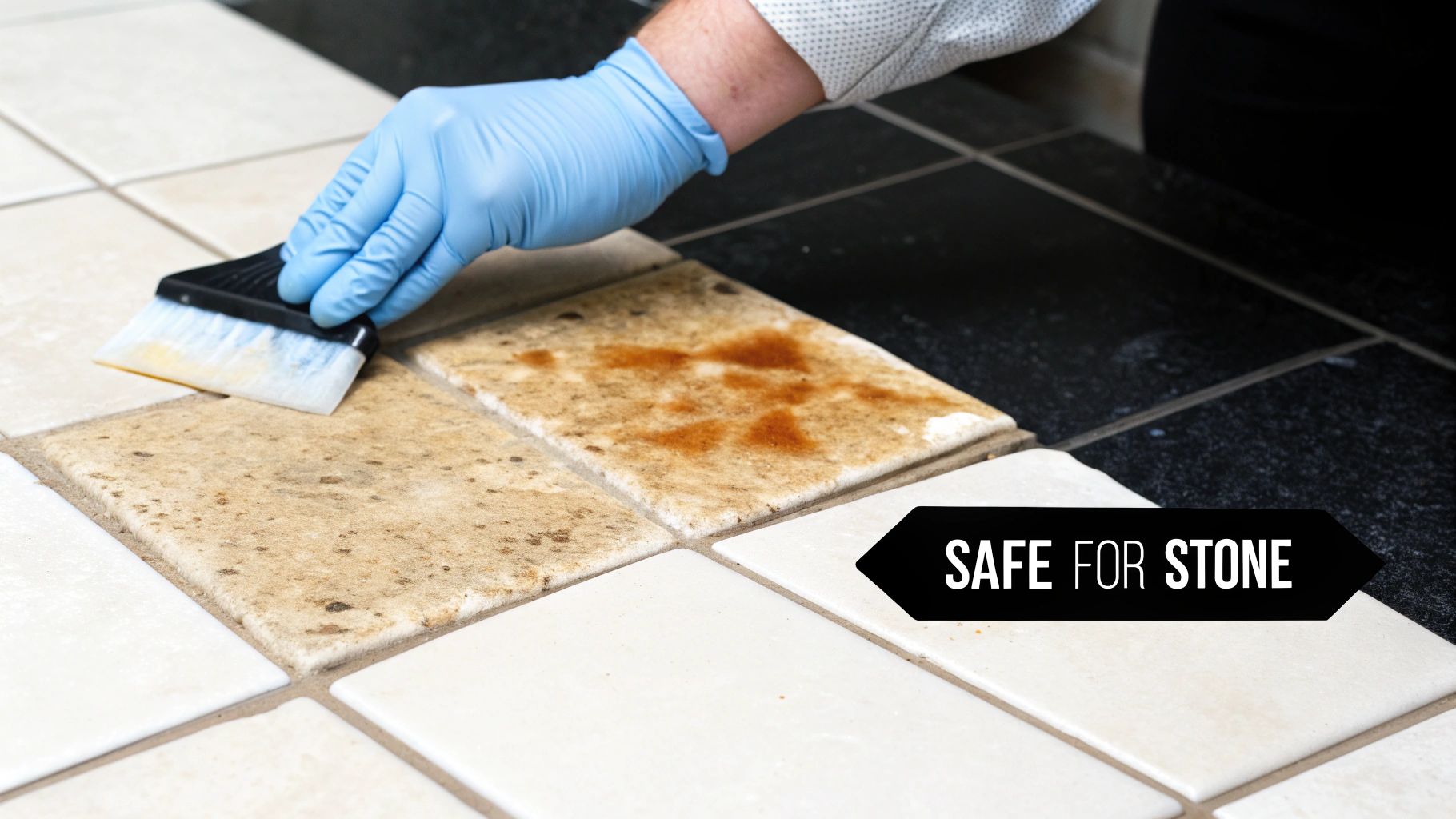
When you're dealing with rust on natural stone like marble, slate, or travertine, you have to completely change your approach. These gorgeous materials are porous and incredibly sensitive. The acidic cleaners that work so well on ceramic tiles can permanently ruin them.
Reaching for common household fixes like lemon juice or vinegar is a one-way ticket to damaging your stone. The acid reacts with the calcium carbonate in materials like marble and limestone, causing etching. This isn't a stain; it's a chemical burn that leaves a dull, cloudy mark and spoils the finish for good.
Why Acidity Is The Enemy of Natural Stone
The very nature of these stones is what makes them so vulnerable. In Australia, we often see how rust doesn’t just sit on top of marble or granite—it seeps deep into the pores, becoming part of the stone itself. This can accelerate the breakdown of the material, causing lasting discolouration and compromising the surface. It's a serious issue, and you can get a better sense of the risks involved with rust on natural stone surfaces.
Ultimately, you have to steer clear of any cleaner with a low pH. The real solution is either a specialised, pH-neutral rust remover or a technique involving what’s known as a poultice.
Crucial Takeaway: Think of a poultice as a thick paste that acts like a chemical magnet. It's made by mixing an absorbent material with a cleaning agent. When you apply it to the stone, it slowly pulls the rust stain out from deep within the pores as it dries.
Creating a Simple Stone-Safe Poultice
Making a basic poultice is surprisingly straightforward and it's the safest way to tackle deep-set rust without harming your beautiful tiles.
Here’s how you can make your own:
- Pick your base: You'll need an absorbent, non-acidic powder. Good options include diatomaceous earth, baking soda, or even plain talc.
- Add your liquid: Mix the powder with a gentle, pH-neutral cleaning liquid. For rust, your best bet is an iron-specific remover formulated specifically for stone.
- Apply the paste: Spread a thick layer—about 6mm—over the entire stain, making sure to overlap the edges slightly.
- Cover and wait: Place a piece of plastic wrap over the paste and tape down the edges to keep it from drying out too quickly. Now, you just need to let it sit for 24 to 48 hours to work its magic.
- Remove and clean: Once the poultice is completely dry, gently scrape it off. Finish by cleaning the area with a dedicated pH-neutral stone cleaner and some fresh water.
This patient, careful method protects the integrity of your investment. It’s a principle that holds true for other quality items in your home, like knowing how to properly care for a high-end ceramic dinner set. And remember, always test any cleaning solution on a small, hidden spot first.
Got Questions About Getting Rust Off Your Tiles?
Even when you know the basic steps, tackling rust stains on your tiles for the first time can throw up a few curveballs. We get it. Here are some straight-up answers to the questions we hear most often, so you can handle those tricky spots like a pro.
Can I Really Use Vinegar on My Ceramic Tiles?
Yes, but you need to be careful. For your standard glazed ceramic or porcelain tiles, a bit of white vinegar can work wonders on light rust marks. Its gentle acidity is just enough to dissolve the rust without damaging the tile's finish. Just dab it on, let it sit for a few minutes, give it a light scrub with a soft brush, and make sure you rinse it off completely with clean water.
Here’s the big "but": never, ever use vinegar on natural stone. This includes marble, limestone, and travertine. The acid will literally eat into the surface, causing what’s known as etching. This leaves a dull, cloudy mark that is permanent damage, not just a stain you can clean away. For any natural stone, always reach for a pH-neutral cleaner.
Expert Tip: The line between a clean tile and a costly repair is knowing what your tiles are made of. If you’re not 100% sure, always test your cleaning solution on a hidden spot first—like behind the toilet or under a rug.
How Do I Stop These Rust Stains From Coming Back?
Honestly, prevention is your best friend here. Stopping rust is all about getting to the source, which usually means managing moisture and keeping metal away from your tiles.
It’s often the simple things that make the biggest difference:
- Tackle Leaks Immediately: That slow-dripping tap or a slight leak around the base of the toilet is a rust stain waiting to happen, especially if your water has a high iron content.
- Get Metal Off Wet Surfaces: The classic culprit is the metal ring left by a shaving cream or aerosol can. Razors and bobby pins are common offenders too. Don’t leave them sitting on wet countertops or in the shower.
- Opt for Rust-Proof Accessories: When buying a new shower caddy or toilet roll holder, look for options made from plastic, coated metal, or high-quality stainless steel.
- Wipe Things Down: Simply wiping down wet tiles in the bathroom, laundry, or on your outdoor patio after it rains can prevent rust from ever getting a foothold.
What’s the Best Approach for a Really Old, Stubborn Rust Stain?
Those old, deep-set stains that have been on your outdoor tiles for a few seasons are a whole different challenge. A simple homemade paste often just doesn't have the muscle to break down years of built-up oxidation.
For these tough jobs, you’ll almost certainly need a commercial-grade rust remover. These products are specifically formulated with stronger active ingredients, like phosphoric acid, designed to dissolve heavy-duty rust.
Before you go all in, test the product somewhere out of sight to make sure it doesn’t discolour your tile. For a really stubborn stain on a porous outdoor tile, you might need a couple of goes at it. Using a stiff-bristled brush to really work the cleaner into the tile will give you the best shot at lifting it for good.
At Everti, we're all about materials that laugh in the face of corrosion. Our kitchen essentials are crafted from 99.9% pure titanium, making them naturally rust-proof for a lifetime of use. Bring some enduring performance into your home and discover the Everti collection at https://everti.com.au.