

The safest way to store plates is vertically in a dedicated rack when the shelf can hold the weight, with dividers as the fallback for horizontal stacks on weaker shelving. Store bowls only after they've been washed and completely dried, then keep them in a clean area where food-contact surfaces won't touch contamination.
You've probably opened a cupboard and found one plate cracked between two others, or a bowl stack leaning into a slow-motion spiral. The damage usually isn't caused by one dramatic drop. It comes from months of damp storage, overloaded shelves, unstable stacks, and heavy stoneware pressing against lighter crockery.
The fix isn't buying another organiser. Good storage matches the orientation, material, shelf strength, and cleaning routine to the way your household uses its dishes. That's especially important in Australian rental kitchens and compact apartments, where a thin shelf may look sturdy until a dense stack of stoneware starts pulling it down.
Why Stored Plates Keep Getting Damaged
A cracked plate wedged inside a stack often tells a longer story. Someone pushed a larger dinner plate into a pile of smaller ones, the rims rubbed during removal, and the shelf flexed each time the cupboard door closed. Eventually, one piece took more pressure than it could handle.
Bowls create a different problem. Their curved sides can make a tall stack lean, particularly when shapes or sizes are mixed. Pulling the bottom bowl from an unstable tower transfers force through every piece above it, which is why the break often happens during an ordinary breakfast rather than a careless moment.
Moisture is another quiet offender. A plate that feels cool may still carry water around its foot ring or along the underside of a bowl. Put several slightly damp pieces together in a closed cupboard and you create an environment that can support microbial growth and unpleasant odours.
Practical rule: If a stack shifts when you remove one item, it's already too tall, too mixed, or too poorly supported.
The load problem most guides miss
Storage advice often focuses on where everyday plates belong, but not on whether the shelf can safely carry them. Heavy stoneware places more demand on thin particleboard, narrow brackets, and adjustable shelf pins than lightweight porcelain or titanium tableware.
Watch for a shelf that bows in the centre, pins that sit loosely, or a cupboard base that feels soft near the front edge. Don't place a heavy stack above delicate ware, where a slipping pile can damage everything below it. Put dense pieces on the lowest stable surface and reserve higher shelves for lighter, less frequently handled items.
If you're packing crockery for a move, the same principles become even more important. A useful companion guide on fragile item moving tips Sydney covers protective handling beyond everyday cupboard storage, particularly when plates and bowls will be lifted, tilted, or transported.
Prep Your Plates Before Storing Them
Storage starts at the sink, not inside the cupboard. Food Standards Australia New Zealand requires utensils such as bowls and cutting boards to be washed in warm soapy water and thoroughly dried before reuse, with air-drying preferred and tea towels suitable only when they're clean. Food Standards Australia New Zealand's food preparation guidance supports a simple sequence that prevents avoidable contamination.
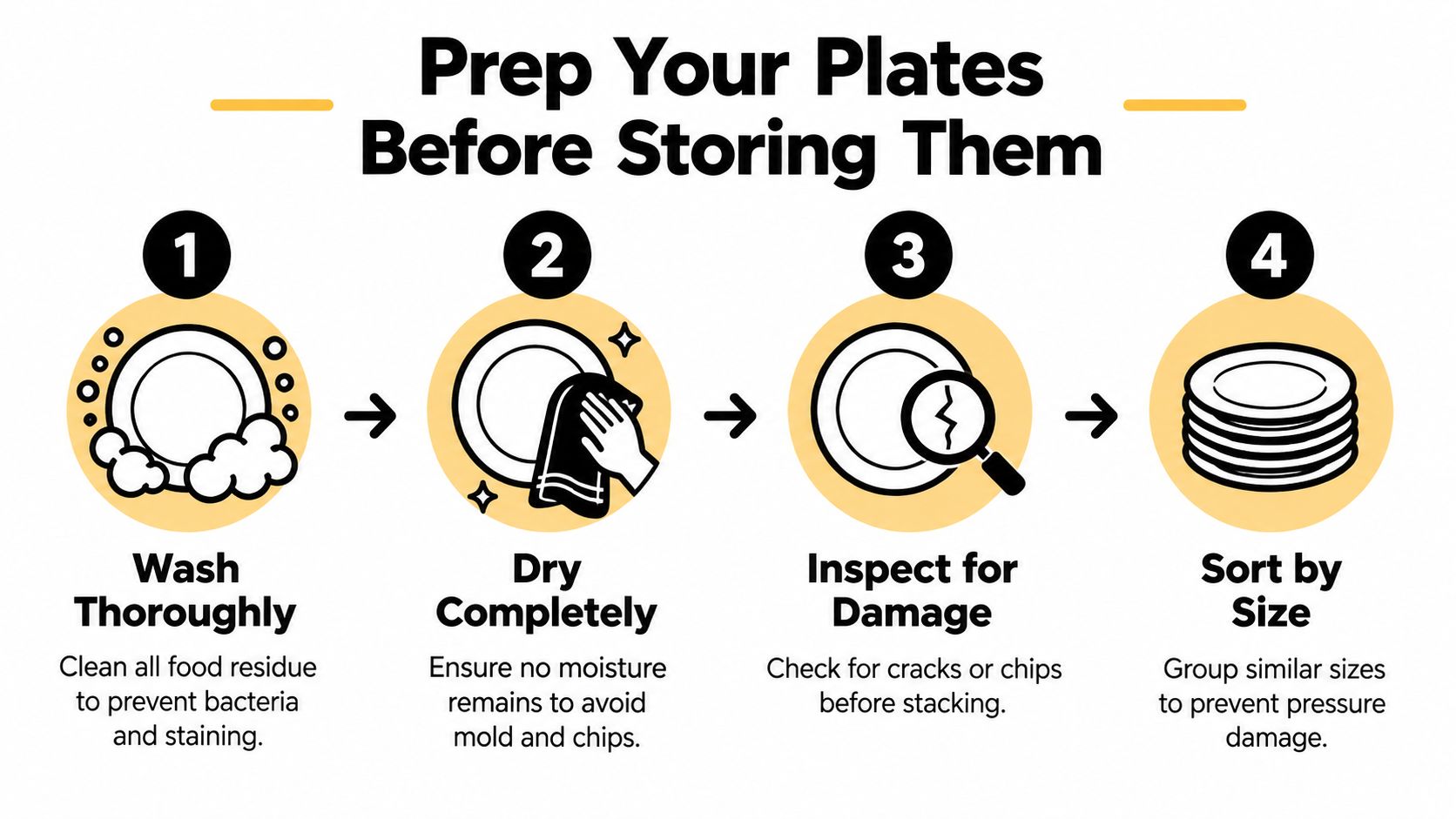
Follow the clean-and-dry sequence
- Scrape first. Remove food residue before washing so grease, starch, and dried sauce don't spread across the wash water or lodge under another plate.
- Wash thoroughly. Use warm soapy water and a clean brush or sponge. Pay attention to rims, textured patterns, the underside, and the foot ring of bowls. These areas can hold residue even when the main surface looks clean.
- Sanitise when needed. Everyday washing may be sufficient for routine use, but sanitisation becomes important when the ware has contacted unsafe material or when a kitchen is being recovered after contamination. Follow the applicable food-safety procedure rather than assuming a quick rinse is enough.
- Dry completely. Air-drying is the preferred approach. Stand plates so air can reach both sides, and invert bowls only when their shape allows water to drain rather than pool. A clean tea towel can finish the job, but it shouldn't be the excuse for putting away damp crockery.
- Inspect before stacking. Run a finger carefully around each rim and look for hairline cracks, chips, or rough edges. Cracked dishes should be discarded because they can't be adequately disinfected.
Water marks can appear after drying, especially on darker or highly polished surfaces. If that's a recurring nuisance, these ways to remove water spots can help you deal with the residue without changing the storage routine.
In a flood-affected kitchen, don't return dishes directly to the cupboard after ordinary washing. NSW Health advises inspecting, disinfecting, and air-drying them before storage, and warns against using a dishwasher exposed to floodwater. Glass, porcelain, china, and enamelware may require a 10-minute disinfecting soak in the relevant flood-cleanup process before air-drying, as described in the ACT Government cleaning and sanitising guidance.
Before the dishes go back, clean the storage area itself. Wipe shelves and cupboard surfaces, remove crumbs and dust, and make sure the place where the ware rests won't contaminate the food-contact surfaces you've just cleaned.
Vertical Racks or Horizontal Stacks
Vertical storage is usually the more practical choice for plates that are used often, provided the shelf has enough width and the rack is stable. Each plate sits in its own slot, so you don't have to drag one rim across another every time you serve dinner. A dedicated rack also makes it easier to see the whole set and remove a single plate without disturbing the rest.
The trade-off is space. A vertical rack needs usable height and depth, and the dividers must accommodate the largest plate in the collection. A rack that grips too tightly can create pressure points, while a shallow model may let plates tip forward when the cupboard is opened.
Horizontal stacking is more forgiving when a shelf is narrow or weak. It spreads the weight across the shelf rather than concentrating it in a tall rack, and it can fit more pieces into a low cupboard. The weakness is access. Repeated sliding creates friction at the rims, and a mixed stack can place uneven pressure on the pieces underneath.
| Storage method | Works well when | Fails when |
|---|---|---|
| Vertical rack | The shelf is strong, the rack is stable, and plates are frequently used | The rack is too narrow, the shelf is overloaded, or plates can tilt |
| Horizontal stack with dividers | The shelf is low or weaker, and the stack stays short and sorted | Pieces are mixed by size, damp, or difficult to remove |
| Dedicated drawer storage | Heavy ware sits low and can be lifted rather than pulled forward | The drawer base, runners, or dividers aren't designed for the load |
The ACT Government advises storing utensils upside-down in a clean area. For plates and bowls, that can reduce exposure of the food-contact surface when the shape allows secure placement. The same guidance recognises sanitising as a separate control from cleaning. Very hot water at 77°C for 30 seconds, or a commercial sanitiser, can be used for sanitising in the relevant food-premises procedure.
Clean the cupboard before loading it, particularly after spills or contamination. NSW Health recommends hot soapy water followed by rinsing with a bleach solution before dishes are stored, so the cupboard itself doesn't undo the work done at the sink.
Protect Each Piece According to Its Material
Material changes the storage decision because weight, surface hardness, rim shape, and resistance to impact vary across a dinnerware set. Porcelain is often relatively light but can chip at a thin rim. Ceramic may tolerate routine use well, yet still suffer when pieces knock together. Stoneware is dense, so a large stack can strain a rack or shelf even when the crockery appears perfectly stable.
For delicate porcelain, thin felt pads between horizontal pieces reduce direct contact and help prevent decorative surfaces from rubbing. Use pads that lie flat and stay clean. A loose, fluffy material can trap crumbs or moisture, which defeats the point of careful preparation.
Silicone sleeves or separators suit heavier ceramic and stoneware when pieces slide during removal. They add grip and cushion contact, but they also consume space. Don't use padding to justify an unstable tower. If the stack is leaning, reduce its height or change its orientation first.
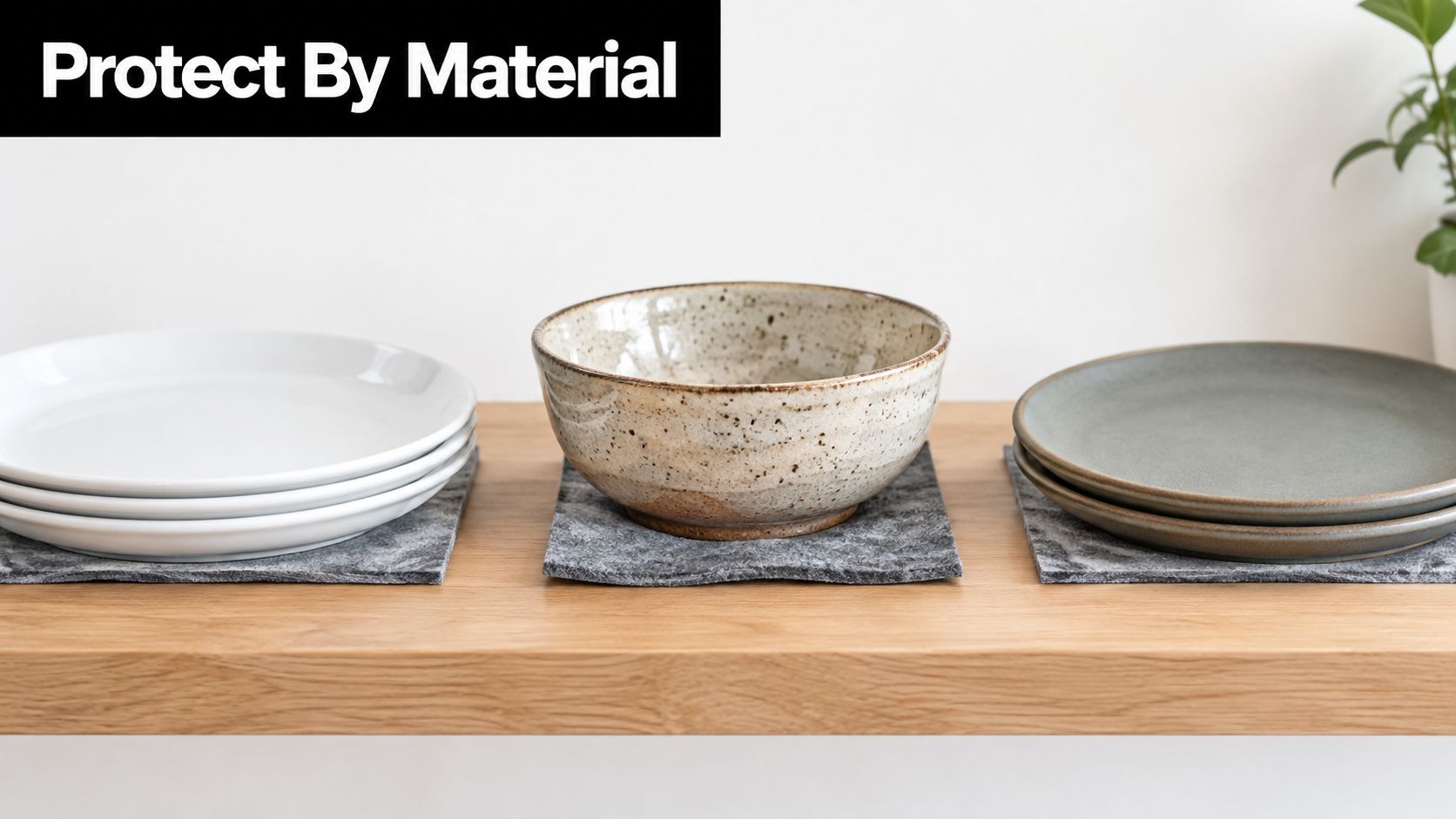
Match protection to the actual risk
- Porcelain: Choose slim felt separators for rim and surface protection, especially when the pieces have fine edges or raised decoration.
- Ceramic: Use silicone only where movement is the problem. Stable, evenly sized stacks don't need layers of padding that make access awkward.
- Stoneware: Prioritise shelf strength and low placement before adding protectors. Its density can turn a tall stack into a structural problem.
- Titanium: Smooth, uncoated titanium pieces can generally share a dedicated space without interleaving, provided the rack edges are smooth and the pieces don't scrape against abrasive hardware. Their lightness changes the pressure placed on the shelf, but it doesn't remove the need for secure storage.
For moving house or storing seasonal crockery, plain packing paper is a practical alternative to permanent felt or silicone. Use clean sheets to separate surfaces and wrap rims, following the guidance on packing paper for wrapping household items like crockery when pieces need temporary protection.
If you're comparing materials for everyday tableware, this guide to non-toxic dinnerware materials gives useful context before you decide whether your current storage system suits the set you own.
Make Small Cupboards Hold More Without Risk
A small cupboard can hold more when you reduce wasted movement, not when you keep adding weight to a shelf. Australian home-organisation guidance increasingly discusses modular systems, space-saving storage, and deep drawers for cookware, which points to a useful distinction: storage form matters as much as storage location. A drawer may be safer for heavy dishes because it lets you lift pieces out at a low level instead of reaching into a deep, overloaded cabinet.
Start by checking the shelf unloaded. Sight along the front edge, then look for a centre sag, split particleboard, loose shelf pins, or brackets that twist under hand pressure. Put the heaviest pieces on the lowest stable level and add weight gradually. If the shelf bends visibly or the cupboard sides begin to spread, stop and relocate the stack.
Use a simple load test
Place a small group of dishes in the intended zone, then open and close the cupboard gently. Listen for movement, watch whether the shelf dips, and check whether the stack shifts when you remove the front piece. The test won't replace the cabinet maker's specifications, but it will expose obvious instability before crockery breaks.
For renters, removable shelf inserts and freestanding plate racks can improve access without drilling into cabinetry. Choose a rack with a broad base and smooth separators, then check that it doesn't concentrate all the weight in one small area. A kitchen counter corner shelf can also reclaim awkward corner space, but it still needs a stable surface and sensible loading.
Deep drawers work well for plates and bowls when the base and runners are designed for the load. Dividers stop pieces from sliding during opening, while low placement reduces the risk of dropping a heavy stack from shoulder height. Lightweight titanium tableware can make a flimsy storage system easier to manage because it places less demand on the shelf than dense stoneware, but the cupboard still needs to remain stable.
A Quick Storage Check Before You Close the Door
Use this check each time you reorganise the cupboard:
- Dry: Touch the underside and foot ring. They should feel completely dry, not cool or tacky.
- Orientation: Confirm that the rack or stack matches the shelf strength and available space.
- Protection: Look for a separator only where the material or movement requires it.
- Weight: Make sure the heaviest pieces sit lowest and the shelf isn't bowing.
- Cleanliness: Wipe the cupboard surface and check that no dish rim rests on crumbs, grease, or a damp patch.
For routine cleaning, use a method suited to the surface and follow product directions. If you're considering effective alternatives to liquid cleaner, treat any substitute as part of a complete wash, sanitise, dry, and store process rather than as a shortcut.
Everti offers titanium dinner plates, side plates, and bowls for households that want lightweight tableware with a durable, easy-care material profile. Visit Everti to compare pieces that may reduce pressure on compact shelves while fitting a deliberate storage system.