

You check the label on a lunchbox and see BPA-free, but do you know what replaced the BPA, or how that material behaves after repeated heating, washing and scratching? That question matters because BPA-free doesn't mean chemical-free, and it isn't a universal guarantee that a plastic container will remain a sensible choice in every kitchen situation.
For Australian households, the practical answer is balanced. FSANZ's assessment of BPA found that dietary exposure from food and beverages was very low and didn't present a significant health and safety issue at current exposure levels. At the same time, consumer guidance warns that heating and repeated washing can increase chemical migration from some plastics. The useful question is not merely “is BPA-free plastic safe?” It's which material is it, what will touch it, and how will you use it?
What BPA Actually Is and Why the Label Matters
Before deciding whether BPA-free is reassuring, understand what the label refers to and what it leaves unanswered. That distinction turns a familiar package claim into a more useful kitchen-safety question.
BPA, short for bisphenol A, is an industrial chemical used to make certain hard, clear polycarbonate plastics and epoxy resins. These materials have been used in drink bottles, food containers and the resin linings inside metal cans. BPA has also appeared in thermal paper, including some receipts. FSANZ's background assessment describes its use in food and beverage contact materials and assessed dietary exposure in Australia.
A simple way to picture BPA
A plastic container is more like a wall built from many small bricks than a bowl filled with a separate chemical. BPA can form part of the material's chemical structure, helping make it hard, clear and practical for everyday use.
Small amounts of chemicals can migrate from a material into food or drink, especially when heat, wear or other conditions stress the plastic. BPA attracted scientific attention because its structure can interact with hormone systems. One useful analogy is a confused key fitting the wrong lock. It does not capture every biological detail, but it explains why hormone-active chemicals receive attention even when exposure is low.
The label's original purpose: “BPA-free” tells you that bisphenol A isn't intentionally present in the product. It doesn't identify every other substance in the material.
FSANZ reported that only a limited number of surveyed products had detectable BPA, with none detected in infant formula. The agency concluded that ordinary dietary exposure was generally below health-risk thresholds at the time of its assessment. That finding provides context for Australian households, while leaving a separate practical question: how will a particular replacement material behave during heating, washing and repeated use?
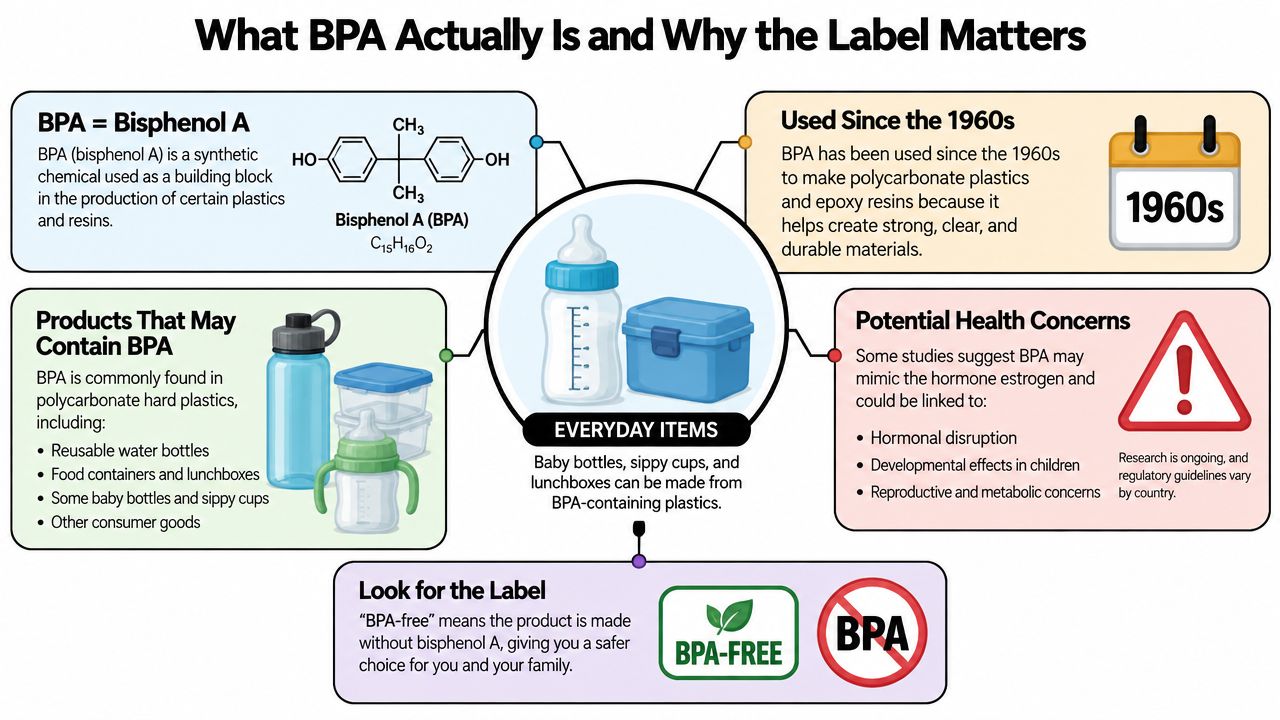
The BPA-free label became common as consumers and manufacturers moved away from products associated with BPA. Australian shoppers now see it on lunchboxes, bottles, storage tubs and other everyday items. Treat it as a starting point, not a complete safety verdict. The material behind the claim, its condition and the way it is used determine whether glass, stainless steel or another option is the simpler choice.
What BPA-Free Does and Does Not Tell You
BPA-free is a narrow material claim. It confirms that bisphenol A is absent or was not intentionally used. The label says nothing about every other ingredient in the plastic, such as the base polymer, colourants or additives. BPA-free is therefore the start of the safety question, not the final answer.
Some products replace BPA with other bisphenols, including BPS, BPF or BPAF. Australian commentary has raised concerns that certain substitutes may show similar endocrine activity, and laboratory testing has found stronger estrogenic effects from some BPA-free materials than from BPA-containing plastics. These findings do not establish a specific health outcome from ordinary household exposure. They do show why shoppers should ask what replaced BPA, rather than treating the label as a chemical-free guarantee. Minderoo's Australian commentary discusses substitutes alongside heat, abrasion and product age.
Other products use a different plastic altogether. Polypropylene is common in food containers, while clear copolyesters such as Tritan are used for bottles and drinkware with a glass-like appearance. Polyethylene is found in softer bottles, bags and flexible packaging. Each material behaves differently, so the care instructions and intended use carry more information than a single claim on the front of the package.
What you may meet at home
| Substitute Material | Common Household Uses |
|---|---|
| BPS or BPF | Some BPA-free coatings, thermal paper and substitute materials |
| Polypropylene | Lunchboxes, food tubs, reusable containers and some baby products |
| Polyethylene | Flexible bottles, freezer bags and soft food packaging |
| Tritan or other copolyester | Clear reusable bottles, blender jugs and drinkware |
| Silicone or metal alternatives | Bottle seals, sleeves, lunch containers and reusable drinkware |
Australian food-contact materials operate within a regulatory framework. FSANZ sets food standards and assesses chemical safety, while the ACCC enforces relevant mandatory consumer protections and warnings. Compliance provides a baseline, not permission to overheat a container, ignore deep scratches or use it beyond its intended purpose.
CHOICE's guidance on BPA notes that reheating or dishwashing polycarbonate can increase leaching risk. It also explains that Australia has no set BPA limit for canned foods, showing why the material, the food and the conditions of use all matter. If that combination is difficult to judge, glass, stainless steel or titanium can offer a simpler everyday choice.
How Heat, Wear and Time Change Any Plastic
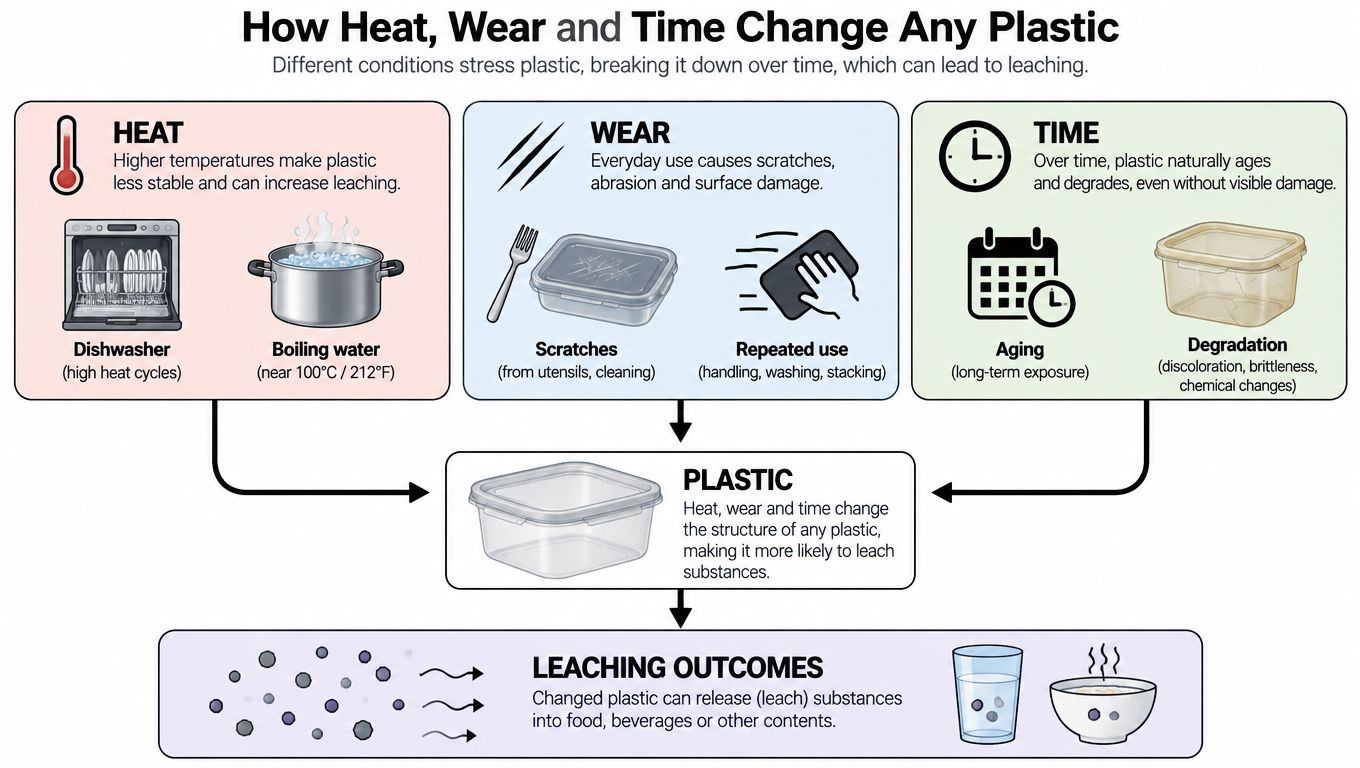
A plastic container can be suitable for cold food and unsuitable for boiling soup. The material hasn't changed its label, but the conditions have changed the migration question.
Heat is the clearest trigger. Hot water, a dishwasher cycle or a microwave can stress a polymer and make chemical movement more likely. This is why a school bottle filled with a cold drink isn't equivalent to the same bottle filled with boiling water, and why a lunchbox that holds sandwiches shouldn't automatically be used to reheat leftovers.
Four conditions to watch
- Heat: Don't microwave plastic unless the manufacturer explicitly rates it for that use. Even then, follow the instructions, avoid overheating and check whether the lid, seal and container have the same rating.
- Mechanical wear: Scrubbing, stacking and cutlery can create fine scratches. Those marks weaken the surface, hold food residue and can signal that the item has reached the end of its useful life.
- Sunlight: UV exposure can gradually degrade some plastics. A container left on a sunny dashboard or in a car may face more stress than one stored in a cool cupboard.
- Contact time: A bottle used briefly for a cold drink isn't the same as one left full for long periods in a hot environment. Longer contact gives migration more opportunity to occur.
Australian households see these conditions every day. A lunchbox may remain in a sun-heated car after school pickup. Containers can sit in a crowded dish rack, rubbing against one another. A reusable bottle may be filled from a very hot tap, then carried around for hours.
Practical rule: Treat temperature, surface condition and contact time as a combined decision. A new, undamaged polypropylene tub used for cool food is a different scenario from a cloudy, scratched container holding hot leftovers.
Replace plastic that has become cloudy, warped, cracked or persistently smelly. A chemical odour doesn't identify a particular substance, but it does tell you that the product has developed an unpleasant change that shouldn't be ignored. Hand-washing may be gentler than repeated dishwashing for some items, but always follow the manufacturer's care instructions.
If you use a plastic product for a job involving heat, inspect it more often and consider whether another material would make the routine simpler.
Common BPA Free Plastics and How They Compare
The recycling symbol can narrow your choices, but it doesn't tell the entire story. The visible behaviour of a container provides useful clues. Tritan is often chosen for clarity, so it suits people who want a bottle or jug that looks more like glass. Its trade-off is that clear plastic can still cloud, scratch or develop odours with age and repeated washing.
Polypropylene, often identified by code 5, is widely used for food containers and lunchboxes. Australian guidance generally regards it as a lower-concern option when it's used as intended, remains undamaged and isn't overheated. That doesn't make it suitable for every task. A container rated for food storage may not be rated for boiling liquids or microwave reheating.
Polyethylene is softer and can be useful for flexible bottles, bags and freezer applications. Its softness can also make it easier to dent, crease or retain smells. Copolyesters can provide rigidity and transparency, but a rigid wall isn't proof that the product is chemically inert in every condition.
| Plastic Type | Typical Uses | Heat Tolerance | Durability | Watch-Outs |
|---|---|---|---|---|
| Tritan or other copolyester | Clear bottles, drinkware and blender jugs | Follow the product instructions closely | Rigid and clear, but still vulnerable to wear | Clouding, scratches, odours and unknown substitute chemistry |
| Polypropylene | Lunchboxes, food tubs and reusable containers | Often suitable for ordinary food use, but avoid unapproved high heat | Practical and relatively tough | Overheating, warping and surface abrasion |
| Polyethylene | Flexible bottles, freezer bags and soft packaging | Better suited to cool or frozen use unless labelled otherwise | Flexible, but may crease or dent | Persistent smells, deformation and difficult cleaning |
| Other BPA-free plastics | Mixed household products | Varies by formulation and design | Varies widely | The label may not reveal the full material or additive profile |
Read behaviour, not just marketing
A plastic that survives a drop may still show surface damage. A container that looks clear may have experienced repeated dishwasher cycles. Recycled or reused plastics also carry uncertainty because you may not know their previous heat history or what they held.
BPA-free products may contain a non-bisphenol plastic, or they may rely on a substitute chemical. That distinction matters, but shoppers can't always identify the complete formulation from the packaging. For everyday use, choose food-contact products from reputable manufacturers, use them within their stated limits and retire them when they show damage.
Real World Scenarios Where the Risk Shows Up
Consider a lunchbox left in a hot car. It may contain only a sandwich, but sunlight through the window can heat the container and extend the time food remains in contact with the plastic. If the box is already scratched or cloudy, the label offers less reassurance than it did when the item was new.
A reusable coffee cup creates a different problem. A cup marked BPA-free may still contain a plastic liner, lid or seal that wasn't designed for very hot liquids. A boiling flat white can expose several components to heat at once, including parts that aren't obvious from the outside. Let hot drinks cool in a suitable vessel, or choose a cup whose manufacturer clearly states that it is designed for that use.
Four routine checks
- Baby bottles: Warming a bottle in hot water exposes the bottle and teat to heat. Follow the care instructions, inspect for clouding or cracks and replace components when they deteriorate.
- Blender jugs: Warm soup can combine heat, movement and pressure. Use only a jug designed for warm ingredients, and don't assume that a clear BPA-free jug has unlimited temperature tolerance.
- Dishwasher loads: Repeated cycles can dull surfaces and accelerate wear. Containers that rub against one another in a tightly packed rack may develop scratches before you notice them.
- Single-use bottles: Refilling a bottle designed for brief use can add cleaning, abrasion and time to a product that wasn't made for that routine.
The most useful signs are visible and tactile. Cloudiness, warping, cracks and persistent odours indicate that a container deserves replacement, even if it still closes properly. A damaged lid or seal can also trap residue and make thorough cleaning difficult.
For more context on a related food-contact item, read this practical guide to whether plastic cutting boards are safe. The same habit applies here: assess the material, its condition and the way you use it, rather than relying on one reassuring word.
Safer Alternatives Worth Switching To
Could choosing a different material make the BPA-free question simpler? Glass, stainless steel and titanium reduce uncertainty around plastic contact, but the best option depends on how the item is used.
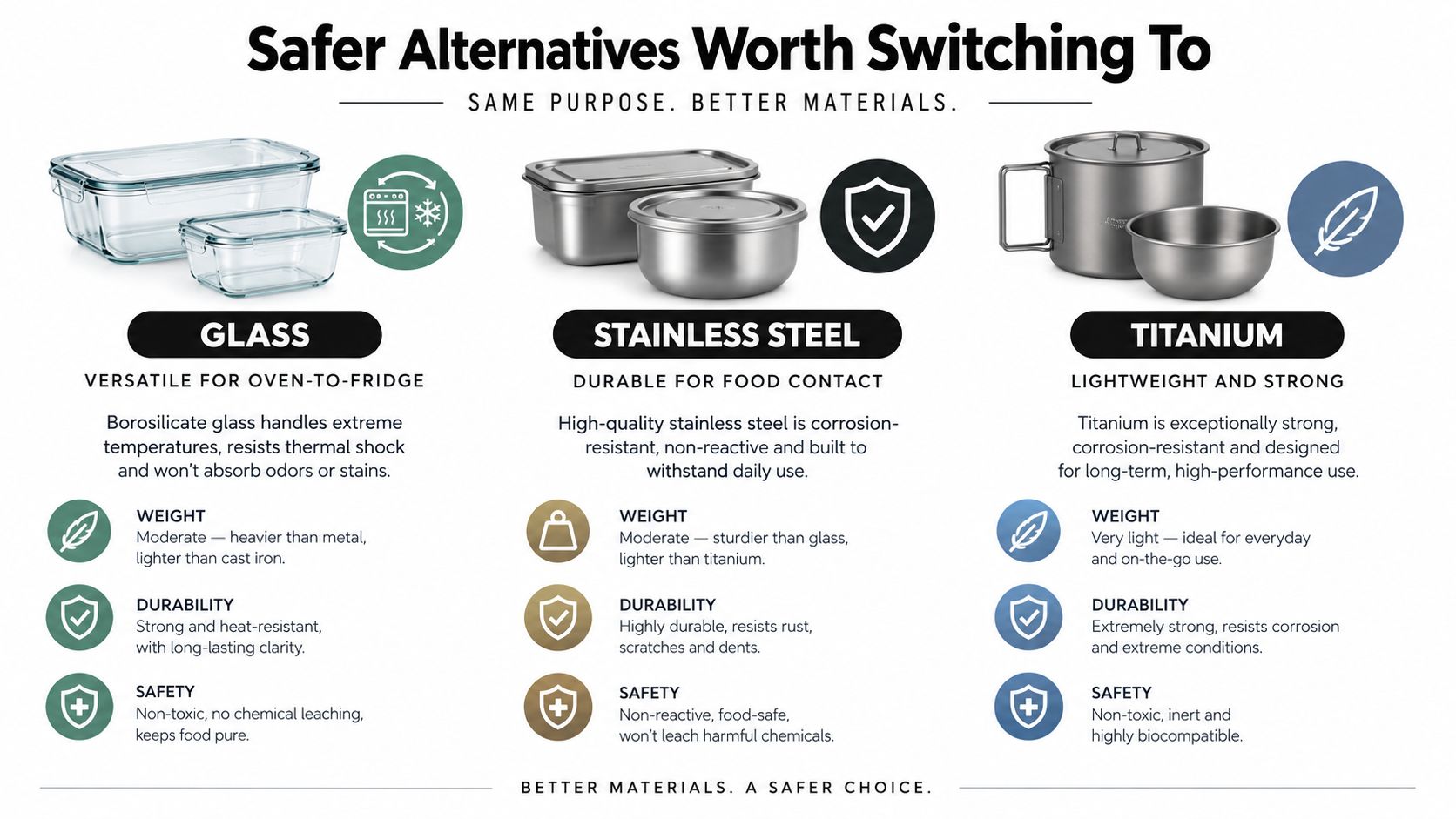
Glass suits leftovers and home storage because it does not absorb food smells like many plastics. A product designed for both storage and reheating can move between those jobs safely when its instructions allow it. Borosilicate and tempered glass offer useful kitchen versatility, although glass is heavier in a school bag and may break if a toddler drops it. Use a protective sleeve where appropriate, and check instructions before placing a cold or damaged item in high heat.
Stainless steel handles daily knocks and is generally taste-neutral when it is food-grade. A food-contact bottle or lunchbox made from 18/8 stainless steel can suit school, work and travel. Steel does not insulate by itself, so choose a double-wall design when temperature retention matters. Inspect the lid, seals and other components too, because the metal body is not the only part touching the drink. For guidance on choosing a suitable bottle, read about BPA-free water bottles and common material considerations.
Titanium is lightweight, strong and corrosion-resistant, which makes it useful for travel, outdoor meals and households seeking a durable metal option. It usually costs more and may be less available through Australian retailers than stainless steel or glass. Products like those from Everti, a Melbourne-based titanium kitchenware maker are described as microplastic- and BPA-free, providing one example of a plastic-free material approach.
Match the material to the routine
Glass often works best for home storage. Stainless steel fits active children and commuting. Titanium suits situations where low weight and long service matter more than the initial purchase price.
End-of-life matters as well. A long-lived product may reduce replacement frequency, while metal may enter recycling systems when unusable, depending on local collection arrangements. Check your council's kerbside guidance rather than assuming every item belongs in the yellow-lid bin.
A Practical Decision and Replacement Checklist
Use this quick routine before buying or keeping a plastic food-contact item.
- Keep as is: Cold, short-contact items such as an undamaged snack cup or sandwich box can remain in service when used according to the maker's instructions.
- Watch and replace soon: Cloudiness, scratches, warping or a lasting odour are reasons to plan a replacement.
- Swap now: Choose glass or metal for items routinely exposed to dishwashers, microwaves, hot drinks, boiling water or sun-heated cars.
- Retire today: Discard cracked lids, damaged seals, badly worn containers and old items with unknown materials or use history.
Run a quick check. Smell it for an unusual odour, look for the resin code, and ask whether it has held hot food or liquid. If you can't confirm the material or care instructions, choose a clearly labelled food-contact alternative.
For practical habits that reduce plastic contact with food, see this guide on how to avoid microplastics in food. Prioritise replacements in this order: daily water bottles, children's lunch gear exposed to heat, then meal-prep containers used for reheating.
Everti offers titanium drinkware and kitchenware for households that want durable, plastic-free food-contact options, including products designed for long-term everyday use. Explore the range and choose a material that fits your kitchen routine at Everti.