

It's no secret that kitchen accessories in Australia have come a long way from just being useful tools. They're now a huge part of what makes a modern home tick, influencing everything from functionality and hygiene to the overall look and feel of our living spaces. These days, we're all looking for products that aren't just beautifully designed, but are also built to last and safe for our families. This change is completely reshaping the heart of the Aussie home.
How the Modern Australian Kitchen Is Evolving
The Aussie kitchen isn't what it used to be. Gone are the days of a small, closed-off room just for cooking. Today, it’s the vibrant, beating heart of the home—a place where families catch up, friends chat over a cuppa, and life happens. It’s where cooking and living blend together seamlessly.
This evolution has completely changed what we expect from our kitchen gear. We don’t just want things that do the job; we want accessories that make our lives healthier, more efficient, and a bit more enjoyable. The focus has shifted from cheap, throwaway gadgets to what you could call ‘lifetime essentials’—pieces that prove their worth year after year with top-notch performance and classic design.
The New Philosophy of Kitchen Essentials
Choosing high-quality kitchen accessories isn’t a luxury—it’s a smart, practical move that pays off in the long run. Think of it like laying the foundation for a house. You could use cheaper materials to get the job done quickly, but you'll likely face problems down the track. It's the exact same logic for your kitchen tools. A well-chosen accessory can make a world of difference.
- Food Safety and Hygiene: Surfaces that are non-porous and naturally antibacterial can significantly lower the risk of cross-contamination.
- Cooking Efficiency: Well-designed tools just work better, making meal prep faster and far more pleasant.
- Long-Term Value: Durable materials mean you're not constantly replacing things, which saves you money over time.
- Home Aesthetic: Let’s be honest, beautifully crafted items just make your kitchen a nicer place to be.
If you're setting up a new kitchen or just giving your current one a refresh, it’s crucial to get the basics right. You can learn more about picking out the right essential kitchen accessories to get started.
The Crucial Role of Materials
Underpinning this entire shift is a growing awareness of materials. What your kitchen tools are made of has a direct impact on their safety, how long they last, and even how your food tastes. People are consciously moving away from plastics that can leach chemicals and porous woods that can be a breeding ground for bacteria.
These days, savvy Aussie shoppers aren't just asking, "What does this do?" They’re asking, "What is this made of?" That simple question is the first step towards creating a kitchen that’s genuinely safe, hygienic, and sustainable for the long haul.
In this guide, we'll dive into why this change is so important. We'll look at how different materials stack up and make a clear case for why advanced options like pure titanium are truly the gold standard for modern kitchenware. Once you understand the fundamentals, you can choose accessories with confidence, knowing they'll truly enhance your home.
So, Why Are Aussies Suddenly Demanding Better Kitchenware?
Something has shifted in the Australian kitchen. It's no longer just a room for knocking together a quick meal; it's become the heart of the home—a space that says a lot about our commitment to health, quality, and real long-term value. This change in thinking is fuelling a massive demand for better kitchen accessories, pushing us away from throwaway gadgets and towards tools built to last.
It’s not just one thing, either. A few big cultural and lifestyle trends are behind this. Our lives are getting busier, and our homes, especially in cities like Sydney and Melbourne, are getting smaller. We expect more from everything we own, and our kitchen gear is no exception. It needs to be a multitasker, save space, and be tough enough to last a lifetime.
The Rise of the Health-Savvy Home Cook
One of the biggest drivers here is our growing obsession with health and wellness. We're more clued-in than ever about the dodgy materials lurking in some products, particularly plastics. Worries about things like BPA, phthalates, and microplastics ending up in our food have sent shoppers searching for safer, non-toxic alternatives.
This isn’t just some fad. It’s a genuine desire for peace of mind. You want to know that the board you're chopping veggies on is truly clean and isn't leaching nasty chemicals. This has sparked a move away from cheap, coated, or porous materials and towards pure, inert options like high-grade metals.
The modern Aussie isn't just buying a kitchen tool. They're investing in their family's health, looking for kitchenware that promises safety and purity, every single time.
This healthy living movement is also about getting back to basics and cooking more meals from scratch at home. When you cook yourself, you have total control over what goes into your body. Having the right tools for the job makes it easier, sure, but it also makes it so much more enjoyable. Good, hygienic kitchen accessories become your trusted sidekicks on the path to a healthier life.
City Living and the Need for Gear That Lasts
Australia is one of the most urbanised countries on the planet. For many of us, that means smaller living spaces, from city-centre apartments to compact townhouses. In a tight space, every single item has to earn its keep. There's just no room for a drawer full of single-use gizmos or things that don't pull their weight.
This has created a real hunger for kitchenware that’s both versatile and incredibly durable. People are fed up with the endless cycle of buying something, watching it break, and having to replace it. Instead, we're embracing a 'buy it once, buy it right' mindset. We want accessories that can take the punishment of daily use for years—even decades—without falling apart, staining, or failing on us.
This push for longevity is tied directly to sustainability, too. By investing in products that last, we're making a conscious choice to cut down on waste and shrink our environmental footprint. A well-made tool isn't just a purchase; it's a vote for a more sustainable way of living.
A Market That's Listening
The kitchenware industry down under is definitely paying attention. The market is seeing some serious growth, and it's largely because of this demand for premium, tough, and multi-functional products.
- Big Numbers: The wider Aussie kitchenware market is on track to hit USD 6,590.53 million by 2033.
- Accessories Leading the Way: The kitchen accessories segment is one of the fastest-growing parts of the market, with a projected 5.58% compound annual growth rate.
- What’s Fuelling It: This growth is directly tied to Aussies becoming more health-conscious and the ongoing shift towards urban living. You can dig deeper into the Australian kitchenware market trends to see the full picture.
The numbers really just confirm what many of us already feel in our gut: the age of cheap, disposable kitchen junk is over. The future is all about thoughtfully designed, exceptionally well-made kitchen accessories that deliver real, lasting value.
Choosing Materials That Truly Matter for Your Health
When you’re kitting out your kitchen, it’s all too easy to get sidetracked by aesthetics and price tags. But the single most important decision you'll make—the one that directly impacts your family's health—is the material your accessories are made from. Get it right, and you’ve got a lifetime of safe, hygienic use. Get it wrong, and you could be introducing risks you never even considered.
Let’s be honest, not all materials are created equal. Your kitchen is the heart of your home, and the surfaces you prepare food on are your first line of defence against bacteria. That’s why a real understanding of what your tools are made of is non-negotiable for any modern Australian kitchen.
We're well past the point of just thinking about function and looks. The conversation in Aussie homes has shifted, now centring on long-term health, durability, and genuine value for money.
This snapshot really captures the trends driving choices in Australian kitchens today.
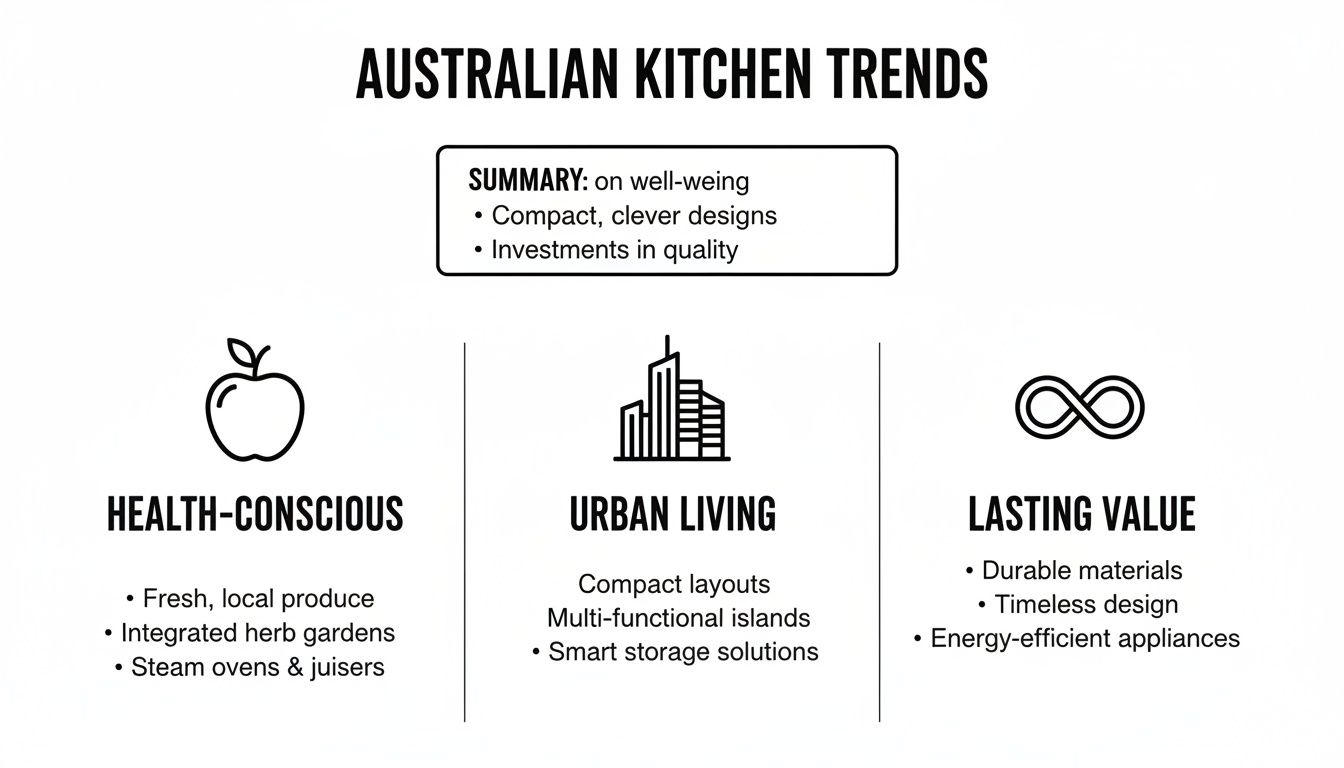
It’s clear that a desire for healthier living, making the most of our urban spaces, and investing in products that last are all shaping what we buy.
A Closer Look at Common Kitchen Materials
To make a truly informed choice, you need to know how the most common materials actually perform day-to-day. Let's break down the big three you’ll find in almost every kitchen: plastic, wood, and stainless steel. Each has its fans, but they all come with significant trade-offs.
The Problem with Plastic
Plastic is everywhere, mainly because it’s cheap and comes in a rainbow of colours. But that convenience comes with a hidden health cost. Every time your knife slices across a plastic cutting board, it creates tiny grooves and scores in the surface. These nicks and cuts are the perfect breeding ground for bacteria, making the board a nightmare to sanitise properly.
Even more troubling is the issue of microplastic shedding. Studies have revealed that a typical plastic chopping board can release tens of millions of microplastic particles into your food every year. That adds up. Throw in the risk of chemicals like BPA found in some plastics, and the case for finding a safer alternative becomes pretty compelling.
The Appeal and Pitfalls of Wood
Wood has a natural, rustic charm that many of us love. It has a traditional feel and can be kinder to your knife blades than harder surfaces. Some woods even boast natural antibacterial properties, which sounds fantastic on paper.
The catch? Wood is porous. It soaks up liquids like a sponge—including juices from raw meat—and can trap odours, creating a serious risk of cross-contamination if not cleaned with military precision. Over time, wooden boards can warp, crack, or splinter, opening up even more hideouts for germs. They demand regular oiling and careful drying to stay safe and functional. We take a deeper dive into this in our guide on the best cutting board material for health.
A side-by-side look at popular materials used in kitchen accessories shows a clear winner when it comes to the key safety and performance metrics that matter most in Australian homes.
A Practical Comparison of Kitchenware Materials
| Material | Hygiene and Antibacterial Qualities | Durability and Lifespan | Toxicity Risk (Microplastics, BPA) | Typical Maintenance Needs |
|---|---|---|---|---|
| Plastic | Poor. Scratches create a breeding ground for bacteria that's difficult to fully clean. | Low. Easily damaged by knives and heat, requiring frequent replacement. | High risk of shedding microplastics and leaching chemicals like BPA into food. | Dishwasher safe, but deep scratches make full sanitisation almost impossible. |
| Wood | Moderate. Some woods have natural antimicrobial properties, but its porous nature can trap bacteria. | Moderate. Prone to warping, cracking, and staining without proper care. | Low. No microplastics, but sealants and glues can be a concern. | High. Requires regular oiling, hand washing, and thorough drying to prevent damage. |
| Stainless Steel | Excellent. Non-porous surface prevents bacteria from hiding, making it incredibly easy to sanitise. | High. Extremely resistant to corrosion, heat, and impact. A lifetime investment. | Negligible. Inert and stable; does not leach chemicals or create microplastics. | Low. Easy to clean by hand or in the dishwasher. No special treatments needed. |
The table makes it obvious: while plastic and wood have their place, they come with significant compromises in hygiene and maintenance that simply don't exist with high-quality metals.
Why Metals Stand Apart
This brings us to metals, especially stainless steel and, at the very top end, titanium. Metals bring a completely different level of performance to the table, particularly when it comes to hygiene and sheer durability.
The core advantage of a high-quality metal surface is that it is non-porous. Unlike wood or a scored plastic board, there is simply nowhere for bacteria to hide. This makes it exceptionally easy to clean and keep sterile.
There’s a reason stainless steel is the undisputed champion of commercial kitchens. It’s tough, it’s corrosion-resistant, and it meets the strictest food safety standards. It doesn’t harbour bacteria, absorb funky smells, or leach anything unwanted into your food. For the home cook, this means you can achieve professional-grade hygiene with zero fuss.
When you weigh up the options, the choice becomes much clearer. Plastic may be cheap and wood may look nice, but they both have inherent flaws when it comes to your family's long-term health. Pure, uncoated metals like stainless steel provide a superior foundation for a modern, health-conscious kitchen.
Why Titanium is a Game-Changer in the Kitchen
Imagine a material that’s as strong as steel but feels almost weightless in your hands. That’s the magic of titanium, a metal that’s quickly becoming the gold standard for high-performance kitchen accessories in Australia. It’s not just a minor upgrade from what you’re used to; it’s a massive leap forward, delivering a mix of strength, purity, and longevity that other materials just can't touch.
When we talk about titanium, we're talking about a fundamental shift in what we should expect from our kitchen tools. It's an investment in a material that feels like it was engineered specifically for the pressures of a modern, health-focused kitchen.
Strength Meets Featherlight Performance
One of titanium’s most talked-about features is its incredible strength-to-weight ratio. It has all the toughness and resilience of high-grade steel, but without any of the heft. This makes titanium kitchenware a dream to handle, cutting down on fatigue during big meal preps without ever feeling flimsy.
Think about lugging a heavy wooden or composite chopping board from the cupboard to the bench. It can be awkward to move, clean, and store. A titanium board, on the other hand, gives you a rock-solid and stable surface that’s surprisingly light, making the whole cooking process smoother and far more enjoyable.
The Ultimate Hygienic Surface
Hygiene is non-negotiable in the kitchen, and this is where titanium really shines. Its surface is completely non-porous, which means there are zero microscopic nooks and crannies for bacteria, food scraps, or smells to hide in. This is a huge advantage over wood, which can soak up liquids and harbour germs, or plastic, which quickly develops knife scores that are impossible to properly sanitise.
Because it’s inherently non-porous and can’t rust, a pure titanium surface is naturally antibacterial. It creates an environment where germs simply can’t get a foothold, ensuring a cleaner, safer prep space for your family’s food.
This isn't some special coating that can wear off over time; it's a core property of the metal itself. Titanium will never rust or break down, even when it comes up against acidic foods like tomatoes or lemons. You can be confident you’ll have a pure, hygienic surface for life.
A Commitment to Pure, Non-Toxic Cooking
With growing concerns about chemicals leaching into our food, titanium offers total peace of mind. It’s a biocompatible material—so inert and non-reactive that it’s trusted for medical implants. This means it will never add a metallic taste to your ingredients or release unwanted substances into your meal.
For Aussie families aiming to build a genuinely non-toxic kitchen, this is a game-changer.
- Zero Microplastics: Unlike plastic boards that can shed millions of tiny particles into your food every year, titanium poses absolutely no risk.
- BPA and Phthalate Free: Pure titanium is free from the harmful chemicals often found in plastic kitchenware.
- No Hidden Coatings or Dyes: Brands like Everti use SGS-verified 99.9% pure titanium, so you know there are no paints, coatings, or weird alloys that could compromise your food.
This focus on purity lets you prepare meals knowing your kitchen accessories are supporting your health goals, not working against them.
Busting the Myth: Will Titanium Wreck My Knives?
There’s a common worry that any hard cutting surface will instantly blunt an expensive knife. While that’s absolutely true for unforgiving materials like glass, granite, or ceramic, titanium plays by different rules. Its unique density creates a surface that’s far gentler on a knife’s edge than most people realise.
Here’s the thing: pure titanium is actually softer than the hardened steel used to make good quality kitchen knives. While it's tough enough to resist deep gouges and scratches, it has just enough ‘give’ to protect your blade’s delicate edge from chipping or rolling. It offers a much better, blade-friendly experience than other hard surfaces, helping preserve the sharpness of your favourite knives for longer.
At the end of the day, choosing titanium is an investment in performance, health, and permanence. It’s a material that elegantly solves the hygiene and durability headaches that plague so many other kitchenware options. For the savvy Australian home cook, it’s simply the smartest choice for a kitchen that’s safe, efficient, and built to last a lifetime.
Building a Complete Titanium Kitchen Ecosystem
Choosing one great titanium tool is a smart first step, but the real magic happens when you start building a cohesive system around it. Picture a kitchen where every core accessory—from your drinkware to your cookware—shares the same DNA: effortless durability, clean design, and total safety. That's the idea behind a complete titanium kitchen ecosystem.
When you bring this philosophy to all your daily essentials, you create a seamless experience. You’re no longer just collecting individual items; you're investing in a unified set of tools that work together, making your life healthier and a little more efficient. This way of thinking is really catching on here in Australia.
The demand for high-quality, beautiful kitchen setups is growing fast. In fact, the Australian kitchen furniture market, which includes accessories, is projected to hit USD 2.03 billion by 2031. This tells us people are moving away from disposable items and choosing to invest in modern, lasting materials for their entire kitchen. You can learn more about the drivers behind Australia's kitchen market growth.
Expanding Beyond the Cutting Board
A complete titanium kitchen goes way beyond just chopping veggies. Everti’s range is designed to cover every part of your day, making sure you get the purity of titanium from your first coffee to your last sip of water.
- Ultra-Lightweight Drinkware: Titanium cups and mugs are fantastic for just about anything. They're completely inert, so they won't leave a metallic taste in your coffee or water, and they're tough enough for home use or to be thrown in a bag for travel.
- Non-Toxic Cookware: If you're serious about a pure cooking surface, titanium cookware is the gold standard. You can discover more about the benefits of titanium cookware in Australia and see why it’s such a great non-toxic choice.
- Hygienic Tableware: Titanium plates and bowls look beautifully minimalist, but they're also incredibly practical. They’re shatterproof, a breeze to clean, and won’t hang onto stains or smells, making them perfect for everyday family meals.
To tie it all together, it's worth thinking about how you store food, too. A great place to start is by rethinking food storage systems to make sure every part of your kitchen works in harmony.
The Art and Science of the Aura Collection
One of the most striking parts of a titanium ecosystem has to be the Aura collection. These pieces have a vibrant, iridescent finish that makes them look like individual works of art, yet the colour is created without any artificial additives at all.
The secret is a sophisticated heating process. By applying precise temperatures to pure titanium, the natural oxide layer on the surface thickens. This thickened layer refracts light differently, creating those stunning colours. There are absolutely no dyes, paints, or chemical coatings involved.
This process is the perfect example of material integrity. The colour is literally part of the titanium itself, so it will never chip, peel, or leach into your food. The Aura collection beautifully fuses aesthetics and purity, allowing you to bring a splash of colour into your kitchen without ever compromising on your health.
Building this kind of unified system truly transforms your kitchen into a space built on performance, longevity, and a genuine commitment to your well-being.
Maintaining Your Kitchen Accessories for a Lifetime of Use
Buying top-notch kitchen accessories is one thing, but knowing how to look after them is what truly makes them last a lifetime. Proper maintenance shouldn't feel like a chore. In fact, when you've got the right materials, it’s a simple routine that keeps your tools looking and performing like new for decades.
This is where premium materials like pure titanium really shine. Its unique properties make cleaning and upkeep a breeze, backing up that ‘buy it for life’ philosophy that smart Aussie shoppers are looking for. You can forget about complicated oiling routines or wrestling with stubborn stains; caring for high-end kitchenware is surprisingly simple.
The Effortless Clean of Titanium
The secret to titanium’s easy maintenance is its completely non-porous surface. Imagine a perfectly smooth sheet of glass—there are no microscopic cracks, pores, or deep knife cuts for food particles, liquids, or bacteria to get trapped in. This makes cleaning incredibly fast and thorough.
For Everti’s titanium cutting boards and tableware, a quick wash with warm, soapy water is all you’ll ever need to get rid of residue. The surface is so inert that it naturally resists holding onto odours and stains from strong ingredients like garlic, onions, or even beetroot.
After a bit of chopping, a simple wipe-down is often all it takes to bring it back to a perfectly hygienic state. This is a world away from the endless scrubbing and disinfecting needed for porous wooden boards or heavily scratched plastic ones.
This low-effort, high-hygiene approach is exactly why so many professional kitchens across Australia are built around non-porous metal surfaces. They deliver a higher standard of cleanliness with less work, a benefit that’s just as valuable in a busy home kitchen.
Protecting Your Blades and Your Board
It's natural to wonder how a metal board will treat your knives. The good news is that looking after your knives with a titanium board is easier than you’d expect. Pure titanium is specifically chosen for its blade-friendly density—it’s much kinder to your knives than stone, glass, or ceramic surfaces, which can blunt or chip a blade in no time.
To keep both your knives and your board in perfect condition, just follow these simple tips:
- Use Quality Knives: For the best results, pair your titanium board with good-quality stainless steel knives.
- Maintain Your Edge: Honing your knives regularly keeps them sharp and ready for clean, effortless cutting.
- Avoid Excessive Force: Let the sharpness of the blade do the heavy lifting. There’s no need to press down with all your might.
Stick to these practices, and your knives will stay sharp while your board remains a dependable, hygienic surface for years to come. For an even more detailed walkthrough, check out these simple, practical steps for titanium cutting board cleaning and care to help you get it right every time.
Proper care is what elevates a great product to an essential part of your kitchen for life. By following these simple maintenance tips, you can be sure your investment in high-quality kitchen accessories in Australia will keep delivering on performance, safety, and enjoyment, year after year.
Got Questions About Titanium Kitchenware? We Have Answers
When you're thinking about investing in high-quality kitchen accessories, it's natural to have a few questions. In fact, it's a great sign—it means you're serious about long-term value, performance, and your family's health. We've put together answers to the most common queries we get about our titanium gear to help you make a confident choice.
Will a Titanium Cutting Board Dull My Good Knives?
It's a fair question, but you can rest easy. While pure titanium is famously strong, it’s actually gentler on a sharp blade than super-hard surfaces like glass, stone, or ceramic. Everti boards are engineered to be kind to your knife's edge, giving you a tough, hygienic surface that won’t chip or splinter. With regular use, you’ll find it helps maintain your knife’s sharpness beautifully.
Is Titanium Gear Really Worth the Price Tag?
Absolutely. Think of it less as a purchase and more as a permanent upgrade for your kitchen and your health. Plastic and wood boards need replacing every few years, but a titanium accessory is built to last a lifetime. No rust, no warping, and completely non-toxic.
When you factor in the money saved on replacements and the peace of mind that comes from avoiding microplastics and hidden bacteria, the value is clear.
It’s a simple shift in mindset: instead of repeatedly buying disposable items, you invest once in a permanent solution that delivers safe, hygienic performance forever.
How Do You Get Those Colours on the Aura Collection?
The incredible colours you see on our Aura collection aren't created with paints, dyes, or any kind of chemical coating. It’s all down to a clever heat-treatment process that changes the natural oxide layer on the titanium’s surface.
This technique creates a vibrant, iridescent finish that’s literally part of the metal itself. That means it can never flake, peel, or leach into your food, ensuring the beauty of your kitchen accessories in Australia is as pure as the material they're made from.
Ready to invest in a healthier kitchen with tools designed to last a lifetime? Explore the full range of pure titanium essentials at Everti and discover the difference for yourself. Shop the collection today at everti.com.au.