

Picking out a new kitchen pan set can feel like a bigger deal than it should be, but it really just comes down to finding the right tools for the way you cook. The goal is to find a set that makes your time in the kitchen easier and more enjoyable, not one that adds another layer of complexity. Think of this guide as your personal shopper, helping you find cookware that feels like it was made just for you.
Why the Right Pan Set Matters
A quality pan set is the backbone of any kitchen. It’s the difference between a steak with a perfect, crusty sear and one that’s just… grey. It’s what allows a sauce to simmer gently without scorching. Good pans give you reliable, even heating, which builds confidence and lets you focus on nailing your favourite recipes or experimenting with new ones.
Investing in the right cookware isn't just about buying shiny new things; it's about upgrading your entire experience at the stove.
When your pans work with you, cooking is a genuine pleasure. You're not battling hot spots, wrestling with stuck-on food, or wondering why things never turn out quite right. This guide will break down what actually makes a pan set great, so you can make a choice that you’ll love using for years.
Core Factors to Consider
Before we get into the nitty-gritty of materials and brands, let’s take a step back and think about your kitchen. The single most important factor in this decision is how you cook day-to-day. A set that's perfect for a professional chef might be completely wrong for a busy parent who needs quick, easy clean-ups.
Start by asking yourself a few key questions:
- What's your cooking style? Are you all about searing meats at blazing high heat? Do you spend hours simmering delicate sauces? Or are quick, non-stick stir-fries more your speed? Your answers point directly to materials like stainless steel, cast iron, or non-stick.
- What kind of cooktop do you have? Whether it's gas, electric, ceramic, or induction makes a huge difference. Induction cooktops, for example, are a special case – they need pans with a magnetic base to even work.
- What's your budget? Pan sets can range from surprisingly affordable to serious investment pieces. Deciding on a price range early on helps you focus on the best options you can get for your money.
By figuring out your own needs first, you can cut through the marketing hype and concentrate on the features that will genuinely make your life easier. It's about finding cookware that’s not only high-performing but also a joy to use.
Ultimately, you’re looking for that sweet spot where performance, durability, and everyday convenience meet your needs and your budget.
Decoding Cookware Materials: From Stainless Steel to Cast Iron
Picking the right material for your new pan set is easily the most critical decision you'll make. It’s the very foundation of how your cookware performs, influencing everything from how evenly your sausages brown to how much time you’ll spend scrubbing at the sink.
Each material has its own personality, its own strengths and quirks. Getting to know them is the key to finding a set that feels like it was made just for your kitchen.
Think of it like choosing a car. You wouldn't take a zippy sports car on a rugged off-road track, and you wouldn’t expect a slow-and-steady tractor to win a race. In the same way, the perfect pan for searing a steak is rarely the best choice for gently scrambling eggs.
This handy visual guide helps connect the dots between your cooktop, your cooking habits, and what you’re looking to spend.
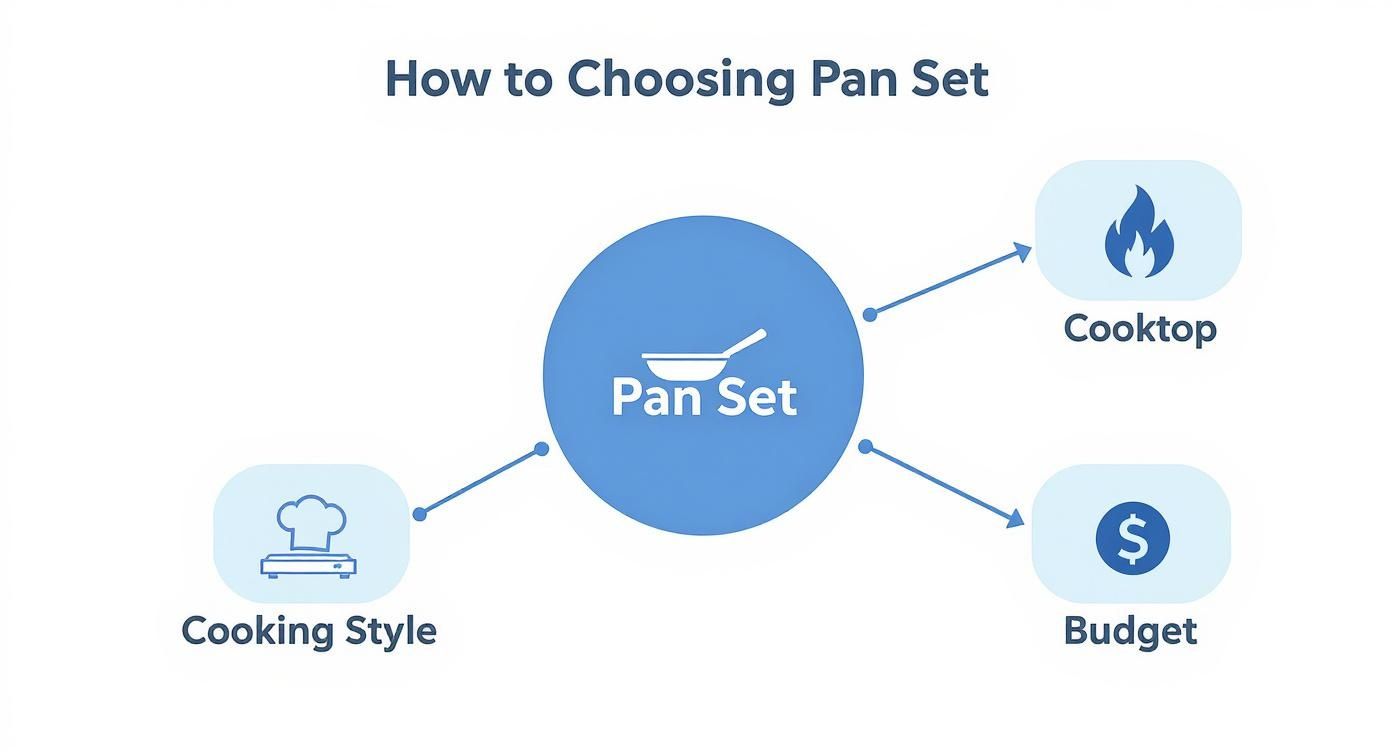
As you can see, letting these three factors guide you really helps to narrow the field, ensuring you invest in a pan set that you’ll actually love to use day in and day out.
To help you get a quick overview, this table breaks down how the most common materials stack up against each other.
Cookware Material Comparison at a Glance
This table provides a quick side-by-side comparison of the key performance characteristics of popular cookware materials to help you decide which is best for your cooking style.
| Material | Heat Conductivity | Heat Retention | Durability | Maintenance Level |
|---|---|---|---|---|
| Stainless Steel | Moderate | Moderate | Very High | Low |
| Non-Stick | Good to Excellent | Low to Moderate | Low to Moderate | Very Low |
| Cast Iron | Low | Excellent | Extremely High | High |
| Copper | Excellent | Low | Moderate | Very High |
| Carbon Steel | Good | Good | Very High | High |
Each one has its place in the kitchen, so let's dig into the details to find your perfect match.
The Reliable Workhorse: Stainless Steel
There's a good reason why stainless steel is the go-to choice for professional kitchens and serious home cooks. It’s incredibly durable, non-reactive (so it won't give your tomato sauce a metallic tang), and can handle seriously high heat. This makes it the champion for getting that beautiful, deep-brown sear on meats and veggies.
But here’s the secret: on its own, stainless steel isn’t a great conductor of heat. That’s why the good stuff is always "clad"—it has a core of a more conductive metal like aluminium or copper sandwiched between layers of steel. This construction gives you the best of both worlds: the even heating from the core and the tough, fuss-free surface of the steel.
The Effortless Performer: Non-Stick
For anyone who dreads cleanup or cooks a lot of delicate food, non-stick cookware is an absolute game-changer. That specially coated surface is designed to release food with barely any oil, making it the undeniable king for eggs, pancakes, and flaky fish fillets.
The sheer convenience is why it's a staple in most modern kitchens. In fact, the non-stick cookware market in Australia and New Zealand was valued at USD 254.62 Million and is projected to climb to USD 356.78 Million by 2032. The humble frying pan is expected to grab the largest share of this market, showing just how much we value that easy-release surface. You can dive deeper into these [market trends and drivers](https://www.fortunebusinessinsights.com/non-stick-cookware-market-102 नॉन-स्टिक कुकवेयर मार्केट) in the full report.
The Heavy-Hitting Champion: Cast Iron
If stainless steel is the versatile ute, cast iron is the slow-burning bonfire. It takes its sweet time to heat up, but once it’s hot, it stays hot. This incredible heat retention makes it unbeatable for jobs that demand a deep, even sear—think thick-cut steaks, crispy fried chicken, or cornbread with that perfect golden crust.
One of the most magical things about cast iron is that it develops a natural non-stick surface, called "seasoning," with proper care. This is just baked-on layers of oil that bond to the pan, and it genuinely gets better and more non-stick the more you use it.
The Responsive Specialist: Copper
Copper is the Formula 1 race car of the cookware world. It heats up in a flash and cools down almost as quickly, giving the cook amazing temperature control. This is why professional chefs adore it for making delicate sauces, caramel, or anything where a few degrees can mean the difference between perfection and a burnt mess.
That high-level performance, however, comes with a high price tag and a demanding maintenance routine. Copper is expensive, can react with acidic foods, and needs regular polishing to keep its signature shine. For this reason, you’ll often find it used as a core layer in stainless steel pans or lined with a non-reactive metal like tin or steel.
The Lightweight Contender: Carbon Steel
Imagine a pan that blends the best traits of cast iron and stainless steel—that’s carbon steel. It’s lighter and smoother than cast iron but brings that same awesome high-heat performance and ability to build up a seasoned, non-stick surface. It’s a firm favourite in professional kitchens for its responsiveness and sheer toughness.
Just like its cast-iron cousin, it needs to be seasoned and kept dry to prevent rust. But for anyone willing to put in a little love, a carbon steel pan is a ridiculously versatile and powerful tool that excels at everything from a quick stir-fry to searing scallops.
Understanding What Makes a Well-Built Pan
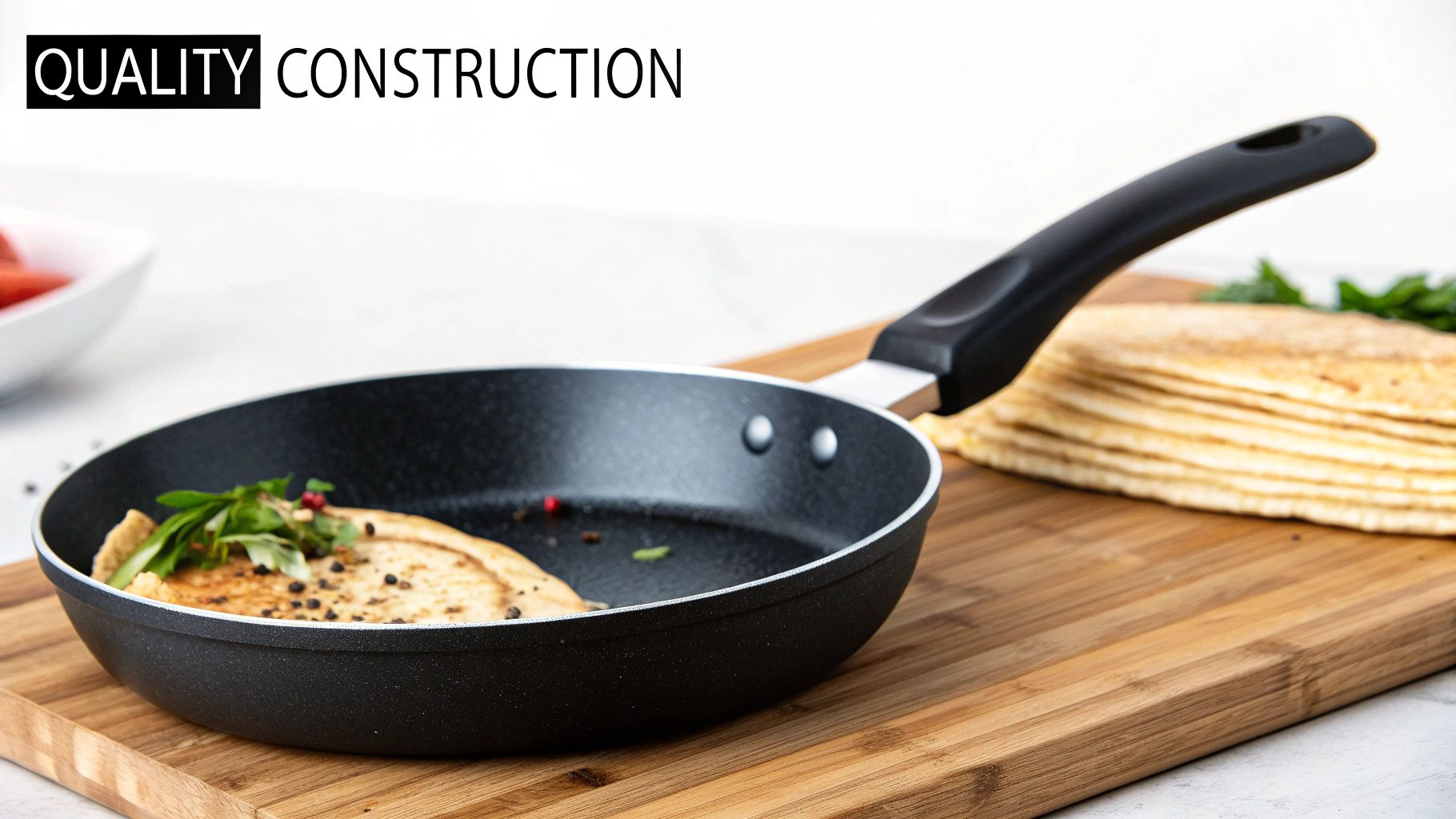
While the material of your kitchen pan set lays the groundwork, it’s the construction that truly separates the good from the great. You could have two pans made from the exact same stainless steel, yet they might perform in completely different ways in the kitchen. It all comes down to how they’re built.
Think of it like two houses that look similar from the street. One has a deep, solid foundation, engineered to last for generations. The other is built on a simple slab that just gets the job done. Both are houses, but one is built to handle anything, while the other might struggle under pressure. The same principle applies to cookware.
The Foundation: Cladding and Base Construction
The biggest difference in pan construction is how conductive metals like aluminium or copper are worked into the design. This is what dictates how evenly and quickly a pan heats up, and there are two main ways manufacturers tackle it.
-
Fully-Clad Construction: This is the premium standard for a reason. Imagine a sandwich of metals, where a core of aluminium or copper is bonded between layers of stainless steel, extending all the way up the sides of the pan. This construction means heat spreads beautifully, not just across the bottom but up the walls too. The result? No more frustrating hot spots and far more precise control over your cooking.
-
Disc-Bottom Construction: This is a more common, budget-friendly approach. Here, a thick disc of conductive metal is simply bonded to the bottom of a stainless steel pan. It does a decent job of heating the base, but the sides are left out of the party. For things like simmering a sauce or making a risotto, this can lead to uneven cooking where food sticks to the bottom.
If you want to dig a bit deeper into what separates truly exceptional cookware from the rest, our guide on identifying good quality pots and pans is a great place to start.
Handles: The Importance of a Secure Grip
A pan’s handle might seem like an afterthought, but it’s your main point of contact and is absolutely critical for control and safety. A wobbly handle isn't just annoying; it’s a genuine hazard when you’re moving a pan full of hot oil or boiling water.
What you really want to look for is how the handle is attached. Riveted handles are the gold standard. They're fastened to the pan with two or more metal rivets, creating a permanent, rock-solid bond that’s highly unlikely to loosen over years of use. Welded handles, by contrast, can be a weak point and may break off after repeated stress.
A strong, comfortable handle gives you balance and confidence in the kitchen. When you pick up a heavy pan, it should feel like a stable extension of your arm, not something you have to nervously balance.
The Small Details That Make a Big Difference
Beyond the base and handles, a few thoughtful design features really separate a well-engineered kitchen pan set from a basic one. These little touches add up to a much more enjoyable cooking experience.
Keep an eye out for these markers of quality:
- Flared Rims: A simple but brilliant feature. A slightly rolled or flared edge lets you pour sauces, soups, or gravies without any messy drips running down the side of the pan. It saves a lot of cleanup!
- Lid Fit: A good lid should fit snugly, trapping heat and moisture where you want it. Look for lids made from stainless steel or tempered glass that sit securely without rattling around.
- Overall Weight and Balance: A quality pan should have some heft to it—this signals that thick, durable materials were used. But it should also feel balanced in your hand, not awkwardly heavy at the base or handle.
These construction details are clearly on the minds of more and more home cooks. The Asia-Pacific kitchen cookware market, where Australia is a major player, accounted for over 38% of global revenue recently. This market is booming, and the pots and pans segment is set for major growth, showing just how much people are willing to invest in quality kitchen tools.
Matching Your Cookware to Your Cooktop
So you've found a beautiful, high-performing kitchen pan set. But before you get too excited, there's a crucial compatibility check you need to make. The best pan in the world will disappoint if it doesn't work with your stove. It’s a bit like trying to run a diesel engine on petrol—the parts are all there, but they just aren't designed to work together.
Every cooktop generates heat in a slightly different way, and this directly impacts which pans will perform well. To get the most out of your investment, you need to understand your heat source first. For a really deep dive into the pros and cons of different stoves, check out this guide on choosing between induction, gas, or electric cooktops.
The Special Case of Induction Cooktops
Induction is the picky one of the bunch. It’s a fantastic technology, using a magnetic field to generate heat directly inside the pan itself, rather than heating an element first. This makes it incredibly fast and efficient. But there's a catch: the pan must be made from a ferromagnetic material.
In simple terms, a magnet has to stick to the bottom of it. This immediately rules out pans made entirely of aluminium, glass, or copper.
The Simple Magnet Test: The quickest and easiest way to check if a pan is induction-ready is to grab a fridge magnet. If it clamps on tight to the base of the pan, you’re good to go. If the pull is weak or nonexistent, it simply won't work on an induction cooktop.
Pans for Glass and Ceramic Cooktops
Those sleek, modern glass or ceramic cooktops look great and are a breeze to clean. Their one major requirement, however, is that your pans have a perfectly flat and smooth bottom.
Why does this matter so much? These cooktops work by direct contact. If a pan has a warped or ridged base, it won't sit flush against the surface. This creates air gaps that prevent heat from transferring properly, leading to frustratingly uneven cooking. Even worse, a rough bottom, like you might find on some cast iron pans, can easily leave permanent scratches on the delicate glass.
For these smooth tops, your best bets are:
- Stainless Steel: Look for pans with a heavy, flat, clad base.
- Titanium: These are known for their durability and typically have a smooth finish.
- Heavy-Gauge Aluminium: Just make sure it has a perfectly flat bottom designed for these surfaces.
Cookware for Gas and Electric Coil Stoves
If you have a traditional gas or electric coil stove, you can relax. These are the most forgiving and versatile cooktops out there. The open flame of a gas stove or the glowing red coils don't need perfect, flat contact to get the job done.
This opens up your options considerably. Almost any material will work well, from a classic round-bottomed wok nestled in the grates of a gas stove to a hefty cast iron skillet. Since minor warping isn't a deal-breaker, you can focus on choosing your kitchen pan set based on how you like to cook, not on what your stove demands.
The Art of Cookware Care and Maintenance
Buying a quality kitchen pan set is one thing, but learning how to look after it is what turns that purchase into a lifelong cooking companion. Proper care isn't just about keeping your pans looking brand new; it's about making sure they perform at their best, heating evenly and releasing food just right for years to come.
Think of your cookware like a high-performance car. You wouldn't skip an oil change or use the wrong fuel, and the same logic applies in the kitchen. Every material, from rugged cast iron to sleek stainless steel, has its own quirks and needs. Getting these simple routines down will protect your investment and frankly, make cooking a lot more fun.
And it seems more people are realising the value of good gear. Australia's kitchenware market, where pots and pans are a huge part, was recently valued at a massive USD 3,854.86 Million. It’s expected to climb to USD 6,590.53 Million by 2033, which shows just how much we're all investing in quality tools for our kitchens. You can read more about this expanding market and its forecast.
Keeping Stainless Steel Gleaming
Stainless steel is the workhorse of most kitchens for a reason—it's tough. The secret to keeping it looking sharp is all in the cleaning. Once you're done cooking, always let the pan cool down for a few minutes before you even think about washing it.
Dumping a hot pan into cold water causes thermal shock, which is a fancy way of saying the metal contracts too quickly and can warp. A wobbly, warped pan is a nightmare to cook with because it won't sit flat on the stove, leading to hot spots and unevenly cooked food.
For those really stubborn, burnt-on messes, resist the temptation to grab the steel wool. There are better, gentler ways:
- Deglazing: While the pan is still warm, pour in a splash of water, wine, or stock. It will sizzle and lift all those delicious browned bits (the fond) right off the bottom.
- Baking Soda Paste: Just mix a bit of bicarb soda with water to make a paste. A soft sponge and a gentle scrub with this will work wonders on most residue.
- Vinegar Simmer: For really tough stains or that rainbow-like discolouration, just simmer a 50/50 mix of white vinegar and water in the pan for a few minutes.
The Secrets of Cast Iron Seasoning
A cast iron skillet is special. It actually gets better the more you use it, building up a natural non-stick surface we call seasoning. This is just a build-up of baked-on, polymerised oil. Looking after this seasoning is rule number one for cast iron.
After cooking, scrape out any food, give it a rinse with hot water, and use a stiff brush to clean it. A tiny drop of dish soap is fine, despite what the old myths say. But the most important part? You have to dry it completely right away to stop it from rusting.
To really nail the seasoning, pop the dry pan back on the stove over low heat for a minute or two. This evaporates any last bit of moisture. Then, just wipe a super-thin layer of cooking oil all over the inside before you put it away. It's this little ritual that builds that beautiful, slick finish.
Protecting Non-Stick Surfaces
Non-stick pans are incredibly convenient, but that delicate coating needs a bit of TLC. How long your non-stick pan lasts is directly linked to how you treat it.
The two biggest enemies of a non-stick coating are metal utensils and high heat. Always stick to wood, silicone, or plastic tools to avoid scratching the surface. You should also never preheat an empty non-stick pan on high; that intense heat can damage the coating and cause it to break down.
For a deeper dive into this, check out our guide on whether your pans are truly dishwasher-safe, which gets into the nitty-gritty of care for different materials. Follow these simple rules, and your whole kitchen pan set will be a reliable partner for countless meals.
Building Your Ideal Set: What Pans Do You Really Need?
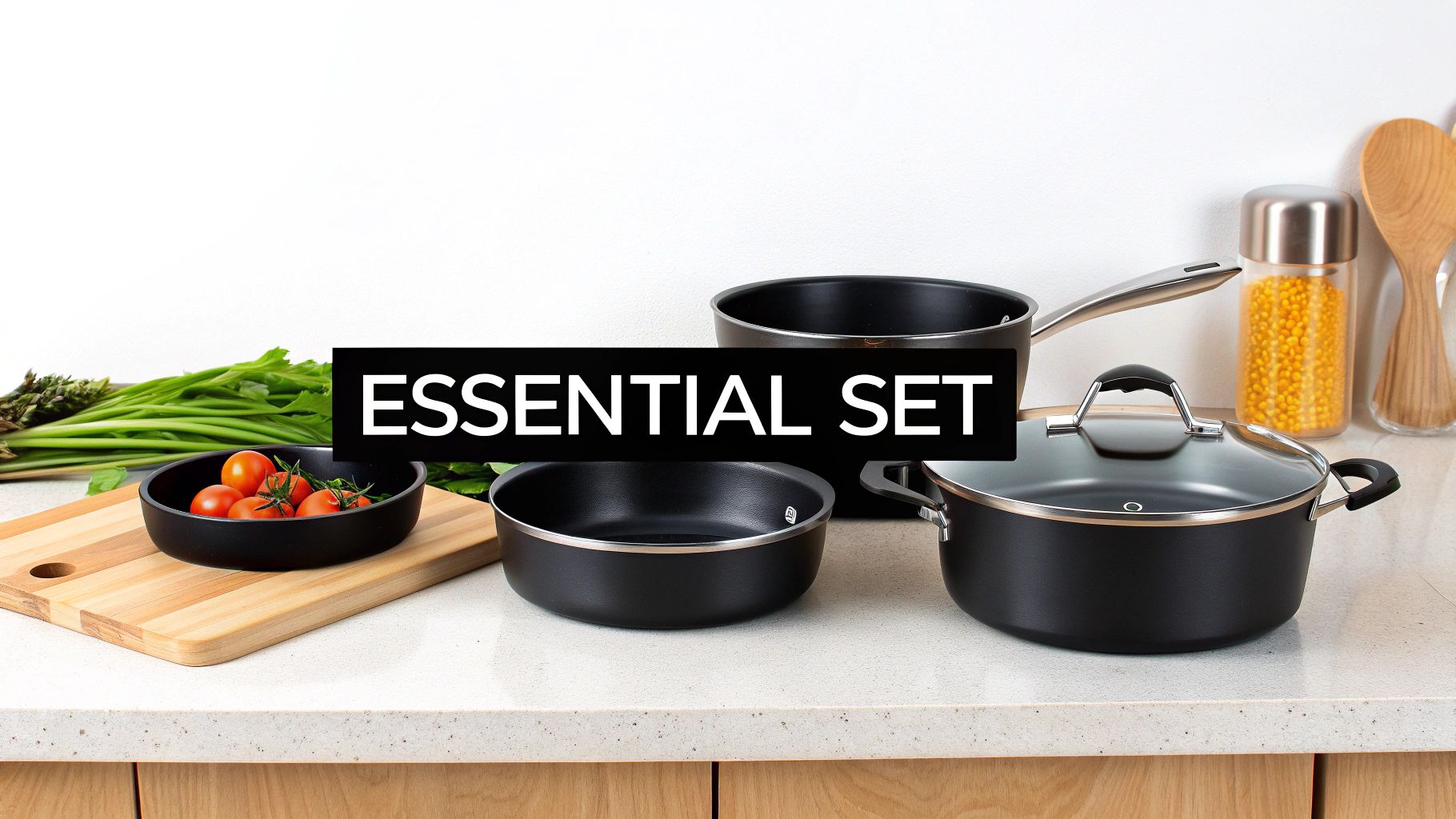
It’s so easy to get drawn in by those massive 15-piece kitchen pan sets that promise a specific tool for every job imaginable. But let's be honest, most of us end up using the same few pans over and over again for nearly every meal. A thoughtful, needs-based approach is a much smarter way to go, ensuring you buy cookware you’ll genuinely use instead of pieces that just clutter up your cupboards.
Think of it like putting together a wardrobe. You wouldn't start with a dozen specialised outfits for every possible occasion. You’d start with the essentials—a great pair of jeans, a classic t-shirt, a smart jacket. The same logic holds true in the kitchen. If you focus on getting the foundational pans right first, you can build a collection that’s incredibly functional and perfectly suited to the way you cook.
The Foundational Three: Every Kitchen Needs These
No matter if you're a seasoned foodie or just starting out, there are three pans that truly form the bedrock of any solid cookware collection. These are your MVPs, the versatile heroes that can handle anything from a quick weeknight stir-fry to a slowly simmered weekend stew.
-
The Skillet (or Frypan): With its wide, flat bottom and flared sides, the skillet is your go-to for anything that needs high heat and fast cooking. It's the master of searing a perfect steak, sautéing veggies, or frying up a Sunday morning breakfast. A good 25-30 cm skillet will likely be the most-used pan you own.
-
The Saucepan: This is your workhorse for all things liquid. Its tall, straight sides are designed to minimise evaporation, making it perfect for simmering sauces, boiling pasta, or warming up soup. Having a small 1.5-litre and a medium 3-litre saucepan will cover almost all your bases.
-
The Stockpot: As the gentle giant of the trio, the stockpot is your best friend for any big-batch cooking. Its huge capacity is ideal for making broths from scratch, cooking up a massive pot of chilli, or boiling corn on the cob for a crowd. A versatile 8-litre pot is a fantastic starting point.
Set vs. Open Stock: Which Path Is Right for You?
Once you’ve got a handle on the core pieces you need, the next big question is how to buy them. Do you go for a pre-packaged set or pick them out one by one as "open stock"? Each path has its pros and cons, and the best choice really comes down to your budget, your cooking style, and where you are in your culinary journey.
Buying a complete set can be great value upfront, and you get a beautifully cohesive collection where everything matches. On the other hand, buying open stock gives you the freedom to mix and match materials and brands, creating a custom toolkit tailored precisely to how you cook.
For instance, you might want the incredible searing power of a stainless steel skillet but prefer the convenience of a non-stick saucepan for delicate eggs and sauces. The open-stock approach lets you do just that. To get a deeper understanding of this key piece, a detailed sauce pan guide can be a huge help in figuring out the finer points.
Ultimately, a quick look at your own cooking habits will point you in the right direction. If you're starting from scratch and a pre-made set includes the foundational three plus a few other handy pieces, it can be a brilliant and cost-effective option. For more tips on making this choice, have a look at our guide to finding the perfect cooking pot set.
Common Questions About Kitchen Pan Sets
It’s completely normal to have a lot of questions when you’re navigating the world of cookware. Whether you're a seasoned home cook or just starting to build your kitchen arsenal, getting straight answers helps you choose and use your new kitchen pan set with confidence. Let's tackle some of the most common queries we come across.
Are Expensive Cookware Sets Really Worth the Money?
In most cases, the answer is a resounding yes. While the sticker shock can be real, think of a premium kitchen pan set as a long-term investment in your kitchen. That higher price tag usually buys you far superior materials and much more robust construction, like fully-clad stainless steel.
What does that mean for your cooking? You'll notice the difference immediately in how evenly the pan heats and its overall durability. A budget set is perfectly fine for getting started, but a high-quality set can genuinely elevate your cooking and will likely last for decades, often making it the more cost-effective choice in the long run.
Is Non-Stick Cookware Safe to Use?
Modern non-stick cookware from reputable brands is perfectly safe, as long as you follow the manufacturer's instructions. The main concern in the past was a chemical called PFOA, which has been phased out of the production of PTFE coatings (the most common non-stick surface) for years.
The real key to using non-stick safely comes down to temperature control. You should never overheat a non-stick pan beyond its recommended limit, which is typically around 260°C. It's also vital to stop using any pan if the coating gets heavily scratched or starts to peel away.
A simple rule of thumb: use non-stick for what it’s best at—low to medium-heat cooking like eggs and pancakes. When you need to sear a steak at high heat, turn to materials like stainless steel or cast iron. They’re not only safer for high temperatures but will give you a much better crust anyway.
How Do I Know if Pans Work on an Induction Cooktop?
This is one of the easiest questions to answer, and you don’t need any fancy gadgets. Induction cooktops use a magnetic field to heat the cookware directly, which means the pan itself must be magnetic.
Here's a foolproof test: grab a regular fridge magnet and see if it sticks to the bottom of the pan.
- If the magnet sticks firmly: You're good to go! The pan is made from a magnetic material like cast iron or a specific grade of stainless steel, making it induction-compatible.
- If the magnet doesn't stick at all (or the pull is very weak): The pan is likely made from aluminium, copper, or non-magnetic stainless steel and won't work on an induction stove.
This simple check takes just a few seconds and can save you the headache of bringing home a beautiful new set only to discover it’s useless on your cooktop.
At Everti, we believe your kitchen deserves tools built for a lifetime of performance and safety. Our titanium essentials offer incredible durability and a pure, non-toxic cooking surface. Explore our collection of lifetime cookware at https://everti.com.au and discover the difference pure titanium makes.