

You've set the table for a Sunday roast, lifted the lid from the serving dish, and discovered that your usual plates leave barely any room for the chicken, vegetables and gravy. The food isn't small, but the 250 mm dinner plates make the meal look crowded before anyone has taken a bite.
That's the practical appeal of large dinner plates. They create breathing room around a generous serving, make shared food easier to arrange, and can change a casual meal into a more considered table setting. The right choice isn't the biggest plate you can fit in the cupboard. It depends on what you serve, how much table space you have, how the plate feels in one hand, and whether you want traditional ceramic or a newer material such as titanium.
Setting the Scene for Bigger Plates
A standard white plate often looks perfectly adequate when it's empty. Add roast potatoes, greens, sliced meat and a spoonful of sauce, and the rim suddenly feels much closer than expected. The food may be portioned sensibly, yet the plate reads as cramped because each component competes for the same limited surface.
A larger plate changes that visual relationship. The empty rim becomes part of the presentation, giving the eye a clear boundary between the meal and the table. That space can make a generous serving feel organised rather than excessive, while a crowded edge can make even a substantial dinner look stingy.

The plate affects the whole table
This matters most when the meal has several elements. A Sunday roast, a shared platter night or a build-your-own grain bowl dinner needs more than a flat surface. Guests need somewhere to separate crisp food from sauce, keep a side dish from sliding into the main, and cut food without pushing it over the rim.
Practical rule: Choose the plate for the meal you actually cook, not the meal you imagine serving once a year.
A larger format also affects the mood of the room. Guests can serve themselves without balancing food on top of other food, and the table feels less formal when everyone has enough space to arrange a meal naturally. If you're also updating the room around the table, these dining room decor ideas can help you consider lighting, storage and surrounding furniture alongside the crockery.
Before comparing materials or shopping for a particular finish, notice the simple decision happening at the cupboard. You're reaching for a bigger plate because the meal needs room. A useful table setting guide can help you coordinate that extra diameter with bowls, cutlery, glassware and serving pieces, but the starting point remains practical: what needs to fit on the plate without touching the rim?
What Counts as a Large Dinner Plate
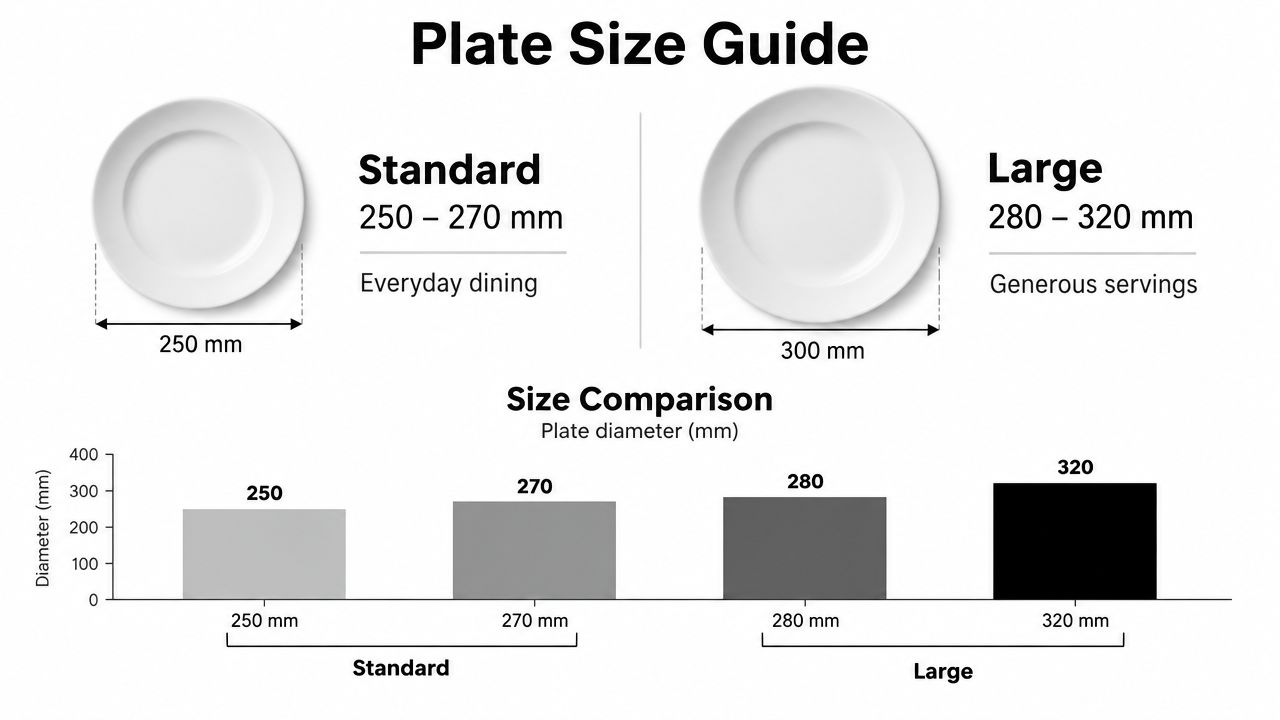
A 250 mm plate is the familiar Australian dinner-plate benchmark. For a plate to feel large, shoppers usually look at 280 mm or 300 mm formats, though the right choice depends on what the meal needs to hold. Nisbets Australia describes the traditional 250 mm size alongside growing use of 280 mm and 300 mm plates.
Use these ranges as practical starting points:
- 250 to 270 mm, approximately 10 to 10.6 inches: A standard everyday size. It suits compact tables, ordinary mains and dinnerware sets where one plate must cover most meals.
- 280 mm, approximately 11 inches: A useful large dinner plate for roast vegetables, salad and protein. Each element has room to sit apart, without making the plate feel like a serving platter.
- 300 mm, approximately 12 inches: A broader format for pasta with toppings, open-faced meals, share-style proteins or plating that relies on visible space around the food.
- 320 mm and beyond, approximately 12.6 inches or more: A specialised choice. It can sit beneath a smaller bowl, replace a charger visually or present a generous buffet serving, but it takes more cupboard and table space.
Diameter alone does not define a dinner plate. A broad plate with a deep rim may leave less usable area than a slightly smaller coupe-style plate, while a raised edge can keep sauce contained during cutting. Check the food-contact surface, not only the outside measurement.
Functional plates are different from chargers
A charger plate is generally a decorative base. It frames the place setting and stays beneath the dinnerware, rather than carrying the meal directly. A 300 mm functional plate can hold food, whereas a similarly sized charger may be designed to remain clean under a smaller plate.
The distinction matters at home. Choose a functional large dinner plate if roast dinners, pasta and composed mains will share one format. Choose a charger when the aim is a layered formal setting. Using both may leave limited room for glasses, cutlery and serving bowls.
Measure the table before buying, especially for four large settings. Place the items used for a typical meal on the surface, then select the smallest diameter that gives each component a clear position. This plate buying guide offers further help with dinnerware formats, while the practical test remains simple: the plate should support the meal without crowding the rim or its neighbours.
How Australian Plate Sizes Have Grown Over Time
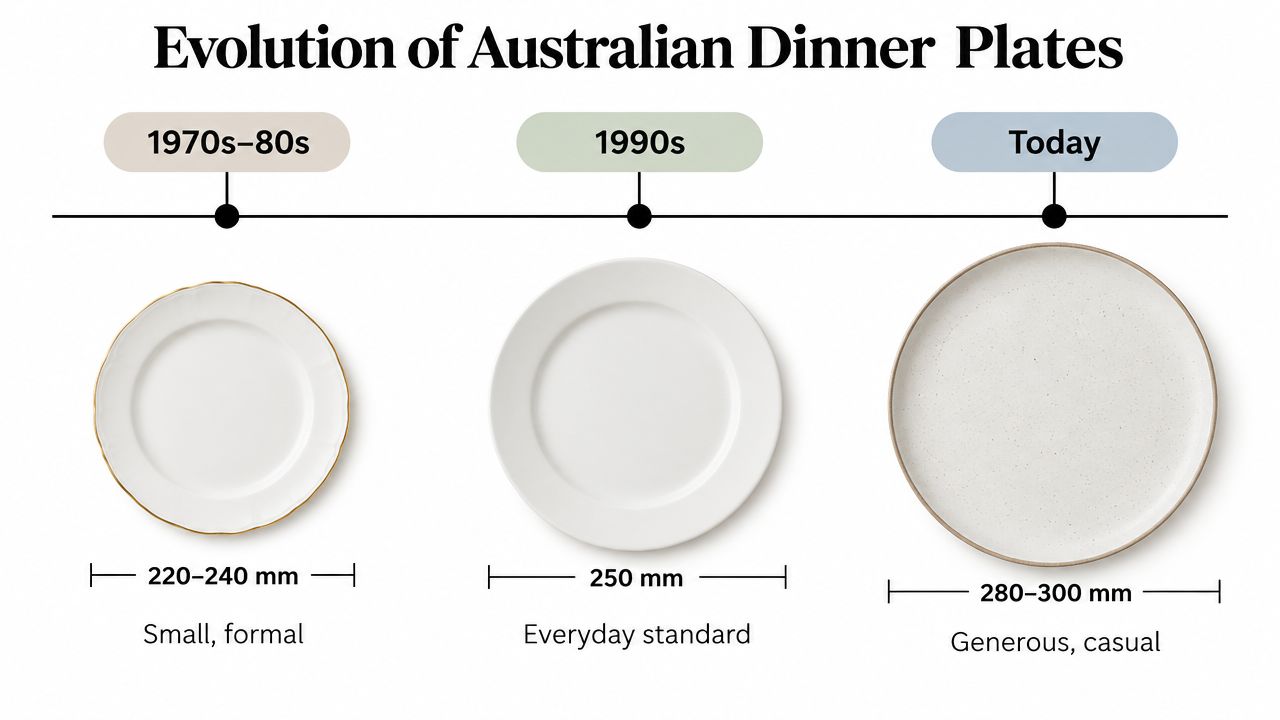
At a family dinner, a plate that once suited a compact serving may feel crowded beneath a roast, vegetables and sauce. Australian plate sizes reflect these changing meal patterns and table settings, rather than a simple pursuit of oversized crockery. The traditional benchmark is 250 mm, while earlier food-service settings used smaller formats and later restaurants adopted broader surfaces. Bunzl Australia's food-history timeline describes 215 mm plates in the 1960s, the 250 mm individual dinner plate in the 1980s, and later growth in upmarket settings.
From shared platters to individual presentation
Earlier table settings often centred on shared food, with diners serving themselves from dishes in the middle of the table. As individual meals became more common, the dinner plate needed to carry the full serving, not provide a small place beside communal bowls. Restaurant presentation then encouraged wider surfaces for a central protein, vegetables and sauce arranged with visible separation.
A 280 mm plate can therefore feel contemporary without looking excessive. Australian buying guidance places 280 mm and 300 mm formats among choices for modern presentation and larger servings. Dinner plates are also commonly described within the 25 to 30 cm range, so larger formats now sit within ordinary tableware selection rather than a specialist niche.
The change also suits casual grazing, shared boards and relaxed entertaining. A broad plate can hold a composed roast dinner, a pasta dish with salad, or leftovers arranged with enough space to keep wet and dry foods apart. Like a larger work surface, it gives the cook more room to arrange food, but it does not require every meal to look formal.
Titanium's appearance in everyday tableware follows this practical shift. Buyers can consider a larger, durable eating surface alongside porcelain and stoneware, particularly when one plate must handle family dinners, outdoor meals and frequent washing. The material choice still needs checking against the product's care instructions, but its growing presence broadens the options for daily use.
Comparing Materials From Porcelain to Titanium
Diameter only tells you how much surface a plate offers. Material determines how that surface behaves when you lift it with one hand, stack it in a cupboard, load it into a dishwasher or use it several times a week.
| Material | Weight for a 280 mm plate | Chip and break resistance | Dishwasher safe | Price range |
|---|---|---|---|---|
| Porcelain | Light to moderate | Good hardness, but the rim can chip or the plate can break when dropped | Usually, follow the maker's instructions | Mid to premium |
| Stoneware | Moderate to heavy | Strong and substantial, though breaks can happen with impact | Usually, follow the maker's instructions | Budget to mid |
| Melamine | Light | High resistance to breaking, with possible surface scratching | Often, check the product instructions | Budget to mid |
| Titanium | Light | High resistance to corrosion and everyday impact | Depends on the product instructions | Premium |
Porcelain and stoneware
Porcelain suits a clean, refined setting. It's usually lighter and thinner than stoneware, has a smooth glazed surface, and works well when you want food colours to stand out. The trade-off is that a large porcelain plate can feel vulnerable around hard sinks, crowded dishwashers and stone benchtops.
Stoneware gives a heavier, more grounded feel. It suits rustic roasts, baked pasta and casual entertaining because the weight makes the plate feel stable. That same weight becomes inconvenient when you're carrying several settings or stacking deep shelves.
Melamine for flexible use
Melamine is useful when break resistance matters more than an oven-to-table appearance. It's light and practical for children, outdoor meals and busy households, but it shouldn't go in the microwave. Check the care instructions for the exact product, and don't treat it as a substitute for ovenware.
Why titanium is worth considering
Titanium brings a different balance to large dinner plates. It's lighter than stoneware, tougher than porcelain in everyday handling, resistant to corrosion, and available with a matte or polished finish. Those properties suit people who want a broad plate without adding the bulk or breakage risk associated with heavier ceramic.
A titanium surface also makes sense when easy cleaning is a priority. Use mild detergent, avoid assuming every finish has identical dishwasher instructions, and check the manufacturer's care guidance before buying a full set. For readers also comparing coatings and safety considerations, this guide to non-toxic dinnerware materials provides useful context.
Matching Plate Size to Meal and Table
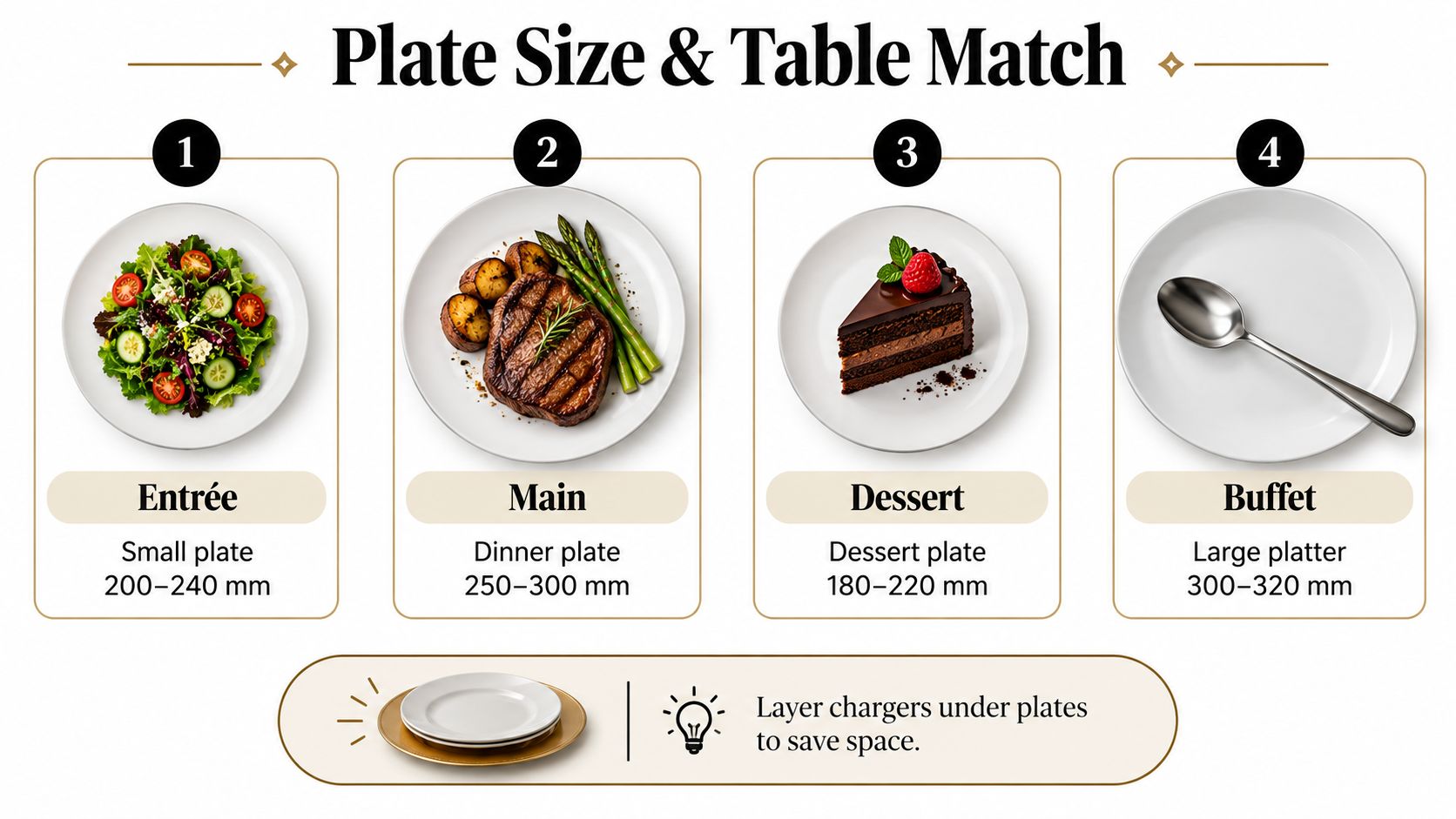
A plate should match the course before it matches the trend. Entrée, main, dessert and buffet service each create different demands, and using one oversized plate for all of them can make the table look less organised rather than more generous.
Start with the food
For a weeknight pasta, a 270 mm plate gives noodles and sauce enough room without turning a simple dinner into a formal presentation. A 290 mm plate is more comfortable for a roast, particularly when the meal includes several vegetables and you want to keep gravy from running into everything else.
A smaller plate can be more appropriate for lighter courses:
- Shared starters: Use a smaller plate so bread, dips and small salads can remain separate from the main setting.
- Dessert: A compact plate makes a slice of cake, fruit or a plated pudding look deliberate rather than lost.
- Buffet service: A broad plate or platter helps diners carry several foods without stacking delicate items on top of sauced dishes.
Leave room around the setting
The plate's diameter is only half the table calculation. Add the space required for cutlery, glasses, bowls and the movement of a guest's elbows. If two plates nearly touch before you add a water glass, the setting will feel crowded regardless of how attractive the crockery looks.
Chargers can add a frame beneath a smaller plate, but they also increase the footprint. Layer them only when the table has enough clearance, and remove them before serving if the meal needs every available centimetre. For a coordinated room, consider what your dining room needs beyond the table itself, including storage that keeps large plates accessible rather than wedged behind rarely used pieces.
Match the rim to the presentation
A wide rim works well when you want sauce pools, separated sides or a strong border around the meal. A narrow rim gives you more usable surface but can make a full serving look close to the edge. For everyday use, choose a shape that lets you cut food comfortably and carry the plate without touching the food or the rim.
Rethinking Plate Size and Portion Control
A larger plate doesn't automatically require a larger serving, but it can influence how much food you choose to put down. The risk appears when people fill the surface by eye instead of plating a considered portion. A broad empty area can look elegant, while a plate filled edge to edge can encourage the impression that a meal needs to be larger.
The Baker Institute's portion guidance specifically warns that plates over 25 cm can make portion control harder and recommends an entrée-size plate as an alternative. Read the Baker Institute's portion plate guide for that guidance. The point isn't that every large plate is unsuitable. It's that diameter changes the visual cue you use when deciding whether the meal looks complete.
Use space as part of the design
The Delboeuf illusion describes how the same amount of food can appear different depending on the size of the surrounding plate. On a smaller plate, the food reaches the rim and looks dense. On a larger plate, the same amount leaves more visible surface and can look lighter or more deliberate.
That makes large dinner plates useful as a styling tool when you control the placement:
- Build height: Stack vegetables or grains beside the protein rather than spreading every component into a thin layer.
- Use an off-centre arrangement: Leave a clean area of plate visible instead of placing the food directly in the middle and filling outward.
- Create a sauce pool: Add sauce beneath or beside the main element so it contributes colour without flooding the plate.
- Protect negative space: Stop plating when the meal looks balanced, not when the plate looks full.
A simple approach is to decide the protein, carbohydrate and vegetable portions before choosing the plate. Then use the diameter to give those elements separation. If you're trying to improve portion awareness, a smaller plate may provide a clearer visual guide. If presentation and flexibility matter more, a larger plate can work well when you resist filling its entire surface.
Buying and Caring for Large Dinner Plates
The most expensive mistake is buying a plate that looks right online but doesn't fit your kitchen. Measure the cupboard opening, shelf depth and dishwasher rack before ordering. A plate that fits the shelf may still collide with the dishwasher spray arm or sit too close to the rack above it.
Test the plate before buying a set
Take a practical approach in the shop or when inspecting a sample:
- Measure the actual diameter: Include the rim, not just the flat eating area. Product descriptions sometimes focus on the nominal size, while your cupboard has to accommodate the complete plate.
- Check the rim: Run a finger around the edge. It should feel even, smooth and free from chips, sharp points or rough glaze.
- Lift it one-handed: A large plate needs to feel stable without forcing your wrist to tilt. This test quickly exposes whether the material is too heavy for your routine.
- Compare two plates face-to-face: Place the rims together and look for rocking, uneven gaps or visible warping.
- Test the stack: Check whether the plates nest securely or slide when lifted from the top.
Shopping check: Bring the inside measurements of your cupboard and dishwasher rack with you. Guessing from the stated diameter can leave you with a set that's difficult to store.
Care depends on the material
Porcelain and stoneware commonly tolerate dishwasher cleaning, but follow the manufacturer's instructions and avoid assuming that decorative finishes behave like plain glaze. Stacking felt can reduce rim wear when plates are stored in a tight pile, particularly if you use them frequently.
Melamine should remain out of the microwave, even when it's suitable for dishwasher cleaning. Titanium plates can generally be wiped with mild detergent, and their corrosion-resistant surface is suited to repeated everyday handling, but the specific care instructions still take priority.
Store large plates where you can reach them
Deep drawers work well with vertical plate racks because you can lift one plate without disturbing the whole stack. In a cupboard, keep heavy formats on a lower shelf and use felt separators if the rims touch. Store the plates you use most often at the front. A beautiful large dinner plate doesn't improve weeknight meals if retrieving it requires moving half the kitchen.
Everti offers titanium dinnerware for shoppers who want a lightweight, durable alternative to ceramic large dinner plates, alongside other titanium kitchen and table essentials. Visit Everti to compare its tableware options and choose a plate that fits your meals, storage and everyday care routine.