

So, what exactly is a mini cookware set? It’s not just novelty kitchen gear. Think of it as a purpose-built collection of small-scale pots and pans, smartly designed for anyone who’s short on kitchen space, cooking for one, or part of a small household.
Why Mini Cookware Is a Small Kitchen Game Changer
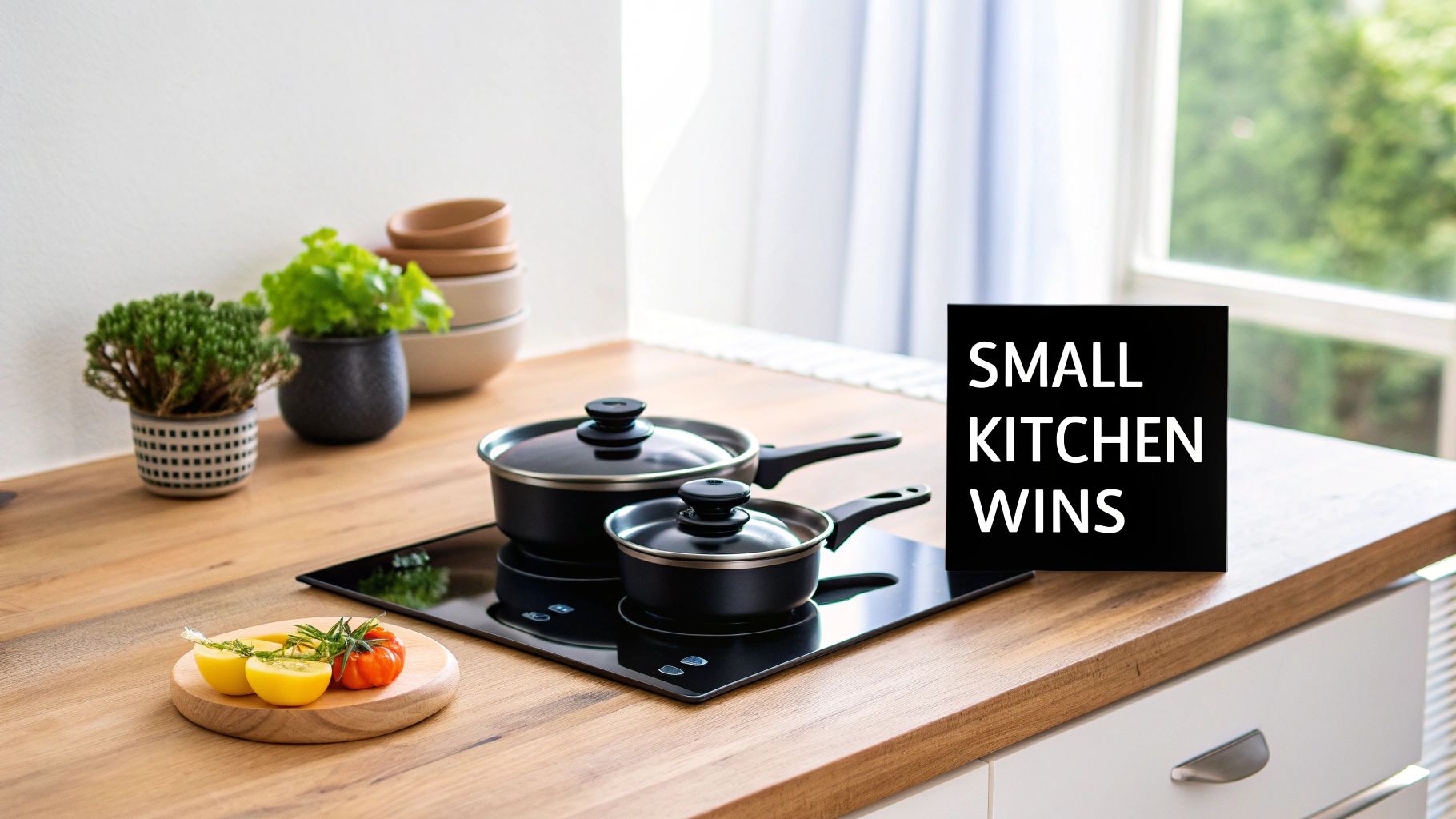
Ever tried to do a delicate job with a clumsy, oversized tool? That’s what it feels like using full-sized pots and pans in a tiny kitchen. A mini cookware set fixes this by giving you the right tool for the job. It's the difference between a chef reaching for a nimble paring knife instead of a huge cleaver for a bit of fine detail work.
This isn’t about swapping quality for a smaller size; it’s about making your cooking more efficient. These sets are thoughtfully designed to solve the real-world problems that millions of us face in smaller living spaces.
The Rise of Compact Cooking
The growing interest in smaller, more efficient kitchen tools isn't just a fleeting trend—it’s a direct response to how we live now. With more people moving to cities and household sizes getting smaller, the demand for space-saving solutions has exploded.
You can see this shift clearly in market trends. The Australian cookware market, which includes these compact sets, hit USD 664.44 Million in 2024. It's expected to climb to a massive USD 1,369.43 Million by 2033. This surge is fuelled by products perfectly suited for apartment dwellers and solo cooks.
A mini cookware set isn’t just about saving cupboard space. It’s a complete system designed to make cooking faster, reduce food waste, and simplify cleanup in environments where every square centimetre counts.
For anyone embracing life on the road or in a cosy living space, mini cookware completely changes the game. You can check out some smart cooking solutions for nomadic travelers to see just how much the right gear can help.
In the end, these sets are brilliant at solving a few key problems:
- Limited Storage: They’re designed to nest together perfectly, freeing up precious room in your cabinets and drawers.
- Faster Meal Prep: Smaller pans mean faster heat-up times. You’ll save on both cooking time and energy bills.
- Portion Control: Cooking in a smaller pot or pan is a natural way to keep your serving sizes in check.
Choosing the Right Material for Your Mini Cookware
Picking the right material for your mini cookware is a bit like choosing the right tyres for a car. It's a decision that dictates performance, how long it's going to last, and how it handles different conditions. It’s honestly the most important choice you'll make, as it affects everything from how fast your food cooks to how painful the cleanup is.
Each material brings its own unique set of pros and cons to the kitchen. A big factor is thermal conductivity – a fancy way of saying how quickly and evenly the pot or pan heats up. Get this wrong, and you end up with frustrating hot spots that burn your food in one area while leaving another part completely raw. So, let’s get into the popular options to help you find a set you’ll actually love using.
The Reliable Workhorses: Stainless Steel and Non-Stick
Stainless steel is the dependable all-rounder, the trusty ute of the kitchen world. It’s tough, stands up to rust and scratches, and won't react with acidic foods like tomatoes, so the flavour of your meals stays pure. Its sheer durability has made it a staple in kitchens everywhere. In fact, the Australian market for stainless steel cookware hit a staggering USD 369.4 Million in 2024, with pots and pans accounting for almost 45% of that. You can dig deeper into these market trends over at OpenPR.
Then you've got non-stick aluminium, famous for its sheer convenience. It’s super light, heats up in a flash, and makes washing up almost effortless. The trade-off? That non-stick coating can be a bit delicate. You have to treat it with care to avoid scratches, which can ruin the surface and shorten its lifespan.
Choosing a material isn't just a technical decision; it's a commitment to a certain way of cooking. Your choice will shape your daily kitchen routine, from prep to the final wipe-down.
It’s also worth thinking about how different materials affect your wellbeing. If you're keen on finding non-toxic cooking surfaces, our guide on the best cookware for health is a great place to start.
The Lightweight Champion: Titanium
For anyone who wants the absolute best in both performance and portability, titanium is in a league of its own. It first made its name in aerospace engineering, but it turns out those same high-performance qualities are perfect for cookware.
Titanium's biggest selling point is its incredible strength-to-weight ratio. A titanium pot can be up to 45% lighter than its steel counterpart, without giving up an ounce of durability. This makes it the clear winner for a few key scenarios:
- Backpacking and Camping: When every single gram in your pack makes a difference.
- Caravan and RV Living: Perfect for maximising storage and keeping your payload light.
- Minimalist Kitchens: You get lifetime durability in a featherlight package.
But it’s not just about the weight. Titanium is also biocompatible and completely non-reactive, which means the taste of your food remains pure and untainted. It’s also incredibly resistant to corrosion and scratches, making it a true buy-it-for-life investment that can handle the knocks of daily use and rugged adventures alike. All this combined makes a titanium mini cookware set a brilliant choice for any discerning cook.
Mini Cookware Material Comparison
To make the choice a little easier, here’s a quick rundown of how the most common mini cookware materials stack up against each other.
| Material | Pros | Cons | Best For |
|---|---|---|---|
| Titanium | Extremely lightweight, strong, non-reactive, corrosion-resistant, built to last a lifetime. | Higher initial cost, lower thermal conductivity (can have hot spots). | Backpacking, camping, caravan life, and anyone prioritising weight and durability. |
| Stainless Steel | Very durable, non-reactive, scratch-resistant, easy to clean, distributes heat well (especially with a core). | Can be heavy, food may stick without proper technique or oil. | Everyday home cooking, minimalist kitchens, and those wanting a reliable, long-lasting set. |
| Non-Stick Aluminium | Excellent heat conductor, lightweight, very easy to clean, affordable. | Non-stick coating can scratch easily and wear out over time, not ideal for very high heat. | Beginners, quick meals like eggs and pancakes, and cooks who value convenience above all. |
| Cast Iron | Unbeatable heat retention, naturally non-stick when seasoned, incredibly durable. | Extremely heavy, requires regular seasoning to prevent rust, slow to heat up. | Searing, slow-cooking, and camp oven cooking where weight isn’t a concern. |
Ultimately, there’s no single "best" material for everyone. The right choice really comes down to how you plan to use your cookware and what you value most—whether that's convenience, durability, or portability.
The Hidden Perks of Cooking Small
Sure, the most obvious win with a mini cookware set is saving space. But if you think it's just about reclaiming a bit of cupboard real estate, you're missing the best part. The real magic is in how these little sets subtly upgrade your entire cooking routine, making it quicker, smarter, and way more efficient.
The first thing you'll notice is the speed. Smaller pots and pans have less metal to heat, so they get screaming hot much faster than their bigger cousins. It’s simple physics, really. For anyone juggling a hectic schedule, this means your morning porridge, that quick weeknight sauce, or a single-serving stir-fry is on your plate in record time. And you’ll use less energy to boot.
It's More Than Just Saving Space
Beyond getting dinner ready faster, cooking with smaller gear has a neat side effect: it naturally guides you towards better portion control. You almost can't help it. You start making just the right amount of food for one or two people, which is a surprisingly effective way to build healthier eating habits without even thinking about it. No more guessing games or facing the temptation of a giant pan full of leftovers.
As you start looking into these sets, you'll find they come in a few key materials, each with its own personality.
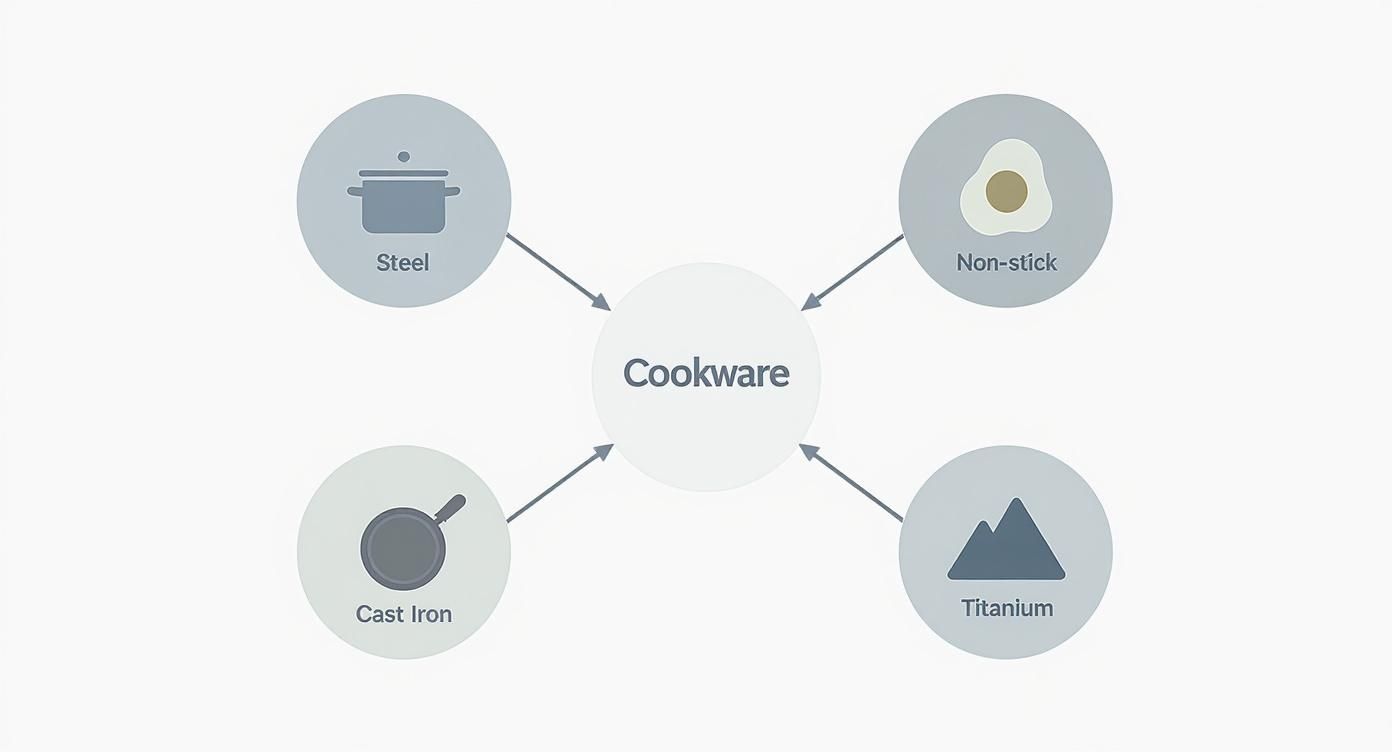
From feather-light titanium perfect for hikers to the easy-cleanup of non-stick for your morning eggs, there’s a material suited for every kind of cook.
Where Compact Cooking Really Shines
The versatility of a mini cookware set means it can slot into almost any lifestyle. Think about it:
- The Solo Professional: Long day at the office? Whipping up a meal for one in a small saucepan is fast and leaves you with barely any washing up.
- The University Student: When you're in a dorm with a tiny kitchenette, a small frypan and pot are all you need to make real, satisfying food.
- The Camper or Backpacker: Out on the trail, every gram counts. A lightweight titanium set is a non-negotiable for cooking hearty meals without weighing you down.
- The Couple in a Studio Apartment: You can still cook up a storm without sacrificing your limited counter space to bulky pots and pans.
A mini cookware set isn't about cooking less; it's about cooking smarter. It's a tool for efficiency, less waste, and a simpler path from a raw ingredient to a finished meal.
In the end, these compact sets are about more than just their size. They’re about adopting a more mindful approach in the kitchen, where your tools are perfectly sized for the job at hand. This simple shift can turn cooking from a daily chore into something you genuinely enjoy, proving that great things really do come in small packages.
How to Find the Perfect Mini Cookware Set
Choosing the right mini cookware set can feel like a huge task, but it really doesn't have to be. The secret is to look past the price tag and get honest about what you actually need. Think of it as creating a personal blueprint for your ideal compact kitchen setup.
Instead of getting bogged down by a sea of options, just start by asking yourself a few simple, but very important, questions. Your answers will act as a filter, quickly helping you zero in on the sets that genuinely make sense for you. It’s a practical way to make sure you end up with gear you’ll actually use and love.
Define Your Cooking Needs
First things first, get a clear picture of your day-to-day cooking. Don't worry about what a professional chef might use; what do you need on a typical Tuesday night? A student living alone has completely different needs from a couple fitting out a campervan for weekend getaways.
Think about these key points to build your profile:
- Household Size: Are you cooking for one, or for two? This will tell you how many pieces you really need. A student might get by perfectly with just a small saucepan and frypan, whereas a couple might want a slightly larger pot for meals they can share.
- Cooking Style: Are you mostly just reheating soups and frying eggs, or do you enjoy whipping up more complex sauces and stews from scratch? Your answer will decide whether a basic duo is enough or if a more versatile multi-piece mini cookware set is the way to go.
- Storage Space: Is your kitchen seriously short on space? If the answer is yes, then features like stackable designs and detachable handles suddenly become non-negotiable. They can make the difference between a set that fits neatly in one drawer and one that doesn't fit at all.
Answering these questions honestly stops you from buying a set full of pots and pans you’ll never even touch. You're aiming for maximum usefulness with a minimal footprint. For a wider look at different set-ups, our guide to choosing a pot and pan set has some extra tips that might help.
Match the Cookware to Your Kitchen
Once you’ve figured out what you'll be cooking, it's time to make sure your new set actually works with your kitchen. This is a step people often skip, and it can lead to some serious frustration later. There’s no point owning a beautiful set of pans if you can’t even use them on your cooktop.
Your cooktop is the heart of your kitchen. Making sure your mini cookware is compatible isn't just a tiny detail—it's the difference between a great cooking experience and a brand-new set you can't even use.
Before you pull the trigger, double-check these technical points:
- Cooktop Compatibility: Take a look at your hob. Is it gas, electric, or induction? Not all materials work on induction cooktops, which need a magnetic base to function. If you have an induction stove, always look for the "induction-compatible" symbol.
- Oven Safety: Do you like to finish dishes in the oven? If so, make sure the pots, lids, and handles are all oven-safe. Don't forget to check their maximum temperature rating, too.
- Lid Design: Lids are more important than most people think. Do you prefer glass lids so you can keep an eye on your food, or solid metal lids that are better at holding in heat? Some clever sets even have universal lids that fit multiple pots, saving you even more space.
By taking the time to think about your personal needs and matching them to the realities of your kitchen, you can confidently choose a mini cookware set that’s not only a pleasure to use but also a perfect fit for your compact home.
Tips for Mastering Small Pot and Pan Cooking
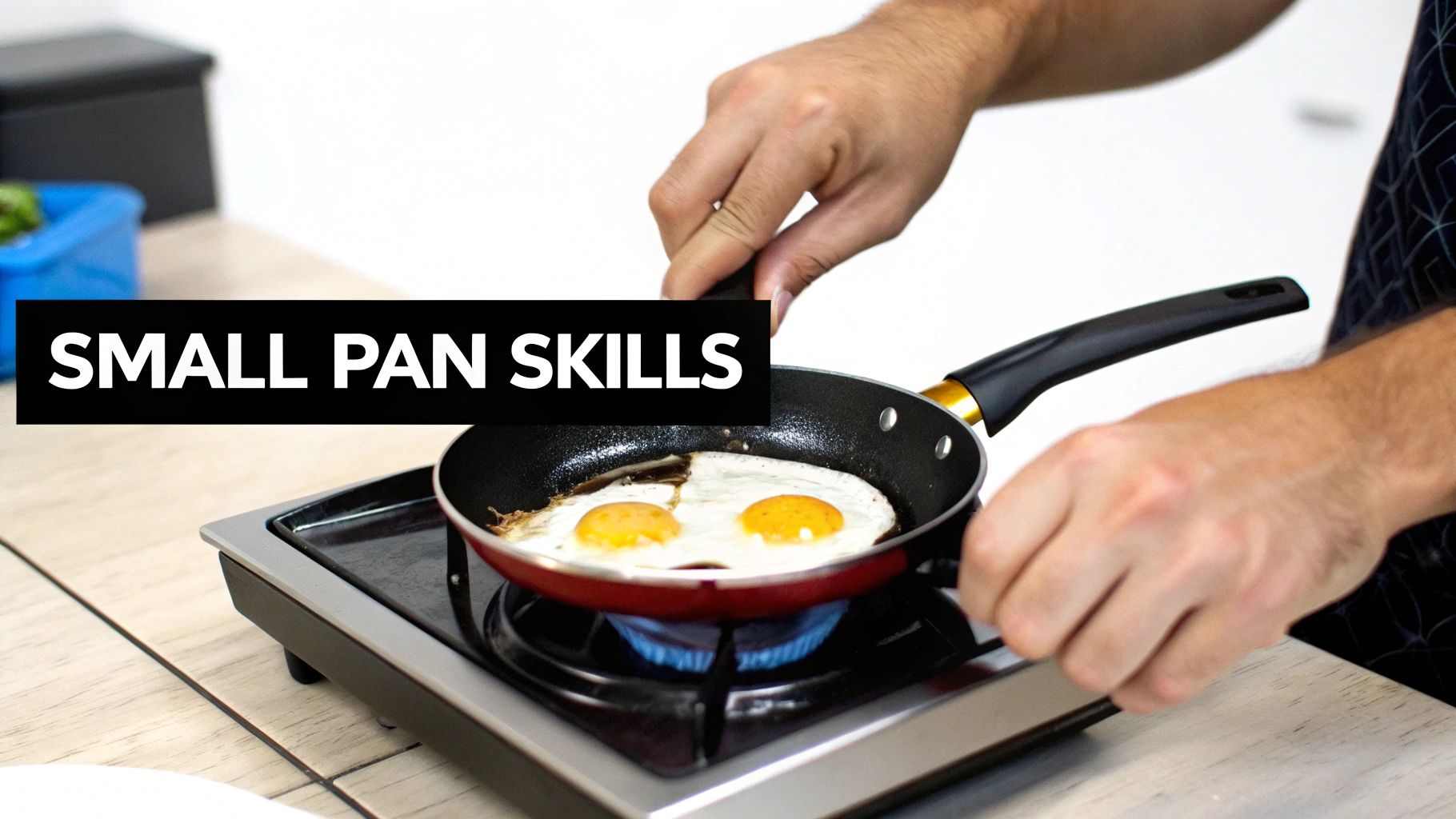
Moving to a mini cookware set takes a little getting used to, but you'll be surprised how quickly you get the hang of it. With a few simple tricks, you can unlock incredible flavour and efficiency, proving that a smaller pan doesn’t have to mean smaller results. The real secret is to embrace what makes compact cooking different.
One of the first things you’ll notice is how you manage heat. Smaller pots and pans react to temperature changes almost instantly because there's less metal to heat up or cool down. This speed is a huge plus for whipping up quick meals, but it does mean you need to pay closer attention. Think of it like driving a zippy sports car instead of a heavy truck—it responds immediately, so your touch needs to be just as precise.
Prevent Overcrowding and Adjust Your Timing
The golden rule of cooking with mini cookware? Give your ingredients room to breathe. Overcrowding a small pan is a one-way ticket to steamed, soggy food instead of a beautiful, crisp sear. If you try to brown too much meat at once, the pan’s temperature will plummet, and your ingredients will start to bubble in their own juices instead of frying.
Here are a few tips to get it right:
- Cook in Batches: Cooking for two? It’s often better to sear your protein or veggies in two smaller batches. This keeps the pan piping hot and guarantees everything gets that perfect golden-brown finish.
- Use Less Liquid: Smaller volumes of liquid come to a boil in a flash. If a recipe calls for reducing a sauce, it's going to happen much faster than you're used to, so don't wander off!
- Adjust Cooking Times: Be ready for everything to cook faster. A single-serving dish might be ready 20-30% quicker than in a full-sized pan, so start checking for doneness a bit earlier than you normally would.
By respecting the pan's size, you're playing to its strengths. This mindful approach is what helps your mini cookware set deliver delicious, perfectly cooked meals every single time.
Mini Recipes for Maximum Flavour
The best way to get comfortable with your new set is to dive in with recipes that are perfectly suited for its size. These single-serving dishes are a fantastic way to practise your technique and discover just how versatile a compact kitchen can be.
Small cookware encourages creativity. It challenges you to focus on high-impact flavours and efficient techniques, turning a simple meal into something special without the waste or the cleanup of a larger production.
Here are a few ideas to get you started:
- Single-Serving Shakshuka: Sauté onions and capsicum in your small pan, pour in some spiced tomatoes, make a little well in the centre, and crack an egg right into it. Cover and cook until the white is just set.
- Small-Batch Risotto: A mini saucepan is absolutely perfect for a creamy, single-portion risotto. The constant stirring feels like much less of a chore in a smaller pot.
- Perfect Pan-Seared Scallops: Get your mini frypan screaming hot to achieve a flawless, caramelised crust on a handful of scallops without overcooking their delicate interior.
These simple yet impressive meals show that cooking with a mini cookware set isn't about limitation—it's about precision, efficiency, and making seriously good food.
Keeping Your Mini Cookware in Top Condition
Think of your mini cookware set as a long-term investment. With the right care, those pots and pans will be your trusted companions for countless meals to come. The good news is, maintenance is pretty straightforward, though the specifics do change depending on the material you're working with.
First things first: cleaning. It’s so tempting to just chuck everything in the dishwasher, but that’s not always the best idea. The intense heat and harsh detergents can be brutal on certain finishes, especially non-stick coatings and even the beautiful lustre of titanium. For most sets, a gentle hand wash with a soft sponge and a bit of dish soap is the way to go. If you're really not sure, it's worth checking out some detailed advice on which pans are genuinely dishwasher-safe pans before you risk any damage.
Think of cookware maintenance like caring for a good knife. A few moments of proper cleaning and storage after each use will preserve its performance and lifespan, making it a reliable tool for every meal.
Material-Specific Care Tips
Every material has its own personality and needs a slightly different touch to keep it in prime condition. Nailing these little details is the secret to making your cookware last.
-
Titanium: When it comes to cleaning titanium, stay away from anything too abrasive. All you really need is a non-scratch scourer to deal with any stubborn bits of food without marking the surface. Plus, its natural resistance to corrosion means you never have to worry about rust.
-
Cast Iron: A mini cast iron skillet requires a bit of old-school love: seasoning. After a quick wash with hot water (go easy on the soap), you need to dry it completely. The best way is to pop it on the stove over a low flame, then wipe a very thin layer of cooking oil on the inside. This simple step builds up that prized natural, non-stick surface.
-
Non-Stick: This one is all about protecting the coating. Always use silicone or wooden utensils to avoid scratches, and try to steer clear of super high heat, as it can break down the non-stick layer over time.
Smart Storage for Small Spaces
Once your cookware is sparkling clean and bone dry, storing it properly is the final step. It’s not just about saving space; it's about preventing dings and scratches.
Most mini sets are designed to be stackable, which is a fantastic space-saver. Just remember to slip a soft cloth or a proper pot protector between each piece. This stops them from rubbing against each other. If your kitchen is truly tiny, think vertically! A hanging pot rack can be a game-changer, and a magnetic strip for lids is a brilliant way to keep everything organised and in perfect nick.
Got Questions About Mini Cookware?
Venturing into the world of mini cookware often brings up a few queries. That's perfectly normal. Let's tackle some of the most common ones so you can find the perfect set for your needs and use it with confidence.
Can I Use Mini Cookware on an Induction Cooktop?
This is a big one, and the answer comes down to one thing: the material. For any pot or pan to work on an induction hob, it needs to be magnetic. It's a simple physics thing.
- Good to Go: Stainless steel and cast iron sets are almost always induction-friendly.
- Check the Base: Aluminium cookware is a no-go on its own, unless it has a special magnetic steel plate fused to the bottom.
The easiest way to be certain? Just look for the little "induction-compatible" squiggle symbol on the packaging or product description before you buy.
Is a Titanium Mini Cookware Set Worth It?
If you're someone who values gear that's both tough as nails and feather-light, then yes, a titanium set is an incredible investment. The upfront cost is definitely higher, but for backpacking, camping, or life on the road in a caravan, its strength-to-weight ratio is simply unmatched.
The other brilliant thing about titanium is that it’s completely non-reactive. This means it will never impart a metallic taste to your food, no matter what you're cooking. For serious adventurers who want gear that lasts a lifetime, it's an investment that pays off trip after trip.
How Many Pieces Should a Starter Set Have?
When you're starting out, think versatility, not volume. For one or two people, a 3- to 5-piece set is the sweet spot. You're looking for the workhorses of the kitchen that can handle most daily jobs without cluttering up your small space. A small saucepan with a lid and a compact frying pan are the perfect foundation.
Discover the ultimate in durable, lightweight, and non-toxic cooking with Everti’s range of pure titanium essentials. Explore the collection and elevate your kitchen at Everti.