

Picking the right cookware for your Aussie kitchen is about so much more than a simple upgrade. It’s a genuine investment in your family’s health and, let's be honest, your wallet. The best cookware is durable, non-toxic, and hygienic, giving you complete peace of mind every time you cook. This guide will walk you through everything you need to know to choose fantastic kitchen gear that will literally last a lifetime.
Why Your Cookware Choice Matters
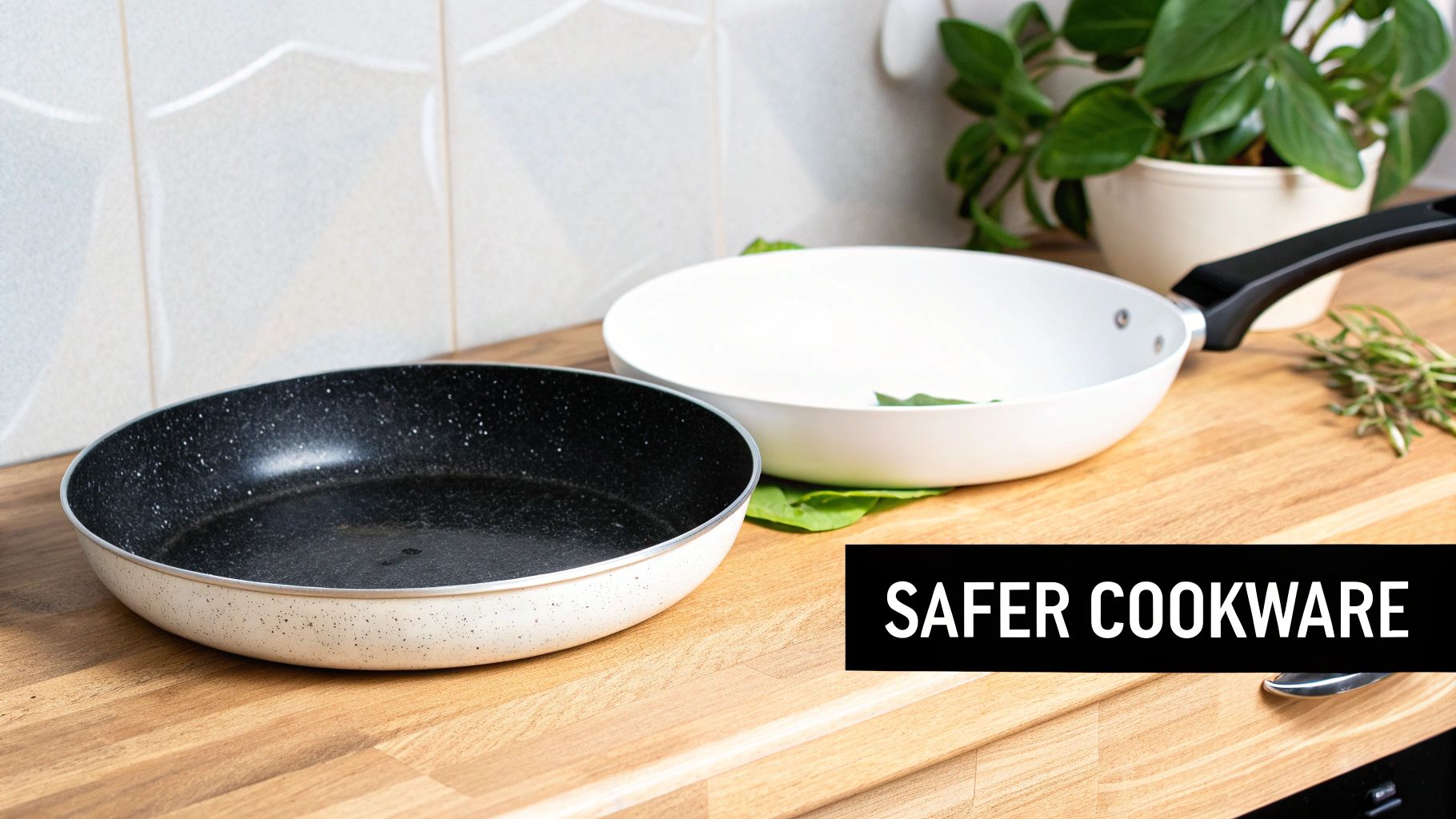
Have a quick think about the gear you use every single day. Are you battling with stained plastic chopping boards that just won't let go of last night's onion smell? Or maybe you're side-eying that non-stick pan, wondering what’s in the coating that’s starting to flake off. If that sounds familiar, you're definitely not alone. So many Australian homes are dealing with these exact issues, which is why there's a growing demand for kitchenware that’s genuinely clean, safe, and built to last.
The problem, more often than not, boils down to the materials. A lot of common kitchen products are made with hidden chemicals or simply break down over time, which can create real health concerns. This guide is here to cut through all that noise and tackle these common worries head-on.
Moving Beyond Disposable Kitchenware
We want you to feel confident about upgrading your kitchen with tools that provide real, long-term value. We’ll dig into why some materials just don't cut it and introduce you to safer, tougher alternatives. After all, a truly safe kitchen is about every single surface your food comes into contact with, not just your pots and pans.
Getting your kitchen set up for healthier cooking means understanding a few key things:
- Material Safety: Knowing which materials are inert—meaning they won't leach nasty chemicals into your food.
- Durability and Value: Picking products that can handle the daily grind without needing to be replaced every couple of years.
- Hygiene and Maintenance: Choosing non-porous surfaces that are a breeze to clean and don't give bacteria a place to hide.
Choosing high-quality cookware is an investment in your family's well-being. It’s about moving away from a cycle of replacing cheap, disposable items and embracing tools that promise a lifetime of safe, delicious meals.
It's not just about the pans, either. A safer kitchen also means knowing how to use your cooking oils correctly. For example, getting some expert guidance on high-heat cooking with olive oil can make a huge difference in preparing healthy meals.
A Clear Path to a Healthier Kitchen
We'll give you a straightforward way to assess cookware, so you can make smart choices when you're searching for "my cookware australia". By focusing on materials that are pure, hygienic, and incredibly long-lasting, you can create a kitchen that will support your family's health for decades to come.
For a deeper dive, you can explore our detailed analysis of the best cookware for health. Think of this guide as your trusted resource to help you sort through the options and find kitchenware that truly delivers on its promise of safety and performance. Let's start the journey to a cleaner, safer, and more enjoyable way of cooking.
Why Your Cookware Material Is the Most Important Choice
Think of your cookware as the foundation of every meal you cook. You wouldn't build a house on shaky ground, so why prepare your family's food on questionable materials? The stuff your pots, pans, and even cutting boards are made from is easily the most important factor in their safety, how they perform, and how long they'll last.
So many common kitchen materials come with hidden problems. Plastics, for instance, can contain chemicals like BPA and are now known to shed tiny microplastics into our food and the environment. Then there are the coated non-stick pans, which often rely on PFAS chemicals that can break down at high heat and flake off into your dinner. Even some lower-grade metals can react with acidic foods like tomatoes, changing the taste and potentially leaching unwanted elements.
When Aussies search for my cookware australia, it’s clear that health and safety are front of mind. The Australian premium cookware market is actually set to grow from USD 78.04 million to USD 117.19 million, a change driven by people actively looking for better quality, non-toxic gear. While non-stick is still popular, this growth signals a real shift towards proven quality and durability. You can dive deeper into these trends and read the full research about Australian cookware preferences.
The Three Pillars of Great Cookware
To cut through all the marketing noise and make things simple, we can judge any kitchen material against three core principles. Think of them as the pillars holding up a truly safe and reliable kitchen.
- Purity: Is the material clean and simple, without coatings, additives, or hidden layers? Pure materials don't rely on chemical surfaces that can wear away, peel off, or leach into your food.
- Durability: Is it built to last? A durable material can handle scratches, won’t warp under heat, and resists corrosion, meaning you won’t have to replace it every few years.
- Inertness: Is the material non-reactive and non-porous? An inert surface won't mess with your ingredients or hang onto flavours, smells, and bacteria from last night's meal.
This simple framework is a powerful way to look at any piece of cookware, from a frying pan to a chopping board. It helps shift the focus from short-term convenience to long-term safety and performance.
Where Common Materials Fall Short
Let's use this framework to look at some of the most common materials found in Aussie kitchens.
Coated non-stick pans fail the purity test. Their convenience comes from a chemical coating that was never meant to be a permanent part of the pan. Over time, heat and utensils can damage this coating, breaking the very promise of a safe cooking surface.
Plastic cutting boards and containers often fall short on both durability and inertness. All those knife grooves create a porous surface that traps bacteria and is almost impossible to fully sanitise. When weighing up the safety of different kitchen items, it helps to get a broader view by understanding materials like BPA-free plastic and their place in food preparation.
At the end of the day, you want to find a material that doesn't force you to compromise. You shouldn't have to pick between convenience and safety, or performance and longevity. The best material delivers on all fronts.
Building a Healthier Kitchen from the Ground Up
By setting this clear standard—Purity, Durability, and Inertness—you create a solid foundation for finding cookware that’s genuinely good for you. This isn't about chasing the latest fad; it's about understanding the fundamental qualities that make a kitchen tool safe and effective for life.
This approach gives you the confidence to look past the flashy features and ask the most important question: "What is this actually made of?" Answering that is the first and most critical step towards building a kitchen that truly supports your family's health. It ensures every meal you create starts from a clean, pure, and reliable place.
Meet Titanium: The Ultimate Non-Toxic Material
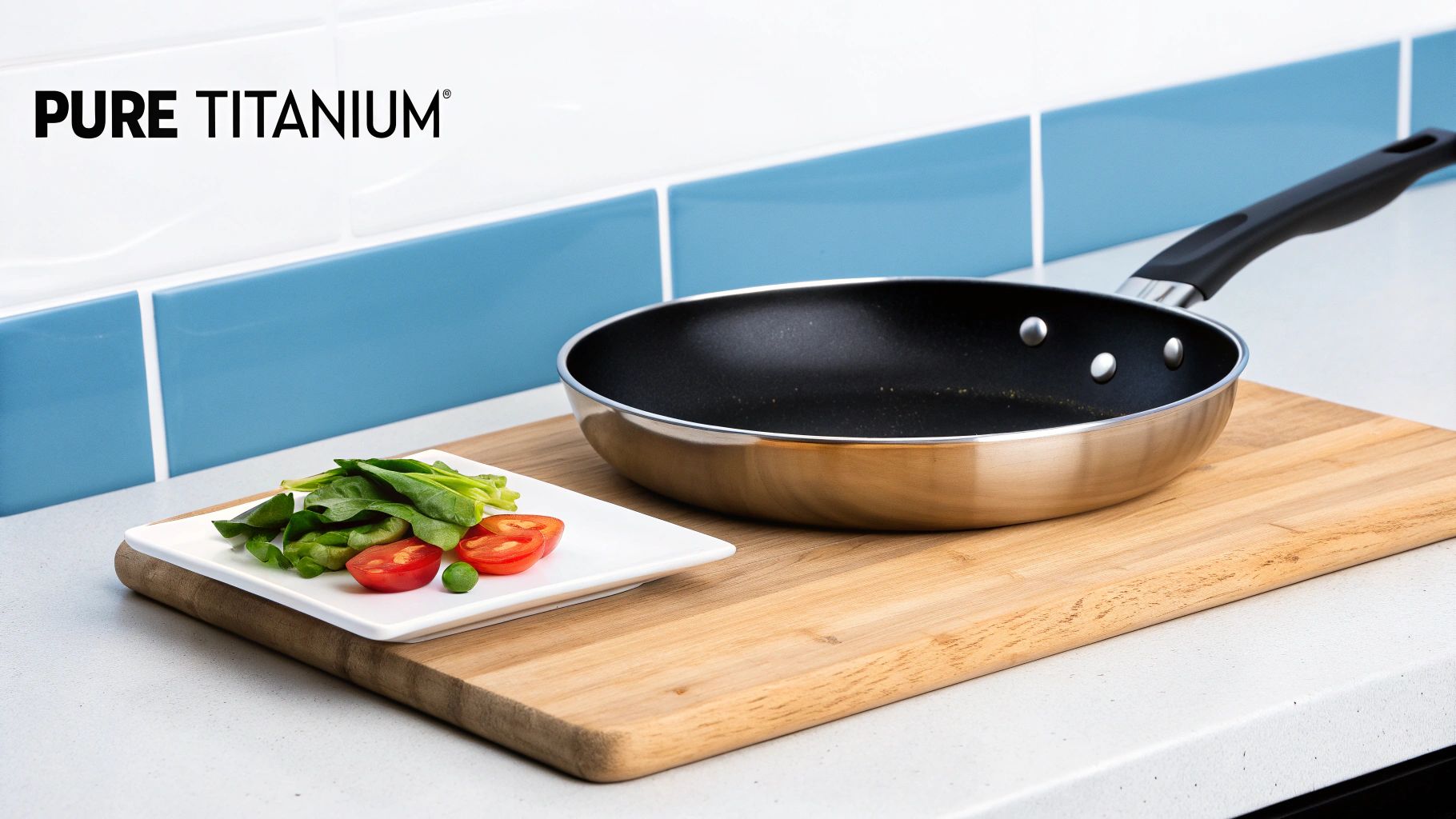
Now that we’ve covered the core principles of what makes cookware truly safe—Purity, Durability, and Inertness—it’s time to introduce the one material that masters them all. This isn't some new-fangled invention or a passing trend. It's a pure element, long trusted in demanding fields like medicine and aerospace for its unmatched reliability and safety. That material is titanium.
For the modern Australian kitchen, titanium is the clear hero. It effortlessly ticks every box for a hygienic, long-lasting, and completely non-toxic cooking experience. It’s the ultimate upgrade for anyone who is serious about their family’s health and the quality of their meals.
Strength Without the Strain
One of titanium’s most celebrated features is its incredible strength-to-weight ratio. Picture a material that’s as strong as steel but at nearly half the weight. This means you get cookware that’s incredibly resistant to dents, warping, and scratches, yet it’s still light and easy to handle for any home cook.
This unique combination makes it perfect for daily use. Think of a sturdy cutting board that won’t bend or a frying pan that’s a breeze to move from the stovetop to the oven. You no longer have to choose between a pan that will last and one that’s actually comfortable to use.
A Naturally Hygienic Surface
For health-conscious families, this might be the most compelling benefit of all: titanium naturally resists germs. Its surface is completely non-porous, which means there are no microscopic nooks and crannies for bacteria, mould, or funky odours to hide in. That's a huge step up from more traditional materials.
Think about your old wooden or plastic cutting board. Over time, knife cuts create tiny grooves that become a five-star hotel for germs, which are almost impossible to clean out completely. A pure titanium surface, on the other hand, stays smooth and impenetrable. This makes it exceptionally easy to sanitise, giving you a truly clean food prep area every single time.
Titanium’s purity is its greatest strength. Because it is uncoated, there are no chemicals to leach, no layers to peel, and no synthetic surfaces to degrade over time. It guarantees a lifetime of safe, clean meals.
Market trends show that for a brand like Everti, Australians are willing to pay a premium when a material offers clear functional advantages—such as titanium’s corrosion resistance, natural antibacterial behaviour, and lack of coatings or BPA—particularly in core items like cutting boards and pans. You can discover more insights about Australia's premium cookware market and see why quality is becoming a top priority.
Meet Australia’s Titanium Specialist
When you’re looking for my cookware australia, sourcing a verified pure product is absolutely essential. That’s where Everti comes in. As Australia’s first SGS-verified 99.9% titanium specialist, Everti is setting a new standard for quality and purity in the local market.
SGS verification is a globally recognised benchmark for quality and integrity, giving you independent confirmation that the titanium used meets the highest purity standards. This commitment ensures every piece of Everti kitchenware delivers on the promise of being completely inert, non-toxic, and built to last a lifetime. To better understand what sets this material apart, explore our guide to the benefits of pure titanium cookware. This level of verified quality provides the ultimate peace of mind.
A Head-to-Head Look at Common Cookware Materials
Walking down the cookware aisle can feel a bit overwhelming, can't it? Stainless steel, cast iron, non-stick... the options are endless. To cut through the noise, let's put the most common materials side-by-side and see how they really stack up.
We'll look at them from the perspective of what truly matters in a busy Australian kitchen: Is it hygienic? Is it safe for my family? Will it last? This way, you can see for yourself where each material shines and, just as importantly, where it falls short. It becomes pretty clear why pure titanium is the smartest investment for a health-conscious home.
Stainless Steel
There’s a reason stainless steel is a staple in so many Aussie kitchens. It’s tough, it’s uncoated, and it can handle seriously high heat, which is brilliant for getting a perfect sear on a steak.
But it has its quirks. Food has a tendency to stick if you don't get the temperature and oil just right. It can also develop a rainbow-like tarnish over time, and cleaning off burnt-on food can be a real workout. While it's generally considered safe, some lower-quality versions can contain nickel, which might be an issue for anyone with sensitivities.
Cast Iron
You can't deny the rustic charm and incredible performance of cast iron. It holds heat like nothing else, and once you get that seasoning right, you’ve got a naturally non-stick surface that can literally last for generations. It's a true kitchen heirloom.
The trade-off? It's seriously high-maintenance. You have to season it properly to stop it from rusting, it weighs a tonne, and it can react with acidic ingredients like tomatoes or wine, sometimes leaving a metallic taste in your food. It’s fantastic for certain jobs, but not a true all-rounder.
Non-Stick Coatings (PTFE/PFAS)
Let's be honest, the convenience is tempting. A quick wipe and you're done – it's easy to see the appeal. Non-stick pans also let you cook with less oil, which is a big plus for many health-conscious home cooks.
This convenience, however, comes with some serious strings attached. The coatings are fragile and scratch easily, and when they get too hot, they can release some pretty nasty chemical compounds. Their lifespan is frustratingly short; you're often lucky to get a couple of years out of them before they end up in landfill, hitting both your wallet and the environment.
Plastic and Wood (For Cutting Boards)
These are the default choices for chopping boards in most homes. Wood has some great natural antibacterial properties, and plastic is cheap and can be thrown in the dishwasher.
The problem is that both are porous. Every knife cut creates tiny grooves and scratches where bacteria can hide and multiply, making them incredibly difficult to get truly clean. They also hang onto strong smells and stains, and plastic boards are known to shed microplastics directly into our food.
The Big Picture: So many common materials force you to make a compromise. You might get easy cleaning but risk your health, or you might get amazing heat retention but have to deal with fussy maintenance. The real goal is to find something that ticks all the boxes, without making you choose between performance and peace of mind.
To really put this into perspective, let's lay it all out in a simple table. This gives you a quick, at-a-glance view of the pros and cons we've just discussed.
Cookware Material Comparison for the Australian Kitchen
| Material | Hygiene & Antibacterial | Durability & Lifespan | Non-Toxic Properties | Maintenance | Best For |
|---|---|---|---|---|---|
| Titanium | Excellent. Non-porous surface resists bacteria growth. | Lifetime. Extremely resistant to scratches, dents, and corrosion. | 100% Pure & Inert. No coatings, no leaching, no heavy metals. | Very Low. Easy to clean, no seasoning required. | Health-conscious cooks who want a versatile, lifetime investment. |
| Stainless Steel | Good. Non-porous but can be difficult to clean if food burns on. | Very Good. Can last for decades but may stain or pit. | Generally Safe. Low-quality versions may leach nickel. | Moderate. Requires specific cleaning techniques to maintain appearance. | Searing, browning, and general-purpose cooking. |
| Cast Iron | Fair. Seasoning creates a barrier, but it can be stripped. | Excellent. Can last for generations if maintained properly. | Safe (when seasoned). Can leach iron, which may be a pro or con. | High. Requires regular seasoning to prevent rust. Is very heavy. | Slow-cooking, frying, and baking. Anything requiring high heat retention. |
| Non-Stick (PTFE/PFAS) | Poor to Fair. Scratches harbour bacteria and degrade the surface. | Poor. Lifespan of 1-5 years before coating fails. | Poor. Coatings can release toxic fumes when overheated and flake into food. | Low (initially). Must be babied to avoid scratches; hand-wash only. | Delicate foods like eggs and pancakes, for cooks prioritising convenience. |
| Wood (Cutting Boards) | Poor. Porous surface and knife grooves can trap bacteria. | Fair. Can warp, crack, and stain. Requires oiling. | Good. Natural and contains no artificial chemicals. | High. Needs regular oiling and careful hand-washing to prevent damage. | Bread, cheese, and dry ingredients. Looks great for serving. |
| Plastic (Cutting Boards) | Poor. Deep knife scores create a breeding ground for germs. | Poor to Fair. Scratches easily, stains, and can warp. | Poor. Sheds microplastics into food and the environment. | Low. Dishwasher-safe but hard to fully sanitise once scored. | Raw meat (if replaced frequently), as it's inexpensive and dishwasher safe. |
As you can see, the choice becomes a lot clearer when all the facts are laid out. The materials we’ve grown up with often come with hidden compromises.
A Clear Winner Emerges
When you hold these options up against pure titanium, the contrast is night and day. It’s the only material that confidently excels in every category without any of the usual trade-offs.
Think about it: it has the durability of cast iron but it's lightweight and won't react with your food. Its surface is naturally non-porous and hygienic, leaving wood and plastic in the dust. And most importantly, it is completely pure and uncoated, which means zero worries about the health risks tied to traditional non-stick pans.
This isn't just our opinion; it reflects a bigger shift in how people are thinking about their kitchens. The data shows that even in a well-established market, Australians are starting to spend more on high-performance items that are built to last. People are turning away from the 'disposable' mindset, and lifetime materials like titanium are gaining ground because they perfectly match this desire for better hygiene, safety, and long-term value. You can learn more about Australian cookware market trends and see this change for yourself.
Searching for my cookware australia online is no longer just about finding something to cook dinner in tonight. It's about making a smart investment in tools that will support a healthier lifestyle for your family for decades. With its unmatched blend of purity, strength, and hygiene, pure titanium simply stands in a class of its own.
How to Start Building Your Titanium Kitchen
Overhauling your kitchen with healthier cookware can feel like a massive undertaking, but it doesn't have to be an all-or-nothing blitz. The best way to approach it is by starting with the foundational pieces you use every single day. One smart, focused upgrade at a time is all it takes to build a lifetime collection of pure, non-toxic kitchen essentials.
When people search for my cookware australia, they're often trying to find that perfect first step. Instead of throwing out every pot and pan, begin with the one item that touches nearly every meal you prepare. This strategic approach makes the whole process feel manageable and gives you the most immediate, positive impact on your family’s health.
This decision guide helps simplify your choices based on what matters most to you.
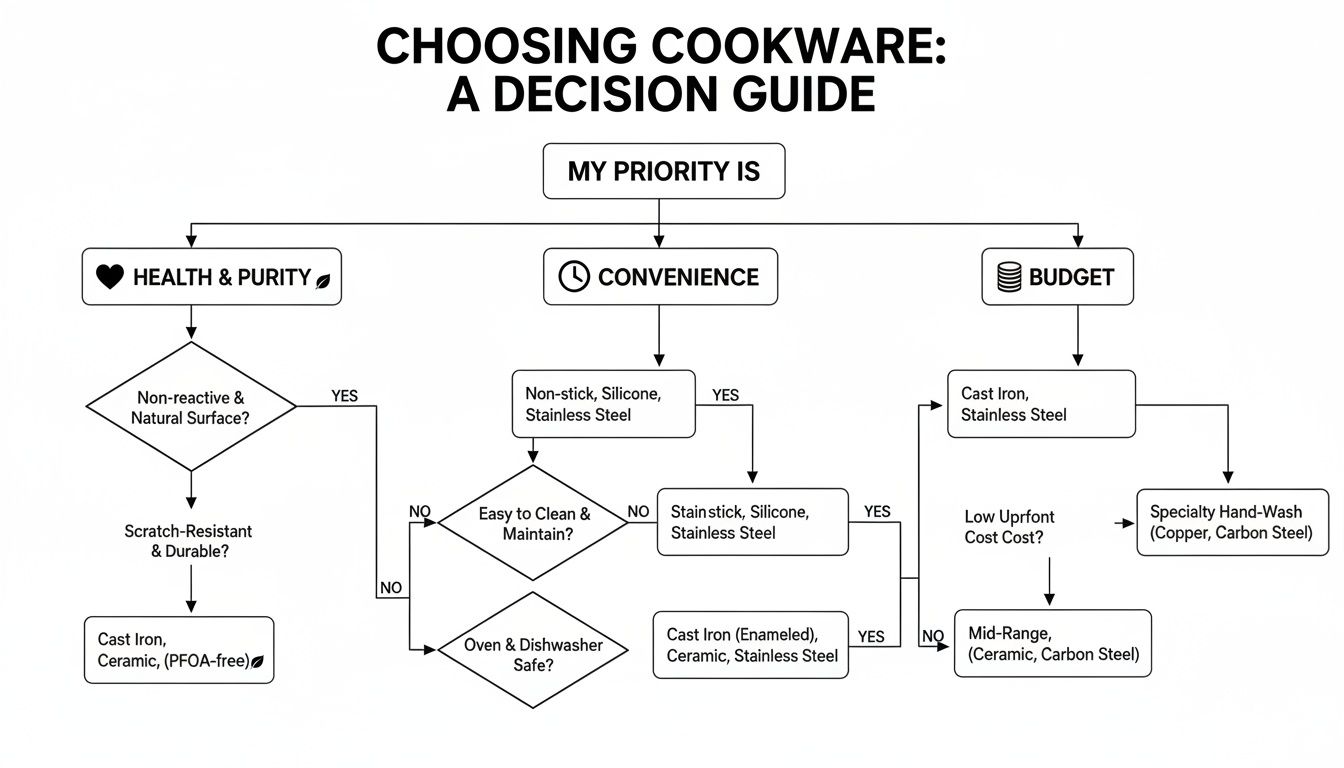
As the flowchart shows, when health and purity are your top priorities, inert and non-toxic materials like titanium are the clear, logical choice.
Your First and Most Important Upgrade
If you want the biggest bang for your buck in terms of kitchen hygiene, start with your cutting board. It's the unsung hero of the kitchen, the very surface where every meal begins. A high-quality, non-porous cutting board is the true cornerstone of food safety, and upgrading it is the single most effective change you can make.
The Everti Titanium Cutting Board is the perfect first investment. Here’s why it’s such a game-changer:
- It stops contamination at the source. Unlike porous wood or plastic boards that trap bacteria in knife grooves, titanium is completely non-porous. This means you can sterilise it perfectly clean, every single time.
- It’s better for your knives. It’s a common myth that hard surfaces instantly dull blades. Everti's pure titanium is engineered to be gentler on high-quality steel knives than other hard alternatives like glass or ceramic, helping keep that sharp edge for longer.
- It’s a lifetime investment. This isn't a board you'll be replacing in a few years. It won’t warp, crack, or stain, making it a permanent and reliable fixture in your healthier kitchen.
By starting with the cutting board, you immediately create a cleaner, safer prep zone for everything from raw meats to fresh vegetables. It’s a simple switch that elevates the hygiene of your entire cooking process from the ground up.
Think of your cutting board as the clean slate for every recipe. Starting with a pure, non-porous titanium surface ensures that the fresh, healthy ingredients you buy stay that way.
Expanding Your Collection with Everyday Essentials
Once your food prep surface is sorted, the next logical move is to upgrade the items you eat and drink from daily. Swapping out your old tableware and drinkware continues your journey towards a completely non-toxic kitchen, one piece at a time. Better yet, these items are perfect for both home use and embracing the Australian outdoor lifestyle.
Titanium tableware—plates, bowls, and cutlery—is not only pure and inert but also incredibly lightweight and tough. This makes it ideal for everyday family meals, especially with kids, as it’s virtually unbreakable. For a deeper look at the options available, have a read of this complete guide to the best titanium cookware in Australia.
Plus, its natural resistance to corrosion and extreme durability makes it the perfect companion for classic Aussie pastimes.
- Camping and Bushwalking: Its featherlight construction means it won't weigh down your pack.
- Caravanning and Road Trips: It’s tough enough to handle being knocked around without a scratch.
- Barbecues and Picnics: You get the class of proper tableware without worrying about it breaking.
Building your collection this way is a practical and rewarding process. You start with the most crucial hygiene tool—the cutting board—and then gradually expand to the items you and your family interact with every single day.
The True Value of Investing in Lifetime Cookware
When you search for "my cookware australia", it’s easy to get sticker shock looking at premium materials like pure titanium. The price can seem steep, especially when you compare it to the cheap pans and plastic boards piled high in department stores. But looking only at the initial price misses the bigger picture. Choosing high-quality kitchenware isn't just another expense; it’s a smart, long-term investment in your family’s health, your kitchen's future, and the planet.
The trick is to think about long-term value, not short-term cost. A cheap, coated pan might feel like a bargain at first, but let's be honest—it's basically a disposable item. You know you’ll be replacing it in a year or two once the surface gets scratched and starts flaking. It's the same story with plastic cutting boards, which have to be tossed as soon as they get deeply scored and impossible to properly clean.
Calculating Your Cost Per Use
Let's actually crunch the numbers. Say a standard non-stick pan costs you $60 and you get about two years of daily use out of it. That’s 730 uses, which works out to a cost per use of around 8 cents. Now, think about a premium Everti Titanium Pan that comes with a lifetime warranty. Sure, the initial cost is higher, but it's engineered to last for decades. Over its lifespan, the cost per use plummets to a fraction of a cent.
The same logic holds true for cutting boards. A $20 plastic board might only be safe to use for a year. An Everti Titanium Cutting Board, on the other hand, is a one-time purchase.
By investing once in a product built to last a lifetime, you break the frustrating cycle of buying, replacing, and throwing away. Over the years, the lifetime product isn't just better for you—it's often significantly cheaper.
More Than Just Money in Your Pocket
The payoff for choosing lifetime cookware goes way beyond your bank account. Every time a worn-out pan or scarred plastic board ends up in the bin, it adds to our landfill problem. Opting for durable, long-lasting materials is a simple but powerful way to shrink your household's environmental footprint, something that many of us here in Australia are becoming more conscious of.
Ultimately, this is about building a better kitchen. You're investing in tools that you can trust to be safe, hygienic, and free from nasty chemicals, meal after meal. You’re also creating a more sustainable home by making a conscious choice to step away from the throwaway culture that’s become all too common.
Choosing high-quality, pure titanium cookware isn’t just a purchase. It's a deliberate investment in your family's well-being, your kitchen's performance, and a more sustainable way of life. It’s a choice that pays you back every single day, for decades to come.
Got Questions About Titanium Cookware? We Have Answers
Switching up your kitchen gear naturally brings up a few questions. To help you feel completely confident while searching for my cookware australia, here are some straight-talking answers to the most common queries we get about pure titanium.
Is Titanium Cookware Really Non-Stick?
Think of pure titanium less like a coated non-stick pan and more like top-tier stainless steel. Its real superpower is being 100% non-toxic, so you never have to worry about chemical coatings flaking into your Sunday roast.
With a little bit of preheating and a splash of your favourite cooking oil or butter, you’ll find it’s a dream to cook with and sticking isn’t an issue. It’s the go-to for anyone who prioritises health and purity, giving you a perfect sear and a clean surface every single time.
Will a Titanium Cutting Board Blunt My Knives?
Not at all—in fact, it's the other way around. Everti's pure titanium cutting boards are designed to be kinder to your expensive knives than hard surfaces like glass, stone, or even ceramic.
Titanium hits the sweet spot. It’s solid and stable enough for heavy-duty chopping, but it has just enough give to protect the delicate edge of your blade from dulling prematurely. That's why it's a favourite among serious home cooks and chefs who’ve invested in good knives and want to keep them sharp.
Caring for titanium is surprisingly effortless. It’s built for a lifetime of use with minimal fuss, freeing you from the high-maintenance routines required by materials like cast iron or wood.
How Do I Clean and Look After My Titanium Kitchenware?
Keeping your titanium gear in top shape is incredibly straightforward. You can pop it straight into the dishwasher or just wash it by hand with a regular sponge and a bit of dish soap. Easy.
Because titanium is naturally non-porous and completely rust-proof, it won't harbour bacteria, hold onto stains, or absorb odours like wood and plastic boards can. If you do get some stubborn, stuck-on food, a simple paste of bicarb soda and water will lift it right off.
The best part? There’s no special seasoning required like with cast iron. It’s a truly 'set and forget' material that will look and perform brilliantly for a lifetime with just basic care.
Ready to upgrade to a lifetime of purity and performance? Explore the full range of SGS-verified pure titanium kitchen essentials from Everti and build a healthier kitchen today. Visit us at https://everti.com.au.