

Let’s be honest, a great non-stick frying pan with a lid is one of those kitchen tools that makes you wonder how you ever managed without it. It takes daily cooking from a potential chore to something genuinely enjoyable. This one piece of gear can handle everything from a perfectly seared steak to a gently simmered sauce, all without the drama of splatters or food that just won’t budge. It’s the true workhorse of a modern kitchen.
Why a Lidded Pan is a Kitchen Game-Changer
Think about having a single pan that simplifies your cooking, improves the final result, and even nudges you towards healthier habits. That's exactly what you get with a non-stick frying pan and lid combo. It's not just for frying—it's about giving you total control over the entire cooking process.
This simple pairing is perfect for the way many of us want to eat now: with less oil and more flavour. By trapping steam and heat, the lid lets you gently cook ingredients in their own juices. You end up needing far less fat, all while locking in nutrients and taste.
Cookware Has Come a Long Way
For a long time, home cooks put up with traditional non-stick coatings that were convenient but often raised questions about how long they'd last. Those old surfaces could scratch up easily and lose their non-stick magic, meaning you were constantly replacing them. Thankfully, things have changed, and the focus is now on materials that deliver both performance and peace of mind.
This guide is all about that evolution. We’ll look at how traditional coatings stack up against newer, advanced materials like pure titanium, and why a durable, non-toxic pan is the smartest, most sustainable choice you can make for your kitchen. The benefits speak for themselves:
- Effortless Food Release: Delicate foods like eggs and fish slide right out, every time.
- Healthier Meals: You can cook with a tiny bit of oil or butter, or sometimes none at all.
- Easy Cleanup: Forget scrubbing. A quick wipe is often all you need.
- Unmatched Versatility: Go from searing on high heat to simmering on low in the same pan, just by adding the lid.
A Growing Trend in Aussie Kitchens
This shift towards better cookware isn't just a small trend—it's a massive change in how we equip our kitchens. Here in Australia, non-stick frying pans with lids are becoming a must-have for anyone who cares about cooking fresh, healthy food at home.
The numbers back this up. Market analysis from Data Bridge Market Research projects the Australia Non-Stick Cookware Market will hit USD 363.92 billion by 2032, growing at a steady clip of 6.69% from 2025. Pans are set to lead the charge in this market, as Aussies look for versatile tools that can handle a quick stir-fry just as well as a slow-cooked curry.
More Than Just a Splatter Guard: Getting the Most Out of Your Lid
Most of us think of a lid as just a way to keep oil from spitting all over the stovetop. And yes, it’s great for that. But a good, snug-fitting lid does so much more. It turns your non stick frying pan with lid from a one-trick pony into one of the most versatile pieces in your kitchen, opening up a whole new playbook of cooking techniques.
Here’s a simple way to think about it. An open pan is all about direct, dry heat—perfect for getting that beautiful sear on a steak or frying up some eggs. The second you put that lid on, you've completely changed the game by trapping two crucial elements: heat and steam. This simple act creates a little convection oven right on your stovetop, giving you control over not just the heat, but the humidity, too. That control is the secret to getting incredibly tender, flavour-packed results.
The Power of Trapped Steam
By trapping steam, a lid changes the very physics of how your food cooks. Instead of just getting blasted with heat from the bottom, your ingredients are gently cooked from all sides by the moist air circulating inside. This is essential for a bunch of cooking methods that are next to impossible in an open pan.
Think about making a quick pan sauce after searing some chicken. You deglaze the pan, but without a lid, all that delicious liquid starts evaporating into thin air. Pop the lid on, and you keep every last drop of flavour locked in, letting the sauce reduce perfectly.
A lid isn't just a cover; it’s an active part of the cooking process. It’s the difference between just frying something and properly developing its texture and flavour with controlled heat and moisture.
This controlled environment is also a huge win for saving time and energy. With all that heat trapped inside, your pan gets up to temperature faster and stays there with less help from your burner. It's a real lifesaver on busy weeknights when you want a great meal without the long wait.
From Frying to Braising and Beyond
The real beauty of a lidded pan is how easily it lets you switch gears. You can start by searing your veggies or meat over high heat to get that amazing colour and crust, then simply turn the heat down, add a splash of liquid, and put the lid on to finish the job.
Suddenly, a whole world of techniques opens up:
- Effortless Steaming: Chuck some broccoli or spinach in the pan with a bit of water, cover it, and in a few minutes, you’ll have perfectly steamed, vibrant veggies that are still packed with nutrients.
- Simple Braising: You can get those fall-off-the-bone chicken thighs by browning them first, then adding some stock and herbs, covering the pan, and letting it all simmer away. The trapped moisture makes the meat unbelievably tender.
- Slow Simmering: When you're making a curry or a bolognese, a lid stops it from reducing too fast. This gives the flavours time to really meld and deepen without you having to constantly top up the liquid.
At the end of the day, the lid is what takes your non-stick pan from being just a good tool to being a truly essential one. It locks in flavour, holds onto nutrients, and gives you the confidence to tackle a much wider range of delicious meals.
Understanding Your Non Stick Surface Options
When you’re choosing a non stick frying pan with lid, it all really comes down to one thing: the surface. This is where the action happens, where food meets heat, and where the pan’s lifespan is truly decided. But with so many options out there, it’s easy to feel a bit lost.
Fundamentally, you’ve got two different philosophies at play. Think of it like comparing a painted wall to one made from solid marble. The painted wall relies on a thin top layer for its look and feel, while the marble's beauty and strength are part of its very structure. This is the perfect way to understand the difference between traditional coated pans and modern uncoated ones.
The World of Coated Pans
For years, the standard for non stick pans has been PTFE (polytetrafluoroethylene), which most of us know by the brand name Teflon. It’s a synthetic coating that gets sprayed onto a metal base (usually aluminium) to create that super-slick surface we’re all familiar with. It works wonders for sliding an omelette right onto the plate and makes washing up much less of a chore.
You'll also see ceramic coatings, which are another popular choice. These are made from a silica-based gel that's baked onto the pan, creating a hard, glossy layer. They’re often positioned as a more "natural" option, but it's crucial to remember that they are still a coating applied to a metal core.
No matter the material, all coatings share the same basic weakness: they're a separate layer that can, and eventually will, break down.
- Scratching: A stray metal fork or an abrasive scrubber can easily scratch or chip the surface, ruining its non stick magic.
- Heat Sensitivity: Pushing the heat too high can cause some coatings, especially older PTFE formulas, to degrade and release fumes.
- Limited Lifespan: Even with perfect care, the non stick performance slowly fades, and you find yourself needing a new pan every couple of years.
And while you're thinking about the pan's surface, don't forget why the lid is so important. A good lid transforms your frying pan into a much more versatile tool.
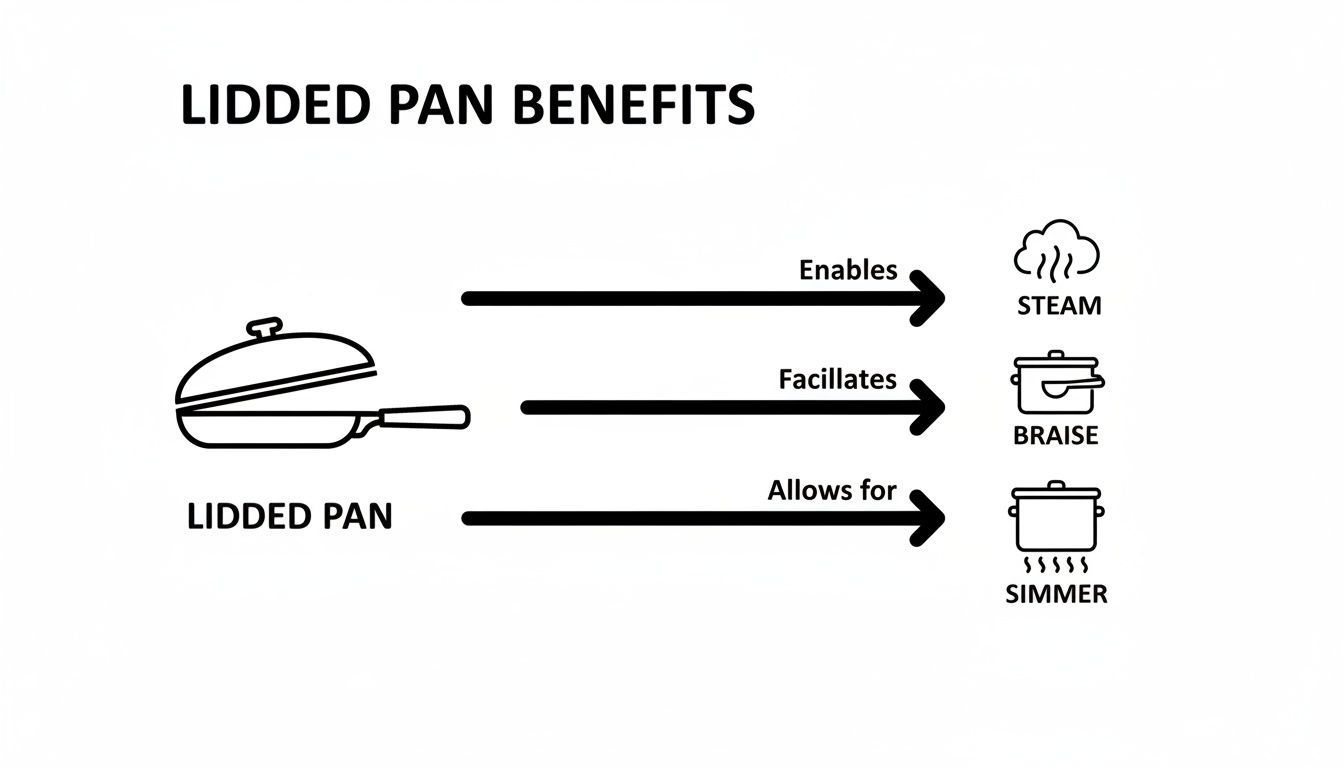
As you can see, that simple addition lets you steam veggies, braise meats, and gently simmer sauces—things you just can't do with an open pan.
The Purity of Uncoated Titanium
Okay, let’s go back to that solid marble wall. This is the idea behind uncoated cookware, particularly pans made from pure titanium. Unlike the other pans we’ve talked about, there’s no synthetic layer here at all. The non stick property isn’t a coating; it's an inherent quality of the metal itself, unlocked by using the right technique.
Pure titanium is incredibly smooth and non-porous. When you preheat it properly, it forms a naturally slick surface that lets food release cleanly without any chemical help. This is a complete game-changer for durability and peace of mind in the kitchen.
Because there is no coating, there’s nothing to scratch, chip, peel, or wear out. The pan you buy today is the exact same pan you’ll be cooking with in ten years.
This kind of longevity is a huge part of why Australians are investing in better cookware. The market has ballooned to USD 664.44 million, driven by a desire for quality. With 78% of health-conscious Aussies prioritising low-oil cooking, reliable non stick is a must. While many standard pans get scratched up within 6-12 months, people are looking for premium options built to last over 3 years, which is exactly what a family needs.
A Head-to-Head Comparison
To make the best choice for your kitchen, it helps to see how these materials stack up against each other and other popular options. Many home cooks often weigh the pros and cons of stainless steel vs. nonstick cookware before making a purchase.
To help you decide, let's put coated pans and pure titanium side-by-side.
Comparing Non Stick Frying Pan Surfaces
This table breaks down the key differences between traditional non stick coatings and pure, uncoated titanium. It’s designed to give you a clear, at-a-glance comparison to help you choose what’s best for your cooking style and long-term health.
| Feature | Traditional Coatings (PTFE/Ceramic) | Pure Uncoated Titanium |
|---|---|---|
| Durability | Prone to scratches and wear; lifespan of 1-5 years. | Exceptionally durable; designed to last a lifetime. |
| Utensil Use | Requires silicone, wood, or nylon utensils. | Safe for all utensils, including metal. |
| Health & Safety | Concerns over chemical coatings and overheating. | Inert, non-toxic, and biocompatible. No coatings to degrade. |
| Heat Tolerance | Limited maximum temperature (around 260°C). | Extremely high heat tolerance without degradation. |
| Performance | Excellent non stick when new, degrades over time. | Natural food release that remains consistent for life. |
Ultimately, choosing the right non stick frying pan with lid comes down to balancing immediate convenience with long-term value and peace of mind. Coated pans are an easy starting point, but their short lifespan and potential issues are serious drawbacks.
If you’re ready to learn more about the science behind these surfaces, have a look at our deep-dive guide on the best non stick surface for a frying pan. An uncoated titanium pan isn't just another piece of cookware; it’s a true lifetime investment in your kitchen and your health.
How to Choose the Right Pan for Your Cooking Style
Choosing the perfect non stick frying pan with lid is a bit like picking out a good chef's knife—it’s a personal decision that needs to feel right for the way you cook. Forget the marketing jargon on the box for a moment. What really matters is how those features translate to real-world cooking, making your time in the kitchen easier and more enjoyable.
This guide is designed to help you see past the hype and focus on what genuinely makes a difference. We’ll break down the essentials: size, weight, handle comfort, and lid design. By the end, you'll be able to confidently choose a pan that feels like it was made just for your kitchen.
Matching Pan Size to Your Household
First things first, let's talk size. It's the most critical decision you'll make, and getting it right means no more trying to squeeze four chicken thighs into a tiny pan or heating a giant one just to fry a single egg.
In Australia, the non-stick cookware market is booming, and that versatility is a huge reason why. The Australia and New Zealand Non-Stick Cookware sector is currently valued at USD 254.62 million, with frying pans making up a whopping 35% of those sales. It’s because they’re so adaptable—from outdoor enthusiasts to families who use the lid to steam veggies and lock in nutrients. In fact, 72% of Australian households now own at least one non-stick pan.
Here’s a simple way to think about size:
- 20-24 cm Pan: This is your go-to for solo meals or cooking for two. It’s perfect for a couple of eggs, searing a single piece of fish, or sautéing a small batch of vegetables.
- 26-28 cm Pan: The all-rounder. This is the sweet spot for most couples and small families. It can comfortably handle three or four chicken breasts or a generous stir-fry without crowding.
- 30 cm Pan (or larger): The family workhorse. If you're regularly feeding four or more people, or you love to meal prep and batch cook, this is the size you need.
Finding the Right Balance of Weight and Handling
A pan's weight isn't just a number; it directly affects how it cooks and how it feels in your hand. A heavier pan, especially one with a thick, solid base, holds onto heat like a champ. This means you get a consistent temperature across the entire surface, eliminating those annoying hot spots that scorch one part of your food while leaving the rest undercooked.
But there’s a catch. If a pan is too heavy, it becomes a nightmare to manoeuvre. Think about trying to flip a delicate crêpe or pour a sauce with one hand. The goal is to find that perfect balance: a pan with enough heft for great heat retention, but light enough that you can handle it with confidence. This is where materials like pure titanium really shine, offering fantastic durability and heat performance without feeling like you're lifting weights.
Before you commit to a non-stick pan, it’s worth reading this great guide to choosing the right cookware materials to see how different options stack up.
Don't Overlook the Handle and Lid
The handle and lid are the parts of the pan you interact with every single day. They might seem like minor details, but a poorly designed handle can make even the most expensive pan a chore to use.
A well-designed handle should feel like a natural extension of your arm, offering a secure, comfortable grip. Look for ergonomic shapes and materials that stay cool on the stovetop.
When you're comparing pans, pay close attention to these features:
- Handle Ergonomics: How does it feel in your hand? Does the pan feel balanced when you lift it?
- Oven Safety: Check if the handle can go in the oven and to what temperature. This is a game-changer, letting you sear a steak on the stove and finish it in the oven without switching pans.
- Lid Fit: A good lid should fit snugly to trap heat and moisture. If it rattles or sits loosely, it’s not doing its job.
- Steam Vent: That little hole in the lid is a brilliant feature. It lets excess steam escape, which stops your pot from boiling over and keeps the glass from fogging up completely.
- Lid Material: Tempered glass lids are fantastic. You can keep an eye on your food without constantly lifting the lid and letting all that precious heat escape.
Looking After Your Pan: Cooking and Cleaning Tips
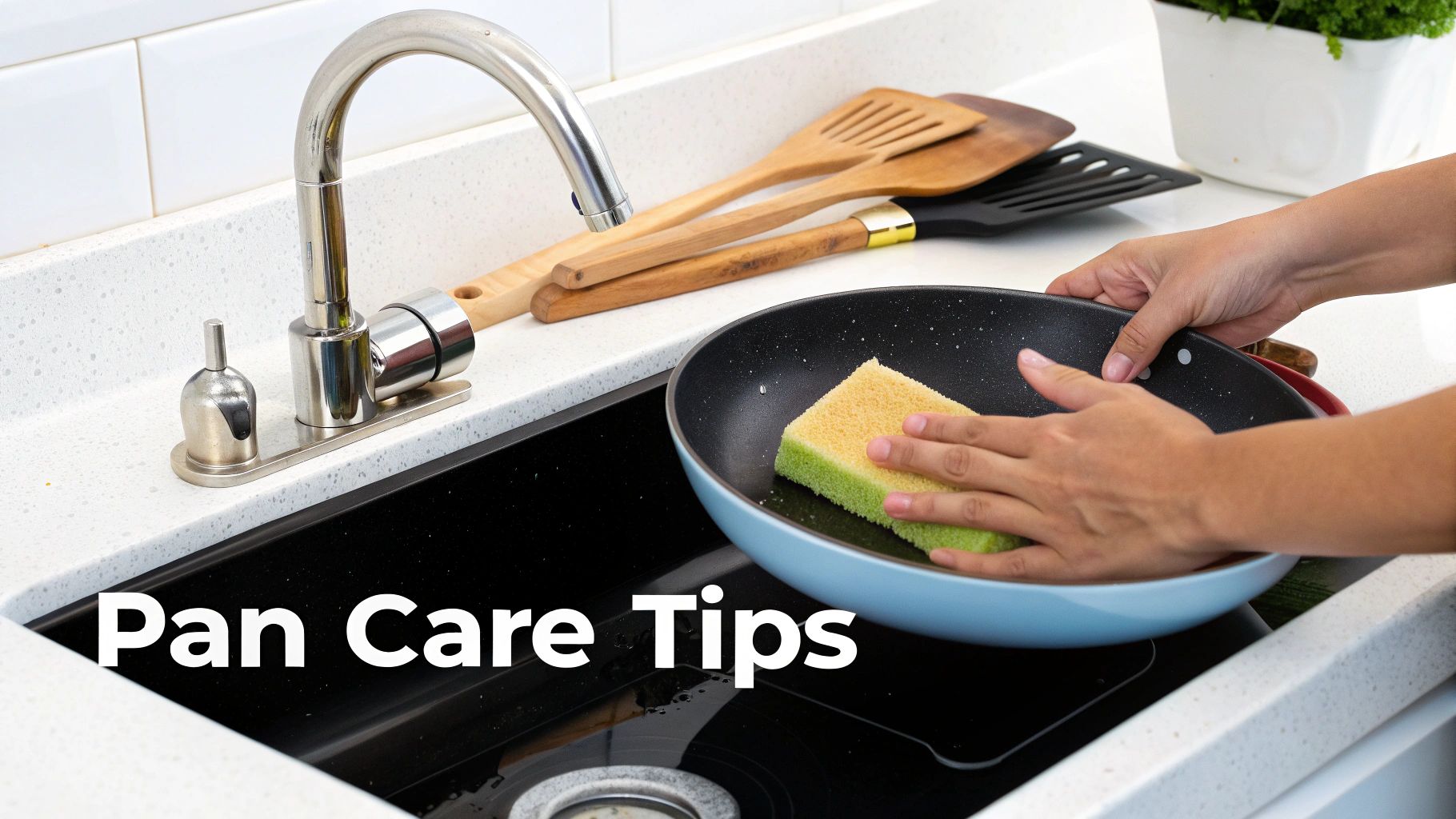
A high-quality non stick frying pan with lid is more than just another pot in the cupboard; it's a real investment in your kitchen. And like any good tool, a bit of care will ensure it serves you well for years, maybe even a lifetime. A few simple habits are all it takes to protect its surface and deliver delicious meals every time.
Think of the pan's surface as its superpower. Whether you've got a traditional coating or uncoated titanium, how you treat it directly affects how long it lasts and how well it cooks. It all begins with something many home cooks get wrong: heat management.
Essential Cooking Techniques
The secret to perfect non-stick cooking? Proper preheating. It’s so easy to get this wrong by rushing, which is why food sometimes sticks even in a great pan. Always pop your pan on the stove over low to medium heat for a minute or two before you add anything. This lets the heat spread out evenly, getting rid of hot spots that can burn your food and damage the pan’s surface.
Once it's warm, you can add your oil. While you don't need much, a little bit of high-smoke-point oil (like avocado or grapeseed) is fantastic for getting a beautiful sear and boosting flavour. Just be sure to steer clear of aerosol cooking sprays. The propellants in them can build up a gummy residue over time that’s a nightmare to clean and can completely ruin the non-stick magic.
Here's another golden rule: never subject your pan to extreme temperature changes. Plunging a hot pan into a sink of cold water is a recipe for disaster. This "thermal shock" can warp the metal and weaken the surface. Always let it cool down on the stovetop for a few minutes before washing.
Keeping Your Pan in Top Shape
How you clean your pan is just as crucial as how you cook with it. While it’s tempting to chuck everything in the dishwasher, handwashing is always the best way to extend your cookware’s life. The intense heat and harsh chemicals in a dishwasher can slowly break down non-stick coatings. You can dive deeper into this topic in our guide on dishwasher-safe pans, where we explain why handwashing often wins out.
For everyday cleaning, all you need is warm, soapy water and a soft sponge or cloth. Stay away from abrasive scourers or steel wool—they will scratch and ruin a traditional non-stick surface in no time.
The aim is to gently lift away any food bits without harming the surface. A soft touch is all it takes to keep your pan performing at its best.
The utensils you use also make a massive difference. For pans with a traditional coating, this is non-negotiable. Stick to silicone, wood, or nylon tools to avoid scratching. These materials are gentle on the surface and will help keep that non-stick layer intact for longer.
This is where the advantage of a different material really shines. With a tough, uncoated titanium pan, you can use any utensil you like—metal included. Since there’s no chemical coating to scratch off, the surface stays strong, proving its worth as a true long-term partner in the kitchen. That durability is what makes it an investment that pays off, meal after delicious meal.
Investing in a Lifetime of Healthier Cooking
Choosing a non stick frying pan with lid is about so much more than just ticking another item off your kitchen wish list. It’s a real decision to cook healthier, get more creative, and frankly, have a better time in the kitchen every single day. This is where the little details—the materials, the lid design, all of it—come together to make a big difference in your well-being.
When you step away from pans with those temporary chemical coatings, you’re making a commitment to a cleaner kitchen. Opting for a genuinely durable, non-toxic surface like pure titanium isn’t just about buying a pan; it’s about buying peace of mind. You won’t have to worry about synthetic layers breaking down or mystery chemicals leaching into your food. Better yet, you won't be throwing it out in a couple of years.
A Tool for Culinary Freedom
Thinking this way completely reframes the purchase. It stops being just another expense and turns into a true investment in your family's health and your own cooking adventures. A pan that’s built to last a lifetime cuts down on waste and gives you the confidence to cook, knowing your gear is as clean as your ingredients.
Your cookware shouldn’t be disposable. It should be a trusted partner in the kitchen, one you can rely on for countless healthy, delicious meals for years and years to come.
This long-term mindset also fits right in with a more sustainable way of living. By picking one great pan that will perform beautifully for decades, you’re helping build a kitchen that values quality over quantity. It’s a foundational piece for anyone who really cares about their food and health.
Your Journey to Better Cooking Starts Now
At the end of the day, the right pan is the one that makes you want to get in the kitchen and cook. It makes healthy eating feel easy, whether you’re searing fish perfectly or steaming veggies to lock in all those nutrients—which is where that lid really shines. It’s your invitation to try new recipes and nail the old family favourites with a tool that's reliable, safe, and a pleasure to use.
As you build out your kitchen, you might find our guide on other types of healthy cooking pans a helpful next step. Think of this new pan not just as another piece of cookware, but as the cornerstone of a healthier, more delicious life.
Your Non-Stick Pan Questions, Answered
Choosing the right cookware can feel a bit overwhelming, so let's clear up some of the most common questions you might have. Think of this as your cheat sheet for picking and using a non-stick frying pan with a lid, helping you cook better and buy smarter.
We’ll tackle everything from safety and daily care to understanding what really sets different pans apart.
Are Non-Stick Frying Pans Safe to Use?
This really boils down to what the pan is made of. The classic non-stick pans with PTFE-based coatings are perfectly safe as long as you use them correctly. The key is to keep them below their recommended maximum temperature, which is about 260°C. If they get too hot, that coating can start to break down and release fumes you don't want anywhere near your food.
If you’d rather not worry about temperatures at all, an uncoated material like pure titanium is a fantastic option. These pans have no chemical coatings whatsoever. They’re completely inert, meaning they won’t leach anything into your meal, making them one of the safest and healthiest choices out there.
Can I Use Metal Utensils on My Non-Stick Pan?
This is a big one, and the answer depends entirely on the pan's surface. For pretty much any pan with a traditional or ceramic non-stick coating, using metal utensils is a hard no. You'll scratch the surface in a heartbeat, and once it's scratched, its non-stick magic is gone for good. Stick with silicone, wood, or nylon tools for these types of pans.
On the other hand, this is where uncoated cookware really shines. A pure titanium pan is incredibly tough. You can use your metal spatulas and spoons without a second thought because there’s simply no coating to scratch, chip, or peel off.
The freedom to grab any utensil you like is a game-changer in the kitchen. It’s a level of convenience coated pans just can't offer and speaks volumes about the pan’s durability and thoughtful design.
How Do I Restore a Pan’s Non-Stick Properties?
When a coated pan starts to get sticky, it’s usually because of one of two things: a hidden buildup of cooking residue or permanent scratches. You can try giving it a deep clean with a baking soda and water paste, but if the coating itself is worn away, the damage is unfortunately done.
With uncoated pans like titanium, the "non-stick" effect comes from managing your heat correctly and keeping the pan clean. If food starts to stick, it’s almost always a sign of some stubborn food residue. A good scrub with a gentle scourer is usually all it takes to lift it off and get the pan’s natural food-release performance back on track.
Is an Expensive Non-Stick Pan Worth It?
It's tempting to grab a cheap pan, but they often have a frustratingly short lifespan. You end up replacing them over and over, which creates more waste and costs more in the long run. Investing in a high-quality pan, especially one made from a seriously durable material like pure titanium, is a much smarter financial move.
A premium pan gives you far better heat distribution, more reliable cooking results, and is built to last a lifetime. That higher price tag upfront buys you incredible long-term value, a better cooking experience, and a more sustainable addition to your kitchen.
At Everti, we believe in creating tools that offer a lifetime of healthy, enjoyable cooking. Explore our range of pure titanium essentials and discover a new standard of performance and peace of mind in your kitchen. https://everti.com.au