

Dinner is half underway. The onions are soft, the garlic smells right, and then the fish tears as soon as you try to turn it. Or the risotto catches in one hot patch while the rest sits pale and underdone. Most home cooks blame themselves first. Often, the pan is the primary problem.
A good non stick induction saute pan solves several frustrations at once. It gives you a broad cooking surface, deeper sides than a frypan, and a lid-friendly shape that suits weeknight food in real Australian kitchens. Stir-fries, creamy mushrooms, barramundi, shakshuka, braised chicken thighs. It is one of the most useful pans you can own.
The part most buying guides skip is the long game. They compare features on day one, then stop. Yet current search results provide no Australian-specific research on how non-stick induction sauté pans degrade over time or how frequently consumers need to replace them, which leaves a real gap for buyers trying to judge long-term value in local conditions like humidity and varied water quality, as noted by Circulon’s induction suitable cookware collection. If you want to buy well, the question is not only “Will it work tonight?” It is also “How will it age?”
The Search for the Perfect Sauté
Many cooks start looking for a new pan after a small kitchen betrayal.
It might be eggs that weld themselves to the surface. It might be a tomato-based braise that scorches around the edges because the base heats unevenly. It might be a pan that once felt slick, then slowly became a sticky, fussy thing you have to baby every meal.
A sauté pan earns its keep when cooking gets messy. Its taller sides help when you toss vegetables, reduce sauces, or finish pasta in the pan. The lid helps trap moisture for dishes that start with searing and end with gentle simmering. On induction, that same pan also needs to cope with rapid heat changes without warping or creating hot spots.
That is where buyers often get confused. They see labels like “PFOA-free”, “ceramic”, “scratch-resistant”, “induction base”, and “oven safe”, but those labels do not tell the full story of ownership.
Why the cheapest option can cost more
A bargain pan can feel sensible at the checkout. Then the coating starts to lose release, the base no longer sits perfectly flat, and you find yourself using more oil, more heat, and more patience.
The smarter way to judge a pan is by total cost of ownership. Think about:
- How often you cook: A pan used most nights wears very differently from a pan used on Sundays.
- What you cook: Fish, eggs, sticky marinades, and acidic sauces test surfaces harder than dry reheating.
- How you clean and store it: Stacking, harsh scrubbing, and overheating shorten life.
- Whether the material suits your values: Many health-conscious cooks now care as much about what is not in the pan as how slippery it feels.
A useful pan should make cooking easier in month one and still make sense in year three, five, or longer.
In Melbourne kitchens, I see the same pattern repeatedly. People do not regret paying for quality. They regret buying twice.
Understanding How Induction Cooking Works
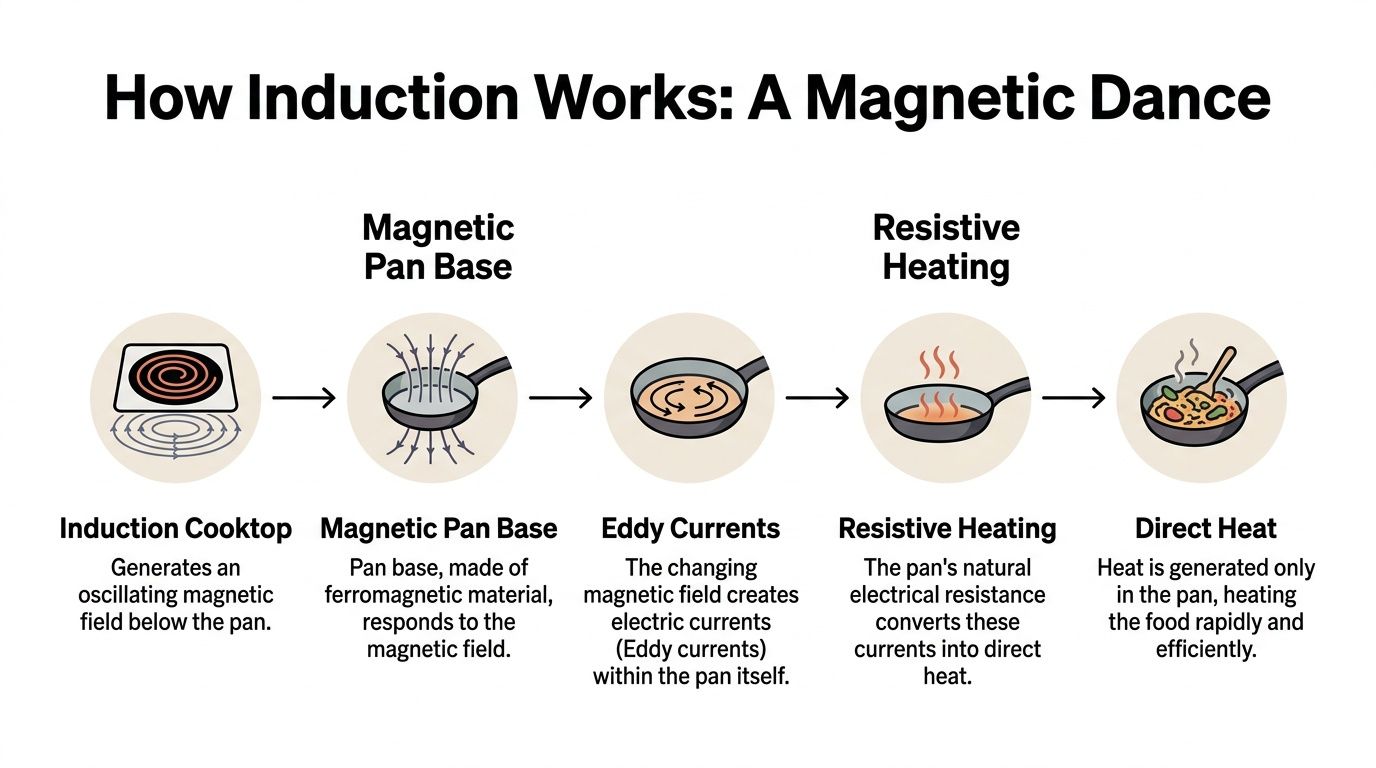
Induction looks mysterious until you picture it as a magnetic dance between cooktop and pan.
The cooktop itself does not behave like a traditional electric hob that glows and slowly transfers heat upward. Instead, it creates a changing magnetic field. If the pan base can respond to that field, heat is produced in the pan itself.
Why some pans work and others do not
For induction, a pan needs a ferromagnetic base. In plain language, the bottom must contain a magnetic material, usually thick stainless steel. If the base is not magnetic, the cooktop cannot “grab” it.
That is why aluminium on its own does not work on induction, even though it is a strong heat conductor. Many good induction pans solve this by combining materials. A magnetic stainless steel base couples with the cooktop, while an aluminium core spreads heat across the cooking surface. According to Circulon’s induction pan construction notes, aluminium conducts heat at about 237 W/m·K, while stainless steel sits at about 16 W/m·K. In practical terms, aluminium moves heat far faster, and stainless gives the pan induction compatibility and structural stability.
If you want a simple primer on matching cookware to this style of hob, this guide on what cookware works for induction is a useful reference.
What that means in real cooking
A well-built induction sauté pan heats quickly, but speed is not the whole advantage. The bigger win is control.
Think about searing chicken thighs. A thin, uneven base gives you pale spots and burnt spots in the same pan. A bonded base with stainless outside and aluminium inside spreads that energy more evenly, so the whole cooking surface behaves like one pan rather than several tiny climates.
Look for these signs of a better induction pan:
- A magnetic stainless steel base: Essential for induction compatibility.
- A bonded or layered core: Helps reduce hot spots.
- A flat, sturdy bottom: Better contact with the cooktop means steadier heating.
- Enough mass in the base: Helps resist distortion when heat ramps up fast.
A quick kitchen test
If you already own a pan and are unsure whether it is induction compatible, try a simple magnet on the underside. If it sticks firmly, the base is likely suitable.
That test is only the beginning, though. A pan can be technically compatible and still perform poorly if the base is too thin or poorly bonded.
Induction rewards good construction more noticeably than gas does. A mediocre pan feels mediocre faster.
Decoding Different Non Stick Technologies
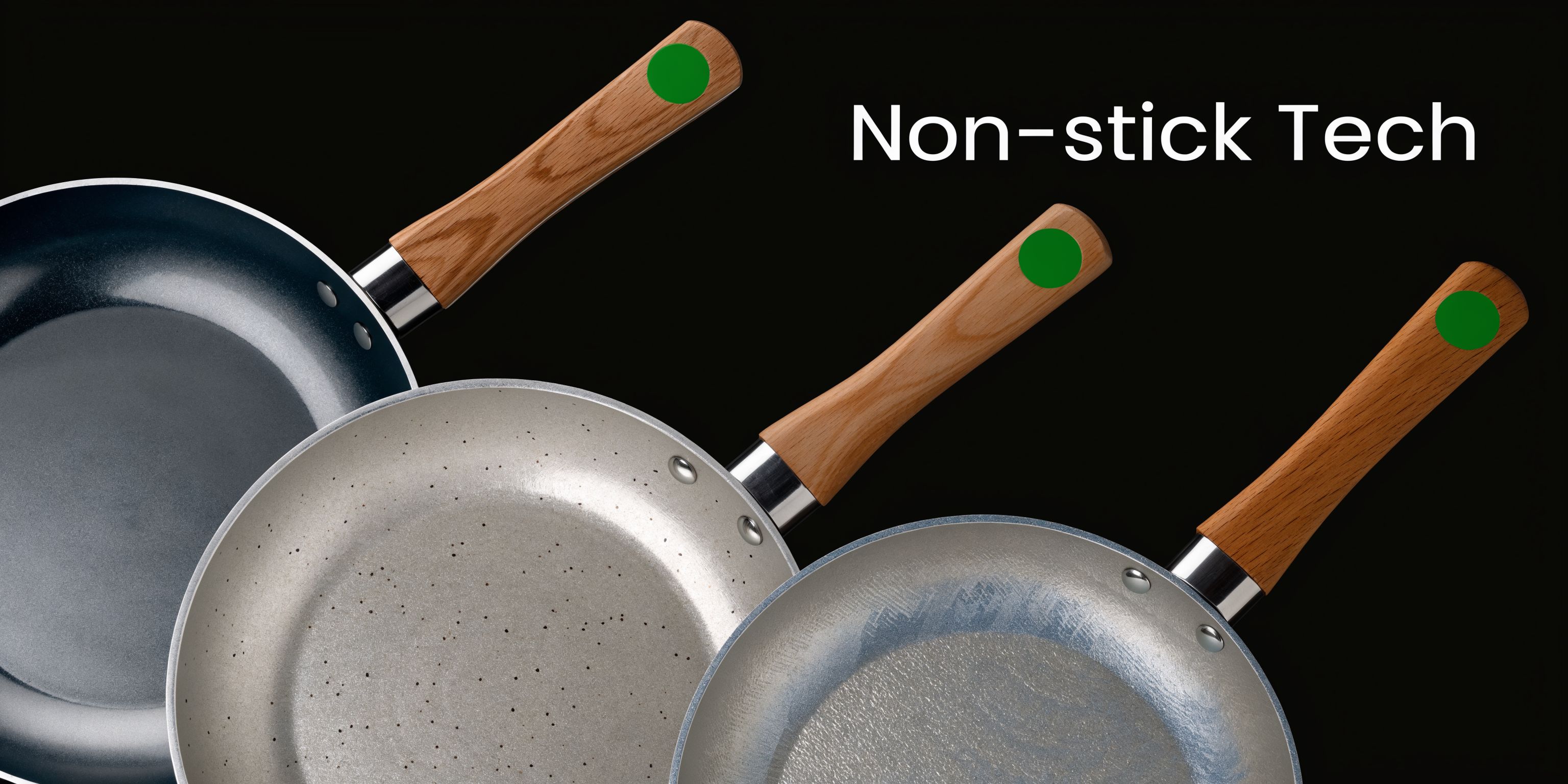
Not all non-stick surfaces behave the same way. The label on the box often sounds reassuring, but performance, lifespan, scratch resistance, and heat tolerance vary widely.
For most home cooks, the main categories are traditional PTFE-style coatings, ceramic coatings, and reinforced systems that use harder materials to strengthen the surface.
Traditional coated non stick
Traditional non-stick is popular for a reason. It usually offers the easiest food release when new, especially for eggs, pancakes, and delicate fish.
Its weakness is wear. High heat, abrasive cleaning, and rough utensils can shorten the useful life of the coating. That does not make every PTFE-style pan poor quality. It means technique matters more than many buyers realise.
A practical rule is to keep heat moderate and avoid treating it like stainless steel or cast iron. It is a release surface, not armour.
Ceramic non stick
Ceramic-coated pans appeal to buyers who want a PFAS-free, PFOA-free, PTFE-free option. They are often marketed as cleaner and simpler, which resonates with households trying to avoid “forever chemical” concerns.
Ceramic can work very well, especially for lower to medium heat cooking. The common frustration is that some ceramic pans start beautifully and then lose easy release if the surface is overheated or residue builds up over time.
Reinforced coatings and titanium-enhanced options
Modern design becomes more interesting with these options. Some brands add harder materials to improve scratch resistance and extend useful performance.
According to Duxtop’s Fusion-Ti ceramic coating information, titanium-reinforced ceramic coatings can enhance scratch resistance by 3 to 5 times over pure ceramic. The logic is straightforward. Titanium is hard, so it helps the coating stand up better to wear and can improve compatibility with metal utensils. If you are comparing materials more broadly, this overview of the best non-stick surface for a frying pan gives useful context.
That does not mean every reinforced pan is equal. The quality of the base, the bonding, and the overall design still matter.
Non-Stick Surface Comparison
| Coating Type | Heat Tolerance | Durability | Safety Notes | Best For |
|---|---|---|---|---|
| Traditional PTFE-style non stick | Best on low to medium heat | Can perform well, but surface care matters | Buyers often look for modern formulations and careful heat use | Eggs, fish, quick everyday cooking |
| Ceramic non stick | Best on low to medium heat | Can lose release if overheated or residue builds up | Popular with cooks seeking PFAS/PFOA/PTFE-free options | Health-focused households, lighter sautéing |
| Titanium-reinforced ceramic | Better suited to tougher daily use than pure ceramic | Stronger scratch resistance than pure ceramic | Appeals to buyers wanting reinforced PFAS/PFOA/PTFE-free surfaces | Busy kitchens, utensil-heavy cooking, frequent sautéing |
How to choose based on your habits
Ask yourself these practical questions:
- Do you cook delicate food often: Traditional non-stick may feel easiest at first.
- Do you avoid PFAS-style coatings: Ceramic or titanium-reinforced ceramic may better match your priorities.
- Are you rough on cookware: Reinforced surfaces usually make more sense than delicate ones.
- Do you sear hard and hot: A coated pan of any type rewards restraint more than aggression.
The best coating is not the one with the loudest marketing. It is the one that suits your heat habits, utensils, and patience for maintenance.
Essential Buying Criteria for Your Sauté Pan
Buying a non stick induction saute pan gets easier once you stop looking at the coating alone.
The shape, handle, base, lid, and warranty all affect how the pan feels on a Tuesday night when you are cooking fast and cleaning later.
With induction hobs in 52% of new Australian homes and 81% of professional chefs in Victoria using induction sauté pans for precise heat control, buyers have more reason than ever to choose carefully. The category is also projected to grow at 7.1% CAGR through 2030, according to FoodPrint’s cookware overview citing those market figures.
Size changes how you cook
A sauté pan is not just a frypan with taller sides. Those sides give you room for tossing, saucing, and finishing dishes with less mess.
Choose by household pattern, not by wishful thinking:
- For one or two people: A smaller sauté pan feels easier to handle and clean.
- For family cooking: A larger pan gives proper room for browning without crowding.
- For one-pan meals: Depth matters. You want enough volume for sauce, grains, or vegetables after the initial sear.
Crowding is one of the main reasons home cooks say a pan “doesn’t sear properly”. The pan may be fine. The size may be wrong.
Weight and balance matter more than you expect
A pan can be well made and still feel wrong in your hand.
Pick it up by the handle if possible. Does the base drag the front downward? Does the helper handle feel useful or decorative? A balanced pan lets you stir risotto or toss mushrooms without fighting the tool.
Handle, lid, and oven rating
Small design details affect everyday comfort:
- Handle shape: A comfortable grip matters when the pan is full.
- Riveted or welded fittings: Rivets are common and sturdy, though they create little spots to clean around.
- Glass or metal lid: Glass lets you monitor braising. Metal often feels tougher.
- Oven-safe rating: Important if you start on the hob and finish in the oven.
A sauté pan earns its spot when it can brown, simmer, cover, and finish without fuss.
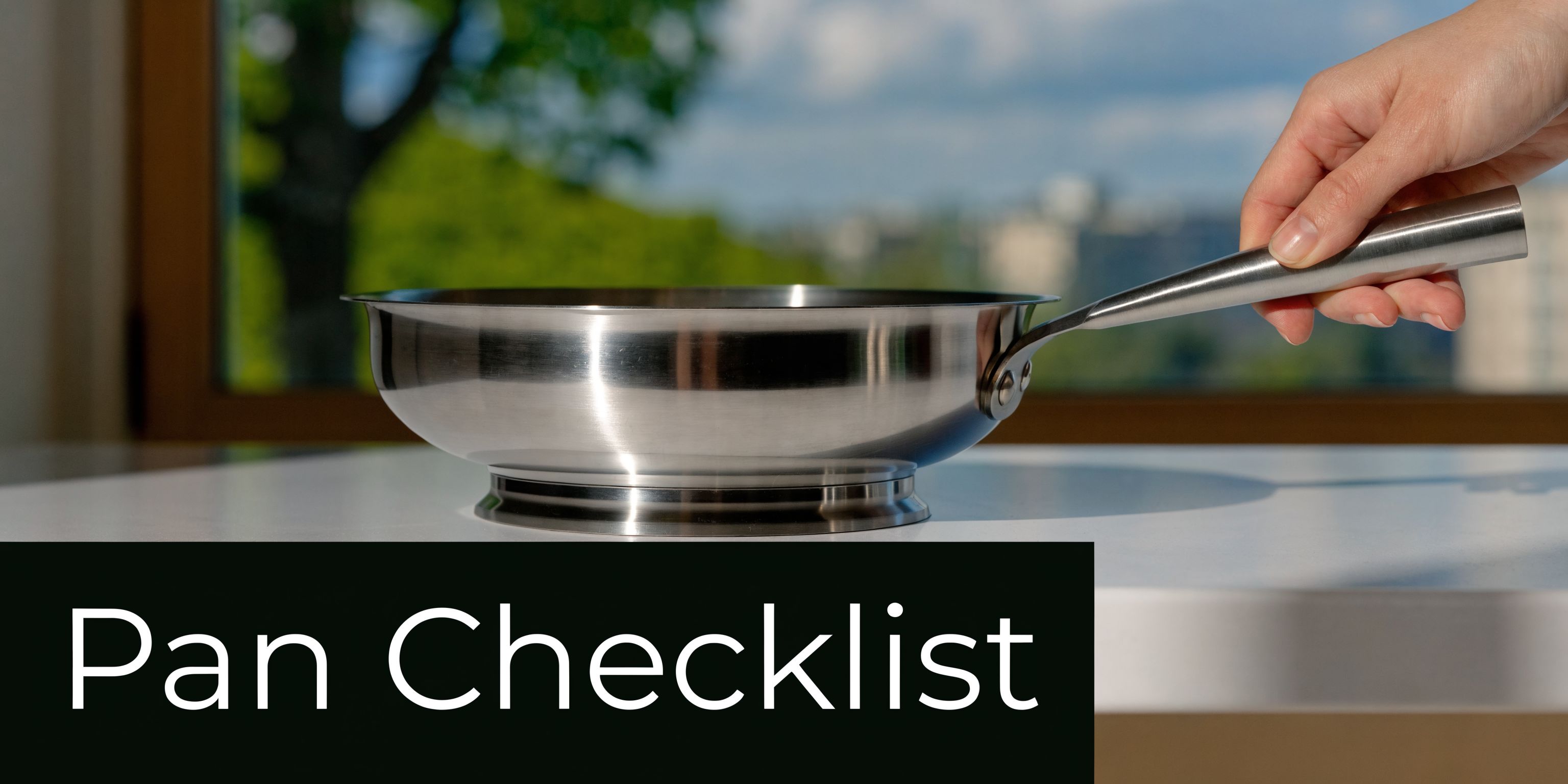
Here is a quick visual on what to inspect before buying:
Warranty as a clue
A warranty is not proof of perfection, but it does tell you how confidently a maker stands behind the product.
Read beyond the headline. Some warranties are broad in language but narrow in practice. Pay attention to what counts as normal wear, what is excluded, and whether induction warping or coating failure is covered clearly.
The Everti Approach A Durable Non Toxic Alternative
Many buyers reach a point where they no longer want to think in coating cycles.
They want one pan material that aligns with a cleaner kitchen, resists corrosion, and does not ask for delicate treatment just to stay usable. That is where titanium enters the conversation differently from coated non-stick.
In Australia, over 40% of households use induction, and 67% of consumers prefer PFAS-free non-stick pans, according to Grand View Research’s nonstick cookware market analysis. That preference reflects two linked concerns. People want easier cooking, and they want fewer worries about what sits against their food.
Why pure titanium stands apart
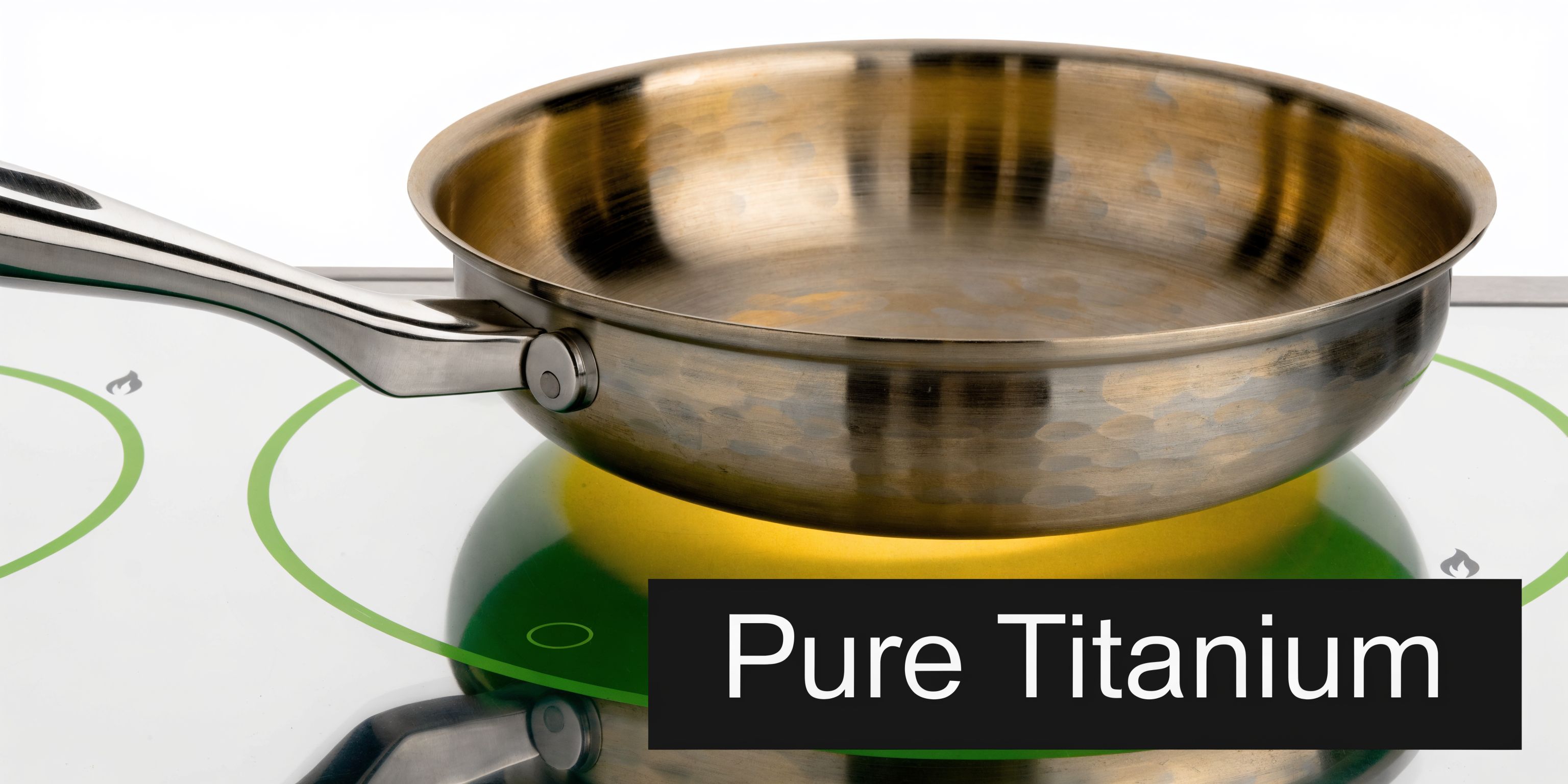
Pure titanium takes a different path from coated pans.
It does not rely on a chemical release layer that can gradually wear away. Instead, the appeal is the material itself. It is uncoated, corrosion resistant, lightweight for its strength, and suited to cooks who want to step off the replace-and-repeat treadmill.
For a health-conscious home cook, that changes the ownership question. Instead of asking how long a coating will hold up, you ask whether you would rather buy a stable, durable material once and learn how to cook with it well.
The buy it for life mindset
A true long-term pan is not just about durability in the abstract. It is about fewer replacements, fewer doubts about worn surfaces, and less compromise in daily use.
That matters in Australian homes where cookware deals with coastal humidity, frequent dishwasher temptation, and the stop-start pace of busy cooking. Materials that resist corrosion and do not depend on surface coatings suit that environment well.
If you care about longevity and low-tox kitchen habits, the strongest argument for titanium is not trend. It is simplicity.
The trade-off is that uncoated cookware asks for a little technique. But many serious home cooks prefer learning a reliable material over nursing a fragile surface.
Care Tips to Maximise Your Pan's Lifespan
A pan’s life is shaped less by brand promises than by kitchen habits.
Most damage comes from three things. Too much heat, rough treatment, and poor cleaning routines. The good news is that all three are fixable.
Heat control first
Induction responds fast. That is a benefit, but it also punishes impatience.
Start lower than you think you need. Let the pan warm gradually, especially if it has a bonded base. For coated pans, moderate heat is usually the safest zone for preserving release. Save aggressive preheating for materials built for it.
A common mistake is blasting the hob because dinner feels urgent. The pan heats before the cook adjusts.
Match utensils to the surface
Use the gentlest tool that suits the job.
- For standard coated pans: Silicone or wood is the safe default.
- For reinforced ceramic: Some are more tolerant of metal utensils, but gentler tools still reduce wear.
- For uncoated titanium: You have more freedom, though thoughtful use still keeps the surface looking better.
Clean without shortening the pan’s life
Let the pan cool before washing. Sudden temperature shocks can stress the base.
Wash with mild detergent and a soft sponge unless the maker clearly says otherwise. If residue builds up, deal with it early. A pan that looks clean can still hold a thin film that interferes with release.
If you want a practical step-by-step routine, this guide on how to clean a non-stick pan properly covers the essentials.
Storage matters too
Stacking pans carelessly is a quiet way to damage them.
Try these habits:
- Use pan protectors: Helpful for coated surfaces.
- Store dry: Good for any cookware, especially after hand-washing.
- Keep the base clean and flat: A dirty underside can affect induction contact.
Treat a pan like a tool, not a disposable accessory. Small habits add up to years of difference.
Your Investment in Healthier Cooking
The right non stick induction saute pan is not just about stopping food from sticking.
It is about how your kitchen works every day. A well-built induction base gives reliable heat. The right surface matches your cooking style. Better materials and better habits reduce frustration, waste, and replacement cycles.
For many Australian cooks, the significant shift is thinking beyond first impressions. A pan that performs nicely for a few months is not necessarily a good buy. A pan that supports safer materials, steadier cooking, and long-term value usually is.
If you choose with durability and health in mind, you end up with cookware that feels less like a temporary fix and more like part of a well-run kitchen.
Frequently Asked Questions
Why does my induction pan make a buzzing sound
A soft buzz or hum can be normal on induction, especially at higher power settings. The cooktop’s magnetic field interacts with the pan base, and some constructions vibrate more audibly than others. If the sound is harsh or new, check that the base is flat and sitting cleanly on the hob.
Can I use metal utensils on a non stick induction saute pan
It depends on the surface. Standard coated non-stick is best treated with silicone or wood. Some reinforced coatings are marketed as more metal-utensil friendly, but gentler tools still reduce wear over time.
Why is my pan sticking even though it is called non-stick
Usually because of heat, residue, or wear. Too much heat can stress the surface. Invisible buildup can also make release worse. If the pan is older, the coating may be losing performance.
What is the difference between a sauté pan and a frypan
A sauté pan has straighter, taller sides and often comes with a lid. That makes it better for saucy dishes, shallow braising, and one-pan meals. A frypan usually has flared sides that suit fast tossing and evaporation.
How do I know if a pan is really induction compatible
Check for a magnetic base. A simple magnet test on the underside helps. If it sticks well, the pan is likely compatible. Performance still depends on build quality, not compatibility alone.
If you are ready to move beyond short-term cookware choices, explore Everti for Melbourne-designed titanium kitchen essentials focused on purity, durability, and a cleaner long-term cooking setup.