

Picture this: you're searing a beautiful salmon fillet, anticipating that perfect crispy skin, only to have it tear to shreds the moment you try to flip it. It's a frustration every home cook knows well, and it's exactly why high-quality non-stick pots and pans have become a staple in modern Australian kitchens. They promise a world of effortless cooking and even quicker clean-ups.
Why Every Aussie Kitchen Needs Great Non-Stick Cookware
Beyond simply stopping food from sticking, the right non-stick cookware can completely change how you feel about cooking. It can turn a chore filled with potential disasters into a genuinely enjoyable, reliable, and even healthier part of your day. Think of this guide as your go-to resource for cutting through the marketing noise, giving you a real understanding of the technology, safety, and care that actually matters.
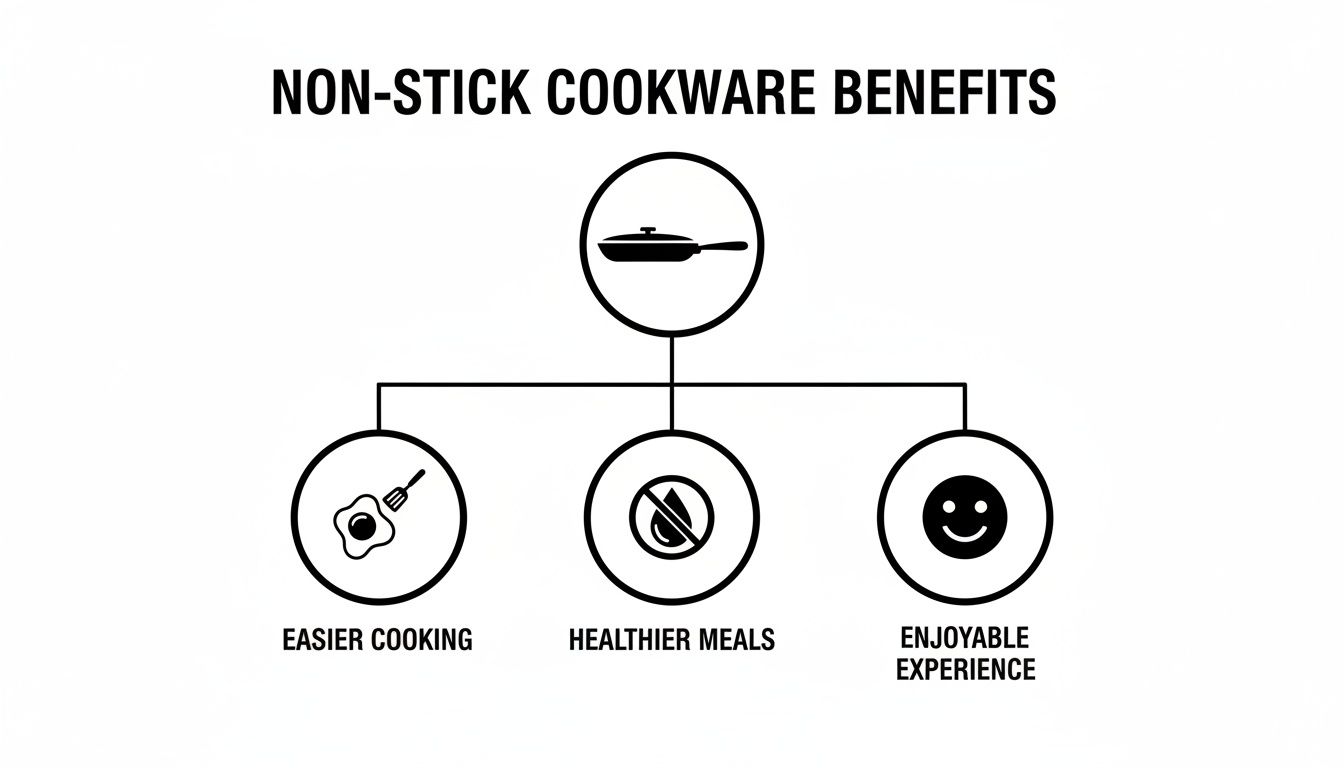
The appeal of non-stick cookware comes down to a few core benefits that just make sense for busy, modern lives. Whether you're a professional juggling weeknight meals or someone who's conscious about their health, the advantages are tough to overlook.
The Core Advantages of Non-Stick Surfaces
At its heart, the value of non-stick cookware is all about making cooking simpler. That low-friction surface means delicate foods like eggs, pancakes, and fish slide right out of the pan, keeping their shape and texture intact without you needing chef-level skills. It’s a real confidence booster in the kitchen.
This technology also makes healthier eating much more achievable by cutting down on the amount of oil or butter you need. While a little fat is great for flavour, a quality non-stick pan lets you get away with using very little, allowing the natural taste of your ingredients to be the star. This has been a huge factor in their soaring popularity.
In fact, the Australian non-stick cookware market is growing strong, largely because of this shift in cooking habits. The market is projected to hit USD 363.92 billion by 2032, which shows just how many Aussie households are prioritising pots and pans that are quick to use, easy to clean, and help minimise fat. You can explore more about these market trends and their drivers.
The true value of a great non-stick pan isn’t just that food doesn't stick; it's that it removes a layer of stress from the cooking process. It makes creating beautiful meals more accessible to everyone, regardless of their skill level.
And finally, the cleanup. This is probably the most celebrated benefit of all. Forget soaking and scrubbing burnt-on messes. With a good non-stick pan, a quick wipe with a soft sponge is often all it takes. That convenience saves a huge amount of time and effort, making the after-dinner routine far less of a headache.
This guide will walk you through everything you need to know, turning you from a curious home cook into a savvy buyer, ready to choose cookware that will genuinely serve you well for years to come.
Decoding the Different Types of Non Stick Surfaces
When you’re on the hunt for a new non-stick pan, it's easy to get lost in all the different options. It’s certainly not a one-size-fits-all situation. Think of a classic non-stick pan as your basic raincoat—it’ll do the job in a light drizzle. But a modern ceramic or reinforced coating? That’s more like high-performance GORE-TEX, built to handle tougher conditions and last much longer.
Getting to know the tech behind these surfaces helps you see past the sales pitch and pick the cookware that actually suits the way you cook. Each type has its own set of pros, cons, and a specific job it does best in the kitchen.
At the end of the day, the right pan just makes cooking more enjoyable. You can focus on creating a delicious meal instead of worrying about your food getting stuck and making a mess.
The Original: PTFE (Teflon)
Polytetrafluoroethylene, or PTFE, is the classic non-stick surface many of us grew up with, famously known by its original trade name, Teflon. It’s a synthetic material prized for its incredibly low friction, which gives it that signature slippery feel. This is why it’s always been the go-to for delicate foods like eggs or fish that need to slide right out of the pan.
It's important to know that modern PTFE coatings are completely PFOA-free, putting those old health concerns to rest. They offer solid, reliable performance at a great price, making them a popular choice for everyday frying pans. Just remember, they are the most delicate of the bunch and need a soft touch—no metal utensils allowed!
The Toxin-Free Alternative: Ceramic Non Stick
When we talk about ceramic non-stick, we're not talking about traditional pottery. This coating is made using a "sol-gel" process. A silica-based gel is sprayed onto the pan’s surface and then baked, or cured, with heat. The result is a hard, glossy, and naturally slick surface that’s completely free from PTFE, PFOA, and other chemicals.
Lots of home cooks choose ceramic for peace of mind and its ability to handle slightly higher temperatures without any worries. It’s fantastic for cooking on low to medium heat, but the coating can be a bit more brittle than PTFE. If you crank up the heat too high or scrub it too aggressively, it can lose its non-stick magic a bit faster.
The Durable Base: Hard-Anodised Aluminium
Hard-anodised aluminium isn't actually a coating itself. It’s a super-tough pan body that gets topped with a high-quality non-stick layer. The process involves giving the aluminium a special electrochemical bath, which creates a hardened, non-porous surface that won't rust or corrode.
This treatment makes the pan significantly stronger than even stainless steel. This rock-solid base gives the non-stick coating on top fantastic support, helping it resist chipping and ultimately last longer. Pans made this way strike a brilliant balance between strength, excellent heat conduction, and longevity.
Choosing the right pan often comes down to matching its construction to your cooking habits. A hard-anodised pan is built for daily use, while a basic PTFE might be perfect for occasional, delicate tasks.
The Next Generation: Reinforced and Infused Coatings
The latest wave in non-stick tech is all about reinforcement. To boost strength and lifespan, manufacturers are infusing coatings with seriously durable materials. If you want to see how far this technology has come, you can explore titanium non-stick options to get a feel for this enhanced performance. These advanced surfaces can take more of a beating and still perform beautifully.
- Diamond-Infused: Tiny diamond crystals are mixed right into the coating. This makes it incredibly hard and also helps the pan heat up evenly.
- Titanium-Reinforced: Layers of titanium are built into the coating, dramatically boosting its resistance to scrapes and scratches, even from metal utensils.
- Granite or Stone-Derived: These coatings use particles of stone or granite to create a tough, speckled finish with much better durability.
These improvements have really shaken up the cookware scene in Australia. Innovations in ceramic and diamond-infused coatings have boosted scratch resistance by up to 3x. And as we all become more health-conscious, a reported 75% of Aussie shoppers are now actively looking for ‘PFOA-free’ labels on their cookware.
Pans with reinforced coatings usually cost a bit more, but for anyone who cooks regularly, they are a fantastic investment. They perfectly bridge the gap between effortless non-stick release and the kind of durability you can count on for years. You can learn more about finding the best non stick surface for a frying pan in our detailed guide.
To help you decide, here's a quick look at how these common non-stick types stack up against one another.
Comparing Common Non Stick Cookware Types
| Coating Type | Pros | Cons | Ideal For |
|---|---|---|---|
| PTFE (Teflon) | Excellent food release, affordable, widely available | Prone to scratching, lower heat tolerance, requires non-metal utensils | Everyday low-to-medium heat cooking, especially for eggs, pancakes, and delicate fish. |
| Ceramic | PTFE/PFOA-free, can handle slightly higher heat, attractive finish | Can lose non-stick properties over time, more brittle, sensitive to sudden temperature changes | Health-conscious cooks, searing at moderate temperatures, and anyone avoiding fluoropolymers. |
| Hard-Anodised | Extremely durable base, scratch-resistant, excellent heat distribution | Heavier than standard aluminium, often more expensive | High-volume daily cooking, searing meats, and recipes that require even, consistent heat. |
| Reinforced (Titanium/Diamond) | Superior durability and scratch resistance, often metal utensil safe, long-lasting | Highest price point, can be heavier | Serious home cooks who want a long-term investment pan that can handle intensive use. |
Ultimately, this table shows there's no single "best" option—only the best option for your kitchen. Considering how you cook will guide you to the perfect pan that makes mealtime easier and more enjoyable.
Navigating the Health and Safety of Your Cookware
Let's get straight to the question every home cook asks: "Are my non-stick pots and pans safe?" It’s a great question, and one that's been muddied by a lot of old news and internet myths. The short answer is yes, modern non-stick cookware is completely safe for everyday cooking, as long as you know how to use it properly.
This section is all about clearing the air. We'll touch on the history of chemicals like PFOA to explain why that conversation is largely a thing of the past. More importantly, we'll focus on the one thing that truly matters for keeping your cookware safe: managing the heat.
The Ghost of PFOA in Modern Cookware
For years, the safety debate was centred on a chemical called PFOA (perfluorooctanoic acid). It wasn't in the final coating itself, but was used during the manufacturing process for PTFE (the key non-stick ingredient). As concerns about its health effects grew, the industry moved on.
Today, you'd be hard-pressed to find a non-stick pan that isn't proudly labelled "PFOA-free". This isn't just marketing fluff; it's a reflection of a massive, industry-wide shift in manufacturing that happened years ago. So, the real safety issue today isn't what your pan was made with, but how hot you let it get.
The Real Safety Rule: Don't Overheat It
The one genuine safety rule for traditional non-stick pans comes down to temperature. If a PTFE-based coating gets heated beyond 260°C, it can start to break down and release fumes. While not seriously toxic in small doses, these fumes can cause what's known as "polymer fume fever," which feels a lot like a temporary case of the flu.
So, how hot is 260°C? It's much hotter than you'd ever need for regular cooking. A good sear on a steak happens around 200–230°C. You're really only at risk of hitting that extreme temperature by accident—like leaving an empty pan on a high burner while you get distracted.
The key takeaway is this: the danger isn't in the pan itself, but in misuse. Proper heat management is the single most effective way to ensure your non stick cookware remains safe and performs at its best.
Understanding your cookware's limits is key. For example, titanium cookware can handle temperatures well over 600°C without any issues, a stark contrast to PTFE's 260°C limit. This kind of rugged durability is why many professional chefs in places like Melbourne's bustling food scene swear by these tougher materials.
Practical Tips for Safe Cooking
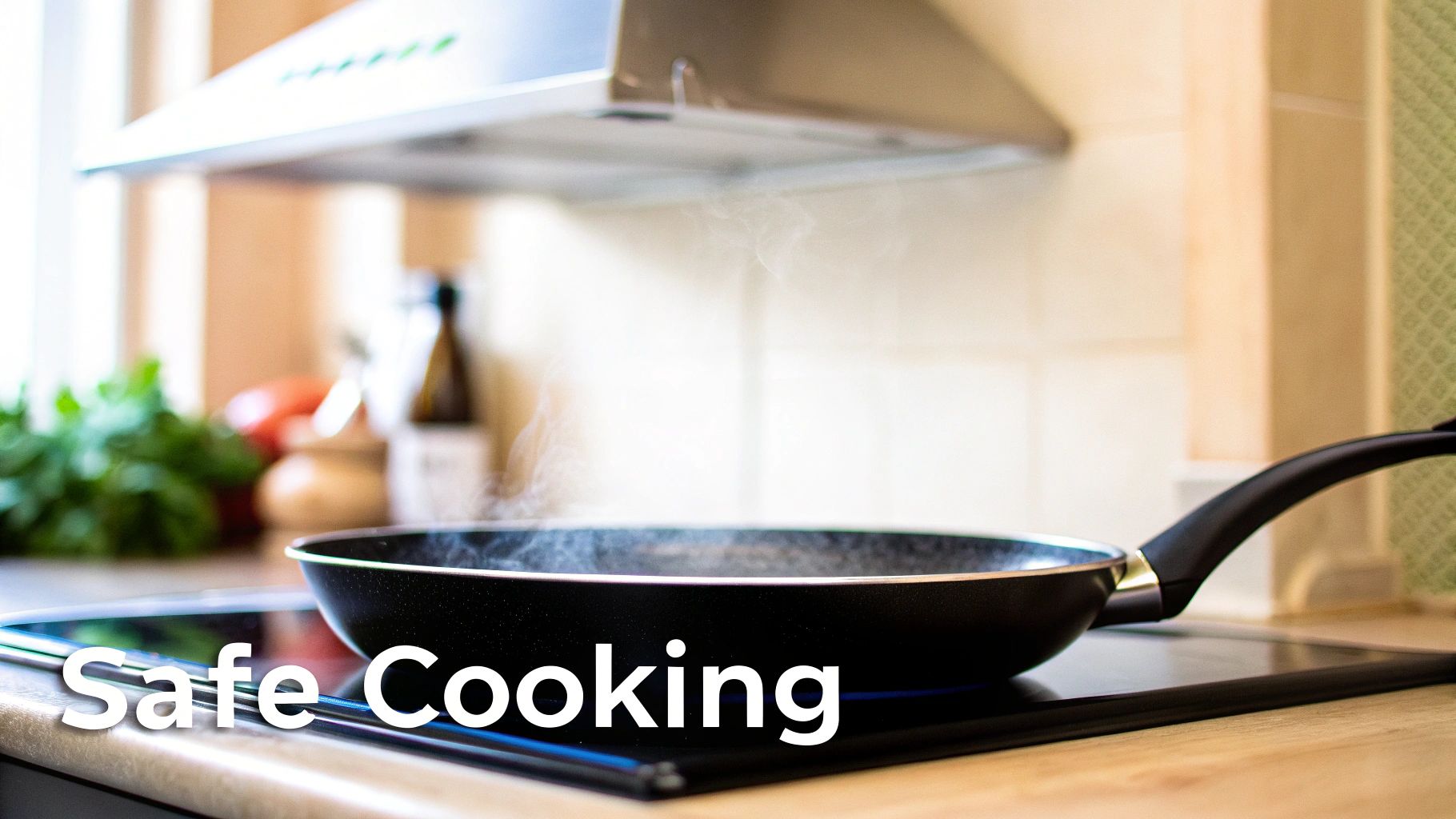
Keeping your cooking temperatures in the safe zone is surprisingly simple. It’s not about using special thermometers or complicated techniques, just building a few good habits. Follow these, and you can cook with total peace of mind.
- Stick to Low or Medium Heat: Your non-stick pan is built to be efficient. A medium setting is more than enough for frying eggs, sautéing vegetables, and even searing chicken. Save the high-heat settings for boiling water in a stainless steel pot.
- Never Preheat an Empty Pan: This is a big one. Always put a bit of oil, butter, or the food itself in the pan before you turn on the stove. An empty pan can get dangerously hot in just a couple of minutes.
- Get Some Air Flowing: It's always a good idea to cook with the rangehood on or a window cracked open. This helps whisk away any fumes from your cooking, whether they come from the pan or the food itself.
- Pick the Right Oil: Use cooking oils with a smoke point that matches your heat level. Extra virgin olive oil is perfect for lower temperatures, while oils like canola or grapeseed are better suited for a bit more warmth.
These simple steps don't just keep your kitchen safe; they also dramatically extend the life of your pan's non-stick surface. If you’re keen to dive deeper into this topic, our guide on the best cookware for health is a fantastic resource for comparing different materials.
How to Choose the Right Non Stick Cookware for You
Finding the perfect non stick pan is about more than just the slick surface. While the coating gets all the attention, it’s the pan’s core construction—the metal it's made from, how it's built, and how it feels in your hand—that really dictates its performance on the cooktop. It’s a bit like buying a car; a great paint job is nice, but it's the engine and build quality that determine how well it drives.
This guide will walk you through what to look for, helping you assess non stick cookware like a pro. By focusing on the fundamentals, you can find a pan that truly fits your cooking style, your stovetop, and your budget, ensuring you end up with a piece you’ll reach for again and again.
What's at the Core? Understanding the Materials
The metal that forms the body of the pan is its engine. It controls how quickly it heats up, how evenly it holds that heat, and how it reacts when you turn the flame up or down. Each material brings something different to the table.
-
Aluminium: You'll find this in most non stick cookware, and for good reason. It’s lightweight, affordable, and conducts heat brilliantly, meaning it gets hot fast. The trade-off? Thinner, cheaper aluminium can warp under high heat, so always look for a pan with a noticeably thick, heavy base.
-
Hard-Anodised Aluminium: This is the tougher, upgraded version of standard aluminium. It goes through an electrochemical process that hardens the surface, making it incredibly durable and resistant to warping. This creates a fantastic, long-lasting foundation for a non stick coating.
-
Stainless Steel: Prized for its sheer durability and non-reactive nature, stainless steel is a premium choice. A non stick pan with a stainless steel body will almost always have a core of aluminium or copper sandwiched inside to improve heat distribution. This gives you the best of both worlds: strength and efficient cooking.
Think of it this way: when you choose a pan, you're not just picking a surface, you're choosing a heat delivery system. A pan with a heavy, multi-layered base will always cook more evenly and prevent frustrating hot spots, no matter what coating is on top.
Don't Overlook Design and Ergonomics
Beyond the core materials, a pan's physical design is what makes it a joy—or a pain—to use day in and day out. Seemingly small details can have a massive impact.
First, get a feel for the handle. Is it comfortable? A poorly designed handle can make a pan feel clunky and hard to manoeuvre. Look for handles that are securely riveted (not screwed) to the pan and made from a material that stays cool to the touch, like cast stainless steel or one with a silicone grip.
The pan's weight and balance are just as important. A quality pan should feel solid and substantial, but not so heavy that it’s a chore to lift. It needs to sit perfectly flat on your stove without wobbling, especially when empty. That thick, heavy base isn't just for show; it's a hallmark of quality that prevents warping and ensures your food cooks evenly.
Is It Compatible With Your Kitchen?
Finally, a quick check to make sure your new pan will actually work with your setup. This is a non-negotiable step, especially if you have a modern cooktop.
If you cook on an induction stove, your pan must have a magnetic base. Most manufacturers state this clearly on the packaging, but you can do a quick check yourself. Just see if a fridge magnet sticks firmly to the bottom of the pan. If it does, you're good to go.
Also, think about how you'll use it. Do you like finishing dishes in the oven? Check the pan's oven-safe temperature limit, which can vary wildly. And what about a lid? A tight-fitting glass lid is a great feature, as it lets you keep an eye on things without losing heat. A little bit of thought here goes a long way in finding the perfect kitchen partner.
Extending the Life of Your Non-Stick Investment
A quality non-stick pan can feel like a superpower in the kitchen, but it’s not invincible. Think of its surface like the screen on a new phone—it works wonders until that first scratch appears. The good news is, with a few simple habits, you can protect that delicate coating and keep your non-stick pots and pans performing beautifully for years.
These aren't complicated or time-consuming chores. They're just small tweaks to how you cook and clean that will fend off the common culprits—scratches, warping, and sticky buildup—that usually send pans into early retirement.
Master the Daily Dos and Don'ts
The two biggest enemies of a non-stick surface are sharp utensils and sudden, extreme temperature changes. Protecting your pan starts the second you put it on the stove.
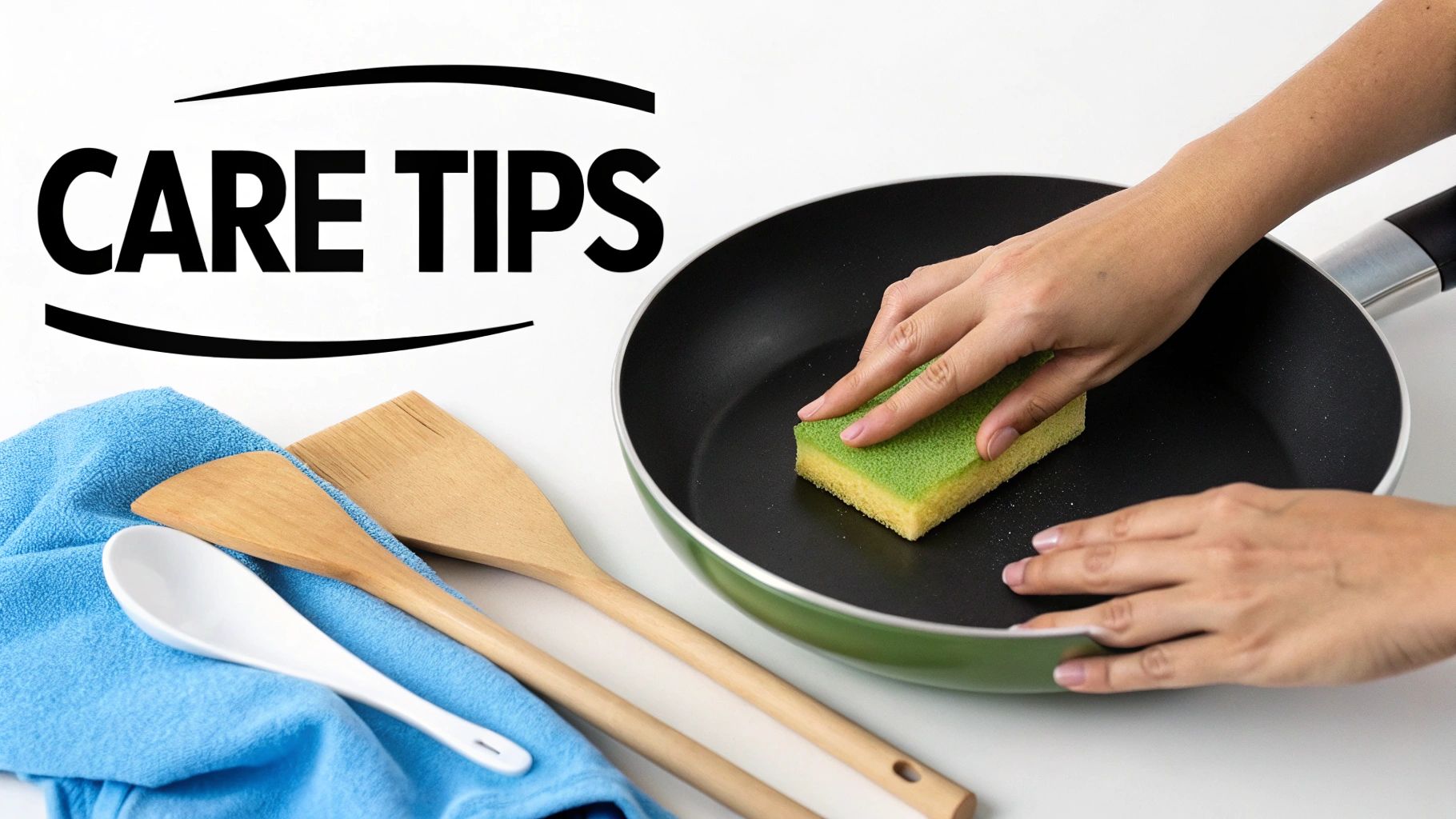
First up, always use the right tools. Metal spatulas, forks, or whisks are a definite no-go. They can easily etch tiny scratches into the coating, and over time, those little imperfections get worse, causing food to stick and the surface to break down.
To keep your pan pristine, stick with materials that are gentle on the coating:
- Silicone: This is the gold standard. It’s flexible, heat-resistant, and completely non-abrasive.
- Wood or Bamboo: A classic choice for a reason. These won't harm the surface at all.
- Nylon: A great, budget-friendly alternative that’s safe for all non-stick coatings.
Another mistake I see all the time is the use of aerosol cooking sprays. While they seem convenient, they contain ingredients that don't burn off properly. This leaves behind a sticky, almost invisible film that builds up, ironically making your pan less non-stick. A little drizzle of oil or a knob of butter is all you need.
The Art of Proper Cleaning and Storage
How you clean your pan is just as critical as how you cook with it. Scrubbing too hard can be just as bad as using a metal utensil. The trick is to be gentle.
Always, always let your pan cool down completely before washing it. Dunking a hot pan into a sink of cold water causes thermal shock, which is a fast track to a warped base. A warped pan will wobble on the cooktop, leading to hotspots and uneven cooking.
The golden rule of non-stick care is simple: avoid anything that can scratch or shock the surface. Gentle utensils, moderate heat, and gradual temperature changes are the three pillars of a long-lasting pan.
Once it's cool, a simple hand wash with warm, soapy water and a soft sponge is perfect. I know a lot of pans are labelled dishwasher-safe these days, but trust me, handwashing is always the kinder option that will preserve the coating for much longer. If you’re curious about the details, you can read more about what makes dishwasher-safe pans truly safe and the potential risks.
When it comes to storage, try not to stack other pots and pans directly inside your non-stick ones. If you're tight on space and have to stack, just place a soft cloth, a paper towel, or a proper pan protector between them to prevent scratches. It’s a tiny step that adds years to your pan's life. While these tips are for modern coatings, the core ideas also apply to more traditional surfaces. If you’re interested in how a non-stick layer is built up on cookware like cast iron, you can learn how to season a cooking surface for a perfect non-stick finish. Making these habits part of your routine ensures your investment keeps paying off with every effortless omelette or perfectly cooked piece of fish.
Your Top Non Stick Cookware Questions, Answered
Even after getting a handle on the different types, safety concerns, and care tips, there are always a few lingering questions that pop up. Getting these sorted is the final step to cooking with complete confidence and making sure you get the most out of your kitchen gear.
I’ve pulled together the questions I hear most often from home cooks and laid out some simple, practical answers. Think of this as your final cheat sheet for mastering non stick cookware.
When Should I Replace My Non Stick Pan?
The most obvious sign it's time for a new pan is when the surface looks beaten up. Keep an eye out for deep scratches that you can feel with your fingernail, any spots where the coating is flaking or peeling, or significant discolouration. These are all dead giveaways that the non stick layer has given up.
Once the coating is damaged, two things happen. First, its magic food-releasing ability is gone, and you'll find your morning eggs are clinging on for dear life again. More importantly, there's a chance tiny bits of the coating could end up in your food. While modern coatings are considered safe, it’s just good practice to retire a pan once it starts breaking down.
As a rough guide, a well-looked-after pan that you use regularly will probably last you somewhere between two to five years. Another tell-tale sign is warping. If your pan wobbles and no longer sits flat on the stovetop, it's not going to heat evenly, and it's definitely time for an upgrade.
Are Ceramic Pans a Safer Alternative to PTFE?
Many people see ceramic coatings as a really safe and dependable choice, and for good reason. They’re made without any PTFE or PFOA, which gives a lot of health-conscious Aussie cooks peace of mind that no fumes will be released, even if the pan gets too hot by accident.
But there is a trade-off, and it almost always comes down to durability. Generally speaking, ceramic surfaces are more fragile than the high-quality, reinforced PTFE pans on the market today. They can lose their non stick mojo a bit faster, particularly if you crank up the heat too often, expose them to sudden temperature shocks, or accidentally scratch them.
Ceramic is a fantastic, safe option if you’re committed to a PTFE-free kitchen. Just be aware that it might need a gentler touch and you’ll likely be replacing it sooner than you would a premium, reinforced non stick pan.
Can I Use Metal Utensils on My Non Stick Pan?
For almost every non stick pan out there, the answer is a hard no. It’s always best to steer clear of metal utensils. They can easily scratch, scrape, and gouge the delicate surface, and once that coating is damaged, there’s no way to repair it.
To keep your pan in good nick for as long as possible, stick to softer tools.
- Silicone: It’s flexible, handles heat well, and won't scratch a thing.
- Wood or Bamboo: The classic choice. Gentle on the pan and great for stirring.
- Nylon: An affordable and perfectly safe option for any non stick surface.
You might see some top-of-the-line pans advertised as "metal-utensil safe" because they have advanced coatings infused with things like titanium or diamond dust. Even with these, I’d still recommend using softer utensils as your default. Sticking to wood or silicone is the surefire way to get the maximum lifespan out of your pan.
Why Is My Non Stick Pan Starting to Stick?
This is easily the most common frustration, and it usually boils down to a couple of key culprits. The number one reason is often a build-up of invisible gunk on the surface. This nearly invisible film is usually caused by aerosol cooking sprays or from heating oils past their smoke point, which makes them polymerise—basically turning them into a sticky varnish bonded to your pan.
This thin layer gets between your food and the non stick coating, causing everything to stick. Other possibilities are tiny scratches from scrubbing too hard with an abrasive scourer, or simply the coating gradually wearing out over time from normal use.
You can sometimes bring it back to life by making a paste with bicarb soda and water and giving it a gentle scrub. If the stickiness is because the coating is physically scratched or worn out, though, the pan has probably reached the end of its road. Time to replace it before it causes any more cooking headaches.
At Everti, we believe in creating kitchen essentials that offer both exceptional performance and peace of mind. Our collection of pure titanium cookware and cutting boards is designed for those who value durability, hygiene, and timeless design. Discover the difference that lifetime-quality materials can make in your daily cooking rituals. Explore our range at https://everti.com.au.