

Ever wonder what makes a pan "oven-safe"? It’s simply cookware designed to go straight from your stovetop into the heat of the oven. This means it’s built from materials tough enough to handle high temperatures without warping, melting, or releasing any nasty chemicals.
Why an Oven-Safe Pan Is a Kitchen Essential
Picture this: you've just seared a thick steak on the cooktop, getting that perfect, crispy crust. Instead of fumbling to move it to a baking tray, you just slide the whole pan into the oven to finish cooking it through with gentle, even heat. That effortless move is exactly why an oven-safe pan is so brilliant.
It's more than just a pan; it's a tool that completely streamlines how you cook. It opens up a whole new world of recipes while saving you time and a mountain of washing up. By getting rid of the need to transfer food from a skillet to a baking dish, it becomes the ultimate multi-tasker in your kitchen.
Making Your Cooking Simpler
The real magic of an oven-safe pan is how it simplifies otherwise complex cooking techniques. It’s the secret behind those incredible one-pan dinners where all the ingredients meld together, building deep, rich flavours you just can't get any other way.
- Building Flavour: When you sear meat or caramelise veggies on the stovetop, you're creating a flavour foundation. Keeping everything in the same pan as it finishes in the oven means none of that goodness is lost.
- Saving Time: Fewer pots and pans mean less time spent scrubbing at the sink after dinner. It's a simple equation that every home cook appreciates.
- Perfectly Even Cooking: An oven's consistent, all-around heat is perfect for ensuring thick cuts of meat, dense casseroles, or even skillet brownies cook through evenly, without a burnt bottom in sight.
This kind of versatility has made oven-safe cookware a must-have in Australian kitchens. It’s no surprise that the local kitchenware market, currently valued at USD 3,854.86 million, is expected to jump to USD 6,590.53 million by 2033. A big part of this growth comes from our increasing focus on health and wellness, with more of us looking for durable, non-toxic cookware that helps us cook better. For a deeper dive into these figures, check out IMARC Group's full report on Australian kitchenware trends.
The ability to start a dish on the stove and finish it in the oven isn't just a convenience—it's a technique used by professional chefs to control temperature precisely and achieve superior texture and taste.
Choosing Your Pan Material for Oven Cooking
Picking the right oven-safe pan is a bit like choosing the right knife for a specific cut. Each material brings something different to the table—heat control, durability, and cooking style. Getting to know these differences is the secret to mastering those stovetop-to-oven recipes and pulling off consistently amazing meals.
Think of it this way: a heavy cast iron skillet is your reliable power tool, built to sear and hold onto heat for what feels like an eternity. On the other hand, a sleek stainless steel pan is the versatile multi-tool you can grab for just about anything. Let's dig into the most common materials to find the perfect fit for your kitchen.
The diagram below really nails down the core benefits of having an oven-safe pan in your arsenal, from its sheer versatility to the better-tasting results you'll get.
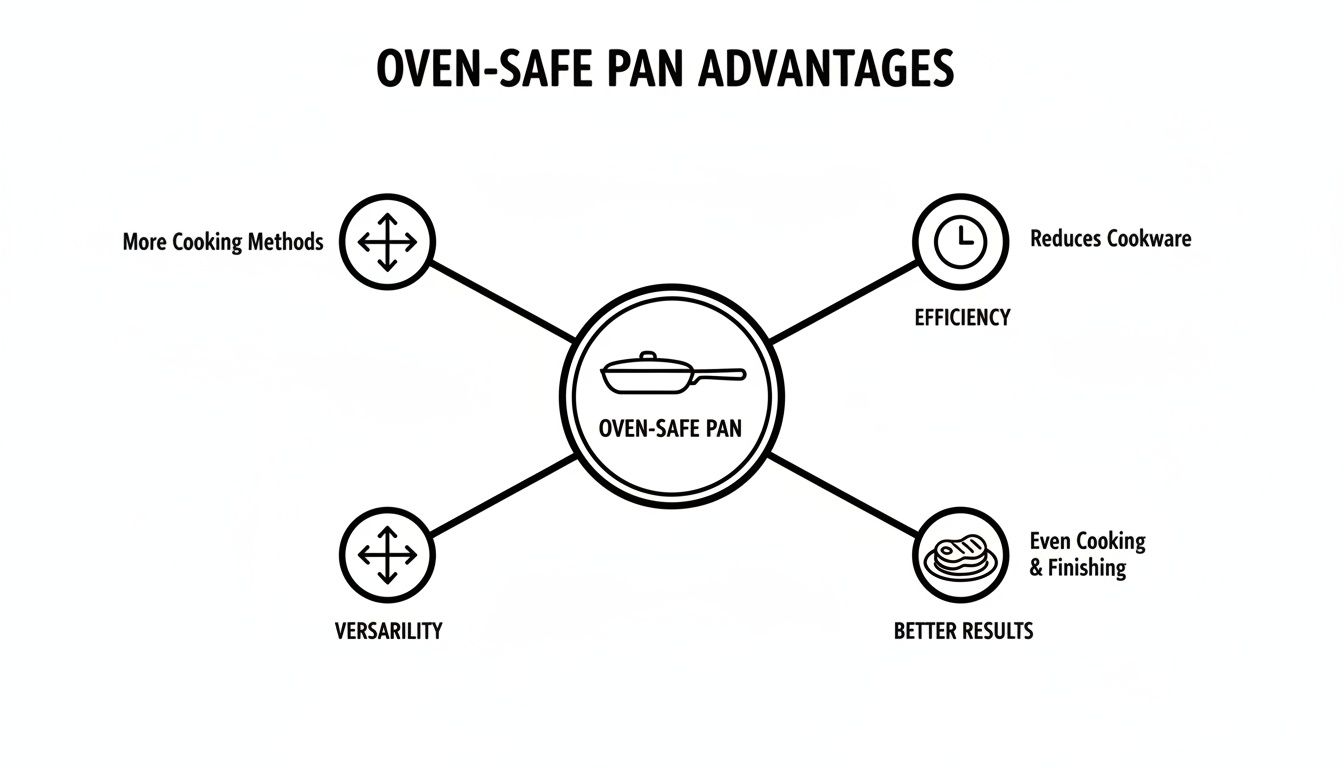
It’s easy to see how one great pan can streamline your cooking, save you time, and seriously elevate the flavour and texture of your dishes.
Cast Iron: The Heavyweight Champion
There’s a reason cast iron is legendary. This dense, heavy material heats up slowly but holds that heat like nothing else. This incredible heat retention makes it the undisputed king for searing steaks, crisping up chicken skin, or baking cornbread with that perfect, golden crust.
Once you get it properly seasoned, cast iron develops a brilliant, natural non-stick surface that only gets better with every use. It’s tough as nails and can handle seriously high oven temperatures, often pushing past 260°C. The trade-off? It needs a bit of love (seasoning) and can react with acidic foods like tomatoes if the seasoning isn't well-established.
Stainless Steel: The Versatile Workhorse
If there’s one pan that can do it all, it’s stainless steel. It’s non-reactive, durable, and generally dishwasher-safe, which explains why it’s a staple in both home and professional kitchens. The best stainless steel pans feature an aluminium or copper core, which massively improves heat conductivity, so your food cooks evenly without annoying hot spots.
An oven-safe stainless steel pan is a true jack-of-all-trades, perfect for:
- Braising meats and vegetables
- Creating rich pan sauces right after searing
- Baking cheesy casseroles and gratins
While it doesn't hold heat quite as stubbornly as cast iron, its responsiveness gives you incredibly precise temperature control. It helps to understand the full range of various types of cooking pans to appreciate how stainless steel fits into a well-equipped kitchen.
Carbon Steel: The Chef’s Secret
Often called cast iron's lighter cousin, carbon steel delivers many of the same perks but with its own unique feel. It heats up much faster, reacts more quickly to temperature changes, and builds up a slick, seasoned surface over time. It’s a firm favourite among pro chefs for its raw performance and durability.
Just like cast iron, it can handle blistering heat and needs to be seasoned to keep rust at bay and maintain its non-stick qualities. It’s the perfect choice for dishes that need a fast, hard sear on the stovetop before heading into the oven to finish cooking.
Ceramic: The Modern Non-Toxic Choice
When we talk about ceramic cookware, we're usually referring to pans with a ceramic non-stick coating over a metal core, which is typically aluminium. These pans have become popular with health-conscious cooks because they’re free from chemicals like PTFE and PFOA. Our guide on healthy cooking pans is a great resource if you're looking for safer alternatives in the kitchen.
They offer fantastic non-stick performance right out of the box and are a breeze to clean. The catch is that their oven-safe temperature limits are usually lower than all-metal pans, and the ceramic coating can be less durable in the long run. They really shine when used for gentle baking and roasting at more moderate temperatures.
To make things a bit clearer, here's a quick comparison of the most common materials you'll come across.
Oven Safe Pan Material Comparison
This table offers a quick-reference guide to help you compare the key features of popular oven-safe pan materials. Use it to find the best option for your specific cooking habits and needs.
| Material Type | Typical Max Temperature (°C) | Heat Retention | Best For | Maintenance Level |
|---|---|---|---|---|
| Cast Iron | 260+ | Excellent | Searing, frying, baking, braising | High (Seasoning) |
| Stainless Steel | 260 | Good | All-purpose cooking, searing, pan sauces | Low |
| Carbon Steel | 315+ | Very Good | High-heat searing, stir-frying, roasting | High (Seasoning) |
| Ceramic | 175 - 230 | Fair | Gentle baking, roasting, non-stick cooking | Medium |
Ultimately, the best pan is the one that fits your cooking style. A steak lover will swear by cast iron, while someone who loves making delicate sauces will reach for stainless steel every time.
Cracking the Code on Temperature Limits and Safety Symbols
Not all oven-safe pans are created equal. A pan that’s perfectly happy baking a casserole at a gentle 180°C might protest loudly—by warping or getting damaged—if you slide it under a scorching 260°C grill. The secret to getting the most out of your cookware, and keeping your kitchen safe, is knowing exactly what it can handle.
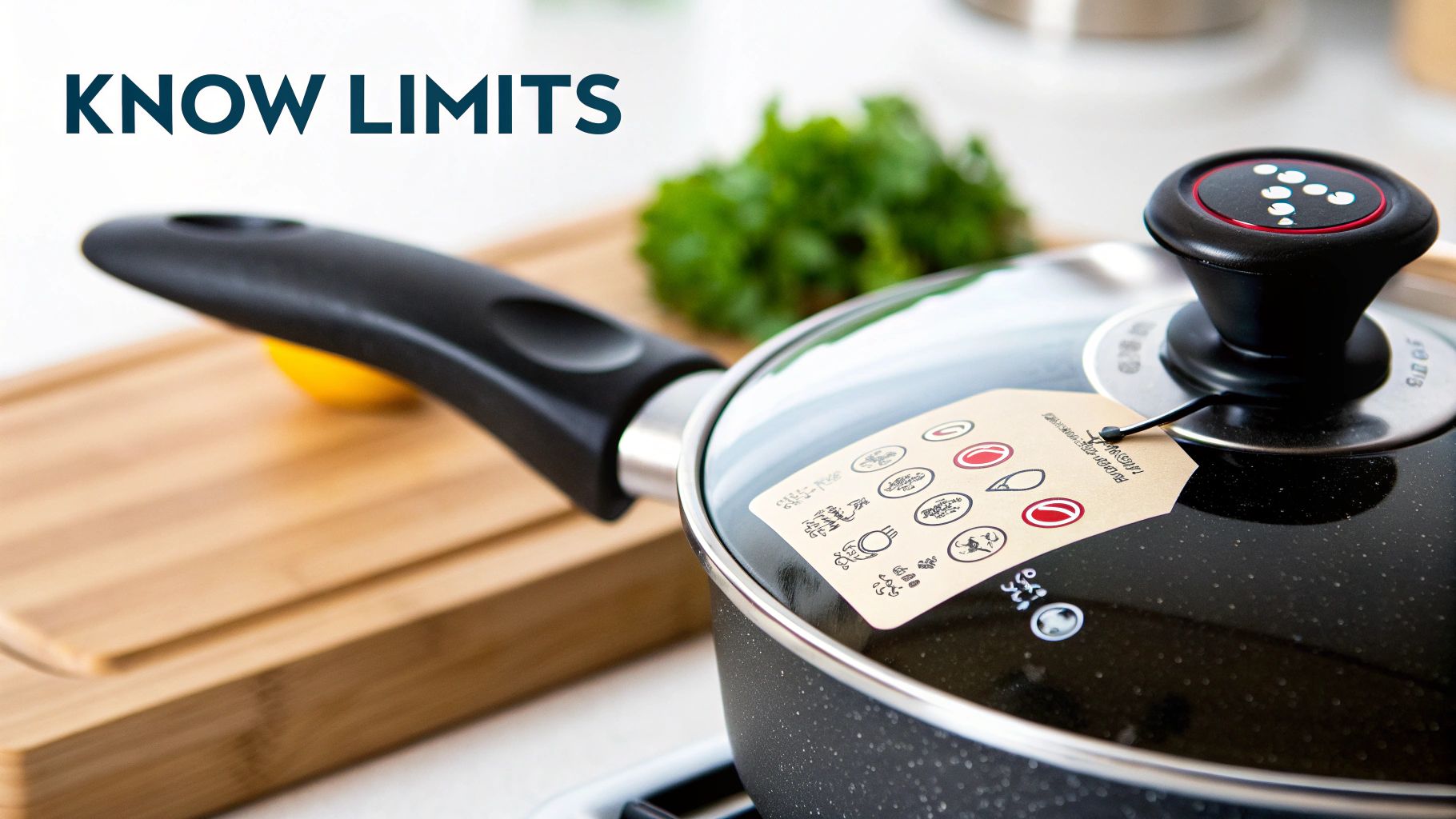
Think of the term 'oven safe' as a range, not a single, fixed guarantee. The real temperature limit of any pan comes down to its weakest link. It’s like a chain; the whole thing is only as strong as its most delicate part. For your cookware, that weak link could be the handle, the lid, or even the non-stick coating.
Finding the Weakest Link
To figure out your pan's true heat threshold, you need to do a bit of detective work. The body of the pan might be built like a tank, but other components can bring its oven-safe rating way down.
Here are the usual suspects to check first:
- Plastic or Bakelite Handles: While these are designed to resist heat, they have their limits. Most will top out around 175-200°C. Push past that, and you risk them melting or releasing some nasty fumes.
- Glass Lids: Tempered glass is tough, but it's almost always rated for lower temperatures than the pan it sits on. A common limit for glass lids is 175°C, and the knob on top might be even less resilient.
- Non-Stick Coatings: High heat is the enemy of most non-stick surfaces. Overheating can cause the coating to break down, which not only ruins its performance but can also release harmful chemicals into the air. Always stick to the manufacturer’s guidelines for coated pans.
A pan forged from a single piece of metal—think cast iron or a stainless steel pan with a metal handle—is almost always your best bet for high temperatures. The fewer different materials in the mix, the less you have to worry about.
Reading the Symbols and the Fine Print
So, how can you know for sure? The best source of truth is always the manufacturer. Check for symbols stamped or etched onto the bottom of the pan. If you can’t find anything there, dig out the original packaging or head to the brand's website.
These symbols are your roadmap to using the pan correctly. While there isn't one universal standard, you'll often see an icon of an oven with a temperature inside, like "220°C" or "425°F". This number is the maximum safe temperature for the entire piece of cookware—handle, lid, and all—unless it says otherwise.
If you can't find any information and your pan has non-metal parts, the safest bet is to assume it’s not meant for the oven. A few minutes of checking can save you from a costly mistake and keep your trusty pan in great shape for years to come.
How to Choose the Right Oven Safe Pan
Now that you've got a handle on the different materials and their heat limits, it's time for the fun part: picking the perfect oven-safe pan for your kitchen. This is less about technical specs and more about how you actually cook. The right pan should feel like a natural extension of your hands, not just another tool in the cupboard.
To find your ideal match, think about your daily cooking habits. Are you whipping up meals for a big family, or is it usually just for one or two? This simple question will guide you to the right size, so you're not trying to cram food into a tiny pan or heat a huge one for a single chicken breast.
Also, consider your signature dishes. Do you find yourself searing thick steaks, simmering stews for hours, or baking fluffy frittatas on the weekend?
Matching Pan Type to Cooking Style
Different pans are shaped for different jobs. Getting the right one not only makes cooking easier but also delivers far better results. You don't need a cupboard full of every single type, but knowing what each one does best will help you choose a versatile workhorse.
- Skillets and Frying Pans: These are the all-rounders. Their sloped sides are brilliant for searing, frying, and sautéing on the stovetop before sliding them into the oven to finish. They’re easily the most versatile oven-safe pan you can own.
- Dutch Ovens: As the heavyweights of slow cooking, these deep pots with their snug lids are unbeatable for braises, stews, and soups. They're also fantastic for baking artisan-style, crusty bread.
- Braisers: Think of a braiser as a Dutch oven's shorter, wider cousin. It's perfect for cooking larger cuts of meat in a bit of liquid, and its wide base gives you plenty of room to brown everything beautifully first.
If you're looking to make a smart investment in your kitchen, our guide on what to look for in good quality pots and pans offers even more great advice.
Balancing Budget and Brand Investment
You can find cookware at just about every price point, so it’s important to find a sweet spot that works for you. The non-stick cookware market in Australia and New Zealand, valued at around USD 254.62 million in 2024, shows just how much people are willing to invest in quality.
A single frying pan from a premium brand can set you back anywhere from AUD 150 to AUD 380. This often leads savvy home cooks towards more budget-friendly yet incredibly durable options like stainless steel or cast iron.
Choosing a pan is a long-term decision. Investing in a high-quality, durable piece that matches your cooking habits will pay dividends in performance and longevity, often outlasting several cheaper alternatives.
Ultimately, picking a pan is a personal journey. As you learn how to choose the right one, it's also helpful to broaden your knowledge by understanding different oven types like countertop commercial convection ovens, because the way your oven works can influence which pan performs best. By aligning the pan's material, type, and size with your needs, you’ll find a true culinary partner for years to come.
Essential Care to Make Your Cookware Last
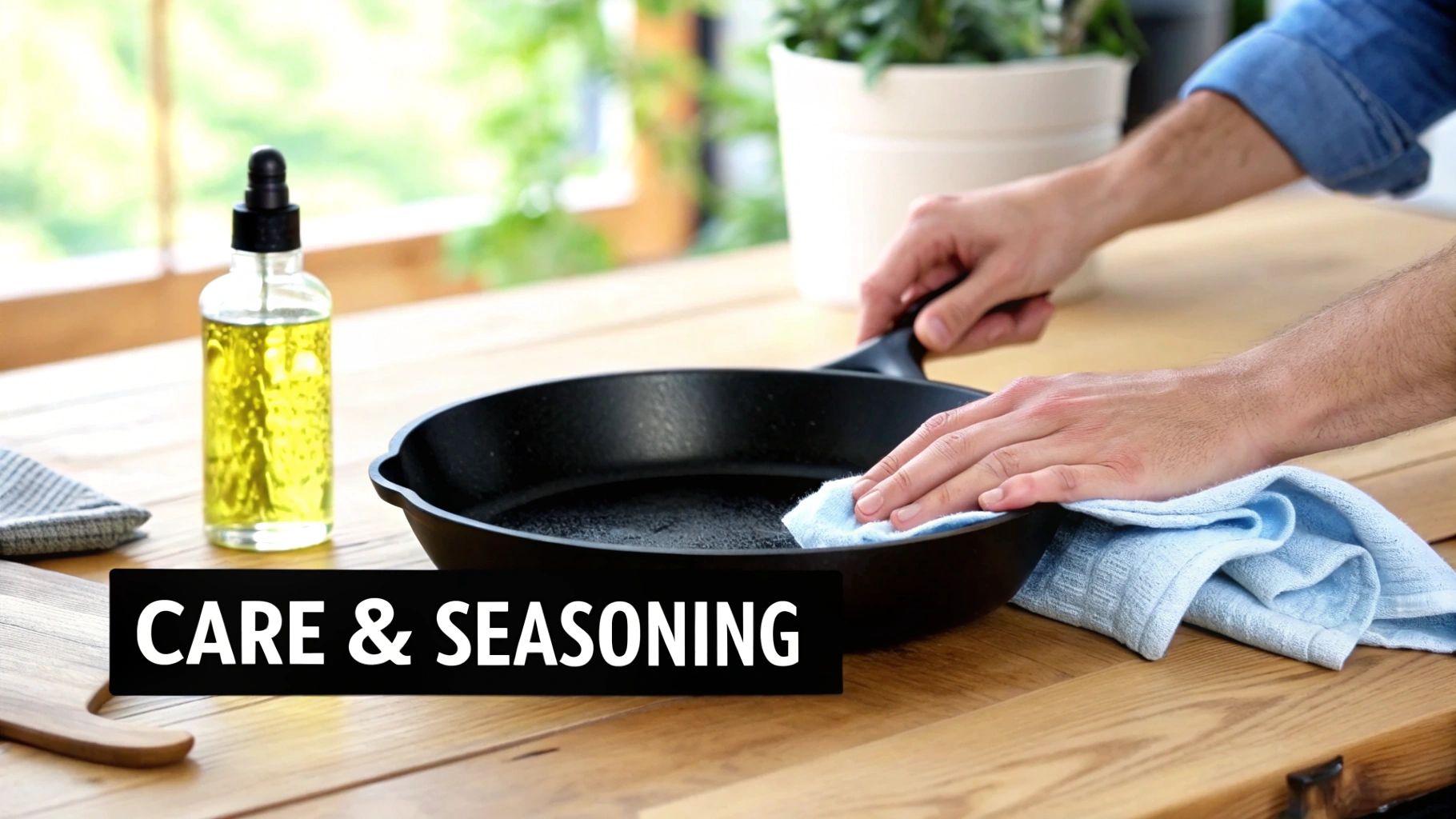
Think of your oven-safe pan as a long-term investment in your kitchen. It's built tough for years of searing, roasting, and baking, and with a bit of routine care, it will perform beautifully for decades. This is how you turn a good pan into a trusted favourite you'll reach for again and again.
The golden rule of cookware care is to avoid thermal shock. Whatever you do, don't take a scorching hot pan from the oven and plunge it into a sink of cold water. That drastic temperature drop can make the metal warp or even crack, particularly with materials like cast iron and ceramic. Always let your pan cool down on a trivet or the stovetop for a few minutes before you think about washing it.
Cleaning Techniques for Different Materials
Every pan material has its own personality, and cleaning is no different. Nailing the right technique not only keeps your cookware looking its best but also protects the cooking surface, which is what really matters.
-
Cast Iron & Carbon Steel: The magic of these pans is in their seasoning—that beautiful, slick layer of polymerised oil that creates a natural non-stick finish. To clean them, stick to hot water and a stiff brush or a pan scraper for any stubborn bits. Steer clear of harsh detergents, as they'll strip away the seasoning you've worked so hard to build up. Once it's clean, pop it on the stove over low heat to dry it completely, then wipe a tiny amount of cooking oil inside before putting it away.
-
Stainless Steel: This workhorse material is incredibly durable, but it can sometimes get stubborn burnt-on food or develop a faint, rainbow-like discolouration. For tough grime, a simple paste of baking soda and water is a fantastic, non-scratchy solution. To get rid of that heat tint and bring back the shine, a quick wipe with a bit of white vinegar usually does the trick.
-
Enamel & Non-Stick Coatings: These surfaces need a gentle touch. Always use non-abrasive sponges and a mild dish soap. Metal utensils are a big no-no here, as they can easily scratch or chip the coating. Once that surface is compromised, it won't cook as well and may no longer be safe to use.
A well-maintained pan isn't just about cleanliness; it's about performance. Proper care ensures even heating, prevents food from sticking, and extends the life of your cookware, making every dollar you spent on it worthwhile.
While most top-tier oven-safe pans do best with hand washing, some are specifically designed for convenience. If a quick and easy clean-up is high on your list, it's worth checking out our guide to dishwasher-safe pans to find a pan that suits your lifestyle. A few simple habits are all it takes to keep your cookware in prime condition, making it a reliable partner for all your culinary adventures.
Your Oven-Safe Pan Questions Answered
Even with the best oven-safe pan in your kitchen, you’re bound to have a few questions. Moving cookware from the cooktop straight into a hot oven can feel like it comes with a whole set of unwritten rules. This section is here to clear up that confusion with straightforward answers to the most common queries we hear.
We'll tackle everything from those mysterious handles to the fine print on lids. Think of this as your go-to reference for using your pans safely, effectively, and with total confidence.
Can I Put a Pan with a Plastic Handle in the Oven?
The short answer is: probably not. You need to be extremely cautious here. Standard plastic handles will melt, warp, and can release some pretty nasty fumes when they meet oven heat. That said, many modern pans are designed with specialised, heat-resistant materials like Bakelite or silicone for their handles, which can often withstand temperatures up to around 175-200°C.
But how do you know for sure? The only reliable way is to check the manufacturer's guidelines. Look for markings on the bottom of the pan itself or check the brand's website for your specific model.
If you're ever in doubt about a plastic handle, the safest bet is to assume it is not oven-safe. This is exactly why pans made entirely from a single material, like stainless steel or cast iron, are the go-to choice for high-temperature oven cooking.
When you can't find any information, just play it safe and keep it on the cooktop.
What Is the Difference Between Oven-Safe and Oven-Proof?
This one is a classic point of confusion, mostly because the terms are often used interchangeably in marketing. While there isn't a strict, industry-wide definition that all brands stick to, there’s a general understanding of what they imply.
- Oven-Safe typically means the cookware can handle oven temperatures up to a specific, stated limit (e.g., "oven-safe to 220°C").
- Oven-Proof often suggests a higher level of durability. It implies the pan can withstand much higher heat, including a blast under the broiler, without any risk of damage.
Ultimately, the marketing term itself matters less than the actual temperature rating. Always look for the maximum recommended temperature provided by the manufacturer. That number is the only guide you truly need to follow.
How Do I Know if My Pan Is Oven-Safe if It Has No Markings?
When a pan is unmarked, it's time to play cookware detective. Your best clue is its construction. A pan made from a single, continuous piece of metal—think cast iron, carbon steel, or stainless steel (handle included)—is almost certainly oven-safe to very high temperatures.
Your investigation should focus on any non-metal parts, as these are the usual weak points. Pay close attention to:
- Handles: Are there any plastic, wood, or rubberised grips? These are red flags.
- Rivets: Check the rivets that attach the handle. Are they made of a different material? Do they seem loose?
- Coatings: If the pan has a non-stick coating of unknown origin, putting it in a hot oven is a gamble. Overheating can damage the surface and potentially release fumes.
When a pan's history and materials are a complete mystery, the safest approach is to limit it to stovetop use.
Can My Glass Lid Go in the Oven with the Pan?
This is a critical question, and the answer is a firm "it depends." Most high-quality oven-safe pans today come with tempered glass lids that are also rated for oven use, but there's a catch. The lid almost always has a lower temperature limit than the pan itself.
For instance, a stainless steel pan might be fine up to 260°C, but its glass lid may only be safe up to 200°C. The knob on the lid, often made of plastic or Bakelite, is usually the culprit. If the knob is metal, the lid can likely handle more heat. Never just assume a glass lid is oven-safe—rapid temperature changes can cause non-tempered glass to shatter, which is a serious safety hazard.
At Everti, we believe in creating kitchen essentials that are built to last a lifetime, offering purity, performance, and peace of mind. Discover our range of pure titanium cookware and kitchenware designed for the discerning home cook. Explore the collection at https://everti.com.au.