

Welcome to your complete guide on choosing the best saucepan sets in Australia. Think of your cookware as the unsung hero of your kitchen. The right set can transform everyday ingredients into something special, making cooking a genuine pleasure instead of just another chore. This guide will help you find a durable, high-performing set that feels like it was made just for you.
Your Guide to Finding the Perfect Saucepan Set
Deciding to invest in a new saucepan set can feel a bit daunting. With so many materials, sizes, and special features on the market, it's hard to know where to even begin. But you’re not alone—with more Australians than ever getting creative in the kitchen, the hunger for quality cookware has never been greater.
This guide is here to simplify things. We’ll walk through everything you need to know to make a smart choice, ensuring your new pans serve you well for many meals to come.
What's Happening in Aussie Kitchens?
The local market for pots and pans is not just big; it's booming. The Australian cookware market, which includes saucepan sets, hit a value of USD 664.44 million and is expected to keep growing. This isn't just a random spike; it points to a real shift in how we think about our kitchens. You can dive deeper into the trends shaping the Australian cookware market over at imarcgroup.com.
So, what's behind this trend? A few key things:
- More home cooking: Aussies are rediscovering the joy and health benefits of making meals from scratch.
- A taste for quality: We're moving on from cheap, disposable gear and looking for premium, long-lasting products.
- Health and safety first: There's a growing demand for non-stick, eco-friendly, and induction-ready cookware.
Picking a saucepan set isn't just a shopping trip—it's an investment in your daily cooking experience. The right pans can spark creativity, streamline meal prep, and even help you cook healthier.
Understanding these trends helps you match your own needs with what's out there. We’ll get into the nitty-gritty of materials, the features that actually make a difference, and how to choose the right sizes for your household. Let's get started.
Understanding Cookware Materials and Performance
The material of your saucepan set is easily the most important decision you'll make. It’s the heart and soul of your cookware, dictating how evenly it heats, how long it’ll last, and even how you clean it. Think of it like choosing tyres for your car; the rubber compound affects grip, durability, and performance. The metal of your pan works in much the same way.
Let's dive into the main players you'll find on the shelves here in Australia. We'll look at the good, the bad, and the best uses for each, so you can match the material to the kind of food you love to cook. This way, you're not just buying pans—you're investing in the right tools for your kitchen.
This diagram gives you a quick snapshot of the core things to consider, from the foundational materials to the little features that make all the difference.
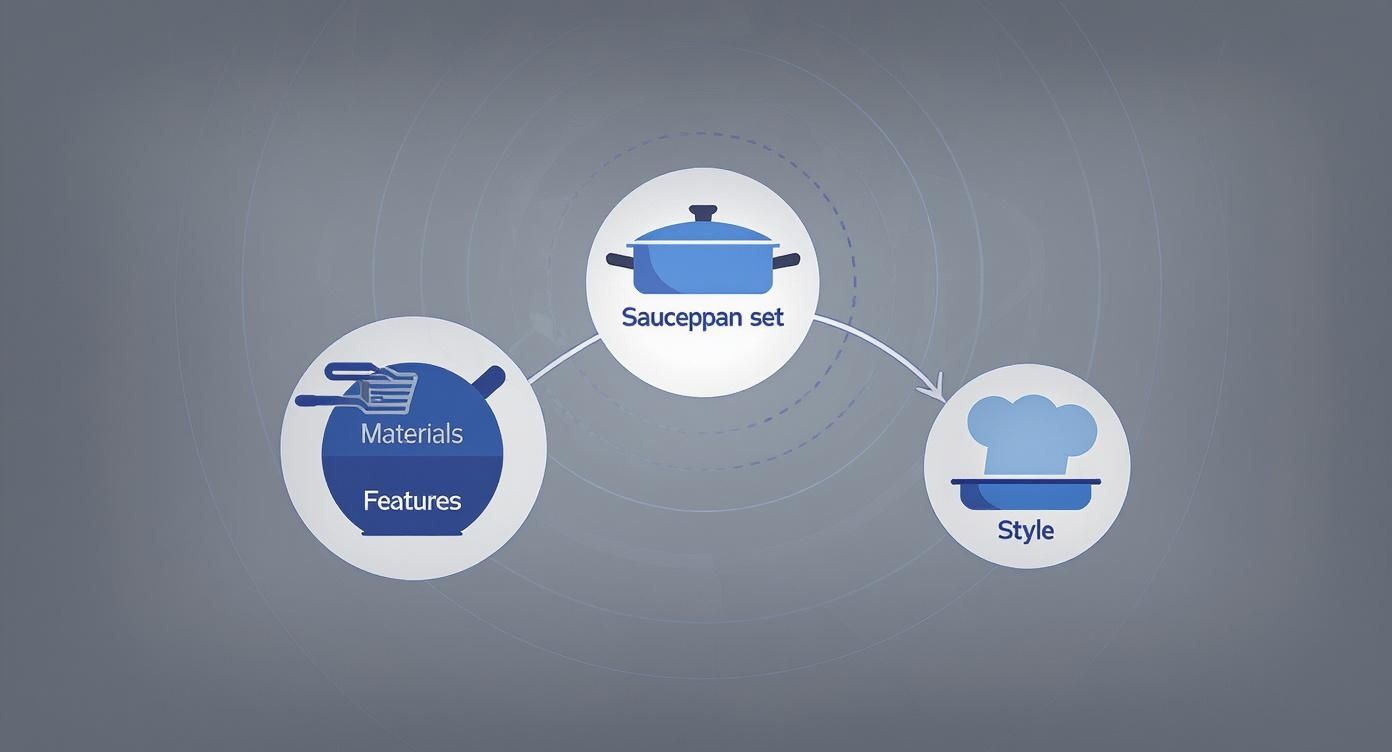
As you can see, the material is the central hub. Everything else, from features to style, branches out from that choice, which really highlights just how crucial it is.
Stainless Steel: The Reliable Workhorse
There’s a reason stainless steel is the undisputed champion of professional kitchens and a staple in Aussie homes. It's tough as nails, non-reactive (so your tomato sauce won't get a metallic tang), and stands up to rust, scratches, and dings without a fuss.
Most quality stainless steel saucepans you’ll find have a multi-ply construction. This just means they've sandwiched a layer of a super-conductive metal, like aluminium or copper, between layers of steel. This clever design gets rid of hot spots, giving you the beautifully even heat of a premium conductor with the durability and safety of steel.
If you're keen to get a bit more technical, understanding the different grades can be helpful. For a deeper dive, here's a detailed explanation of stainless steel grades.
Non-Stick: The Champion of Convenience
For those everyday jobs like frying an egg or flipping pikelets, you just can’t beat the ease of non-stick. The coating is specifically designed to stop food from grabbing onto the surface, which makes both cooking and the dreaded clean-up incredibly simple.
Modern non-stick has come a long way, too. You’ll find the classic PTFE-based coatings that offer amazing food release, but there are also newer ceramic options that are free from certain chemicals and can often handle higher temperatures. The secret to making them last is proper care—stick to wooden or silicone utensils and avoid harsh scourers to protect that delicate surface.
A great non-stick pan can feel like a kitchen superpower, especially on a busy weekday morning. It makes cooking simpler and cuts down on the amount of oil or butter you need to use, which is a nice bonus for healthier eating.
Cast Iron: The Heavyweight Hero
Cast iron is pure heritage cookware, loved for its incredible ability to hold heat. Once it’s hot, it stays hot. This makes it absolutely perfect for searing a steak, frying chicken, or getting that unbeatable crust on a slice of cornbread.
It does ask for a little more TLC in the form of "seasoning"—a process of baking oil onto the surface to build up a natural, non-stick layer. While it’s heavier and takes longer to heat up than other materials, a well-looked-after cast iron pan can be passed down for generations, becoming a true family heirloom. Ultimately, choosing between materials comes down to your cooking style and what you value most. For a bit more guidance, take a look at our thoughts on what makes for good quality pots and pans.
Copper: The Premium Choice
If cookware had a sports car equivalent, it would be copper. It heats up almost instantly and cools down just as fast, giving the cook incredible control over temperature. This is exactly why you'll see it in the hands of professional pastry chefs and candy makers.
But, copper is a reactive metal, so it's nearly always lined with a non-reactive material like stainless steel or tin to keep your food safe. It's also the priciest option and needs a regular polish to keep that beautiful, warm glow. While a full set might be a serious splurge, a single copper saucepan can be an amazing addition for those very specific cooking tasks.
Essential Features That Elevate Your Cooking
Beyond the basic material of a saucepan, it’s the design features that truly make or break your experience in the kitchen. These are the thoughtful little details that turn a simple cooking tool into a trusted partner, day in and day out. When you're looking at saucepan sets in Australia, it pays to look past the metal and focus on these practical elements. It’s the secret to finding a set you’ll genuinely love using for years.
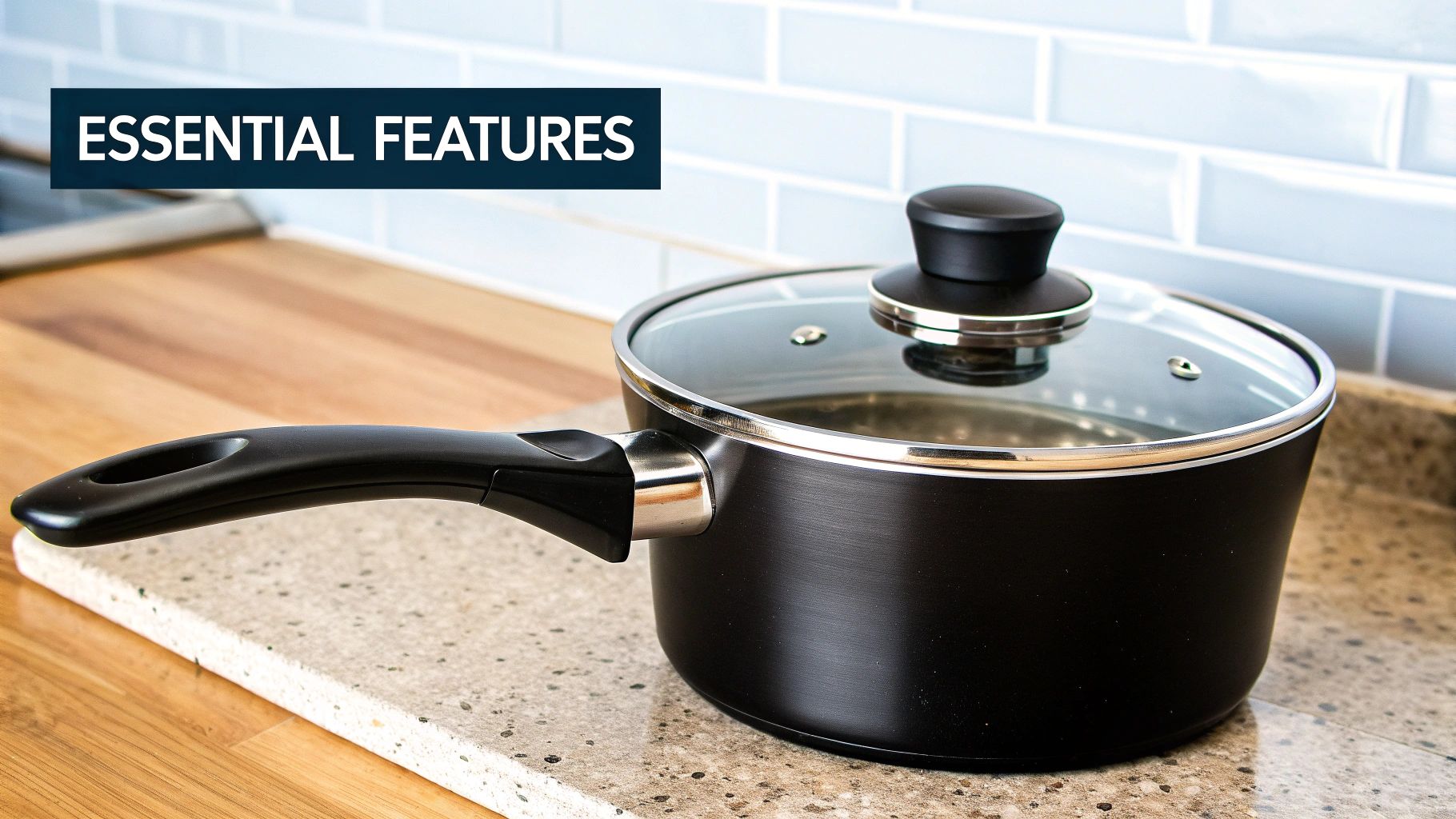
Think of it like buying a new car. The engine is obviously crucial, but it's the comfortable seats and the user-friendly dashboard that you interact with every single day. The same logic applies here. Handles, lids, and other clever touches can be the difference between a joy and a frustration to use.
Handles That Offer Comfort and Control
A saucepan handle is your direct line to what’s happening on the stove, so its design is incredibly important for both safety and comfort. A poorly designed handle can feel awkward, get dangerously hot, or worse, start to wobble over time.
You'll want to look for handles that are ergonomically shaped to fit nicely in your hand. This gives you a secure grip, especially when the pan is heavy with hot food. Materials like silicone or Bakelite are fantastic because they're designed to stay cool to the touch, meaning no nasty surprises when you grab the handle off a roaring burner.
How the handle is attached is also a big deal.
- Riveted Handles: These are fastened with two or more metal rivets, offering the strongest, most durable connection you can get. It's the gold standard for high-quality and professional cookware for a reason.
- Welded Handles: These are fused directly onto the pan, which creates a lovely, smooth interior that’s a breeze to clean. The only catch is that a weak weld can become a point of failure down the track.
A wobbly handle is a massive safety hazard, so always check for a sturdy, well-attached design.
Lids: Glass Versus Metal
The lid might seem like a simple afterthought, but it actually has a huge impact on how you cook. The choice usually boils down to visibility versus maximum heat retention, and each has its own strengths.
A glass lid is brilliant because you can keep an eye on your food without lifting it. This is perfect when you’re simmering a delicate sauce or cooking rice, where keeping the temperature stable is key. You can see exactly what's going on while keeping all that precious heat and moisture locked in.
On the other hand, a solid metal lid—usually made from the same material as the pot—is the undisputed champion of heat and moisture retention. This makes it the go-to for braising meats or slow-cooking a stew, where you want to trap every last bit of steam to build flavour.
Many saucepan sets in Australia cleverly offer a mix of both. You might get glass lids for the smaller saucepans and a solid metal one for the big stockpot. This combo really gives you the best of both worlds, setting you up for a whole range of cooking techniques.
Ultimately, it comes down to your cooking style. If you love convenience and seeing what’s going on, glass is a great choice. If you're all about maximum heat efficiency for slow cooks, metal is the way to go.
Smart Design Elements
It's so often the little things that make the biggest difference in the kitchen. Modern saucepan sets are packed with clever features designed to make your life just that little bit easier.
One of the most useful features is a pouring spout or a flared rim. This simple design touch means you can pour liquids—like gravy, soup, or hot milk—without it dribbling messily down the side of the pan. No more clean-ups!
Another brilliant touch is internal measurement markings. These are faint, laser-etched lines on the inside of the pan that let you measure liquids right in the pot. It saves you from dirtying (and then washing) an extra measuring cup, which is a small win that feels great every time.
Confirming Hob Compatibility
Finally, before you fall in love with a set, there's one last crucial check: make sure it actually works with your cooktop. While most cookware plays nicely with gas and electric hobs, induction cooktops are the picky ones.
Induction hobs use magnetism to generate heat, which means they only work with cookware that has a magnetic base. Most stainless steel and cast iron pans are induction-ready, but materials like aluminium, copper, or certain stainless steel alloys won't work at all.
To be certain, look for the induction symbol on the box or the bottom of the pan—it looks like a little coil of wire. An even easier way is the good old magnet test. If a fridge magnet sticks firmly to the base of the saucepan, you're good to go on an induction hob.
Choosing the Right Set Size for Your Kitchen
A new saucepan set should fit your life, not the other way around. It’s all too easy to be wowed by a massive 10-piece collection gleaming on the shelf, promising to turn you into a master chef overnight. But before you get carried away, ask yourself one simple question: will I actually use all of those?
Choosing the right size is really about being honest about your day-to-day needs. The aim is to set your kitchen up for success, not to clutter your cupboards with pans that hardly ever see the light of day. Taking this practical approach is the secret to navigating the huge Australian houseware market.
How Many People Are You Cooking For?
First things first, think about who’s usually at your dinner table. The needs of someone living solo are worlds apart from those of a large, hungry family. A mismatched set either leaves you scrambling for the right pan or takes up precious space you don't have.
Here’s a simple breakdown to help you find your perfect fit:
- For Singles or Couples: A basic 3-piece set is often the ideal starting point. This usually covers you with a small pan for porridge or reheating soup, a medium one for pasta sauces, and a slightly larger pan for everything else.
- For Small Families (3-4 people): Stepping up to a 5-piece set gives you much more flexibility. You might get an extra medium-sized pan and a proper stockpot, which is a lifesaver when you need to cook multiple parts of a meal at once.
- For Large Families or Entertainers (5+ people): This is where a 7 to 10-piece set really makes sense. These collections give you a fantastic range of sizes, including several large saucepans and a generous stockpot, so you’re always ready for big batch cooking or hosting a dinner party.
It’s no surprise that the Australian houseware sector is valued at an estimated 2.2 billion Australian dollars (AUD). This huge market is driven by our love for home cooking, so it’s essential for brands to offer practical options that suit every Aussie household.
To help you decide, here’s a quick reference guide.
Saucepan Set Guide for Australian Households
This table is a practical guide to help you match the size and number of pieces in a saucepan set to your specific household and cooking style.
| Household Size | Recommended Set Size | Essential Pieces |
|---|---|---|
| Singles & Couples | 3-Piece Set | Small (1.4L), Medium (1.9L), Large (2.8L) or Sauté Pan |
| Small Families (3-4) | 5-Piece Set | Small (1.4L), 2x Medium (1.9L-2.8L), Stockpot (4L+) |
| Large Families (5+) | 7-10 Piece Set | Multiple small, medium, and large pans; a large stockpot |
Ultimately, the goal is to have the right tool for the job without creating unnecessary clutter. A well-chosen set streamlines your cooking process and makes your time in the kitchen more enjoyable.
Match the Pan to the Meal
Beyond just the number of pans, think about the specific sizes you’ll reach for most often. What does a typical week of cooking look like for you? Are you always making big pots of soup, or are you more likely to be simmering a small sauce for two?
A practical set equips you for the meals you actually cook, not the ones you aspire to cook. The best saucepan sets in Australia are the ones that get used every single day, becoming reliable workhorses in your kitchen.
When you’re making your choice, remember that a good set also contributes to maximising your kitchen space. The right collection should feel like a natural part of your kitchen, not a bulky obstacle course.
Let's break down what each size is really for:
-
Small Saucepan (approx. 1.4L): This is your champion for all the small jobs. Think melting butter, heating a single tin of baked beans, whipping up a delicate custard, or just boiling a couple of eggs.
-
Medium Saucepan (approx. 1.9L - 2.8L): This is the true workhorse of any set. It’s perfectly sized for cooking rice or quinoa, steaming veggies for the family, or simmering a classic weeknight bolognese.
-
Large Saucepan or Stockpot (4L+): When you need to go big, this is the one you’ll grab. It’s essential for making a hearty soup, boiling a big batch of pasta, or cooking up a curry for a crowd.
Comparing Popular Cookware Brands in Australia
When you're standing in a shop or browsing online, the brand name on a saucepan can tell you a lot about its history, the quality of its materials, and who it’s designed for. The Australian market is packed with options, which can feel a bit much, but getting to know the key players is the best way to spot real value. You’ll find everything from heritage brands with lifetime guarantees to trusted names known for smart, affordable tech.
My goal here isn’t to name one single "best" brand—that really comes down to your kitchen, your budget, and what you love to cook. Instead, let's treat this as a field guide. We’ll look at what makes each brand tick, so you can recognise quality when you see it and make a confident choice from the huge range of saucepan sets Australia has available.
Premium and Heritage Brands
At the top of the ladder, you have the brands that are legends in the kitchen. Think of these as "buy it for life" investments. They’re built with the best materials, perform brilliantly, and often come with warranties that last for decades.
- Le Creuset: Instantly recognisable for its vibrant enamelled cast iron, Le Creuset also crafts some of the best stainless steel and non-stick cookware out there. This French icon is all about culinary heritage, delivering flawless heat control and the kind of durability that sees it passed down through families.
- Scanpan: A Danish powerhouse in non-stick technology, Scanpan is famous for its patented ceramic titanium cookware in Australia. The cooking surfaces are incredibly tough and PFOA-free, built for home cooks who want that professional-grade feel and performance that lasts for years.
Yes, these brands come with a higher price tag. But if you’re serious about cooking and want precision tools, the payoff in incredible cooking results and sheer longevity is absolutely worth it.
Reliable Mid-Range Players
This is the sweet spot where most of us find our perfect match. The mid-range is all about balancing great performance and clever features with a more accessible price. These brands are brilliant at bringing high-end tech into the everyday kitchen.
These brands have really levelled the playing field. Things like advanced non-stick surfaces and induction-ready bases used to be exclusive to expensive cookware, but now they're standard, making it easier for everyone to get better results at home.
- Tefal: A name you'll find in kitchens all over Australia, and for good reason. Tefal’s genius is its Thermo-Spot technology, that little red dot that tells you exactly when the pan is hot enough to start cooking. Their non-stick is consistently dependable, making them a go-to for easy, everyday meals.
- Circulon: The standout feature here is the "Total Non-Stick System." It’s a unique design with tiny raised circles on the cooking surface that protect the non-stick coating from scratches and help food slide right off. It’s a clever bit of engineering that helps their pans last much longer than many others.
Budget-Friendly and Value-Focused Options
You absolutely do not need to break the bank to get a good saucepan set that gets the job done. Value-focused brands offer solid, reliable performance for daily cooking, making them a fantastic choice for first-home buyers, students, or anyone watching their budget.
Baccarat is a great example here. As an Australian-owned brand, they offer an enormous variety of cookware, often using quality materials like Japanese steel or tough non-stick coatings, but at a really sharp price. They might not have the same heavy-duty feel or polished finish as a premium brand, but for the money, they deliver fantastic value and reliability.
Making Your Saucepan Set Last a Lifetime
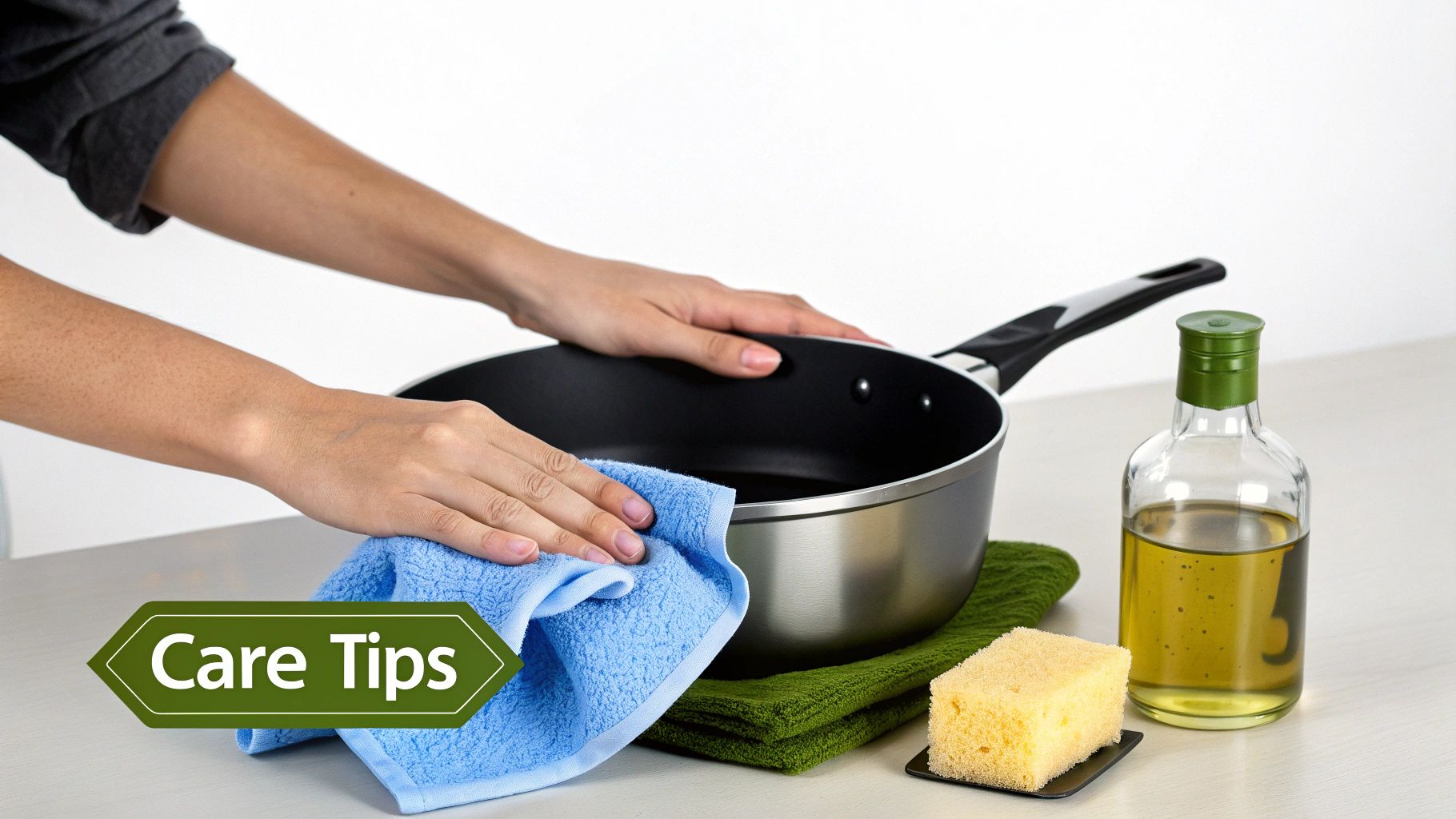
You've just invested in a quality saucepan set, and that's a brilliant move for your kitchen. With the right care, these pans won't just last you a few years—they can become lifelong culinary companions. Think of it like looking after a good chef's knife; a little bit of routine maintenance is all it takes to keep your cookware performing perfectly.
A few simple habits, tailored to the material of your pans, can dramatically extend their lifespan. It’s not about spending hours scrubbing, but about small, smart steps that protect your investment and guarantee countless delicious meals to come.
Caring for Non-Stick Surfaces
The magic of a non-stick pan is all in its delicate coating, and protecting that surface is your top priority. The golden rule? No metal utensils. Ever. Stick to tools made from wood, silicone, or nylon to avoid scratching the coating, which is the fastest way to ruin its non-stick power.
When it's time to clean, always let the pan cool down first. Dunking a hot pan into a sink of cold water can cause thermal shock, which can warp the metal and permanently damage the non-stick layer. A soft sponge, warm water, and a bit of mild dish soap are all you need. Definitely steer clear of steel wool or any abrasive scourers.
Keeping Stainless Steel Sparkling
Stainless steel is the rugged workhorse of the kitchen, but even it can show a bit of wear. You might notice stubborn food spots or a bluish, rainbow-like tint after a while. Don't panic! This is just a natural reaction to heat and minerals, and it's surprisingly easy to fix. A simple paste made from baking soda and water, or a quick wipe with white vinegar, will usually bring back that brilliant shine.
Now, while many brands claim their stainless steel pans are dishwasher safe, handwashing is always the gentler, better choice. Aggressive dishwasher detergents can be highly alkaline, which can start to corrode the exposed aluminium layers in multi-ply pans. Over time, this can lead to sharp or damaged rims. To get a better handle on this, you can learn more about what makes cookware genuinely dishwasher-safe and why it pays to be cautious.
Pro Tip: The secret to stopping food from sticking to stainless steel is to preheat your pan correctly. Add a few drops of water to the dry, heating pan. If they sizzle away, it's not ready. If they form little beads that dance across the surface, your pan is at the perfect temperature to add your oil and then your food.
Maintaining Cast Iron and Copper
These classic materials need a little more TLC, but the payoff in performance and longevity is huge. They're the kind of pans you can pass down through generations.
-
Cast Iron: A well-loved cast iron pan has a beautiful 'seasoning'—a polymerised layer of oil that creates a natural, non-stick finish. After cooking, just clean it with hot water and a stiff brush (try to avoid soap). The most important step is to dry it immediately and thoroughly to prevent rust, then wipe a tiny amount of cooking oil inside before you put it away.
-
Copper: To keep that gorgeous, warm glow, copper needs a polish every now and then. You can use a dedicated copper cleaner or go the DIY route with a paste of lemon juice and salt to buff away any tarnish. Just be sure to follow the care instructions for the interior lining, which is usually tin or stainless steel.
Common Questions About Saucepan Sets
When you're finally ready to choose from the dozens of saucepan sets on the market in Australia, a few last-minute questions always seem to pop up. Let's run through some of the most common queries I hear, so you can feel 100% confident in your choice.
Are Expensive Saucepan Sets Really Worth It?
This is the big one, isn't it? And honestly, it depends, but often, yes. The premium you pay for high-end sets usually goes into better materials and smarter construction. Think multi-ply metals that sandwich a highly conductive core of aluminium or copper between layers of durable stainless steel.
This design gives you far more even heating—no more frustrating hot spots that burn one side of your onions while the other is still raw. They’re also built to last. For anyone who cooks more than a couple of times a week, that investment pays for itself in performance and longevity. That said, plenty of great mid-range brands offer fantastic quality that’s more than enough for the average home cook, so you don't have to break the bank.
What Is the Main Difference Between Teflon and Ceramic Non-Stick?
It’s easy to get these two confused. Teflon (PTFE) is the original non-stick coating everyone knows. It’s famous for its incredible slipperiness, making it a dream for cooking things like eggs or delicate fish. The trade-off is that it can't handle super high heat and you have to be gentle with it—no metal utensils allowed.
Ceramic non-stick, on the other hand, is a mineral-based coating. It’s PTFE/PFOA-free and can take higher temperatures, which is a big plus. While it feels incredibly slick straight out of the box, I find its non-stick properties can sometimes wear out a bit faster than a top-quality Teflon. Your best bet depends on what you value more: cooking performance or health priorities.
How Can I Be Sure a Saucepan Is Induction Compatible?
This is an absolute must-check if you have an induction cooktop. These hobs work by creating a magnetic field, so they need cookware with a magnetic base to heat up.
The simplest test? Grab a fridge magnet. If it sticks firmly to the bottom of the saucepan, you're good to go. Most manufacturers also include an induction-ready symbol on the packaging, which looks like a little coil or spring. A quick check before you buy will save you a lot of hassle later on.
At Everti, we believe in equipping your kitchen with tools that are safe, durable, and designed for a lifetime of use. Discover our range of pure titanium kitchen essentials. Explore the Everti collection today.