

When you're on the hunt for the best silicone utensils Australia has on offer, the decision usually boils down to a classic trade-off: flexibility versus durability. For most of us cooking at home, high-quality, food-grade silicone is the go-to. Its impressive heat resistance and non-scratch surface make it an absolute saviour for non-stick cookware. But, if you’re after something that could genuinely last a lifetime, titanium emerges as a premium, ultra-durable alternative.
A Guide to Modern Kitchen Tools
The kitchen is the heart of the Aussie home—a place for experimenting, creating, and sharing food. The tools we choose are more than just implements; they become extensions of our hands, directly influencing how we cook and the lifespan of our pots and pans. It's no surprise that today's home cooks are looking for utensils that do more than just get the job done. We want them to be safe, built to last, and even look good while doing it.
This guide dives into two front-runners in the modern kitchen: the incredibly versatile silicone and the seriously tough titanium. We'll break down why choosing the right material is so important, whether you're whipping up a quick weeknight dinner or tackling a more ambitious weekend recipe. Before you upgrade, it’s always a good idea to consult a comprehensive kitchen essentials checklist to see where new tools might fit in.
To get started, let’s lay out a clear comparison of how these materials perform side-by-side. Getting a handle on their fundamental differences is the best first step to finding the perfect match for your kitchen. And if you're curious about other high-end options, our article on the https://everti.com.au/blogs/news/best-kitchenware-australia provides even more great insights.
| Feature | Silicone Utensils | Titanium Utensils |
|---|---|---|
| Flexibility | High – Excellent for scraping bowls and pans. | None – Rigid and unyielding. |
| Cookware Safety | Excellent – Safe for all surfaces, including non-stick. | Poor – Can scratch non-stick, ceramic, and enamel. |
| Heat Resistance | Very Good – Typically heat-resistant up to 230°C. | Exceptional – Withstands extremely high temperatures. |
| Durability | Good – Can last years but may stain or tear. | Lifetime – Extremely resistant to bending or breaking. |
| Primary Use Case | Baking, stirring, and use with delicate cookware. | High-heat searing, grilling, and heavy-duty tasks. |
Why Silicone Is Taking Over Australian Kitchens
If you take a stroll down the kitchenware aisle at any major Aussie retailer, you’ll be met with a sea of colourful, flexible utensils. That material is silicone, and its growing presence isn’t just a passing fad. Home cooks are getting smarter, and they're looking for gear that’s safe, performs well, and won't destroy their expensive cookware.
Silicone's popularity stems from its unique chemistry. Unlike plastics or metals, food-grade silicone is a polymer built from silica—the same stuff that makes up sand and glass. This gives it fantastic stability, meaning it's inert and won't react with your food or drinks.
This move toward silicone utensils in Australia is part of a bigger trend in our kitchens: a demand for healthier, more durable tools. With Australia’s kitchenware market valued at USD 3,854.86 million in 2024 and still growing, silicone’s high heat tolerance and non-toxic properties have made it a go-to choice for everyday cooking. You can dig deeper into the silicone spatulas market report for more on this trend.
The Science of Safety and Performance
For any Aussie family that cares about what they eat, the materials touching their food are a big deal. High-quality silicone is BPA-free, which means you don't have to worry about nasty chemicals leaching into your spag bol, even at high temperatures. That peace of mind is a massive reason for its widespread adoption.
But it’s not just about safety; silicone utensils are also brilliant performers in the kitchen.
- Exceptional Heat Resistance: Good quality silicone can handle temperatures up to 230°C. That means you can stir a simmering sauce or leave a spatula resting on the edge of a hot pan without it melting or warping.
- Non-Scratch Surface: This is the big one. Silicone's soft, forgiving edges are a godsend for non-stick pans and ceramic pots. They won't scratch or damage those delicate surfaces.
Think of silicone as the ultimate insurance policy for your cookware. Metal spoons and spatulas can easily leave permanent scratches that ruin a non-stick finish, but silicone just glides right over, keeping your favourite pans in great nick for years.
Flexibility Meets Functional Design
Beyond its core safety features, the sheer practicality of silicone is what seals the deal for most people. The material is incredibly flexible, allowing a spatula to scrape every last speck of batter from a bowl—nothing goes to waste.
Plus, its non-porous surface means it doesn't hang onto stains or smells. Last night's curry won't haunt tomorrow's scrambled eggs. This blend of safety, toughness, and clever design is exactly why silicone is now a first choice, not just an alternative, for so many home cooks across Australia.
Exploring Titanium: A Premium Utensil Alternative
While silicone has certainly earned its place in Aussie kitchens for being so friendly to non-stick pans, there's another material playing in a league of its own: titanium. If you're a serious home cook or a professional chef, you've probably heard the buzz. Titanium is all about peak performance, a material of extremes.
Forget the soft pliability of silicone. Titanium's biggest drawcard is its phenomenal strength and rigidity. Its strength-to-weight ratio is simply unmatched in the kitchen, giving you tools that feel feather-light in your hand but are virtually indestructible. A titanium spatula won't buckle under a heavy steak, and a spoon won't flex when you're stirring a thick, hearty stew.
The Power of Pure Performance
One of the standout features of titanium is that it's completely non-reactive. This means it won’t rust, corrode, or leave a metallic tang in your food, even when you’re working with acidic ingredients like tomatoes or lemon juice. Your food tastes exactly as it should—pure and unadulterated.
Titanium also handles extreme heat with ease, which is a massive point of difference. It can take the blistering heat of a BBQ or the direct flame from a gas cooktop without breaking a sweat, never degrading or leaching anything into your food. This makes it a go-to for high-heat searing and grilling, situations where lesser materials would simply give up. To dig deeper into its kitchen applications, you can check out detailed guides on titanium cookware in Australia.
For the true cooking enthusiast, choosing titanium is a 'buy it for life' decision. These tools are built to last forever, shrugging off the kind of daily abuse that wears down other materials over time.
This incredible durability makes titanium a genuine long-term investment. Yes, the initial cost is higher, but the fact that you might never need to buy a replacement makes it a smart move. If you see your kitchen gear as a permanent collection built around uncompromising performance, titanium is an exceptional choice. It's more than just a utensil; it’s a commitment to enduring quality.
Silicone vs. Titanium: A Head-to-Head Comparison
Choosing between silicone and titanium utensils isn’t just about picking a colour. It’s a decision that affects your cooking style, your cookware, and how long you expect your tools to last. Both materials have their strengths, but they truly shine in completely different parts of the kitchen.
Let's put them side-by-side and see how they stack up across the factors that really matter to Aussie home cooks: durability, heat resistance, hygiene, and—critically—cookware safety. This breakdown will make it crystal clear which material is the right investment for you.
Durability and Longevity
When it comes to durability, we're looking at two very different philosophies: flexible resilience versus unyielding strength.
High-quality silicone utensils are incredibly tough. They’re built to handle daily bending, scraping, and stirring without cracking or losing their shape. With a bit of care, they can last for years. That said, they aren't invincible; a slip of a sharp knife can nick the surface, and prolonged contact with high-fat oils can sometimes cause slight degradation over time.
Titanium, on the other hand, is in a league of its own. This is a ‘buy it for life’ material. Its immense structural integrity means it simply will not bend, snap, or warp, no matter how thick your stew or how heavy the steak you're flipping. It’s built for heavy-duty tasks and will probably outlive every other utensil you own. The trade-off? It has zero flexibility.
Heat Resistance Thresholds
Both materials are fantastic with heat, but their limits and how they behave under pressure are quite different.
Food-grade silicone is generally heat-resistant up to around 230°C. For most of what you'll be doing on the stovetop—stirring a simmering sauce or resting a spatula on the edge of a hot pan—that’s more than enough. You won't have to worry about it melting.
Titanium boasts a much higher melting point, making it completely unfazed by any temperature you'll hit in a home kitchen. You can use it on a scorching BBQ grill or even near a direct gas flame without a second thought. It won’t degrade, discolour, or release any fumes. For a deeper look into its capabilities, exploring the various pros and cons of titanium cookware can give you some great context.
The key takeaway on heat is all about the situation. For everyday cooking under 230°C, silicone is perfectly safe and effective. But for high-heat searing, grilling, or open-flame cooking where temperatures can spike, titanium offers total peace of mind.
Hygiene and Ease of Cleaning
When it’s time to clean up, both materials are winners, but for slightly different reasons.
Silicone's non-porous surface is its biggest hygiene advantage. It won't absorb odours or flavours, which means the garlic from last night’s stir-fry won’t show up in this morning's pancake batter. Better yet, most silicone utensils can be tossed straight into the dishwasher for an effortless clean.
Titanium is just as non-porous and a breeze to clean. Food slides right off its ultra-smooth surface, and you can scrub it as hard as you like without worrying about damage. It's also completely dishwasher-safe. As long as you clean them properly, neither material will hang onto bacteria, making them both excellent, hygienic choices for a busy kitchen.
Cookware Safety: A Critical Difference
This is arguably the most important decider between the two. Silicone utensils are the undisputed champions of cookware safety.
Their soft, flexible edges are incredibly gentle on all cooking surfaces. This makes them the only sensible choice for your non-stick, ceramic, and enamelled cast iron pans. Using silicone is genuinely the best way to protect your investment in delicate cookware and make it last longer.
Titanium, being a hard metal, is the complete opposite. It will absolutely scratch and gouge non-stick coatings, quickly ruining them and potentially making them unsafe to use. Titanium tools should only ever be used with seriously durable cookware like stainless steel, carbon steel, or traditional cast iron.
To help you visualise these differences at a glance, here’s a quick comparison table summarising the key features of each material.
Silicone vs Titanium Utensils Feature Comparison
| Feature | Silicone Utensils | Titanium Utensils |
|---|---|---|
| Durability | Flexible and tough, but can be cut or nicked. | Extremely rigid and virtually indestructible. |
| Heat Resistance | Up to 230°C; ideal for most stovetop cooking. | Impervious to any home kitchen temperature, including grills. |
| Cookware Safety | Excellent. Safe for all surfaces, including non-stick. | Poor. Will scratch and damage non-stick and delicate surfaces. |
| Hygiene | Excellent. Non-porous, dishwasher-safe, resists odours. | Excellent. Non-porous, dishwasher-safe, easy to scrub. |
| Flexibility | High. Great for scraping bowls and flexible tasks. | None. Completely rigid and unbending. |
| Best For | Non-stick pans, baking, general-purpose cooking. | High-heat grilling, cast iron, and stainless steel cookware. |
Ultimately, the right choice comes down to the cookware you own and the kind of cooking you do most often. Many modern kitchens find that having a mix of both is the perfect solution.
Matching the Utensil to the Task
Knowing the specs of silicone and titanium is helpful, but the real test is in the kitchen. Which one do you actually reach for when you're in the middle of cooking? The right tool for the job makes everything easier and safer, so let’s get practical and look at a few common scenarios you’d find in any Aussie home.
By thinking about how you cook day-to-day, you can figure out which material makes the most sense for your style. This way, you’re not just buying another gadget; you’re investing in something you'll genuinely use.
For Baking and Scraping Bowls
When you're baking, there’s really no debate here: silicone utensils are the clear winner. That flexible edge on a silicone spatula is its best feature, letting it hug the curves of a mixing bowl perfectly. It means you get every last drop of cake batter or icing, which cuts down on waste and keeps your measurements spot on.
Titanium is completely rigid, making it pretty much useless for this. It just can’t get into the corners or scrape down the sides, leaving a frustrating amount of good stuff behind. If you do any baking at all, a set of quality silicone spatulas is non-negotiable.
For Delicate Sauces and Scrambled Eggs
Gentle jobs, like stirring a silky hollandaise or folding scrambled eggs in your favourite non-stick pan, call for a soft touch. This is another moment where silicone really shines. Its smooth, forgiving surface won't scratch or damage delicate non-stick coatings, helping your expensive cookware last longer.
Trying to use a titanium spoon in a non-stick pan is a recipe for disaster; you’ll have it scratched and ruined in no time. For anything that involves constant stirring in a pan you want to protect, silicone is the only smart choice.
For the everyday cook, especially one who relies on non-stick cookware, silicone isn’t just a good option—it's a necessity. Its ability to protect your pans makes it the workhorse of the modern Australian kitchen.
For High-Heat Searing on Cast Iron
Alright, let's crank up the heat. If you're searing a steak in a screaming-hot cast iron pan or getting a good fond going in a stainless steel one, you need a utensil that won't back down. This is where titanium steps into the spotlight. Its fantastic heat resistance means it won't melt, warp, or even break a sweat under intense, direct heat.
Even the best silicone utensils Australia has can typically only handle up to around 230°C, but the surface of a searing pan can get much, much hotter. Titanium gives you total peace of mind for those high-temperature jobs, making it the go-to for durable cookware.
For Outdoor Grilling and BBQs
Take the tools outside for a weekend barbie, and you’ve got the ultimate test of strength and heat tolerance. Between the open flames, sizzling grill grates, and flipping heavy snags or steaks, you need something that’s built tough. Titanium was made for this.
Its rock-solid construction means it can handle heavy lifting without bending, and because it’s immune to high heat, it’s perfect for working directly over the fire. Silicone is a champion in the kitchen, but it’s just not cut out for the rugged demands of a classic Aussie BBQ.
Cost vs. Value: A Smart Investment Guide
When it comes to fitting out your kitchen, the price tag is always part of the conversation. In Australia, the cost difference between silicone and titanium utensils is pretty stark, kicking off that classic debate: do you go for immediate affordability or long-term value? Let's break down what your money actually buys you with each option.
Titanium utensils are, without a doubt, at the premium end of the spectrum. A single tool can be quite expensive, and putting together a full set is a serious financial commitment. But here’s the thing—you should really think of it as a one-time investment. Titanium is practically indestructible in a home kitchen, so you're essentially buying a tool for life. That high upfront cost is offset by the fact you’ll likely never have to replace it, which is incredible long-term value for a passionate cook.
On the other hand, high-quality silicone utensils in Australia hit a brilliant sweet spot. They give you fantastic performance and durability without that hefty titanium price. You can kit out your entire kitchen with a comprehensive silicone set for what a couple of titanium pieces might cost, making them a much more approachable choice for most people.
Understanding Market Value
Silicone's popularity really speaks to its excellent value. The Australian silicone market hit a whopping AUD 832.73 million in 2024 and is expected to nearly double by 2034. That kind of growth shows just how much Aussie consumers trust the material to deliver on both performance and price. It’s become the go-to for households trying to balance a budget with the need for quality gear. You can dig into the numbers yourself on the expanding Australian silicone market.
Ultimately, it all boils down to what you prioritise. Titanium is a lifetime purchase for someone who wants the absolute best in durability. Silicone offers brilliant everyday performance and longevity at a price that just makes more sense for most of us.
It's all about matching your budget to your cooking ambitions. For the vast majority of home cooks, a good set of silicone utensils is the smarter, more practical financial move. It'll give you years of reliable use and keep your expensive pots and pans safe, all without costing a fortune.
Making the Right Choice for Your Kitchen
So, how do you actually decide between silicone and titanium? It all comes down to what you cook, how you cook, and the gear you already have in your kitchen. There’s no single ‘best’ material here—just the right tool for the job.
If you’re a keen home baker or you’ve invested in good non-stick cookware, the answer is pretty straightforward. High-quality silicone utensils in Australia are your best bet, giving you that perfect mix of flexibility, safety, and value. They won't scratch your precious pans and are brilliant for everything from stirring a delicate sauce to getting every last bit of batter out of a bowl.
But what if you're a serious home cook who demands pure performance and longevity? For you, titanium is an investment that pays off for years. Its incredible toughness is perfect for grilling, searing on cast iron, or any high-heat task where you simply can't afford to have a tool fail.
The real decider? Look at your pots and pans. If you primarily use non-stick, silicone is non-negotiable. If your cupboards are full of stainless steel and cast iron, then titanium becomes a fantastic, premium option to consider.
Thinking about your budget can also steer you in the right direction when it's time to buy new kitchen tools.
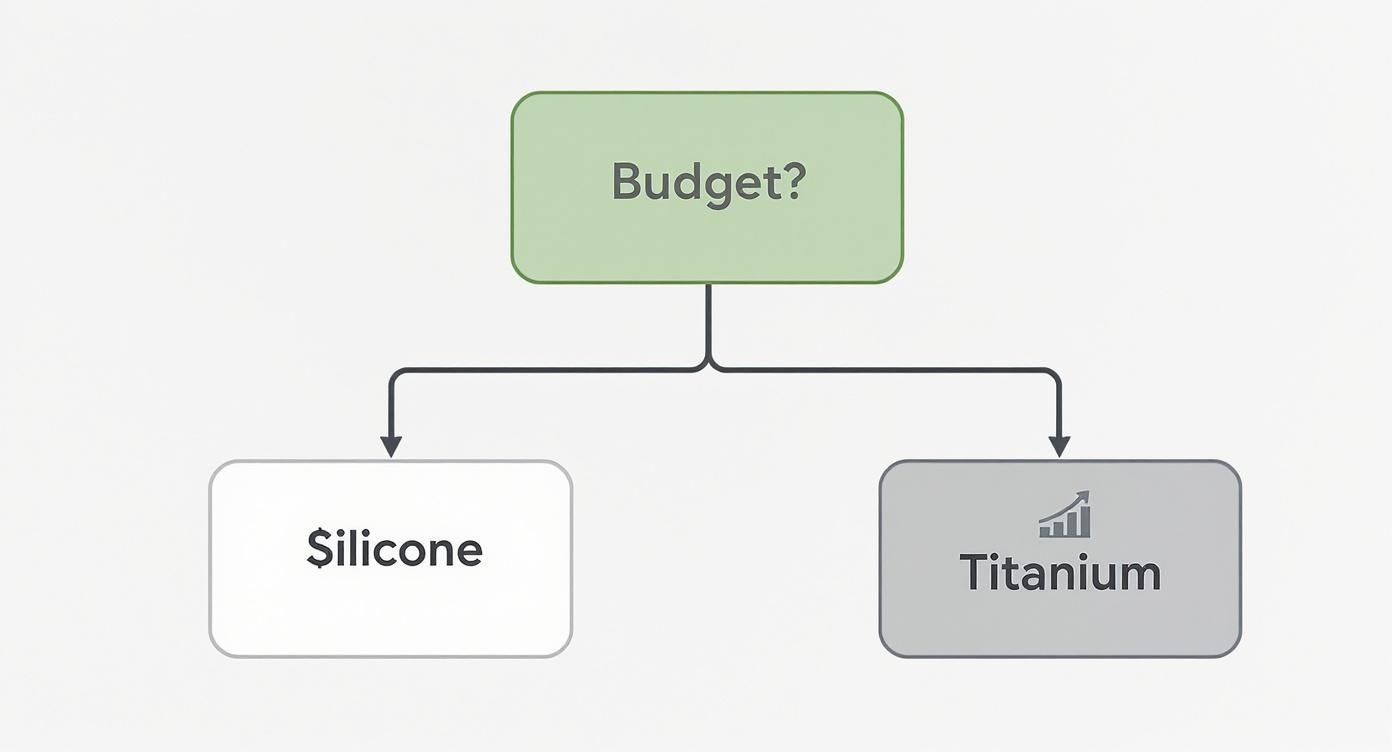
This flowchart really simplifies things: silicone is the more accessible, budget-friendly starting point, while titanium represents the high-end, long-term investment. At the end of the day, picking the utensils that align with your cooking style is the best way to set your kitchen up for success.