

If you've ever tried to flip an egg only to have half of it stubbornly stick to the pan, you know the value of a good non-stick skillet. It’s a true kitchen workhorse, designed to make cooking delicate foods like fish and omelettes practically foolproof and cleaning up a breeze. The magic is in the special coating that stops food from clinging to the surface.
But picking the right one involves more than just grabbing the first one you see. It's a balancing act between cooking performance, how long it'll last, and health considerations.
The Modern Non-Stick Skillet Explained
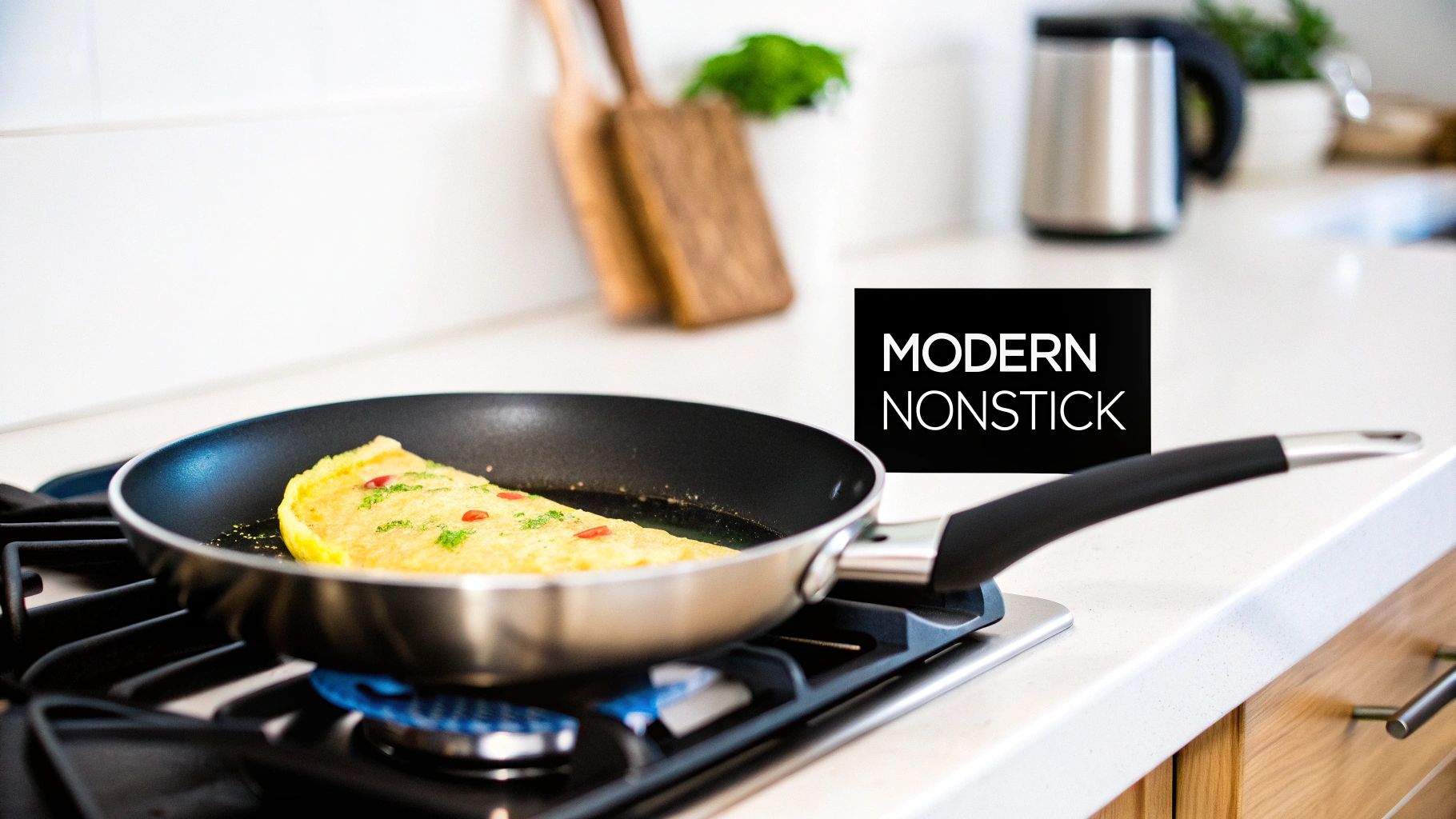
The non-stick skillet is a staple in almost every kitchen, promising that perfect, slide-right-onto-the-plate result we all strive for. So, what’s the real difference between a great pan and one that’s just okay? The answer isn't just in the marketing hype; it's baked into the pan's actual construction—the materials and technology behind it. My goal here is to give you a straightforward, practical look at what really makes a difference.
We're going to break down how non-stick technology has grown up. The first generation of pans used pretty basic coatings. They solved the sticking issue, sure, but they often didn't last long and came with some nagging worries about chemical safety. Thankfully, things have moved on quite a bit, and today's options feature advanced materials that are safer, tougher, and cook a whole lot better.
From Basic Coatings to Advanced Materials
The evolution of the non-stick skillet has been a story of constant refinement. For a long time, the main goal was simple: stop food from sticking. But as cooks—both at home and in professional kitchens—got more sophisticated, so did their expectations. People started demanding cookware that wasn't just effective but also fit into a healthier lifestyle and offered real, long-term value.
This push from consumers has driven manufacturers to get creative, bringing us a new generation of skillets that really deliver on what matters most:
- Enhanced Durability: Today's pans are built to stand up to scratches and the grind of daily use, meaning they'll last much longer than their predecessors.
- Improved Health and Safety: Many modern coatings are now made without controversial chemicals, giving you more peace of mind every time you cook.
- Superior Cooking Performance: Better materials mean better heat distribution and retention, which translates to more even cooking and greater control for you.
The ultimate goal is to find a skillet that aligns with your cooking style, health priorities, and desire for long-lasting quality. It’s about making an informed investment in a tool you'll use daily.
Newer materials are even changing the game completely. Take pure, uncoated titanium, for example—it offers incredible food-release properties naturally, without needing any synthetic layers at all. The aim is to arm you with the right information so you can choose a skillet that not only performs brilliantly today but also stands the test of time.
How Non-Stick Surfaces Actually Work
Ever wondered what keeps your morning eggs from glueing themselves to the pan? It’s not some kitchen wizardry, but a clever bit of science that plays with surface tension. Picture how raindrops bead up and roll off a freshly waxed car; the wax creates a surface so slick that water just can't get a grip. That's almost exactly how your non-stick skillet pan works.
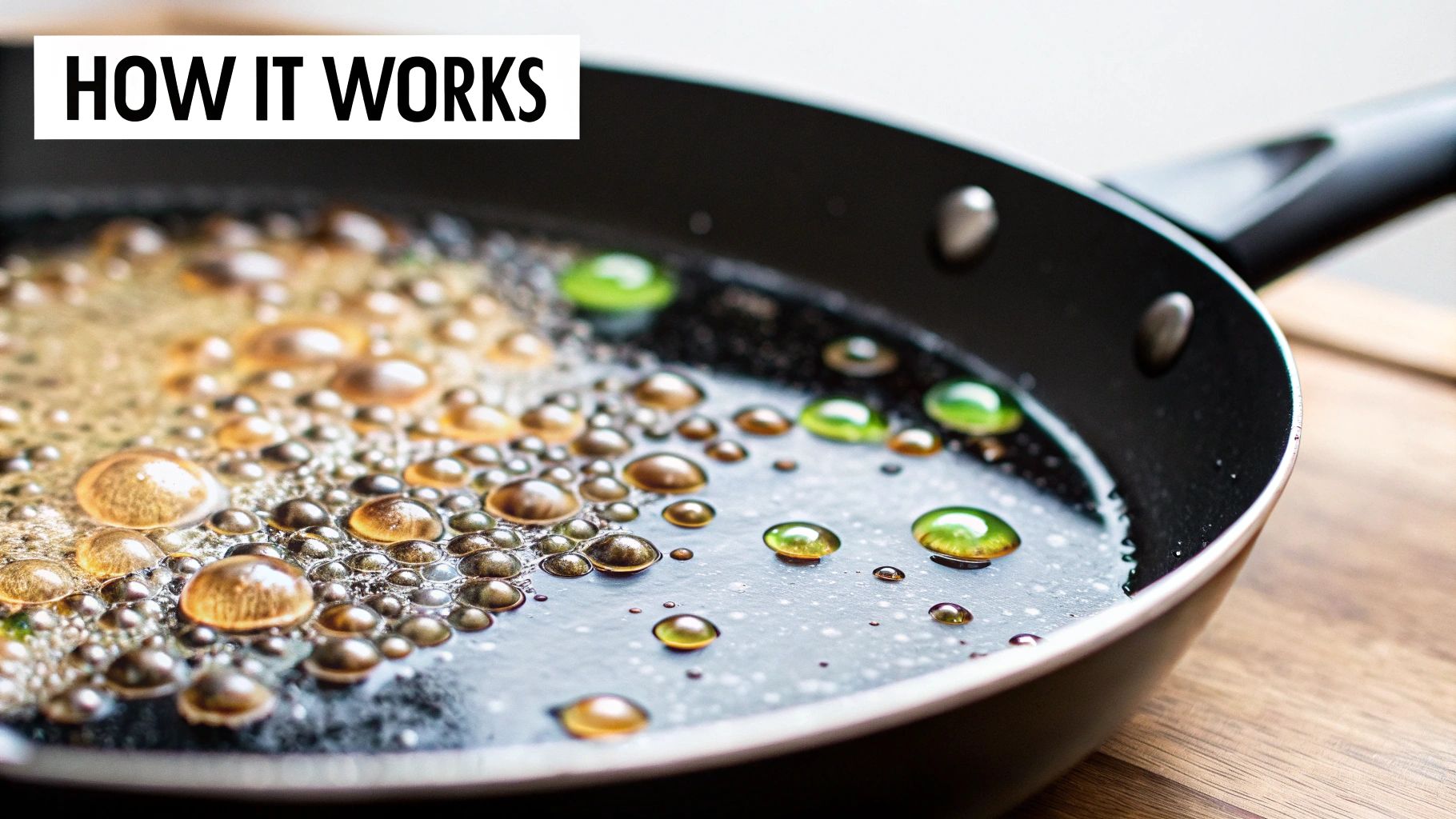
On a microscopic level, these coatings are incredibly smooth and stable. When you heat food, its proteins are desperate to form chemical bonds with whatever they touch. A non-stick coating acts like a shield, creating a surface so non-reactive and slippery that those proteins have nowhere to latch on. The result? Your food slides right off.
This desire for hassle-free cooking isn't a small thing—it’s driven a huge market. In Australia, the non-stick cookware market hit USD 254.62 million, and it's only expected to climb as more of us look for ways to cook with less oil. You can dig into more detailed insights about the non-stick cookware market and its future from recent industry analysis.
The Different Types of Non-Stick Surfaces
When you start shopping, you'll quickly realise that "non-stick" isn't a one-size-fits-all term. The technology has come a long way, giving us a few key types of surfaces, each with its own personality.
-
PTFE (Polytetrafluoroethylene): This is the classic non-stick material, known worldwide by the brand name Teflon. It’s a synthetic polymer that offers an incredibly slick cooking surface, perfect for delicate things like fish or omelettes. It's important to note that while early versions were made with a chemical called PFOA, all reputable manufacturers have long since phased it out due to health concerns.
-
Ceramic Coatings: Don't think of a ceramic bowl. This is actually a silica-based gel that's sprayed onto the pan and cured with heat. It’s often sold as a "green" or "natural" alternative because it’s free from chemicals like PFOA and PFAS. While they work well initially, their non-stick abilities tend to fade faster than PTFE, especially if you use high heat or harsh scrubbers.
-
Hard-Anodised Aluminium: This one isn't a coating at all, but a special treatment. The aluminium is put through an electrochemical process that hardens the surface, making it incredibly tough and non-reactive. It offers a slightly non-stick surface that's far more durable than a standard pan, though it won't be quite as slippery as a true coated pan.
The goal is always the same: make a surface so smooth and chemically inert that food can't stick. The material used to get there is what really separates one pan from another in terms of durability, heat tolerance, and how long it will last.
The Uncoated Alternative: Pure Titanium
If you're looking to sidestep synthetic coatings altogether, some materials are naturally low-stick on their own. Pure, uncoated titanium is a fantastic example. It has a unique molecular structure and thermal properties that naturally resist bonding with food, especially when you pre-heat it correctly with a little bit of oil.
This gives you an incredibly durable, long-lasting option. Because there’s no coating to scratch, flake, or degrade over time, a titanium non-stick skillet pan will perform just as well on day one as it will years down the track. It's a robust, health-conscious choice for any serious home cook.
Comparing Skillet Pan Materials Side-By-Side
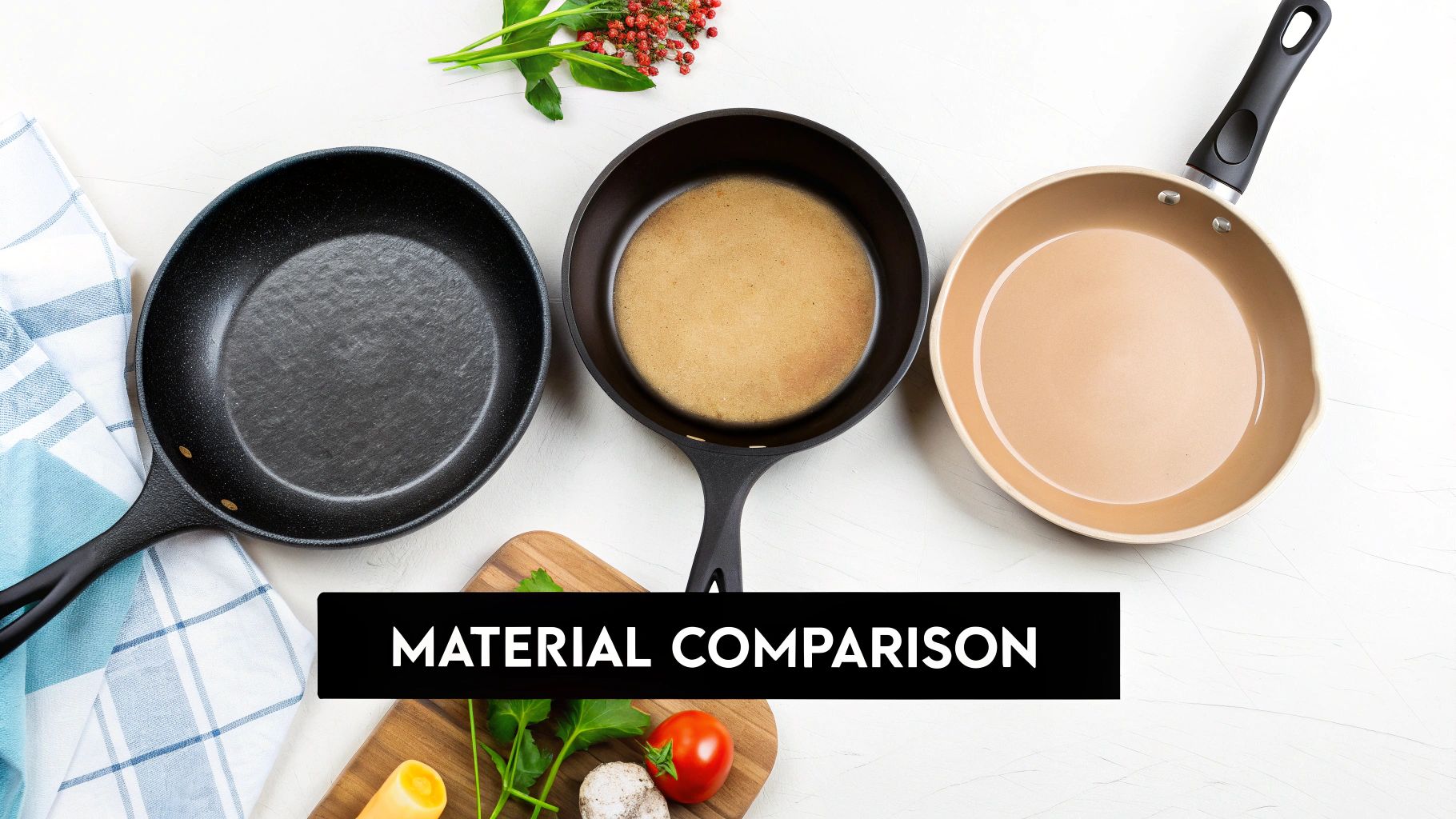
When you're looking for a new skillet, choosing the right material is probably the most crucial decision you'll make. It’s what separates a pan that becomes a trusted kitchen workhorse from one that ends up in the back of the cupboard. Think of it like buying tyres for your car—the material dictates how it performs, how it grips, and how long it lasts.
Every material has its own personality in the kitchen. Some heat up in a flash but lose that heat just as quickly, while others take their time to warm up but hold a steady, even temperature like a champ. Understanding these quirks is the key to picking a pan that truly suits how you cook.
To help you find the perfect match, let's dive into the most common options and see how they really perform.
Non Stick Skillet Pan Material Comparison
To make sense of the options, it helps to see them side-by-side. This table breaks down the pros and cons of each common skillet material, focusing on the things that matter most on a day-to-day basis: cooking performance, durability, and safety.
| Material Type | Heat Performance | Durability & Lifespan | Health & Safety | Best For |
|---|---|---|---|---|
| Coated Aluminium | Heats up very quickly and is highly responsive. Can develop hot spots. | Low. Prone to warping and scratches. The coating often degrades in 1-2 years. | Concerns about PTFE/PFOA in some coatings, especially when overheated or scratched. | Quick, everyday tasks like eggs and pancakes on low-to-medium heat. |
| Ceramic Coated | Good heat-up speed. Heat retention is moderate. | Low to moderate. The non-stick surface can degrade quickly if overheated or cleaned abrasively. | Generally considered safe (PTFE/PFOA-free), but the short lifespan is a drawback. | Cooks looking for a non-PTFE option for delicate foods, with the understanding it needs frequent replacement. |
| Stainless Steel | Slower to heat but offers excellent heat retention and even distribution. | Very high. A true workhorse that can last a lifetime. Resists warping, rust, and corrosion. | Very safe and stable. No coatings to worry about. | Searing meats, developing pan sauces, and general-purpose cooking for those who've mastered heat control. |
| Pure Uncoated Titanium | Heats evenly and retains heat well. Lighter and more responsive than cast iron. | Exceptional. Practically indestructible. Highly resistant to scratches, dents, and corrosion. Lasts for decades. | One of the safest materials. It's inert, biocompatible, and has no chemical coatings to degrade. | Health-conscious cooks who want a buy-it-for-life pan that combines safety, durability, and excellent food release. |
Ultimately, the right pan comes down to what you value most. If you’re looking for a quick and cheap solution for occasional use, a coated pan might do the trick. But for those seeking longevity, top-tier safety, and reliable performance, materials like stainless steel and pure titanium are in a league of their own.
Coated Aluminium and Ceramic
Coated aluminium is the go-to for many budget-friendly pans, and it's easy to see why. It’s wonderfully lightweight and heats up in no time, making it great for whipping up a quick breakfast.
Ceramic-coated pans are often marketed as a "green" or "natural" alternative. They offer a slick cooking surface without PTFE, but that non-stick ability tends to fade much faster than other options, especially if you use high heat or scrub them too hard.
- Pros: Very affordable and get hot fast.
- Cons: These pans can warp easily, and the coatings are quite delicate. You’ll likely be replacing them every couple of years.
Stainless Steel
Step into any professional kitchen, and you’ll see stainless steel everywhere. It's tough as nails, holds heat beautifully, and is built to withstand the rigours of a busy service. The catch? It’s not naturally non-stick.
Cooking on stainless steel is a skill. It demands proper preheating and the right amount of fat to keep food from latching on. It’s brilliant for getting a perfect sear on a steak but can be a nightmare for a beginner trying to fry an egg. While it's incredibly durable, it requires more technique to get those non-stick results. We explore this further in our guide to the best non-stick surface for a frying pan.
Pure Uncoated Titanium
If you're looking for the best of all worlds, pure titanium is where you'll find it. It marries incredible durability with impressive natural food-release properties. Because there's no synthetic coating, there's nothing to scratch, peel, or wear out over time.
Titanium is a fascinating material—it’s significantly lighter than cast iron yet stronger than stainless steel. It distributes heat evenly and is exceptionally resistant to rust and scratches, making it a true lifetime investment for any serious home cook.
An uncoated titanium skillet isn't something you buy for a couple of years; it's something you buy for decades. It can handle high heat without a second thought, and you don’t have to worry about using metal utensils. This unique blend of safety, performance, and sheer longevity makes it the standout choice for anyone who values quality and peace of mind in their kitchen.
How to Use and Care for Your Skillet Pan
Getting the most out of your non-stick skillet doesn't require any complicated rituals. It really just comes down to a few simple, smart habits that protect your investment and keep your meals turning out perfectly. With the right care, you can keep your pan in top shape for years to come.
It all starts before you even think about adding your ingredients. Gently pre-heating your skillet pan non stick on a low to medium heat is a non-negotiable step. This gives the pan time to heat up evenly, getting rid of those pesky hot spots that can burn your food and damage the coating.
Once it's warm, it's time to think about oil or butter. While non-stick surfaces mean you don't need to use a lot of fat, a small amount is still a great idea for boosting flavour and getting the best performance from your pan.
Cooking and Cleaning Best Practices
If there's one golden rule for keeping your pan's surface pristine, it's this: stay away from metal utensils. Metal is the enemy of most non-stick coatings, causing scratches that can ruin its performance in no time.
To keep your skillet safe, always reach for softer tools.
- Silicone Utensils: These are my personal favourite. They're flexible, can handle the heat, and are super gentle on the delicate surface.
- Wooden Spoons and Spatulas: A classic for a reason. Wood is naturally soft and won't harm your cookware.
- Nylon Tools: Another safe, budget-friendly option that won't cause any scratches.
This is one area where uncoated pans, like those made from pure titanium, have a serious edge. Their surface is so incredibly hard that you can use metal utensils without a second thought, which definitely simplifies things in the kitchen.
When it’s time to clean up, a little bit of patience goes a long way. Never, ever plunge a sizzling hot pan into cold water. That sudden temperature change—known as thermal shock—can cause the pan to warp and can even crack or blister the non-stick coating.
Always let your skillet cool down on the stovetop before you wash it. When it comes to cleaning, nothing beats hand-washing with a soft sponge and a bit of mild dish soap. I know many pans are labelled "dishwasher-safe," but the harsh detergents and high heat inside a dishwasher will wear down a non-stick coating over time. If you want to dive deeper into this, check out our detailed breakdown of whether you should put dishwasher-safe pans in the dishwasher.
Learning proper cleaning habits will extend the life of any pan you own. In fact, many of the core principles apply across different types of cookware, and you can learn more about general effective cleaning techniques for cooking surfaces from professional kitchen guides. Following these straightforward steps will make sure your skillet remains a trusted partner for countless delicious meals.
Common Mistakes That Ruin Non-Stick Pans
Even the most durable non-stick pan can meet an early demise thanks to a few common, often accidental, missteps. These little habits can secretly sabotage your cookware, turning that slick, reliable skillet into a frustrating, sticky mess. The good news? Once you know what causes the damage, protecting your pan is simple.
One of the biggest culprits is cranking up the heat too high. It's tempting to blast your skillet pan non stick on high to get things sizzling quickly, but this is a direct path to destruction for most coated pans. Intense heat can cause the non-stick layer to break down, which not only ruins its ability to release food but can also release unwanted fumes.
Using the Wrong Tools and Cleaners
Another habit that spells disaster for non-stick surfaces is using the wrong gear. Metal spatulas, forks, or whisks will inevitably scratch and gouge the delicate coating. These tiny scratches create footholds for food to stick and can cause the coating to flake off into your meal over time.
It’s not just metal tools, though. Certain everyday cooking and cleaning products can be surprisingly aggressive:
- Aerosol Cooking Sprays: These might seem convenient, but they contain propellants and other additives that don't burn off. Instead, they cook into a sticky, gummy residue that’s almost impossible to clean without resorting to harsh scrubbing—which, of course, damages the pan further.
- Abrasive Scourers: Steel wool and scratchy green scouring pads are far too rough for a non-stick surface. They’ll strip away the coating, leaving your pan useless.
- Harsh Dishwasher Detergents: Many pans claim to be "dishwasher safe," but that doesn't mean it's the best choice. The combination of high heat and abrasive detergents in a dishwasher will slowly but surely degrade the non-stick coating. Gentle hand-washing is always the better bet.
Thermal shock is a silent pan killer. Never plunge a hot skillet straight into a sink of cold water. The sudden temperature change causes the metal to contract violently and unevenly. This can warp the pan, creating a wobbly, unstable base, and can even make the non-stick coating blister or peel right off.
The Science of Pan Damage
Understanding why these things are so bad for your pan helps the advice stick. The damage from high heat, for example, is a chemical breakdown. Traditional PTFE coatings start to decompose at temperatures above 260°C, which changes their molecular structure and kills their non-stick properties. This is why cooking on low to medium heat is absolutely crucial.
That sticky build-up from aerosol sprays creates what’s known as a polymerised layer—a tacky film that essentially acts like glue between your food and the pan’s surface. It completely negates the very feature you bought the pan for. By simply avoiding these common mistakes, you can keep your skillet performing beautifully for years to come, ensuring every cooking experience is a smooth one.
How to Choose the Right Skillet for Your Kitchen
Picking the perfect non-stick skillet doesn't have to be a complicated affair. Now that we’ve walked through the different materials and what they’re good at, you can pull it all together and find a pan that truly fits your cooking style. It really just comes down to asking yourself a few simple questions.
First, think about what you actually cook day-to-day. Are you constantly flipping pancakes and delicate omelettes, or are you looking for a workhorse that can handle a good, hard sear on a steak? Also, take a quick look at your stovetop – is it induction? If so, you’ll need a pan that’s compatible.
It’s easy to get caught up in the features, but just as important is knowing what not to do. A great pan can be ruined pretty quickly by a few common mistakes.
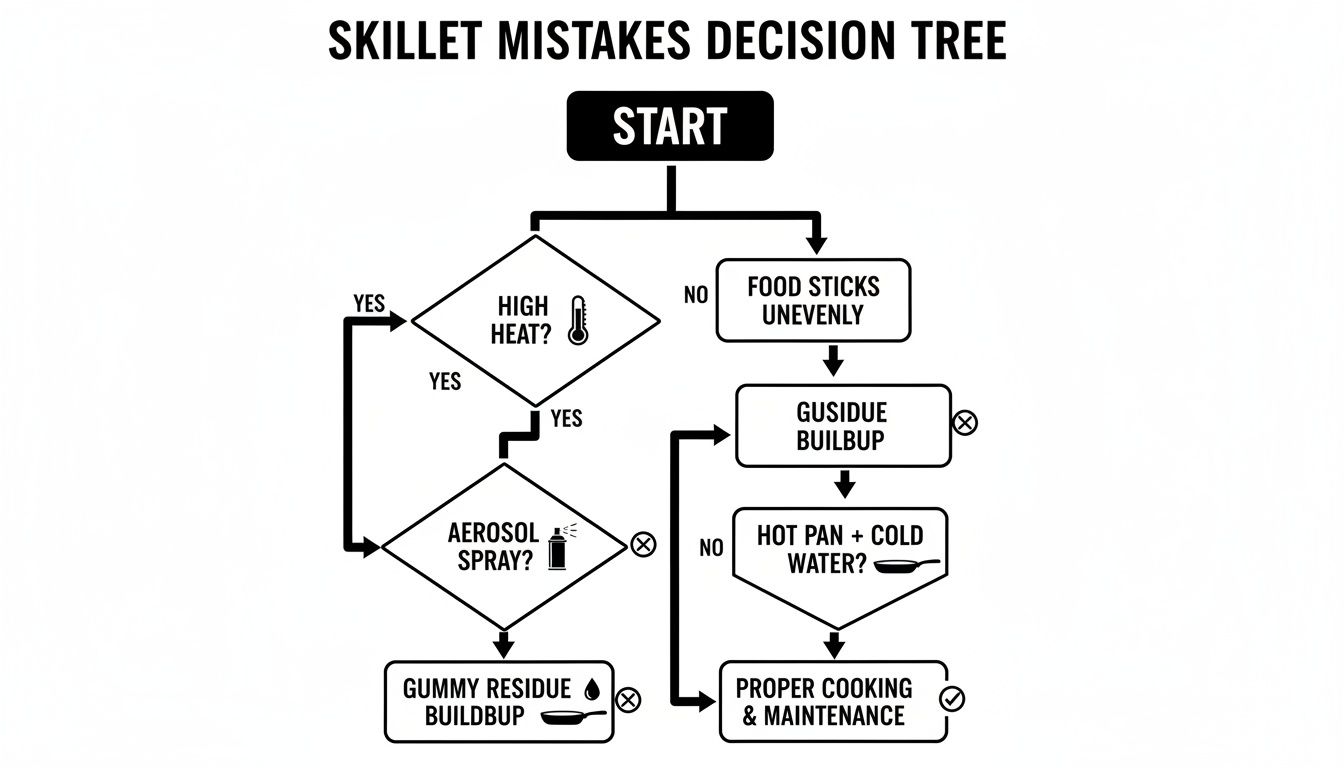
As you can see, little things like grabbing an aerosol spray oil might seem harmless, but they can build up a sticky residue that’s almost impossible to clean off, ultimately destroying the non-stick surface. This is a perfect example of why proper care is just as critical as the pan you choose in the first place.
Defining Your Priorities
Your personal preferences are a massive part of the equation here. How much does a non-toxic cooking surface matter to you and your family? Are you okay with the idea of replacing a coated pan every couple of years, or would you rather invest in something built to last a lifetime?
It's clear that Aussies are thinking more about their cookware. The Australian non-stick market is set to hit a staggering USD 363.92 billion by 2032, with frying pans leading the charge. This isn't just about buying more stuff; it shows a real shift towards wanting quality and performance in our everyday kitchen tools.
Once you have answers to these questions, the right choice usually becomes pretty clear. For anyone who puts long-term value, health, and sheer durability at the top of their list, an uncoated material like pure titanium often comes out on top. It lets you sidestep that frustrating cycle of buying and replacing coated pans every few years. Of course, a skillet is just one piece of the puzzle; for a wider perspective on setting up a functional cooking space, a good commercial kitchen equipment checklist can provide some handy pointers.
At the end of the day, the best skillet is the one you’ll reach for again and again. You can learn more about what separates the great from the good when it comes to quality frying pans in our detailed guide.
Got Questions About Non Stick Skillets? We've Got Answers
When you're shopping for a new non-stick skillet, a few common questions always seem to pop up. It's only natural to wonder about safety, how to use your pan day-to-day, and just how long it's going to last. Let's clear up some of the most frequent queries.
Are Non Stick Skillets Actually Safe?
Yes, for the most part. Modern non-stick pans made without PFOA are perfectly safe for everyday cooking, as long as you use them as intended.
The main thing to watch out for is extreme heat. If you crank a PTFE-based pan up past 260°C, its coating can start to break down and release fumes. For absolute peace of mind, materials like pure, uncoated titanium are a fantastic alternative. Since they don't rely on any synthetic coatings, there's zero risk of fumes, no matter how hot your stovetop gets.
The golden rule? Manage your heat. Never preheat an empty pan on high, and you'll keep your coated cookware well within its safe zone.
How Do I Use and Care for My Pan?
If you want to get the most out of your skillet pan non stick, the number one rule is to ditch the metal utensils. They're the fastest way to scratch and ruin that delicate surface. Instead, always reach for silicone, wood, or nylon tools.
Of course, there are exceptions. Uncoated cookware, like pure titanium, is tough enough to stand up to metal utensils without a scratch.
It’s also worth thinking about longevity. A typical coated pan will usually last you somewhere between two to five years, depending on how well you treat it. An uncoated titanium skillet, on the other hand, is built for the long haul—it's designed to last a lifetime. This means you can finally stop the endless cycle of replacing worn-out pans and cut down on kitchen waste.
Discover cookware designed for a lifetime of healthy cooking. Explore the pure titanium collection from Everti and invest in quality that endures. https://everti.com.au