

You've set out a beautiful cake, cut neat slices, and then reached for the nearest side plate. The slice is either pressed against the rim or floating in a wide empty field, while cream, crumbs and a fork compete for space. That small mismatch is exactly why small cake plates deserve more thought than they usually get.
The right plate supports the portion, frames the dessert and fits the way you serve. In Australia, that decision also sits within a long tradition of shared afternoon tea, fundraising suppers and practical “bring a plate” gatherings. Today, smaller cakes and more intimate celebrations are giving the format fresh relevance, but the buying questions remain straightforward: what diameter works, which material suits your routine, and how much care are you willing to give it?
What Small Cake Plates Are and Why Size Matters
A lemon-cake slice on a dinner plate can look lost, with a fork surrounded by unused porcelain. Put the same slice on a dish that is too small, and the sponge may touch the rim while cream has nowhere to settle. The right small cake plate gives the portion a clear boundary, like a frame that supports the food without competing with it.
A small cake plate is a flat, round or squared dish for one serving, rather than a whole tart, gateau or celebration cake. In Australian kitchens, a useful buying range is roughly 15 to 21 cm. The most flexible everyday plates usually sit nearer the upper end, leaving space for a slice, petit fours or a mini cake, plus a fork and modest garnish.
Diameter affects handling as well as appearance. A narrow plate makes a wedge feel unstable when it has soft layers, ganache or whipped cream. A broad plate gives a small portion too much empty space and can tempt you to add decoration to fill it. For modern small-format cakes, the plate should support the serving style: a compact dish suits a neat individual portion, while a little extra room helps with sauce, fruit or cream.
A serving tradition with practical roots
Australian cake plates belong to a longer culture of shared food. By 1920, newspaper notices had shortened “Ladies please bring a plate of cakes” to “bring a plate”, showing how contributed dishes and the food they carried had become part of social gatherings. The Red Cross, Boy Scouts and sporting clubs used afternoon teas and buffet suppers to bring people together, with cakes, scones and other finger foods suited to passing and sharing. Australian Food Timeline records this history.
The lamington offers another useful example of portioned service. It was first made in 1900, and its recipe appeared in Queensland Country Life on 17 December 1900. The historical account also describes smaller cakes being adapted for gatherings of up to 1,500 people, where individual pieces made serving large groups more manageable. The Australian Food Timeline explains the lamington's serving context.
Practical rule: Choose the plate for the portion you serve most often, not the largest cake you bake occasionally.
Start with the food, then judge the plate. A petit four, narrow wedge and fully dressed slice each need a different amount of surface, rim clearance and room for a fork.
The Right Size for Small Cakes and Intimate Servings
Australian tableware guidance places cake dessert plates around 200 to 250 mm, while side plates commonly sit around 16 to 20 cm. For a small cake plate, a practical working target is approximately 18 to 21 cm, because it bridges the two categories and gives an individual dessert enough room without making it look undersized. Nisbets Australia explains common plate size categories.
A government portion-control guide gives another useful visual cue, listing a 19.4 cm small plate, alongside larger medium and standard plate sizes. That doesn't make 19.4 cm a compulsory dessert diameter, but it does show why a smaller field of view can make a controlled serving appear more complete. Wedgwood Australia discusses these plate-size cues.
Match the diameter to the dessert
An 18 cm plate suits a narrow layer-cake slice, a brownie with a small spoonful of cream or a pair of mini cupcakes. It feels intimate and works well where cupboard space or compact place settings matter.
Move towards 19 to 21 cm for cheesecake, a taller slice with fruit, or cake served with sauce. The extra rim clearance gives a fork somewhere to land and prevents soft toppings from sitting directly against the edge.
Anything below 16 cm is better reserved for one petit four, a macaron or a small truffle. It can make a single bite look intentional, but a fork-friendly slice will usually feel cramped.
| Plate Diameter | Best For | Typical Use |
|---|---|---|
| Under 16 cm | Petit fours and macarons | One-bite sweets or a small tasting plate |
| 16 to 18 cm | Brownies, mini cakes and narrow slices | Weeknight dessert or compact afternoon tea |
| 19 to 20 cm | Individual cake with garnish | Lemon cake, cheesecake or a café-style plated slice |
| 21 cm | Generous slices and accompaniments | Cake with cream, fruit, sauce or shared-table service |
A warm brownie can look abundant on an 18 cm dish, especially when it's served alone. The same brownie may look stranded on a broad plate unless you add fruit, cream or a sauce. A mini cheesecake benefits from a little more breathing room because its topping often forms part of the visual design.
For readers comparing the broader role of side plates with other place-setting pieces, this guide to plates for dinner offers useful context.
Simple rule: if your dessert needs a fork and one accompaniment, start around 19 to 20 cm. If it's a single petit four or compact mini cake, go smaller.
Material Choices from Ceramic to Titanium
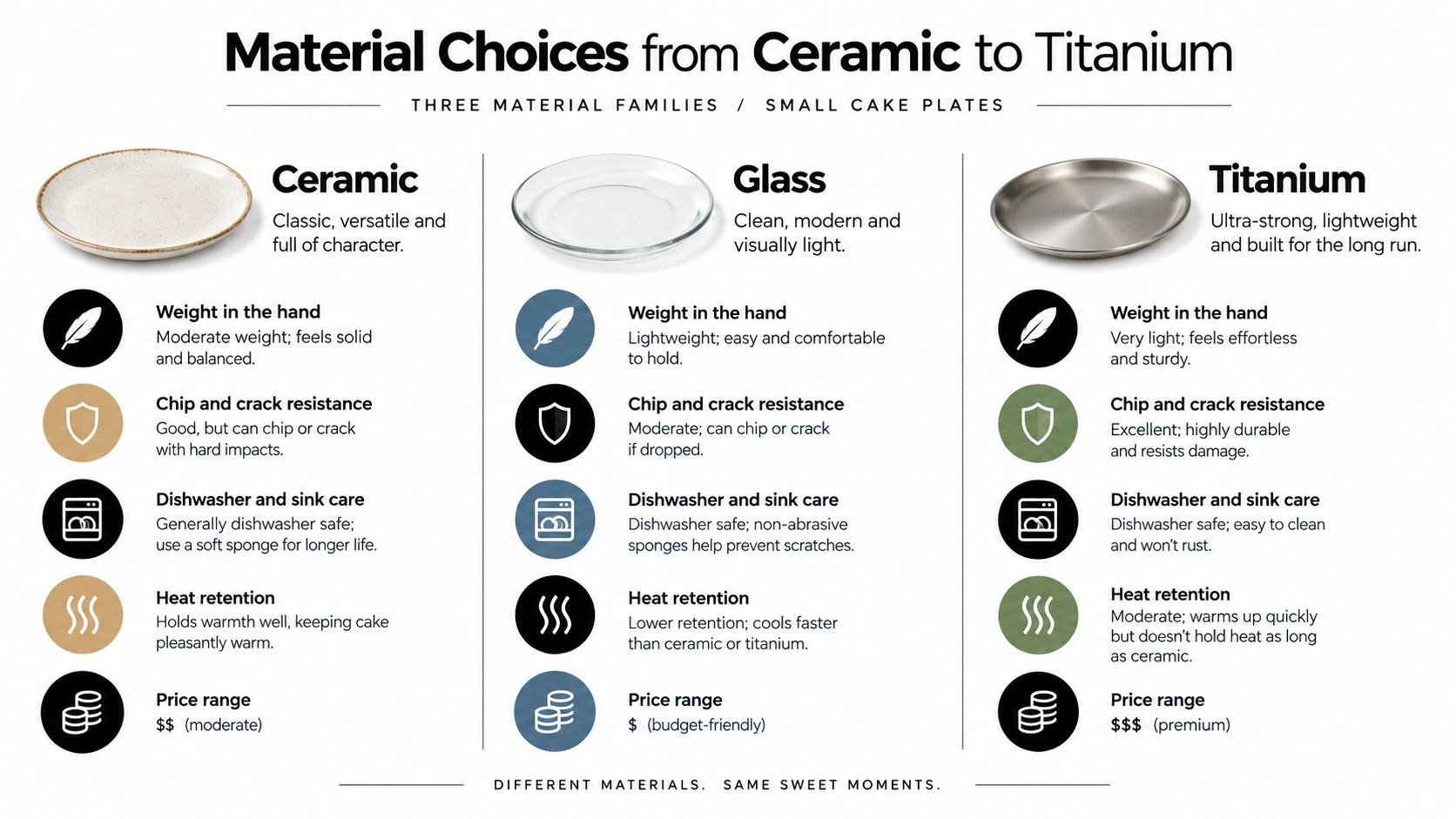
Material changes how a small cake plate feels in the hand, how it behaves under a knife and how much attention it demands after dessert. The three families most likely to enter your shortlist are ceramic, glass and titanium, and each creates a different balance between warmth, visibility and long-term practicality.
Ceramic feels familiar. Its glaze can make a kitchen table look classic, rustic or highly decorative, and the extra visual weight often suits afternoon tea. The trade-off is vulnerability at the rim. A careless stack, a sharp knock against the sink or repeated contact with a metal utensil can lead to chips, while a crack may make the plate unsuitable for continued use.
Glass gives a clean, display-led result. It lets the colour and texture of the cake do most of the work, which is effective for bright fruit toppings, layered desserts and neat chocolate slices. It can also feel heavier than expected, and breakage remains the obvious risk. Thermal shock deserves attention too, particularly when a warm plate meets a cold surface.
Titanium takes a different approach. An uncoated titanium plate is light for its strength, corrosion-resistant and visually restrained. It doesn't provide the glaze variations of ceramic, but it suits buyers who want an everyday piece that can move from cupboard to table to dishwasher without much ceremony.
Compare the daily handling
Think about the moment after serving, not just the photograph before it.
- Ceramic: Warm, decorative and easy to pair with existing crockery, but rims and glazes need careful handling.
- Glass: Crisp and transparent, though weight, break risk and temperature changes can make it less relaxed for busy service.
- Titanium: Light, corrosion-resistant and uncoated, with a minimalist appearance and less concern about a surface coating wearing away.
Knife-friendliness also matters. Cake knives usually meet soft crumbs, cream and icing rather than dense foods, but a plate still needs a surface that won't become marked or unpleasant through ordinary use. Hygiene is tied to the material and the finish. Smooth, intact surfaces are easier to clean than damaged glazes or heavily textured decoration.
Judge value by use, not just price
A decorative ceramic plate may be exactly right if it comes out for occasional entertaining. Glass can earn its place when presentation is the priority and handling is controlled. Titanium makes more sense when the plate will rotate through breakfast benches, lunch service, weekend guests and regular washing.
That distinction matters because the cheapest item at checkout isn't always the least expensive over its usable life. A plate that stays in service, stacks easily and needs little special treatment can offer better practical value than a more fragile piece that spends most of its time stored away.
Styling and Serving with Confidence
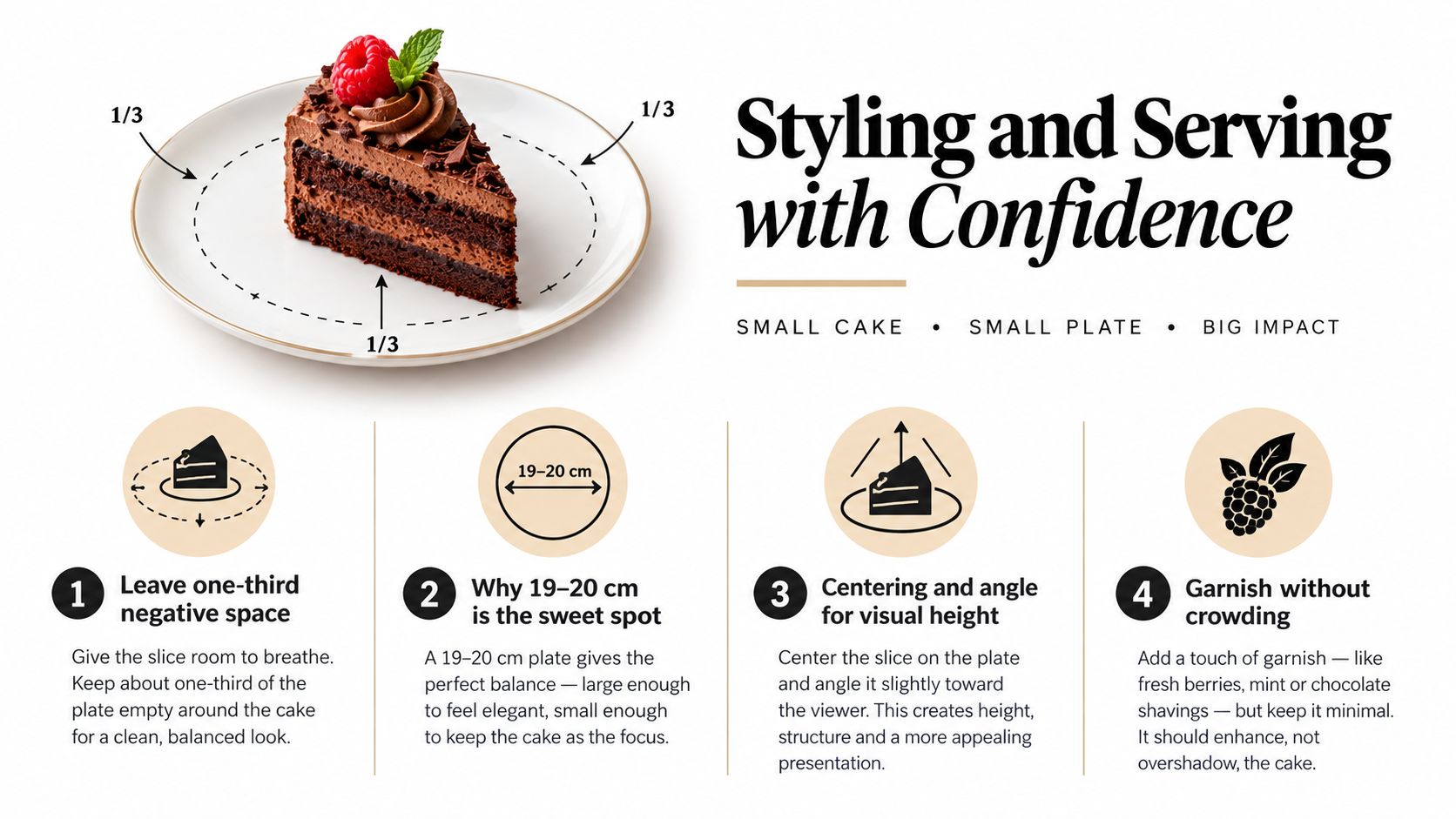
A small plate looks polished when the cake has room to breathe. Start by leaving roughly one-third of the plate visible around the portion. That negative space frames the dessert, keeps crumbs away from the edge and gives the diner a clear path for the fork.
For most individual slices, a plate around 19 to 20 cm offers a useful balance. It gives a mini cake or dressed slice enough surface for cream, fruit or sauce without turning the plate into a blank backdrop. Place the cake slightly off-centre rather than pushing it against the rim, then use the open quadrant for one small supporting detail.
Build the plate in three moves
- Set the main portion. Angle a layered slice so the cut face is visible. That immediately shows the crumb, filling and height.
- Add one anchor. A quenelle of cream, a spoon of fruit or a restrained brush of sauce gives the empty area a purpose.
- Finish lightly. A single raspberry with a mint tip works for layered sponge. A mini cheesecake can take a small herb garnish, provided it doesn't obscure the topping.
The garnish should support the cake, not compete with it. A crowded plate makes a small portion feel fussy, while a quiet plate can make a carefully made dessert look deliberate.
Plan for stands, boards and real service
On a tiered stand, check the vertical clearance before adding whipped cream or tall ganache. The upper tier shouldn't catch the topping when the plate is lifted, and the lower plate needs enough room for a hand to collect it without disturbing its neighbour.
A wooden board changes the mood from formal to relaxed. Keep the plate stable on the board and avoid letting the rim disappear into a busy pattern. For an outdoor gathering, a Forever Party Rentals cocktail table can provide a practical surface for a tiered arrangement, especially when guests need room to stand and circulate.
Finish affects the whole composition. Matte titanium reads minimalist and works with clean garnishes, while glossy ceramic feels more traditional and pairs naturally with classic floral or coloured table settings. Choose that visual language before you select the garnish palette. For more ideas on coordinating the wider table, see these table-setting ideas.
How Plate Choice Shapes Portions and Presentation
A small cake plate doesn't merely hold dessert. It helps communicate what the portion is meant to be. A mini cake on a compact dish can look complete rather than reduced, while a half-slice on a large plate may appear accidental, even when the serving is exactly what you intended.
For mini cakes, half-slice offers and tasting flights, a 15 to 17 cm plate can make the food occupy more of the visual field. The effect is presentational rather than nutritional, but it changes how the serving feels. A diner sees a finished dessert with a clear beginning and end, rather than a small piece surrounded by excessive empty space.
Let shape reinforce the slice
Shape tells the eye how to read the dessert.
- A round plate feels classic and centred. It suits wedges, cupcakes and symmetrical garnishes.
- An oval plate guides the eye along a rectangular slice, brownie or strip of cake.
- A square plate gives the same portion a sharper café feel and makes straight edges more prominent.
Material adds another layer of meaning. A brushed titanium plate can feel substantial without being visually ornate. Thin porcelain suggests delicacy, while clear glass allows the cake's colour to carry the presentation. None of these choices is better. They set different expectations before the first bite.
Create a repeatable serving system
The most useful combination is simple: choose size for portion perception, shape for cake geometry and material for the tone of the occasion. Once those three decisions are settled, you won't need to reinvent the arrangement every time someone asks for dessert.
A 15 to 17 cm round plate can become the dedicated tasting-flight option. A 19 to 20 cm neutral plate can handle the regular slice with cream or fruit. For a broader view of how material and profile affect formal presentation, compare these fine-dining dinner plates.
This system also helps cafés and hosts stay consistent. The same cake receives the same visual treatment, whether it's served on a quiet weeknight or placed among several desserts at a gathering.
Care, Cleaning and Long-Term Value
The material you choose determines whether washing up feels routine or like part of the event. Ceramic and porcelain usually benefit from gentle handling, particularly when the rim has a decorative glaze or hand-finished detail. Stack them carefully, avoid knocking the edges together and use felt dividers if the plates will stay stored for long periods.
Glass calls for similar caution, with an extra warning about sudden temperature changes. A plate that has just come through a warm dishwasher shouldn't be placed straight onto a cold stone bench. Let it settle first, and keep an eye out for hairline damage before serving.
Titanium asks for less ceremony. A single-melt, uncoated titanium surface resists corrosion, tolerates ordinary dishwasher cycles and standard detergents, and won't react with acidic toppings such as lemon curd or tomato-based accompaniments. The absence of a coating also removes one common long-term concern, namely a decorative layer wearing through with repeated use.
Compare the care burden
| Material | Cleaning Method | Durability Risk | Coating to Wear | Relative Cost per Year of Use |
|---|---|---|---|---|
| Ceramic | Gentle dishwasher or hand-washing, depending on glaze | Rim chips, cracks and glaze damage | Glaze or decoration may wear | Lower for occasional use, variable over long service |
| Glass | Careful dishwasher use where suitable, with temperature awareness | Breakage and thermal shock | Usually no coating, but decoration may fade | Moderate, depending on breakage and handling |
| Titanium | Standard dishwasher cleaning and ordinary detergent | Surface marks are possible, but no glaze to chip | Uncoated surface | Can be favourable when used frequently over a long period |
The table's final column isn't a promise of a particular price outcome. It's a buying principle. Divide the upfront cost by the realistic period you expect to use the plates, then consider how often they'll be washed, stacked and moved.
Read the warranty carefully
A useful warranty should state what happens if the plate warps, develops a manufacturing defect or experiences coating failure where a coating exists. Look for written coverage, a clear claims process and terms that match the way you intend to use the item.
Before buying: Ask whether the warranty covers manufacturing defects, what evidence a claim requires and whether everyday dishwasher use is allowed.
Long-life value comes from repeated service, not from a material label alone. A fragile plate that's reserved for special occasions may remain beautiful for years, while an uncoated plate used constantly may deliver more practical value because it earns its shelf space every week.
Choosing the Right Small Cake Plate for Your Occasion
An Australian afternoon tea might bring out sponge cake, cream and fruit on one table, while a modern café-style dessert may be a single neat slice with little extra decoration. Choose the plate for that serving habit first, then judge its finish and material. Start with portion size, setting, style and longevity. This order keeps an attractive plate from becoming a poor everyday choice.
For one slice after dinner, a 16 to 18 cm plate usually leaves enough visible space around the cake without taking over a small table. Ceramic adds warmth and variety, while titanium suits households that wash and reuse plates often. The plate should frame the dessert like a picture, with enough margin to make the portion look intentional.
Afternoon tea needs more room. An 18 to 21 cm plate gives a wedge of cake space for cream, fruit or a small sauce detail. A low rim helps when a slice is moved with a fork, and a neutral finish works across chocolate, citrus and berry cakes.
Use the occasion as your selector
| Occasion | Recommended Size | Best Material | Rim Style | Why It Works |
|---|---|---|---|---|
| Weeknight single slice | 16 to 18 cm | Ceramic or titanium | Low, simple rim | Compact, generous-looking and easy to store |
| Afternoon tea | 18 to 20 cm | Ceramic or titanium | Low to moderate rim | Holds cake plus a restrained garnish |
| Café or catering service | 19 to 21 cm | Titanium or durable ceramic | Low rim | Supports consistent plating and repeated handling |
| Tiered-tray presentation | Compact size suited to the tier | Lightweight titanium or thin glass | Low rim | Reduces visual and physical crowding between levels |
| Display-led entertaining | Size matched to the cake base | Hand-finished ceramic or clear glass | Decorative or minimal | Adds character when presentation matters most |
Tiered displays reward careful weight choices. A lighter plate can reduce wobble on an upper level, while decorated glass may require hand-washing and safer storage. Hand-finished ceramic adds visual weight and suits a centrepiece where the plate contributes to the display, not just the service.
For one set covering weeknight cake, weekend guests and repeated stack-and-wash use, titanium small cake plates are a strong long-life option. Their light feel, corrosion resistance and uncoated surface support frequent rotation without relying on a fragile glaze.
If you're ready to choose a set for everyday dessert service, explore Everti for titanium tableware designed for lightweight handling, easy cleaning and long-term use. Select the diameter and finish that match your usual cakes, then use your next slice as the test run.