

The choice really boils down to this: stainless steel gives you low-maintenance, corrosion-resistant durability, while carbon steel offers superior heat control and a naturally non-stick surface once it's seasoned. Are you after convenience and all-around versatility, or are you looking for responsive cooking performance that actually gets better with age? That’s the central question.
Understanding The Core Differences
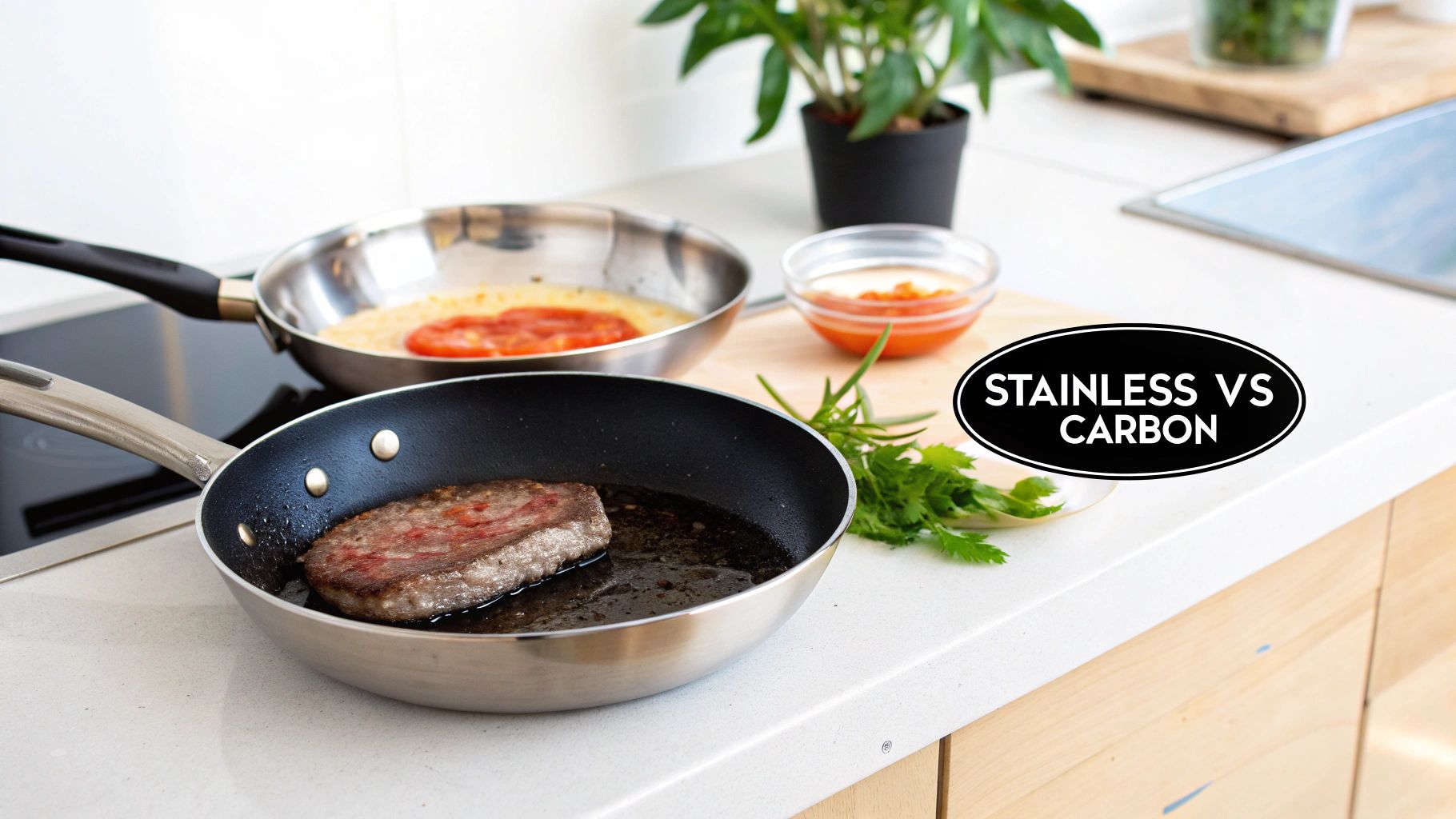
When you put stainless steel and carbon steel side-by-side, the contrast starts at a molecular level. We’re not just talking about two different metals; we’re looking at two completely different philosophies in cookware design, and it all stems from their basic chemical makeup. Getting a handle on this is key to understanding why they act so differently on your stove.
The Role of Chromium and Carbon
The secret ingredient in stainless steel is chromium—and lots of it, usually 10.5% or more. This element is a game-changer. It reacts with oxygen in the air to form a super-thin, passive layer over the surface. You can't see it, but this invisible shield is self-healing and makes the pan incredibly resistant to rust and stains. This is exactly why stainless steel is so forgiving and a breeze to clean.
Carbon steel, on the other hand, is a much simpler affair. It’s basically just iron with a little bit of carbon mixed in (typically up to 2.1%). That extra carbon makes the metal much harder and more durable than plain iron, which allows it to heat up fast and hold that heat evenly. The catch? Without that protective chromium layer, it's prone to rust. That’s where seasoning comes in—the process of building up a protective, non-stick patina over time.
At its core, the debate is simple: you are choosing between the built-in protection of chromium in stainless steel or the performance potential unlocked by seasoning carbon steel.
Quick Comparison Key Distinctions
This table summarises the fundamental differences that define how each steel performs in the kitchen.
| Characteristic | Carbon Steel | Stainless Steel |
|---|---|---|
| Primary Alloy | Iron and Carbon | Iron, Chromium, and Nickel |
| Corrosion Resistance | Low (requires seasoning) | High (naturally resistant) |
| Maintenance Level | High (seasoning and careful cleaning) | Low (dishwasher safe) |
| Heat Responsiveness | Heats and cools very quickly | Slower to heat and cool |
| Food Reactivity | Reactive with acidic ingredients | Non-reactive with all foods |
Understanding these distinctions helps clarify which pan is right for which job, and more importantly, which one is right for your cooking style.
The Rise of a Third Alternative
While the stainless steel vs. carbon steel debate is a classic in many kitchens, it's worth noting that material science hasn't stood still. For cooks wanting the best of both worlds—durability, non-reactivity, and top-tier performance—without the usual trade-offs, titanium has entered the conversation as a premium alternative. It's lighter than steel but incredibly strong, offering a non-toxic and corrosion-proof surface that hints at the future of high-performance kitchenware.
A Head-To-Head Performance Comparison
Beyond the science of their composition, the real story of stainless steel versus carbon steel unfolds on the stovetop. How a pan heats up, holds that heat, and talks to your food is what really matters. This is where you see just how different these two workhorses are, and why each one shines in its own way.
Heat Conductivity and Responsiveness
If there's one thing chefs rave about with carbon steel, it's the exceptional heat responsiveness. It's thinner and less dense than its cast iron cousin, so it gets screaming hot in a flash. Just as importantly, it cools down quickly when you turn down the flame. This gives you the kind of pinpoint temperature control that's essential for anything delicate, from searing scallops to sautéing greens.
Stainless steel, on its own, is actually a pretty sluggish heat conductor. That’s why you'll find quality stainless steel pans are built with a core of aluminium or copper sandwiched between the steel layers. This clever construction evens out the heat distribution, but the pan still takes its time reacting to changes in temperature compared to carbon steel.
For a chef, the responsiveness of carbon steel is like driving a sports car—it reacts instantly to every adjustment. Stainless steel is more like a reliable sedan, offering a steady and predictable ride.
Heat Retention Capabilities
While quick reflexes are great, you also need stamina. A pan has to hold its temperature to get the job done right. Carbon steel scores well here, holding onto heat beautifully to give you a powerful, consistent sear on a steak or a perfect char on vegetables. It has an incredible ability to get roaring hot and stay that way, making it a beast for high-heat cooking.
Multi-clad stainless steel is no slouch in this department either. Once it’s up to temperature, that conductive core helps it maintain a very stable heat across the entire cooking surface. This consistency is brilliant for simmering sauces or braising meats, where you need that gentle, even heat over a long time without worrying about hot spots.
Reactivity with Different Foods
This is a massive point of difference. The chromium in stainless steel creates a protective layer that makes it completely non-reactive. You can simmer acidic things like tomatoes, wine, or lemon juice for hours, and you’ll never have to worry about the pan leaching into your food or giving it a metallic tang.
Carbon steel, being 99% iron, is a different story. It's reactive. Cooking very acidic foods for too long can strip away that precious, hard-earned seasoning and might leave a faint metallic taste. A well-seasoned pan can handle a quick deglaze with a splash of wine, but it’s definitely not the tool you'd grab to make a long-simmered bolognese.
Here's a simple breakdown of how they stack up in the kitchen.
Performance Breakdown: Steel vs Steel
| Performance Attribute | Carbon Steel | Stainless Steel |
|---|---|---|
| Heat-Up Speed | Very fast. Gets hot in minutes. | Slower. The clad core needs time to heat. |
| Responsiveness | Excellent. Reacts instantly to heat changes. | Moderate. Slower to respond. |
| Heat Retention | Very good. Holds high heat for searing. | Excellent. Maintains steady, even heat. |
| Best For | Searing, stir-frying, sautéing, wok cooking. | Simmering, braising, sauces, acidic foods. |
| Non-Stick Ability | Naturally non-stick when seasoned well. | Not non-stick. Requires oil or fat. |
| Acidic Foods? | Not recommended for long cooking times. | Perfect. Completely non-reactive. |
As you can see, choosing the right pan really comes down to what you're cooking.
Overall Durability and Longevity
Both of these materials are tough as nails, but their lifespan really depends on how you treat them. This is true whether you’re looking at cookware or the broader Australian steel landscape. Out in the real world, stainless steel's superior corrosion resistance gives it a huge advantage over carbon steel, especially when exposed to moisture.
While carbon steel makes up the bulk of the 5.4 million metric tonnes of crude steel produced in Australia in 2023, its tendency to rust makes it a poor choice for coastal or humid areas like Melbourne. On the other hand, stainless steel is a star in construction, with its market growing at a 5.56% CAGR through 2032, perfect for building facades and fittings. For those wanting even more resilience, titanium offers a clear upgrade, resisting corrosion while being naturally antibacterial. To see how these materials are used across industries, you can explore more insights into the Australian steel market.
This translates directly to your kitchen. A carbon steel pan can be passed down for generations if it’s seasoned and cared for, but a moment of neglect can lead to a spot of rust. Stainless steel is far more forgiving—it resists rust and damage with very little fuss.
Maintenance and Longevity: The True Cost Of Ownership
The initial price of cookware is just the beginning of the story. The real investment reveals itself over time, through the care and attention each pan demands. When it comes to stainless steel versus carbon steel, the differences in daily upkeep couldn't be more stark—they represent two completely different approaches to cookware ownership.
The Carbon Steel Ritual: Seasoning and Care
Think of owning carbon steel cookware as building a relationship. Its incredible longevity, which can easily span generations, depends entirely on a process called seasoning. This involves rubbing a thin layer of oil onto the pan and heating it until the oil polymerises, forming a hard, protective, and naturally non-stick surface.
This isn't a one-and-done job; it's an ongoing commitment. Every time you cook with fats and oils, you're strengthening this patina, making the pan better and better. But this delicate surface demands a specific kind of care.
- Go easy on the soap: Harsh detergents are the enemy. They can strip away the seasoning you've worked so hard to build, leaving the raw metal exposed and vulnerable.
- Dry it immediately and completely: Water will cause carbon steel to rust, period. After a gentle wash, the pan needs to be dried thoroughly. A great trick is to pop it back on low heat for a minute to ensure every last drop of moisture has evaporated.
- Store it with care: A quick wipe of oil before putting it away provides a protective barrier, which is especially important in humid Australian climates where rust can appear seemingly overnight.
If you do neglect your carbon steel pan and it rusts, don't panic. It's almost always salvageable. A bit of steel wool and some elbow grease will take it back to bare metal, ready for you to start the seasoning process all over again.
The Stainless Steel Approach: Simple and Forgiving
If carbon steel is a commitment, stainless steel is the low-maintenance friend. Its built-in shield of chromium provides all the protection it needs against rust and corrosion, making it incredibly resilient and easy to live with.
You can scrub it, soak it, and attack stubborn, burnt-on messes without worrying about damaging the surface. For the busy home cook who values convenience above all else, this forgiving nature is a massive win. While many stainless steel pans can go in the dishwasher, it's always a good idea to check the manufacturer's instructions. Our guide on what makes cookware truly dishwasher safe pans can offer some valuable pointers here.
Even this tough material isn't completely bulletproof. It can develop water spots or heat tint (that bluish-purple discolouration), but these are just cosmetic issues. A specialised cleaner or even a simple splash of vinegar will usually get it looking new again.
The core difference in maintenance comes down to this: Carbon steel requires a proactive ritual to build its protective layer, while stainless steel has its protection built-in, requiring only reactive cleaning.
Comparing Long-Term Durability
When you think about how long your cookware will last, both materials are built like tanks but have different Achilles' heels.
| Longevity Factor | Carbon Steel | Stainless Steel |
|---|---|---|
| Rust Vulnerability | High. Needs constant attention to prevent oxidation, especially if the seasoning gets stripped. | Extremely Low. The passive chromium layer provides excellent, built-in rust protection. |
| Impact of Neglect | High. Will rust quickly if left wet or unseasoned, requiring a full restoration. | Low. Very forgiving. It can handle being left to soak and withstands aggressive scrubbing. |
| Potential Lifespan | Generational. With proper care, it can last indefinitely and literally gets better with age. | Decades. Extremely durable and resistant to warping, though scratches are permanent. |
While stainless steel is incredibly tough, it's not invincible. In extreme circumstances, like prolonged exposure to harsh salts, it can still be susceptible to pitting. For tips on keeping it in top shape, learning how to get rust off your stainless steel can be a lifesaver.
Ultimately, your choice comes down to your lifestyle. If you enjoy the hands-on process and the rewarding feeling of a perfectly seasoned pan, carbon steel is in a league of its own. But if you want cookware that works hard and asks for very little in return, stainless steel is the dependable workhorse you can count on.
The Price Tag: Initial Cost vs. Lifetime Value in Australia
When you're standing in the aisle trying to decide between stainless steel and carbon steel, the price is often the first thing you notice. But the real story isn't just about the initial dollars and cents; it's about what you get for your money over the long haul. The price difference comes down to the raw materials, how they're made, and who they’re made for.
Carbon steel is almost always the cheaper of the two to buy straight off the shelf. Its simple makeup—mostly iron with a little bit of carbon—makes it relatively straightforward and inexpensive to produce. That’s why it’s the workhorse of heavy industry, used for everything from construction beams to car parts.
This industrial-scale production means the cost stays low for everyone, including home cooks. You can pick up a fantastic carbon steel pan that delivers professional-level searing without a huge financial hit, which makes it a brilliant starting point for anyone getting serious about their cooking.
Why You Pay More for Stainless Steel
Stainless steel, on the other hand, usually comes with a higher price, and for a few very good reasons. The magic ingredients here are chromium and often nickel, and adding them into the mix is a more complicated and expensive process. These alloys are what give stainless steel its famous ability to resist rust and stains—a feature you're essentially paying for upfront.
That built-in durability is a huge part of its appeal. You're buying a piece of cookware that can handle a bit of neglect, shrugging off rust and acid far better than carbon steel, which needs consistent attention to stay in top shape.
When comparing stainless steel and carbon steel, don't just look at the price. Think of it as upfront cost versus the ongoing 'cost' of your time and effort in maintenance over the life of the pan.
The Bigger Picture in the Aussie Market
Looking at the numbers in Australia really puts things into perspective. Carbon steel is a massive player in our economy. The nation's steel sector is enormous, projected to climb from AUD 20.52 billion in 2025 to AUD 27.31 billion by 2035, built on the back of the 5.4 million metric tonnes produced in 2023 alone.
The stainless steel market is smaller but growing strong, especially where its resilience makes the extra cost a no-brainer. For home cooks, this is the key takeaway: carbon steel’s low price is a byproduct of its industrial scale, but its tendency to rust without proper seasoning makes it a bit high-maintenance for a busy, hygienic kitchen. This is especially true if you live in a humid, coastal part of Australia where rust can set in fast. You can read more about the Australian stainless steel market and its growth for a deeper dive.
And for those who really value hygiene and keeping their knives sharp, it's worth noting how other materials fit in. Everti's titanium cutting boards, for instance, are a perfect match for stainless steel knives, offering incredible corrosion resistance and a surface that won't dull your blades like steel can.
So, Where Should Your Money Go?
Ultimately, the best choice really boils down to what you value most in the kitchen.
- For the Hands-On Cook on a Budget: If you don't mind putting in the time to season and care for your pan to get that incredible, non-stick performance, carbon steel offers phenomenal value.
- For the Set-and-Forget Home Chef: If you’d rather have something that’s easy to use, simple to clean, and versatile for all kinds of cooking, the higher upfront cost of stainless steel is a sound investment in pure convenience.
The great thing is, both can be fantastic long-term additions to your kitchen. A well-loved carbon steel pan will last a lifetime, and so will a quality stainless steel set. If you're looking to kit out your whole kitchen, our guide on the best cookware sets in Australia is a great place to explore how different materials compare.
Choosing The Right Steel For Your Kitchen Tasks
Knowing the difference between stainless steel and carbon steel is one thing, but figuring out which one belongs on your stovetop is another. Let's move from the theory to the practical and look at which material makes the most sense for your cooking style, the meals you love to make, and even the knives in your block.
This decision tree can help you visualise which path might be right for your cooking habits and budget.
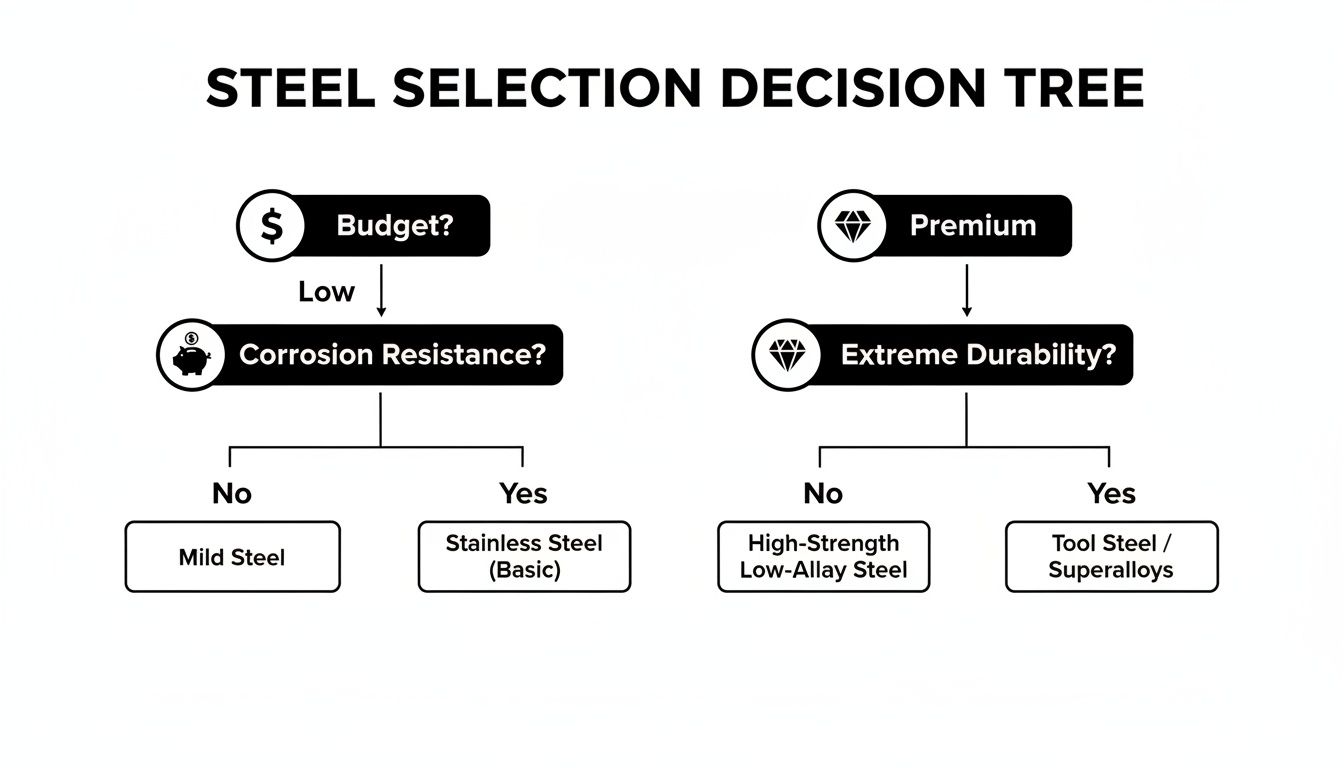
As the visual guide shows, your budget and how much maintenance you're willing to do are often the first things to consider, quickly pointing you toward a material that suits your lifestyle.
For The Sear And Sauté Specialist
If your idea of a perfect meal involves a deep, crunchy crust on a steak or a stir-fry cooked at blistering heat, carbon steel is your undisputed champion. It gets screaming hot—fast—and stays that way, making it the ultimate tool for any task demanding intense, direct heat. This responsiveness gives you incredible control, letting you nail that perfect Maillard reaction without overcooking what’s inside.
Think about searing a steak. A carbon steel pan creates that instant, flavourful crust that locks in all the juices. It's the same for wok cooking, where the ability to heat up and cool down quickly is vital for flash-cooking vegetables so they stay bright and crisp.
For The All-Rounder And Sauce Maker
On the other hand, if your kitchen is more about slow-simmered sauces, hearty braises, and versatile one-pan dinners, stainless steel is the reliable workhorse you need. Its non-reactive surface is its superpower. You can cook with acidic ingredients like tomatoes, wine, or lemon for hours without worrying about the pan altering the flavour or leaching metal into your food.
Picture a bolognese sauce simmering away all afternoon. A stainless steel pot provides steady, even heat and won't react with the acidic tomatoes. For building complex flavours over time with total peace of mind, it’s the most dependable choice you can make.
The decision often comes down to a simple trade-off: Do you want the reactive, high-heat performance of carbon steel for searing, or the non-reactive stability of stainless steel for sauces and everyday cooking?
A Cut Above The Rest: Kitchen Knives
The stainless steel vs. carbon steel debate isn't just about pans; it's crucial when choosing kitchen knives. The right material here really depends on your priorities and how much time you’re willing to spend on upkeep.
-
High-Carbon Steel Knives: These are the darlings of many professional chefs for a reason. They can be honed to an incredibly fine, razor-sharp edge. The higher carbon content makes the steel harder, so it holds that superior edge for longer. The downside? They're brittle, so they can chip if you're not careful, and they will rust in a heartbeat if not washed and dried immediately.
-
Stainless Steel Knives: For most home cooks and busy households, this is the practical choice. They might not get quite as terrifyingly sharp as high-carbon blades, but they are far more durable, forgiving, and highly resistant to rust and stains. A quality set of stainless steel knives delivers excellent performance with very little maintenance.
Regardless of your knife choice, what you cut on matters just as much. A good cutting board is an investment in your blades. This is where you can see how different materials shine in various roles; for instance, considering what flatware materials like stainless steel and titanium are made of shows their different strengths. By making sure your tools—from pan to knife to board—all align with your cooking habits, you build a kitchen that truly works for you.
Why Titanium Is The Ultimate Kitchen Upgrade
After weighing up the pros and cons of stainless steel and carbon steel, it’s pretty clear you're facing a classic trade-off. Do you go for carbon steel's incredible heat control but sign up for a life of meticulous maintenance? Or do you pick stainless steel for its set-and-forget durability, knowing you're giving up a bit of performance? This is exactly where a third material, titanium, steps in and changes the game for the modern home cook.
Titanium isn't just another metal to throw into the mix; it’s a genuine step forward. It elegantly solves the very problems that make the stainless steel versus carbon steel debate so tricky.
Solving The Steel Standoff
The biggest drawback of carbon steel is its tendency to rust, which means you have to follow a strict seasoning routine. Stainless steel, on the other hand, is rust-proof but just doesn't have that pure responsiveness that serious cooks look for. Titanium completely bridges this gap. It has a non-porous and non-reactive surface that is 100% corrosion-proof, and you don't have to season it or give it any special treatment.
This gives you the best of both worlds. You get a surface that can handle acidic foods like tomatoes or wine, just like stainless steel, but with an inert quality that guarantees your food tastes exactly as it should.
Titanium eliminates the compromise. It delivers the zero-maintenance convenience of stainless steel and the food purity that seasoned carbon steel strives for, all in one superior material.
A Commitment To Health And Purity
Beyond just how it performs on the stovetop, your choice of cookware is a choice for your family's health. Titanium is completely non-toxic and biocompatible. It’s even naturally antibacterial, which helps stop germs from growing on its surface.
That’s a massive plus in any kitchen. While Australia has a huge steel market, producing around 5.4 million metric tonnes in 2023, most of it goes towards industrial uses like construction. For health-conscious home cooks in places like Melbourne, carbon steel's industrial toughness doesn't translate perfectly to the kitchen, especially when its tendency to rust in humid weather creates a hygiene headache. In contrast, Everti's SGS-verified 99.9% pure titanium cutting boards offer a far better alternative, being both microplastic-free and backed by a lifetime warranty. You can read more about the Australian steel market and its applications to understand the difference.
The Everti Advantage: Strength Without The Weight
One of the most amazing things about titanium is its strength-to-weight ratio—it's the highest of any metallic element. This means an Everti titanium pan or cutting board is incredibly durable and won't warp, yet it feels surprisingly light and is a breeze to handle.
This unique combination makes it an investment not just in performance but in longevity and sheer ease of use. If you're curious about what makes it so special, you can explore the complete list of titanium cookware pros and cons in our detailed guide. When you choose titanium, you're choosing a lifetime material designed for purity, performance, and peace of mind.
Frequently Asked Questions
When you're trying to decide between stainless steel and carbon steel, a few common questions always seem to pop up. Let's tackle them head-on so you can feel confident about what you're buying and how to use it.
Can You Use Soap On Carbon Steel?
You can, but it’s best to avoid it. A tiny bit of mild dish soap isn't going to destroy your pan on the spot, but modern detergents are really good at cutting through grease—and that's exactly what your hard-earned seasoning is made of.
For everyday cleaning, a quick wipe while the pan is still warm or a scrub with coarse salt and a little oil is all you need. This method cleans the pan perfectly while protecting that beautiful non-stick patina you've been building.
Which Pan Is Better For A Beginner?
For anyone just starting out, stainless steel is the more forgiving option, hands down. It doesn't ask much of you. You can cook whatever you want, scrub it clean without a second thought, and never worry about rust or seasoning.
A good stainless steel pan lets you focus purely on developing your cooking skills, not on pan maintenance. It’s a reliable workhorse.
Think of stainless steel as your trusty first car—it gets you where you need to go without any fuss. Carbon steel is like graduating to a high-performance vehicle; it’s incredible, but it demands a bit more attention and care to get the best out of it.
Why Does My Carbon Steel Pan Look Splotchy?
That patchy, uneven look is completely normal—in fact, it's a good sign! It means the seasoning is starting to build up. As you cook, layers of polymerised oil create a patina that often appears as a mosaic of black, brown, and even blueish hues.
Don't worry about the aesthetics. The real test is how it performs. If your food slides around easily and doesn't stick, the seasoning is doing its job perfectly, regardless of how splotchy it looks. That sleek, uniform black surface you see in photos only comes after a long time and lots of cooking.
At Everti, we believe the best kitchen tools offer performance without compromise. While steel pans have their place, our SGS-verified pure titanium cookware provides a naturally non-stick, non-toxic, and corrosion-proof surface that requires zero seasoning—blending the best of all worlds. Upgrade your kitchen with lifetime essentials at https://everti.com.au.