

Ever seared a beautiful steak on the stove, only to have to transfer it to a separate baking dish just to finish it in the oven? It's a common frustration, adding another dirty dish to the pile. That's where stovetop to oven cookware completely changes the game. It’s the secret weapon for streamlining your cooking, cutting down on washing up, and frankly, making you a better cook.
The Power of a Single Pan From Stovetop to Oven
Being able to move one pan from the hob straight into the oven isn't just a neat trick; it's a fundamental technique used by chefs to get incredible results. It lets you build deep, complex flavours and achieve textures that are impossible with just one cooking method. Think of it as combining the best of both worlds.
The stovetop gives you that intense, direct heat perfect for creating a flavourful, caramelised crust. Then, by moving the pan to the oven, you surround the food with gentle, consistent heat. This cooks it through perfectly without any risk of burning the outside. It’s this exact one-two punch that makes all the difference.
Unlocking Culinary Versatility
Once you have a reliable oven-safe pan in your arsenal, a whole new world of recipes opens up—dishes that would normally mean juggling multiple pots and pans. Not only does this make the cooking process smoother, but it also means less time spent at the sink afterwards. A single, high-quality pan quickly becomes the most reached-for item in your kitchen.
Here are just a few classics that become a breeze:
- Seared Meats: Get that perfect crust on a thick steak, pork chop, or chicken thigh, then finish it in the oven for a tender, juicy result every time.
- Braises and Stews: Brown your meat and vegetables on the stove to build that crucial flavour base, then pop it in the oven for a low-and-slow cook until everything is melt-in-your-mouth tender.
- Gratins and Bakes: Start a creamy potato gratin or a hearty casserole on the hob and then transfer it to the oven for that golden, bubbly top.
- Skillet Desserts: Nothing beats a giant, shareable cookie or a rustic fruit crumble baked and served right in the same pan.
A Growing Trend in Australian Kitchens
This move towards smarter, more versatile cookware isn't just a niche trend. As more of us get serious about cooking at home, the demand for durable, multi-functional gear has skyrocketed.
You can see this shift in the numbers. Australia's cookware market has seen impressive growth, hitting USD 664.44 million in a single year and is forecast to reach USD 1,369.43 million by 2033. It’s clear that Australian home cooks are happy to invest in quality kitchen essentials that last. You can explore more data on the Australian cookware market for a deeper dive.
This guide will walk you through everything you need to know about choosing and using the best stovetop to oven cookware, from breaking down the different materials to helping you master new cooking techniques.
Comparing Cookware Materials for Heat and Durability
Choosing the right material for your stovetop to oven cookware is probably the biggest decision you'll make. Think of it like picking the engine for a car—it dictates everything from how it performs on the road to how long it will last. In the kitchen, each material has its own personality, directly impacting heat control, durability, and even the final flavour of your food.
Getting a feel for these differences is the secret to matching a pan to your cooking style. A material that’s brilliant for a long, slow braise might be a real headache if you’re trying to whip up a delicate sauce that needs instant heat adjustments. Let's get into the main players and see how they really stack up.
The Heavyweight Champion: Cast Iron
Cast iron is the old-school hero of the kitchen, a true workhorse loved for its incredible ability to hold onto heat. You can think of it like a thermal battery; it takes its time to get hot, but once it's there, it stays there. This makes it absolutely unbeatable for getting that perfect, deep sear on a steak or holding a steady temperature for baking cornbread.
The trade-off? It’s seriously heavy, which can make it a bit of a mission to move around, especially when it's full of food. It also needs a bit of love and attention. You have to season it to keep its non-stick surface up to scratch and to stop it from rusting, and it's a definite no-go for the dishwasher. Still, for many cooks, its performance and sheer longevity make the extra effort worthwhile.
- Pros: Absolutely phenomenal heat retention, built like a tank, and can literally last for generations. It also builds up a fantastic natural non-stick surface over time.
- Cons: Very heavy, slow to heat up and cool down, and needs regular seasoning to stay in top shape.
The Versatile Professional: Stainless Steel
Stainless steel is the dependable all-rounder you'll find in nearly every professional kitchen, and for good reason. It’s tough, durable, and has a non-reactive surface. This is a big deal because, unlike cast iron, it won’t react with acidic ingredients like tomatoes or a splash of wine, meaning the flavour of your dish stays pure and untainted.
Most high-quality stainless steel pans have a core of aluminium or copper sandwiched between the steel layers. This clever design trick dramatically improves how well they conduct heat, helping to get rid of those annoying hot spots.
Here's a pro tip: Look for stainless steel labelled 18/10. This number refers to the percentage of chromium and nickel in the alloy, which gives it fantastic rust resistance and a brilliant shine that lasts.
The Responsive Contender: Carbon Steel
Often called cast iron's lighter, smoother cousin, carbon steel gives you many of the same amazing benefits but with fewer of the drawbacks. It gets hot much faster than cast iron and is way more responsive when you turn the heat up or down, putting you firmly in control. Just like cast iron, though, you’ll need to season it to build up that beautiful, slick patina.
You’ll see carbon steel everywhere in professional kitchens. Chefs love it because it can handle screamingly high heat and it's light enough to toss and sauté food without getting a workout. It’s a brilliant piece of stovetop to oven cookware for anyone who loves what cast iron can do but wants something a bit more nimble.
The Premium Innovator: Titanium
Titanium is really in a league of its own, offering a modern take that blends incredible durability with a feather-light feel. Its strength-to-weight ratio is simply off the charts. You get all the toughness of heavier metals without any of the heft. Better yet, pure, uncoated titanium is naturally non-reactive and non-toxic, giving you a completely clean and safe surface to cook on.
One of titanium's biggest wins is its amazing resistance to corrosion and scratches, which makes it incredibly low-maintenance and built to last. It heats up evenly and is designed to handle extreme temperatures, making the jump from hob to oven a total breeze. While it might be a bigger investment up front, its performance, health benefits, and longevity make it a fantastic choice for serious cooks. As you weigh up your options, it's worth learning more about what makes for good quality pots and pans.
Cookware Material Performance Comparison
To help you decide, here’s a quick side-by-side look at how these materials perform across the board. Each one has its clear strengths, so it's all about what you value most in your cooking.
| Material | Heat Conduction | Heat Retention | Weight | Durability | Maintenance | Best For |
|---|---|---|---|---|---|---|
| Cast Iron | Slower | Excellent | Heavy | Very High | High (Seasoning) | Searing, baking, deep-frying |
| Stainless Steel | Good to Excellent | Moderate | Medium | Very High | Low (Dishwasher Safe) | All-purpose cooking, sauces |
| Carbon Steel | Excellent | Good | Medium-Light | High | High (Seasoning) | High-heat searing, sautéing |
| Titanium | Very Good | Good | Very Light | Exceptional | Very Low | Healthy cooking, everyday use |
So, what’s the final word? It really comes down to your priorities. If you value tradition and that unbeatable heat retention, cast iron is your soulmate. If you're after professional-grade performance with easy care, stainless steel is a rock-solid bet. Want a balance of cast iron’s searing power with more agility? Carbon steel is calling your name. But for those who want the absolute best in lightweight strength, purity, and durability, titanium is the clear winner.
Why Titanium Cookware Is a Superior Investment
When you're looking for cookware that can truly go the distance, moving seamlessly from the stovetop to a ripping hot oven, it’s hard to look past titanium. It's not just another option; it represents a serious step up in performance and a genuine long-term investment for any serious home cook. While the old faithfuls like cast iron and stainless steel have their place, titanium manages to solve many of their classic trade-offs.
Its most impressive trait? An incredible strength-to-weight ratio. Think about the resilience and heat-holding power of a heavy cast iron skillet, but in a pan so light you can move it around with one hand. This makes that crucial trip from the hob to the oven—and back again—far safer and just plain easier.
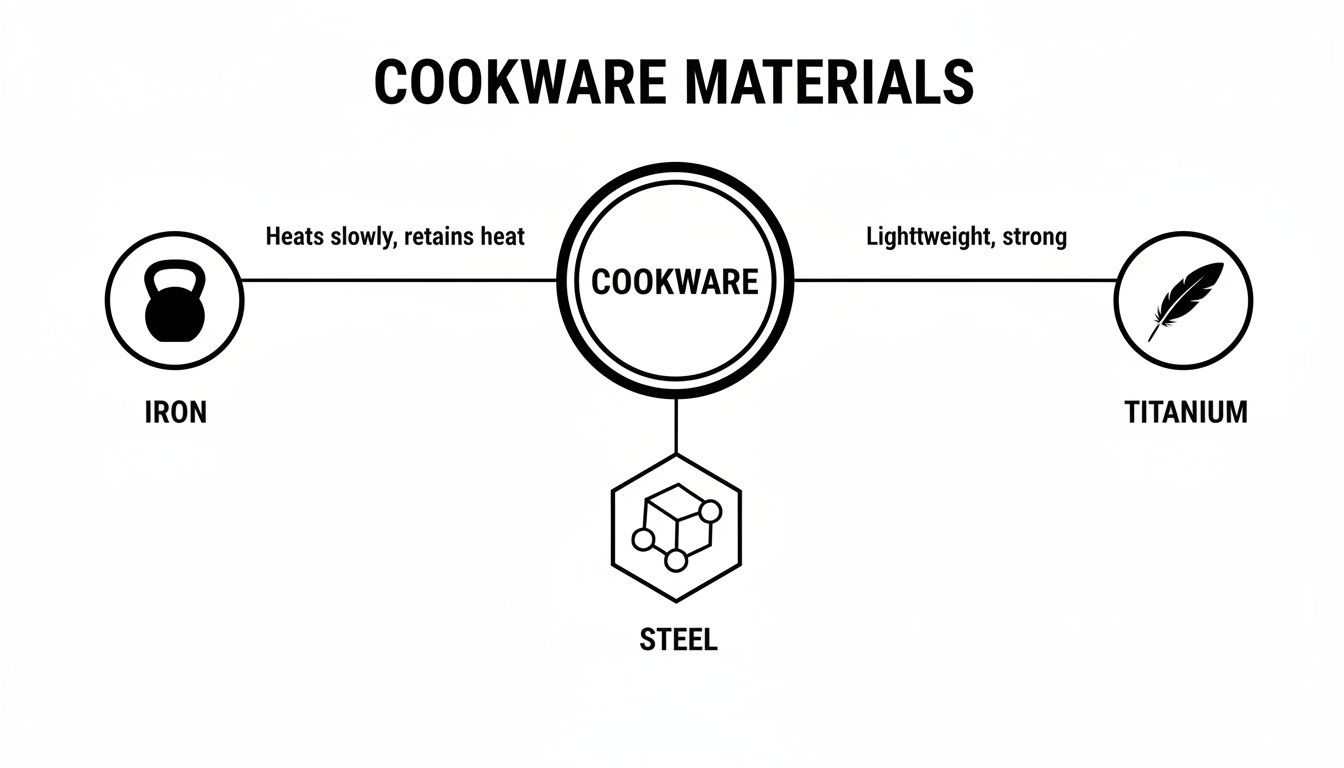
As you can see, titanium hits a sweet spot, offering the strength you need without the back-breaking weight of traditional iron.
A Commitment to Health and Purity
Beyond its brute strength, the real magic of titanium lies in what it doesn’t do. When you’re cooking with pure, uncoated titanium, you're using one of the safest, most non-reactive materials out there. It’s naturally non-porous, which means it won’t hold onto bacteria or soak up the flavours and smells from last night's dinner. Your delicate fish won't taste faintly of yesterday's spicy curry.
This inert quality is a huge deal. It means the pan won't leach metals or other nasties into your food, even when you're simmering a highly acidic tomato sauce for hours. We’ve all heard the concerns about certain non-stick coatings degrading over time and potentially releasing PFOA or other chemicals.
With pure titanium, what you cook is what you eat. It’s that simple. You get total peace of mind, knowing that the only things ending up on the plate are the ingredients you chose yourself.
This is a massive reason why so many health-conscious cooks are making the switch. If you're keen to dig deeper, it's worth learning more about what makes titanium cookware in Australia such a standout choice.
Built for a Lifetime of Performance
When you invest in good cookware, you expect it to last. You want pieces that can take a beating, day in and day out, for years—maybe even decades. This is where titanium really shines. It's incredibly resistant to scratches, corrosion, and the kind of warping that can happen when a hot pan meets cold water. Other metals can rust or pit if you don't baby them, but titanium holds its own with very little fuss.
This durability translates to incredibly low-maintenance gear. It cleans up beautifully, often with just a quick wipe, and completely sidesteps the seasoning rituals that come with cast iron or carbon steel. For anyone with a busy life, that means less time scrubbing at the sink and more time actually enjoying your meal.
- Exceptional Durability: Fights off dents, scratches, and warping, even at very high temperatures.
- Corrosion-Proof: It simply won’t rust or react to acidic ingredients like lemon or vinegar.
- Effortless Maintenance: No special seasoning or complicated care routines needed—just wash and go.
Its fantastic heat tolerance makes it perfect for those dishes that start with a blistering sear on the hob before being transferred to the oven to finish cooking. Titanium heats up evenly and responds quickly when you adjust the temperature, giving you that fine-tuned control every good cook craves.
The True Value of Titanium
Look, there’s no getting around it: titanium cookware often comes with a higher price tag upfront. But to see its real value, you have to think about its lifespan and performance over time. This isn’t a pan you buy and replace in a few years. It's a permanent piece of your kitchen arsenal.
You're investing in cookware that won’t need replacing, that supports healthier cooking, and that genuinely makes the whole process, from prep to cleanup, simpler. The combination of being lightweight yet tough-as-nails, completely non-toxic, and a breeze to care for truly puts titanium at the peak of modern stovetop to oven cookware.
How to Choose Your Perfect Oven Safe Pan
Finding the right piece of stovetop to oven cookware isn’t about cramming your cupboards with a massive, matching set. It's about finding that one, brilliant workhorse that perfectly suits the way you actually cook. This is the 'buy once, buy well' philosophy in action—choosing a pan that will serve you for years, not a collection that just gathers dust.
This mindset is becoming more common in home kitchens. In the wider Asia Pacific region, for example, Australian consumers are increasingly favouring high-quality, durable kitchen gear with specific functions. Even though Australia represents a niche 2.23% of this market, the demand for premium, long-lasting cookware is strong, shifting the focus from quantity to real quality.
So, the first step is to have an honest chat with yourself about your cooking style. Are you usually whipping up meals for one or two, or are you feeding the whole family? Do you prefer quick weeknight sears or slow-cooked weekend creations? Your answers will point you in the right direction.
Check the Temperature Limits First
Before you get carried away by a pan’s good looks, the single most important detail is its maximum oven-safe temperature. And this doesn’t just apply to the body of the pan; every single part has to be able to take the heat.
A pan forged from a single piece of metal—like titanium or cast iron—can typically handle incredibly high temperatures. The weak points, however, are almost always the handles and the lid knob.
- Handles: Anything made of plastic, resin, or wood will have a much lower temperature limit than the pan itself. Metal handles are always a safer bet for high-heat oven use.
- Lids: The same logic applies here. A solid metal lid is ideal. Be cautious with tempered glass lids, as they often have a lower heat tolerance, and look out for any knobs made from non-metal materials.
Always double-check the manufacturer's guidelines for every single component. A pan might be rated to a blistering 300°C, but its lid could tap out at just 180°C. Knowing these numbers is crucial for keeping you safe and your cookware in one piece.
Match the Size and Shape to Your Meals
Once you’ve confirmed a pan can handle the heat, it’s time to think about its form. The size and shape will dictate the kinds of delicious meals you can create. There's no single "best" shape—it all comes down to what you love to cook.
When you're figuring out what type of oven-safe pan is right for you, it helps to browse a range of kitchen and tabletop options to see what fits your style and practical needs.
Think about what you cook most often:
- For Searing and Roasting: A skillet or frypan with sloping sides is your best friend. This shape helps moisture evaporate quickly, giving you a beautiful crust on steaks, chicken thighs, or roasted vegetables. A 26-30 cm skillet is a great all-rounder for most homes.
- For Braises and Casseroles: You’ll want a sauté pan with straight, high sides or a classic Dutch oven. These deeper pans are built to hold more liquid, making them perfect for slow-cooking stews, braising tough cuts of meat until they’re falling apart, or baking a deep-dish gratin. A 3-5 litre capacity is a solid choice for family meals.
- For Solo Cooking or Small Dishes: A smaller 20-24 cm pan is ideal for individual frittatas, baking a giant skillet cookie for two, or simply reheating leftovers. It heats up fast and is much easier to handle and store.
Ultimately, choosing the right stovetop to oven cookware is a personal decision. If you focus on the temperature limits first and then match the pan's size and shape to your real-world cooking habits, you’ll invest in a single, high-quality piece that will quickly become the MVP of your kitchen.
Cooking Techniques Unlocked by Your Oven-Safe Cookware
This is where the real fun begins. A piece of stovetop-to-oven cookware isn’t just another pan; it’s your ticket to a whole new world of cooking techniques. It’s what lets you build incredible depth of flavour and texture, turning good meals into great ones. So, let's step away from the theory and get into the delicious reality of what this one pan can do for you.
The secret behind so many restaurant-quality dishes is the ability to start with high, direct heat and finish with gentle, ambient heat. You can finally nail those methods at home, elevating everyday ingredients into something truly special.
Master the Classic Sear-and-Bake
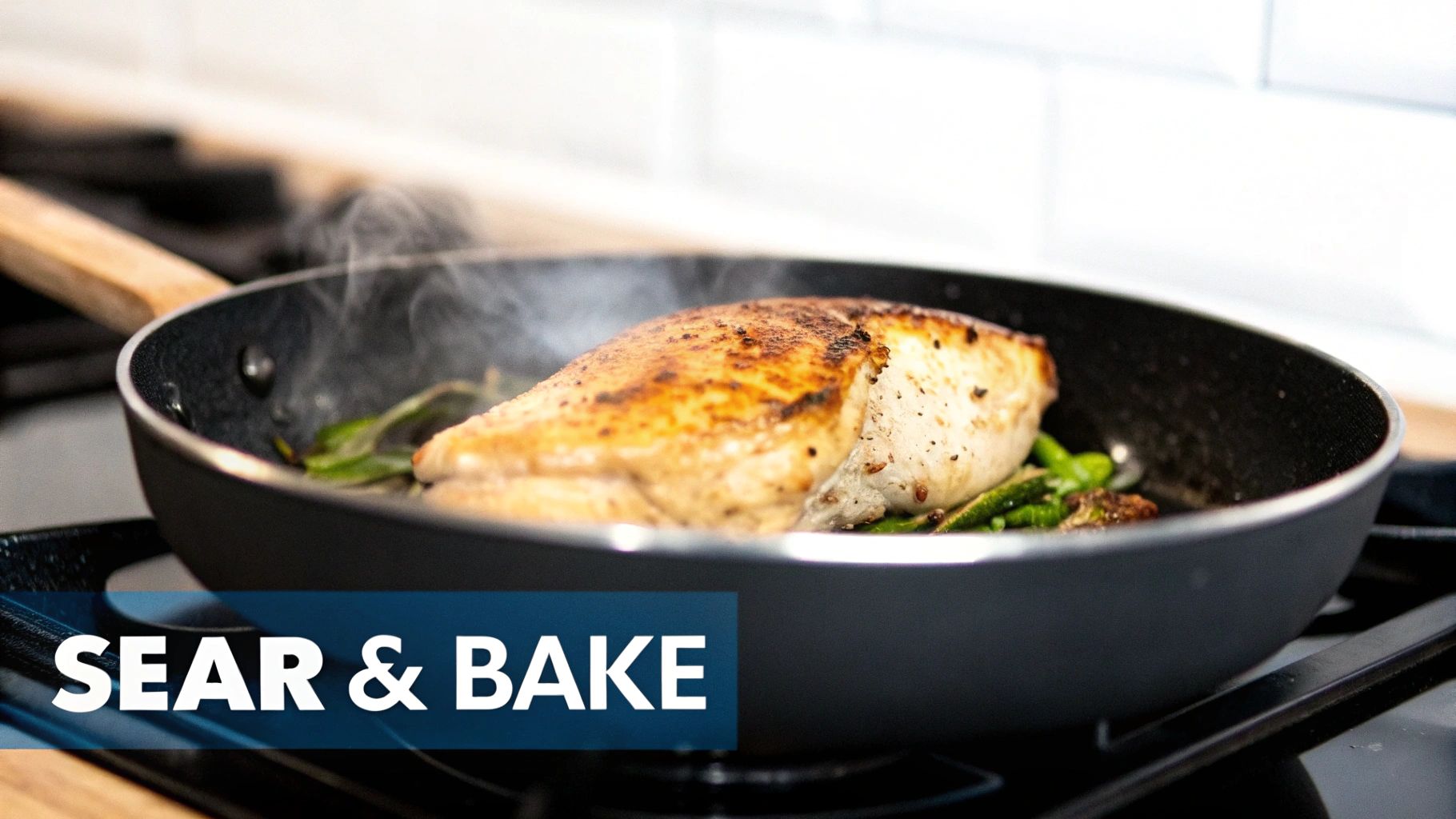
The sear-and-bake is the quintessential stovetop-to-oven move. It’s the key to getting that perfect contrast: a deeply caramelised, crispy crust on the outside and a juicy, flawlessly cooked interior. Think of it as a two-act play where your pan is the stage.
Let's talk crispy-skin chicken thighs, for example:
- The Stovetop Sear: Get your pan screaming hot on the hob with a slick of oil. Lay the chicken thighs skin-side down and resist the urge to move them. You’re waiting for that skin to turn golden brown and release itself from the pan. That blast of high heat is what renders the fat and creates that irresistible crust.
- The Oven Finish: Once seared, flip the chicken over and slide the whole pan straight into a preheated oven. The oven’s consistent, all-around heat takes over, gently cooking the meat through without any risk of burning that beautiful skin you just worked so hard to create.
This exact principle works wonders for thick-cut steaks, pork chops, and even sturdy fish fillets like salmon or cod.
Build Deeper Flavours in Braises and Stews
The rich, complex soul of a slow-cooked dish comes from browning your ingredients properly at the start to create a "fond." Your oven-safe pan is the perfect vessel for this entire journey, capturing every last bit of flavour from beginning to end.
It all starts on the hob, where you brown your meat and veggies. Those caramelised bits that get stuck to the bottom of the pan? That's the fond, and it's pure gold. You then deglaze with a splash of wine or stock, scraping up all that concentrated flavour.
Once you’ve added the rest of your ingredients, just pop the lid on and move the whole pot into the oven for a low-and-slow braise. The oven delivers the steady, gentle heat needed to turn tough cuts of meat into something that just melts in your mouth. To get the most from your gear, have a look at our guide on frying pans that can go in the oven.
A single oven-safe pan allows you to build layers of flavour without interruption. Every step, from the initial sear to the final simmer, happens in the same vessel, ensuring no taste is lost along the way.
But it doesn't stop there. This one pan opens up a huge range of possibilities. You could bake a giant, gooey skillet cookie for dessert, a rustic no-knead bread with a perfect crust, or even a stunning upside-down cake. The versatility even extends beyond the kitchen walls. If you're feeling adventurous, this pan is your best friend for cooking over an open fire with cast iron. This truly is a tool that expands your culinary horizons.
Simple Care for a Lifetime of Delicious Meals
Buying a fantastic piece of stovetop to oven cookware is just the beginning. If you really want it to last a lifetime, you need to know how to look after it. The good news is, proper maintenance isn't complicated, but the rules do change quite a bit depending on the material.
Think of it this way: each material has its own personality and its own specific needs. What works for a rugged cast iron skillet won’t do for a sleek stainless steel pan. A few simple habits are all it takes to protect your investment and keep it performing beautifully for decades to come.
Care Tips for Common Materials
A little bit of attention after each use goes a long, long way. It's the secret to keeping your pans in top shape.
- Cast Iron: It’s all about the seasoning. After you’re done cooking, clean it with hot water, but try to avoid harsh soaps that will strip away that hard-earned seasoned layer. Dry it thoroughly on the stove or with a towel, then wipe a whisper-thin layer of cooking oil over the surface before putting it away. This simple step is what builds that incredible natural non-stick surface and keeps rust at bay.
- Stainless Steel: Got some stubborn rainbow-like discolouration or stuck-on food? A paste made from baking soda and water is your best friend. For really caked-on messes, just pour a little water into the pan and bring it to a boil on the stove—it will lift right off.
- Titanium: This is the low-maintenance superstar of the cookware world. Because the surface is so durable and non-porous, it naturally resists corrosion and doesn't hang onto odours. A quick and easy wash with warm, soapy water is genuinely all it needs.
This trend towards high-quality, long-lasting gear isn't just in our heads. It's part of a bigger shift where consumers are choosing to buy premium cookware online rather than from specialty stores. You can learn more about how cookware retail is evolving in Australia and see this trend in action.
Avoiding Common Damage
Knowing what not to do is just as important as knowing what to do. The quickest way to ruin a good pan? Thermal shock.
Never plunge a hot pan directly into a sink of cold water. This rapid temperature change can cause metal to warp or even crack. Always let your cookware cool down for a few minutes before washing it.
It's also a good idea to double-check if your cookware is dishwasher safe. Many modern stainless steel and titanium pans are fine, but putting cast iron or carbon steel in the dishwasher is a recipe for rust. Honestly, handwashing is always the safest bet for high-quality stovetop to oven cookware.
Follow these simple, material-specific tips, and you’re not just cleaning a pan—you’re preserving a vital kitchen tool that could be passed down for generations.
Got Questions About Oven-Safe Cookware? We’ve Got Answers.
When you're looking for cookware that can handle both the stovetop and the oven, a few questions always seem to pop up. It's completely normal. Getting these details right from the start means you’ll choose the perfect pan and use it safely for years. Let’s dive into some of the most common queries we get from fellow home cooks.
Are the Handles and Lid Always Oven-Safe?
This is the big one, and the short answer is no. It’s absolutely the most critical detail you need to double-check before buying.
Cookware forged from a single piece of metal—think classic cast iron or pure titanium—can typically withstand incredibly high heat. The problem comes in when other materials are added. Handles made of plastic, silicone, or wood are the usual suspects, and they often have a much lower heat tolerance, sometimes maxing out at just 180°C.
The knob on the lid is another potential weak spot. Always, and I mean always, check the manufacturer's maximum oven temperature for every single component of the pan.
A pan's body might be rated for a scorching 300°C, but if its lid handle is only safe to 180°C, you have to respect that lower limit. It's a surprisingly common and costly mistake to overlook this.
Can I Use Metal Utensils on My Cookware?
This one is all about the pan's surface material. If you've got something tough and uncoated like stainless steel, carbon steel, or our favourite, pure titanium, then go for it! Using metal utensils is perfectly fine and won't cause any harm. That incredible durability is one of their main selling points.
On the other hand, if your pan has any kind of non-stick coating or an enamel finish, you'll need to stick to wood, silicone, or nylon utensils. Using metal on these surfaces is a surefire way to scratch and ruin them for good.
How Do I Know if a Pan Works on an Induction Stovetop?
There's a beautifully simple trick for this. Grab a fridge magnet. If it sticks firmly to the bottom of the pan, you're good to go—it will work on an induction hob.
Induction cooking relies on a magnetic field to generate heat, so the cookware itself has to be magnetic. Materials like cast iron and most types of stainless steel are naturally magnetic. For non-magnetic materials like pure titanium or aluminium, manufacturers often bond a special magnetic steel plate to the base.
To be certain, just look for the induction symbol (it looks like a coil of wire) on the packaging or do the trusty magnet test yourself.
At Everti, we craft lifetime titanium essentials designed for superior performance and purity, from the stovetop to the oven. Explore our collection of safe, durable, and lightweight cookware today at https://everti.com.au.