

When you hear the term “titanium pan,” it’s easy to imagine a solid piece of cookware forged from the same metal used in spacecraft. But the reality is a little more down-to-earth. Most pans marketed as "titanium" are actually made from aluminium or stainless steel, with a cooking surface that's been reinforced with titanium. This is a crucial distinction, as it completely defines how the pan performs and how long it will last.
What Exactly Are Titanium Pans
Let's clear up what we're actually looking at when we talk about titanium cookware. The term nearly always refers to one of two constructions, and knowing the difference is the first step to making a smart purchase.
The most common version you'll find has a traditional core, usually aluminium, which is fantastic for conducting heat. The magic happens when a non-stick coating, infused with tiny titanium particles, is applied to the cooking surface. This creates a finish that's far more durable and scratch-resistant than what you'd find on a standard non-stick pan.
The other, less common type is premium cookware with a solid titanium core, or titanium layered with other metals like stainless steel. These are much pricier, but they’re also incredibly strong and surprisingly lightweight.
Core Materials and Their Impact
Think of the pan's core as its engine—it determines how fast and evenly it heats.
- Aluminium Core: The go-to for most pans. It's affordable and heats up in a flash, making it ideal for everyday cooking where you want quick responses. The titanium in the coating is there to add toughness.
- Stainless Steel Core: Often used in multi-layered (or "clad") cookware, a stainless steel core is brilliant at retaining heat, which is perfect for getting that perfect sear on a steak. It’s heavier than aluminium but built to last.
- Solid Titanium: The rarest and most expensive of the bunch. Cookware made from solid titanium is valued because it's completely non-reactive (so it won't affect the taste of acidic foods) and boasts an incredible strength-to-weight ratio. It's a true buy-it-for-life investment.
The key takeaway is that the "titanium" label almost always describes the reinforcement of the non-stick surface, not the pan's body. This reinforcement is what provides the signature durability and longevity that sets these pans apart.
The Coating The Unsung Hero
The non-stick coating is where the real work gets done. By embedding titanium into the coating, manufacturers create a surface that’s significantly harder and more resistant to the scrapes and scratches that come from using metal utensils.
This means the non-stick performance lasts much longer, and you're far less likely to see it chip or peel away over time.
This enhanced durability is the main reason so many home cooks are happy to invest a bit more in titanium cookware. A cheap non-stick pan might need replacing every couple of years, but a quality titanium pan can be a reliable kitchen partner for ages if you look after it. Before you decide, it’s worth getting clear on the nuances between pure titanium, alloys, and coatings; you can learn more about choosing what's best for you in our guide.
How We Put the Top Titanium Pans to the Test
To give you a genuinely useful review of titanium pans, we went way beyond the marketing fluff. We developed a consistent, hands-on testing process to see how these pans really hold up under the pressure of a real kitchen. Our goal is to give you a transparent look at how each one performed.
We built our entire evaluation around five core pillars. Each one is designed to measure something that actually matters to a home cook. By showing you our method, you won't just see which pan we liked, but why we liked it. This keeps our comparisons fair, practical, and relevant to what you actually need.
Build Quality and Construction
First things first, we got our hands on the pans and just looked at their build. This meant digging into the core material—usually an aluminium or multi-ply stainless steel base—and seeing how it was all put together. We paid close attention to the thickness of the pan walls and the base, as this is a dead giveaway for how well it will resist warping down the track.
We also put the titanium-infused non-stick coating under a microscope. Generally, a thicker, multi-layered coating means it's going to last longer. So, we scanned for any imperfections, uneven spots, or flimsy-feeling construction that could point to a short lifespan. The handle was another big one; a securely riveted handle is the sign of a pan that's built to last.
We’ve always believed a pan’s foundation determines its longevity. A well-built pan is a smart investment; a poorly made one is just a recurring cost.
Heat Distribution and Retention
There’s nothing worse than a pan with hot spots that scorch your food in one area while leaving another part undercooked. To test for even heating, we used the classic flour test: a light dusting across the surface, then watching how evenly it browned over medium heat. It’s a simple test, but it tells you everything you need to know.
We also needed to see how well these pans held onto their heat. The best way to do that? Searing steaks. A pan that maintains its temperature will give you a fantastic crust without dropping in heat the moment the cold meat hits the surface. This is what separates a good pan from a great one if you’re chasing those professional-level results at home.
Durability and Scratch Resistance
Let’s be honest, the main reason you buy a titanium pan is for its toughness. We put this claim to the test by using a range of utensils, including metal spatulas where the manufacturer gave the green light, to mimic the realities of daily use. We kept a close eye out for any scratching, chipping, or wearing down of the non-stick surface after plenty of cooking and cleaning cycles.
A pan’s resilience is what makes it a workhorse in your kitchen. This part of our review was all about separating the pans that were genuinely tough from the ones that just looked the part. It's clear people are looking for this kind of lasting quality. The Australian cookware market was valued at USD 664.44 million and is expected to hit USD 1,369.43 million by 2033. This shows a big consumer shift towards premium, durable gear like titanium. You can check out more cookware market insights on imarcgroup.com.
Comparing the Best Titanium Pan Brands
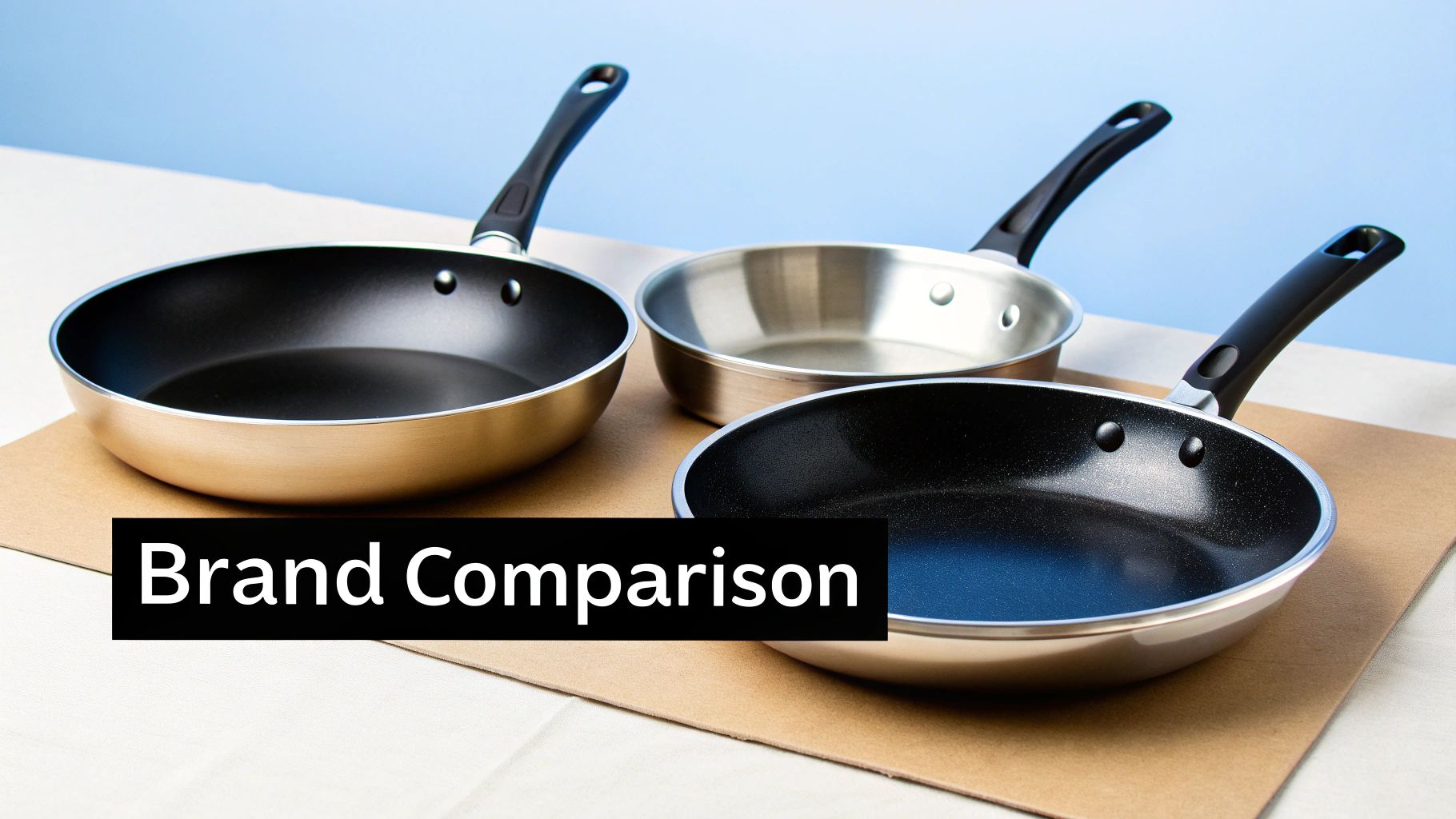
Alright, now that we know what to look for, let’s put the top titanium pan brands side-by-side. Forget the marketing fluff; we're diving into how these pans actually perform in a real kitchen. We’ll look at the small details that make a big difference—like how a pan’s core material affects its searing power or how its coating holds up to delicate foods.
This isn’t just a list of features. It's a practical breakdown designed to help you figure out which pan genuinely fits the way you cook. Let’s get into it.
H3: Material Purity and Core Construction
The heart of any great pan is what it’s made of. This is where you see the biggest differences between brands, and it directly impacts how your food turns out.
You have brands like Everti that are all about purity. They use a solid, uncoated 99.9% pure titanium cooking surface. This is a huge draw for anyone trying to avoid coatings altogether, as your food only ever touches an inert, non-reactive metal. That solid construction also means it’s practically impossible to warp and is built to last a lifetime.
On the other side of the spectrum, brands like Scanpan and Woll build their pans around a pressure-cast aluminium core. This technique is fantastic for creating a dense base that heats up fast and incredibly evenly. They then infuse their non-stick surfaces with titanium particles, giving you a tough, scratch-resistant finish on top of that brilliant heat-conducting foundation.
Then there are the multi-clad pans. These are constructed with layers of stainless steel and aluminium around a core, finished with a titanium-reinforced non-stick coating. It’s a complex build that aims to deliver the best of both worlds: the heat retention of steel and the speedy response of aluminium.
The pan's core tells you its philosophy. A solid titanium pan is built for purity and permanence. A cast aluminium core is engineered for flawless heat control and non-stick ease. Your choice really boils down to what you value more in the kitchen.
H3: Heat Distribution and Retention Showdown
How a pan handles heat is its moment of truth. Even heat distribution saves you from those annoying hot spots, while great heat retention is the secret to a perfect, crusty sear.
In our tests, pans with a thick, cast aluminium base were the clear winners for even heating. The classic flour test showed consistent browning from the centre right to the edges. This makes them perfect for things like pancakes or omelettes, where you need a steady, uniform temperature.
But when it comes to searing, the solid titanium and multi-clad stainless steel pans pull ahead. They might take a minute longer to get hot, but once they’re there, their ability to hold that heat is exceptional. When you drop a cold steak onto the surface, the temperature barely flinches, giving you a fantastic Maillard reaction and a deep, flavourful crust. In contrast, ultralight backpacking pans, like those from SnowPeak, are designed for rapid heating and cooling, so they just don’t have the mass for serious searing.
- Best for Searing: Everti (solid titanium) and multi-clad stainless steel models.
- Best for Even Browning: Woll and Scanpan (cast aluminium core).
- Best for Rapid Heating: Lightweight backpacking pans.
This is a critical distinction. If you’re a steak or chop fanatic, a pan with high heat retention is a must-have. If your go-to meals are more along the lines of eggs and fish, you’ll be much happier with a pan that offers flawless, even heat. For a deeper dive into how different materials perform, check out our guide to titanium cookware in Australia.
H3: Comparing Durability and Scratch Resistance
The "titanium" name implies toughness, but the reality varies from pan to pan. The biggest difference comes down to whether the titanium is in a reinforced coating or if it is the pan itself.
Premium pans with multi-layer, titanium-infused non-stick coatings are impressively tough. They handle daily cooking well and resist scratches from wooden or nylon utensils. But let's be realistic—they aren’t bulletproof. Metal utensils will eventually leave their mark, and the non-stick surface can degrade over time, especially with high heat.
This is where an uncoated, solid titanium pan from Everti offers a completely different kind of value. With no coating to scratch, chip, or wear out, its lifespan is measured in decades, not years. You can grab a metal spatula or whisk without a second thought. While you might see minor surface scuffs over time, they’re purely cosmetic and won’t affect performance one bit.
It’s the classic trade-off: the slick convenience of a non-stick surface versus the nearly indestructible nature of solid metal.
H3: Ergonomics Weight and Handling
A pan can cook beautifully, but if it feels awkward in your hand, it’s going to get pushed to the back of the cupboard. Weight, balance, and handle design really matter.
Solid titanium pans are surprisingly light for how strong they are, which makes them a joy to handle. Everti's pans, for instance, give you the durability of cast iron but at a fraction of the weight, meaning less strain on your wrist.
Cast aluminium pans sit in a comfortable middle ground. They’re heavy enough to feel solid on the stove but are generally lighter than their multi-clad steel cousins. Their handles are also usually shaped for a comfortable, secure grip.
Multi-clad pans tend to be the heavyweights. While that heft is great for heat retention and stability, it can be a real drawback for some, especially when you’re tossing veggies or trying to pour a sauce.
This one is purely personal preference. If you want a nimble, lightweight pan, solid titanium is the way to go. If you prefer the anchored, sturdy feel of a heavier pan, a multi-clad model will feel right at home.
H3: Titanium Pan Feature Comparison
To make things easier, here’s a quick breakdown of how the top contenders compare across the most important metrics.
| Brand/Model | Core Material | Coating Type | Heat Distribution Rating (1-5) | Durability Score (1-5) | Best For (Use Case) |
|---|---|---|---|---|---|
| Everti | 99.9% Pure Titanium | Uncoated | 4 | 5 | Searing, health-focused cooking, lifetime use |
| Scanpan Pro IQ | Pressure-Cast Aluminium | Stratanium+ (Titanium Non-Stick) | 5 | 4 | Delicate foods, everyday non-stick cooking |
| Woll Diamond Lite | Pressure-Cast Aluminium | Diamond-Reinforced Titanium Non-Stick | 5 | 4 | Even heating, pancakes, and eggs |
| All-Clad D3 | Multi-Clad Stainless/Aluminium | Titanium-Reinforced Non-Stick | 4 | 4.5 | High-heat searing and professional performance |
| SnowPeak Trek 900 | Thin-Gauge Titanium | Uncoated | 3 | 5 | Backpacking, rapid boiling, ultralight travel |
This table really shows that there's no single "best" pan—it's all about finding the one that specialises in what you need most in your kitchen.
H3: Price and Overall Value
Finally, let's talk money. Titanium cookware is definitely a premium purchase, and in Australia, these pans make up a huge slice of the high-end market. Globally, premium pans account for about 60% of premium cookware revenue, a trend we see right here at home. People are clearly willing to invest more for something that lasts and is non-toxic.
Coated titanium pans from brands like Woll and Scanpan are a solid investment. They cost more than your standard Teflon pan, but their performance and durability are in a different league entirely. Their value comes from providing years of reliable non-stick cooking before they eventually need replacing.
Uncoated, solid titanium pans from Everti have the highest upfront cost, but their value is calculated differently—it’s based on a lifetime of use. With no coating to wear out, the pan is a one-and-done purchase. For a serious home cook, this often works out to be the more economical choice in the long run.
Ultimately, your budget and how often you cook will guide your decision. For the everyday cook, a well-made coated pan offers fantastic performance. For the passionate home chef, an uncoated titanium pan is a true lifetime investment in quality and health.
Which Pan Is Right For Your Kitchen?
Technical specs and material science are great on paper, but the true test of any pan is how it handles the food you actually cook. A glowing review doesn't mean much if the pan doesn't fit your daily routine. Let's look at how these pans perform in real-world scenarios to figure out which one belongs on your stovetop.
Ultimately, choosing the right pan isn’t about finding a single “best” one. It’s about matching its strengths to your cooking habits. Whether you're a weekend warrior chasing the perfect sear or a busy parent trying to get dinner on the table, there's a titanium pan that will make your life easier.
Searing the Perfect Steak
To get that deep, flavourful crust on a steak, you need one thing above all else: high, sustained heat. When you drop a cold piece of meat into a hot pan, a lesser pan’s temperature will plummet. That leads to a sad, grey, steamed surface instead of a beautiful crust. This is where pans built for serious heat retention really prove their worth.
- Top Performer: Solid, uncoated titanium pans, like those from Everti, are absolute beasts for searing. They might take a minute longer to get hot, but once they're there, they hold that energy like nothing else. This stability means you get a consistent, edge-to-edge crust every single time.
- Strong Contender: A multi-clad stainless steel pan with a titanium-reinforced coating is also a great choice. Its heavy-gauge construction is designed to hold heat, making it a reliable tool for getting that professional-quality sear.
While pans with a cast-aluminium core heat up quickly, they just don't have the thermal mass to maintain searing temperatures as effectively. They’ll get the job done, but for the absolute best results, a pan with superior heat retention is the clear winner.
Mastering Delicate Dishes
Cooking delicate foods like eggs, pancakes, or flaky fish demands a completely different skill set from your cookware. Here, a flawless non-stick surface and precise, even temperature control are what matter most. You need a pan that releases food without a fight and doesn't have hot spots that scorch one side of an omelette while the other is still runny.
When it comes to delicate cooking, it's not about raw power; it’s about finesse and control. A reliable, ultra-slick non-stick coating gives you the confidence to cook without constantly worrying about things sticking.
Pans with a pressure-cast aluminium core and a high-quality, multi-layer titanium-infused non-stick coating are the undisputed champions here. They spread heat perfectly across the entire base, ensuring your pancakes brown evenly and your eggs cook gently. The slick surface also means you can use minimal oil, and cleanup is a breeze.
Sure, you can cook delicate foods on an uncoated titanium pan with the right technique—plenty of preheating and a good amount of fat—but a premium non-stick offers a much more forgiving and straightforward experience.
Conquering Weeknight Family Meals
When you’re cooking for the whole family on a busy weeknight, you need a versatile workhorse. The pan has to be big enough for larger quantities, heat up reasonably fast, be tough enough for daily abuse, and—this is a big one—be easy to clean.
A 28-30 cm skillet with a top-tier titanium-reinforced non-stick coating and a cast aluminium core often hits that perfect sweet spot.
- Versatility: This combo is brilliant for everything from sautéing vegetables and browning mince to whipping up a quick pasta sauce.
- Size and Weight: They’re large enough for family-sized portions but still light enough to handle comfortably, unlike some of the heavier multi-clad pans.
- Easy Cleaning: On a night when you’re short on time, that non-stick surface is a lifesaver. A quick wipe is often all it takes to get you out of the kitchen faster.
An uncoated solid titanium pan is also a fantastic option for family meals, especially if you're health-conscious and want to avoid coatings entirely. Its durability is second to none, and once you get the hang of preheating, it becomes an incredibly versatile tool. But for sheer convenience on a hectic Tuesday night, the simplicity of a top-tier non-stick titanium pan is tough to beat. It all comes down to whether you prioritise lifetime durability or ultimate convenience.
How to Choose the Right Titanium Pan for You
Trying to pick the right titanium pan can feel a bit overwhelming, but it really just comes down to your own cooking style. We’ve already gone through the nitty-gritty of material purity, heat retention, and durability in our titanium pans review. Now, let’s connect those dots and figure out which pan actually belongs in your kitchen.
Think about what you cook most often. Is it high-heat searing, delicate tasks, or just getting dinner on the table during the week? This little decision tree can help you picture which pan lines up with your go-to meals.
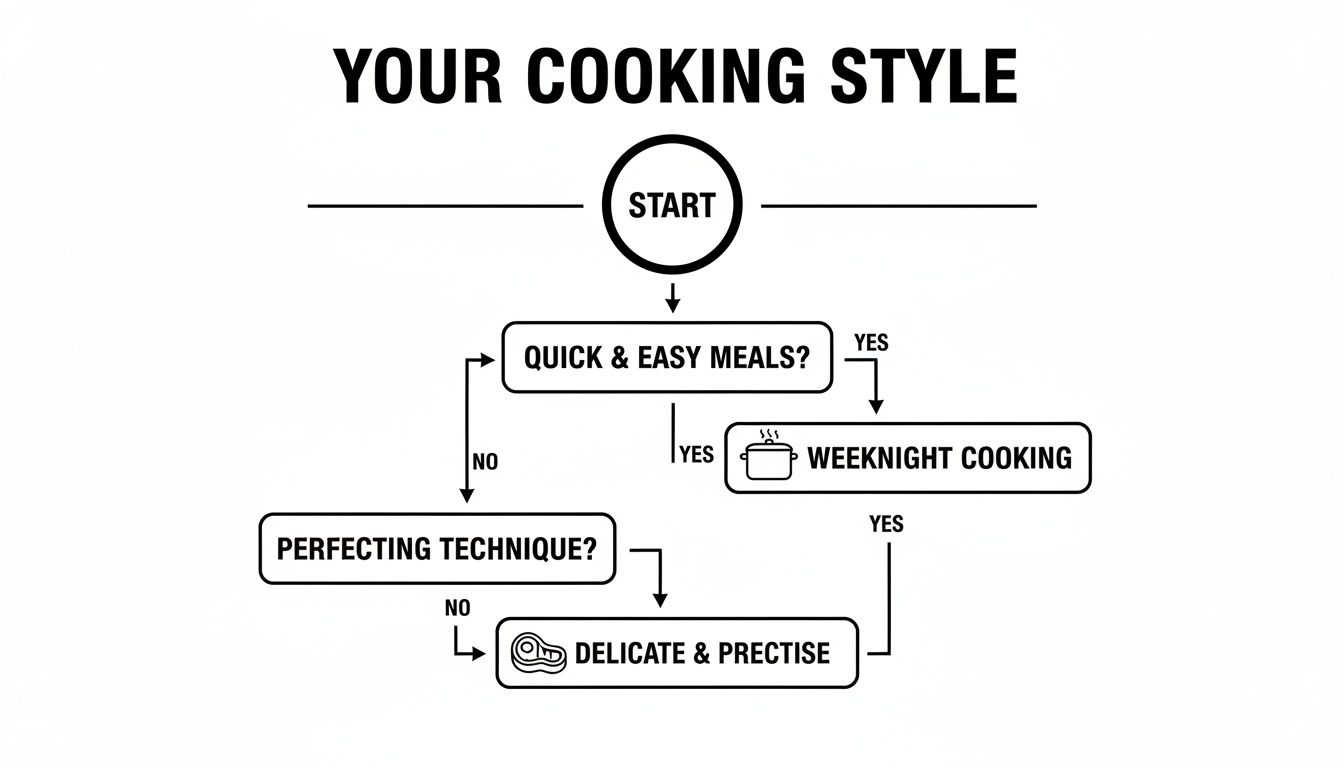
As you can see, the path to the right pan is paved by your cooking habits. Whether you're searing a steak or just frying an egg, your choice should be guided by what matters most to you—be it heat, non-stick ease, or a bit of everything.
For the Health-Focused Cook
If what touches your food is your number one concern, then an uncoated, solid titanium pan is your best bet. Simple as that. These pans have no chemical coatings, so your food only comes into contact with pure, inert metal. You can completely sidestep any worries about PFOA, PFAs, or other synthetic compounds.
Everti's 99.9% pure titanium pans are the perfect example of this philosophy. They offer total peace of mind and are built to last a lifetime. Sure, you'll need to get the hang of temperature control, but their longevity and completely non-reactive surface make them a true investment in healthy cooking.
Choosing an uncoated pan is less about convenience and more about a commitment to material integrity. It's for the cook who values purity and durability above all else.
For the Culinary Enthusiast
Are you the kind of person who geeks out over a perfect sear or lives for precise temperature control? Then you need to focus purely on performance. A multi-clad pan with a titanium-reinforced surface or a solid titanium pan will give you that exceptional heat retention needed for a restaurant-quality crust on steaks and chops.
These pans are built for high-heat stability, meaning the temperature won’t plummet the second you place food in them. Their tough construction can take a beating in an ambitious kitchen, making them a seriously worthwhile tool for anyone passionate about mastering their craft.
For the Budget-Conscious Home Chef
You don't need to break the bank to get a fantastic, long-lasting pan. If you're looking for the best bang for your buck, a pan with a pressure-cast aluminium core and a quality titanium-infused non-stick coating is a brilliant compromise. These pans heat up evenly and offer impressive scratch resistance without the hefty price tag of solid titanium.
They're a massive step up from your average non-stick pan and will serve you well for years with a little care. This makes them a smart, practical choice for the everyday grind. If you want to dive deeper into coatings, you can learn more about finding the best non-stick surface for a frying pan in our detailed guide. A little homework now ensures your new pan will be a trusted partner for countless meals.
Got Questions About Titanium Cookware?
Even with a detailed review, it's natural to have a few lingering questions. Deciding on high-quality cookware is a big step, so let's clear up some of the most common queries we get. We want you to feel completely confident in your choice.
This section covers the big ones—from safety and non-stick surfaces to whether they're truly worth the money. Let's get into it.
Are Titanium Pans Genuinely Non-Stick and Safe?
Yes, a good titanium pan is brilliant for non-stick cooking, but it’s important to know how it works. Most options on the market have a multi-layered coating, which is toughened up with titanium particles. These surfaces are incredibly resilient and PFOA-free, making them a safe bet for your daily meals. The titanium reinforcement is key here, as it helps fend off scratches that can cause cheaper non-stick coatings to break down.
If you’d rather skip coatings altogether, a pan made from pure, uncoated titanium is the purest option. With nothing between your food and the inert metal, it offers ultimate peace of mind.
The real safety win with a well-made titanium pan, coated or not, is its stability. Reputable brands use certified non-toxic materials, so you get a reliable cooking surface that won’t leach anything unwanted into your food.
How Should I Clean and Look After My Titanium Cookware?
A little bit of care goes a long way in keeping your pan performing at its best. While plenty of brands claim their pans are dishwasher safe, we always recommend hand washing with a soft sponge and a bit of dish soap. It's the most reliable way to protect the non-stick surface and keep it going for years.
Stick to these simple habits to keep your pan in prime condition:
- Steer Clear of Abrasives: Ditch the steel wool, metal scourers, and harsh cleaning powders. They will scratch and ruin the cooking surface, whether it's coated or pure titanium.
- Pick the Right Tools: For coated pans, stick with silicone, wood, or nylon utensils. If you've got an uncoated pan, like the ones from Everti, you can happily use metal utensils because there’s no coating to damage.
- Let It Cool Down First: Always let your pan cool completely before you wash it. Dunking a hot pan in cold water can cause thermal shock, which might lead to warping down the track.
- Tackle Stuck-on Food: If you have some stubborn, burnt-on bits, just soak the pan in warm, soapy water for a bit. It should come off easily after that.
Is a Titanium Pan Actually Worth the Price Tag?
For most people who cook regularly, the higher price of a titanium pan is a really smart long-term move. You're paying for serious durability and performance that you just don't get from standard non-stick pans, which you often have to replace every couple of years. A quality titanium pan is built to last, giving you consistent results time and time again.
Think of it this way: that cheap pan might feel like a good deal now, but it ends up being a repeat purchase. A truly durable titanium pan, especially an uncoated one, can genuinely be a "buy it for life" piece of kitchen gear. When you weigh up its lightweight feel, fantastic heat control, and non-toxic safety, the upfront cost makes a lot of sense for anyone serious about cooking.
Ready to invest in a pan that will last a lifetime? Explore the Everti collection of pure titanium cookware and discover the difference that quality materials can make in your kitchen. Shop the collection at everti.com.au.