

You've probably heard about alkaline water, but what about the devices that make it? A water alkalizer machine is a countertop appliance that plumbs directly into your tap. Its main job is to take your standard tap water and, through a process called electrolysis, raise its pH level, making it more alkaline.
Think of it as more than just a fancy filter; it's designed to change your water on a molecular level.
What a Water Alkalizer Machine Actually Does
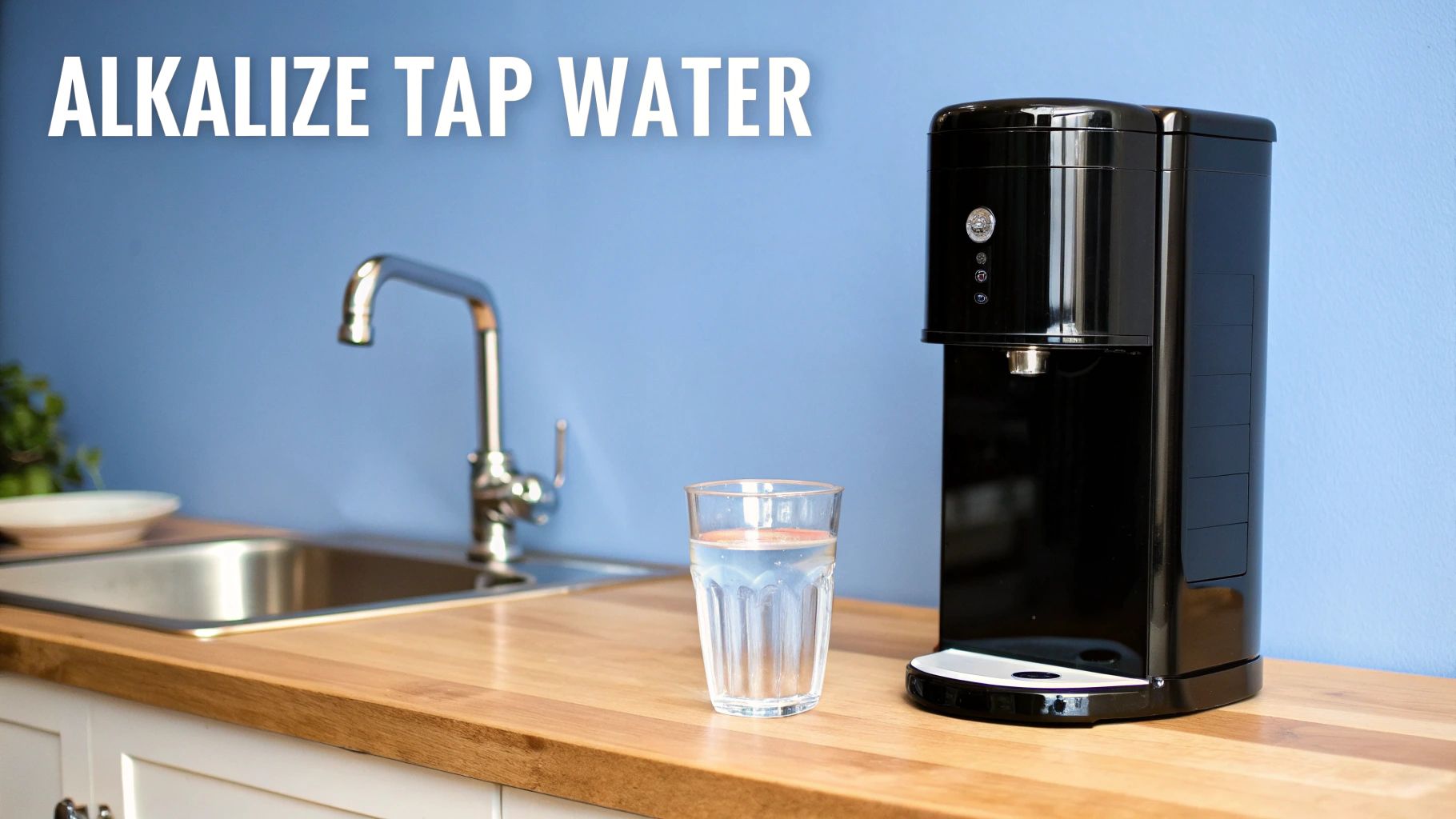
Let's cut through the technical jargon. A water alkalizer isn't just filtering your water—it's actively upgrading it. The whole point is to alter the water's chemical makeup, splitting it into two separate streams: one alkaline and one acidic.
Imagine your tap water flowing into the machine. It enters a chamber fitted with a series of electrically charged plates. This is where electrolysis happens. This electrical charge gently coaxes the dissolved minerals already present in your water—like calcium and magnesium—to separate from the acidic minerals.
The Core Components at Work
The real work is done by two key parts working together: electrodes and an ion-permeable membrane. The electrodes are the charged plates, typically made from high-grade materials like platinum-coated titanium, which create the electrical field needed to kick off the separation.
The membrane then acts like a very precise gatekeeper. It allows only the alkaline mineral ions to pass through to one side, effectively sorting the water into two distinct types.
The result? You get two streams of water from a single tap. One is rich in beneficial alkaline minerals like calcium and magnesium, giving it a higher pH. The other becomes acidic, which is surprisingly useful for things like cleaning or watering certain plants.
Creating Your Desired Water
This whole process puts you in control. Most quality machines let you choose different pH levels. You might select a mildly alkaline setting around pH 8.5 for daily drinking, and a higher one for cooking or making coffee and tea.
It’s also important to know that a good water alkalizer machine doesn't skip the basics. Before any ionisation happens, the water first runs through a sophisticated filtration system. These filters are there to tackle common contaminants, such as:
- Chlorine and other chemicals
- Sediment and rust
- Heavy metals
This pre-filtration step ensures the water being ionised is clean from the start. By combining high-grade filtration with ionisation, these machines provide a pretty complete solution for your drinking water—it’s both purified and structurally enhanced.
How a Water Ioniser Actually Works
So, how does a water ioniser take your regular tap water and turn it into something completely different? It’s not magic, but it is a clever bit of science called electrolysis. At its heart, the machine is intelligently reorganising the H₂O molecules that flow into it.
Think of it like a highly specialised sorting station for water. When tap water enters the machine's internal chamber, it flows over a set of platinum-coated titanium plates. A safe, low-voltage electrical current is passed through these plates, and that’s what gets the whole process started.
This electric charge makes the minerals already present in your water separate. The alkaline minerals—like calcium and magnesium—are pulled towards the negatively charged plates. Meanwhile, the acidic minerals are drawn to the positively charged plates. A special membrane in the centre keeps these two groups apart, effectively splitting the water into two separate streams.
What is ORP and Why Does It Matter?
This is where things get really interesting and we need to talk about Oxidation-Reduction Potential (ORP). It sounds complex, but it's simply a way of measuring water's potential to be either an oxidant or an antioxidant. We measure it in millivolts (mV), and the number can be positive or negative.
Water with a positive ORP is oxidising, which isn't what we want for drinking. In contrast, water with a negative ORP has antioxidant properties. During electrolysis, the alkaline water produced by the ioniser is given a negative ORP, typically landing somewhere between -150mV and -450mV.
Simply put, the more negative the ORP, the better the water’s ability to help neutralise damaging free radicals in your body. This antioxidant quality is one of the main reasons people choose to invest in a quality water ioniser.
This kind of technology is catching on worldwide, and Australia is becoming a key market. It's all part of a bigger shift in how we think about the water we drink at home. In fact, Cognitive Market Research estimates that Australian sales of ionisers could hit around USD 67 million by 2025. For our population, that’s a significant number and shows a real move towards more sophisticated water solutions. If you're curious, you can explore the full Asia-Pacific alkaline water ionizer market report to see the trends for yourself.
From Your Tap to Your Glass
When the process is finished, you get two very different types of water. One spout delivers fresh, restructured alkaline water perfect for drinking and cooking. The other spout dispenses acidic water, which you don't drink but has some surprisingly useful applications around the house.
Here’s a quick summary of what comes out:
- The Alkaline Stream: This is the star of the show. It has a higher pH, a negative ORP, and is full of the healthy alkaline minerals that were in your tap water to begin with.
- The Acidic Stream: This is the byproduct. With its lower pH and positive ORP, it’s a brilliant chemical-free option for cleaning benchtops or even watering plants that thrive in more acidic soil.
What Are the Potential Benefits of Alkaline Water?
So, you've got the nuts and bolts of how a water alkalizer machine works. Now for the big question: why are so many people bringing these devices into their homes? The growing interest really boils down to a handful of potential health and lifestyle benefits tied to drinking alkaline, ionized water.
One of the most talked-about perks is the idea of superior hydration. The theory goes that the electrolysis process restructures water molecules into smaller clusters. These so-called "micro-clusters" are thought to be more easily absorbed by our cells, potentially leading to faster, more effective hydration. And as we all know, good hydration is the cornerstone of everything from maintaining energy levels to keeping our skin looking its best.
Antioxidant Power and pH Balance
Beyond just quenching your thirst, the antioxidant properties of ionized water are a major drawcard. As we touched on earlier, this water has a negative Oxidation-Reduction Potential (ORP), which is just a technical way of saying it can act like an antioxidant. In practice, this means it may help neutralise damaging free radicals floating around in your body.
Free radicals are unstable molecules that cause oxidative stress, a process linked to ageing and a whole host of health issues. Having a source of antioxidants on tap is a simple way to give your body’s natural defence systems a bit of a helping hand against this daily cellular wear and tear. Many people who make the switch report feeling a greater sense of overall wellbeing.
A popular line of thought is that drinking alkaline water helps your body offset the acidic effects of a typical modern diet—think processed foods, sugar, and lots of coffee. While our bodies are incredibly good at tightly regulating our internal pH, the idea is that alkaline water offers a gentle nudge in the right direction, supporting this natural balancing act.
It's More Than Just Drinking Water
One of the most surprising things about a water alkalizer is how versatile it is. It’s not just about what you drink; it’s about having a multi-purpose tool right in your kitchen. The different pH levels the machine can produce have a whole range of practical uses that can help you create a healthier and more efficient home.
Many home cooks, for example, have discovered that alkaline water can subtly improve the flavour and appearance of their food. It's especially good for:
- Boiling vegetables: It can help them keep their bright, vibrant colours and a firmer texture.
- Brewing coffee and tea: Users often find it dials back the bitterness, leading to a smoother, richer brew.
- Soaking rice and beans: It can help soften them faster, cutting down on your prep time.
This diagram breaks down the journey your tap water takes to become these two distinct, useful types of water.
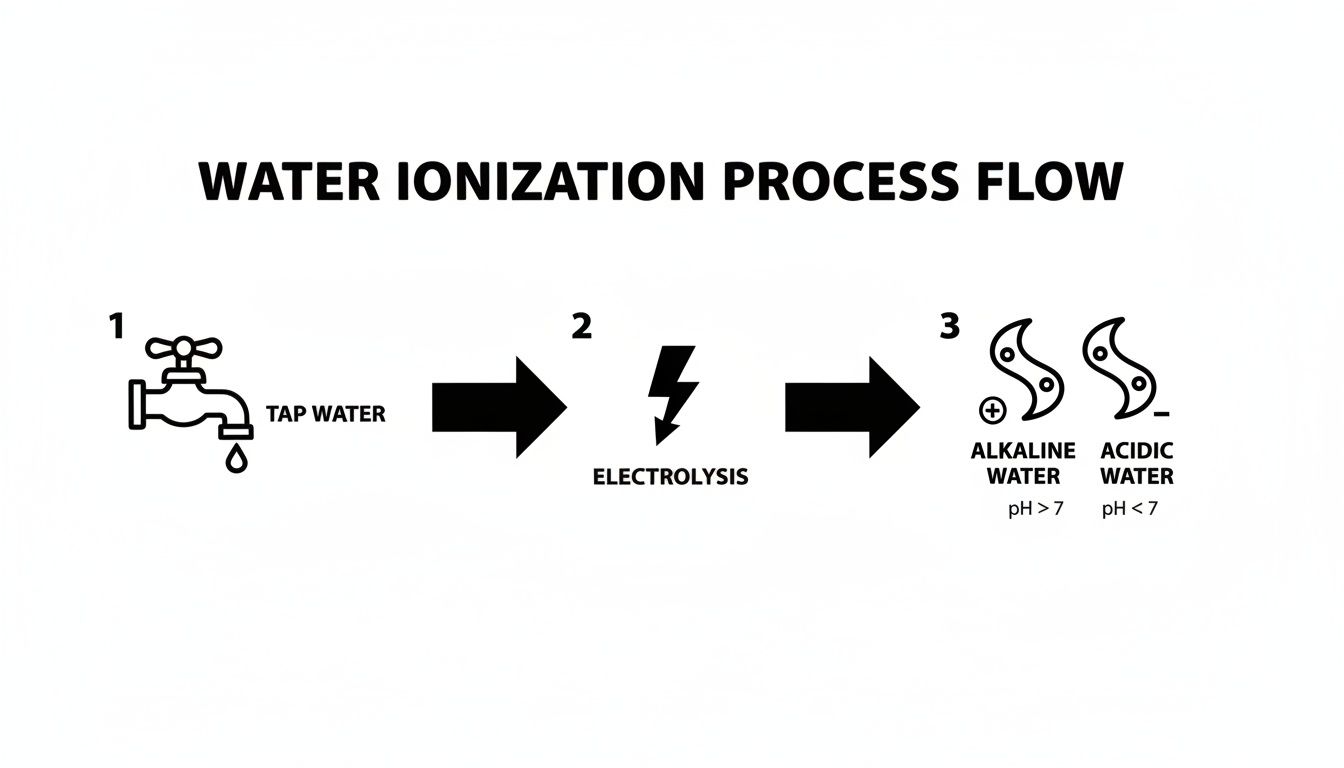
As you can see, a single stream of ordinary tap water gets split into two very different, but equally useful, outputs.
To give you a clearer picture, let's compare standard tap water with what comes out of an alkalizer.
Tap Water vs. Alkaline Water a Quick Comparison
| Feature | Standard Tap Water | Alkalized Ionized Water |
|---|---|---|
| pH Level | Typically neutral (pH 7.0) or slightly acidic/alkaline. | Can be adjusted to be more alkaline (usually pH 8.5–9.5 for drinking). |
| ORP Value | Positive (+200mV to +500mV), meaning it is oxidative. | Negative (-150mV to -800mV), indicating antioxidant properties. |
| Molecule Structure | Standard water molecule clusters. | "Micro-clustered" for potentially better absorption. |
| Mineral Content | Contains dissolved minerals, but they are not ionised. | Contains ionised alkaline minerals like calcium and magnesium. |
This table neatly sums up the key transformations that happen during the ionization process.
Of course, once you've created this high-quality water, you'll want to store it properly to maintain its unique properties. It's a bit like choosing the right pan for cooking—the material matters. You can learn more by checking out our guide to choosing between titanium and stainless steel water bottles, which explains how different metals can interact with what's inside. Pairing pure water with a pure container ensures you get the maximum benefit.
How to Choose the Right Water Alkaliser Machine
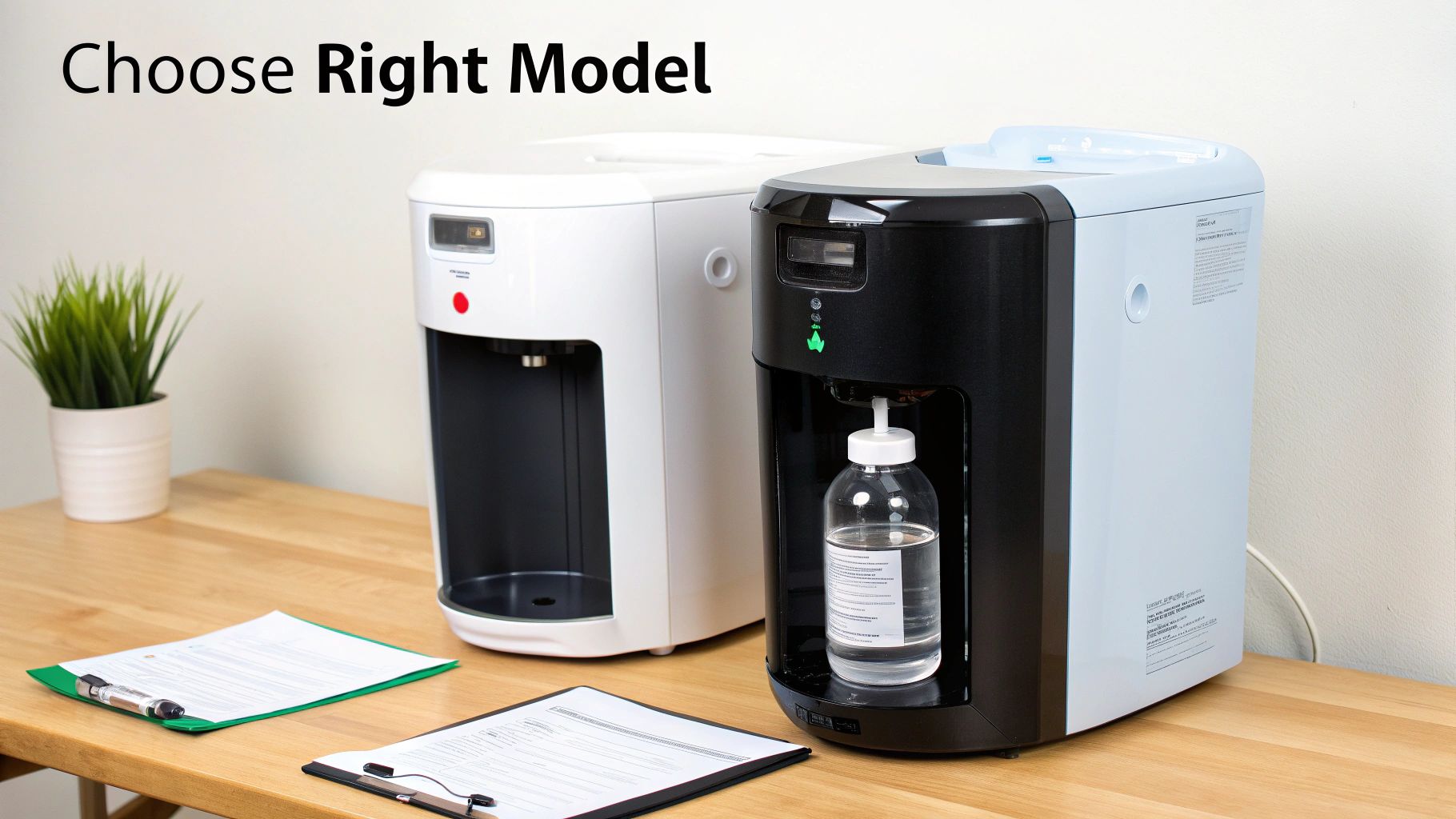
Choosing the right water alkaliser machine can feel like a big decision. It’s a real investment in your home and wellbeing, so it pays to get it right. But it doesn't have to be complicated. By focusing on a few key areas, you can easily find a machine that fits your family's needs, your kitchen space, and your health goals.
Think of it like buying a car. You wouldn't just look at the colour; you'd check what's under the bonnet. For a water alkaliser, the "engine" is its electrode plates. These plates are what make the magic of electrolysis happen, so their quality and number are paramount. Generally, more plates mean a more powerful and efficient machine.
When you're looking at the specs, keep an eye out for plates made from platinum-coated titanium. This isn't just a fancy feature; it's the gold standard in the industry. This combination ensures the plates are tough enough to last for years without corroding, giving you consistent performance day in and day out.
Performance and Filtration Capabilities
Next up, let's talk about performance. A good unit is a versatile one. You want a machine that can produce a wide range of both pH and ORP levels. This flexibility means you can create super alkaline water for washing produce, gently alkaline water for drinking, and even acidic water for cleaning surfaces—all from the same tap.
Here’s what to look for:
- pH Range: A solid machine will offer a broad spectrum, typically from an acidic pH 2.5 all the way up to a highly alkaline pH 11.5.
- ORP Range: For those powerful antioxidant benefits, you want a machine that can hit a strong negative ORP. Aim for one that can reach -400mV or lower.
Of course, none of this matters if the water isn't clean to begin with. Filtration is absolutely essential. Before the water even gets to the plates for ionisation, it needs to be thoroughly purified. Top-tier water alkaliser machines have multi-stage filtration systems built-in to tackle common contaminants like chlorine, heavy metals, and sediment from your tap water. Always check how long the filters last and how easy they are to replace.
Design, Warranty and Market Context
The practicalities matter, too. You’ll generally find two styles: countertop models and under-sink systems. Countertop units are the easiest to set up, usually connecting straight to your existing tap. On the other hand, under-sink models are for those who love a minimalist aesthetic, keeping the main unit out of sight with just a sleek, dedicated faucet on the benchtop. They do, however, require a more involved installation.
A long warranty is more than just a piece of paper—it’s a sign of the manufacturer's belief in their own product. Pay close attention to the warranty, especially for the electrode plates. It's also wise to look for certifications that confirm the safety and quality of the materials used.
This decision fits into a broader movement we're seeing in Australian kitchens. People are moving beyond simple water filter jugs and looking for more permanent, high-performance solutions. In fact, the water purifier market is booming and is projected to reach about AUD 652.17 million by 2035. It shows a clear trend towards investing in quality kitchen appliances built to last. You can discover more about Australia's water purifier market trends to understand the bigger picture.
By weighing up these key factors—the plates, performance range, filtration, design, and warranty—you'll be in a great position to choose an alkaliser that becomes a trusted and valuable part of your home for years to come.
Installation and Long-Term Care for Your Machine
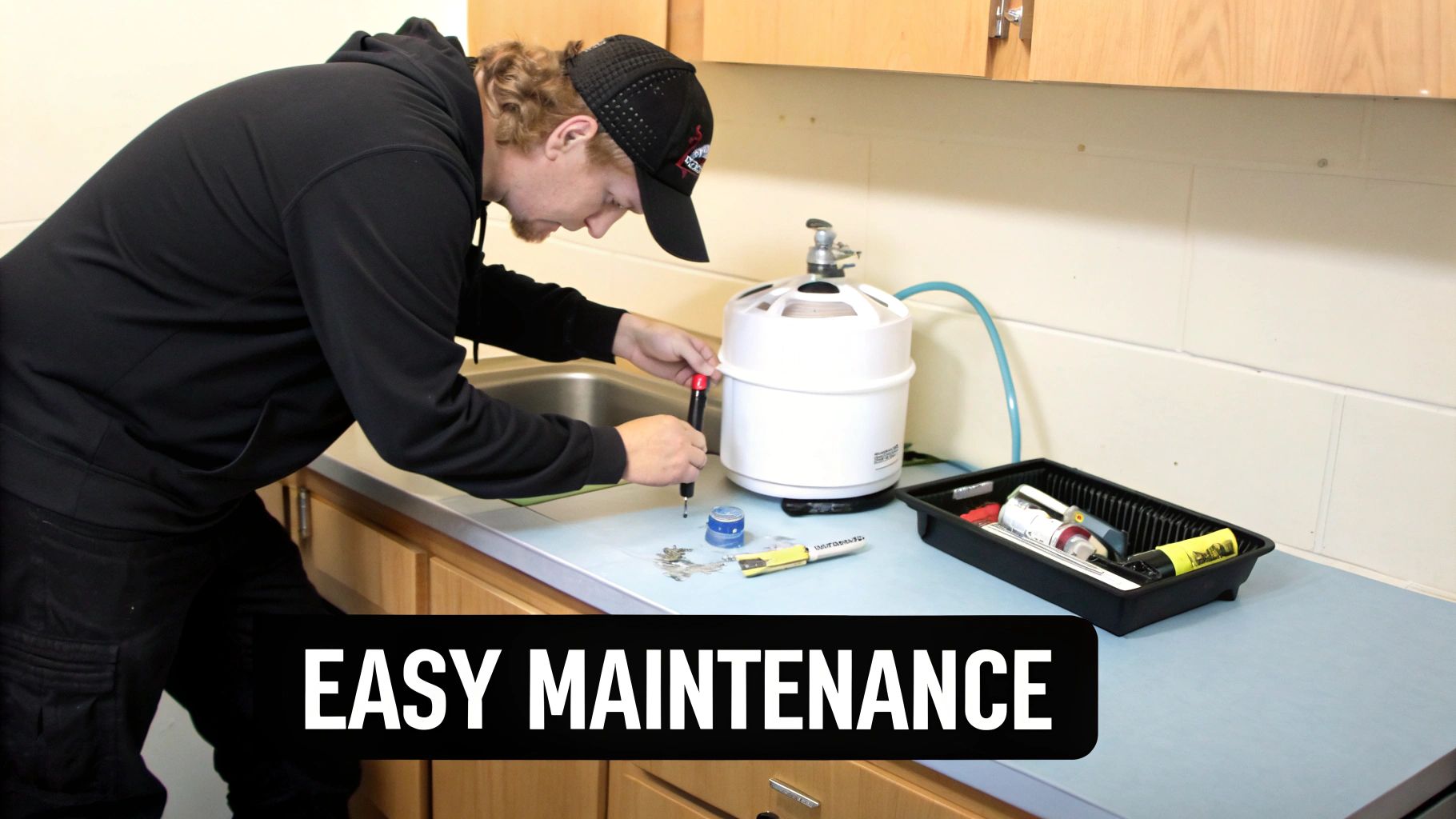
Think of your water alkalizer machine as a long-term investment in your home’s health and wellness. Just like any high-quality appliance in your kitchen, its performance and lifespan really come down to a good setup and a little bit of regular care. With some simple, routine attention, you can expect your machine to deliver pure, ionised water for many years.
Getting it set up is usually quite straightforward, especially if you’ve chosen a countertop model. Most of these units connect directly to your kitchen tap using a diverter valve, a simple job that most people can get done in less than 30 minutes. It’s always a good idea to get familiar with your plumbing first; knowing how to test your home's water pressure can help you avoid any hiccups and ensure you’re getting the best possible water flow.
Of course, under-sink models are another option if you’re after that clean, minimalist look. They do involve a bit more plumbing work, so many homeowners opt to call in a professional for that. Either way, a smooth installation is the perfect start to enjoying your new machine.
Establishing a Maintenance Routine
Once your machine is up and running, consistent care is what keeps it in top shape. The two big tasks to stay on top of are replacing the filter and running regular cleaning cycles. These simple habits are your best defence against mineral buildup on the electrode plates, which keeps everything working efficiently.
How often you need to change the filter depends on your specific model and the quality of your local water, but most machines will give you a heads-up when it’s time. It’s really important to follow these prompts for two main reasons:
- Purity: A fresh filter ensures the machine is effectively removing things like chlorine and sediment from your water.
- Performance: A clogged filter can put a strain on the whole system, slowing down the water flow and affecting the quality of the ionisation.
Keeping Your Machine Clean
Most modern alkalizers have a handy automatic cleaning cycle. This function cleverly reverses the electrode polarity for a few seconds after each use to shake loose any mineral scale that might be trying to settle. It’s a crucial feature for keeping those all-important plates in pristine condition.
On top of that, it’s smart to do a periodic deep clean. This usually means running a special cleaning cartridge with a citric acid solution through the machine every few months. This process dissolves any stubborn mineral deposits that the daily auto-clean might not catch.
For the outside of the machine, a quick wipe with a soft cloth is usually all it takes. If you need something a bit stronger or want to make sure the surface is sanitary, natural cleaning agents can be a great choice. We explore some of these options in our detailed article on food-grade hydrogen peroxide and its uses around the home.
By putting in this little bit of effort, you’re treating your water alkalizer machine less like a disposable gadget and more like the durable, valuable appliance it’s designed to be.
Common Questions About Water Alkalizer Machines
It's completely normal to have questions when you're looking into a new home water system. Deciding on a water alkalizer machine is a big step, so let's clear up some of the common things people wonder about. We want you to feel confident you're making the right choice for your family.
Is Drinking Alkaline Water Safe for Everyone?
For most healthy people, the short answer is yes. Your body is a master at keeping its internal pH in check (a process called homeostasis), so drinking alkaline water won't throw things out of whack. Think of it as a simple way to support your daily hydration.
That said, a little common sense goes a long way. If you have any kidney issues or you're on medication that affects your body's pH levels, it's always best to have a chat with your doctor before changing your water habits.
A great way to start is by taking it slow. Begin with a lower alkaline setting, like pH 8.5, and just see how you feel. Listening to your body is the best guide to finding what works for you.
How Is Ionised Water Different from Bottled Alkaline Water?
This is a great question, and the answer lies in how the water becomes alkaline and what extra benefits you get. A water alkalizer machine uses a process called electrolysis, which not only raises the pH but also gives the water a negative Oxidation-Reduction Potential (ORP).
That negative ORP is the key. It’s what provides the antioxidant properties you hear about. This benefit is most powerful right when the water comes out of the machine—it's a fresh, active quality you just don't get from a bottle that's been sitting on a shelf for weeks.
Bottled alkaline water, on the other hand, usually gets its higher pH from minerals like calcium and magnesium being added. It’s alkaline, sure, but it almost always lacks that negative ORP. Plus, having a machine at home means you can say goodbye to single-use plastic bottles, which is a fantastic win for the environment.
What Should I Do with the Acidic Water?
Don't pour it down the drain! The acidic water your machine produces is surprisingly useful and can replace a bunch of chemical-based products around your home. Often called "beauty water," the mildly acidic stream (around pH 4.0-6.0) is a fantastic natural astringent.
Here are a few ways to put it to work:
- Skin and Hair Care: Splash it on your face as a toner after cleansing or use it as a final hair rinse to close the cuticles and add shine.
- Plant Care: Your acid-loving plants like roses, blueberries, and gardenias will absolutely thrive on it.
- Natural Cleaning: The stronger acidic water is brilliant for chemical-free cleaning. Use it to wipe down benchtops, sanitise cutting boards, or wash your fruit and vegetables.
Using the acidic water means you're truly getting the most out of your investment.
Do These Machines Also Filter the Water?
Yes, they do—and it's a non-negotiable feature of any good machine. A quality water alkaliser is a two-in-one system. Before the water even gets to the electrolysis plates, it has to pass through a powerful multi-stage filter.
These filters are designed to tackle the common contaminants found in tap water, like chlorine, sediment, pesticides, and heavy metals. This purification step ensures the water being ionised is clean and pure to begin with, giving you the best possible final product. For more answers to your questions, take a look at our comprehensive list of frequently asked questions.
Ready to elevate your daily routines with tools designed for a lifetime? Explore the Everti collection of pure titanium kitchen and tableware, and discover how the right materials can make every moment healthier and more beautiful. Find your lifetime essentials at Everti today.