

When you're standing in the milk aisle trying to decide between almond and soy, your best choice really hinges on what you need it to do. If you're after pure nutritional punch, soy milk is the clear winner. It packs a high-protein, creamy profile that's remarkably close to dairy milk.
But if you're keeping a close eye on calories, almond milk is your go-to. It’s a much lighter, low-calorie option with a distinctly nutty flavour.
Comparing Almond and Soy Milk
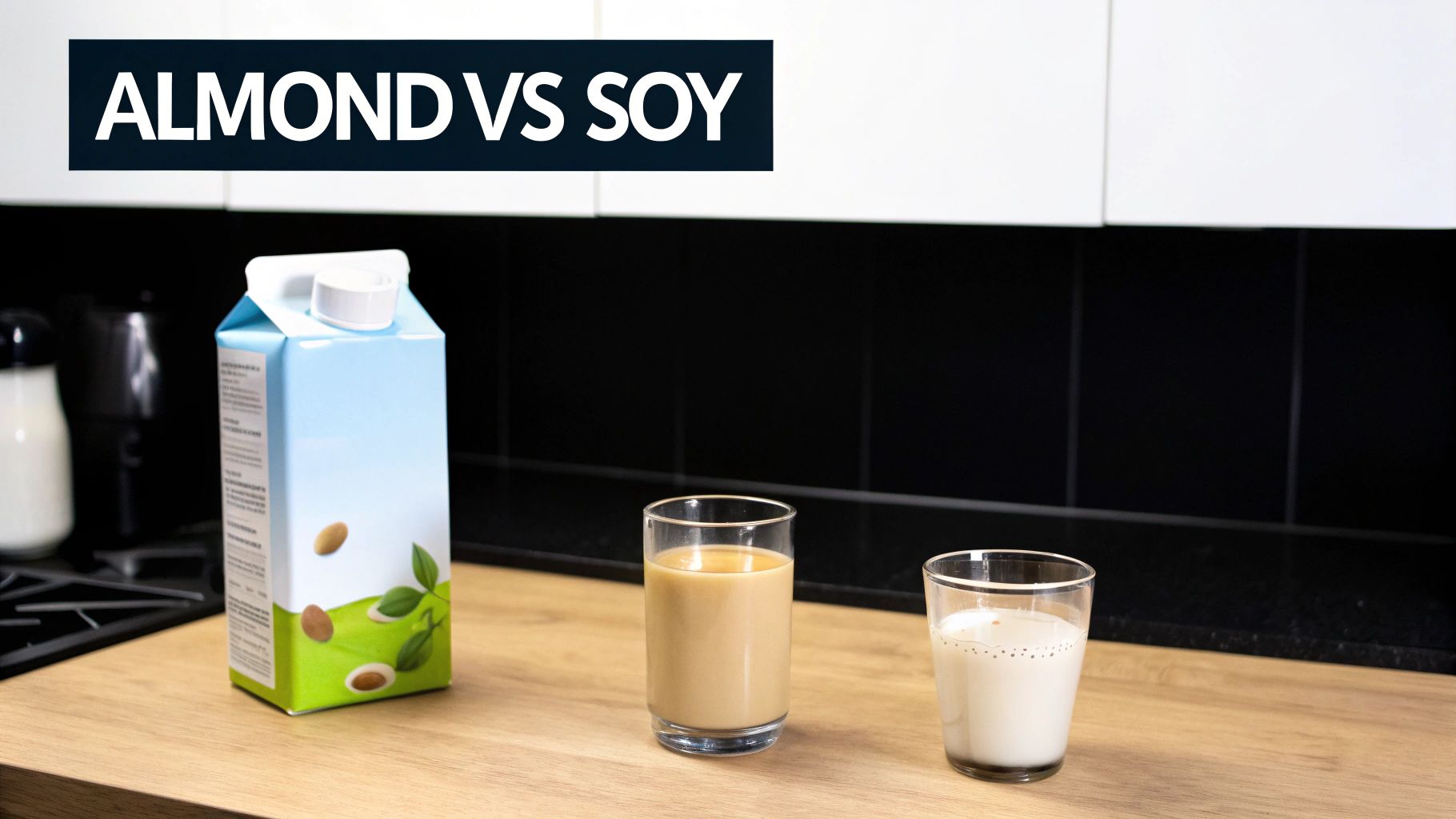
Navigating the plant-based milk section can be a bit much, but breaking down these two popular choices makes the decision a lot easier. Soy and almond milk have become staples in Australian households for all sorts of reasons—from managing lactose intolerance to embracing a vegan lifestyle or simply preferring the taste. Each one brings something different to the table, making them better for certain jobs.
Soy milk, which is made from whole soybeans, is a true nutritional powerhouse. It’s one of the very few plant-based milks that provides a complete protein, meaning it contains all nine essential amino acids your body needs. This makes it an excellent dairy substitute for anyone looking to keep their protein intake up, from athletes to growing kids. Its naturally creamy texture is also why it’s a favourite for baristas and home cooks.
On the flip side, unsweetened almond milk is famous for being incredibly low in calories—often less than half of what you'd find in skim dairy milk. It's made from ground almonds and water, giving it a thinner consistency and a subtle, nutty taste that many people love in their smoothies, on cereal, or just to drink on its own. While it’s not big on protein, most brands fortify it with extra calcium and vitamin D.
To help you see the differences clearly, let's put them side-by-side.
Almond Milk vs Soy Milk at a Glance
This table breaks down the key differences between a standard 250ml serving of unsweetened almond and soy milk, giving you a quick snapshot to guide your choice.
| Feature | Soy Milk | Almond Milk | Best For |
|---|---|---|---|
| Protein | High (~7g) | Low (~1g) | Building muscle, satiety, protein shakes. |
| Calories | Moderate (~80 kcal) | Very Low (~35 kcal) | Weight management, low-calorie recipes. |
| Taste & Texture | Creamy, neutral, slightly beany. | Thin, watery, mild nutty flavour. | Coffee (froths well), creamy sauces, baking. |
| Primary Nutrient | Complete Protein, Isoflavones | Vitamin E, Low Carbohydrates | Boosting overall nutrition and heart health. |
| Common Allergens | Soy | Tree Nuts (Almonds) | People without soy or nut allergies. |
Ultimately, soy milk is built for performance—delivering protein and a rich texture that works beautifully in cooking and coffee. Almond milk is all about being light and easy, making it perfect for those who want a low-calorie drink without a strong flavour.
A Deep Dive into Nutritional Profiles
When you line up almond and soy milk side-by-side, their nutrition labels tell two completely different stories. Getting to grips with these differences is the key to picking the right one for your body, whether you’re aiming for muscle gain, managing your weight, or just trying to get more vitamins in. To really get it, it helps to know how to read nutrition labels effectively.
Soy milk really is a nutritional heavyweight, particularly when you look at the big-picture macros. It’s one of the rare plant-based milks that provides a complete protein, meaning it has all nine essential amino acids your body needs for muscle repair and immune support. A standard 250ml glass of unsweetened soy milk packs about 7 grams of protein, making it a strong choice for anyone wanting to build or maintain muscle.
Unsweetened almond milk, on the other hand, is much lighter all around. That same 250ml serving typically has only 1 gram of protein. While that doesn’t make it a great post-workout drink, its incredibly low calorie count—often just 35 calories a serving—is perfect if you’re focused on weight management or keeping your carbs low.
Unpacking Micronutrients and Fortification
Beyond protein and calories, the vitamin and mineral content largely comes down to fortification. Most brands add essential nutrients to both milks to get them closer to the profile of dairy milk, so it’s always worth checking the label for this.
Here’s what you’ll commonly see added:
- Calcium: Crucial for bone health. Many brands fortify their milks to match or even exceed the calcium in dairy.
- Vitamin D: This helps your body absorb that calcium and is vital for your bones and immune system.
- Vitamin B12: A must-have for nerve function and creating red blood cells. It's especially important for anyone on a vegan diet, as it's not naturally found in plant foods.
While the added nutrients can be similar, the natural profiles of soy and almond offer their own unique perks. Almonds are a good source of Vitamin E, a powerful antioxidant that helps protect your cells from damage. Soybeans, meanwhile, bring something else to the table entirely.
Soy milk contains isoflavones, which are plant-based compounds known as phytoestrogens. These have been studied for their potential benefits in supporting heart health and managing cholesterol levels.
Phytoestrogens vs Antioxidants
The debate over almond milk vs soy milk often zeroes in on these unique compounds. Soy's isoflavones have been studied extensively. While some people worry about potential hormonal effects, major health organisations generally agree that moderate consumption of whole soy foods is safe and even beneficial for most of us.
Almond milk’s main claim to fame is its vitamin E content. This antioxidant is fantastic for skin health and protecting the body from oxidative stress. It is worth remembering, though, that the actual amount of vitamin E you get depends on how many almonds are in the final product.
Here in Australia, you can see these nutritional differences play out in the supermarket aisles. Soy milk has been a staple for ages, but almond milk's popularity has soared, partly due to the rising rates of lactose intolerance. People are drawn to soy for its dairy-like nutrition and to almond for its lighter, low-calorie profile. Ultimately, the best choice really comes down to which nutritional profile—high-protein and balanced, or low-calorie and antioxidant-rich—fits your personal health goals.
Health Considerations and Dietary Impact
When you look past the nutrition panel, how do almond and soy milk really stack up for your health? The right choice often comes down to their unique benefits and potential downsides, from heart health to common allergies. Your personal health goals are what will ultimately steer you towards the best fit.
Soy milk has a long-standing reputation for being good for the heart. It’s naturally free of cholesterol and low in saturated fat, and some studies suggest it can help keep LDL (the "bad") cholesterol in check. This makes it a heart-smart choice for many.
On top of that, soy milk contains isoflavones. These are plant-based compounds that have been studied for a range of health perks, including potentially supporting bone density—something that becomes increasingly important as we get older.
The Isoflavone Question
The isoflavones in soy are often a point of discussion. Because they are phytoestrogens, they can act a bit like estrogen in the body, which has led to questions about their impact on hormones and thyroid function.
However, a large body of research indicates that for most people, enjoying whole soy foods like soy milk in moderation is perfectly safe and won't throw your hormones out of whack. If you have a pre-existing thyroid condition, it’s always a good idea to chat with your doctor first.
Almond Milk's Health Advantages
Turning to almond milk, its biggest health drawcard is its incredibly low calorie count. A cup of the unsweetened stuff has only about 35-40 calories. This makes it a fantastic option if you’re managing your weight or just looking to cut back on energy intake without giving up that creamy texture in your coffee or smoothie.
Almond milk also naturally contains vitamin E, a potent antioxidant celebrated for its role in skin health. Vitamin E helps defend your cells against the kind of oxidative stress that contributes to ageing. Of course, a healthy diet is about more than just one ingredient; even considering the best cookware for health can make a difference in your overall wellness journey.
Potential Drawbacks and Allergens
Neither option is perfect for everyone. The most obvious issue with almond milk is that it’s made from tree nuts, which are a major allergen. For anyone with a nut allergy, it's a definite no-go.
Key Takeaway: Soy milk brings high protein and isoflavones to the table, supporting heart and bone health. Almond milk shines with its low-calorie count and vitamin E, making it great for weight management and skin health.
With soy milk, the main concern is a soy allergy. While not as prevalent as nut allergies, a soy allergy can be quite serious for those who have it.
It's also smart to scan the ingredient list on both milks. Keep an eye out for added sugars, thickeners, and gums that are often added to improve the texture and extend shelf life. If you're moving away from dairy for broader health reasons, exploring dairy-free diet plans can offer a bigger picture. At the end of the day, choosing between almond and soy milk means weighing these distinct health profiles against your own body's needs.
Taste, Flavour, and Culinary Performance

While the nutritional label tells one story, the real test for any milk alternative happens in the kitchen. The best choice on paper isn’t always the one you want in your morning coffee or favourite baking recipe. When it comes down to it, the distinct flavours, textures, and behaviours of almond and soy milk under heat determine where each one truly shines.
Soy milk brings a creamy, full-bodied texture to the table that’s much closer to dairy milk. Its flavour is generally quite neutral, although some people notice a subtle "beany" background note. This richness makes it a real workhorse in the kitchen.
Almond milk, on the other hand, is known for its thinner, more watery consistency. It has a light, clean flavour with a nutty finish that’s pleasant but not overpowering. Because it’s so much lighter, it tends to blend into the background of a recipe rather than taking centre stage.
Coffee and Hot Beverages
If you're chasing that cafe-quality coffee at home, soy milk is the undisputed champion. Its higher protein content—around 7 grams per cup—is the magic ingredient. It allows the milk to heat, stretch, and froth into a dense, stable microfoam that’s perfect for lattes and cappuccinos. It holds its structure beautifully and is far less likely to curdle when it hits hot, acidic coffee.
Almond milk really struggles in this department. With very little protein, it produces a thin, bubbly foam that disappears in a flash. It can also separate or "split" when added to very hot coffee, which creates a pretty unappealing texture.
Barista’s Choice: For a creamy, frothy coffee that rivals your favourite cafe, soy milk is the clear winner. Its protein structure creates a far superior foam compared to the thinner, less stable froth from almond milk.
Baking and Cooking Performance
When it’s time to bake, soy milk’s creaminess and protein provide structure and moisture, making it an excellent one-for-one substitute for dairy milk in most recipes. It helps create a tender crumb in cakes and muffins and adds richness without messing with the core flavour profile. It’s also brilliant for creating thick, creamy sauces, custards, and soups. For any recipes where you might use versatile non-stick cookware, soy milk’s stability is a huge plus.
Almond milk can certainly work in baking, but its lower fat and protein content often results in a final product that's a bit drier and less rich. It’s best used in recipes where a lighter texture is what you're after. Its nutty undertones can be a fantastic complement to recipes featuring nuts, oats, or vanilla.
Here’s a quick rundown of where each one works best:
-
Soy Milk Excels In:
- Creamy Soups & Sauces: Think béchamel, chowders, or a creamy tomato soup.
- Rich Baked Goods: Perfect for cakes, pancakes, and custards that need serious moisture.
- Coffee & Tea: Creates that stable, velvety foam for lattes every time.
-
Almond Milk is Perfect For:
- Smoothies: Its thin consistency and mild flavour let the fruit and vegetables do the talking.
- Cereal & Porridge: A light, low-calorie option that won't make your breakfast feel too heavy.
- Light Baking: Works well in recipes where a delicate texture is key, like certain muffins or quick breads.
Ultimately, choosing between them really just depends on your goal. Need richness and structure? Grab the soy. Want something light that won’t overpower other ingredients? Almond milk is your best bet.
Sustainability and Environmental Footprint
When you're standing in the supermarket aisle, the choice between almond and soy milk goes far beyond just taste or nutrition. For many of us, the real question is: which one is better for the planet? Diving into their environmental footprints reveals a complex picture involving water, land, and carbon emissions.
The "greener" choice isn't black and white; it really depends on where and how the almonds or soybeans are grown.
The Water Issue with Almonds
The biggest environmental red flag for almond milk is its staggering water consumption. Almond trees are incredibly thirsty, and most are grown in places like California, which frequently battles serious droughts. It can take hundreds of litres of water to produce just one litre of almond milk, placing an enormous strain on local water supplies.
This intense water demand has real-world consequences, from depleting groundwater to stressing out entire ecosystems. While farmers are working on more efficient irrigation, the basic thirst of an almond tree remains a significant environmental hurdle.
Land Use and Soy's Complicated Past
Shifting our focus to soy milk, the main environmental conversation moves from water to land. Soy farming is far more water-efficient than almond cultivation, which is a big plus. However, soy has a well-known connection to deforestation, especially in critical regions like the Amazon rainforest, where massive tracts of land have been cleared for soy crops.
But here's the crucial context: the vast majority of soy grown globally—we're talking over 80%—is actually used for animal feed, not for the soy milk you pour into your coffee. The soy destined for plant-based milks, particularly in Australia, usually comes from sustainable, non-GMO farms that aren't linked to deforestation.
The Australian Context: When you're weighing this up locally, sourcing becomes everything. A lot of the soy in Australian-made soy milk is grown right here or sourced from certified sustainable farms, neatly sidestepping the deforestation problem. Almonds, on the other hand, are often grown in water-scarce regions, making their high water use a constant worry.
Comparing Environmental Impact
To make things clearer, let's break down the key environmental metrics side-by-side. This table gives a snapshot of what it takes to produce one litre of each milk.
| Environmental Factor | Soy Milk (per litre) | Almond Milk (per litre) | Key Consideration |
|---|---|---|---|
| Water Usage | Approx. 28 litres | Approx. 371 litres | Almond milk's water footprint is over 13 times higher, a critical issue in dry climates. |
| Land Use | Approx. 0.7 sq. metres | Approx. 0.5 sq. metres | Almonds use slightly less land, but soy's impact is tied to where it's grown (deforestation risk). |
| Greenhouse Gas Emissions | Approx. 1.0 kg CO2e | Approx. 0.7 kg CO2e | Both have a low carbon footprint compared to dairy, with almond milk having a slight edge. |
As you can see, each has its trade-offs. While almond milk produces slightly fewer emissions, its water usage is dramatically higher. Soy's land use is only a major concern when sourced from regions linked to deforestation.
Making an Informed Choice in Australia
Here in Australia, soy milk has been a plant-based staple for years, though almond milk's popularity is definitely on the rise. The local Soy and Almond Milk Production market is a big deal, driven by Aussies looking for healthier and more ethical options. If you're interested in the market trends, you can explore the industry analysis from IBISWorld.
Knowing this local context helps you make a smarter purchase. Opting for Australian-grown soy milk generally means you're supporting farming practices with a much lower environmental toll than water-guzzling almond production.
Of course, for those really dedicated to shrinking their food footprint, growing your own is an amazing option. While an almond orchard in the backyard isn't practical, getting started with other plants is. If you're curious about growing your own food, our guide on how to grow vegetables in pots is a great place to begin.
Ultimately, for the eco-conscious Australian, soy milk often comes out ahead as the more sustainable pick, especially when it's made from responsibly grown local soybeans. No food is perfect, but soy's modest water needs give it a clear advantage in our dry country.
Making the Final Choice for Your Needs
Deciding between almond and soy milk doesn't have to be a tough call. Now that we’ve broken down the nutrition, health impacts, taste, and sustainability, the best choice really boils down to what you value most and how you plan to use it. There’s no single "best" option here—just the one that’s right for you.
To make things easier, let's walk through a few common scenarios. Your lifestyle, dietary goals, and even what you're cooking for dinner can steer you toward the perfect plant-based milk for any given moment.
For the Athlete and Protein Seeker
If you're focused on building muscle, staying full, or fuelling an active lifestyle, soy milk is the clear winner. It packs a serious protein punch, offering around 7 grams per cup and all nine essential amino acids your body needs for muscle repair and growth. It's an ideal post-workout recovery drink or a fantastic base for a protein shake.
Almond milk, with its minimal protein, just doesn't measure up in this department.
For the Calorie-Conscious Consumer
When managing your weight or simply cutting back on calories is the main game, unsweetened almond milk is your best bet. Clocking in at just 35-40 calories per serving, it's one of the lightest plant milks on the shelf. This means you can get that creamy texture in smoothies, cereals, and coffee without making a big dent in your daily calorie count.
Soy milk isn't exactly high in calories, but it typically has more than double that of almond milk, making it a less obvious choice for anyone counting every calorie.
This decision tree shows how your main priorities—sustainability, protein, or low calories—can point you to the right milk.
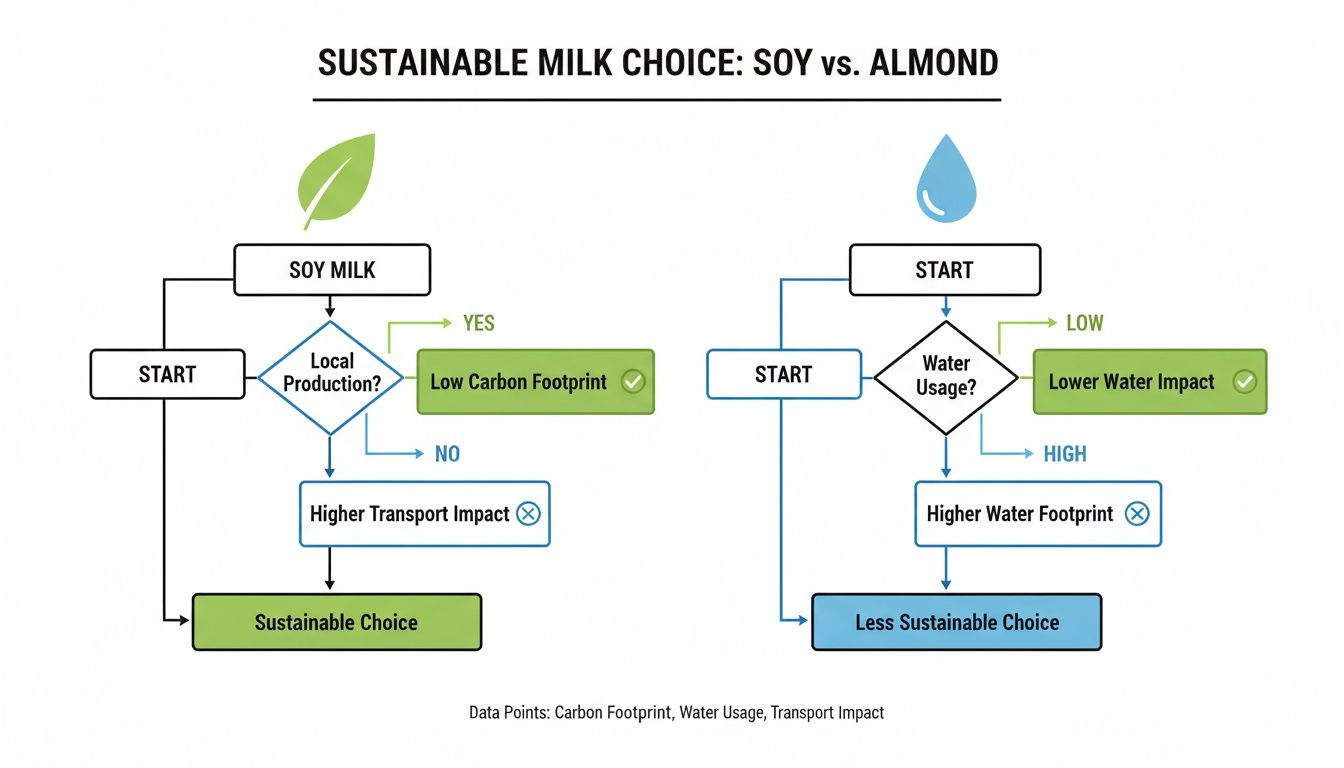
The flowchart makes it clear: soy milk comes out on top for protein and sustainability, while almond milk is the standout for its low-calorie profile. It's all about what matters most to you.
For the Home Barista and Chef
How you plan to use your milk in the kitchen is a massive factor in the almond vs. soy debate. They behave very differently when the heat is on or the blender is running.
- Coffee & Hot Drinks: If you're chasing that perfect, cafe-style latte, soy milk is unmatched. Its higher protein content creates a beautifully rich and stable microfoam that holds its shape and won't curdle in your hot coffee.
- Cooking & Baking: Soy milk’s creamy consistency makes it a brilliant all-rounder for replacing dairy in sauces, soups, and baked goods, where it adds both moisture and structure.
- Cereals & Smoothies: This is where almond milk really shines. Its light body and subtle nutty flavour complement other ingredients without overpowering them, making it perfect for a refreshing smoothie or a simple bowl of porridge.
By matching your choice to your specific needs—whether it’s athletic performance, calorie goals, or culinary use—you can pick the right plant-based milk with confidence. Think of soy milk as your high-performance, versatile workhorse and almond milk as your light, specialist option.
In the end, many people find it useful to keep both in the fridge. You could start your day with almond milk over your cereal and later use soy milk to whip up a rich, creamy pasta sauce for dinner. Knowing their strengths lets you get the best out of both.
Got Questions? We’ve Got Answers
Diving into the world of plant-based milks often leaves you with a few lingering questions. Even after a deep dive into nutrition and uses, some specifics can be tricky. Let's clear up some of the most common queries about almond and soy milk so you can choose with total confidence.
We'll cover everything from daily drinking habits to which one is kinder to our Aussie environment and how they behave in the kitchen.
Can I Drink Soy Milk Every Day?
For most people, absolutely. A daily glass of soy milk is not only safe but can be a really positive part of a balanced diet. The main chat around soy usually involves phytoestrogens (isoflavones), which are natural plant compounds that can act a bit like estrogen in the body, but much more weakly.
A huge body of research shows that moderate consumption isn't harmful and can even be beneficial, particularly for heart health. Most of the old concerns about hormonal issues haven't been supported by modern studies on people who eat soy as part of a normal diet. That said, if you have a pre-existing thyroid condition, it's always smart to have a chat with your doctor for personalised advice.
Which Milk Is Better for the Environment in Australia?
When you're standing in a local supermarket, soy milk generally gets the green tick. The whole almond milk vs soy milk sustainability debate really boils down to one crucial resource: water.
Soy is simply less thirsty. It needs far less water and land to produce a litre of milk. While soy production overseas has been linked to deforestation, a lot of the soy used for milk here in Australia comes from sustainable and non-GMO sources. Almond farming, on the other hand, is famously water-intensive, which is a massive issue on a dry continent like Australia.
The Greener Choice: Locally sourced soy milk is often the more eco-friendly option in Australia due to its lower water requirements compared to the thirsty almond industry.
Can I Swap Almond and Soy Milk in Recipes?
You can, but you need to be strategic about it. A straight one-for-one swap isn't always going to work, and the final result of your dish will definitely be different.
Thanks to its higher protein and fat content, soy milk is a much better dairy substitute in baking or creamy sauces. It provides the structure, richness, and moisture needed for a great result. Almond milk is much thinner and has a more delicate, nutty flavour, which is perfect for smoothies, pouring over cereal, or in recipes where you just want a light touch that won't overpower other ingredients.
And for your morning coffee? Soy milk is the undisputed champion for frothing. Its protein content creates a thick, stable foam that almond milk just can't replicate.
At Everti, we believe the best meals start with clean, durable, and hygienic tools. Our pure titanium cutting boards and kitchen essentials are designed to last a lifetime, ensuring a safe and non-toxic surface for all your culinary preparations. Explore the Everti collection and elevate your kitchen at https://everti.com.au.