

If you're on the hunt for the best ceramic cookware, you're likely looking for a non-toxic, PFOA-free surface that doesn't compromise on performance. Modern ceramic pans are a brilliant alternative to traditional non-stick coatings, giving you that easy-release surface perfect for delicate foods like eggs and fish.
Why Ceramic Cookware Is Gaining Popularity
Over the last few years, the conversation around what we keep in our kitchens has changed. It's no longer just about finding a pan that heats evenly. Today, home cooks are after cookware that fits a healthier, more conscious lifestyle, and this shift has pushed ceramic cookware from a niche choice into the spotlight.
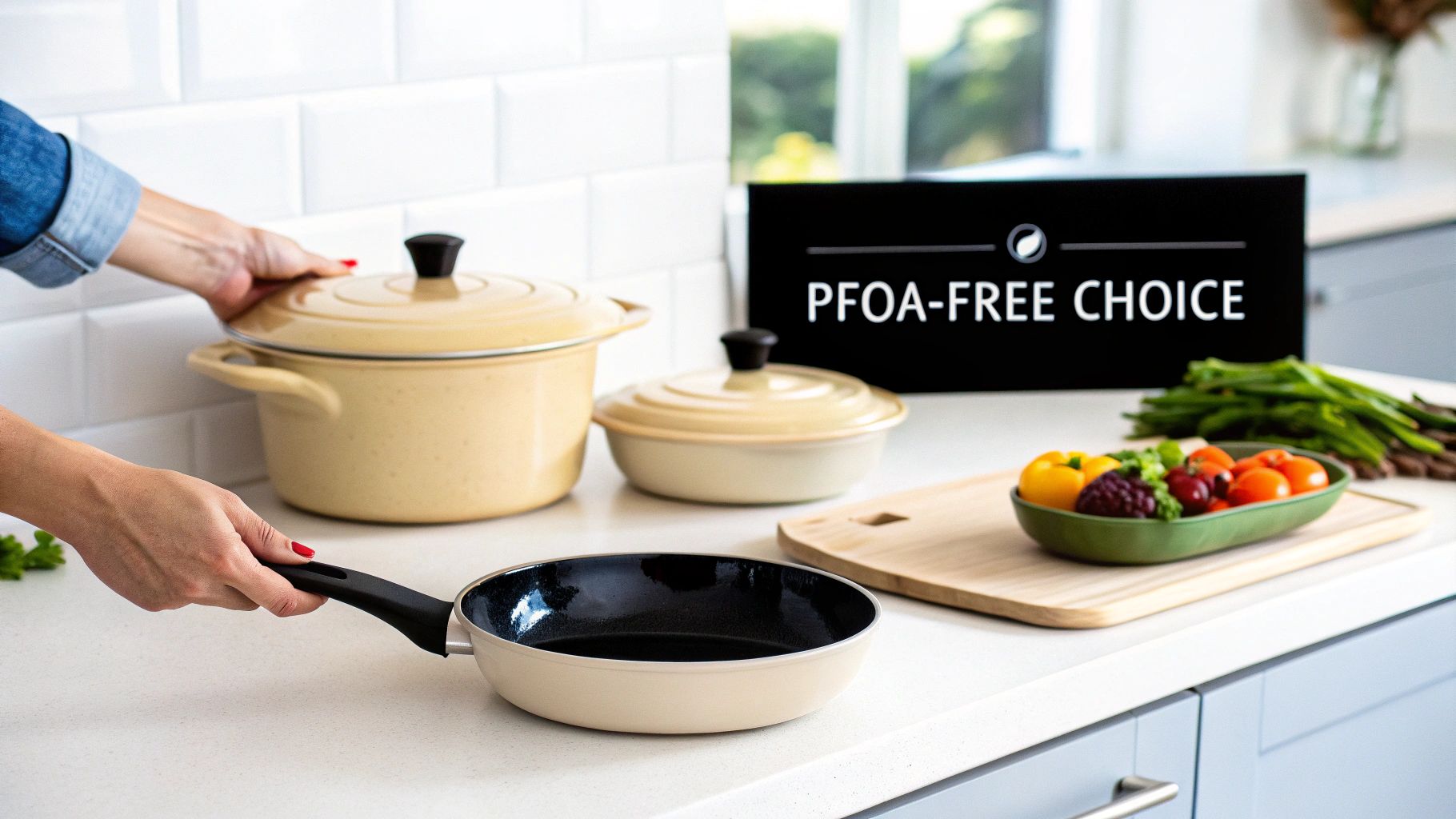
The biggest driver here is a growing awareness of the chemicals found in old-school non-stick coatings, especially PFOA and PTFE. As more people want to avoid potentially harmful substances, ceramic has stepped up as a compelling, safe solution.
The Search for Safer Kitchens
A big part of ceramic cookware's appeal comes down to what it doesn't contain. Unlike older non-stick tech, today's ceramic coatings are created with a sol-gel process that completely avoids perfluorooctanoic acid (PFOA) and polytetrafluoroethylene (PTFE). This gives health-conscious cooks peace of mind, knowing that unwanted chemicals aren't making their way into their food.
This demand for better kitchen tools is clearly visible in market trends. Australia's cookware market hit a value of USD 664.44 million in 2024 and is expected to nearly double by 2033, which points to a huge consumer appetite for quality kitchenware. You can find more detail on the growing Australian cookware market on IMARC Group's site.
Aesthetics Meet Functionality
Beyond its health benefits, ceramic cookware just plain looks good. It comes in a huge range of colours and stylish designs, appealing to anyone who sees their kitchen tools as part of their home's decor. But it’s not all about looks; the functional benefits are just as impressive:
- Excellent Non-Stick Properties: A well-maintained ceramic surface lets food slide right off, even with minimal oil.
- Ease of Cleaning: That slick coating makes cleanup a breeze, often needing nothing more than a quick, gentle wipe.
- Eco-Friendly Production: The manufacturing process for ceramic coatings is generally seen as more environmentally friendly compared to traditional non-stick surfaces.
Of course, no single material is perfect for every job. In the sections to come, we'll get into a real-world comparison between ceramic, stainless steel, and pure titanium to help you figure out what’s genuinely right for your kitchen.
Decoding Ceramic Cookware Materials
Before you start shopping, it's really important to know what "ceramic cookware" actually means. The term gets thrown around a lot, but it covers two completely different types of pots and pans. Getting this straight from the outset will save you a lot of headaches and help you figure out what to expect in terms of performance, lifespan, and even how you'll clean them.
Most of the colourful, trendy pans you see flooding social media are ceramic-coated cookware. At their heart, they're metal pans—usually aluminium for great heat conduction—with a thin, non-stick ceramic layer sprayed on top. This gives them that slick, easy-to-use surface.
The other option is 100% solid ceramic cookware. This stuff is the real deal, made entirely from kiln-fired clay and natural minerals. Think of it as a completely different beast. It's heavier and takes its time to heat up, but once it's hot, it holds that heat incredibly well, much like a seasoned cast iron skillet. You see the same durable, heat-retaining properties in other kitchen items, like a traditional Matcha Ceramic Mixing Bowl. For a much deeper look into what makes this material special, you can learn more about pure ceramic cookware in our detailed guide.
The Science of Ceramic Coatings
So, how is that non-stick surface made? It all comes down to a process called sol-gel technology. In simple terms, a silica-based gel—which is basically liquid sand—is applied to the pan’s metal core and then baked on at a high temperature.
This firing process creates a hard, glassy finish that’s naturally non-porous and slick. One of the biggest reasons people love it is because it’s made without chemicals like PFOA (perfluorooctanoic acid) and PTFE (polytetrafluoroethylene), which were the go-to materials in old-school non-stick pans.
That absence of PFOA and PTFE is a massive drawcard for health-conscious cooks. It's why so many people are making the switch, actively looking for kitchen gear they can trust to be non-toxic.
This shift isn’t just anecdotal; the numbers back it up. The Australian ceramic cookware market is expected to grow by 9.6% annually, with its value already sitting at USD 91.08 million. That kind of growth shows a huge consumer demand for safer, more eco-friendly cooking options. You can read more about the booming ceramic cookware market and see what’s driving it.
Understanding the basic science here is the first step. Now, let’s get into how these materials actually stack up against each other when the heat is on.
Comparing Ceramic Cookware Performance in Real-World Scenarios
Choosing the right cookware is about more than just marketing claims; it’s about understanding how different materials actually handle the heat in your kitchen. While the best ceramic cookware is fantastic for its easy, non-stick surface, its performance really comes into focus when you put it side-by-side with workhorses like cast iron, stainless steel, and pure titanium. This practical look will help you figure out which material genuinely fits the way you cook.
It’s crucial to remember there are two very different types of "ceramic" cookware out there. This infographic quickly shows the difference between 100% solid ceramic and the ceramic-coated pans you see most often.
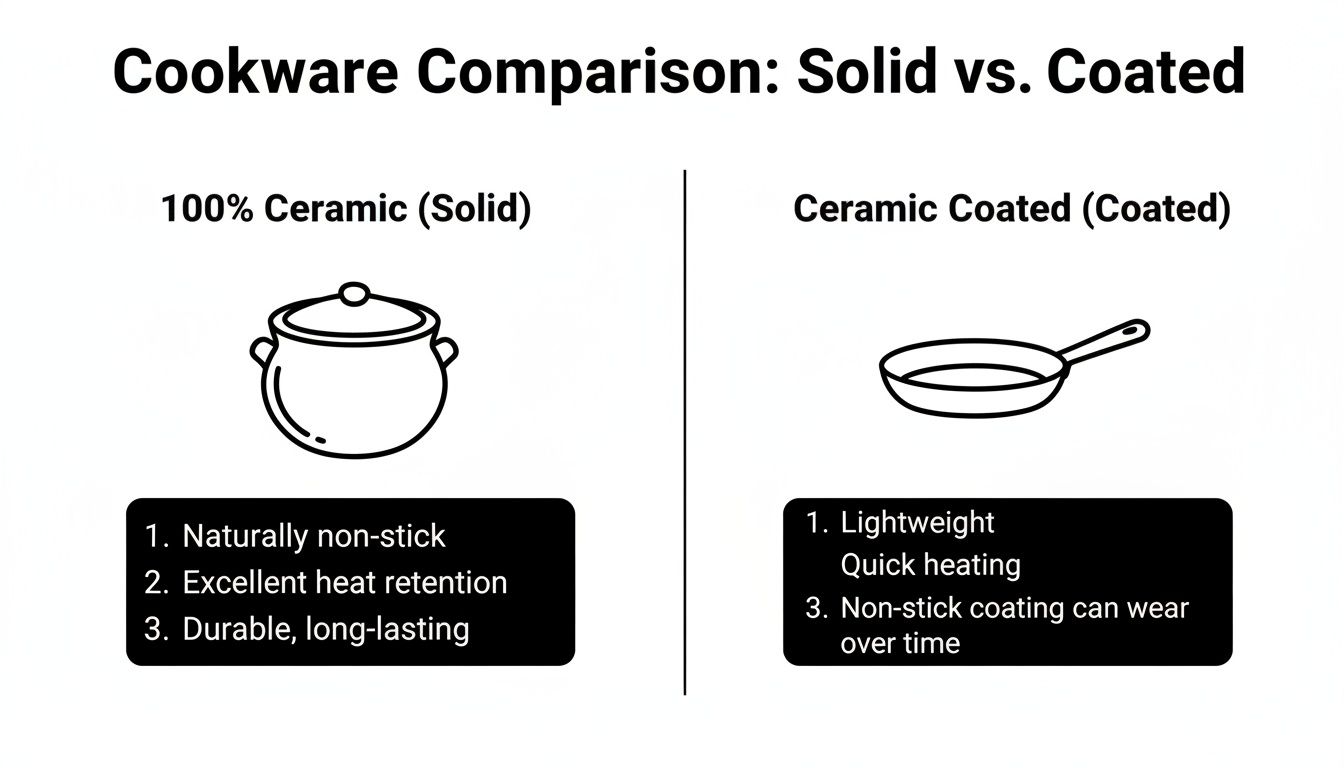
The main takeaway here is that most popular ceramic pans are coated. This detail is what really shapes their performance and durability, especially when compared to solid, uncoated materials.
Heat Distribution: Ceramic vs. Cast Iron
When it comes to holding and spreading heat evenly, very few materials can go toe-to-toe with cast iron. A well-seasoned cast iron skillet takes its time to heat up, but once it’s hot, it stays hot with incredible stability. This makes it the perfect choice for deep frying or simmering a stew where consistent, even heat is non-negotiable.
Ceramic-coated pans, which usually have an aluminium core, get hot much faster. This is a huge advantage for quick jobs like scrambling eggs or flipping pancakes. The trade-off? They don’t hold onto that heat nearly as well. If you drop cold ingredients into a hot ceramic pan, you’ll see the temperature dip noticeably.
Think of it this way: for a slow-cooked beef stew that needs hours of unwavering, low heat, cast iron is the clear winner. But for a quick weeknight omelette, a ceramic pan’s speedy heating is far more practical.
Searing Capabilities: Ceramic vs. Stainless Steel
Getting that perfect, flavour-packed crust on a steak or a piece of salmon demands high, direct heat. This is where stainless steel really shines. You can crank the heat up without worrying about damaging a coating, letting you achieve a deep, beautiful sear that a ceramic pan just can't replicate.
Trying to sear at high temperatures in a ceramic-coated pan is a recipe for disappointment. Extreme heat quickly breaks down the sol-gel non-stick coating, dramatically shortening the pan's life. While you can get some browning on medium heat, you won't get that professional-grade crust stainless steel delivers so effortlessly. For a closer look at different surfaces, you can explore our guide on the best non-stick surface for a frying pan.
- Stainless Steel: Your go-to for high-heat searing. It creates a superior fond—those tasty browned bits—that’s the foundation for incredible pan sauces.
- Ceramic Coated: Best kept for low-to-medium heat cooking. It excels when the main goal is preventing food from sticking, like with delicate fish or crepes.
Long-Term Durability: Ceramic Coating vs. Pure Titanium
Durability is where the fundamental weakness of any coated cookware really shows. The non-stick surface on even the best ceramic pan has a limited lifespan. Through normal use, heat cycles, and tiny scratches, the coating will inevitably wear down and lose its non-stick magic, usually needing to be replaced every few years.
Pure, uncoated titanium, on the other hand, is a true "buy-it-for-life" material. It’s incredibly tough, non-reactive, and won’t chip, peel, or degrade over time because there’s simply no coating to fail. While it may not feel as slick as a brand-new ceramic pan, its performance will stay the same for decades, making it a much smarter long-term investment for both your health and your wallet.
The appeal of ceramic cookware is easy to understand, especially in a market where good looks and non-toxic claims are big selling points for consumers. In Australia, ceramic products make up a huge part of the kitchenware sector. This is all part of a global industry expected to hit USD 137.64 billion by 2034. You can learn more about the expanding global kitchenware market and what’s driving it. Still, for anyone who puts lifetime durability first, materials like titanium offer a far more resilient option.
Cookware Material Performance Matrix
To bring it all together, this table offers a snapshot of how these materials stack up against each other across key performance areas. It’s a quick reference to help you match the right pan to the right job.
| Feature | Ceramic Coated | Stainless Steel | Cast Iron | Pure Titanium |
|---|---|---|---|---|
| Heat Up Speed | Very Fast | Fast | Slow | Fast |
| Heat Retention | Low to Moderate | Moderate | Excellent | Moderate to High |
| Non-Stick | Excellent (when new) | Poor (requires technique) | Excellent (with seasoning) | Good (naturally low-stick) |
| High-Heat Searing | Not Recommended | Excellent | Excellent | Very Good |
| Durability & Lifespan | 1-5 years (coating degrades) | Decades | Lifetime (can be re-seasoned) | Lifetime |
| Maintenance | Hand wash only, no metal utensils | Easy to clean, can handle scrubbing | Requires seasoning, prone to rust if not cared for properly | Very low, dishwasher safe |
| Best For | Eggs, pancakes, delicate fish (low-medium heat) | Searing, sautéing, pan sauces | Searing, frying, slow-cooking, baking | Everyday all-purpose cooking, health-conscious consumers |
Ultimately, there's no single "best" material for every task. A well-equipped kitchen often has a mix of cookware, allowing the chef to choose the perfect tool for the meal they're creating.
Navigating Health and Safety Claims in Cookware
The move towards the best ceramic cookware didn't happen in a vacuum. It was a direct response to a growing conversation around kitchen health and safety. For a long time, traditional non-stick was the go-to, but serious concerns about chemicals like PFOA and PTFE started to bubble up, sending people searching for alternatives they could feel good about. That’s when ceramic cookware stepped into the spotlight, positioned as a safer, cleaner choice for the modern kitchen.
Ceramic's big selling point is simple. Its non-stick surface comes from a silica-based coating applied through a sol-gel process, completely sidestepping the chemical compounds that many now actively avoid. This gives people peace of mind, especially the idea that their pan won't release potentially harmful fumes at high temperatures. But here’s the catch: the safety of ceramic cookware is entirely dependent on that coating staying in perfect condition.
The Weakness of Coated Surfaces
A brand-new ceramic pan is a great, non-toxic surface. The problem? Its lifespan is notoriously short. That sol-gel coating is basically a super-thin layer of glass fused onto a metal base. Through the daily grind of cooking—heat, utensils, and cleaning—that delicate layer is prone to scratching and slowly wearing away.
Even tiny, almost invisible scratches can ruin its non-stick performance and, more critically, its safety. Once the coating is chipped or worn through, the metal core underneath (usually aluminium) can be exposed. When that happens, there's a real risk of it leaching into the food you’re cooking.
The fundamental issue with any coated cookware is that its safety is temporary. That "non-toxic" promise only holds up as long as the surface is pristine, which is a tall order for any pan in a well-used kitchen.
This is a massive point of difference when you compare it to materials that are safe through and through, without needing a fragile coating. Take pure, uncoated titanium as an example. It provides a permanent, non-leaching cooking surface from day one. Since there's no coating to scratch or degrade, its safety profile never changes. It really sets the standard for long-term kitchen hygiene. For a deeper look, you can learn more about what makes the best cookware for health in our comprehensive article: https://everti.com.au/blogs/news/best-cookware-for-health.
Beyond the Pan: The Cleaning Process
Creating a truly healthy kitchen environment isn't just about the pan itself; it’s also about how you care for it. The products you use for cleaning play a huge role in its longevity and safety. It's worth considering everything you use, even down to questions like whether dish soap is toxic and what the safer options might be. Harsh, abrasive cleaners can speed up the breakdown of a ceramic coating, cutting its safe, effective life even shorter.
Ultimately, to properly navigate health claims, you need to look beyond the "PFOA-free" sticker on the box and think about the material's long-term stability. While ceramic offers a safe starting point, its reliance on a delicate coating means its non-toxic status is conditional. It needs careful handling to last. By contrast, uncoated materials offer a more permanent, worry-free solution for anyone putting health first.
Evaluating Cookware Durability and Long-Term Value
When you're investing in new kitchen gear, one of the biggest questions is always: how long will it last? While the best ceramic cookware starts out with brilliant non-stick performance, it's really important to have realistic expectations about its lifespan. Let's break down what you're really getting for your money, focusing on long-term value.
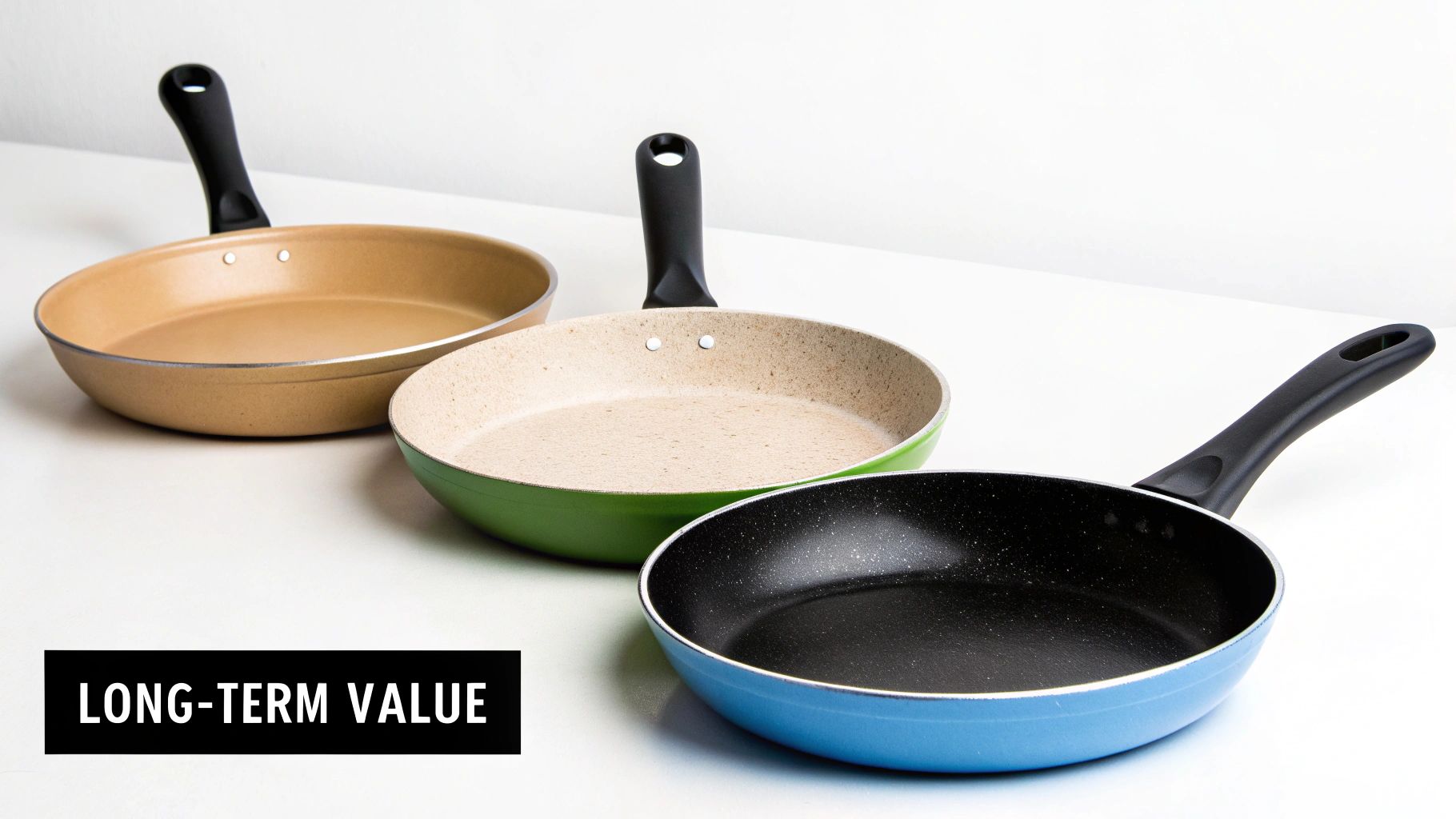
The hard truth about ceramic-coated cookware is that its non-stick magic doesn't last forever. The delicate sol-gel coating will inevitably degrade with repeated exposure to heat, cleaning, and utensils. Even if you treat it with the utmost care, you’ll likely find most ceramic pans lose their slick surface within 1 to 5 years.
This effectively turns them into a recurring purchase, not a one-time kitchen investment.
Lifespan Comparison: Ceramic vs. The Alternatives
This limited lifespan is a world away from materials built to go the distance. Uncoated cookware, like a well-seasoned cast iron skillet or a pure titanium pan, are genuine "buy-it-for-life" pieces. Their performance isn't tied to a fragile top layer that can be chipped, scratched, or worn down.
- Ceramic-Coated: Expect to replace it every few years once the non-stick surface gives out. This means ongoing costs and more cookware ending up in landfill.
- Cast Iron: These pans can literally last for generations. If the seasoning gets damaged, you just strip it back and re-season it—good as new.
- Pure Titanium: An incredibly durable yet lightweight material that simply won't corrode, chip, or break down. It provides a permanent, inert cooking surface that you can count on for decades.
A smart purchase isn't just about the initial price tag; it's about the total cost over its lifetime. Replacing a ceramic pan every couple of years can easily end up costing more than buying one high-quality, lifetime piece from the start.
Maximising the Life of Your Ceramic Pans
While you can't stop the coating from eventually wearing down, you can certainly extend its useful life with the right care. If you want the best possible experience with your ceramic cookware, following these rules is non-negotiable.
Always cook on low to medium heat. Blasting your pan with high heat is the single fastest way to kill the non-stick coating.
Avoid metal utensils like the plague. Stick to silicone, wood, or nylon to keep from scratching that delicate surface.
Hand wash with a soft sponge. Dishwashers are too aggressive, using harsh detergents and high temperatures that will strip the coating much faster.
Even with perfect care, the pan’s coated design is its own limiting factor. This makes ceramic a practical choice if your main priority is easy, non-stick cooking for specific jobs and you’re okay with replacing it regularly. For cooks who value durability, sustainability, and better financial sense in the long run, uncoated materials like titanium and cast iron are a much more resilient and cost-effective solution for a well-stocked kitchen.
Choosing the Right Cookware for Your Cooking Style
After breaking down the materials, performance, and durability, the final decision really comes down to you. There's no single "best" cookware for every kitchen; the right choice is the one that genuinely fits how you cook, what's important to you, and your long-term plans for your kitchen. It's about looking past the marketing hype and making a practical choice that suits your reality.
For many people, the immediate, no-fuss non-stick surface of ceramic-coated cookware is the number one priority. And for certain jobs, it’s an absolutely brilliant tool where preventing food from sticking is the whole game.
The Case for Ceramic Cookware
If your cooking routine features a lot of delicate foods, then ceramic is definitely a strong contender. Think about whether these situations sound familiar:
- The Breakfast Specialist: You're frequently whipping up scrambled eggs, pancakes, or crepes and need a surface that guarantees a clean release with just a tiny bit of oil.
- The Occasional Cook: You don't get into the kitchen every single day, but when you do, you want something simple to use and even simpler to clean. You're also okay with the idea of replacing your pan every couple of years.
In these cases, the sheer convenience of ceramic is tough to argue with. Its slick surface makes tricky recipes a breeze and turns cleanup into a non-issue, which is a massive win for any busy household.
The Case for Lifetime Durability
On the flip side, if your focus is squarely on performance, health, and getting real long-term value, your priorities will probably steer you towards uncoated materials like pure titanium. This isn't just buying another pan; it's about investing in a permanent solution for your kitchen.
For the cook who values a powerful high-heat sear, wants something that will last a lifetime, and needs the peace of mind that comes from a completely inert, non-leaching surface, pure titanium is the clear long-term winner.
See if these scenarios resonate more with your approach:
- The Health-Conscious Family: Your primary concern is hygiene and avoiding any materials that might break down over time. You want a permanent, non-porous surface that won’t trap bacteria or leach anything into your food.
- The Culinary Enthusiast: You need high-performance gear that can handle intense heat for searing the perfect steak and won’t ever need replacing. You view your cookware as a lifelong investment in your passion for cooking.
For these cooks, the initial investment in titanium pays for itself over decades of reliable, safe performance. It’s a tool built to last, ending the cycle of replacements and giving you a truly permanent, worry-free foundation in the kitchen.
Ready to invest in cookware that will last a lifetime? Explore the pure titanium essentials from Everti and discover the difference that uncompromising quality makes. Find your perfect kitchen solution at https://everti.com.au.