

When you hear “ceramic cookware,” what comes to mind? For many, it’s the colourful, non-stick pans that have become popular recently. But there’s a world of difference between those and pure ceramic cookware. True pure ceramic is made entirely from natural clay and minerals, fired in a kiln until it becomes a solid, non-porous pot or pan.
There's no metal core, no chemical coating—just pure, natural material. This makes it one of the most non-toxic and non-reactive choices you can bring into your kitchen.
What Is True Pure Ceramic Cookware
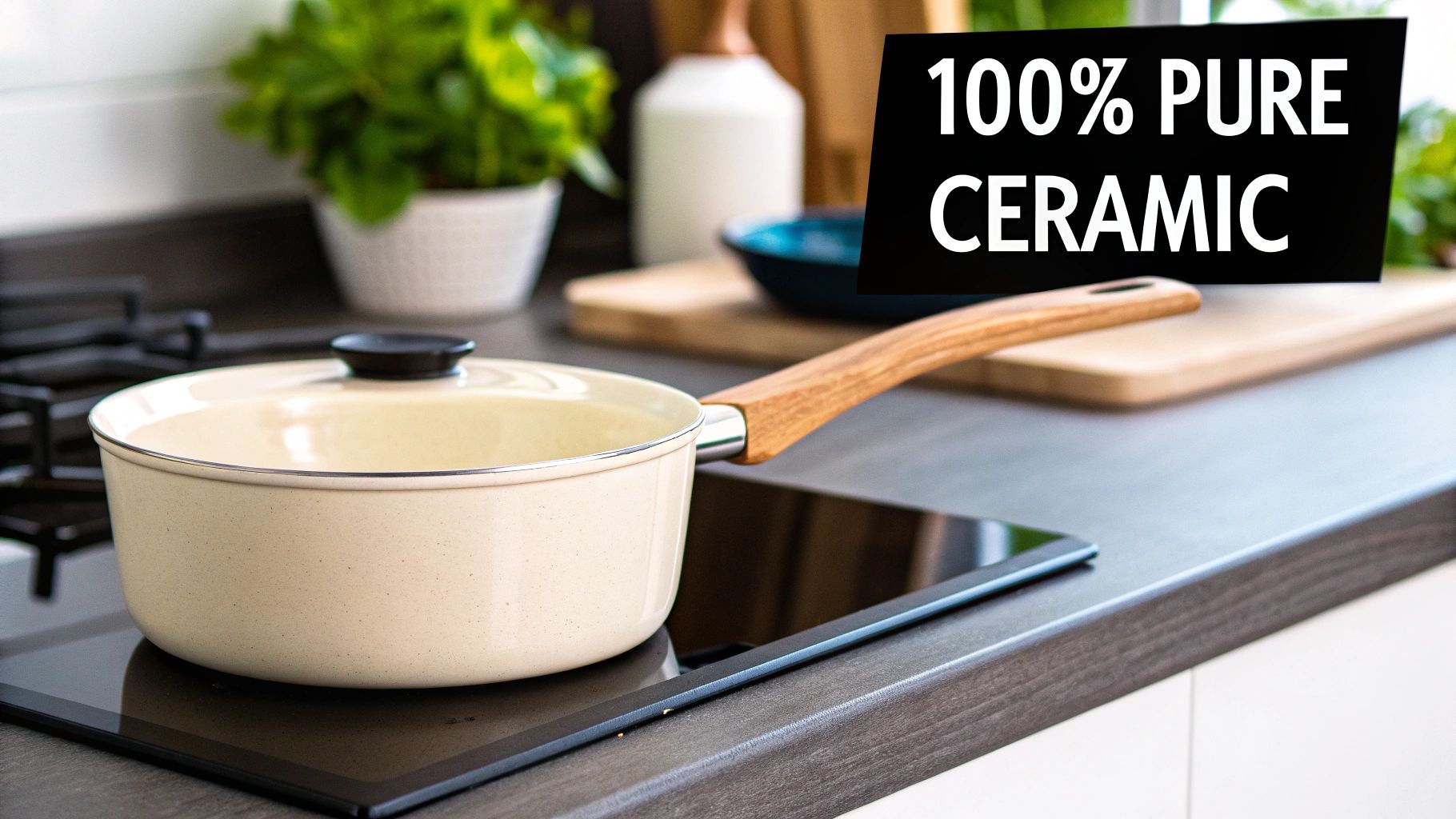
Navigating the world of healthy cookware can be confusing. The market is flooded with pans that look ceramic but are actually something else entirely. That's why it's so important to know the difference between pure ceramic and ceramic-coated cookware before you buy.
Think of it this way: pure ceramic is like a solid oak dining table, while ceramic-coated is like a particleboard table with a thin oak veneer. One is solid and crafted from a single, robust material, while the other relies on a fragile outer layer that can easily be damaged.
The Foundation: Solid Ceramic Construction
At its core, pure ceramic cookware begins its life as a simple blend of natural clay, water, and inorganic minerals. This earthy mixture is shaped into a pot or pan and then fired in a kiln at incredibly high temperatures, often soaring past 1,300°C.
This intense heat is what turns the soft clay into a rock-solid, durable, and completely non-porous cooking vessel. Because it’s ceramic from top to bottom, it has a few standout qualities:
- Complete Material Purity: There are no metals involved. This means there's zero chance of aluminium or other substances leaching into the food you cook.
- Natural Composition: The cookware is literally made from the earth, offering a genuine back-to-basics approach to healthy cooking.
- Exceptional Durability: That high-firing process creates a material that’s highly resistant to scratches. It won't peel, flake, or chip away over time like a coating can.
If you’re curious about the science, it helps in understanding ceramics as a natural material and why this process is so effective.
Why Pure Ceramic Stands Apart
So, what about those other "ceramic" pans? Ceramic-coated cookware actually has a metal base, usually aluminium, which is then sprayed with a very thin, sand-derived sol-gel coating. This coating gives it that initial non-stick quality, but it's not built to last.
Overheating, using metal utensils, or even just scrubbing too hard can cause the coating to chip and wear thin, eventually exposing the metal core underneath.
The core difference lies in longevity and stability. Pure ceramic is built for a lifetime of consistent performance, while ceramic-coated alternatives often have a limited lifespan of just a few years before their performance declines.
This solid construction isn't just about making your cookware last longer; it's about giving you complete peace of mind. With pure ceramic, the surface you cook on today is the exact same one you’ll be using years from now—stable, safe, and completely inert.
The Real Health Benefits of Cooking with Ceramic
When we talk about healthy eating, we usually focus on the ingredients. But what you cook on matters just as much as what you cook. The biggest health advantage of pure ceramic cookware boils down to one simple idea: purity. Unlike most pans you'll find on the shelf, solid ceramic is completely inert. It creates a safe, non-reactive barrier between the heat and your food.
This means you can cook without worrying about nasty chemicals seeping into your meals. Many traditional non-stick pans have coatings that contain PTFE and PFOA – chemicals that can release fumes at high heat and have been linked to a whole host of health problems. Pure ceramic has none of that.
A Chemically Inert Cooking Surface
Think of your pure ceramic pan as a clean slate for your food. It’s made from natural clay and minerals, fired at incredibly high temperatures, so it won’t react with acidic ingredients like tomatoes, citrus, or vinegar. This keeps the flavour of your food pure, without any strange metallic or chemical taste.
That non-reactive quality gives you amazing peace of mind. You can simmer a rich tomato sauce for hours or splash in some wine to deglaze a pan, knowing the cookware itself isn't changing the taste or chemical makeup of your dish. It's a fundamental difference that really sets pure ceramic cookware apart from most metal pans.
The core safety feature of pure ceramic is its stability. It doesn’t break down at high temperatures or react with your food, ensuring what you taste is exactly what you cooked—nothing more, nothing less.
Many people don't realise what might be hiding in their coated pans. It's worth digging a little deeper to understand the truth about your 'green' ceramic pan and see why solid ceramic is a far better choice.
Free from Heavy Metals and Toxins
Beyond PTFE and PFOA, there’s another issue with lower-quality cookware: heavy metals like lead and cadmium. These can sometimes be hiding in the glazes or coatings of cheaply made or imported pans. Reputable brands of pure ceramic cookware are always rigorously tested to ensure they are completely free from these dangerous substances.
The result is a cooking surface you can trust, day in and day out. This focus on safe, non-toxic materials is driving a huge shift in what people want in their kitchens. In fact, Australia's ceramic cookware market is growing fast, which shows just how much people are prioritising health-conscious choices.
Market forecasts predict this sector will reach USD 187.65 million by 2033, growing at an impressive annual rate of 8.6%. This trend isn't just a fad; it highlights a clear demand for premium, safe, and durable cookware. You can find more details about these market insights on Australia's ceramic cookware market growth.
Choosing pure ceramic isn't just about avoiding the bad stuff. It's about embracing the good—making a conscious decision to put your health first, protect the integrity of your food, and cook with confidence.
How Ceramic Performs Against Other Cookware
Choosing the right cookware can feel like a bit of a balancing act. You're constantly weighing up performance, how long it's going to last, and what it means for your health. When you pop a pure ceramic pot on the stove, you're dealing with a material that behaves very differently from its metal cousins. Getting to grips with these differences is the secret to really mastering its use and appreciating what it brings to a busy kitchen.
Unlike stainless steel or cast iron that get screaming hot in an instant, pure ceramic heats up more gently and evenly. Think of it less like a roaring fire and more like a bed of warm coals, slowly releasing energy into your food. This methodical heating is absolutely perfect for delicate jobs like simmering a sauce without it catching, slow-cooking grains, or even making a silky custard.
This infographic really gets to the heart of what makes pure ceramic a standout choice for health-conscious cooks.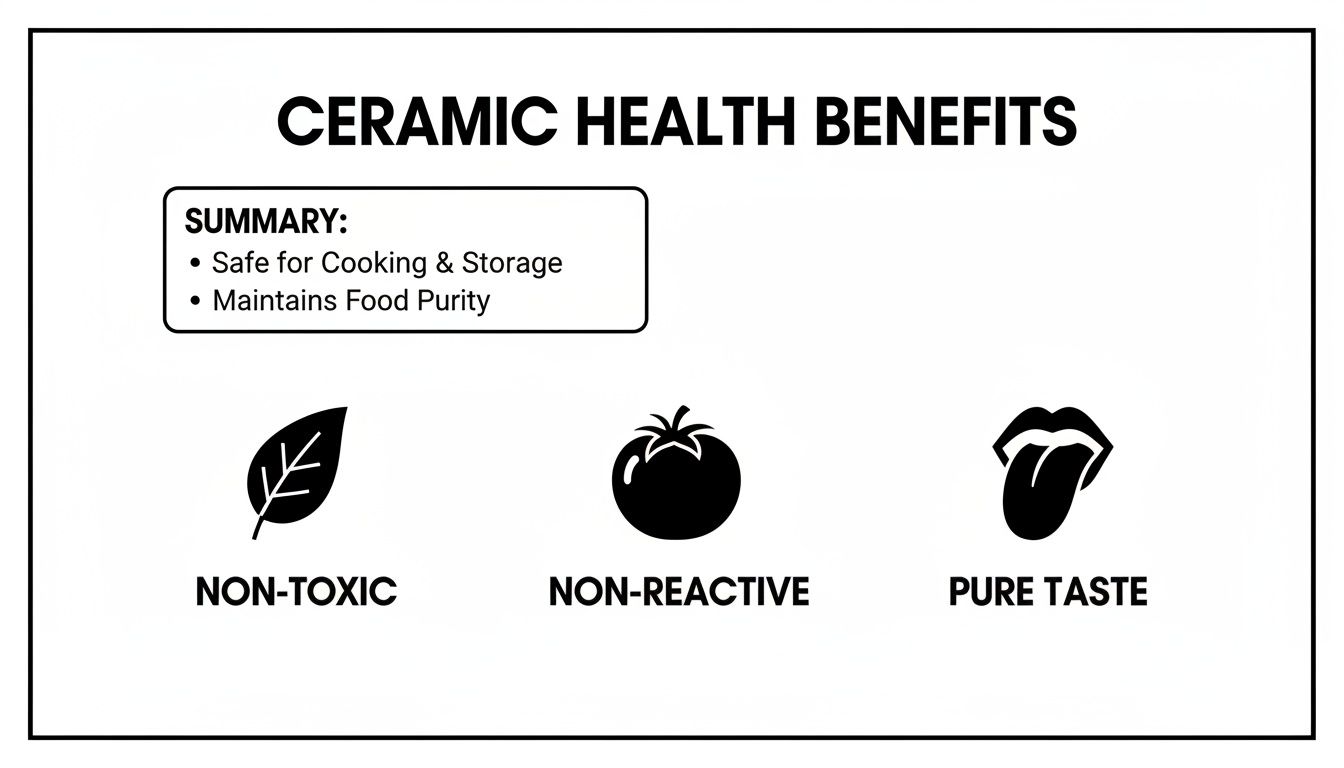
Each of these points represents a commitment to purity. It means your cooking surface is completely non-toxic, won't react with acidic ingredients like tomatoes, and keeps the true flavour of your food front and centre.
Heat Distribution and Retention
Where pure ceramic really comes into its own is holding onto heat. Once it gets up to temperature, it stays there with incredible efficiency. This quality makes it a brilliant choice for dishes you want to keep warm long after they've left the stove, like a hearty soup or a stew you're serving right at the table.
In contrast, stainless steel is quick to react but cools down just as fast when you turn off the heat. Cast iron is a champion at holding heat, but it can be slow to warm up and often has hot spots if you haven't preheated it properly. And those standard non-stick pans? They heat up in a flash, but you can't crank them up to the high temperatures you need for a really good sear.
Pure ceramic offers this unique combination of gentle, even heating and brilliant heat retention. This makes it a specialist tool for slow cooking and keeping things warm for serving—a job where other materials often miss the mark.
Of course, every material has its place. When you’re looking for something like the best non-stick wok for a high-heat stir-fry, you'll probably find that carbon steel or cast iron are better suited for that specific task.
To give you a clearer picture, let's break down how these materials stack up side-by-side.
Cookware Material Comparison
| Feature | Pure Ceramic | Non-Stick (PTFE) | Stainless Steel | Cast Iron |
|---|---|---|---|---|
| Heat Distribution | Even and gentle | Fast, but can be uneven | Fast and responsive | Slow to heat, but even when hot |
| Heat Retention | Excellent | Poor | Poor | Excellent |
| Non-Stick Surface | Naturally non-stick | Excellent (but degrades) | None (requires oil/fat) | Excellent (when seasoned) |
| Health & Safety | 100% non-toxic, non-reactive | Concerns over PTFE/PFOA at high heat | Non-reactive, but can leach metals | Can leach iron (a benefit for some) |
| Durability | High (but prone to thermal shock) | Low (scratches easily) | Very High | Extremely High (can last generations) |
| Max Temperature | Very High | Low to Medium | Very High | Very High |
| Maintenance | Easy to clean | Easy to clean (when new) | Can be difficult to clean | Requires seasoning and careful cleaning |
This table shows there’s no single "best" material—it all comes down to what you’re cooking and what you value most in your kitchen.
Durability and Daily Use
When it comes to durability, the differences become even clearer. Stainless steel is a true workhorse, standing up to scratches and high heat without any fuss. Cast iron is legendary for its toughness and can easily last for generations if you look after it. Pure ceramic is also incredibly durable and scratch-resistant, but it does have one weakness: thermal shock. A sudden, drastic temperature change—like plunging a hot pot into cold water—can cause it to crack.
Traditional non-stick coatings, on the other hand, are the least durable of the bunch. They're easily scratched by metal utensils, and their non-stick magic fades within a few years, meaning they need to be replaced far too often.
So, to boil it all down:
- Pure Ceramic: The master of heat retention and gentle cooking. Your go-to for simmering, baking, and serving.
- Stainless Steel: Highly responsive and tough as nails. Fantastic for searing and sautéing.
- Cast Iron: Unbeatable for holding heat and getting a powerful sear. Just needs regular seasoning.
- Non-Stick (PTFE): Super convenient for delicate foods like eggs. But it has a short lifespan and can't handle high heat.
Ultimately, the right cookware for you really depends on your cooking style. You might grab a stainless steel pan to sear a steak, but pure ceramic is the undisputed champion for a slow-cooked bolognese or a perfectly baked casserole. It's also a versatile choice for different kitchen setups; if you’re looking into options for a modern cooktop, our guide on ceramic induction cookware is packed with helpful advice.
How to Choose the Best Pure Ceramic Cookware
Deciding to bring pure ceramic cookware into your kitchen is a fantastic step towards healthier cooking. But with so many options out there, how do you pick a set you’ll genuinely love for years to come? It’s not just about looks; performance and safety are what really count.
Let’s walk through the essential things to check to make sure you're getting the real deal.
First and foremost, you need to be certain you're buying 100% pure ceramic. This is the single most important detail. Many pans are marketed as "ceramic," but they're actually just metal pans with a thin ceramic coating. That coating can chip and wear away over time, which defeats the whole purpose.
Real ceramic cookware is made from solid clay and minerals, fired into a durable, non-toxic vessel. Look for terms like "solid ceramic" or "100% ceramic" in the product description. Be a little sceptical of vague labels like "ceramic non-stick," as they often refer to coated pans.
Verifying Quality and Safety
Once you’ve confirmed the material, it’s time to dig into the safety credentials. Any reputable brand will be upfront about their testing and standards.
Here's what to look for:
- A clean bill of health: The cookware must be guaranteed free from nasties like PFOA, PTFE, lead, and cadmium. This is absolutely non-negotiable.
- Independent verification: Brands that go the extra mile to have their products tested by a third-party lab are showing a real commitment to quality and safety.
- A solid warranty: A manufacturer that stands behind its product with a good warranty is confident in its durability.
Doing this little bit of homework ensures your new cookware is genuinely safe and built to last. For a closer look at some of the top options on the market, have a read of our guide to the best ceramic cookware in Australia.
Considering Practical Design Features
Beyond the material, the small design details are what will make or break your daily cooking experience. Think about the weight and balance of the pan. It should feel solid and well-made in your hand, but not so heavy that lifting it feels like a workout.
Pay attention to the handles, too. Are they comfortable to grip? Do they stay cool on the stovetop? Some handles are moulded as part of the pot, while others are attached separately. Just make sure any joins feel seamless and secure.
A well-designed piece of pure ceramic cookware feels like an extension of your hand. It should be comfortable to manoeuvre from the stovetop to the oven and finally to the table for serving.
Lastly, check its compatibility with your cooktop. Pure ceramic is a natural fit for gas and electric hobs. However, because it isn't magnetic, it won't work on an induction stove by itself. If you have an induction cooktop, you must choose a model with a bonded induction plate on the base. Always double-check the manufacturer's specs before buying.
This move towards quality materials reflects a bigger shift in the Australian market. The national cookware sector is set to grow from USD 664.44 million to over USD 1,369.43 million by 2033. This growth is largely driven by people wanting non-toxic, eco-friendly, and induction-ready options—all areas where pure ceramic shines. You can find more insights about this expanding cookware market.
By focusing on material purity, safety, and smart design, you'll be well-equipped to choose the perfect pure ceramic cookware for your kitchen.
Maintaining Your Pure Ceramic Cookware
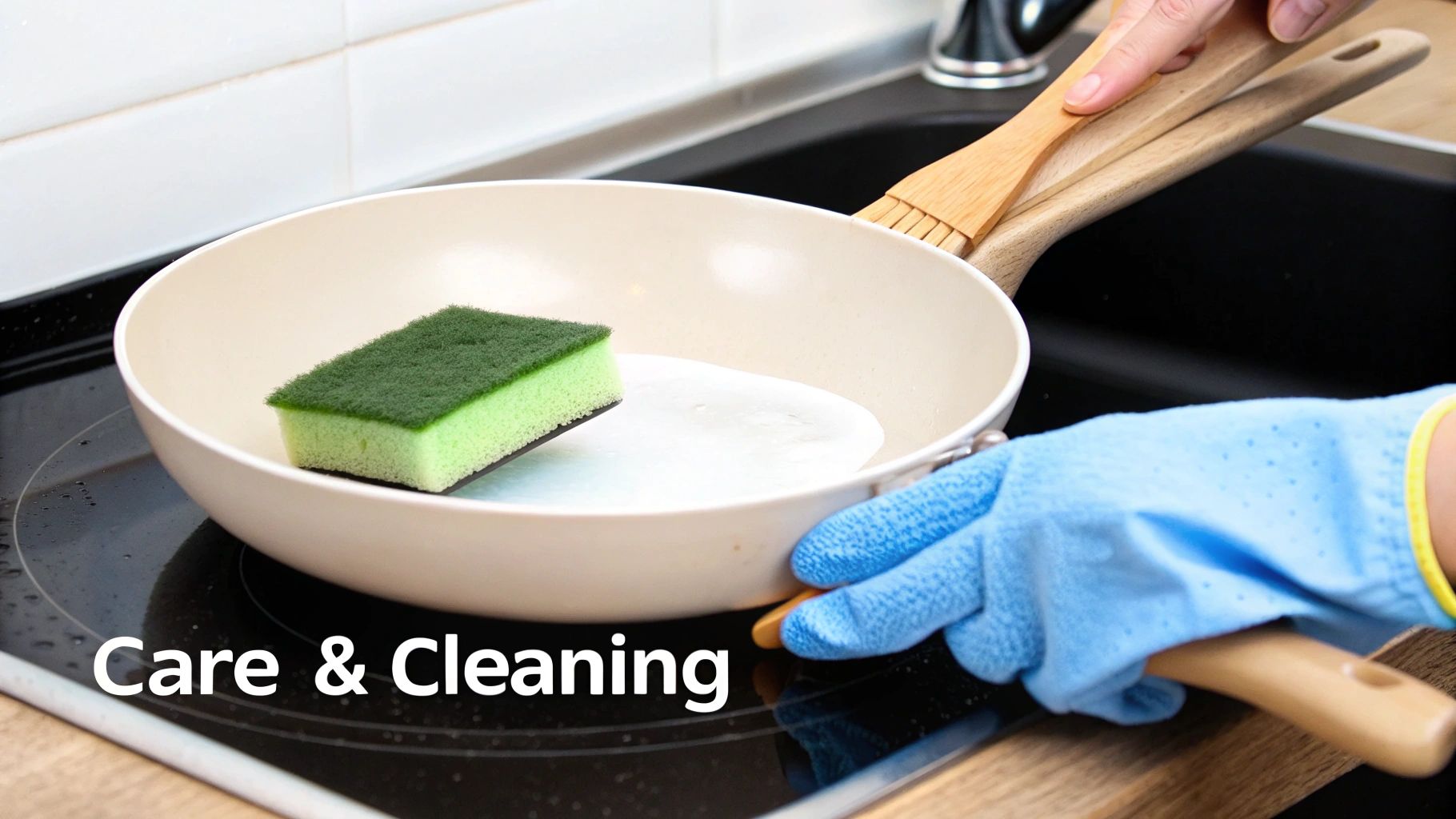
You’ve invested in fantastic, high-quality pure ceramic cookware, and that's a brilliant move for a healthier kitchen. To make sure it performs beautifully for years to come, a little bit of mindful care goes an incredibly long way. Think of it less as a chore and more as protecting your investment.
The golden rule for cleaning is simple: be gentle. Once you're done cooking, always let your pot or pan cool right down before you even think about washing it. A quick wash with warm, soapy water and a soft sponge is usually all it needs to look good as new.
Steer clear of abrasive scourers, steel wool, or harsh chemical cleaners. They're just too aggressive and can easily scratch the glazed surface. While scratches won't make the pan unsafe, they will diminish its naturally non-stick magic over time.
Preventing Cracks and Scratches
The biggest enemy of any pure ceramic piece is something called thermal shock. This happens when the cookware goes through a sudden, extreme temperature change, which can lead to tiny fractures or even a full-blown crack.
It sounds dramatic, but avoiding it is easy if you follow a few simple rules:
- Never plunge a scorching hot pan into a sink of cold water.
- Avoid taking a pan straight from the fridge and whacking it on a high-heat burner.
- Always let your cookware heat up and cool down gradually. Patience is key.
Just as important is what you cook with. While pure ceramic is tough and scratch-resistant, it’s best to stick with wooden, bamboo, or silicone utensils. Using metal tools is a bit like rolling the dice—why risk it? This simple switch will keep your cooking surface looking flawless meal after meal.
Think of it like caring for your favourite dinner plates. You wouldn't scrape them with a metal fork, and the same logic applies here. Gentle handling is the secret to a long and happy life for your cookware.
Smart Storage and Upkeep
How you put your cookware away also plays a part. If you need to stack your pans to save space, just slide a soft cloth, a paper towel, or a proper pan protector between each one. This small step acts as a cushion, preventing chips and scuffs on the rims and cooking surfaces.
And what about that stubborn, burnt-on mess that happens to the best of us? Resist the temptation to get in there and scrape it off. Instead, fill the pan with warm water and a splash of dish soap and just let it soak for an hour or so. You'll be amazed at how easily the food residue lifts off with a gentle wipe.
By following these straightforward tips—gentle cleaning, avoiding thermal shock, using the right utensils, and smart storage—you're doing everything right. Your pure ceramic cookware will pay you back with consistent, reliable performance and stay a beautiful, non-toxic centrepiece in your kitchen for a lifetime of healthy cooking.
Got Questions About Pure Ceramic Cookware? Let's Get Them Answered.
Even with all the benefits covered, you probably still have a few lingering questions. It's one thing to know the theory, but it's the day-to-day practicalities that really matter. Let’s tackle some of the most common queries to make sure you feel completely confident about bringing pure ceramic into your kitchen.
Think of this as the final checklist before you get cooking.
Will It Work on My Hob?
This is usually the first question on everyone's mind, especially with all the different kitchen setups out there. The good news is that pure ceramic cookware is a fantastic performer on both gas and electric hobs. Its knack for distributing heat evenly and gently makes it a perfect match for these classic cooktops.
But there’s one big exception: induction hobs. Pure ceramic is made from clay and minerals, which means it has no magnetic properties. Since induction cooking relies on magnetism to generate heat, a standard pure ceramic pan won't work on its own.
Don't despair if you have an induction stove, though. Many manufacturers have solved this problem by creating pure ceramic cookware with a bonded induction plate on the bottom. This small metal disc is all it takes to make it compatible. Just be sure to double-check the product description or packaging to confirm it’s induction-ready before you buy.
Can I Stick It in the Oven or Dishwasher?
Yes to the oven, but I’d be very careful with the dishwasher.
Most high-quality pure ceramic pieces are oven-safe to impressively high temperatures, often up to 450°C. This is where it truly shines, letting you sear a pot roast on the hob and then transfer the whole thing straight into the oven for a slow braise. It’s brilliant for those one-pan wonders.
Now, about the dishwasher. While many brands will say their cookware is "dishwasher-safe," I always advise against it. Over time, the combination of intense heat and harsh detergents can dull the beautiful finish and even make it more prone to chipping. Honestly, a quick, gentle hand wash is all it takes to keep it looking and performing its best for years.
My Two Cents: Treat your pure ceramic well, and it will treat you well. Use its amazing heat retention in the oven, but save it from the harsh environment of the dishwasher. A little hand washing goes a long way.
The demand for safer, more versatile kitchen gear is growing worldwide, and it’s home cooks who are leading the charge. In fact, the residential sector accounts for a massive 85.3% of the ceramic cookware market share. This shows a clear shift towards people wanting chemical-free pans for their families. Australia is a big part of this trend in the booming Asia-Pacific market. You can read more about the global ceramic cookware market trends on cognitivemarketresearch.com.
Do I Need to Season Pure Ceramic Cookware?
This all comes down to the finish. The vast majority of modern pure ceramic cookware you'll find has a glazed surface. Think of this glaze as a super-thin layer of glass that's been fired onto the clay, sealing it completely. This process creates a perfectly smooth, non-porous surface that is naturally non-stick. Glazed ceramic does not need seasoning.
The only time you’d need to season ceramic is if you’re using a traditional, unglazed piece, like an old-school tagine or a rustic clay baker. These are porous and really benefit from a good seasoning. This involves rubbing the surface with oil and heating it gently to build up a natural non-stick patina over time. But for the slick, modern pans you’re likely looking at, you can skip this step entirely.
Here at Everti, our mission is to fill kitchens with tools that are pure, safe, and made to last a lifetime. While we’re huge advocates for the incredible durability of titanium, we believe that understanding all your non-toxic options—like pure ceramic—helps every cook make healthier choices.
Ready to explore? Check out our collection of lifetime kitchen essentials.