

When you’re on the hunt for the best ceramic saucepan, it really boils down to a few key things: you want something non-toxic, a pan that heats up evenly without frustrating hot spots, and one that works perfectly on your specific cooktop. The absolute best ones almost always have a solid, heavy-gauge aluminium or stainless steel core, which is the secret to great heat distribution. This is then finished with a tough, PFOA-free ceramic coating that gives you that brilliant non-stick surface without the nasties.
Why Ceramic Saucepans Are Taking Over Modern Kitchens
If you’ve browsed any kitchenware store lately, you’ve probably noticed that ceramic cookware is having a real moment. But this isn't just some passing fad. It’s a genuine shift, with home cooks everywhere looking for healthier and more dependable pots and pans for their everyday cooking.
The huge appeal of ceramic lies in what it’s missing. You won’t find any PTFE, PFOA, or other iffy chemicals that have long been associated with traditional non-stick coatings. It's all about peace of mind.
This focus on safer materials fits right in with the bigger picture of top kitchen design trends, where health, sustainability, and good looks are king. Ceramic saucepans nail this trifecta, often coming in beautiful, vibrant colours that just look great on the hob.
The numbers back this up, too. Here in Australia, the market for ceramic cookware is booming, with revenues expected to hit USD 88.92 million in 2024. Even more telling, it’s projected to more than double to USD 187.65 million by 2033. This isn't a small change; it's a clear signal that consumers are actively choosing these non-toxic options.
A great saucepan isn’t defined by a single brand name. It's about understanding the core components—like the base material and coating quality—that separate a brilliant pan from a disappointing one.
In the end, choosing the right ceramic saucepan is about finding the perfect match for your kitchen and cooking style. It’s about moving on from cheap, disposable cookware and investing in pieces that are durable, safe, and a genuine pleasure to use.
For a closer look at what separates the good from the great, check out our complete guide to the best ceramic pans available in Australia.
What’s Under the Hood? A Look Beneath the Ceramic Coating
That smooth, colourful ceramic surface is what catches your eye, but the real workhorse of a saucepan is what’s underneath. Think of the pan's core material as its engine—it determines how evenly it heats, how heavy it feels, and ultimately, how long it will last. Getting this part right is the secret to finding a pan you’ll love using for years.
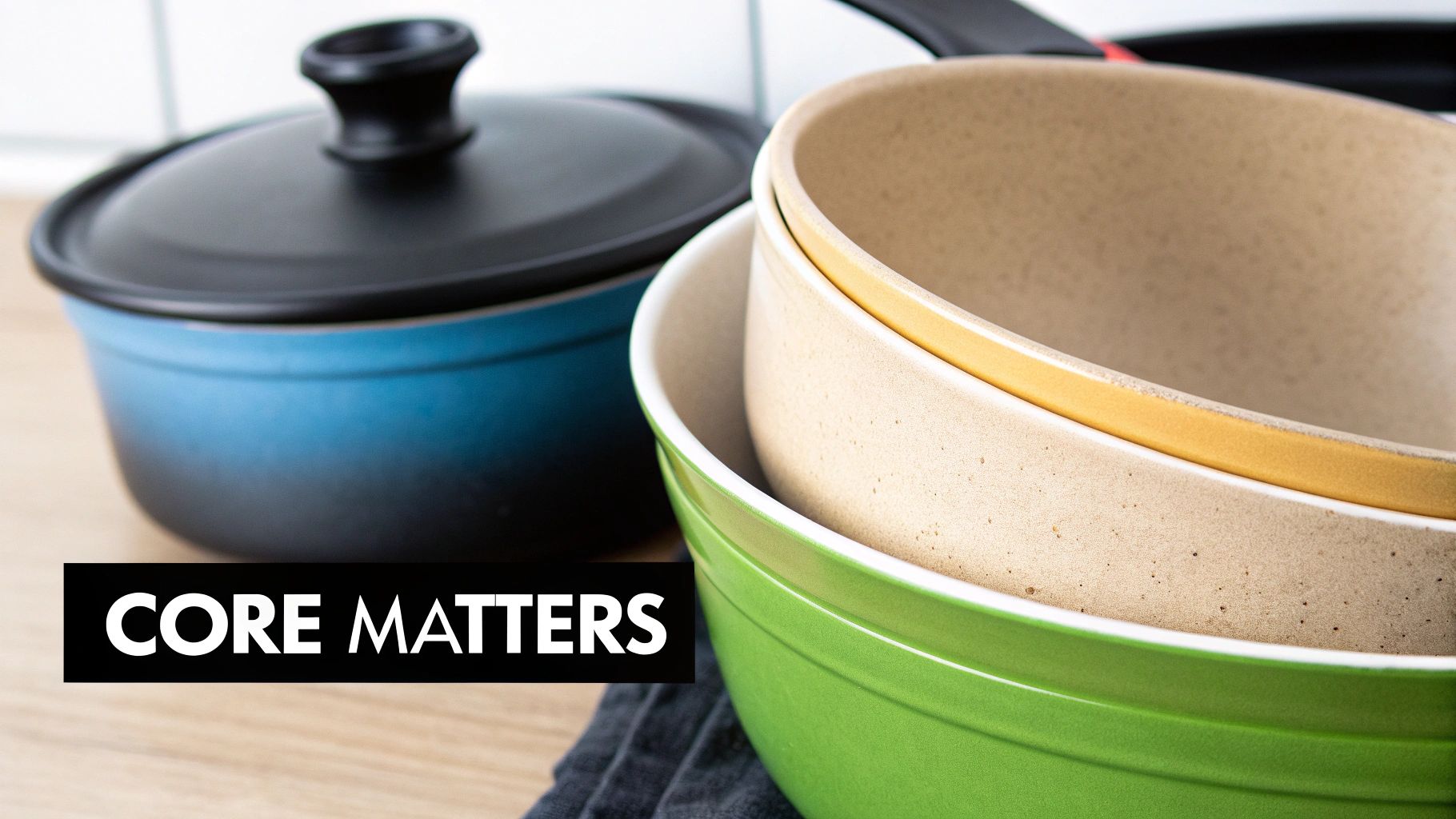
Most ceramic pans are built around either an aluminium or stainless steel base. Heavy-gauge aluminium is a brilliant heat conductor. It gets hot fast and spreads that heat evenly across the base, which is exactly what you want to avoid those frustrating hot spots that can scorch a delicate cream sauce.
On the other hand, you've got multi-ply stainless steel. It’s incredibly durable and is usually the go-to for induction cooktop compatibility.
No matter which material you choose, a thick, solid base is a must. A flimsy pan will inevitably warp over high heat, leading to an uneven cooking surface where oil pools in the middle and your food catches on the edges. When you're in the shop, pick up the pan. It should feel solid and well-balanced, not light and tinny.
Understanding the Coating Itself
Let’s clear something up: not all "ceramic" is the same. The term can be a bit misleading, so it’s worth knowing what you’re actually buying.
- Ceramic-Coated: This is the most common type. It features a metal base (like aluminium) with a mineral-based, non-stick layer sprayed on top. When looked after, these pans are fantastic performers for everyday cooking.
- 100% Ceramic: This cookware is made purely from clay that’s been fired in a kiln. It's completely non-toxic but heats up much more slowly and can be quite fragile if you knock it. For most day-to-day tasks, a quality ceramic-coated pan is the more practical and durable option.
My Two Cents: Keep an eye out for pans with reinforced coatings. Many brands now add things like titanium or even diamond particles to their ceramic layers. It sounds like a gimmick, but it’s not just marketing talk. These additions genuinely make the surface harder and more resistant to scratches, which means your non-stick performance will last a whole lot longer.
Ultimately, you’re looking for that perfect marriage: an efficient core material paired with a tough, multi-layered coating. Looking past the pretty colour and scrutinising the pan's construction is what will help you find a truly great piece of cookware, not just a good one.
Matching Your Saucepan to Your Cooktop
A brilliant saucepan should feel like it was made for your stove, but that perfect partnership doesn't happen by accident. You need to make sure the pan you choose is actually compatible with your cooktop, whether you're cooking with gas, electric, or induction. Getting this right from the start means better, more even cooking, and it prevents any potential damage to your new pan or the appliance itself.
If you've got a modern glass or ceramic electric cooktop, a perfectly flat base on your saucepan is an absolute must. Even the slightest warp or curve means the pan won't make full contact, leaving you with annoying hot and cold spots and a lot of wasted energy. Look for a pan with a heavy, solid base—it's far less likely to buckle and lose its shape over time.
Gas hobs, on the other hand, are a bit more forgiving and can handle pans that aren't perfectly flat. Still, the best ceramic saucepan for a gas flame will have a sturdy base designed to spread that concentrated heat evenly. This prevents that dreaded scorching right in the middle of the pan.
Induction Hobs: A Special Case
Induction is a whole different ball game. It works by creating a magnetic field to heat the cookware directly, which means your saucepan must have a magnetic base to even work.
Here’s a simple trick you can do right in the store to save yourself a headache later: just bring a small magnet and see if it sticks firmly to the bottom of the pan. If it does, you're good to go—it's induction-ready.
The need for induction-compatible cookware is a huge driver behind its soaring popularity. In Australia, the cookware market is booming, hitting a value of USD 664.44 million in 2024. More and more, home cooks are looking for options that are non-stick, eco-friendly, and induction-ready, pushing ceramic pans right to the front. If you're curious about these market shifts, you can explore detailed insights on the Australian cookware market to see what's driving the trends.
Your cooktop isn't just one of many factors to consider; it's the foundation of your decision. To make it easier, here’s a quick breakdown of what to look for based on what's in your kitchen.
Ceramic Saucepan Features by Cooktop Type
| Feature | Gas Cooktop | Electric Coil/Ceramic Cooktop | Induction Cooktop |
|---|---|---|---|
| Base Material | Any (aluminium, steel, etc.) | Any, but heavier is better | Magnetic Base Required (ferrous metal) |
| Base Shape | Flat or slightly rounded is fine | Must be perfectly flat | Must be perfectly flat |
| Heat Conduction | Needs good heat distribution | Excellent, even heat contact | Fast, direct magnetic heating |
| Pro Tip | Look for thicker bases to prevent centre hot spots. | Avoid thin, lightweight pans that can warp easily. | Do the magnet test before you buy! |
Ultimately, choosing a saucepan that doesn't work with your cooktop will only lead to frustration. But when you find the right match, you'll find every meal just gets that little bit easier and more enjoyable to prepare.
Beyond Cooking Performance: The Details That Matter
Sure, a saucepan needs to cook well, but it's the little design details that make you fall in love with it. These are the things that affect how it feels to use day in and day out, turning cooking from a chore into a pleasure. An awkward handle or a rattling lid can sour the experience, no matter how evenly the pan heats your food.
Let's start with the handle. It should feel like an extension of your arm—comfortable, secure, and well-balanced. Look for ergonomic shapes that fit your grip naturally and materials that stay cool on the hob, like silicone or smartly designed stainless steel. Pay close attention to how it's attached; securely fastened rivets are the gold standard for durability, while a handle that's just screwed on is likely to loosen over time.
Lids, Rims, and Overall Balance
Next up is the lid. You absolutely need one that fits snugly to trap heat and moisture, which is key for a perfect simmer or for steaming veggies. A tempered glass lid is a massive bonus, letting you peek at what's happening inside without losing all that precious heat. A small steam vent is another fantastic feature to look out for, as it helps prevent boil-overs and that annoying lid-rattling dance.
The overall feel of the saucepan is just as important. When you pick it up, it should have a bit of heft—a sign of quality—but not be so heavy that pouring a full pot of soup becomes a workout. Also, check the rim. A sturdy, rolled rim might seem like a minor detail, but it’s brilliant for preventing chips and ensuring you can pour without messy drips.
This decision tree helps visualise which pan features are critical for your specific stovetop.
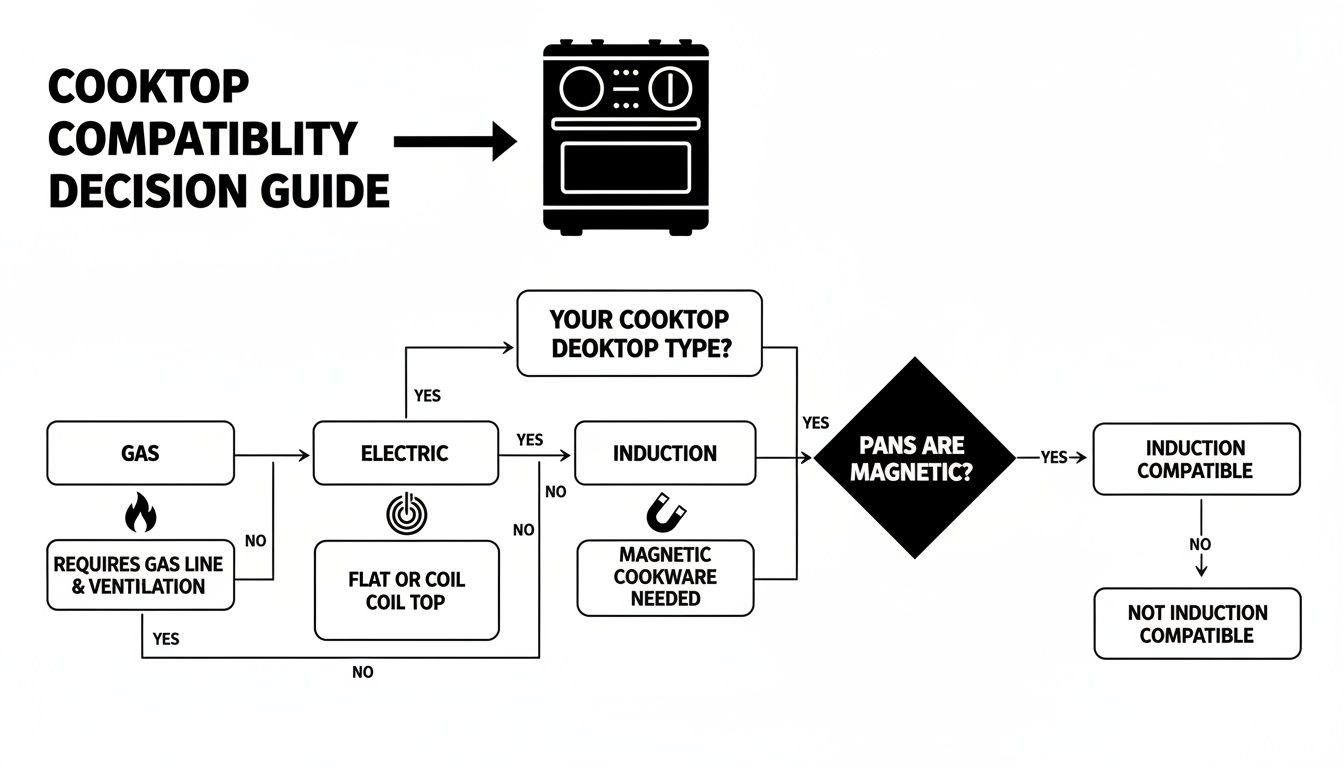
As the guide shows, while gas is more forgiving, electric and induction hobs really need specific base designs to perform at their best.
When you're assessing a pan in the shop, actually imagine using it. Does the handle feel right in your hand? Is the lid practical? Does the weight feel balanced when you tilt it to pour? Answering these questions is how you find a tool you'll genuinely enjoy using.
Proper care is the final piece of the puzzle. While many pans claim to be dishwasher-safe, I always recommend hand washing to protect that delicate ceramic coating. If you want to dive deeper into this, our guide on caring for dishwasher-safe pans has some great tips to keep your cookware looking and performing its best for years.
Finding the Right Size and Value for Your Budget
When you're on the hunt for the perfect ceramic saucepan, it's not just about the fancy features; it's about what actually works for your kitchen and your budget. Getting the size right is a game-changer for your daily cooking.
A compact 1.5L saucepan is brilliant for those quick jobs, like warming up a single serve of soup or whipping up a sauce for two. But if you’re making a big batch of bolognese for the family or boiling potatoes for a Sunday roast, you'll need something more substantial, like a 3.0L pan.
Take a moment to think about how you really cook. If it’s usually just for yourself or a partner, a smaller pan is more practical and uses less energy. For a bustling household or if you love meal-prepping, a larger size is a no-brainer. If you find you need a bit of everything, our guide to Australian saucepan sets might show you that a bundle is a smarter buy.
Decoding the Price Tag
So, what’s the real difference between a cheap saucepan and a more expensive one? It usually comes down to the build quality. Pricier pans often have a thicker, multi-layered base that gives you far better control over the heat, a tougher ceramic coating that won't give up after a few months, and handles that feel sturdy and stay cool to the touch.
The real trick is finding that sweet spot between quality and cost. Spending a little more upfront can save you money in the long run because a well-made pan will last for years and cook your food more evenly.
The great news for us here in Australia is that the market is working in our favour. The global ceramic cookware market is tipped to grow by about 8.8% annually, which means more competition and better prices are landing on our shelves. High-quality, popular sizes are becoming much easier to find without breaking the bank. You can read more about these market insights to see how the industry is changing. And if you're outfitting your kitchen from scratch, it sometimes helps to think like a pro; this commercial kitchen equipment checklist offers a broader perspective on what makes for a well-equipped cooking space.
Got Questions About Ceramic Saucepans? We've Got Answers.
Choosing new cookware always brings up a few questions. To help you feel completely confident in your decision, I’ve put together answers to some of the most common queries I hear about ceramic saucepans. Think of this as your final checklist before you find the perfect pan.
Are Ceramic Saucepans Actually Safe to Use?
Yes, absolutely. This is one of the main reasons people are switching to ceramic. A high-quality ceramic coating is made from natural materials like sand and minerals.
This means they are completely free from chemicals you might worry about in older non-stick pans, like PTFE, PFOA, lead, and cadmium.
A big plus is that if you accidentally overheat a ceramic pan, it won't release any harmful fumes like some traditional non-stick surfaces can. The key is simply to buy from a reputable brand that’s transparent about its materials and how its pans are made.
How Do I Keep the Non-Stick Surface Working Like New?
The secret to a long-lasting non-stick surface is all in the care. A few simple habits will make a massive difference to how your pan performs and how long it lasts.
- Dodge the "Thermal Shock": Always let your pan cool down on the stovetop before washing. Plunging a hot pan straight into cold water can cause tiny, invisible cracks in the coating, which is the beginning of the end for its non-stick properties.
- Choose Your Tools Wisely: Stick to silicone, wood, or nylon utensils. Even one scrape with a metal fork or spatula can create scratches that will ruin the ceramic surface over time.
- Wash by Hand (It's Worth It): I know some pans say they're dishwasher-safe, but the harsh detergents are incredibly abrasive and will slowly wear down the coating. A quick, gentle wash with a soft sponge is always the best way to go.
Here's a pro tip: Using a small amount of oil or butter when you start cooking doesn't just add flavour. It also helps to season and protect the non-stick surface, keeping it in top condition for years to come.
As for whether a ceramic saucepan is oven-safe, that depends entirely on the manufacturer. It usually comes down to what the handle is made of, so always check the product details for the maximum safe temperature.
At Everti, we believe in creating kitchen essentials that are safe, durable, and a pleasure to use. Explore our range of premium titanium cookware designed for a lifetime of healthy cooking.
https://everti.com.au