

When you're on the hunt for the best cookware set in Australia, you're really looking for a long-term partner for your kitchen. The goal is to find something durable, non-toxic, and perfectly suited to the way you cook. The real heavy hitters in this space are often crafted from pure titanium, multi-ply stainless steel, or classic enamelled cast iron – all materials built for longevity and performance in a modern Aussie home.
Why Your Cookware Is Your Most Important Kitchen Investment
Picking out a new set of pots and pans is so much more than a simple shopping trip. It’s a genuine investment in your daily meals, your family's health, and the sheer joy of cooking. The right set can single-handedly turn cooking from a chore into a creative outlet, which is a big deal in Australia where home cooking is such a vibrant part of our culture. This guide will cut through the noise and help you find a collection that's truly built to last.
More Than Just Tools
It's time to move past the flimsy, temporary pans that warp and peel after just a few months. A high-quality cookware set becomes a reliable kitchen companion, one that makes every meal you prepare just that little bit better. It’s about getting that perfect, crusty sear on a steak, or simmering a delicate sauce without the constant fear of it catching and burning. That kind of reliability is what builds real confidence at the stove.
Ultimately, a great set comes down to a few key principles:
- Safe and Non-Toxic Materials: You want peace of mind that nothing nasty is leaching into your food.
- Exceptional Durability: It needs to stand up to the rigours of daily use, year after year.
- Beautifully Functional Design: It should be a pleasure to use, from handles that feel good in your hand to lids that fit just right.
A truly great cookware set is like having a team of versatile specialists. Think of a skillet that can sear a steak on the cooktop and then go straight into the oven to finish, or a saucepan that’s just as good for a gentle custard as it is for a rolling boil.
The Australian Kitchen Context
Kitchens across Australia are changing. Induction cooktops are fast becoming the standard, so compatibility is no longer an afterthought – it’s a must-have. There's also a huge, and very welcome, shift towards health and sustainability. We're all more aware of the nasties we want to avoid, like PFOA and PFOS coatings. A cheap, disposable pan might save you a few dollars today, but it almost always ends up in landfill within a year or two, which is bad for your wallet and the planet.
This guide is all about finding a permanent solution. We’ll get into the nitty-gritty of why things like material science, even heat distribution, and solid construction are so important. Once you understand these fundamentals, you’ll be able to confidently choose one of the best cookware sets in Australia — one that won't just meet your needs now, but will serve you and your family for decades.
A Practical Guide to Cookware Materials
Choosing the right cookware material is easily the most important decision you'll make when buying a new set. Think of it like choosing tyres for your car; you wouldn't put city tyres on a 4WD heading for the outback. The material of your pots and pans dictates everything—how evenly they heat up, how well they hold that heat, how heavy they are to lift, and what sort of TLC they’ll need to keep them in top shape.
Every material has its own personality in the kitchen. Getting to know these personalities is the secret to finding a set that perfectly matches your cooking style, your health priorities, and the kinds of meals you truly love to make. Let's break down the most common options you'll find when hunting for the best cookware sets in Australia.
H3: Stainless Steel: The Reliable Workhorse
Stainless steel is probably the most popular kid on the block, and for good reason. It’s tough, it won’t react with acidic foods (so your tomato sauce won’t get a weird metallic tang), and it's brilliant for getting that perfect golden-brown sear on a piece of meat. This makes it a genuine all-rounder.
But here’s the catch: on its own, stainless steel is a pretty terrible conductor of heat. To get around this, quality stainless steel pans are "clad," meaning they have a core of a more conductive metal like aluminium or copper sandwiched between layers of steel. This clever design gives you the durability and non-reactive surface of steel with the beautiful, even heating of aluminium.
Its popularity is undeniable here. In fact, stainless steel cookware is a massive part of the Australian market, with pots and pans making up a huge 44.48% share of revenue. That tells you just how central it is to the average Aussie kitchen.
H3: Cast Iron: The Heirloom Heavyweight
Cast iron is the sentimental favourite, famous for its incredible ability to hold heat. Once it gets hot, it stays seriously hot. This makes it unbeatable for searing a steak, frying up crispy chicken, or baking cornbread with that perfect crust that other pans just can't seem to replicate.
The trade-off? It’s heavy and needs a bit of looking after. Cast iron requires "seasoning"—a process of baking on thin layers of oil to build up a natural, non-stick surface. It can also react with acidic foods and will rust if you don't dry it properly. But if you give it the care it needs, a good cast iron skillet will last for generations.
A well-seasoned cast iron pan becomes a part of your family’s story. Each meal adds to its unique patina, creating a cooking surface that holds the memory of countless shared dishes.
H3: Non-Stick Coatings: The Convenient Sprinter
Let's be honest, standard non-stick pans are incredibly popular because they make life easy. Food slides right off, and cleanup is a breeze, which is a huge plus for beginners or for anyone cooking delicate things like eggs and pancakes. That convenience, however, often comes at the cost of durability and raises some potential health questions.
Most common non-stick coatings are made from a material called PTFE. When it gets too hot, it can start to break down and release fumes. Scratches can also cause the coating to flake off into your food. Because of this, they usually need replacing every few years, which isn’t great for your wallet or the planet.
This diagram breaks down the core traits of these first three materials to help you see their strengths and weaknesses at a glance.
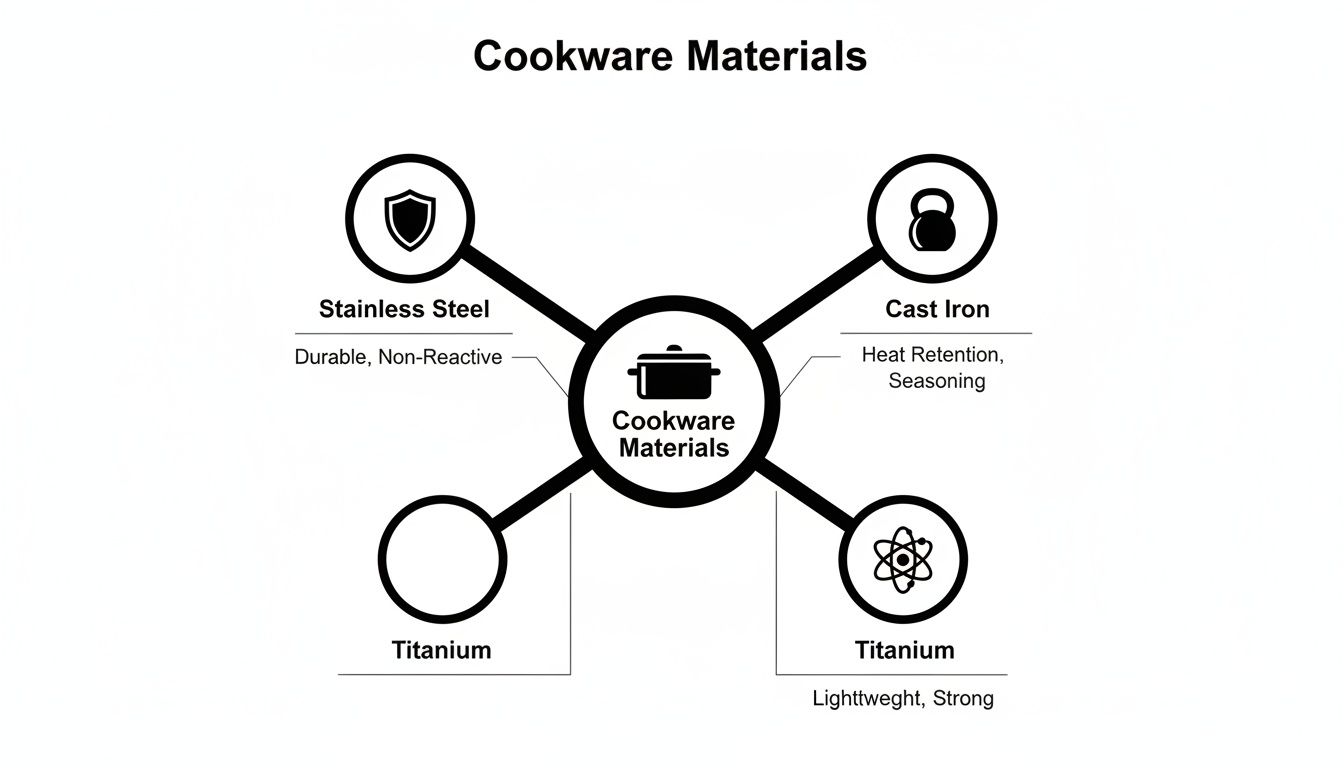
As you can see, it’s all about finding the right balance between performance, durability, and ease of use. There really is no single "best" option that works for everyone.
H3: Pure Titanium: The High-Performance Innovator
Finally, we have pure titanium, a material that brings together an impressive list of benefits. It has the strength and durability of steel but at a much lighter weight, making it far easier to handle on the stove. It’s this kind of detail that makes all the difference when you’re mastering pan-searing techniques, which really depend on having the right skillet for the job.
Unlike coated pans, pure titanium is naturally non-stick without any chemical layers. It's also completely inert and non-reactive, which means the taste of your food stays pure and exactly as it should be. This makes it one of the safest and healthiest materials you can cook with.
Here’s a quick rundown of the benefits:
- Lightweight Strength: As strong as steel, but so much lighter.
- Naturally Non-Stick: No chemical coatings to worry about.
- Completely Non-Reactive: Keeps your food's flavour pure.
- Exceptional Durability: Fights off scratches, corrosion, and warping.
Yes, the upfront cost might be higher, but its incredible longevity and health benefits make it a fantastic long-term investment. If clean cooking and buying a set that will last a lifetime are your top priorities, titanium is a clear winner. For more on what makes a smart investment, take a look at our guide on what to look for in good quality pots and pans.
To help you compare these options side-by-side, we've put together a simple chart that summarises the key features of each material.
Cookware Material Comparison Chart
| Material | Heat Conduction | Durability & Lifespan | Maintenance | Health & Safety | Best For |
|---|---|---|---|---|---|
| Stainless Steel | Moderate (good with clad core) | Very High (decades) | Low | Very Safe | Searing, browning, all-purpose cooking. |
| Cast Iron | Slow to heat, but excellent retention | Extremely High (generations) | High (requires seasoning) | Safe when seasoned; reactive with acid | Searing, frying, baking, slow-cooking. |
| Non-Stick (PTFE) | Very Good | Low (1-5 years) | Very Low | Concerns over high heat & scratches | Eggs, pancakes, delicate fish, low-fat cooking. |
| Pure Titanium | Good & Even | Extremely High (lifetime) | Low | Highest Safety (inert & non-reactive) | Healthy cooking, searing, anyone wanting a lightweight, durable pan. |
This chart should give you a clear, at-a-glance idea of how each material stacks up, helping you weigh the pros and cons based on what matters most to you in the kitchen.
What to Look for Before You Buy a Cookware Set
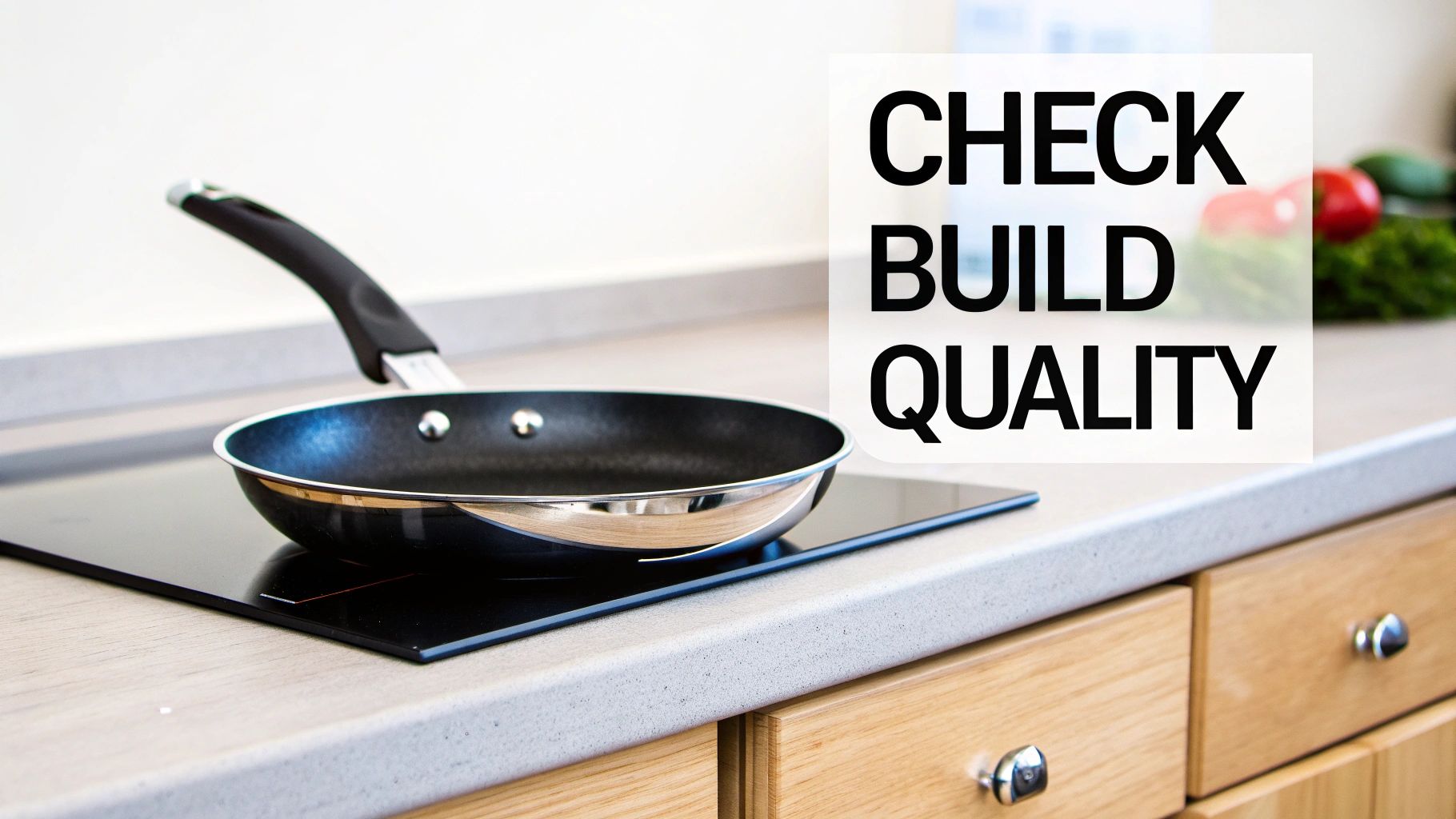
Beyond the main material, it’s the little things that separate a good cookware set from a truly great one. These design and construction details are often what makes the difference between a joy to use and a daily frustration. Getting these right is how you find the best cookware set in Australia for your kitchen and the way you cook.
It’s easy to overlook the most important features when you're just looking at a box or a webpage. Things like how a handle feels in your hand, how well the lid fits, or even the shape of the pan’s rim can have a massive impact on your cooking experience. Let's break down the practical things you need to check before you commit.
Cooktop Compatibility Is a Must
First things first: will the cookware actually work on your stove? This is absolutely critical, especially with so many modern Aussie homes now featuring induction cooktops. Induction works by creating a magnetic field to heat the pan directly, so the cookware itself has to be magnetic.
How can you tell? Most manufacturers now put a little "induction compatible" symbol (it looks like a coil) on the box. But there's a much simpler, foolproof method.
- The Magnet Test: Grab any fridge magnet and hold it to the bottom of the pot or pan.
- A Solid Stick: If the magnet clings on tight, you’re good to go. It’s induction-ready.
- A Weak Grip or No Stick: If it barely holds on or slides right off, it won't work on an induction cooktop.
Materials like cast iron and most types of stainless steel are naturally magnetic. On the other hand, aluminium, copper, and glass will only work if the manufacturer has bonded a special magnetic steel plate to the base. Always, always double-check this before buying.
Construction Quality and Design Details
The overall build quality of a pot or pan tells you a lot about how long it's going to last. A well-made set just feels right—it's solid and balanced in your hand, which is a sure sign of quality engineering. You'll want to pay close attention to the handles, lids, and the general finish.
Handles should feel like they are part of the pan, securely attached with sturdy rivets. Screws are a red flag as they tend to loosen over time. They also need to be ergonomic, giving you a comfortable, safe grip when you're lifting a heavy pot of boiling water. Stay-cool handles are a game-changer, saving you from grabbing an oven mitt for every little task.
Don't forget the lids. A snug-fitting lid is essential for trapping heat and moisture, which is the secret to a great simmer, perfectly steamed veggies, and tender braises. Look for lids that sit flush on the rim without any wobbling.
A well-designed pan just feels right. It's balanced, the handle provides confident control, and the lid seals perfectly. This isn't just about aesthetics; it’s about creating cookware that works with you, not against you, during the busy moments of cooking.
Choosing the Right Set Composition
Cookware sets come in all sorts of configurations, from a basic three-piece starter kit to a huge 13-piece collection. It’s tempting to go for the biggest set to get the most "value," but that’s usually a mistake. The real goal is to buy pieces you will actually use, day in and day out.
Before you start shopping, take a quick inventory of your cooking style:
- Mostly fry and sauté? Make sure the set has a couple of high-quality frying pans in different sizes.
- Love making soups, stocks, or big pasta dishes? A large, heavy-bottomed stockpot is a non-negotiable.
- Cooking for one or a whole family? This will determine the ideal size for your saucepans and pots.
Picking a set that matches your real-life cooking habits stops your cupboards from filling up with pans that never get used. For a bit more help on this, our guide to choosing a pot and pan set can help you zero in on what you truly need.
The Power of a Lifetime Warranty
Last but not least, never underestimate a good warranty. A lifetime warranty is more than just a marketing gimmick; it's a manufacturer's vote of confidence in their own product. It tells you they believe their cookware is built to handle decades of daily use without failing.
When a brand is willing to stand behind its product for life, you know it has invested in top-notch materials and craftsmanship. That kind of peace of mind is priceless, protecting your investment against defects for as long as you own it. It's one of the clearest signs you're buying a set that's truly built to last.
Understanding Cookware Prices: From Budget Buys to Premium Investments
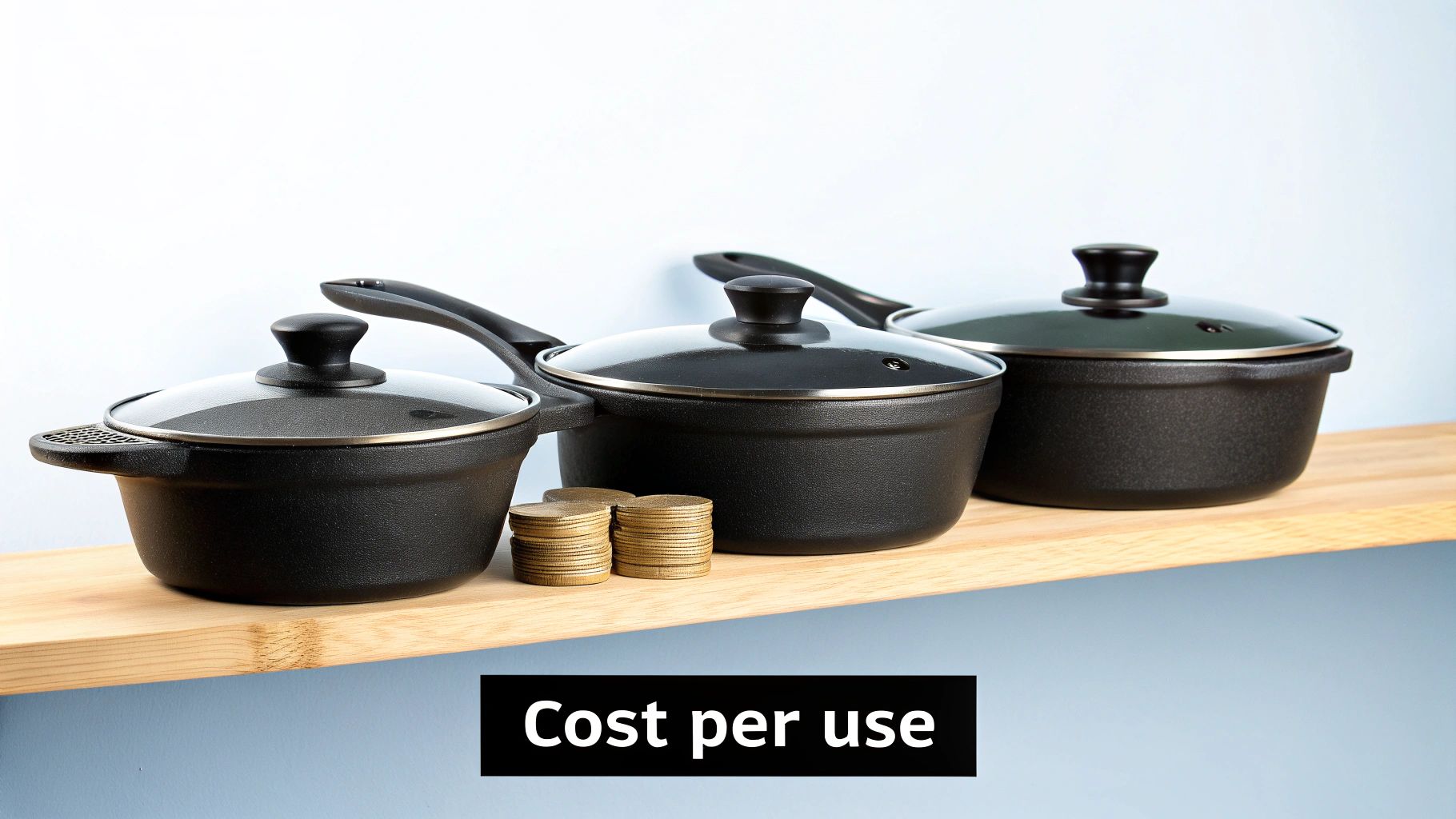
Trying to figure out cookware prices can feel a bit like buying a car. You've got your budget-friendly runabouts, your reliable family sedans, and your high-performance luxury models. To cut through the noise, it really helps to break the Aussie market down into three distinct tiers.
Each category comes with a different promise on performance, longevity, and ultimately, value for money. Getting your head around these tiers is the key to finding a set that fits your wallet and your long-term kitchen goals.
Entry-Level Cookware
This is the stuff you'll see piled high in major department stores and supermarkets. We're talking about sets made from thin aluminium with a pretty basic non-stick coating. The low price tag is certainly tempting, but it almost always comes with a catch.
Pans in this bracket are notorious for warping under high heat, which means you'll struggle with hot spots and uneven cooking. The non-stick surface scratches if you so much as look at it the wrong way, often forcing you to replace the whole set within a year or two. They're fine for a uni student or a temporary kitchen, but they're not a long-term solution.
Mid-Range Cookware
Take a step up, and you’ll find a real jump in quality. In the mid-range, you start seeing better-built stainless steel sets, often with an aluminium core to help spread the heat more evenly. The non-stick options here are also much thicker and more durable.
This category is the sweet spot for many home cooks, offering reliable performance for everyday meals. It's a definite upgrade from the entry-level gear, but it might not have the rock-solid durability or precision of the premium stuff.
The real shift in thinking about cookware cost comes when you move from asking, "How much does it cost to buy?" to "How much does it cost to own?" A cheap pan you replace three times is often more expensive in the long run than one quality pan you buy once.
Premium Cookware Investments
At the top of the ladder, you'll find cookware built to last a lifetime. We're talking about superior materials like multi-ply stainless steel, enamelled cast iron, and even pure titanium. These pieces are engineered for exceptional heat control, incredible durability, and a safer cooking experience.
Sure, the upfront cost is higher, but this is where the idea of cost per use really clicks. A premium pan might get used thousands of times over decades, making its cost per meal tiny compared to the cycle of buying and binning cheaper sets. This mindset is catching on, with Australia's premium cookware market on the rise as more people look for luxury, long-lasting kitchen gear. You can explore more about this growing demand for high-end kitchenware and its market resilience.
This approach isn't just better for your wallet over time; it's also far more sustainable. Investing once in a high-performance, non-toxic set means you stop throwing warped and scratched pans into landfill every few years. It’s about choosing tools for your kitchen that are as enduring as the memories you make with them.
Where to Find the Best Cookware in Australia
So, you've figured out what you want from your cookware—the material, the features, the whole lot. Now for the big question: where do you actually buy it? In Australia, you've got a few different avenues to explore, and each has its own quirks. Knowing the landscape will help you track down the perfect set without overpaying.
For years, the go-to option was heading to a big department store or a specialist kitchenware shop. The massive advantage here is obvious: you can actually touch the products. Feeling the heft of a pan in your hand or checking how a handle fits your grip gives you a real sense of its quality, and that can be hard to beat.
But that hands-on experience has its downsides. The selection is often limited to big, established names, so you might miss out on newer, more innovative brands. Plus, the prices are usually a bit higher to cover the costs of running a physical store.
The Rise of Direct-to-Consumer Brands
Lately, there’s been a huge shift in how we buy things, and cookware is no exception. Direct-to-consumer (DTC) brands that sell exclusively online are becoming the first stop for Aussies hunting down the best cookware sets in Australia. By cutting out the retail middleman, they can often offer top-notch quality at a much more attractive price.
The perks go well beyond just saving a few dollars, though. When you buy straight from the source, you get:
- The Full Lineup: You can see every single product a brand makes, including special colours or limited-edition items you’d never find in a department store.
- Expert Support: If you have a question or a warranty issue, you're talking directly to the people who live and breathe the product, not a general retail assistant.
- Deep-Dive Details: Brand websites are usually packed with detailed specs, care guides, and the story behind their materials—far more info than you’d get on a store shelf.
This direct-to-you approach has given Australian home cooks more choice than ever. It's all part of a bigger trend, really. We're spending more time in our kitchens, getting creative, and rediscovering the joy of a home-cooked meal. In fact, the Australian cookware market is growing like crazy, mostly because our kitchens are once again becoming the heart of the home. You can discover more insights about the Australian cookware market and its impressive growth.
How to Be a Savvy Online Shopper
Shopping online is fantastic, but it does mean you need to do a little more homework. Since you can’t physically hold the pan, you have to look for other clues to make sure you’re making a smart investment.
When shopping online, verified reviews and independent certifications are your best friends. They are the digital equivalent of a trusted recommendation from a friend who has already put the product to the test.
Always look for brands that are open and honest about how their products are made. Here are the key things to watch out for:
- Verified Customer Reviews: Don't just read the glowing five-star reviews. Dig into the ones from verified purchasers who give honest feedback on how the cookware performs day-to-day and holds up over time.
- Independent Certifications: A third-party report, like one from SGS confirming the purity of the steel, is a massive tick of approval. It's proof that a brand isn't just making empty claims—their quality is backed by objective testing.
- Clear Warranty Information: A good brand stands by its products. Their lifetime warranty should be easy to find, read, and understand.
By keeping an eye out for these signals, you can click "buy" with total confidence. And if you're not after a full set but just need to fill a gap in your collection, checking out a curated range of high-quality cooking pans for sale is a great way to find that one perfect piece.
Your Final Checklist for Choosing the Perfect Cookware
Feeling ready to find your new kitchen partner? Let's boil everything we've covered down to a simple, actionable guide. Think of this as your final gut-check before you commit, making sure you land one of the best cookware sets in Australia that will serve you well for years.
This isn't just about buying pots and pans; it's about making a smart investment in your kitchen and your cooking. Run through these points one last time to be sure your choice is the right one for your home.
Your Essential Pre-Purchase Questions
Before you even think about adding a set to your cart, pause and run through these crucial points. A few minutes spent here can save you years of frustration down the track.
-
What Do You Actually Cook? Be honest with yourself. Are you constantly searing steaks, simmering big batches of soup, or just frying a couple of eggs for breakfast? Your daily habits should dictate the set's makeup. Make sure the number of frypans, saucepans, and stockpots matches your real-life routine, not some gourmet fantasy.
-
Does the Material Match Your Style? This is a big one. Does the material suit how you cook and what you value? Maybe you're after the heirloom quality of cast iron, the workhorse reliability of stainless steel, or the clean, non-toxic performance of pure titanium. Your choice here is fundamental.
Investing in your health means choosing materials that are proven to be non-toxic and non-reactive. Your cookware should enhance your food, not add unwanted elements to it.
- Will It Work on Your Cooktop? This is an absolute deal-breaker. If you have an induction cooktop, grab a magnet. If it sticks firmly to the base of the pot or pan, you’re good to go. No stick, no buy. It's that simple.
Finalising the Finer Details
Once you've ticked off the big-picture items, a quick look at the build quality will seal the deal. It’s these little things that separate good cookware from truly great cookware.
- Check the Build Quality: Do the handles feel balanced and comfortable in your hand? Are they securely riveted to the body? A snug-fitting lid is also crucial for trapping heat and moisture, so give that a check too.
- Look for a Lifetime Warranty: Nothing says "we stand by our product" like a lifetime warranty. It’s a powerful sign of a brand's confidence and gives you genuine peace of mind about your investment.
- Insist on Proven Non-Toxic Materials: Keep an eye out for materials that are free from nasty coatings like PFOA and BPA. At the end of the day, your cookware is an investment in your daily health and wellbeing.
Your Cookware Questions, Answered
Picking out a new cookware set is a big deal, and it's totally normal to have a few questions rattling around before you decide. To help you feel completely confident in your choice, we've pulled together answers to the queries we hear most often from Aussie home cooks.
Think of this as the final check-in before you find a set you’ll love for years to come.
What Is the Safest and Healthiest Cookware Material in Australia?
When we talk about "safe" cookware, we're really talking about materials that are non-reactive. This just means they won't leach any unwanted chemicals or metals into the food you're cooking.
Pure titanium is a standout choice here. It’s naturally inert, doesn't need any coatings, and is completely free from nasties like BPA, PFOA, and heavy metals. Other great options include surgical-grade stainless steel, glass, and 100% ceramic.
Most of the health concerns around cookware come from synthetic non-stick coatings. If they get too hot or scratched, they can start to break down and flake into your meal. That's why uncoated materials are usually the best bet for a health-focused kitchen.
Do I Need an Expensive Cookware Set to Cook Well?
Not at all. You don’t need the most expensive set money can buy, but investing in good quality cookware genuinely makes a difference to your cooking. The real secret to delicious food is even heat, and quality pans distribute heat beautifully, so you can say goodbye to annoying hot spots that burn one side of your food while leaving the other undercooked.
Plus, a well-made set is tougher, safer, and just feels better to use.
Think of it as a long-term investment in your kitchen, not just a purchase. A single, high-quality pan you reach for every day will serve you far better than a cheap set that warps and needs replacing in a year. It's all about long-term value, not the initial price tag.
How Many Pieces Do I Really Need in a Cookware Set?
Honestly, this comes down to how you cook and who you're cooking for. For most Aussie homes, a small, versatile set is all you need to get started. A great core kit usually includes:
- A medium frypan (24-28cm) for your everyday eggs, searing, and sautéing.
- A small saucepan for whipping up sauces, heating liquids, or reheating leftovers.
- A larger stockpot or casserole for soups, stews, and boiling pasta.
Don't be tempted by those huge sets packed with pieces you’ll rarely touch. It’s much smarter to buy a smaller, higher-quality set with these essentials. You can always add a specialty pan later if you find you really need it. This way, every piece in your cupboard earns its keep.
Ready to invest in cookware that is safe, durable, and designed for a lifetime of beautiful meals? Explore the pure titanium collection at Everti, where timeless material innovation meets everyday performance. Discover the difference at https://everti.com.au.