

Walking into a kitchenware shop, or even just browsing online, can be a bit of a sensory overload. There are just so many cooking pans for sale, and they all seem to promise the world. The secret, though, isn't about finding one miracle pan; it's about matching the right pan to your cooking habits, your stovetop, and what you value most in the kitchen.
A good pan really is an investment. It’s the difference between a frustrating, sticky mess and a perfectly seared steak or a flawlessly flipped pancake. Getting it right from the start saves you headaches and money down the line.
Your Guide to Finding the Perfect Cooking Pan
So, where do you even begin? This guide is designed to cut through the noise for Aussie home cooks, breaking down what actually matters when you're on the hunt for new cookware. We’re not looking for a single “best” pan, but the best pan for you and the food you love to cook.
Think of your pans as partners in the kitchen. A heavy, old-school cast-iron skillet is your slow and steady friend, brilliant at holding onto heat for that deep, crusty sear. On the other hand, a nimble titanium frypan is quick on its feet, reacting instantly when you turn the heat up or down—perfect for delicate fish or a fast-moving stir-fry.
Key Factors to Consider
Before you hit the shops, it helps to have a mental checklist. Nailing these key elements means you’ll end up with a pan that becomes a go-to workhorse, not a dust-collector at the back of the cupboard. We'll dive deep into each of these points.
- Material Properties: The metal a pan is made from is the biggest factor. It determines how fast it heats, how evenly it cooks, and whether it will react with acidic foods.
- Pan Shape and Design: Those sloped sides or high walls aren’t just for show. They're specifically designed for different jobs, from tossing vegetables to simmering a sauce.
- Durability and Longevity: A quality pan should be a long-term relationship. You want something that can handle high heat without warping and resist scratches from everyday use.
- Health and Safety: With growing concerns about forever chemicals, knowing your pan is non-toxic and won’t leach anything nasty into your food is more important than ever.
A well-chosen pan becomes more than just cookware; it becomes an heirloom. It's the vessel for family recipes and shared meals, holding memories of countless gatherings around the table.
Ultimately, we want you to feel confident in your choice. Once you understand the building blocks of great cookware, you can pick a pan that brings joy to your cooking for years to come. We’ll also look at why newer materials, like pure titanium, are becoming the new gold standard for both performance and peace of mind.
Understanding Cookware Materials
When you start looking for a new pan, the first thing you’ll notice is the sheer variety of materials on offer. This isn't just about how a pan looks; the material is the very heart of the pan, defining how it heats up, holds its temperature, and ultimately, how it cooks your food. Nailing this choice is the single most important step in finding cookware you’ll genuinely love using for years to come.
Think of heat conductivity like the responsiveness of a car. High-conductivity materials like copper are the sports cars of the kitchen—they heat up in a flash and cool down just as quickly. Low-conductivity materials, like cast iron, are more like a freight train; they take a while to get going but hold onto that heat with incredible tenacity. Neither is better than the other, they’re just suited for completely different jobs.
This decision matters more than ever now. With so many of us cooking more at home, the Australian cookware market has boomed, hitting USD 664.44 million and is expected to climb to USD 1,369.43 million by 2033. Aussies are passionate about their food and are looking for high-performance, non-toxic, and induction-friendly gear.
This diagram breaks down what you really need to look for when you're on the hunt for the perfect pan.
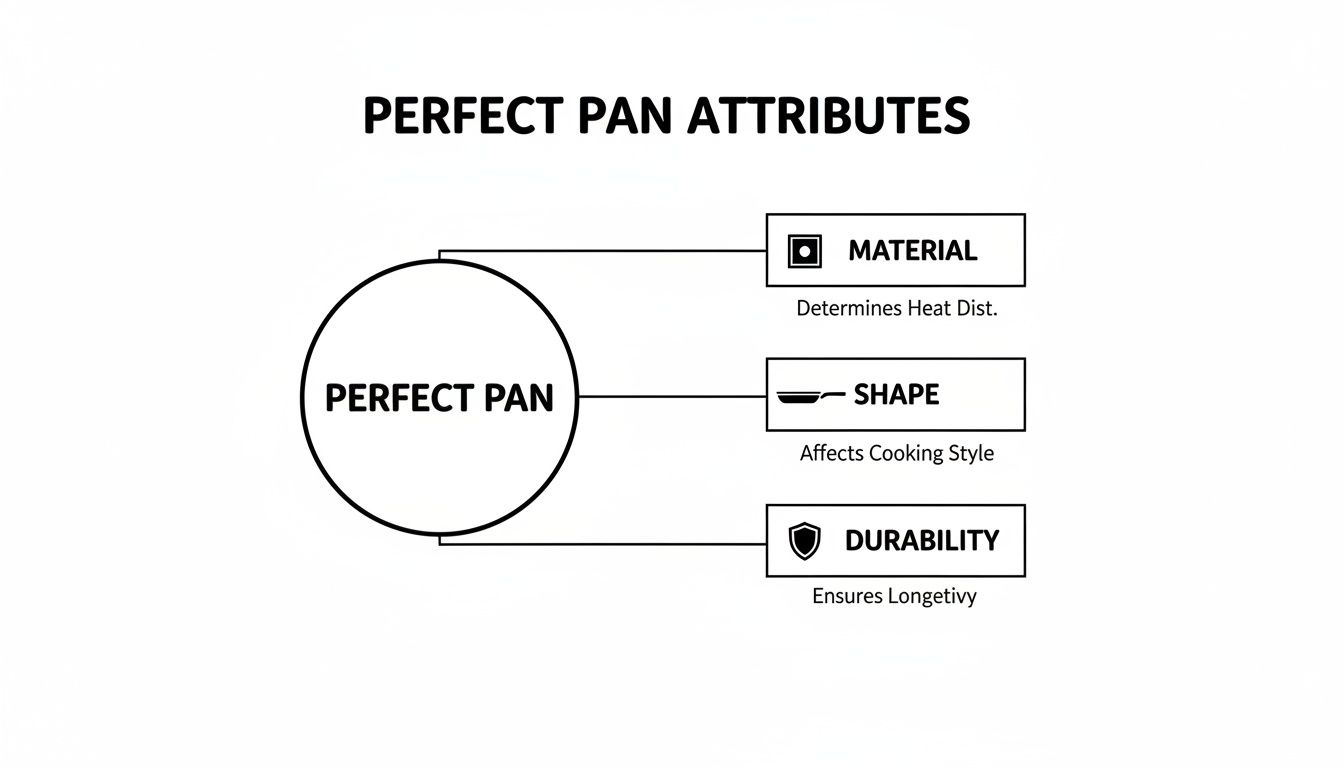
As you can see, the material, shape, and overall durability are all connected, directly impacting everything from cooking performance to whether the pan is a good long-term investment.
Cooking Pan Material Comparison
To make things easier, here’s a quick rundown of the most common materials you’ll find, comparing what they’re good at and where they fall short.
| Material | Heat Conduction | Durability | Maintenance | Best For |
|---|---|---|---|---|
| Stainless Steel | Poor (needs a core) | Excellent | Low | All-purpose cooking, searing, sautéing |
| Cast Iron | Poor | Excellent | High (seasoning) | Searing, frying, baking |
| Coated Non-Stick | Varies by base | Poor | High (delicate) | Eggs, pancakes, delicate fish |
| Pure Titanium | Moderate | Exceptional | Low | Healthy cooking, searing, everyday use |
Each material offers a trade-off, so the best one for you really depends on what you cook most and how you like to cook.
Traditional Favourites Still Going Strong
For decades, a few tried-and-true materials have been the go-to in kitchens everywhere, and for good reason. They each bring something special to the table.
Stainless Steel
Walk into almost any professional kitchen, and you’ll see stainless steel. It’s the ultimate workhorse—tough, reliable, and completely non-reactive, so it won’t give your tomato sauce a weird metallic taste.
- Pros: Incredibly durable, resists rust and scratches, and can usually be thrown in the dishwasher.
- Cons: On its own, it’s a terrible heat conductor. That’s why quality stainless steel pans have a core of conductive aluminium or copper sandwiched between the steel layers to even things out.
Cast Iron
Nothing holds heat like a classic cast-iron skillet. It’s the heavyweight champion, prized for its ability to get screaming hot and stay that way, which is why it’s unbeatable for searing steaks or getting that perfect crispy skin on a piece of chicken.
- Pros: Unmatched heat retention, develops a natural non-stick surface with use, and can literally last for generations.
- Cons: It’s heavy, slow to heat up, and requires regular maintenance (known as seasoning) to stop it from rusting. It can also react with very acidic foods.
The Convenience of Non-Stick Coatings
Let’s be honest, coated non-stick pans are incredibly convenient. They make flipping pancakes and sliding out a perfect omelette a breeze, often with little to no oil. But that convenience comes with some serious compromises.
The coatings themselves are often quite fragile. They scratch easily with metal utensils and can break down at high temperatures. Over time, these surfaces can start to peel or flake, which raises valid concerns about chemicals getting into your food. If you're weighing the pros and cons, our guide to https://everti.com.au/blogs/news/non-stick-cookware is a great place to start.
The Modern Alternative: Pure Titanium
This is where pure titanium really shines. It offers all the benefits you want in a pan without the health or durability issues that come with coatings. It’s an incredibly strong yet surprisingly lightweight metal that is completely inert and non-toxic.
- Exceptional Durability: Titanium simply doesn’t rust, corrode, or react with acidic foods like tomatoes or lemons. It's built to last.
- Health and Safety: As a biocompatible material, pure titanium is naturally antibacterial and won't leach chemicals or microplastics into your meal. Ever.
- Performance: While it needs to be pre-heated properly (just like stainless steel), its naturally non-porous surface provides fantastic food release and is incredibly easy to clean.
Understanding the materials used in professional settings can also provide great insight. For a wider view on the types of tools used in high-volume kitchens, take a look at this guide on commercial kitchen accessories. It really drives home why the choice of material is so fundamental to great cooking.
Matching the Right Pan to Your Cooking Style
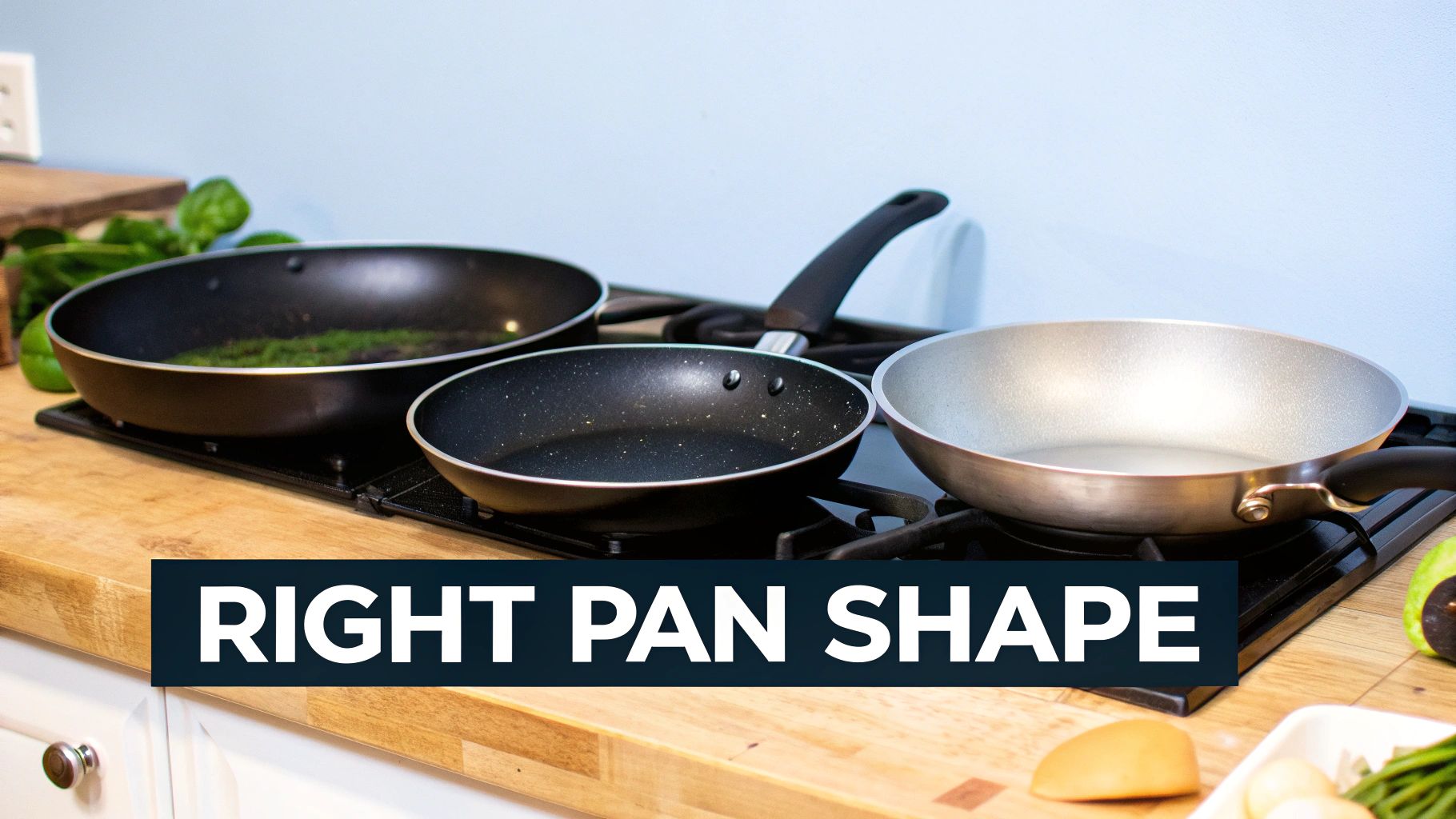
Choosing the right material is a huge first step, but a pan's shape is what really defines its job in the kitchen. Think of it like this: you wouldn't use a sledgehammer to hang a picture frame. The same logic applies here. The design of a pan—its height, the curve of its walls, and its surface area—is purposefully engineered for specific cooking techniques.
Getting your head around these design differences is the secret to building a cookware collection that actually works for you, not against you. It means you’ll always have the perfect tool on hand, whether you’re flash-frying delicate scallops or simmering a hearty bolognese for hours.
This appreciation for the right tool for the job is why pots and pans are the biggest slice of the Australian stainless steel cookware market, pulling in a massive 44.48% of the revenue. Aussies clearly love having a specialised pan for every task, contributing to a market worth USD 369.4 million. You can dig deeper into what Aussies are buying over on ibisworld.com.
The Everyday Essential: Frypans
The frypan, which you might also hear called a skillet, is probably the most recognisable pan in anyone's kitchen. You can spot it a mile off by its wide, flat base and classic flared, sloped sides.
This design is pure genius. The flared sides let steam escape easily, which is exactly what you need to get a dry, golden-brown crust when you're searing or frying. They also make it a breeze to toss ingredients with a flick of the wrist or slide a perfectly cooked omelette right onto your plate.
- Best for: Searing steaks, pan-frying chicken, whipping up eggs, and sautéing veggies where you want moisture to evaporate quickly.
- Think of it like this: The frypan is the sprinter of the kitchen—built for speed, agility, and high-heat performance.
The Do-It-All Workhorse: Sauté Pans
At first glance, a sauté pan looks a lot like a frypan. The crucial difference? The walls. A sauté pan has tall, straight sides and generally a wider flat base.
Those straight sides serve two key purposes. First, they do a much better job of containing liquids, so you won't have sauce splattering all over your stovetop. Second, they give you more usable cooking surface, letting you cook more food in a single layer without it all steaming in a crowded pan.
The name gives a hint to its origins. "Sauté" comes from the French word sauter, meaning "to jump." While it's great for tossing food, those high walls make it perfect for tasks that involve sauces and liquids.
The Kitchen Staple: Saucepans
No kitchen is truly complete without a trusty saucepan. You’ll know it by its tall, straight sides and a single long handle. This is your go-to for pretty much anything liquid-based. Its design is all about volume and heat control, not a wide cooking surface.
The tall-to-wide ratio is specifically designed to slow down evaporation. This makes it ideal for gently simmering soups, boiling pasta, or carefully crafting delicate sauces that need time to develop their flavour. They almost always come with a tight-fitting lid to give you even more control over heat and moisture.
The Big One: Stockpots
When you’re cooking for a crowd or meal-prepping for the week, the stockpot is the undisputed champion. It's essentially a saucepan on steroids, built with two sturdy side handles to help you manage its weight when it’s full of deliciousness.
Its huge capacity is perfect for making stocks, broths, and big batches of soup or pasta. The tall, narrow shape keeps the surface area exposed to air at a minimum, which drastically slows down evaporation over long, slow cooking times. This ensures your liquids reduce nice and slowly, concentrating all those beautiful flavours without boiling away.
Picking the right collection of these core pans sets you up for success with any recipe, making your time in the kitchen more efficient and a whole lot more enjoyable.
Why Pure Titanium Cookware Is a Lifetime Investment
When you're shopping for new pans, it's easy to feel like you're staring at a wall of near-identical options. But every now and then, a material comes along that truly changes the game—not just in how it cooks, but in its lasting value. Pure, SGS-verified 99.9% titanium is one of those materials, turning what could be a simple purchase into a real, lifelong investment in your kitchen and your health.
Unlike coated pans, which inevitably wear out, pure titanium cookware is built to last. Think of it as the foundation of your kitchen; it's stable, reliable, and it won't degrade over time. This isn't just about being tough. It’s about having a pure, safe cooking surface that performs just as brilliantly on its thousandth use as it did on its first.
This shift towards quality is something we're seeing more and more. The premium cookware market in Australia, currently worth USD 78.04 million, is expected to grow to USD 117.19 million by 2033. This surge is being led by home cooks and health-conscious families who are deliberately stepping away from disposable non-stick pans in favour of ultra-durable, non-toxic alternatives. Everti is at the forefront of this movement, crafting pans that meet these exacting standards. For more on this trend, you can check out this detailed industry report.
The Purity of an Uncoated Surface
Perhaps the most important feature of premium titanium cookware is what it’s missing: a synthetic coating. So many pans on the market rely on chemical layers for their non-stick properties. The problem? These coatings break down over time, especially under high heat. Once they start to scratch and peel, they can release unwanted substances straight into your food.
Pure titanium sidesteps this issue completely. Because it’s a solid, uncoated material, there is absolutely nothing to chip, flake, or wear away into your meals. This means no PFOA, PFAs, BPA, or microplastics will ever leach into your family’s dinner, giving you total peace of mind.
For anyone who prioritises clean eating and wants to control exactly what goes into their food, this is a game-changer. With pure titanium, the surface you cook on is as clean as the ingredients you’ve so carefully chosen.
Naturally Resilient and Non-Reactive
One of titanium’s most celebrated qualities is its incredible resistance to corrosion. It's a completely inert material, which is just a technical way of saying it won’t react with acids or alkalis in your food.
Ever noticed a faint metallic tang after simmering a rich, acidic tomato sauce in a certain type of pan? That’s the pan itself reacting with your ingredients. With titanium, that simply doesn't happen.
Your vibrant, acidic sauces, citrusy marinades, and wine reductions will taste exactly as you intended, with zero metallic interference. The pan preserves the true flavour of your food, letting your cooking shine.
This non-reactive nature makes it a ridiculously versatile workhorse, ready for any recipe you can throw at it without a second thought.
A Hygienic and Antibacterial Kitchen Partner
Beyond being non-toxic, pure titanium brings another powerful health benefit to the table: it’s naturally antibacterial. The material’s surface actively inhibits the growth of bacteria, making it one of the most hygienic choices you can make for your kitchen.
There’s a reason titanium is the gold standard for medical implants. Its biocompatibility means it’s trusted to exist safely within the human body. When you bring that same principle to cookware, you get a surface that helps maintain a cleaner, safer cooking environment.
- Odour Resistant: It won't hang onto the smell of last night’s garlic or fish.
- Stain Resistant: It easily resists stains from colourful ingredients like beetroot and turmeric.
- Easy to Clean: The smooth, non-porous surface makes cleanup almost effortless.
This trio of features simplifies your kitchen routine and ensures no leftover flavours ever transfer between dishes. To dive a little deeper, you might find our article on what makes pure titanium cookware a superior choice interesting.
Ultimately, choosing a pure titanium pan isn't just buying another piece of cookware. It’s an investment in durability, health, and uncompromising quality. It's a kitchen tool that will not only help you create better meals today but will serve your family for decades to come—maybe even becoming an heirloom passed down to the next generation.
Making Your Cookware Last a Lifetime
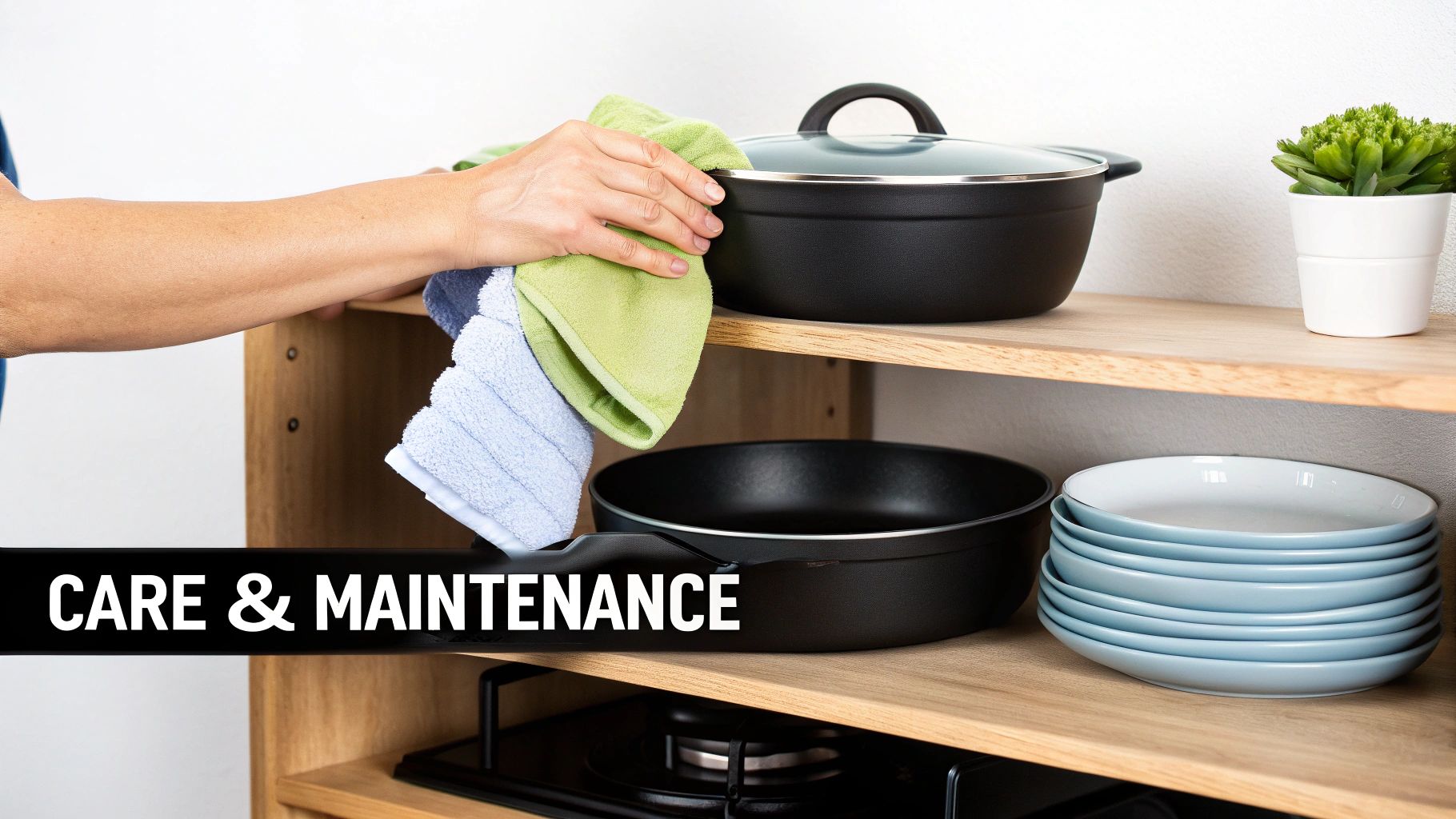
Buying a high-quality pan is just the first step. Knowing how to look after it is what turns a simple purchase into a lifelong kitchen partner. Proper care isn't rocket science, but it does mean understanding what your specific pan needs to stay in top shape.
Think of it like laundry: you wouldn't wash a silk shirt the same way you’d wash a pair of jeans. Different pan materials need different care routines to keep them performing at their best for decades. Get it right, and you'll avoid warping, stubborn stains, and a cooking surface that lets you down.
The Golden Rule: Let It Cool
By far, the most common mistake that ruins good cookware is thermal shock. It happens when you plunge a searing hot pan into cold water. The sudden temperature drop forces the metal to contract way too quickly, leading to permanent warping and an uneven cooking base.
The solution is simple: patience. Always let your pan cool down for at least five to ten minutes before washing. This one small habit is the most effective thing you can do to keep its base flat and its heating even for years to come.
Material-Specific Cleaning Tips
Once the pan has cooled, it’s time to clean. But what you clean with is just as important as how you do it. The wrong scrubber can easily scratch or permanently damage a pan’s surface.
-
Coated Non-Stick: These are the most delicate of the bunch. Never let steel wool or any abrasive scrubber near them. A soft sponge and a bit of mild dish soap are all you need to protect that fragile coating.
-
Stainless Steel: It's a tough material, but it can develop water spots or that tell-tale rainbow shimmer from high heat. For stuck-on food, a simple paste of baking soda and water works like a charm. To get rid of the discolouration, just swirl a splash of white vinegar in the pan to bring back its shine.
-
Cast Iron: With cast iron, it's all about protecting the seasoning—that beautiful layer of polymerised oil that gives it a natural non-stick surface. Try to avoid soap altogether. Hot water and a stiff brush usually do the trick. Afterwards, always dry it completely over low heat on the stovetop, then wipe a whisper-thin layer of cooking oil inside before you put it away.
-
Pure Titanium: This is where pan care gets incredibly simple. The non-porous, inert surface of pure titanium naturally resists stains and odours. A gentle wash with a soft sponge and dish soap is all it takes. Its inherent durability means you don’t have to baby it or worry about delicate coatings.
"An heirloom is personal. And what is more personal than what you make and serve in the warmth of your own home? It takes time to make an heirloom." This insight from cookware experts highlights that care is what transforms a product into a cherished part of your family's story.
Storing Your Pans Properly
How you store your pans is just as crucial as how you clean them. Nesting them directly inside one another is a sure-fire way to get scratches, especially on non-stick and stainless steel surfaces.
If you’re short on space and have to stack, just place a soft cloth, paper towel, or a dedicated pan protector between each one. This simple buffer prevents metal from scraping against metal. Even better, hanging your pots and pans from a rack keeps them safe, easy to grab, and on display.
How to Choose the Right Pan and Where to Buy
You've explored the world of cookware materials, figured out which pan shapes suit different cooking styles, and learned the secrets to proper care. Now for the fun part: putting all that knowledge to use and picking the perfect pan. When you’re faced with all the cooking pans for sale, it’s much less daunting when you have a clear game plan.
First, take a moment to think about what you actually cook day-to-day. Are you all about searing steaks and flash-frying veggies? Or is your kitchen filled with the aroma of slow-simmered sauces and hearty soups? Your answer points you straight towards either a frypan or a sauté pan.
Next up, a quick check of your stovetop is a must. Gas, electric, or induction? This is a deal-breaker, since not every material plays nicely with every heat source. Finally, reframe your budget. Don't think of it as just another expense, but as a real investment in your health and cooking enjoyment for years to come.
Investing in Quality for Long-Term Value
Choosing a high-quality pan isn’t just about feeling fancy; it’s a smart decision that genuinely pays off. A well-made pan gives you far superior heat control, which translates directly to better-tasting food and a whole lot less frustration in the kitchen.
Even more importantly, investing in a durable, non-toxic material like pure titanium is a direct investment in your family’s health. It gives you peace of mind that no unwanted chemicals will ever find their way into your food.
A great pan isn't just a purchase; it's a commitment to better cooking, healthier meals, and a more sustainable kitchen. It’s a tool that will serve you reliably, meal after meal, for a lifetime.
When you're ready to find your perfect match, our detailed titanium pans review offers deeper insights into their performance and unique benefits. And if you're keen on expanding your culinary horizons to the great outdoors, you might even want to explore specialty options like Taco Wok BBQ Pans.
What to Look for When Buying Online
When you're shopping for cookware online, the brand’s policies are just as crucial as the product specs. Keep an eye out for these customer-focused features—they're a clear sign a company is confident in what it’s selling.
- Lifetime Warranties: This is the ultimate proof that a company stands firmly behind its craftsmanship and materials.
- Free and Fast Shipping: A great Australian brand should make it easy and affordable to get your new cookware delivered to your door.
- Flexible Payment Options: Services like Afterpay make it much simpler to invest in top-tier quality without the big upfront hit to your wallet.
These aren't just perks; they're hallmarks of a trustworthy brand that’s interested in building a lasting relationship with its customers. They show you the company believes its products are built to last, letting you make your purchase with total confidence.
Frequently Asked Questions About Cooking Pans
Stepping into the world of cookware can feel a bit overwhelming, especially when you're looking for new cooking pans for sale. To help clear things up and get you cooking with confidence, we’ve put together answers to the questions we hear most often from home cooks around Australia.
Are Titanium Pans Compatible with Induction Cooktops?
This is a fantastic and very common question. On its own, pure titanium isn’t magnetic, so a 100% titanium pan wouldn't work on an induction cooktop. But don't worry, the best manufacturers have a clever workaround for this.
High-quality titanium pans, including select models from Everti, are constructed with a magnetic steel base. This clever design gives you the best of both worlds: you get the pure, non-toxic titanium cooking surface you want, plus the incredible speed and efficiency of induction cooking. Just make sure to check the product details to confirm it's induction-ready.
What Is the Main Advantage of Uncoated Titanium Over Non-Stick Pans?
It really boils down to two things: health and durability. We’ve all seen traditional non-stick coatings start to peel and scratch over time. When they degrade at high temperatures, they can potentially release unwanted chemicals and microplastics into your food.
Uncoated pure titanium, on the other hand, is completely inert and non-toxic. It contains no PFOA, PFAs, or BPA. Because there’s no coating, there's absolutely nothing to chip, flake, or leach into your meals, no matter how high you turn up the heat. This gives you incredible peace of mind and a pan that will outlast any coated alternative.
Investing in high-quality, uncoated cookware is often more economical in the long run. Cheaper pans with coatings often need replacing every few years, while a premium titanium or stainless steel pan can literally last a lifetime with proper care.
How Do I Prevent Food From Sticking to a Stainless Steel or Titanium Pan?
This is the secret every chef knows, and it's all about mastering heat. Once you get the hang of this simple technique, you'll wonder why you ever needed a non-stick coating.
-
Preheat the Pan: Put your empty, dry pan on the stove over medium heat for a minute or two. The classic test is to flick a few drops of water onto the surface. If they bead up and dance around like mercury, your pan is ready.
-
Add Your Oil: Now, add your cooking oil or fat. Let it heat up for a moment until it shimmers. This creates a natural, temporary non-stick layer between the pan's surface and your ingredients.
-
Ensure Food is Dry: Before placing food in the pan, pat it completely dry with a paper towel. Excess moisture is the number one enemy of a good sear and a major cause of sticking. That’s it! This three-step trick is the key to getting a perfect, golden-brown crust and easy food release, every single time.
Is It Worth Investing in Expensive Cookware?
Absolutely. While the price tag might be higher upfront, think of premium cookware as a true investment. Cheaper pans are notorious for heating unevenly, creating hotspots that burn one part of your dinner while leaving the rest undercooked. Their surfaces also wear out quickly, locking you into a frustrating cycle of buying replacements.
A well-made pan from a material like pure titanium delivers far better cooking performance, is much safer for your health, and is built to last for decades. It's an investment in better meals, a healthier family, and a more sustainable kitchen.
Ready to invest in cookware that will last a lifetime? Discover the purity and performance of Everti's pure titanium collection and elevate your cooking today. Explore the full range at https://everti.com.au.