

The quest for the perfect poached egg—that delicate, silky white embracing a gorgeously runny, golden yolk—is a familiar culinary challenge for many of us. We've all been there, swirling water in a pot, hoping for the best. But what if I told you the secret to consistently amazing poached eggs isn't about fancy water-swirling techniques?
It’s about the tool. The right egg poacher can turn a finicky art form into a simple, repeatable science.
Why Your Egg Poacher Matters More Than You Think
The real difference between a stringy, watery disappointment and a flawless, café-style poached egg often boils down to your equipment. Many guides will tell you to add vinegar to the water or create a vortex, but these are often just workarounds for cookware that simply doesn't handle heat very well. A great poacher gives you the kind of consistency that technique alone just can't match.
This guide isn't just another list of products. We're going to get into the nitty-gritty of what actually makes an egg poacher work brilliantly.
- Heat Distribution: Uneven heat is the number one enemy of a good poached egg. It’s what gives you rubbery, overcooked whites while the yolk is still disappointingly cold. We’ll look at how different materials spread heat and why that’s the key to getting a perfectly uniform cook every single time.
- Material Purity: Ever thought about what your poacher is made of? It matters. The material comes into direct contact with your food, and an inert, non-reactive material ensures nothing nasty leaches into your meal. You get the pure, clean flavour of the egg, and nothing else.
- Long-Term Durability: A quality poacher is a real investment in your kitchen. We'll explore why picking a robust, non-degrading material not only saves you money in the long run but also helps cut down on kitchen waste.
This is more important now than ever. It seems Australians are falling in love with eggs all over again, with the average person eating 266 eggs in 2023-24. That’s a whopping 8.13% jump since just 2020! As more of us try to master poached eggs at home, the need for reliable, healthy, and high-performing tools is on the rise. (You can see more details on Australia’s egg obsession over at ibisworld.com).
Ultimately, picking the right poacher is about giving yourself control and confidence in the kitchen. When you start with a solid foundation, mastering that perfect poached egg becomes so much easier than you ever thought possible. You can learn more about how a dedicated poached egg pan can elevate your breakfast game.
Diving Into Egg Poacher Materials
When you're on the hunt for the perfect egg poacher, you’ll quickly discover that the material it's made from is the single most important decision you'll make. It’s the foundation for everything that follows—how well your eggs cook, how long the poacher lasts, and even how healthy your breakfast is.
Think of it like choosing a chef's knife. A basic one might get the job done, but a finely crafted blade feels different, performs better, and makes the whole experience more enjoyable. The same goes for egg poachers.
You'll find most poachers are made from one of a few common materials, each with its own personality and quirks. Silicone is often the cheap and cheerful option, while stainless steel is the classic, durable workhorse. Then there are the non-stick coatings, which promise an easy clean-up but often come with a hidden catch.
The Give-And-Take of Common Materials
Every material is a balancing act. What you gain in one area, you might sacrifice in another. It's about knowing what matters most to you in the kitchen.
- Silicone: People love it because it’s flexible and doesn’t cost much. The downside? Silicone isn't a great heat conductor, so you can end up with eggs that are cooked unevenly. Plus, there are growing conversations around its long-term stability and potential to shed particles.
- Stainless Steel: This is the stuff pro kitchens are built on. It's tough, holds heat like a champion, and will last forever. But it can be a bit sticky. Without a good slick of butter or oil, your egg might not want to let go.
- Non-Stick Coatings: The initial appeal is undeniable—eggs just slide right out. The problem is that this convenience is fleeting. Over time, scratches from utensils or exposure to high heat can compromise the surface, which affects its performance and raises health questions.
The durability and non-reactive properties of stainless steel equipment make it a staple in commercial settings where gear needs to withstand heavy use day in and day out. But for the specific, delicate task of poaching, there might be an even better way.
To make things clearer, let's break down how these materials stack up against each other.
Egg Poacher Material Comparison
This table offers a quick, head-to-head look at the most common materials, helping you see the trade-offs at a glance.
| Material | Heat Distribution | Health & Safety | Durability | Ease of Cleaning |
|---|---|---|---|---|
| Silicone | Fair to Poor | Generally safe, but concerns exist about fillers & leaching. | Good, but can stain or absorb odours. | Dishwasher safe, but can be flimsy. |
| Stainless Steel | Good | Excellent; non-reactive and inert. | Excellent; resists rust and scratches. | Can be tough if food sticks; requires scrubbing. |
| Non-Stick | Good | Concerns over coating breakdown (PFOA/PFAS). | Poor; easily scratched and degrades. | Very easy when new, but declines with wear. |
| Titanium | Excellent | The safest option; completely inert and non-toxic. | The best; buy-it-for-life quality. | Naturally non-stick and simple to wipe clean. |
As you can see, while traditional options have their place, they all involve a compromise between performance, safety, and longevity.
The Gold Standard: Pure Titanium
Beyond the usual suspects, there's another material that changes the game entirely: pure, uncoated titanium. If a silicone poacher is your reliable daily runabout, pure titanium is a precision-engineered machine built for a lifetime of perfect results. It elegantly solves the compromises you have to make with other materials.
What makes titanium special is that it’s completely inert. It doesn’t react with your food, it doesn’t leach anything, and it’s totally non-toxic. This guarantees the purest taste and absolute peace of mind every time you cook.
This idea of the tool being fundamental to the outcome is key.
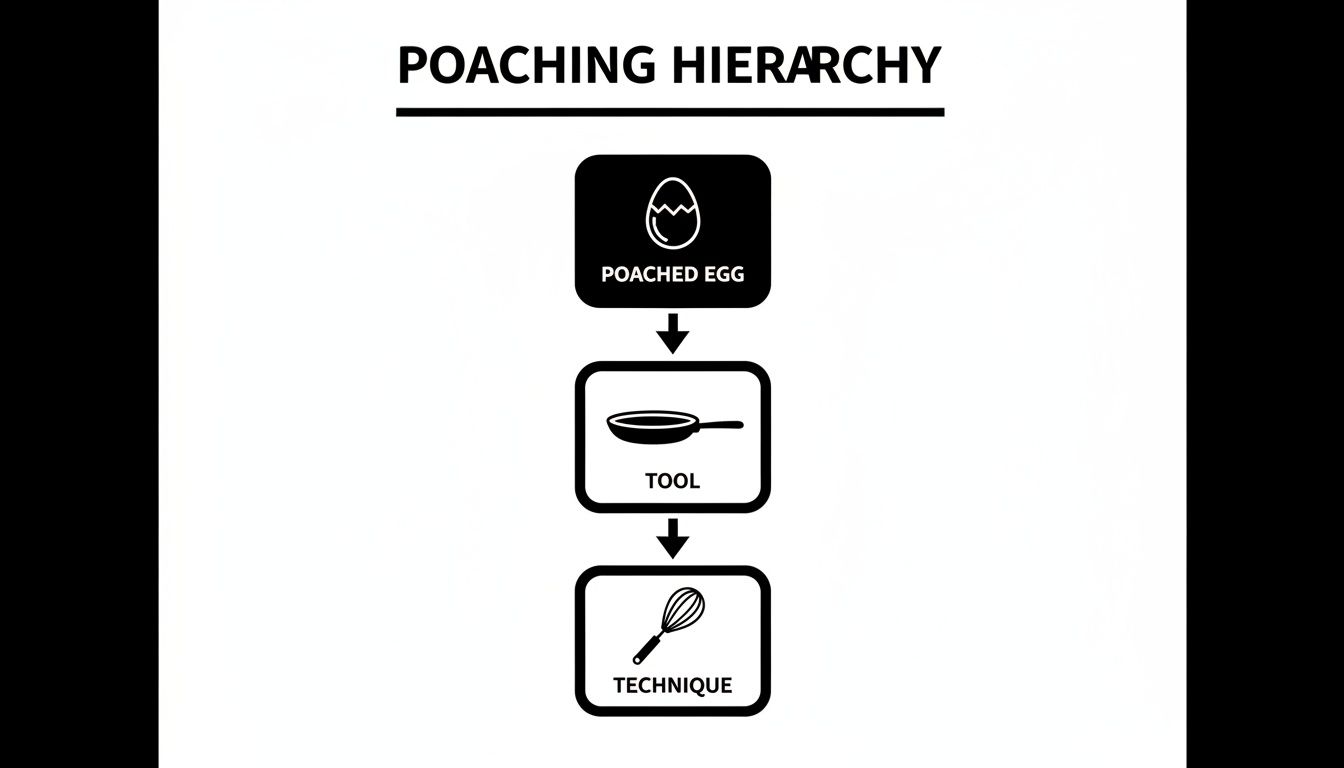
As this hierarchy shows, while your technique matters, the tool you start with lays the groundwork for success or failure.
Titanium also conducts heat beautifully, so your eggs cook through quickly and evenly without any frustrating hot spots. Better yet, it's incredibly durable. It won’t corrode, chip, or degrade over time, making it a true one-and-done purchase for your kitchen. For anyone serious about both their health and their cooking, titanium isn't just another choice—it's the definitive one.
The Health Concerns Hiding in Your Cookware
We put so much effort into choosing fresh, healthy ingredients, but what about the surfaces we cook them on? The pan or poacher you use can be just as important as the food itself, potentially turning a wholesome meal into something a bit more worrying. This is particularly true when you're on the hunt for a great egg poacher.

It’s easy to get drawn in by the convenience of modern cookware, but that convenience can sometimes come with a hidden price tag for our health. This isn't about scaremongering; it's about being empowered to make smarter, healthier choices in the kitchen.
The Problem with Common Materials
A surprising number of popular egg poachers are made from materials that can cause issues down the track. As they wear out, they can start releasing things you’d rather not have mingling with your breakfast.
-
Non-Stick Coatings (PFAS): That super-slick surface on many non-stick pans comes from a class of chemicals called PFAS, often dubbed "forever chemicals." Once that coating gets scratched or overheated, it can start to break down, releasing these compounds into your food and even the air.
-
Silicone Shedding: While food-grade silicone is generally considered safe, questions are being raised about its stability over the long haul. Cheaper silicone can be loaded with fillers that might leach out at high temperatures, and there's also the concern of shedding microplastics over time.
-
Metal Leaching: Cookware made from lower-grade metals, like some aluminium or certain stainless steel alloys, can leach tiny metallic particles into your meal. This happens most often with acidic foods (like tomatoes), which can change the flavour and add unwanted elements to your dish.
These common issues show why it pays to look a little closer at what your cookware is made of. If you want to dive deeper, our guide on choosing the best cookware for your health covers these material concerns in much more detail.
The Pure Titanium Solution
The simplest way to sidestep all these worries is to choose a material that is completely inert and non-reactive. This is where pure, uncoated titanium really shines, setting itself apart as the top choice for anyone who puts health first.
Think of an inert material like a neutral observer—it doesn't get involved. Pure titanium won’t react with acids, bases, or anything else in your food. This guarantees that what you taste is your meal, and nothing else.
This means absolutely nothing leaches from the surface into your poached eggs. Not a single thing.
An SGS-verified, pure titanium egg poacher delivers total peace of mind. Its surface is naturally non-porous and completely non-toxic, giving you a safe, clean cooking experience every single time. When you choose titanium, you’re not just buying another kitchen gadget; you're making a lasting investment in the health of your family's meals.
How to Choose the Right Egg Poacher
Finding the right egg poacher isn’t about picking the most popular model off the shelf. It’s really about finding the one that fits you—your kitchen, your cooking style, and the way you live. Think of it less as buying a product and more as hiring the perfect little assistant for your morning routine.
The first thing to sort out is your cooktop. Are you working with a sleek, modern induction stove, a classic gas range, or a standard electric cooktop? Different materials play nicely with different heat sources, so checking for compatibility is your first, non-negotiable step.
From there, have a think about your day-to-day reality. Are you usually whipping up a quick breakfast for one, or do you find yourself hosting big weekend brunches for family and friends? A nimble two-cup poacher is brilliant for solo meals, but a larger, pan-style poacher that can handle multiple eggs at once will keep everyone happy when you’ve got a full table.
Finding a Poacher That Fits Your Lifestyle
The process of drilling down into the details—size, capacity, materials—is a lot like evaluating other kitchen appliances like coffee grinders. It’s about moving past the basic function and asking, "How will this actually work for me?"
Let's look at a few real-world scenarios to see what I mean:
-
For the Busy Parent: Time is your most precious resource. You need a poacher that heats up fast, is dead simple to use, and, most importantly, cleans up in a flash. It also has to be tough enough to handle the daily grind and the occasional accidental drop.
-
For the Health-Conscious Cook: You're all about purity. Your perfect poacher will be made from a non-reactive, non-toxic material, ensuring that no unwanted chemicals or strange metallic flavours ever find their way into your food.
-
For the Outdoor Adventurer: If you’re poaching eggs over a campfire, you need gear that’s lightweight, compact, and seriously durable. It has to be corrosion-proof to stand up to the elements and tough enough to get knocked around in a backpack.
It’s no surprise that Australians are leaning into quality ingredients, with free-range eggs making up 57.4% of major supermarket volume in 2023-24. When you're using beautiful eggs like that, you want a poacher that does them justice by preserving their delicate flavour and texture. This is where material choice becomes so important; an inert material like pure titanium naturally resists bacterial growth, giving you a cleaner, safer surface than some non-stick coatings that can degrade over time.
Why Titanium Is Such a Standout
Interestingly, one material often ticks all these boxes. A pure titanium egg poacher is a fantastic conductor of heat, which makes it incredibly efficient for those hectic mornings. Its completely inert and non-toxic surface also gives health-focused cooks total peace of mind.
A single, well-chosen tool should adapt to your needs, not the other way around. Whether you're in a modern kitchen or out in the wild, the right poacher performs reliably everywhere.
And for the adventurer? Titanium’s incredible strength-to-weight ratio and natural resistance to rust make it the perfect companion for camping or travelling. By choosing a material this versatile, you’re not just buying an egg poacher; you’re getting a single, reliable solution that adapts to every part of your life. It proves that the best tools are the ones that meet you exactly where you are.
A Practical Guide to Poaching with Titanium
Knowing the theory behind titanium is great, but actually using it to cook a flawless poached egg is where the fun starts. This little guide will walk you through just how easy it is to get those cafe-style results without any of the fussy, traditional tricks. When you're using titanium, the pan does most of the heavy lifting.
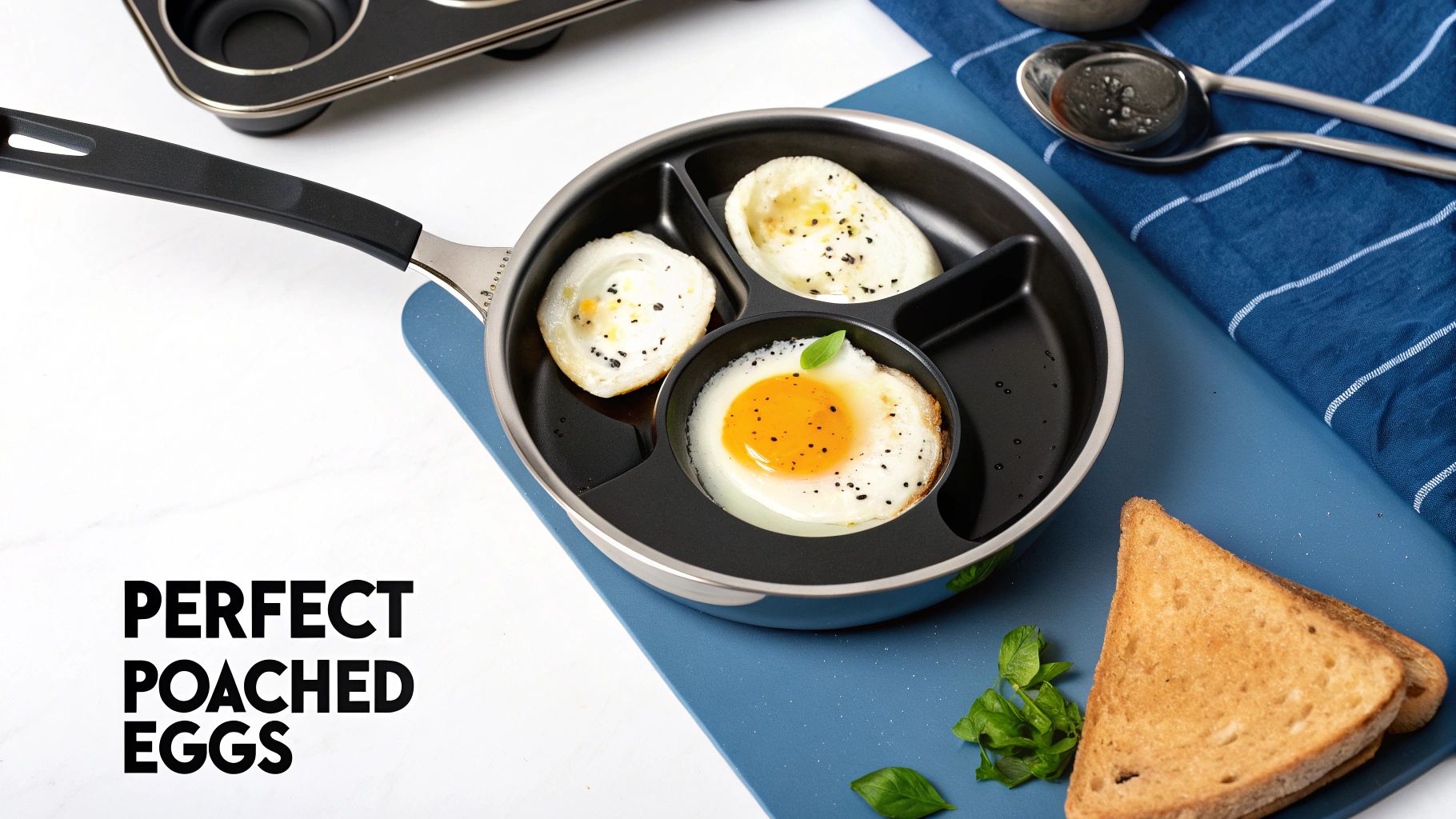
Because titanium offers such incredible heat control, you can officially forget about adding vinegar to the water or swirling it into a vortex. Those old methods are really just workarounds for cookware that doesn't distribute heat very well. Titanium’s ability to heat up so evenly means the egg white sets quickly and wraps itself neatly around the yolk, all on its own.
The No-Fuss Titanium Poaching Method
The secret to a perfect poach is gentle, consistent heat. The process itself is wonderfully simple and repeatable, so you can count on getting the same great result every single time.
-
Water Temperature is Key: Fill your poacher with enough water to come up around the egg and bring it to a gentle simmer. You're aiming for about 80-90°C—look for tiny, champagne-like bubbles, not a full, rolling boil.
-
Crack and Cook: Gently crack a fresh egg into one of the poaching cups. The slick surface of titanium means there's no need to grease it beforehand.
-
Master the Timing: How long you cook it really comes down to how you like your yolk. This is a great starting point:
- For a runny yolk: 3 minutes
- For a jammy, soft-set yolk: 4 minutes
- For a firm-set yolk: 5 minutes
The real beauty of cooking with titanium is just how predictable it is. Once you've figured out your ideal timing, you can nail it every single time, making your morning routine that much simpler. To get a better sense of how the material performs, check out our article covering the pros and cons of using titanium cookware.
Cleanup is just as straightforward. Thanks to its natural non-stick qualities, a quick rinse with a bit of warm, soapy water is all it takes. No soaking or scrubbing needed.
Recipe: Smashed Avocado Toast with a Titanium-Poached Egg
Ready to give it a go? This classic recipe is the perfect way to see what your poacher can do.
- Toast a thick slice of good quality sourdough.
- Smash half an avocado in a bowl with a squeeze of lemon juice, a pinch of salt, and some cracked pepper.
- Spread the avocado mix generously over the warm toast.
- Poach your egg using the timing guide above to get the yolk just how you like it.
- Slide the perfect poached egg right on top and finish with a sprinkle of chilli flakes or some fresh herbs.
Enjoy your flawless, healthy, and seriously delicious breakfast
Why Investing in Quality Cookware Actually Pays Off
Choosing a great egg poacher is about more than just nailing your next brunch. It's a chance to step back and look at how we stock our kitchens, moving away from quick, disposable fixes towards tools that are built to last. This isn't just a single purchase; it's about adopting a mindset that puts quality, durability, and health first.
When you invest in a genuinely high-calibre piece of cookware, you're making a choice that will reward you for years, not just a few months. Think about it: those cheaper, flimsy silicone poachers or coated pans that scratch if you look at them wrong? They always need replacing. That constant cycle doesn't just chip away at your bank account; it adds to our ever-growing landfill problem.
The Real Value of a "Buy It Once" Kitchen Tool
A premium tool, especially one crafted from something as robust as pure titanium, isn't just another gadget. It's designed to become a permanent part of your kitchen arsenal. It won’t break down, the surface won't peel, and it certainly won't become obsolete. The long-term perks are pretty clear when you spell them out:
- Smarter Spending: Buying one exceptional poacher means you stop the cycle of purchasing replacements every couple of years. The initial cost is higher, but the lifetime value is undeniable.
- A Greener Kitchen: Opting for tools built to endure is a simple but meaningful way to cut down on consumption and reduce your household waste.
- Complete Peace of Mind: Cooking with an inert, non-toxic material like pure titanium means you never have to second-guess what might be seeping into the food you serve your family.
If there's one thing to take away from this guide, it's this: for a healthier kitchen and consistently perfect results, the material is what matters most. The cookware you choose is just as important as the fresh ingredients you buy.
It's an Investment in Your Health and Happiness in the Kitchen
At the end of the day, picking a top-tier egg poacher isn't just about making better eggs. It's about committing to a way of cooking that is safer, more sustainable, and frankly, more enjoyable for decades to come. Don't think of it as an expense—see it as a permanent upgrade to your life in the kitchen.
By putting safe, reliable, and tough-as-nails materials at the top of your list, you’re making a real investment in your health and your confidence as a cook.
Still Have Questions About Egg Poachers?
When you’re looking at a piece of cookware as well-crafted as a titanium egg poacher, a few questions are bound to pop up. It’s a bit different from what most of us are used to, so let’s tackle some of the common ones.
First up, the old vinegar trick. Do you still need to add a splash of vinegar to the water to help the egg whites set? With a quality titanium poacher, you can forget it. The pan's ability to heat so evenly and precisely means the egg white sets perfectly around the yolk all on its own. It's one less step between you and a delicious breakfast.
Then there’s the question of stovetop compatibility. It’s a fair one. The good news is that pure titanium cookware is a true all-rounder, working beautifully on gas, electric, and even induction hobs. It fits right into any kitchen, no matter your setup.
Cleaning and Why It's Worth the Investment
So, what about the cleanup? Is it a hassle? Not at all. Titanium has a naturally smooth, non-porous surface, which means food doesn't really want to stick to it. A simple wipe with a soft cloth and some warm, soapy water is usually all it takes. You can put the abrasive scourers away for good.
This brings us to the big question: what makes titanium a smart long-term investment? It really comes down to a trio of benefits: your health, cooking performance, and sheer durability. You’re not just buying an egg poacher; you're investing in a non-toxic kitchen tool that delivers incredible results and is tough enough to last a lifetime. It won't degrade, warp, or need replacing like so many cheaper pans do.
Think of it as the last egg poacher you'll ever need to buy.
Ready for a lifetime of perfect poaching? Discover the difference pure, non-toxic titanium can make. Explore the full range of lifetime kitchen essentials from Everti at https://everti.com.au.