

You've bought a beautiful set of ceramic dinner plates, unpacked them for the first family meal, and already noticed the first compromise. One plate is heavier than expected, another has a tiny rim mark, and the packaging says “dishwasher safe” without explaining whether it should also go from the refrigerator to a hot oven. The colour looks perfect on the table, but the long-term value is harder to judge.
That uncertainty is common because ceramic describes a broad family of materials, not one uniform performance level. Earthenware, stoneware and porcelain can look similar on a product page while differing in porosity, weight, strength and care requirements. Australian buyers also need to think about glaze quality, heavy-metal release and thermal shock, not only shape and colour.
Introduction to Ceramic Dinner Plates and Why They Matter
A ceramic dinner plate can make a simple meal feel considered. Its solid weight, finished surface and visual warmth create a dependable backdrop for food, which helps explain why plates remain the leading product segment in Australia's ceramic tableware market. Bonafide Research identifies plates as the leading product segment in the Australian ceramic tableware market.
The category is also expanding. One market overview values Australia's ceramic tableware market at about USD 170.01 million in 2025 and projects USD 288.82 million by 2034, with a projected 6.08% CAGR from 2026 to 2034. Another Australia-focused estimate places growth at more than 6.22% CAGR from 2025 to 2030. These figures describe market projections, not the lifespan or quality of a particular dinnerware range. They do show continuing demand for ceramic formats used at home.
The hidden decision behind a pretty plate
Appearance is only the first test. A dinner plate must withstand washing, stacking, serving and the occasional contact with a sink or benchtop. Hot food, reheating and repeated dishwasher cycles can expose weaknesses in the body or glaze, leading to chips, cracks or surface deterioration.
Thermal shock deserves particular attention. A plate can behave like a glass exposed to a sudden temperature change: the surface and interior expand at different speeds, creating stress. A range labelled for everyday use may still require care around moving directly between cold storage and intense heat. Food-contact safety also depends on a sound glaze and compliance with Australian requirements, so finish quality matters as much as colour.
Your household determines which compromise makes sense. A family running the dishwasher each evening may value durable edges and easy care over delicate decoration. Someone who entertains occasionally may accept extra weight for presentation. In a small kitchen, reliable stacking and a manageable lift can matter more than an elaborate rim.
Why Australian context matters
Ceramic tableware has a long history in Australia. Local potteries produced utilitarian domestic ware alongside imported British ceramics in the nineteenth century, while roughly 80% of imports were ironstone from Staffordshire potteries during the period described by the historical record. By the early twentieth century, Australian firms were commercially producing tableware in New South Wales, and by the early 1950s some earthenware plates carried Australian-made markings. The Australasian Historical Archaeology paper by Kelloway traces this shift from imported to local ceramic production.
That history helps explain ceramic's lasting place at the table. The practical choice today is about lifecycle value: how the plate looks, how likely it is to chip, how safely it handles heat and food, and how much care it demands over time.
How Ceramic Dinner Plates Are Made and What Sets Them Apart
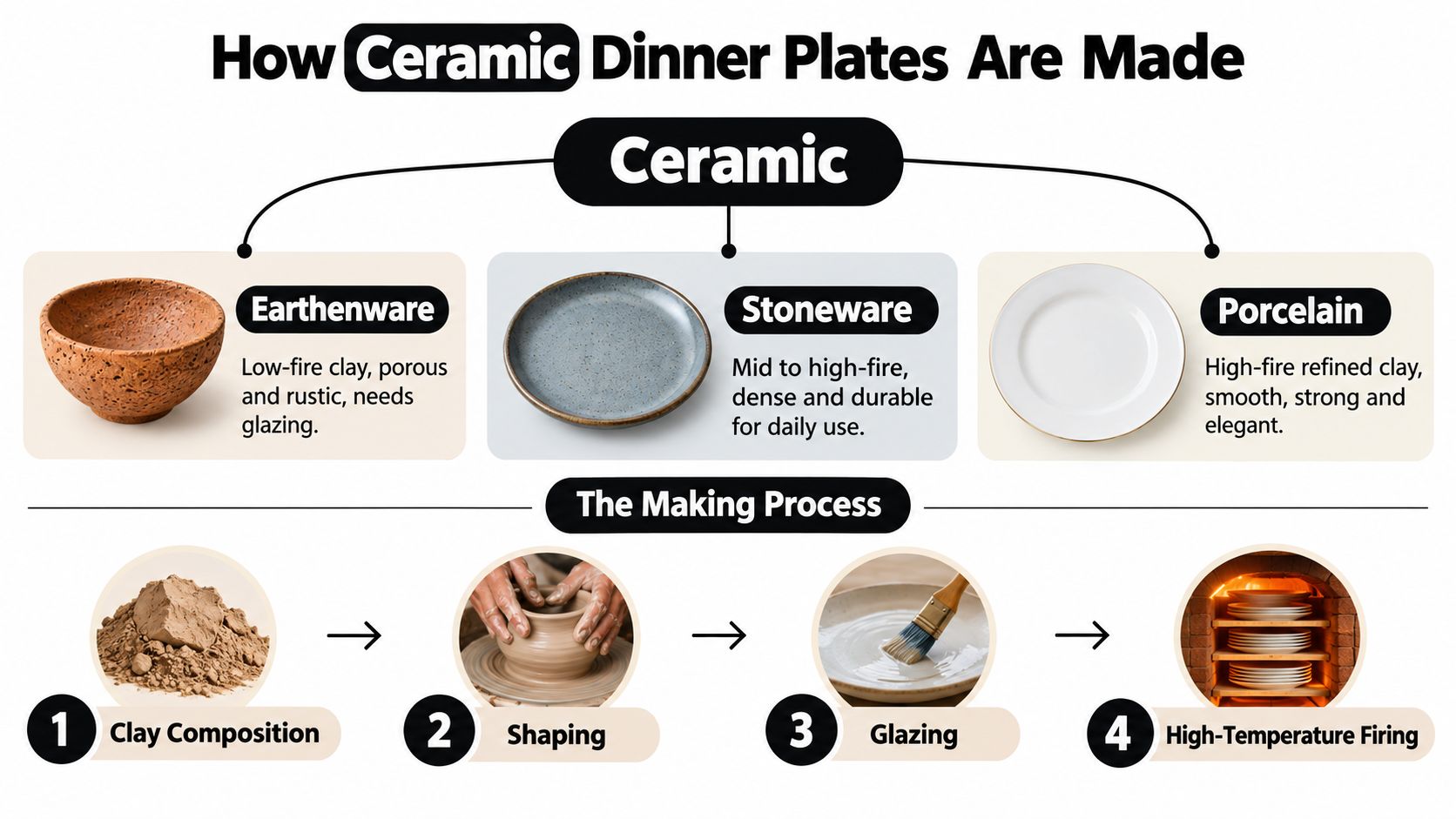
Ceramic starts with clay and minerals, but the final plate depends on what goes into the body, how it's shaped, how it's glazed and how it's fired. Think of firing as turning a soft, crumbly structure into a hardened one. Heat drives off moisture and encourages the particles to bond, much like an unfired brick becoming firm in a kiln.
The three main ceramic families
Earthenware uses a lower-fire clay body and usually remains more porous than other ceramic types. Its character is often rustic, warm and substantial, but it relies heavily on a glaze to create a suitable food-contact surface. If the glaze is damaged or poorly applied, the underlying body can absorb moisture more readily.
Stoneware is fired at a higher temperature, producing a denser body with a sturdy, everyday feel. It's often thicker and heavier than porcelain, which can help it feel stable at the table. Handmade and artisanal stoneware may show variations in colour, rim shape or glaze pooling, and those details can be part of its appeal rather than a defect.
Porcelain uses refined ingredients and high-temperature firing to create a smooth, dense body. Thin porcelain can appear translucent at the edge, and its clean surface suits formal or minimalist settings. “Fine” doesn't automatically mean fragile, but a delicate profile can be less forgiving of impact than a thicker everyday plate.
Why firing changes performance
Imagine three sponges compressed to different levels. The least compressed sponge has more open space, while the most compressed one has fewer pathways for water. Ceramic bodies behave similarly. More vitrified, denser bodies generally have lower porosity, while less vitrified bodies depend more on their glaze for protection.
Glaze is a glass-like coating that seals and decorates the surface. It can create a glossy, satin or matte finish, add colour and make cleaning easier. It can also introduce practical questions about formulation, application and firing control, so a plate's appearance alone can't confirm its safety or quality.
Product labels often use “ceramic” as a broad category. If you want a closer guide to porcelain's refined body and appearance, Everti's explanation of porcelain dinner plates offers useful terminology for interpreting product descriptions.
This short video provides a visual introduction to the production journey, from clay preparation through firing.
Key Strengths and Limitations of Ceramic Dinner Plates
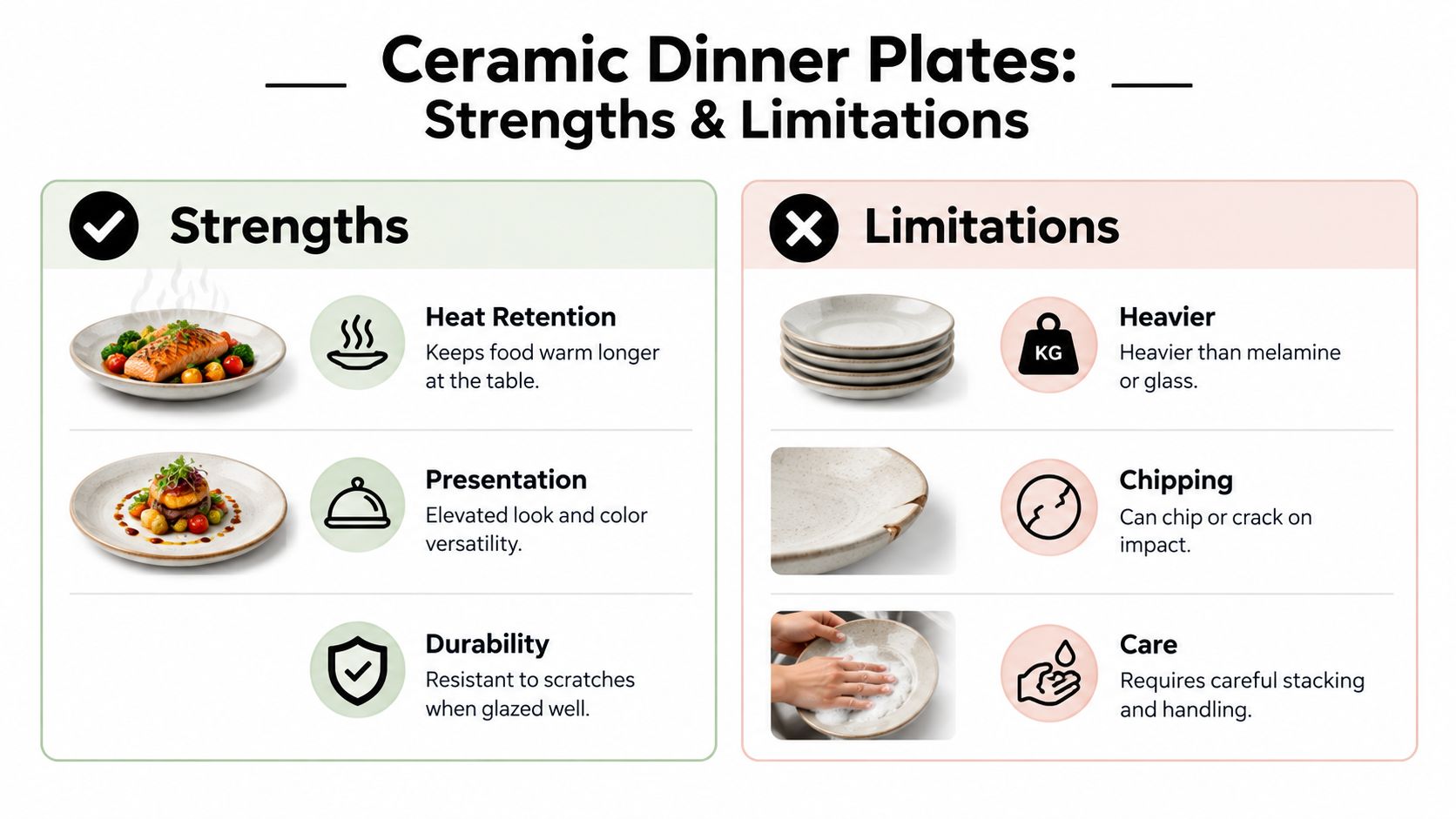
Ceramic dinner plates earn their place through a combination of table presence, heat retention and surface versatility. A glazed plate can provide a smooth surface for everyday cleaning, while its thermal mass helps food stay warm at the table for longer than it might on a very light plate. The same mass, however, makes a full stack heavier to lift and increases the consequences of poor storage or handling.
What ceramic does well
A well-glazed plate gives cooks a neutral or expressive canvas. White porcelain can make colourful food stand out, while reactive or speckled stoneware can support a more relaxed setting. Ceramic also resists ordinary surface scratching when the glaze is well made and used with sensible utensils.
The material feels stable under a knife and fork, and many people prefer that reassuring weight to the lightness of plastic alternatives. Stoneware can suit generous, casual meals, while porcelain offers a finer profile for plated dishes and formal service.
Where the trade-offs appear
Ceramics are rigid. Rigidity helps a plate keep its shape, but it means the material has less ability to absorb a sudden impact by bending. A plate dropped on a hard floor may chip at the rim, crack across the body or break completely. The rim is especially exposed because it meets other plates, sink edges and cutlery.
Thermal shock is a separate problem. A plate can tolerate heat in one situation yet fracture when its temperature changes too quickly. Stress concentrates in small imperfections and expands unevenly through the rigid body, causing a sudden break rather than slow visible wear. Made of Australia explains that ceramic pieces can be oven, microwave and dishwasher safe up to 450°C while still remaining vulnerable to rapid temperature changes.
Match the ceramic type to the setting
| Ceramic type | Useful character | Main consideration |
|---|---|---|
| Earthenware | Rustic look and tactile finish | More porous body and greater reliance on glaze |
| Stoneware | Dense, weighty feel for daily dining | Can be heavy and vulnerable to impact at the rim |
| Porcelain | Smooth, refined appearance and lighter profile | Fine shapes need careful handling |
A plate described as “durable” still needs context. Ask whether the claim refers to scratch resistance, impact resistance, dishwasher performance or thermal cycling. Those are different tests, and one doesn't guarantee the others.
Ceramic Dinner Plates Compared with Glass Stainless Steel and Titanium
Ceramic isn't automatically the right answer for every table. Glass, stainless steel and titanium solve different problems, so the sensible comparison starts with your priorities rather than a single idea of quality.
Glass offers a clean, transparent or lightly coloured appearance and can make food look bright. It's easy to inspect for stains and often feels less porous than an unglazed ceramic body. Its weakness is impact and thermal shock. A glass plate can break sharply when dropped or exposed to a sudden temperature change, so it isn't a universal durability upgrade.
Stainless steel is practical for high-turnover settings, outdoor use and households that prioritise impact resistance over formal presentation. It won't chip like a glazed ceramic rim, but it can show scratches, transmit heat quickly and look more utilitarian. Titanium takes the lightweight approach further, offering a strong, corrosion-resistant metal option for travel, camping or people who dislike lifting heavy stacks.
For readers weighing food-contact materials, Everti's guide to non-toxic dinnerware materials provides a useful comparison framework. Material purity, coatings, cleaning and intended use all matter more than a simple “natural versus synthetic” label.
A practical comparison
| Criteria | Ceramic | Glass | Stainless steel | Titanium |
|---|---|---|---|---|
| Table appearance | Traditional, tactile and highly versatile | Clean, modern and visually light | Functional and contemporary | Minimal and lightweight |
| Weight | Moderate to heavy, depending on body | Moderate | Moderate | Very light |
| Impact behaviour | Can chip, crack or break | Can shatter or crack | Resists ordinary household impact well | Resists corrosion and handles active use |
| Thermal handling | Must avoid rapid temperature changes | Also sensitive to thermal shock | Heats and cools quickly | Heats and cools quickly |
| Heat retention | Generally good because of mass | Variable and often lower | Usually limited | Usually limited |
| Care focus | Protect rims and inspect glaze | Avoid sudden temperature changes | Manage scratches and heat | Check manufacturer guidance for heating |
| Best fit | Everyday dining and entertaining | Bright, simple presentation | Busy, robust or outdoor use | Lightweight, durable tableware |
Ceramic wins when the meal itself and the setting are part of the experience. Stainless steel or titanium may make more sense when low weight, impact resistance and easy transport matter most. Glass sits between those choices, offering visual simplicity but still requiring careful handling.
Caring for Ceramic Dinner Plates to Prevent Chips and Cracks
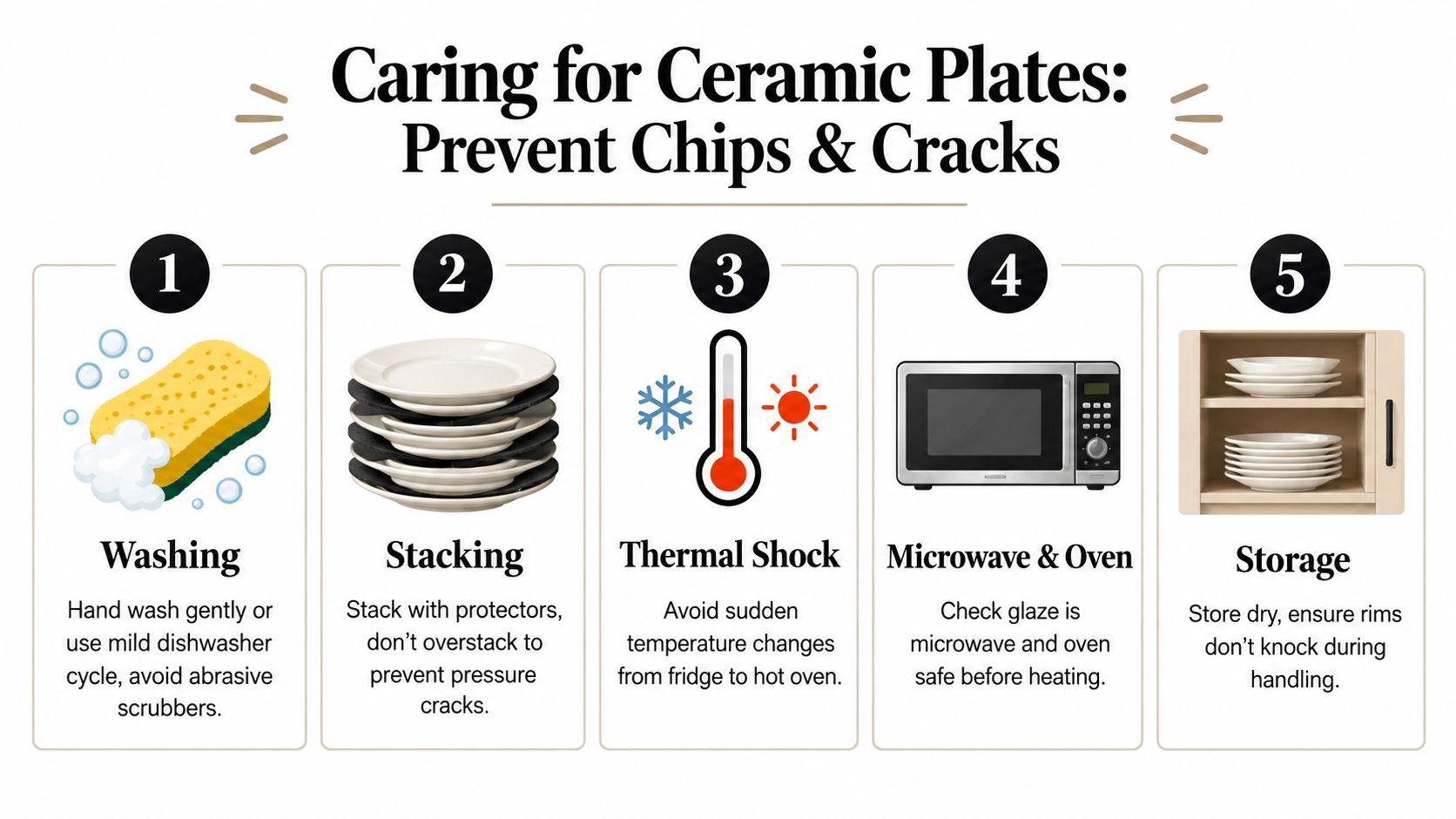
Care starts with reducing impact. Don't drag plates across one another, drop them into a sink or place heavy cookware on top of a stack. A small rim chip can become a stress point, and repeated knocks may turn that local weakness into a larger crack.
A simple daily routine
- Wash with restraint. Use a mild dishwasher cycle if the manufacturer allows it, or wash by hand with a soft sponge. Abrasive pads can dull or mark some finishes.
- Stack with control. Keep stacks stable and avoid excessive height. If the plates have delicate rims or uneven handmade surfaces, use separators or store them so rims don't grind against one another.
- Control temperature changes. Never move a cold plate directly into a very hot oven, and don't place a hot plate on a wet or cold surface. Let the plate warm and cool gradually.
- Check before heating. Microwave and oven safety depends on the specific body, glaze and manufacturer testing. A dishwasher-safe label doesn't automatically mean oven-safe.
- Store plates dry. Moisture trapped between pieces can make handling slippery and encourage careless lifting. Keep the cabinet organised so you can remove one plate without striking the stack.
Practical rule: Treat a ceramic plate like a rigid glass structure. Avoid sudden temperature changes and point impacts, especially around the rim.
Food safety is part of care
In Australia, AS 4371-2012 sets maximum permissible lead and cadmium release limits for ceramic tableware and includes performance and marking requirements for commercial, industrial and hotel-grade ware. The Standards Australia listing for AS 4371-2012 identifies the relevant standard.
The Customs (Prohibited Imports) Regulations 1956 Schedule 7 lists plates, including soup and dessert plates, and requires acid-extraction testing. For plates, the schedule specifies permissible test-solution levels of 20.0 for lead and 2.0 for cadmium.
A glossy surface isn't proof of compliance. Importers and cautious buyers should ask for third-party test reports, particularly when buying from an unfamiliar supplier or choosing brightly coloured, decorative or handmade ware. Replace plates with deep chips, cracks or flaking glaze rather than continuing to use them for food.
For storage ideas that account for stacking and access, Everti's guide to storing plates and bowls offers practical organisation advice.
Choosing Ceramic Dinner Plates for Different Homes and Uses
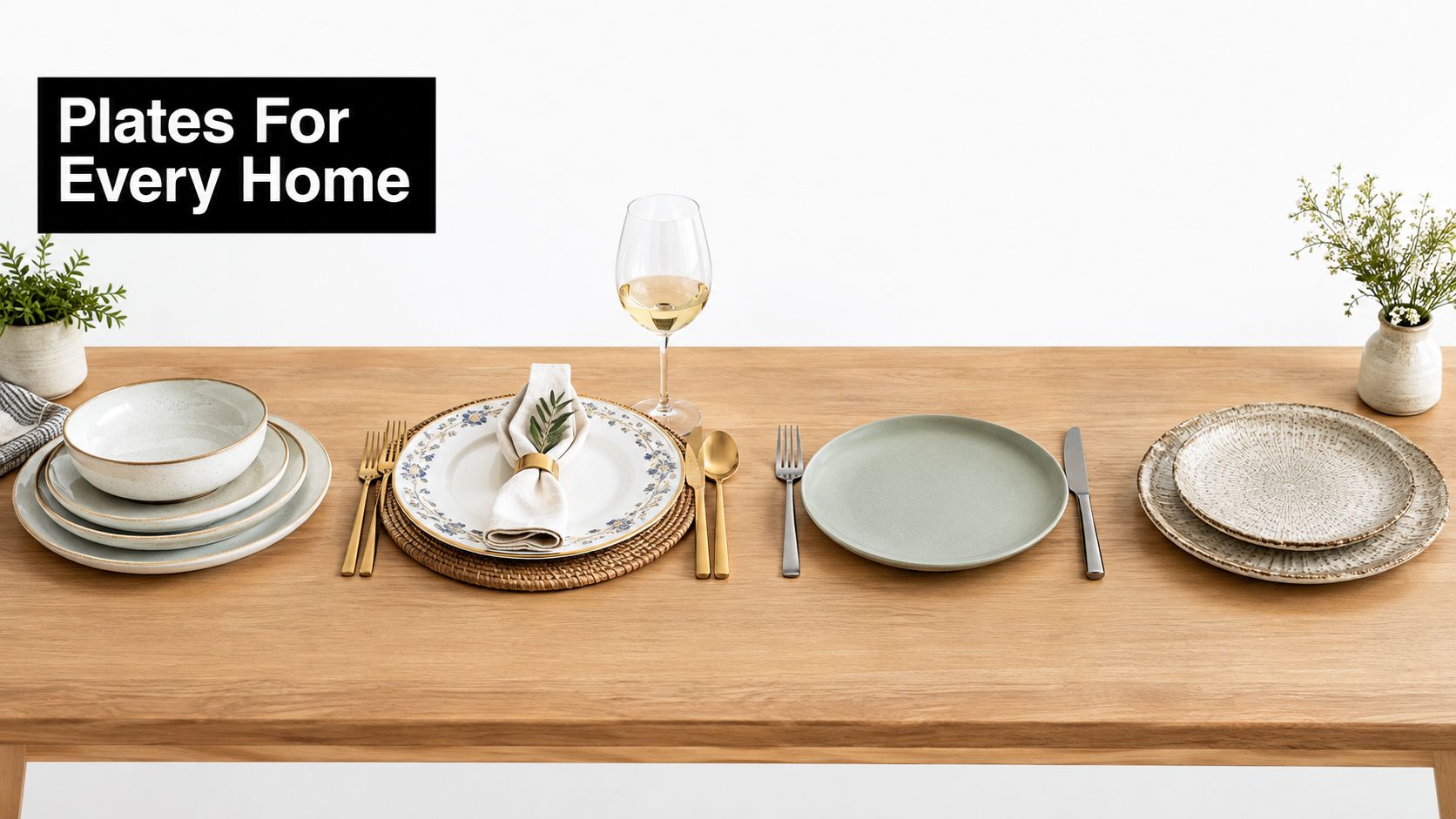
The right plate is the one that fits your household's complete routine, not just the meal photographed on the product page. Count the handling involved, from unloading the dishwasher to lifting a stack, serving hot food and putting everything away. That routine reveals whether a plate's beauty will remain a pleasure or become another chore.
Busy families
Choose a dense, glazed stoneware or strong porcelain profile with a rim that feels substantial rather than wafer-thin. Look for clear care instructions, consistent sizing for stacking and replacement availability. A dramatic handmade edge may look appealing, but irregular shapes can make storage less efficient and increase rim contact.
The cheapest set isn't always the lowest-cost choice over its life. If one style chips easily, requires special washing and is difficult to replace, its attractive purchase price may not compensate for repeated replacements and extra handling.
Frequent entertainers
Porcelain can suit plated meals where a smooth, restrained background keeps attention on the food. Stoneware works well when you want a warmer, more relaxed table with visible glaze variation. In either case, buy enough matching pieces for your normal hosting pattern and check whether the range includes replacement plates.
Weight matters during service. A thick stoneware plate may retain warmth and feel luxurious, but carrying a full set from kitchen to table can be tiring. A thinner porcelain option may be easier to handle, provided you have a safe stacking and washing routine.
Minimalist everyday dining
Prioritise one versatile shape, a finish that doesn't make every mark obvious and a profile that fits your shelves and dishwasher. Neutral colours are easy to combine with existing bowls and serving pieces, while a small accent glaze can add variation without forcing a full tableware change.
Premium design buyers
Artisanal work offers individuality, tactile surfaces and colour depth. Fine porcelain offers refinement and a lighter visual line. The practical test is whether you're comfortable treating the pieces as functional objects rather than ornaments. Ask about glaze testing, oven and microwave use, replacement policy, and the maker's advice for thermal shock before committing.
Making a Confident Choice for Your Table
Start with the failure you most want to avoid. If chipped rims frustrate you, choose a thick, durable profile, protect the stack and favour a supplier with clear replacement information. If heavy lifting is the problem, compare plate weight and stack height rather than judging a single plate in isolation. If food presentation matters most, decide whether porcelain's clean surface or stoneware's handmade character better suits your meals.
Use this short decision filter before buying:
- Daily workload: Will the plates go through frequent washing and handling?
- Heat routine: Do you reheat food, use oven-to-table serving or move plates between cold and hot surfaces?
- Storage: Can your shelves support the stack comfortably without rim contact?
- Safety evidence: Does the seller provide clear material, glaze and testing information?
- Lifecycle value: Can you replace individual plates, and will the design still work when one piece is lost?
Ceramic dinner plates can be an excellent long-term choice when their type and care requirements match your home. Their value comes from the complete experience, appearance, food presentation, handling, safety and service life, not from a fashionable glaze alone.
If your priorities lean towards lightweight, uncoated tableware, Everti offers pure titanium tableware alongside other kitchen and table essentials, with product information focused on material properties and everyday use. Visit Everti to compare its titanium approach with the ceramic qualities you want for your table.