

Ever wondered if your ceramic frying pan really needs a lid? It's a fair question. But a quality ceramic frying pan lid isn't just a nice-to-have accessory—it's the key to unlocking what your pan can truly do. Think of it as the missing piece that takes your cooking from good to great.
Why Your Frying Pan Needs the Right Lid
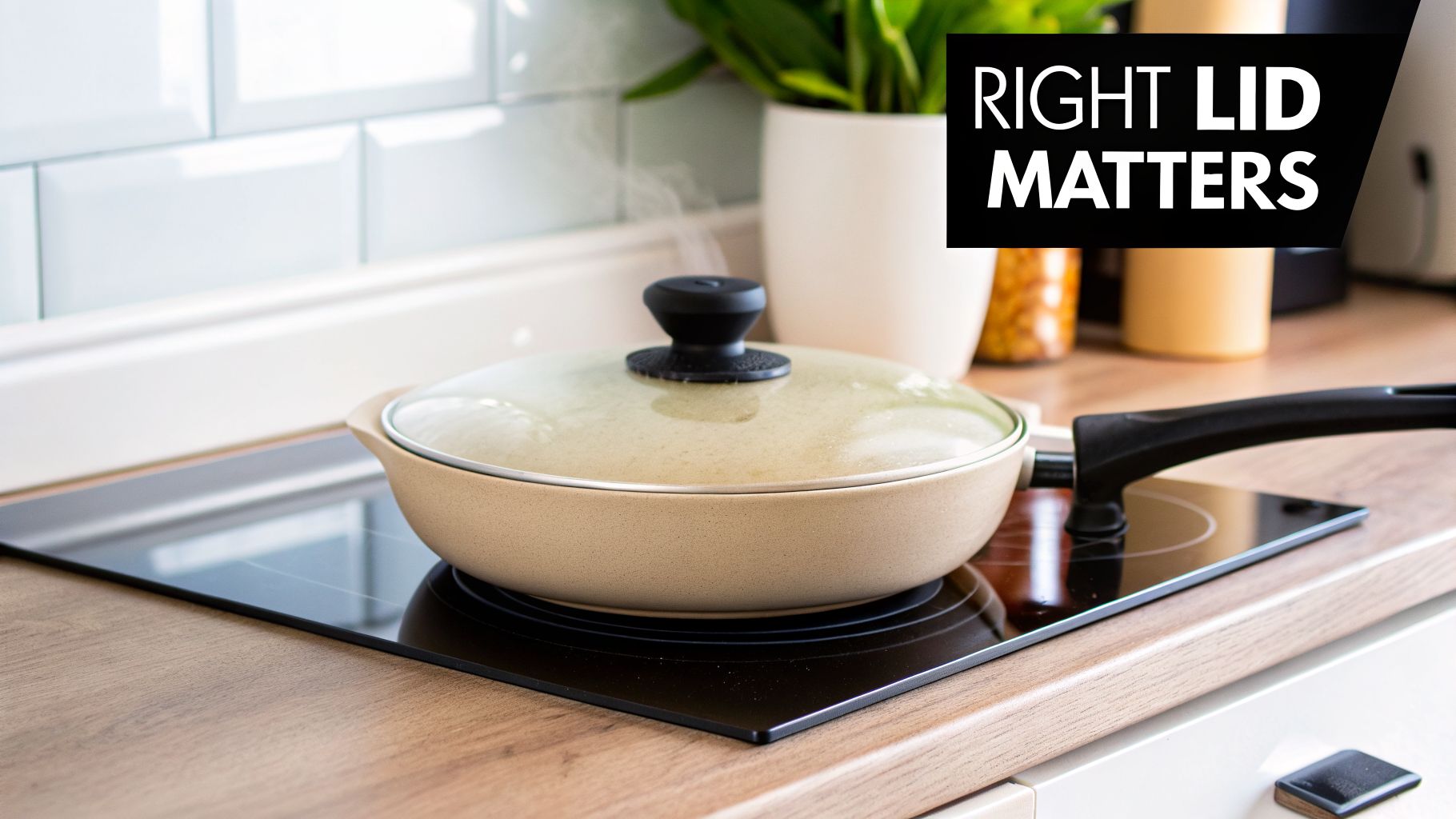
Matching your beautiful ceramic pan with the right lid is about so much more than just stopping oil from splattering all over your stovetop. It’s a simple step that transforms your pan into a complete cooking system, leading to tastier food, a safer kitchen, and a whole lot more convenience.
A snug-fitting lid essentially turns your pan into a mini-oven. By trapping steam and heat, it keeps everything inside moist and full of flavour. This is absolutely crucial for techniques like braising tough cuts of meat until they're tender, gently steaming vegetables, or just making sure a chicken breast cooks through without drying out.
Unlock Flavour and Efficiency
When a lid contains all that heat, your food naturally cooks more evenly and finishes faster. The hot air circulates, gently cooking the top of your food while the pan’s surface gets that perfect sear on the bottom. Getting that ideal balance of crispy-on-the-outside, juicy-on-the-inside for something like pan fried soup dumplings is so much easier in this controlled environment.
All that trapped heat also means you can often turn the dial down. Cooking at lower temperatures saves on your energy bills, which is a welcome bonus in any household.
The right lid creates a closed-loop system, recycling heat and moisture to cook food faster and more evenly while preserving nutrients and flavour.
The Growing Demand for Safe Cookware
It's no secret that health-conscious Aussies are paying more attention to what their cookware is made of. We're all looking for non-toxic options, and that trend doesn't stop at the pan—it includes every part that comes into contact with our food, lids included.
This shift in what we buy is making waves. The Australian ceramic cookware market was recently valued at USD 88.92 million and is expected to grow at a healthy 8.6%. This tells us that more and more people are actively choosing ceramic for its health and safety benefits.
So, What Exactly Is a Ceramic Lid?
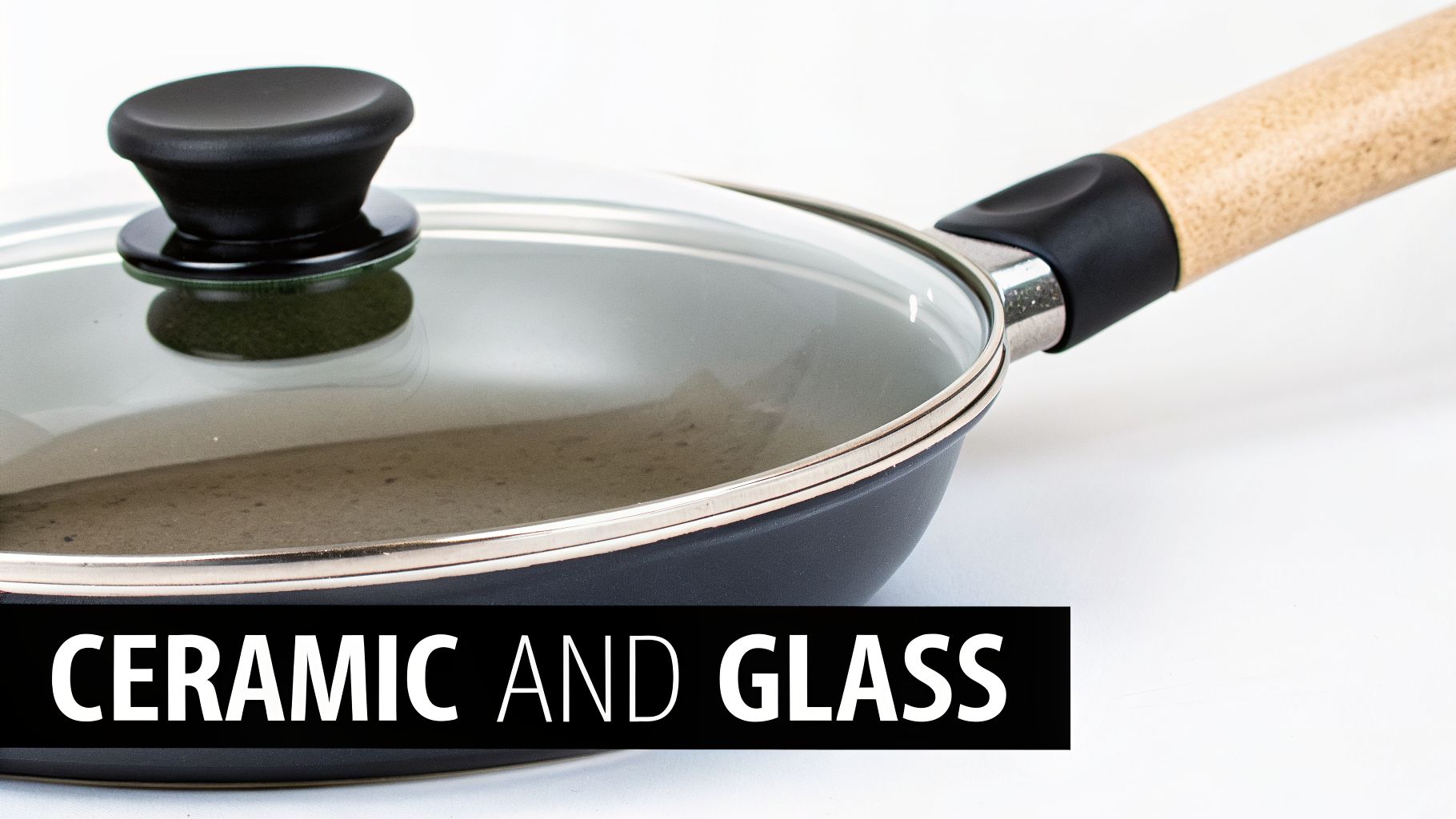
When you hear the term "ceramic frying pan lid," you might picture something heavy and solid, like a stoneware pot lid. But in the world of modern cookware, it’s actually a far more practical and clever design—a hybrid that combines the best features of a few different materials.
You’ll find that most "ceramic" lids today aren't made from solid ceramic at all. They almost always have a tempered glass centre. This glass acts like a strong, shatter-resistant window, giving you the massive advantage of being able to watch your food cook without lifting the lid and losing all that valuable heat and moisture.
It's this blend of materials that makes the lid so effective. You get the see-through convenience of glass combined with the safety and non-toxic benefits of ceramic.
The Role of the Ceramic Coating
So, where does the "ceramic" bit actually come in? It's usually a specialised coating applied to the most important parts of the lid, like the rim that sits on the pan or even the handle. It’s helpful to think of this coating less like traditional pottery and more like a high-tech protective layer made from natural sand and minerals.
This coating is there for a few very good reasons:
- It’s Non-Toxic: This is a big one. The coating provides a completely inert surface, which means it’s non-reactive. You can cook with confidence knowing that no nasty chemicals like PFAS, PFOA, or lead will ever leach into your food.
- It’s Heat Resistant: The ceramic layer is built to handle high temperatures, so the lid stays stable and safe whether you're searing a steak or simmering a sauce for hours.
- It’s Easy to Clean: Just like the surface of a ceramic pan, this coating is smooth and non-stick. Food splatters and condensation wipe away easily, making cleanup a breeze.
This is what really sets a quality ceramic-style lid apart from a basic metal or all-glass one. It's been designed from the ground up for better performance and your peace of mind.
Think of a modern ceramic lid as a clever innovation. The tempered glass gives you a clear view, while the ceramic coating creates a non-toxic, heat-resistant seal that locks in moisture and keeps your food pure.
How It Protects the Flavour of Your Food
One of the most underrated benefits of a ceramic frying pan lid is its non-reactive quality. It's something you might not think about, but certain materials—especially some metals or plastics—can have a subtle chemical reaction with acidic or alkaline foods. This can leave a faint metallic or plastic taste in your meal.
Ceramic, on the other hand, is chemically inert. It’s like a neutral guard, ensuring the only flavours in your dish are the ones you intended. It won’t interfere with your ingredients at all.
So whether you’re simmering a vibrant, acidic tomato sauce or gently steaming fish with a squeeze of lemon, the lid helps protect the food’s true, authentic taste. The result is a cleaner, more delicious meal on your plate.
Here is the rewritten section, crafted to sound like it was written by an experienced human expert.
What a Good Ceramic Lid Actually Does for Your Cooking
So, we've talked about the materials, but what does adding a quality ceramic frying pan lid really mean for your day-to-day cooking? It’s much more than just a splatter guard. A good lid genuinely changes how your pan performs, making your food tastier, your kitchen run smoother, and even your meals healthier.
Think of it like this: a lid turns your frying pan into a mini-oven. By trapping steam, you're locking in all that wonderful moisture and flavour that would otherwise just vanish into thin air. This simple act can transform a standard pan-sear into a tender, succulent braise. It's how you get those tough cuts of meat to fall apart or steam your veggies to perfection with just a little water, all in the one pan.
This trapped heat also makes your cooking far more energy-efficient. With the lid on, heat builds up and circulates, so you can turn the stove down a notch. It might seem like a small thing, but those little adjustments really do add up on your energy bills over time.
A Healthier, Safer Way to Cook
For many of us, especially with families, the biggest win is simply peace of mind. One of the main reasons people switch to ceramic cookware is because it’s non-toxic, and that benefit absolutely extends to the lid. A properly made lid with ceramic elements ensures no nasty chemicals can leach into your food while it's bubbling away.
This is a huge deal if you’re health-conscious. When you choose a lid that's free from materials like PFOA, PTFE, lead, or cadmium, you’re creating a completely inert cooking surface. It’s a guarantee that the food you serve is pure and untainted, which is particularly important when you're cooking for kids or anyone with sensitivities.
This growing awareness around food safety is exactly why ceramic cookware has become so popular in Australian kitchens. As more of us put health first, a non-toxic ceramic lid is shifting from a 'nice-to-have' to a kitchen essential. In fact, recent Australian market analysis points to this very trend, showing how households are choosing ceramic for its safety-first reputation. If you're interested, you can explore more about these consumer trends and what's driving the market shift.
The Practical, Everyday Perks
Beyond the big wins for flavour and health, using a lid just makes kitchen life easier. It’s the simple things:
- Faster Cooking: Trapped heat cooks food more quickly, which is a lifesaver on a busy weeknight.
- Less Mess: A lid keeps oil splatters and steamy condensation contained, meaning your stovetop stays a whole lot cleaner.
- Keeps Nutrients In: When you steam or braise with a lid, you hold onto more of the water-soluble vitamins that are often lost in other cooking methods.
A ceramic frying pan lid isn't just a cover; it's a tool that unlocks flavour, saves energy, and gives you confidence in the healthiness of your cooking. It elevates a simple pan into something much more versatile, helping you cook better food, more easily.
How to Choose the Perfect Lid for Your Pan
Ready to find the perfect partner for your ceramic frying pan? It might seem like a simple decision, but the right lid is so much more than just a cover—it's a tool that can completely change how you cook. Let's break down what really matters so you can find a ceramic frying pan lid that fits like a glove and matches your style in the kitchen.
First Things First: Getting the Fit Right
The single most important factor is the fit. It’s non-negotiable. If a lid is too small, it’ll just fall into your food. Too large, and it’ll slide around, letting all that precious heat and moisture escape. A poor fit pretty much defeats the purpose of using a lid in the first place.
Getting the size right is simple. Just grab a tape measure and check the inside diameter of your frying pan from one top edge straight across to the other. If your pan measures 28cm, you need a 28cm lid. It really is that easy. A snug fit creates a seal that traps heat and steam, giving you ultimate control over your cooking.
Comparing Lid Types for Your Ceramic Pan
Once you've nailed down the size, the next step is choosing the material. While we're talking about ceramic pans, lids often come in different materials, each with its own set of pros and cons. This table breaks down the most common options to help you decide.
| Lid Type | Primary Material | Key Advantage | Consideration | Best For |
|---|---|---|---|---|
| Glass Lid | Tempered Glass | Excellent visibility—see your food without losing heat. | Can be more fragile than metal or ceramic. | Everyday cooking where you want to monitor progress. |
| Full Ceramic/Stoneware | Ceramic or Stoneware | Superior heat retention and even cooking. | Opaque, so you can't see inside; can be heavy. | Braising, slow-cooking, and keeping dishes warm. |
| Stainless Steel Lid | Stainless Steel | Durable, lightweight, and often oven-safe. | Opaque; can sometimes create a too-tight seal. | General-purpose cooking; great for professional kitchens. |
Ultimately, your choice here comes down to personal preference. If you love peeking at your food as it simmers, a glass lid is a no-brainer. But if you’re a fan of low-and-slow cooking where consistent heat is king, a solid ceramic lid might be your best bet.
Essential Features That Make All the Difference
Beyond the basics of size and material, a few clever features can elevate a lid from good to great. These are the small details that make a huge difference to your daily cooking experience.
- Steam Vent: Look for a lid with a small hole. This steam vent is a game-changer. It lets just enough steam escape to prevent pressure from building up, which stops that annoying rattling and messy boil-overs.
- Oven-Safe Handle: An oven-safe handle made from silicone, metal, or heat-resistant ceramic offers incredible versatility. You can start a frittata on the stovetop and move the whole pan, lid and all, straight into the oven to finish. Just be sure to check the manufacturer's maximum temperature rating first!
This decision tree can help you visualise whether you should prioritise keeping an eye on your food or locking in all that flavour.
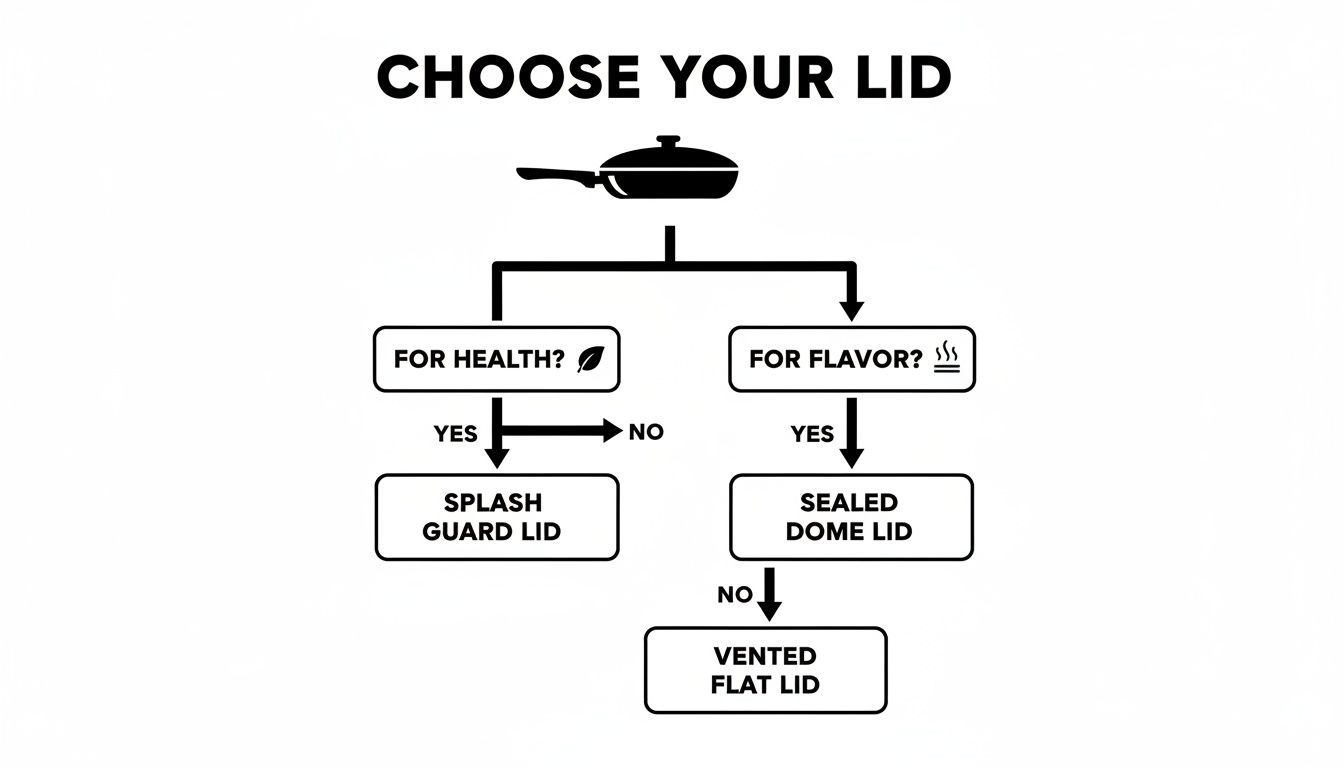
As you can see, different cooking goals—from simply preventing splatters to deep braising—will lead you to very different types of lids.
Choosing the right lid is all about balancing fit, material, and features. A snug fit is the one thing you can't compromise on, but the rest really comes down to how you love to cook.
Taking the time to think through these points ensures your new lid will become a trusted and indispensable tool in your kitchen. If you want to explore this topic further, our complete guide on non-stick frying pans with lids offers even more great advice. A thoughtful choice now means you'll have a quality piece of cookware that helps you create countless delicious meals for years to come.
Keeping Your Lid in Top Shape for Years to Come
Think of your lid as a key piece of kitchen gear. A little bit of care goes a long way in making sure it performs beautifully for years. Looking after your ceramic frying pan lid is surprisingly simple and doesn't require any fancy tools—just a few good habits to protect its finish and keep it structurally sound.
The golden rule? Avoid thermal shock. This is what happens when you subject the lid to a sudden, extreme temperature change, which can easily cause the glass to crack or even shatter. So, never take a hot lid straight from a simmering pan and plunge it into a sink of cold water. Just let it cool down gradually on a wire rack or another heatproof surface first. It’s that simple.
Simple Cleaning for a Lasting Finish
When it's time to clean, gentle is always the way to go. Abrasive scourers and steel wool are the enemy here; they'll scratch the glass and can damage any ceramic coatings on the rim or handle. All you really need is a soft cloth or sponge with some warm, soapy water.
Most of the time, any food splatters will wipe away with minimal effort. For those times you're dealing with stubborn, baked-on grime, here's what to do:
- Let the lid soak in warm, soapy water for 15-20 minutes. This usually does the trick to loosen everything up.
- For really tough spots, mix up a simple paste of bicarbonate of soda and a little water.
- Apply the paste to the grime, let it sit for a few minutes, then gently scrub it away with a non-abrasive sponge.
This gentle approach is your ticket to keeping the surface pristine and ensuring you get a perfect seal every time you cook.
A common mistake is reaching for harsh chemical cleaners or aggressive dishwasher detergents. These can be far too abrasive for delicate finishes and might even cause the seals to degrade over time. Mild dish soap is all you need.
Smart Handling and Storage
Beyond cleaning, the way you handle and store your lid really does matter. While tempered glass and ceramic coatings are tough, they aren't indestructible. Dropping a lid onto a tiled floor or banging it against the side of another pot can lead to chips, or worse, cracks.
When putting your lids away, try to avoid stacking them directly on top of one another. A simple tea towel, a felt pan protector, or a proper lid organiser will prevent scratches and stop them from knocking against each other. It’s a small step that prevents the little dings and chips that can weaken the lid's structure over time. If you’re interested in cookware that’s built for true versatility, our article on what makes a pan oven-safe is well worth a read.
By getting into these easy maintenance habits, you're not just cleaning—you're protecting your investment. You'll ensure your lid remains a reliable, effective, and safe part of your cooking toolkit for countless meals ahead.
Exploring Other High-Performance Lid Options
While a quality ceramic frying pan lid is a fantastic choice, it’s not the only player in the game. The world of premium cookware is full of brilliant materials, and exploring them can help you find the perfect match for your specific cooking style.
This is especially true in Australia, where home cooks are increasingly seeking out durable, multi-functional kitchen tools. There's a real shift towards healthier cooking and buying products that are genuinely built to last. You can read more about these Australian market trends and what’s driving them.
Two common alternatives you'll see are tempered glass and stainless steel. Glass lids are great because you can see what's happening without letting heat escape, while stainless steel is the workhorse known for its rugged durability. But for those who want the absolute pinnacle of performance and purity, there’s another material that stands out: pure titanium.
The Ultimate Upgrade: Titanium Lids
Think of titanium as the final word in high-performance cookware. It's a material that perfectly balances qualities you wouldn't expect to find together. It’s astonishingly lightweight, making it a joy to handle, yet it has incredible strength that resists dents, warping, and damage like nothing else.
A pure titanium lid is biochemically inert. This means it is completely non-reactive with any food, ensuring that the taste of your ingredients remains absolutely pure and untainted, no matter what you're cooking.
On top of that, titanium is completely corrosion-proof, so it will never rust or degrade over time. This unique combination of properties makes a titanium lid the ultimate ‘buy it for life’ upgrade. It's an investment for the discerning home chef who values unparalleled durability and absolute safety in their cooking.
By understanding the full spectrum of options, including which is the best non-stick surface for a frying pan, you can build a kitchen toolkit that truly meets your needs.
Got Questions About Ceramic Lids? Let's Clear Things Up
Even with all the benefits laid out, you probably still have a few practical questions swirling around. That's completely normal. Let’s tackle some of the most common queries people have, so you can feel totally confident when you're choosing and using your ceramic frying pan lid.
Can I Put My Ceramic Lid in the Oven?
This is a fantastic question, and the answer is: it depends. Usually, the answer is yes, but the real deciding factor is the handle. Many lids, particularly those with tempered glass and silicone or metal handles, are oven-safe up to around 200°C.
But—and this is a big but—if your lid has any plastic or wooden parts, keep it out of the oven. Those materials just can't take the heat. Before you ever slide a lidded pan into the oven, your first move should always be to check the manufacturer's guidelines.
Pro Tip: A lid is only as oven-safe as its most delicate part. Always hunt down the brand’s specific temperature limits to prevent any kitchen mishaps.
Is a Ceramic Lid Better Than a Glass Lid?
Honestly, one isn't definitively "better" than the other. It really just boils down to what matters most to you and how you cook.
A classic all-glass lid is brilliant for visibility. You can see exactly what's happening to your food without letting all that precious heat escape.
A ceramic-coated lid, on the other hand, brings top-tier non-toxic qualities to the table and often adds a more polished, premium feel to your cookware. The smartest designs actually give you the best of both worlds: a glass window for a clear view, framed by a ceramic-coated rim that creates a perfect, non-reactive seal.
How Do I Find a Lid That Fits Perfectly?
Getting the right fit is non-negotiable for effective cooking—it’s how you trap heat and moisture. It's simpler than you think. Just grab a tape measure and check the inside diameter of your pan, from one edge of the rim straight across to the other.
If you have a 28cm pan, you need a 28cm lid. Simple as that. If you've lost the original or can't find a matching one, don't stress. Look for a "universal" lid. These clever designs often feature a stepped silicone rim that creates a snug seal on a range of different pan sizes.
At Everti, we're all about creating kitchen tools that aren't just effective, but are also genuinely safe and designed to last a lifetime. Our philosophy is simple: use pure, high-performance materials like titanium to elevate your everyday cooking. See for yourself how quality essentials can transform your kitchen. Explore the collection at https://everti.com.au.