

Absolutely, a lot of pots and pans can go in the dishwasher, but whether they'll survive the experience is a different story. It all comes down to the material. That "dishwasher safe" sticker on a coated pan can sometimes be a bit optimistic, often leading to a much shorter lifespan than you'd expect.
Why Dishwasher Safe Cookware Is a Genuine Lifestyle Upgrade
Let's be honest—nobody gets excited about scrubbing a greasy pan after a great meal. This is where truly dishwasher safe pots and pans make a world of difference. They turn a dreaded chore into a simple 'load and go' task. It’s not just about saving a bit of time; it's about getting your evenings back for family, hobbies, or just putting your feet up.
It’s a bit like the difference between hand-washing your clothes and throwing them in the washing machine. Sure, scrubbing by hand works, but the machine gives you freedom and consistently clean results. In the same way, the right cookware liberates you from being chained to the kitchen sink, a bigger deal than ever in our busy lives.
The Growing Demand for Convenience
Here in Australia, the cookware market is absolutely flying, set to hit USD 1,369.43 million by 2033. This boom is fuelled by more people cooking at home and a clear demand for products that last and are easy to clean.
With over 70% of Aussie households now owning a dishwasher, it's pretty clear that cookware compatibility isn't just a bonus feature anymore—it's a must-have for many.
Of course, this all hinges on your machine doing its job properly. If you ever find your dishwasher not cleaning dishes the way it should, getting it sorted is key to enjoying the full convenience of your easy-care cookware.
The real win isn't just about having clean pans. It’s about what you get to do with the time and energy you save. Choosing the right cookware is an investment in making your daily routine that little bit smoother and more enjoyable.
But it’s vital to remember that not all "dishwasher safe" labels are created equal. As we'll get into, the material your pots and pans are made from is the single biggest factor in determining how well they'll hold up, cycle after cycle.
A Cookware Material Showdown: What Really Survives the Dishwasher?
Let’s be honest, not all cookware is created equal, especially when you introduce it to the high-heat, high-pressure environment of a modern dishwasher. That little "dishwasher safe" symbol can sometimes be more of a hopeful suggestion than a guarantee of long-term survival. The real story lies in the material itself.
When you’re looking for good quality pots and pans, it’s about more than just cooking. The choice you make ripples through your daily life, affecting convenience, hygiene, and even your overall wellbeing. Think of it as a pyramid of value.
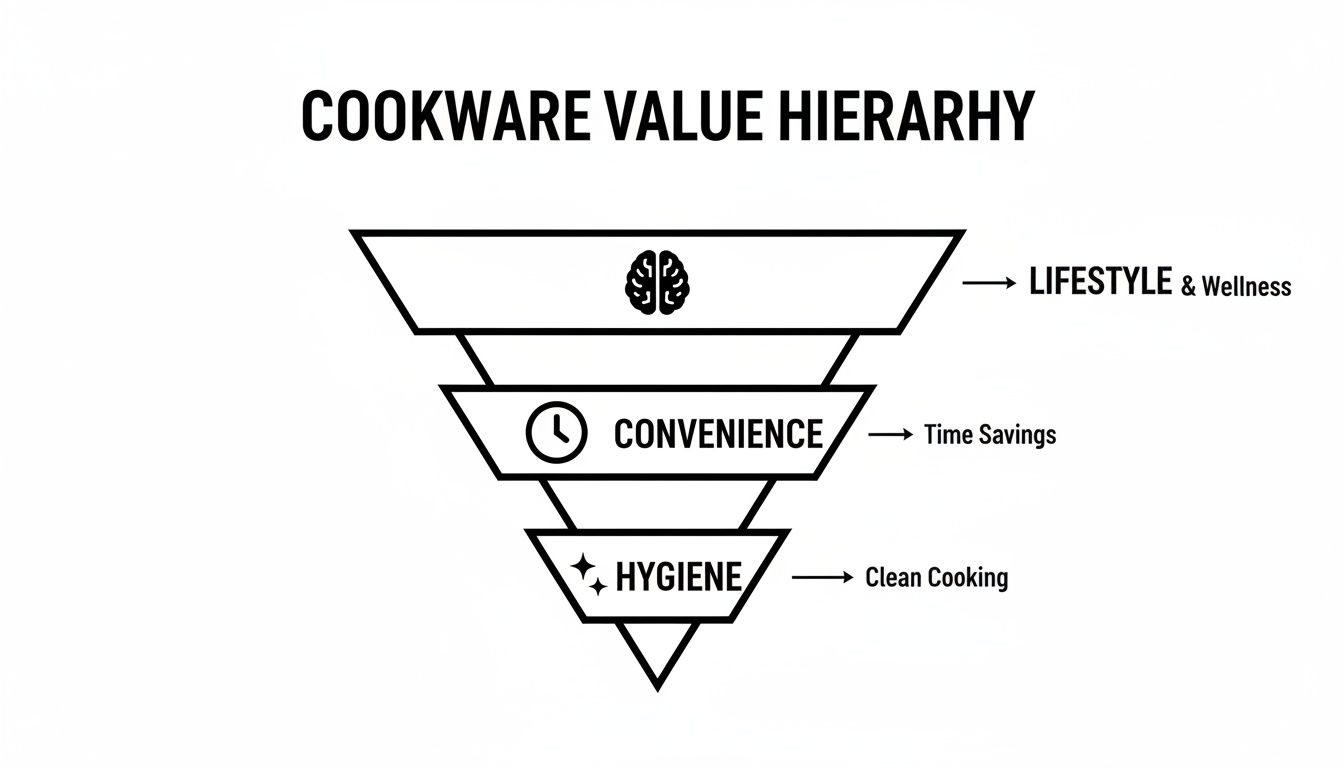
As the diagram shows, while the initial appeal is often convenience, the ultimate benefit of choosing the right cookware is how it supports a healthier lifestyle with materials that are truly hygienic and safe.
The Trouble with Typical Non-Stick Pans
Most of us have started out with a non-stick aluminium pan. They're lightweight and food slides right off, which sounds great in theory. But that delicate coating is precisely its biggest flaw when it comes to the dishwasher. The combination of powerful water jets and abrasive detergents acts like a slow, steady sandblaster, gradually wearing away the non-stick surface.
With each cycle, the coating gets a little weaker. Eventually, it starts flaking off into your food, and the pan loses its non-stick magic. What began as a convenient kitchen tool quickly turns into a repeat purchase and a potential health headache.
Stainless Steel: A Tougher Competitor
Stainless steel is a definite upgrade. It’s a seriously robust material that can take the dishwasher’s intense heat without bending out of shape. For the most part, high-quality stainless steel pots and pans handle repeated washes surprisingly well.
But even this champion has a few vulnerabilities.
- Discolouration: The harsh chemicals in some dishwasher tablets can dull its shiny finish or leave behind a rainbow-like tarnish.
- Pitting: If you leave salty or acidic foods sitting on the surface, the dishwasher cycle can accelerate the formation of tiny, permanent pits.
It’s a reliable workhorse, no doubt, but keeping that mirror-like shine might take a little extra effort.
The Big Idea: Even a strong material like stainless steel isn't bulletproof in the dishwasher. The perfect material is one that’s completely inert—it simply doesn't react with detergents, heat, or food acids.
To get a clearer picture, let's compare the most common materials head-to-head.
Cookware Material Dishwasher Safety Comparison
This table breaks down how different cookware materials stand up to the rigours of a dishwasher, looking at everything from immediate risks to their long-term performance.
| Material Type | Dishwasher Safety Rating | Key Considerations | Long-Term Durability |
|---|---|---|---|
| Titanium (Uncoated) | Excellent | No coatings to degrade. Completely inert and non-reactive with detergents. | Lasts indefinitely. Performance and safety remain unchanged after thousands of cycles. |
| Stainless Steel | Good | Can handle heat, but may discolour or pit over time with harsh detergents. | Very durable, but cosmetic appearance may degrade without proper care. |
| Non-Stick (Coated) | Poor | High heat and abrasive detergents wear down the coating, causing it to flake. | Short lifespan. The non-stick properties diminish with each wash cycle. |
| Cast Iron | Avoid | Dishwasher strips the essential oil seasoning, leading to immediate rust. | The pan itself is durable, but its surface will be ruined by a single wash. |
| Aluminium (Untreated) | Avoid | Reacts poorly with detergents, causing oxidation and a chalky, discoloured finish. | The material will degrade and become pitted and dull very quickly. |
The takeaway is clear: while some materials can tolerate the dishwasher, only a select few are truly built for it without any compromises.
Materials to Keep Far Away from Your Dishwasher
Some materials are a definite no-go. No matter how much you want to save a few minutes of scrubbing, putting these in the dishwasher is a recipe for disaster.
- Cast Iron: This beloved kitchen beast will rust almost instantly. A dishwasher cycle strips away that beautiful, hard-earned seasoning, which is what protects it and gives it that non-stick quality. You’ll ruin the pan.
- Untreated Aluminium: Without a protective coating, harsh detergents will cause it to oxidise and discolour, leaving behind a dull, chalky residue.
Uncoated Materials: The Safest Choice by a Mile
This brings us to materials that don't need a fragile coating to perform. Pure, uncoated cookware, especially titanium, is in a league of its own. Because there is no coating to peel, flake, or degrade, it can withstand thousands of wash cycles without any change in performance, safety, or appearance.
This built-in resilience makes it the most dependable and worry-free option for anyone who truly values both convenience and lasting quality in their kitchen.
The Hidden Risks of Using the Wrong Cookware
Tossing the wrong pan in the dishwasher is more than just an expensive mistake—it can bring genuine health concerns into your kitchen. That incredible convenience of an automatic wash cycle can, unfortunately, speed up the breakdown of certain materials, turning a trusted cooking tool into a source of contamination. This is a particularly big problem for cookware with non-stick coatings.
Picture a non-stick coating like a thin layer of paint on a fence. When it's new, it’s smooth and protective. But after years of facing harsh weather—or in this case, high heat and aggressive dishwasher detergents—it starts to chip, peel, and flake away. Every wash cycle is like a small storm battering the surface, releasing tiny particles.
Those particles are often microplastics or other chemicals used to bond the coating to the pan. When this starts happening, you’re not just losing the pan's non-stick magic; you're also risking those unwanted materials leaching directly into your family’s meals. It’s a quiet process, but one that has serious implications for any health-conscious home.
Beyond Flaking Coatings
The danger isn't just about non-stick surfaces, either. Any cookware material that isn't completely inert can become a problem once it starts to break down. The intense environment inside a dishwasher—the high heat, powerful water jets, and harsh detergents—can cause scratches, pitting, and general wear on less durable pots and pans.
These tiny imperfections aren't just cosmetic. They create the perfect hiding spots for bacteria.
- Bacterial Havens: Microscopic scratches and pits are incredibly difficult to clean properly, even for a dishwasher. Tiny food particles get trapped inside, creating a breeding ground for germs that can easily transfer to your next meal.
- Altered Flavours: As a pan's surface degrades, it can start to react with acidic ingredients like tomatoes, vinegar, or lemon juice. This chemical reaction can leave a metallic or "off" taste in your food, ruining the flavours you worked so hard to build.
This gradual breakdown turns a once-reliable kitchen staple into something unpredictable and potentially unhygienic. The damage often happens so slowly that you might not even notice it until the pan is already compromising your food's quality and safety.
Choosing cookware made from a completely non-reactive and durable material isn't just about longevity. It's about ensuring that what you cook with is as clean and safe as the ingredients you use.
This is where truly inert materials give you real peace of mind. An uncoated pan made from pure titanium, for instance, has no surface layer that can degrade. It can't peel, flake, or chip, and its non-porous surface naturally resists the kinds of deep scratches that can harbour bacteria. It remains a safe, stable, and reliable cooking surface, wash after wash. By selecting the right dishwasher safe pots and pans, you protect both your investment and your family’s wellbeing.
Extending the Life of Your Cookware
Even the most durable dishwasher safe pots and pans need a bit of TLC. Just because a pan can go in the dishwasher doesn't mean you can just throw it in and forget about it. A few smart habits can go a long way in protecting your investment, keeping your cookware performing at its best for years to come.
Think of it like this: you wouldn't take a high-performance car through a rough, automated car wash with harsh brushes every single day. A little preventative maintenance for your cookware keeps it in showroom condition.
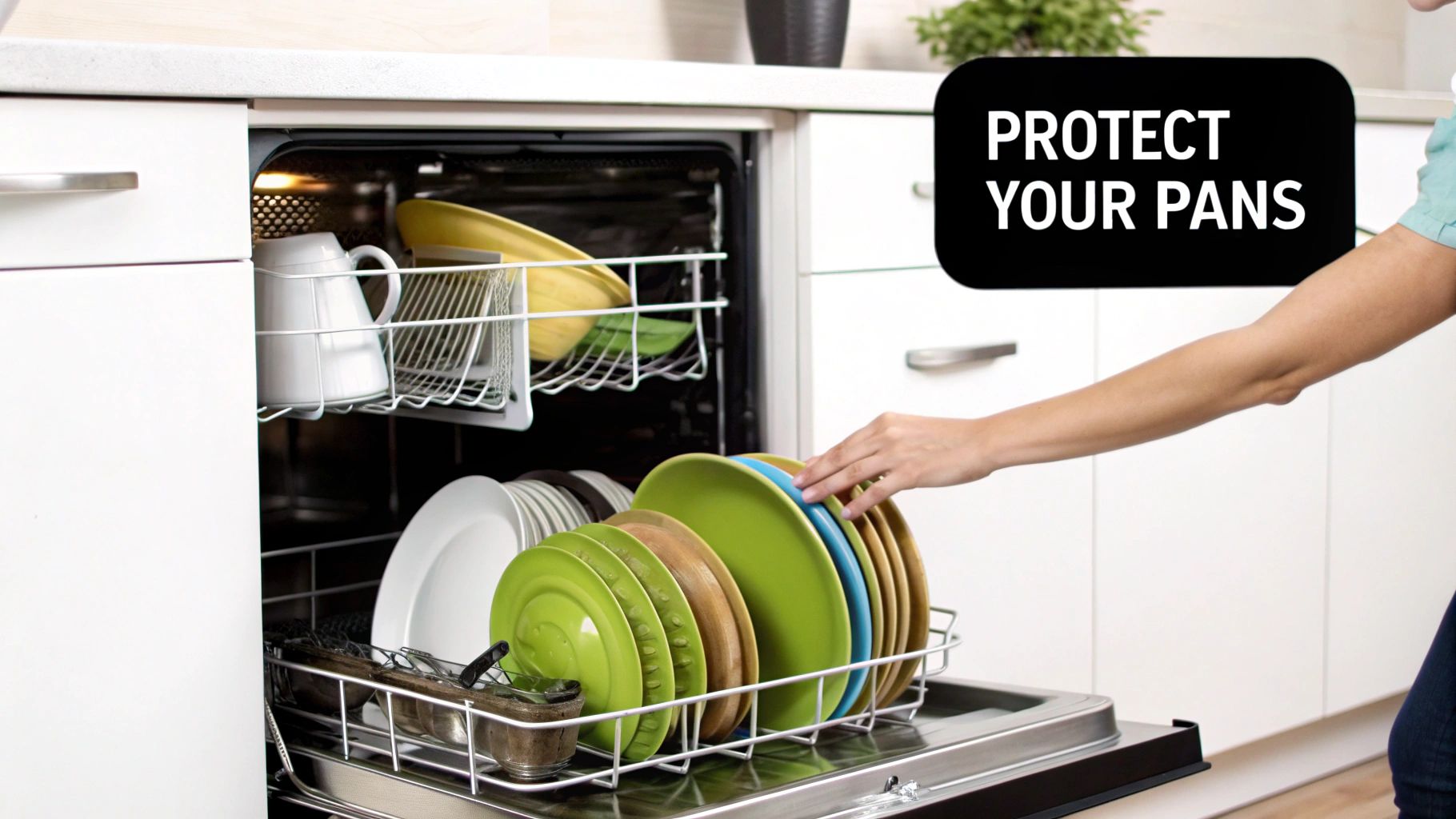
Smart Dishwasher Loading Strategies
How you load your dishwasher makes a bigger difference than you might realise. When heavy pots and pans clang against each other, you're asking for scratches, dings, and premature wear and tear, even on the toughest materials.
The trick is to give your cookware some breathing room. Position pots and pans securely on the racks so they won’t rattle around or collide with other dishes during the wash cycle. It’s also worth checking that the rotating spray arms can spin freely without whacking the handles, which can not only cause damage but also block water from reaching other items.
Choosing the Right Detergent and Cycle
Walk down the supermarket aisle and you'll see that not all dishwasher detergents are made the same. Many powders and pods are packed with harsh abrasives and high levels of bleach that can, over time, dull a pan's beautiful finish or even cause pitting on stainless steel surfaces.
- Go for gentler detergents: Liquid or gel detergents that are phosphate-free are generally a less aggressive choice.
- Steer clear of citrus boosters: While they can make your glasses sparkle, the high acidity can be harsh on certain metal coatings.
- Stick to the normal cycle: Unless you've just seared a dozen steaks, the heavy-duty "pots and pans" cycle is often overkill. Its higher heat and water pressure can accelerate wear. A normal cycle is almost always enough.
This is similar to understanding temperature limits for oven-safe cookware. You can dive deeper into that topic in our guide on choosing an oven safe pan.
The aim is to clean effectively without stripping your cookware's finish. The mildest detergent and gentlest cycle that still gets the job done is always the winning combination for longevity.
When Hand-Washing Still Makes Sense
Sometimes, a quick trip to the sink first is the smartest move. If you're dealing with stubborn, baked-on food, the dishwasher might not have enough power to get it all off, meaning you'll just have to run it through again. A quick pre-soak or a gentle scrub is a much better use of your time.
Just fill the pan with warm, soapy water and let it sit for 15-20 minutes. This gives the soapy water time to work its magic and loosen up any stuck-on grime, making the dishwasher's job a breeze. This simple habit helps ensure your dishwasher safe pots and pans truly go the distance.
Why Titanium Is the Ultimate Dishwasher-Safe Solution
When you're on the hunt for genuinely reliable dishwasher-safe pots and pans, you quickly realise most materials come with a catch. Stainless steel can discolour, and those non-stick coatings? They'll eventually wear down. This is where pure, uncoated titanium steps into the picture—not just as another choice, but as the clear winner for any modern kitchen.
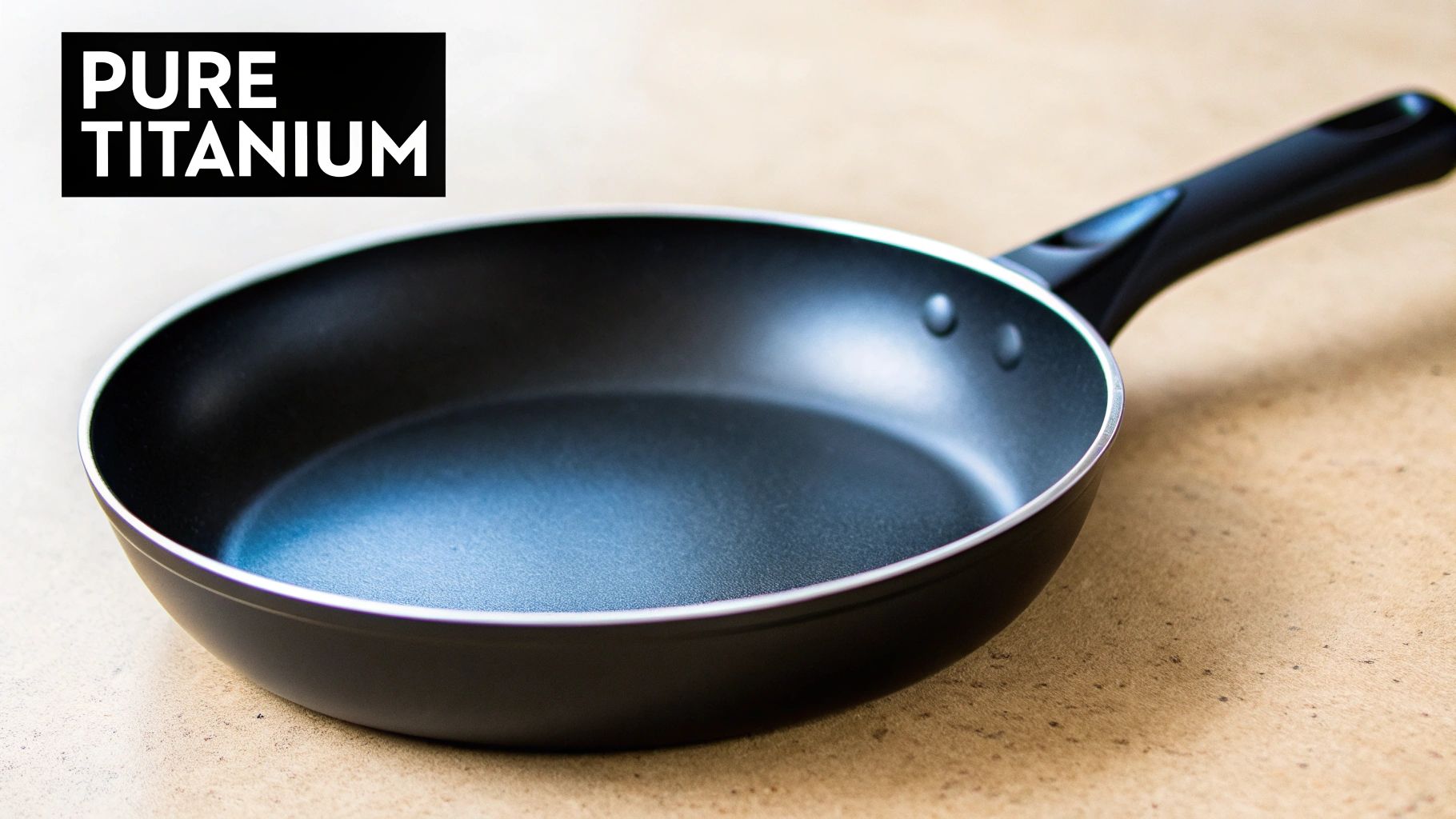
Think about what you'd use to build a ship's hull. You wouldn't pick a material that rusts or gets brittle in saltwater. Titanium has that same kind of built-in resilience. It's a completely inert material, which means it simply doesn't react with the harsh detergents, high temperatures, or acidic food scraps it encounters inside a dishwasher.
The Power of Being Uncoated
The real genius of titanium lies in what it doesn't have: a coating. Standard non-stick pans rely on a delicate top layer, but an uncoated titanium pan has no weak points. There’s absolutely nothing to peel, flake, or scratch off into your food, no matter how many times it goes through a wash cycle.
This simple fact gets rid of the main reason most "dishwasher-friendly" cookware fails. While coated pans have a definite lifespan that gets shorter with every wash, a titanium pan’s performance never wavers. It’s structurally immune to the very forces that break down other materials.
Durability Meets Performance
Titanium’s incredible strength-to-weight ratio makes it not only tough but also surprisingly light and easy to manage. Even better, it handles extreme temperature swings without warping. You can move a hot pan straight from the stovetop to the sink, knowing it will hold its shape perfectly through the dishwasher's intense heat cycle.
This level of durability is becoming more crucial for Australian families. With dishwasher ownership now at 72% in urban areas, the demand for cookware that can keep up is higher than ever. It's a telling statistic that 40% of people report seeing coating wear after only 6-12 months of dishwasher use. A robust material like titanium, however, is built to withstand over 5,000 cycles without a problem. For more on these trends, Statista has some great insights into Australian appliance usage.
The ultimate promise of a dishwasher-safe pan is lifetime convenience without compromise. Pure titanium is the only common cookware material that truly delivers on this promise, offering complete peace of mind with every wash.
Choosing uncoated titanium is an investment in permanence. You’re not just buying a pan that can survive the dishwasher; you’re buying one that thrives in it. By breaking the cycle of replacing worn-out coated pans, you're getting a reliable, safe, and high-performing kitchen tool for life. To learn more about its benefits, explore our detailed guide on titanium cookware in Australia.
Your Cookware Questions, Answered
Even after getting a handle on the different materials, you probably still have a few questions. That's completely normal. Let's dig into some of the most common things people ask about putting their pots and pans in the dishwasher.
Can You Put Stainless Steel Pots And Pans In The Dishwasher?
Yes, you definitely can. A good quality stainless steel pan is tough enough to handle the hot water and high pressure of a dishwasher cycle. It's one of the main reasons it's such a go-to choice in so many kitchens.
But here’s the thing: "dishwasher-safe" doesn't mean "dishwasher-proof". Over time, those harsh detergents can take a toll. You might start seeing a strange rainbow-like film or even some tiny pitting on the surface, especially if you let something acidic like a tomato sauce sit in the pan before washing it. So, while it’s a solid, reliable option, it’s not completely bulletproof against the dishwasher's tough love.
What Happens If You Put A Non-Stick Pan In The Dishwasher?
Honestly, even if the manufacturer says it's okay, putting a non-stick pan in the dishwasher is the quickest way to kill it. That combination of super-high heat and powerful, gritty detergents is a death sentence for the fragile non-stick coating.
Just imagine that delicate surface getting hit with a microscopic sandblaster in every single wash. The detergents literally eat away at the coating, making it less and less non-stick. Before you know it, the surface starts to flake and peel off. Not only does this ruin your pan, but it also means those little bits of coating could be ending up in your dinner, which is a real worry.
For genuine peace of mind and cookware that actually lasts, nothing beats an uncoated pan. Without a coating, there's nothing to degrade, peel, or leach into your food. It’s simply a safer, more durable choice for anyone who relies on their dishwasher.
How Do I Know If My Cookware Is Dishwasher Safe?
The easiest way to check is to look for the "dishwasher safe" symbol on the bottom of the pan – it usually looks like a little square with some plates or water drops inside.
But you should take that symbol with a grain of salt. All it really means is that one wash cycle won't completely destroy it; it's no guarantee the pan will look or perform the same after hundreds of washes. The material itself is a much better guide.
- Naturally Safe: Uncoated materials like pure titanium and high-quality stainless steel are built for the dishwasher. They can take the heat and detergents without breaking down.
- Handle with Care: Anything with a special coating, a delicate finish, or wooden handles is a different story. These parts are much more likely to be damaged by the harsh dishwasher environment.
Is Titanium Cookware Worth The Investment For Dishwasher Use?
Absolutely, one hundred percent. The price tag on titanium cookware is higher upfront, but when you consider its sheer durability and performance in the dishwasher, it’s a fantastic long-term investment.
Titanium is completely inert, which means it simply doesn't react with anything – not detergents, not high heat, and not acidic foods. It won’t corrode, warp, or pit. Ever. A high-quality titanium pan is engineered to last a lifetime, handling thousands of dishwasher cycles without any drop in performance or safety. This incredible resilience saves you a lot of money over the years because you're not constantly replacing cheap, worn-out non-stick pans.
Ready for cookware that truly lasts a lifetime and thrives in the dishwasher? Explore the pure, uncoated titanium essentials from Everti, designed in Melbourne for a safer, cleaner, and more convenient cooking experience. Discover the Everti difference today.